
These 10 Gorgeous Illinois Lighthouses Are So Beautiful, They Almost Feel Out Of Place
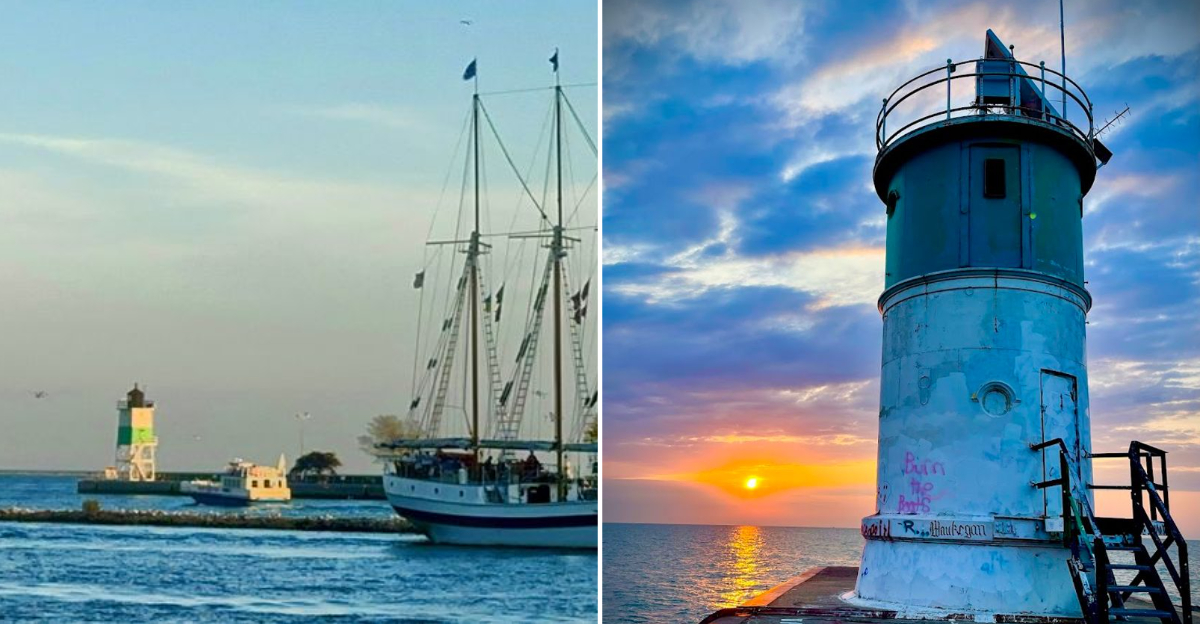
Illinois has a lighthouse side most people never expect, and that is what makes it so fun. Beyond the cornfields, river bluffs, and Chicago skyline, the state has beacons that look like they wandered in straight out of a New England postcard.
Some sit along Lake Michigan near the city’s busy waterfront, while others turn up near quiet river towns with a lot more charm than crowds. Together, these towers, crib lights, and riverfront landmarks show off a side of Illinois shaped by shipping, bold engineering, and scenic shorelines.
Not every one is a classic coastal lighthouse, but that only makes the trip more interesting. Love unusual landmarks, lake views, history, and places that look amazing in photos? This Illinois lighthouse trail deserves a spot on your list.
1. Grosse Point Lighthouse, Evanston
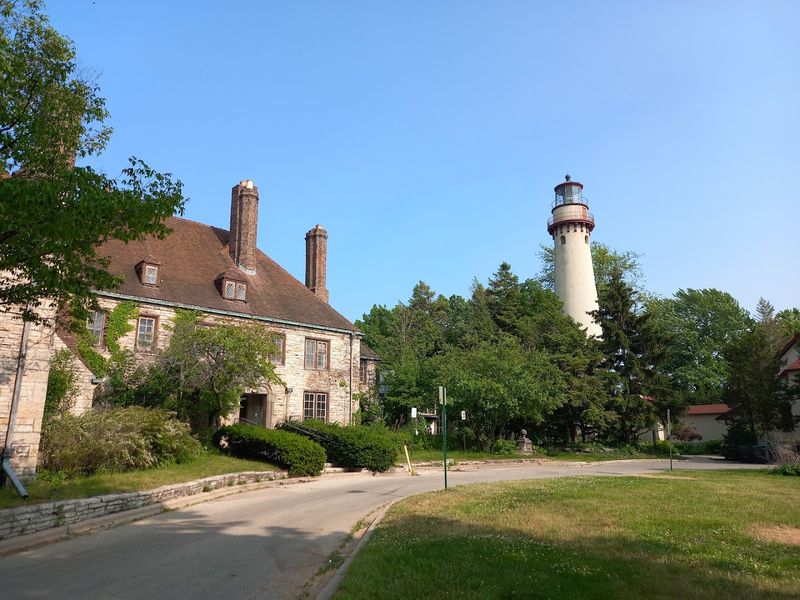
Standing over 113 feet tall, the Grosse Point Lighthouse in Evanston, Illinois, is one of the most photogenic structures on the entire Great Lakes shoreline.
Built in 1873, it was constructed after a tragic shipwreck on Lake Michigan prompted federal officials to demand a more powerful light in the area. The result was a second-order Fresnel lens that could be seen from 21 miles away on a clear night.
Today, the lighthouse sits within a beautifully maintained nature center and is listed on the National Register of Historic Places. Visitors can tour the grounds during warmer months and even climb the tower on select weekends.
The surrounding park features native plant gardens and easy walking paths that make this spot equally enjoyable for lighthouse enthusiasts and casual nature lovers alike.
Evanston is just north of Chicago, making this an easy day trip from the city. The keeper’s house next to the tower has been preserved and adds an extra layer of old-world charm to the whole experience.
Bring your camera because the light and the lakefront backdrop create some seriously frame-worthy shots.
2. Chicago Harbor Lighthouse, Chicago
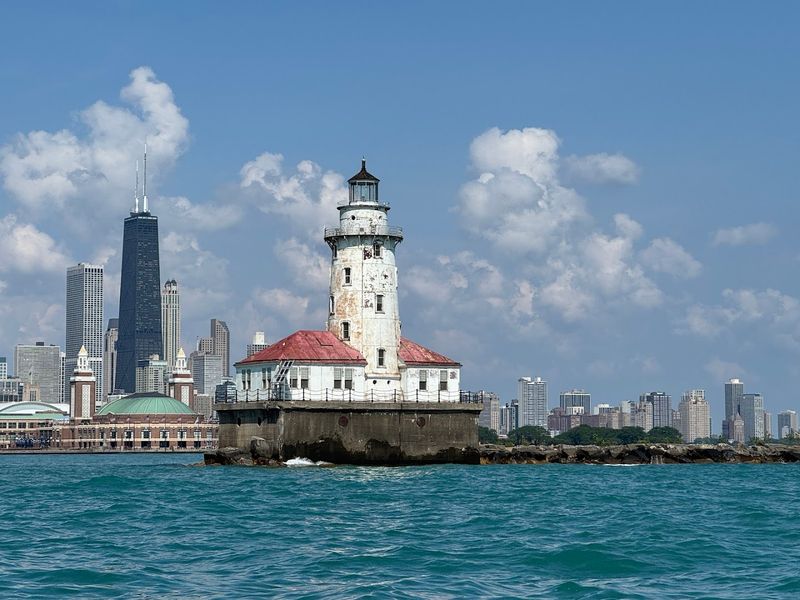
Few lighthouse backdrops on Earth can compete with the one framing Chicago Harbor Lighthouse. Perched at the end of a long pier where the Chicago River meets Lake Michigan, this red-roofed white tower has been guiding vessels into one of America’s busiest ports since 1893.
The current structure replaced an earlier light and was built to handle the growing maritime traffic that came with Chicago’s explosive growth.
What makes this lighthouse feel almost surreal is the contrast behind it. The gleaming towers of downtown Chicago rise just beyond the water, creating a scene where 19th-century maritime architecture sits comfortably in front of a 21st-century skyline.
It is a sight that genuinely stops people in their tracks, especially at sunset when the light catches the glass of the skyscrapers.
You can get a great view of the lighthouse from Navy Pier or from one of the many architectural boat tours that circle the harbor. The lighthouse itself is not open for public tours, but seeing it from the water or the shoreline is absolutely worth the effort.
Chicago’s lakefront trail also offers excellent vantage points for photographers looking for that perfect wide-angle frame.
3. Waukegan Harbor Light, Waukegan
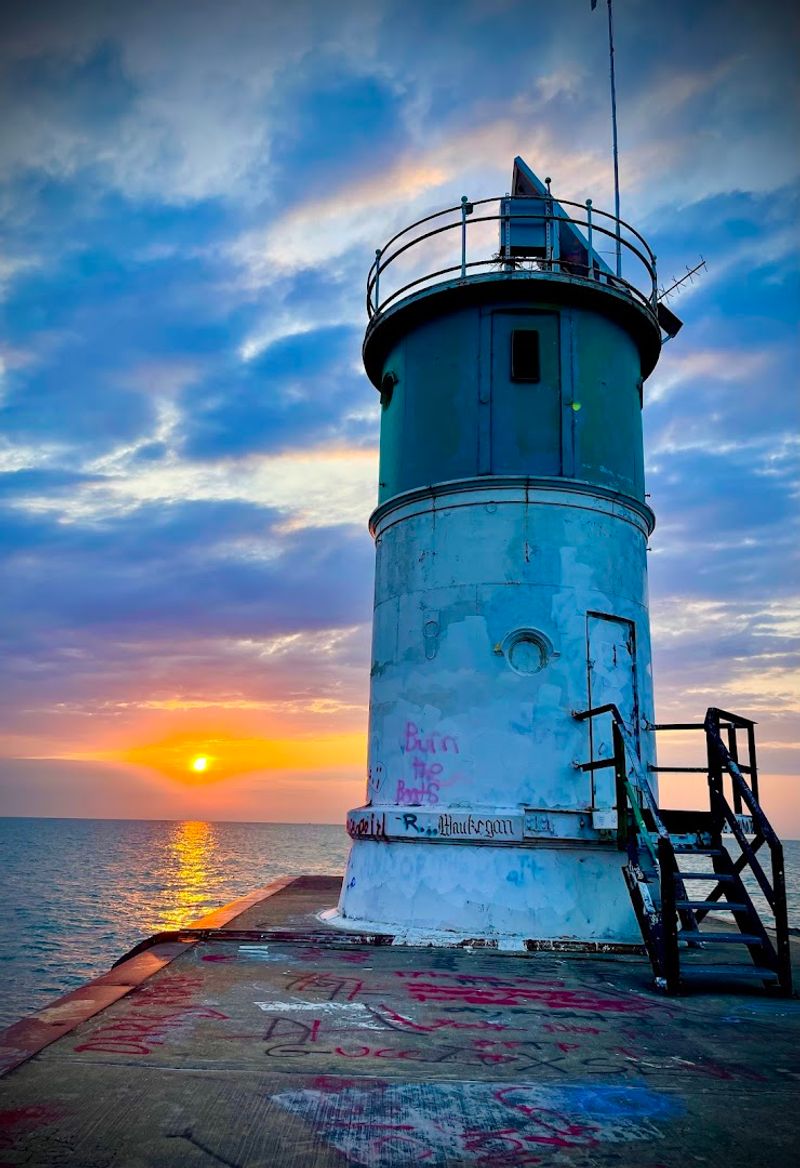
About 35 miles north of Chicago along the Lake Michigan shoreline, the Waukegan Harbor Light has been marking the entrance to Waukegan Harbor since 1899.
The current tower replaced an earlier structure and features the classic white cylindrical design that many people picture when they imagine a traditional lighthouse. It is compact, clean, and surprisingly striking against the flat blue horizon of the lake.
Waukegan itself is an underrated destination that most Chicago-area visitors overlook. The harbor area has been revitalized in recent years, and the lighthouse now anchors a pleasant waterfront district with marina access, fishing spots, and seasonal events.
Getting up close to the light gives you a real sense of how important this beacon was to commercial fishing and cargo shipping throughout the 20th century.
The best time to visit is during summer when the marina is full of sailboats and the lake shimmers in the afternoon sun. The lighthouse is not open for interior tours, but the surrounding harbor area is very walkable and welcoming.
Pair a visit here with a stroll through downtown Waukegan to get a fuller picture of this often-overlooked lakefront community.
4. Wilson Avenue Crib Lighthouse, Chicago
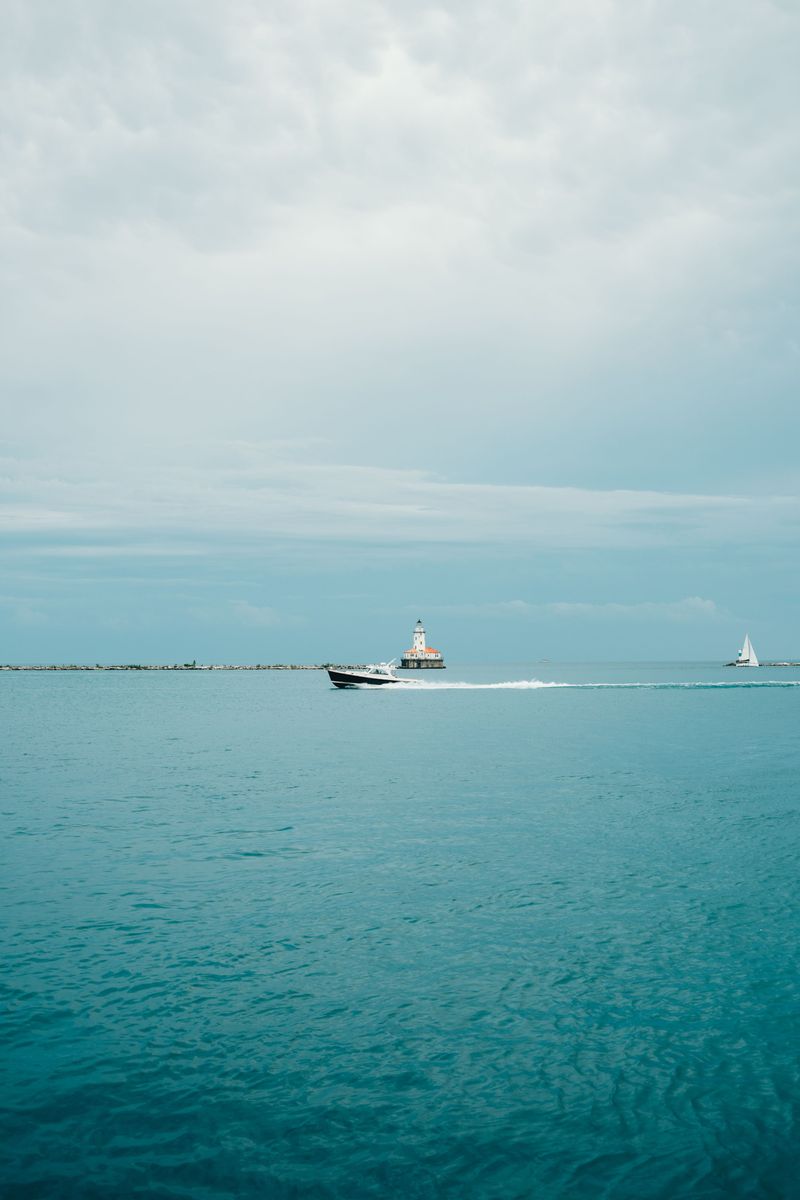
Not every lighthouse sits on solid ground, and the Wilson Avenue Crib Lighthouse is proof that some of the most fascinating beacons are built entirely on water.
Located about two miles offshore from Chicago’s North Side in Lake Michigan, this structure was originally built as a water intake crib to supply fresh water to the city.
The small lighthouse perched on top guided ships away from the structure, which otherwise sat dangerously low and nearly invisible on the lake’s surface.
Crib lighthouses like this one are uniquely tied to Chicago’s history as a city that literally had to engineer its own clean water supply in the 1800s. The engineering feat required to build these structures in open water, without modern equipment, is genuinely impressive.
The Wilson Avenue Crib dates back to the early 20th century and has been decommissioned but still stands as a quiet monument to that era of industrial ingenuity.
You can spot this lighthouse from the Lakefront Trail or from a boat, though it is not accessible to the public on foot. Kayakers and boaters sometimes paddle out for a closer look on calm days.
Its isolated position on the open water gives it a quietly dramatic presence that photographs beautifully in early morning light.
5. Chicago Harbor Southeast Guidewall Lighthouse, Chicago
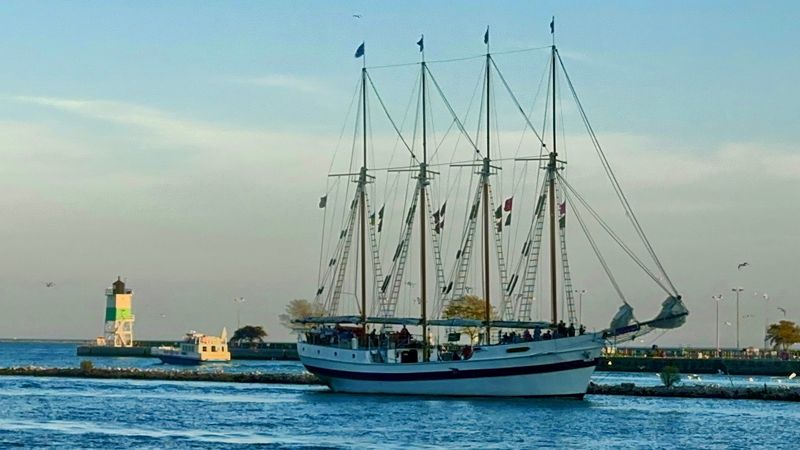
Compact and quietly confident, the Chicago Harbor Southeast Guidewall Lighthouse sits at the southern end of Chicago’s harbor entrance, marking a critical navigational point where boats must turn to safely enter the protected waters beyond.
Built in 1938, it is one of the younger lights on this list, but its compact white tower with contrasting trim gives it a visual punch that more than makes up for its modest size.
This lighthouse is best appreciated as part of Chicago’s larger maritime infrastructure. The city’s lakefront is essentially a complex system of engineered waterways, breakwalls, and guiding lights that work together to manage boat traffic on one of the world’s busiest inland ports.
The Southeast Guidewall light is a small but essential piece of that puzzle, and seeing it in context with the harbor makes you appreciate the scale of the whole system.
Photographers love this lighthouse because of its reflections in the calm harbor water on still mornings. The nearby Museum Campus and Burnham Harbor offer excellent viewing angles without requiring a boat.
If you are visiting Chicago’s lakefront and want a lighthouse experience that feels a little off the beaten tourist path, this one delivers a satisfying and uncrowded alternative to the more famous Chicago Harbor Lighthouse nearby.
6. William E. Denver Crib Lighthouse, Chicago
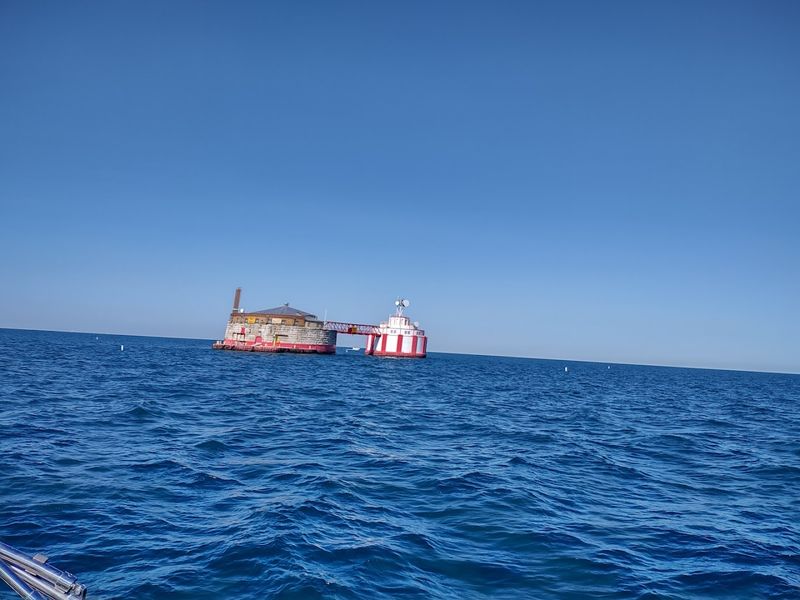
Named after former Chicago mayor William E. Dever, the William E.
Dever Crib Lighthouse is one of several crib structures scattered across Lake Michigan near the Chicago shoreline.
Like its cousins, it was originally designed as a water intake facility that pulled fresh water from deep in the lake, far enough offshore to avoid contamination from the city’s shoreline. The lighthouse on top served as a warning beacon for passing vessels.
What makes the Denver Crib particularly interesting is its history within Chicago’s ambitious 20th-century public works program. At a time when waterborne illness was a serious public health concern, the city made the bold decision to build intake cribs miles out into the lake.
Workers actually lived on these cribs during construction, enduring brutal Great Lakes winters in the process. The lighthouse was a practical necessity, but it also became an unexpected landmark.
Seeing this structure from a boat or kayak on a clear day gives you a window into that chapter of Chicago history that most tourists completely miss.
The crib sits quietly in the open water, weathered and stoic, looking like something out of an old maritime painting. It is not glamorous, but it carries a weight of history that makes it genuinely worth seeking out.
7. Four Mile Crib Lighthouse, Chicago
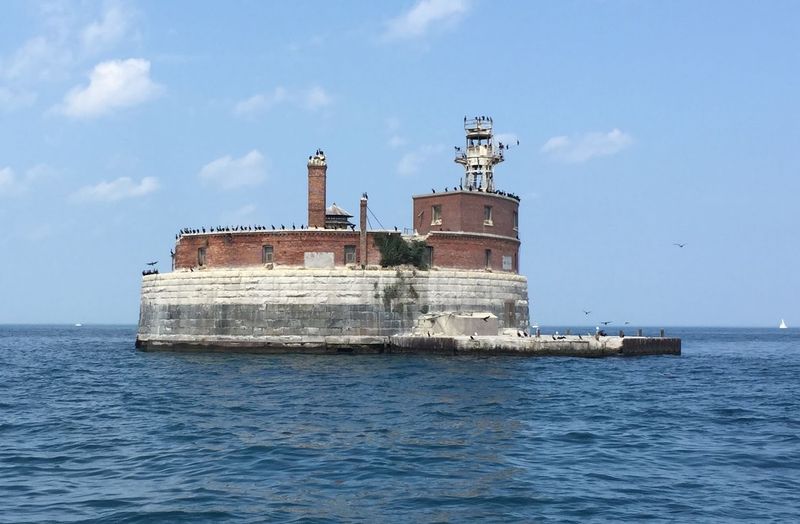
Sitting roughly four miles offshore from the Chicago coastline, the Four Mile Crib Lighthouse earned its name the straightforward way.
Completed around 1891 and placed in service in the early 1890s, this structure is one of Chicago’s most remote water intake cribs and features a lighthouse that once guided vessels through the busy shipping lanes of southern Lake Michigan.
Its distance from shore gives it a particularly isolated and dramatic appearance.
There is something almost meditative about a lighthouse this far out on open water. On a calm summer day, the lake around it is a deep blue-green, and the crib rises from the surface like a small island of industrial history.
It is easy to forget, looking at it from a distance, that this structure was built entirely by hand using materials transported by barge from the Chicago shoreline.
The Four Mile Crib is decommissioned today but still visible from boats and occasionally from elevated points along the lakefront on exceptionally clear days.
Boaters and kayakers who make the trip out report that the scale of the structure is much more impressive up close than it appears from shore. If you are renting a boat in Chicago for a lake excursion, adding this to your route gives the trip a genuinely memorable historical dimension.
8. 68th Street Crib Lighthouse, Chicago

Off the South Side of Chicago, the 68th Street Crib Lighthouse anchors the southern end of the city’s network of offshore water intake structures.
The original 68th Street Crib dates to 1892, while the adjacent Edward F. Dunne Crib was built in 1909; together, these structures helped pull clean drinking water from Lake Michigan and were marked with lights to protect passing ships.
Its position near the 68th Street shoreline made it a familiar silhouette for generations of South Side residents.
The crib design itself is a fascinating piece of engineering history. These structures had to be built to withstand brutal winter ice pressure from Lake Michigan, which can be powerful enough to crush poorly designed structures.
The thick walls and rounded shapes of Chicago’s cribs were deliberate engineering choices, and the fact that many of them are still standing more than a century later speaks to how well they were built.
Viewing the 68th Street Crib from the lakefront near Jackson Park or Rainbow Beach gives you a clear sightline on calm days. Boaters heading out from Burnham Harbor or Jackson Park Harbor can get much closer for a better look.
The lighthouse has a quiet, forgotten-by-time quality that makes it one of the more atmospheric stops on any Chicago lighthouse tour.
9. Metropolis Hope Light Lighthouse, Metropolis
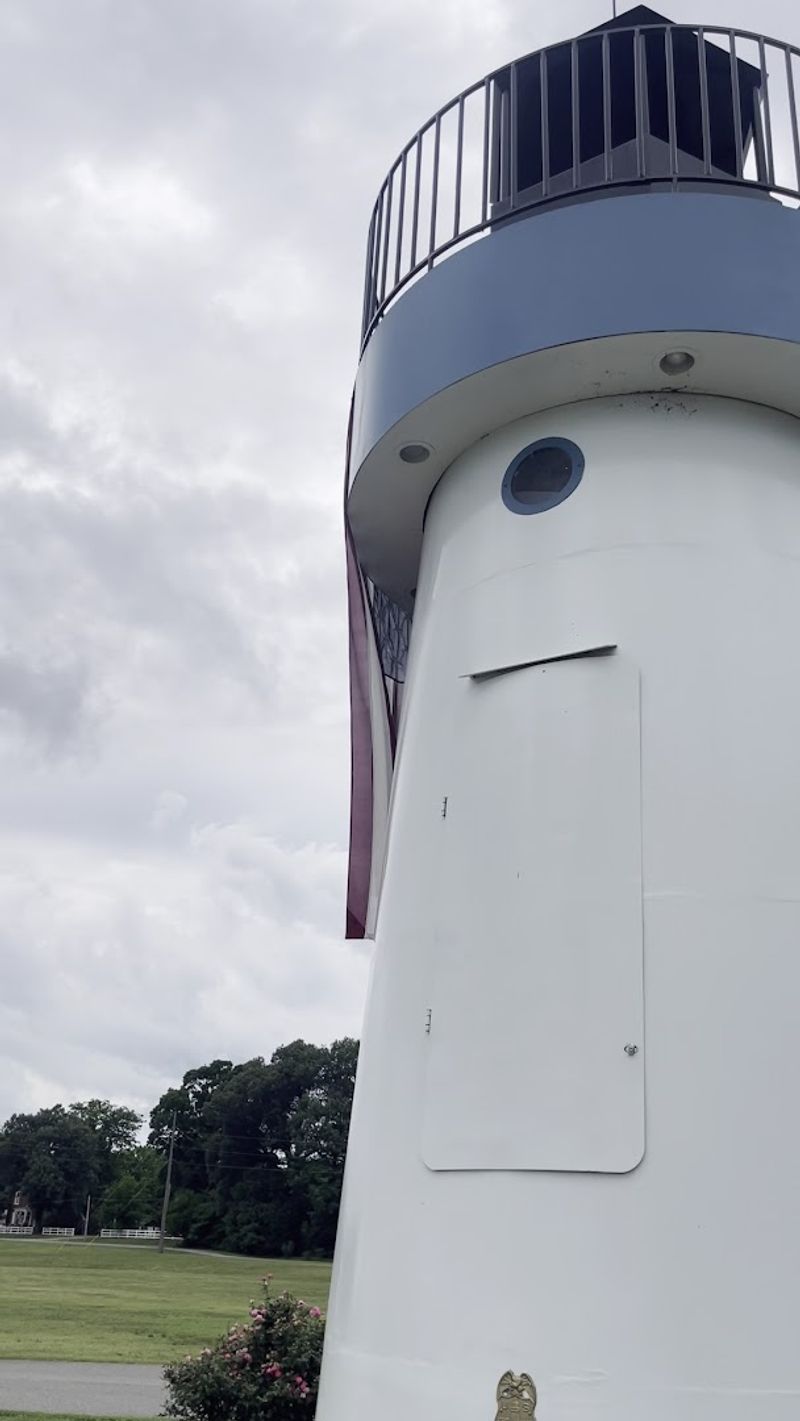
Far from Lake Michigan and closer to the Kentucky border, the Metropolis Hope Light Lighthouse stands near the Ohio River in the small southern Illinois town of Metropolis.
Yes, that Metropolis, the one that has fully leaned into its status as Superman’s hometown, complete with a giant bronze statue of the Man of Steel in the town square. The lighthouse here carries a different kind of energy than the industrial cribs up north.
The Hope Light is a symbolic and community-oriented structure dedicated to cancer awareness, reflecting the town’s personality rather than a strict navigational history.
It sits near the riverfront and offers lovely views of the Ohio River, which forms the border between Illinois and Kentucky at this point.
The surrounding area has a warm, small-town atmosphere that feels completely different from Chicago’s lakefront scene.
Metropolis is worth a full afternoon visit if you are road-tripping through southern Illinois. The riverfront area near the lighthouse has parks, a casino, and easy access to the water.
Catching the lighthouse at golden hour when the Ohio River reflects the warm light of a setting sun is a genuinely beautiful experience that most people would never expect to find in this corner of the state.
10. Port Of Grafton Lighthouse, Grafton
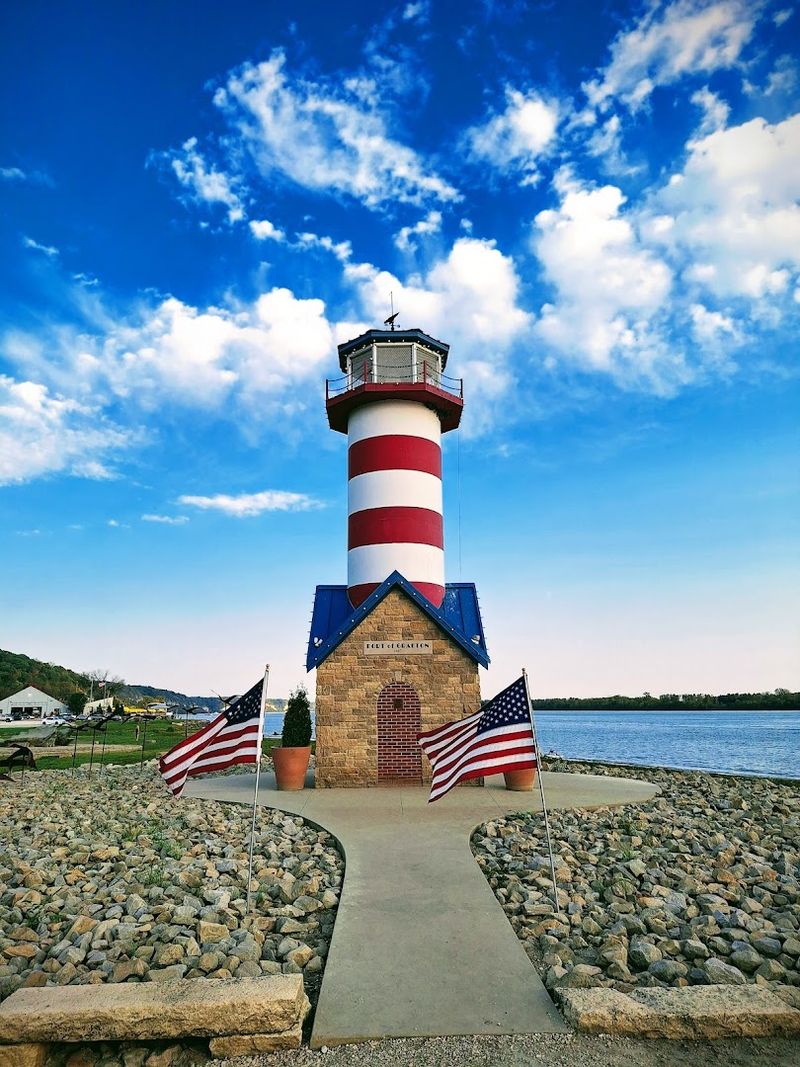
Right where the Illinois River meets the Mississippi River, the small river town of Grafton, Illinois, offers one of the most scenic lighthouse settings in the entire Midwest.
The Port of Grafton Lighthouse is a newer faux lighthouse built to celebrate the town’s deep connection to river culture, commerce, and its recovery after major flooding. What it lacks in centuries of history, it more than makes up for in sheer visual drama.
Grafton sits at the base of towering limestone bluffs, and the combination of those dramatic cliffs, two great rivers merging below, and a lighthouse standing watch over the confluence creates a view that genuinely feels like it belongs somewhere more famous.
The town itself is a beloved destination for visitors from St. Louis, just 30 miles to the south, who come for the river views, the scenic Great River Road, and the charming main street.
The best way to experience the Grafton lighthouse is from the water, ideally on one of the river boat tours or ferry rides that operate seasonally from the town’s marina.
Seeing the lighthouse from the river, with the bluffs rising behind it and the two rivers spreading wide in front, gives you a perspective on this little Illinois town that is hard to forget. Grafton is genuinely one of the state’s most underrated destinations.