
These Illinois Waterfalls Drop Over 40 Feet And Almost Nobody Visits, Even In 2026
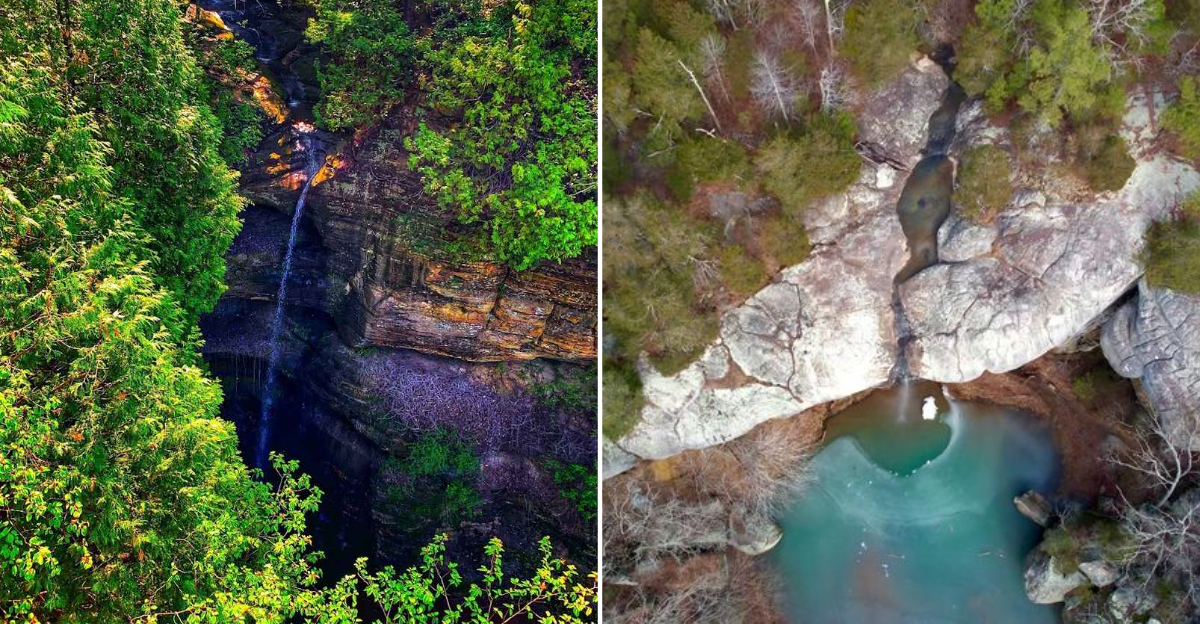
Illinois has a wilder side than many travelers expect, and its waterfalls prove it. After a good stretch of rain, water spills over tall sandstone cliffs and drops into cool, shadowy canyons that look far removed from the usual Midwest scenery.
Several of these falls rise more than 40 feet, making the walk in feel even more rewarding once the water comes into view. The experience can change with the weather.
A light trickle may turn into a powerful curtain after a storm, while the rock formations still make the trip worthwhile during drier weeks. This list highlights several of the most impressive examples, along with the trail conditions and access details worth checking before you head out.
1. Ferne Clyffe Waterfall, Goreville
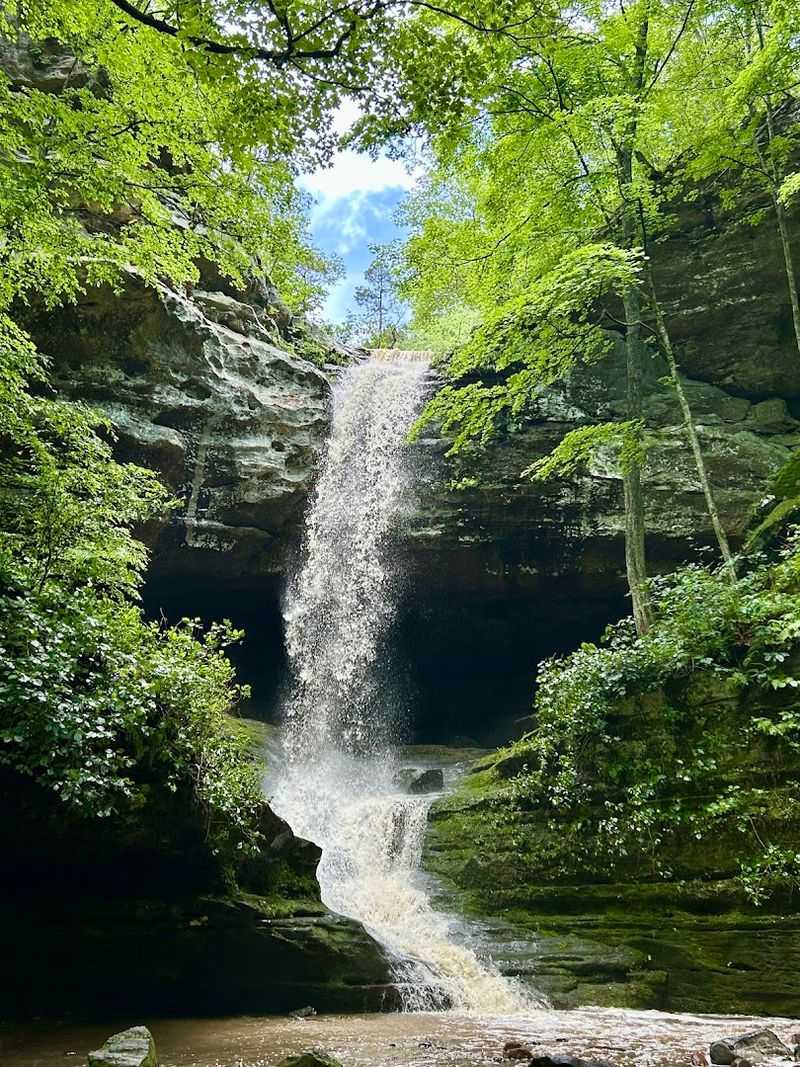
Few things are as satisfying as finding a waterfall that barely shows up on most travel maps. Ferne Clyffe Waterfall, located inside Ferne Clyffe State Park at 90 Office Drive in Goreville, sits in the rolling hills of southern Illinois.
It regularly drops water over a stunning curved sandstone bluff that arcs like a natural amphitheater around the plunge pool below.
The waterfall is most dramatic after spring rains, when snowmelt and heavy showers send a thick curtain of white water tumbling down the face of the rock.
During drier months, the flow slows to a delicate veil, but the canyon walls and the fern-covered ledges around the pool are honestly worth the hike on their own. The sandstone here has been carved over thousands of years, creating overhangs you can actually stand beneath.
Getting here involves an easy to moderate trail that winds through a forest full of towering hardwoods and wildflowers in spring. Bring waterproof shoes because the trail can get slippery near the base of the falls.
The park is open year-round, and fall is a particularly gorgeous time to visit when the surrounding maples and oaks light up in shades of orange and red.
There are also picnic areas and restrooms on site, making this a comfortable full-day outing for families, solo hikers, and photographers who want dramatic shots without fighting crowds. Honestly, the solitude here is one of its best features.
2. Wildcat Canyon Waterfall, Starved Rock State Park
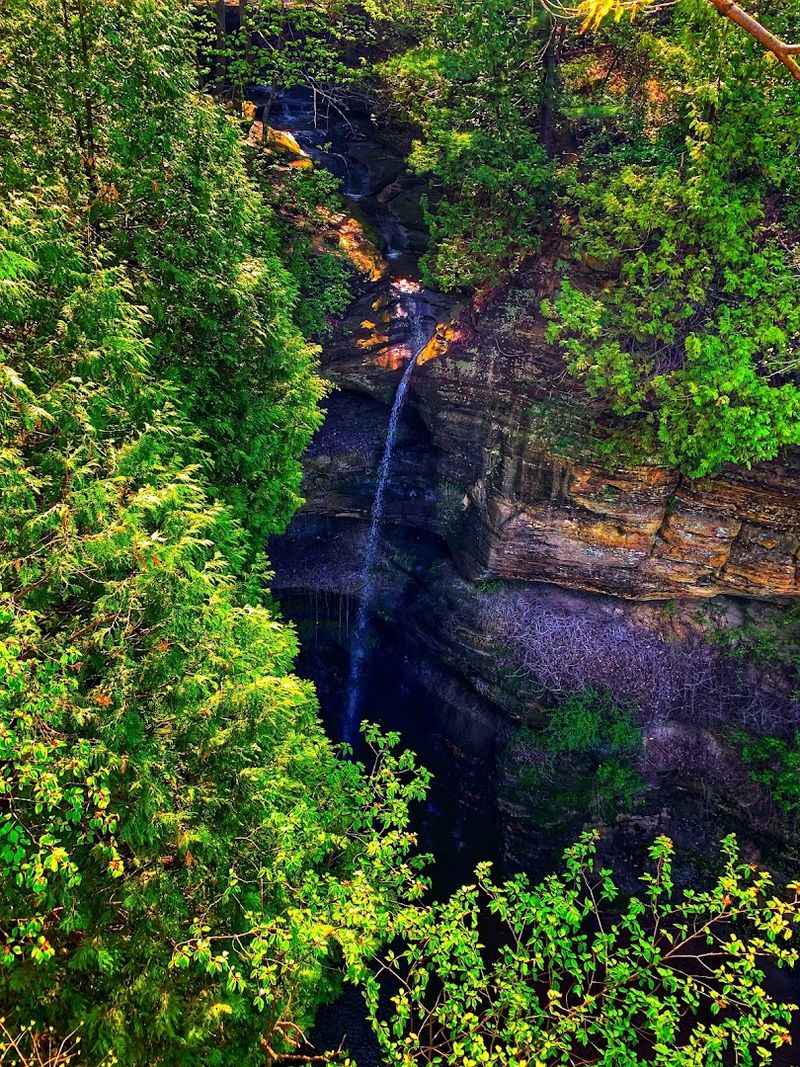
Wildcat Canyon has a name that sounds like it belongs in the American West, and once you see its waterfall, you will understand why.
Located inside Starved Rock State Park at 2678 E 875th Road, Oglesby, IL 61348, this canyon waterfall is one of the tallest and most dramatic in the entire park, sending water crashing down into a narrow gorge lined with ancient, moisture-darkened sandstone walls.
The canyon feels genuinely wild and remote even though the park is only about 90 miles southwest of Chicago.
Spring is the prime season here because snowmelt feeds the falls at full force, but heavy summer rainstorms can also bring the water back to life in impressive fashion. The walls of the canyon rise steeply on both sides, creating a cool, shaded microclimate that feels refreshing even on warm days.
The trail to Wildcat Canyon is well-marked and connects to the broader network of 18 canyons throughout Starved Rock, so you can easily combine this stop with several other waterfall hikes in a single day.
Sturdy hiking boots are strongly recommended because the canyon floor can be wet and uneven.
Photography enthusiasts will want to arrive in the morning when soft light filters down between the canyon walls and illuminates the falling water beautifully.
Starved Rock gets busy on weekends, but Wildcat Canyon tends to see fewer visitors than the more famous St. Louis Canyon nearby, making it a smarter pick for a quieter experience.
3. St. Louis Canyon Waterfall, Starved Rock State Park
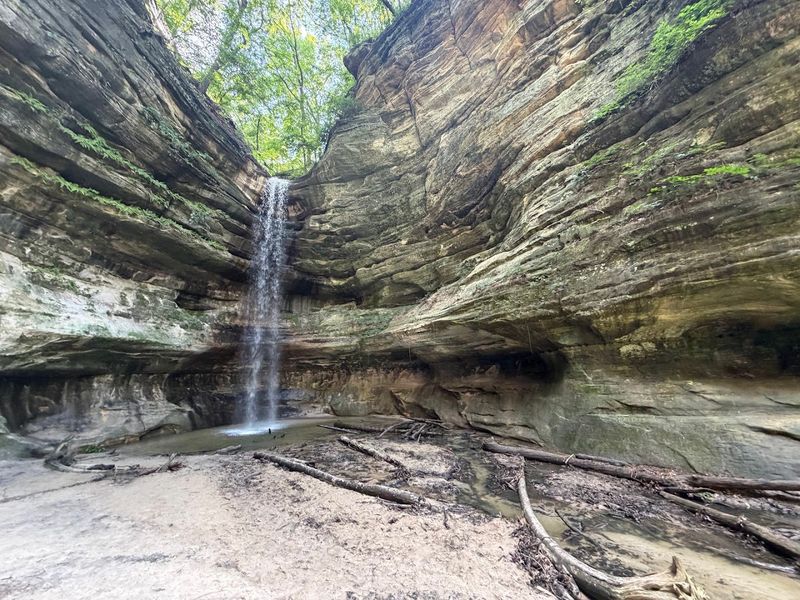
St. Louis Canyon is arguably the crown jewel of Starved Rock State Park, and its waterfall is the kind of scene that makes you stop walking and just stare for a minute.
Also found at 2678 E 875th Road, Oglesby, Illinois 61348, this canyon features a waterfall that plunges dramatically into a wide, shallow pool enclosed by walls of golden-brown sandstone that rise impressively on all sides.
What makes this waterfall especially memorable is the way the canyon wraps around the pool in a near-complete circle, so when you stand at the base of the falls, you are essentially surrounded by ancient rock.
In winter, the waterfall sometimes freezes into a spectacular column of ice, attracting photographers from across the Midwest who come specifically for that shot.
Spring and early summer bring the full water flow back, making it one of the most photogenic waterfalls in all of Illinois.
The hike to St. Louis Canyon is relatively short and accessible from the main park trailhead, making it a great option even for visitors who are not experienced hikers. The trail is well-maintained and marked clearly, though some sections can be muddy after rain.
Plan to arrive early on weekends to secure a parking spot, as this is one of the more popular stops in the park. Even so, once you are inside the canyon itself, the acoustics of the falling water and the towering walls create a sense of peaceful isolation that is hard to find so close to a major metro area.
4. Ottawa Canyon Waterfall, Starved Rock State Park
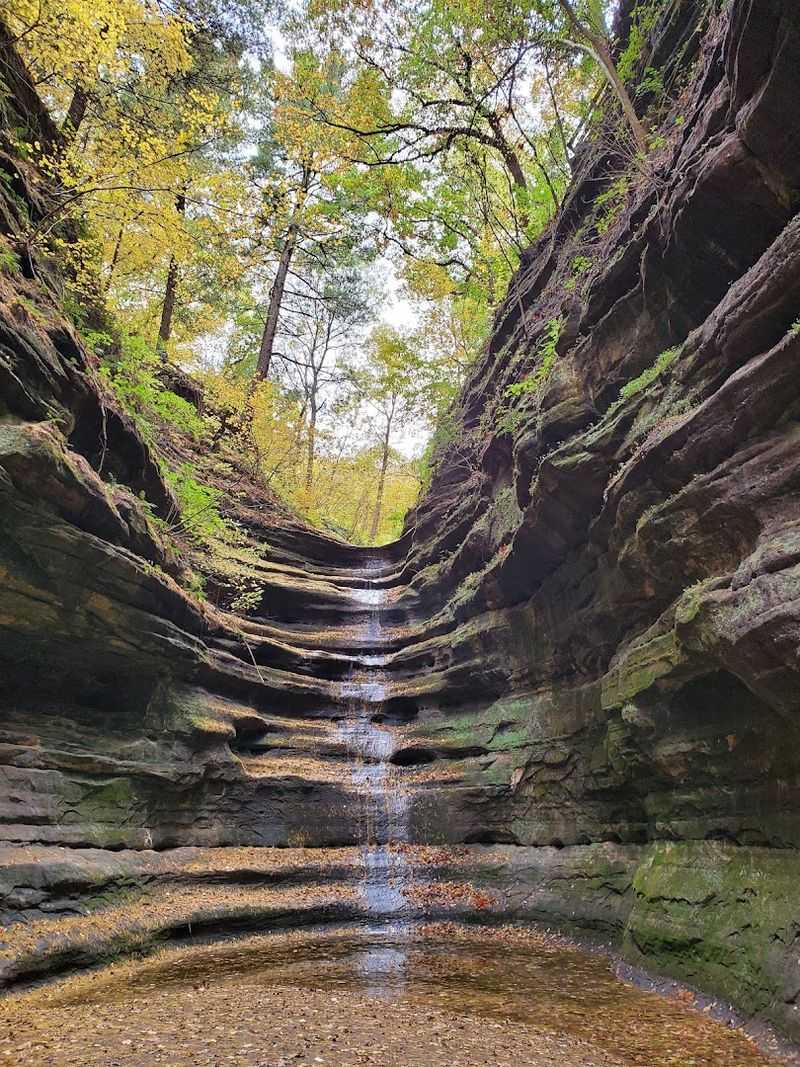
Ottawa Canyon is one of the quieter corners of Starved Rock State Park, and that is exactly what makes it so appealing.
Sharing the same park address of 2678 E 875th Road, Oglesby, IL 61348, this canyon offers a waterfall experience that feels more intimate and less trafficked than its famous neighbors, with water cascading down a narrow slot of weathered sandstone in a way that feels almost secretive.
The canyon walls here are particularly rich in geological detail, showing layers of ancient rock that were deposited over 400 million years ago when this region was covered by a shallow sea.
Running your hand along the stone while listening to the water fall is a genuinely grounding experience. The moss and ferns that cling to the walls give Ottawa Canyon a deep green, almost otherworldly color palette that looks stunning in overcast light.
Because Ottawa Canyon sits a bit farther from the main visitor center than some of the other canyons, foot traffic stays noticeably lighter, especially on weekday visits. This is a good place to sit quietly near the base of the waterfall and simply take in the surroundings without the buzz of other visitors.
Bring a light jacket because the canyon stays cool even in midsummer. Combining Ottawa Canyon with nearby Wildcat and St. Louis Canyons makes for a full and rewarding day of waterfall exploration within a single park, covering a surprising range of landscapes and moods all within a few miles of each other.
5. Cascade Falls, Matthiessen State Park
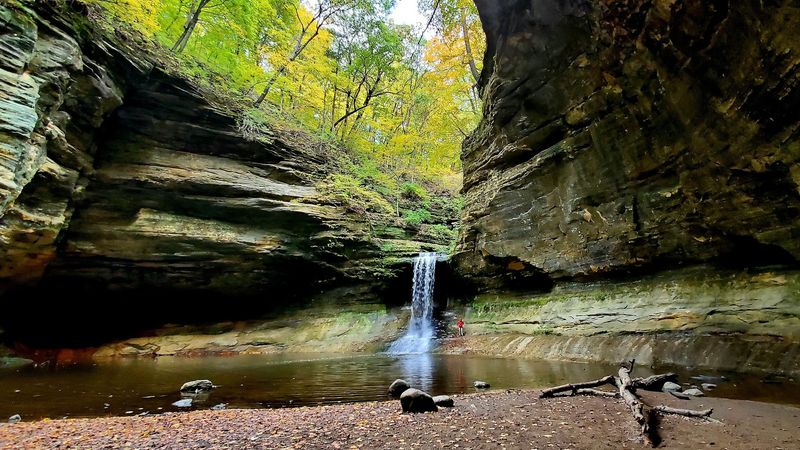
Right next door to the famous Starved Rock, Matthiessen State Park tends to fly under the radar, and Cascade Falls is the best-kept secret inside it.
Located in the Dells Area of Matthiessen State Park near Oglesby, Cascade Falls drops approximately 45 feet between the Upper and Lower Dells.
Matthiessen is divided into two main areas called the Dells and the Lake area, and Cascade Falls sits within the Dells section, which features some of the most dramatic canyon scenery in the state.
The trail system here is less crowded than Starved Rock even though the two parks share a border, which means you can often have the entire canyon to yourself on a weekday morning.
The waterfall itself is especially photogenic because the wide, stepped shelves allow the water to spread out and create a layered, theatrical effect.
Hiking through the Dells involves crossing wooden bridges and navigating some uneven terrain, so proper footwear matters. The park does not charge an admission fee, which makes it an excellent budget-friendly option for a day trip from Chicago, Peoria, or the Quad Cities.
Fall foliage season transforms the canyon into a riot of color, and the contrast of warm red and orange leaves against the pale sandstone is something that sticks with you long after the hike is over. Pack a lunch and plan to spend at least half a day here.
6. Cedar Falls, Ozark
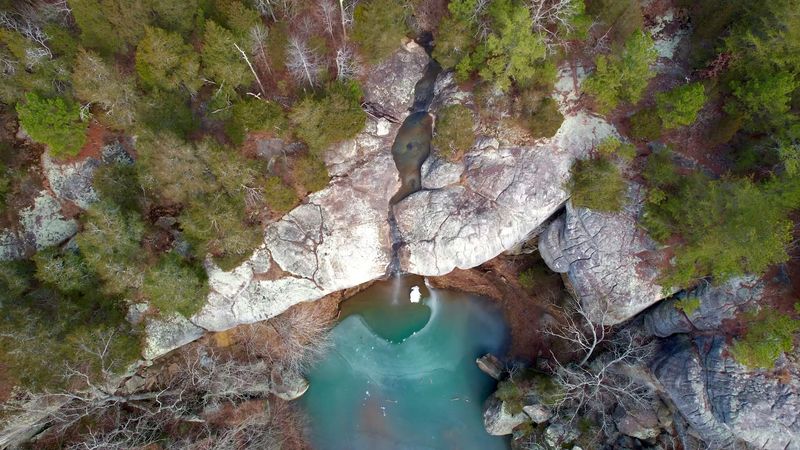
Cedar Falls in Ozark, Illinois might be the most underrated waterfall in the entire state, and the fact that barely anyone talks about it is both a mystery and a gift.
Located along Cedar Falls Road in Ozark, IL 62972, this waterfall drops dramatically into a rocky ravine carved through the dense hardwood forests of southern Illinois, putting on a show that would draw serious crowds if it were located in a more well-known region.
The surrounding landscape in this part of the state is rugged and wild in a way that surprises most visitors who have only seen the flat northern stretches of Illinois.
Cedar Falls sits within the Shawnee Hills, a region sometimes called the “Illinois Ozarks” due to its hilly terrain, clear streams, and thick forests. The waterfall is fed by seasonal rains and snowmelt, so late winter through early summer is when the flow is strongest and most impressive.
Access to Cedar Falls requires a bit more navigation than the state park waterfalls farther north, so downloading an offline map before heading out is a smart move.
The reward for that extra effort is a waterfall experience that feels genuinely off the beaten path, surrounded by birdsong, towering oaks, and the kind of quiet that is increasingly rare.
Autumn is a spectacular time to visit, when the hillsides surrounding the falls burst with color. If you only make one trip to a southern Illinois waterfall this year, Cedar Falls deserves serious consideration as your destination.