
These 9 Michigan Places Reveal The Fascinating Remains Of The State’s Industrial Past
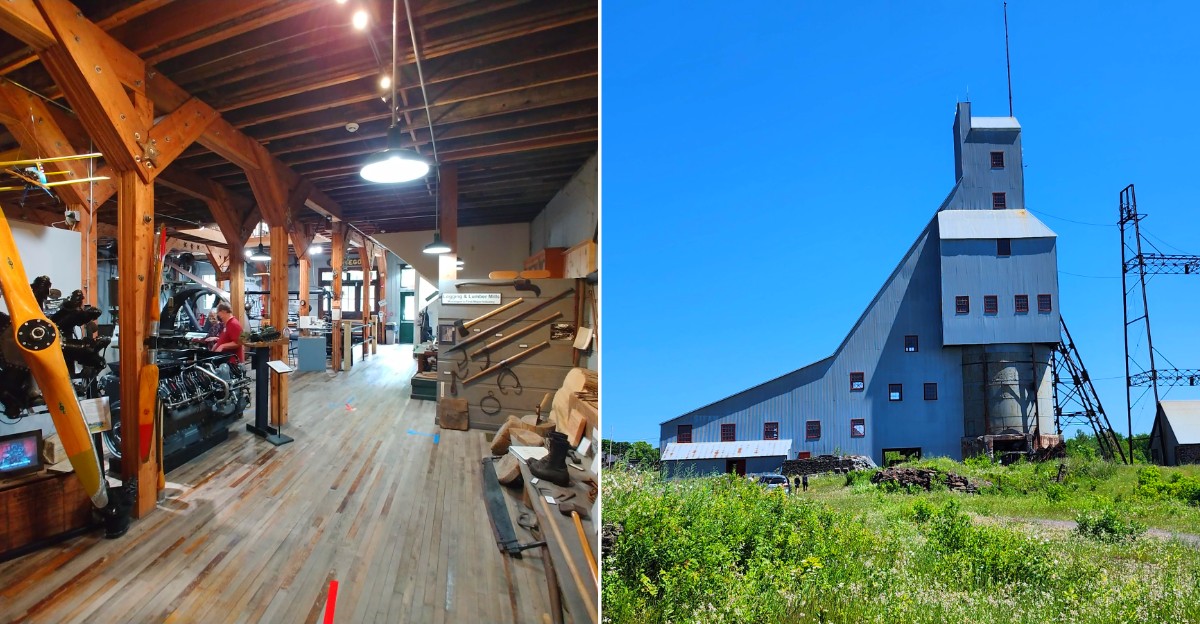
A steel dam in the woods once held back a river for copper miners, and it’s considered the largest steel dam ever built. Today, its flood gates sit permanently open. People walk right up to it and fish beneath it.
That detail hooked me hard. I love when giant industrial leftovers end up in quiet, wild places. Michigan has plenty of them, from deep mines to old mills still running on water power.
Some of these spots let you ride a train underground. Others let you watch a turbine from 1894 still doing its job. One even has a 40-foot miner waiting in the parking lot. From abandoned mining sites to working historic mills, Michigan’s industrial landmarks offer a surprisingly hands-on look at the state’s past.
There’s something different about hearing machinery hum or standing beneath a structure built for an industry that’s long since moved on. These places make history feel less like a textbook and more like a landscape you can walk through. Where would you start exploring?
9. Muskegon Heritage Museum of Business & Industry
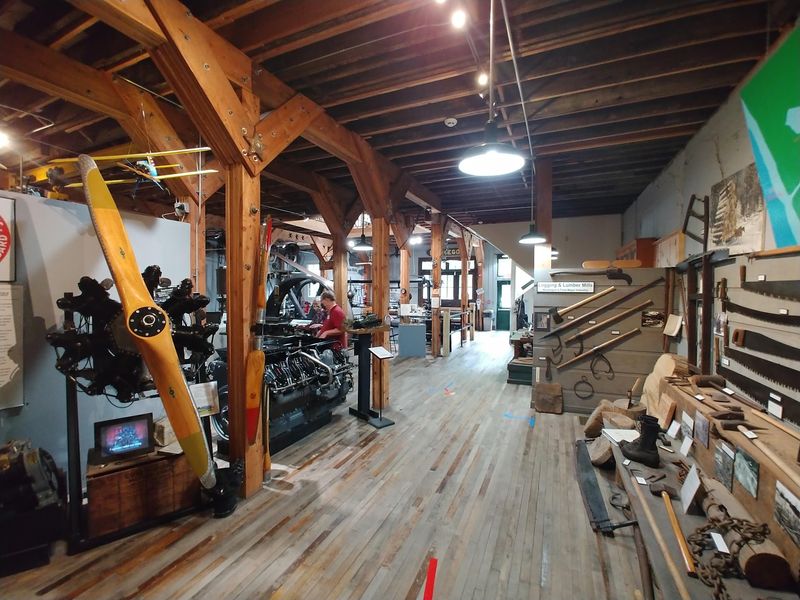
A steam engine from 1893 basically started a whole museum here. Back in 1983, the Muskegon Heritage Association needed a home for that donated engine.
The result sits in downtown Muskegon, spread across nearly 12,000 square feet on three floors. An elevator helps you reach each level, which your legs will appreciate.
The star is a working 1893 Corliss Valve steam engine rated at 90 horsepower. It once made electricity for a roller shade factory in town.
You’ll also find a working Brunswick pinsetter, the kind that resets bowling pins. Brunswick began moving operations to Muskegon in 1906 and built many items there until the 1990s.
Exhibits highlight more than 80 local companies. Think lumbering, foundries, manufacturing, and even aerospace.
Like old machines that clank? Early 1900s machine shop equipment and a working letterpress should keep you happy.
There’s also a spring winding machine, plus displays on sawmills and Continental Motors engines. The Sappi Paper Mill gets its own spotlight too.
I really like that the museum includes Black-owned businesses in the Muskegon story. That makes the picture of local industry feel more complete.
The museum merged with the Lakeshore Museum Center in 2020. It runs from May through October, generally Wednesday through Saturday.
Plan your visit for an afternoon, since it’s open 11 a.m. to 4 p.m. Free parking runs along Western Avenue, so you won’t hunt for long.
Address: 561 W. Western Ave., Muskegon, MI 49440
8. Fayette Historic Townsite
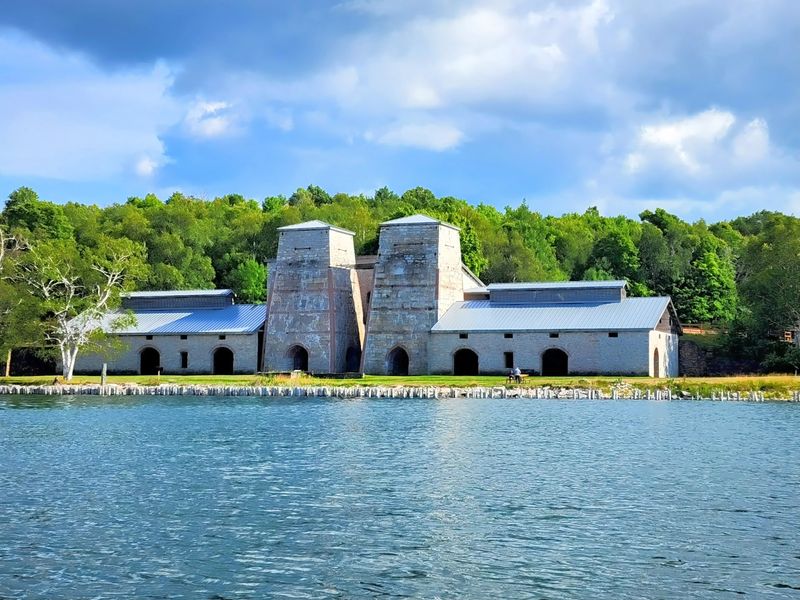
Nearly 230,000 tons of charcoal pig iron came out of one small harbor town. Then the furnaces went cold in 1891, and the town emptied out.
Fayette Brown, a manager for the Jackson Iron Company, founded the town in 1867. He picked the site for its natural harbor, limestone cliffs, and thick hardwood forests.
Those forests became charcoal, and the limestone helped with smelting and building. At its peak, about 500 people lived here, many of them immigrants.
Eventually the trees ran low, and newer smelting methods took over. The company shut down, leaving behind a remarkably preserved company town.
Today you can explore more than 20 historic structures. The list includes a blast furnace, charcoal kilns, a hotel, a town hall, and a machine shop.
Many buildings open for self-guided or guided visits. The Visitor Center has a scale model of the 1880s town, which helps you get your bearings fast.
Want more than history? Five miles of hiking trails wind through the park.
Snail Shell Harbor also allows scuba diving with a permit. Seasonal options may include swimming, picnicking, and costumed interpreters.
The park stays open year-round, but townsite buildings open mid-May to mid-October. You’ll need a Michigan State Parks Recreation Passport for your vehicle.
Fayette became a state park in 1959. I love that a former iron town now feels more like a peaceful harbor escape.
Address: 4785 II Rd, Garden, MI 49835
7. Quincy Mine Tour
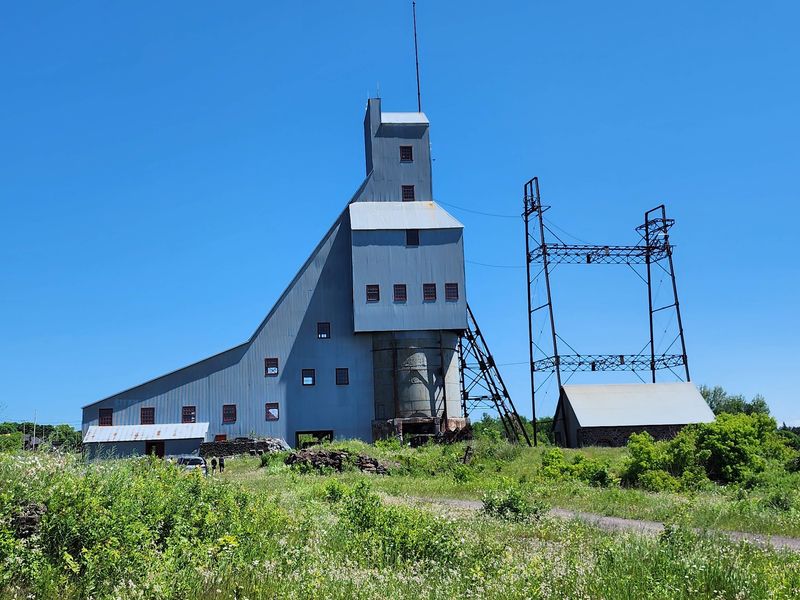
They called it Old Reliable, and the nickname was earned. The Quincy Mine paid steady dividends to investors from 1868 until 1920.
Founded in 1846, the mine produced nearly one billion pounds of copper. From 1863 through 1867, it led the country in copper production.
Your full tour lasts about two and a quarter hours. It starts with a walk through the hoist house.
Inside sits the Nordberg Steam Hoist, the largest steam-powered hoist ever built. Next, you ride a cog-rail tram, the only cogwheel tram in the Midwest.
Then things get serious. You head underground about 360 feet, descending seven levels into areas miners worked in the 1860s.
Pack a jacket, even in July. It stays around 43 degrees and damp down there, so closed-toe shoes are smart.
Don’t skip the Quincy No. 2 Shaft House, built in 1908. It towers over the hill like it still has a job to do.
Up top, the views stretch to the Portage Lake Lift Bridge and Houghton. Prefer staying above ground? Surface-only tours are available too.
The mine closed for good in 1945 after a final run of wartime production. It’s now a National Historic Landmark and part of Keweenaw National Historical Park.
Tours run year-round, with longer summer hours. Reservations are highly recommended, so book ahead.
Address: 49750 US Hwy 41, Hancock, MI 49930
6. Iron Mountain Iron Mine
Big John stands 40 feet tall in the parking lot, and he doesn’t do small talk. This giant miner replica greets you before you even reach the ticket counter.
The real fun starts below ground. You’ll ride the Iron Mine Express train 2,600 feet into an authentic 1800s mine.
After the ride, you walk through tunnels and drifts. The route takes you 400 feet below the surface.
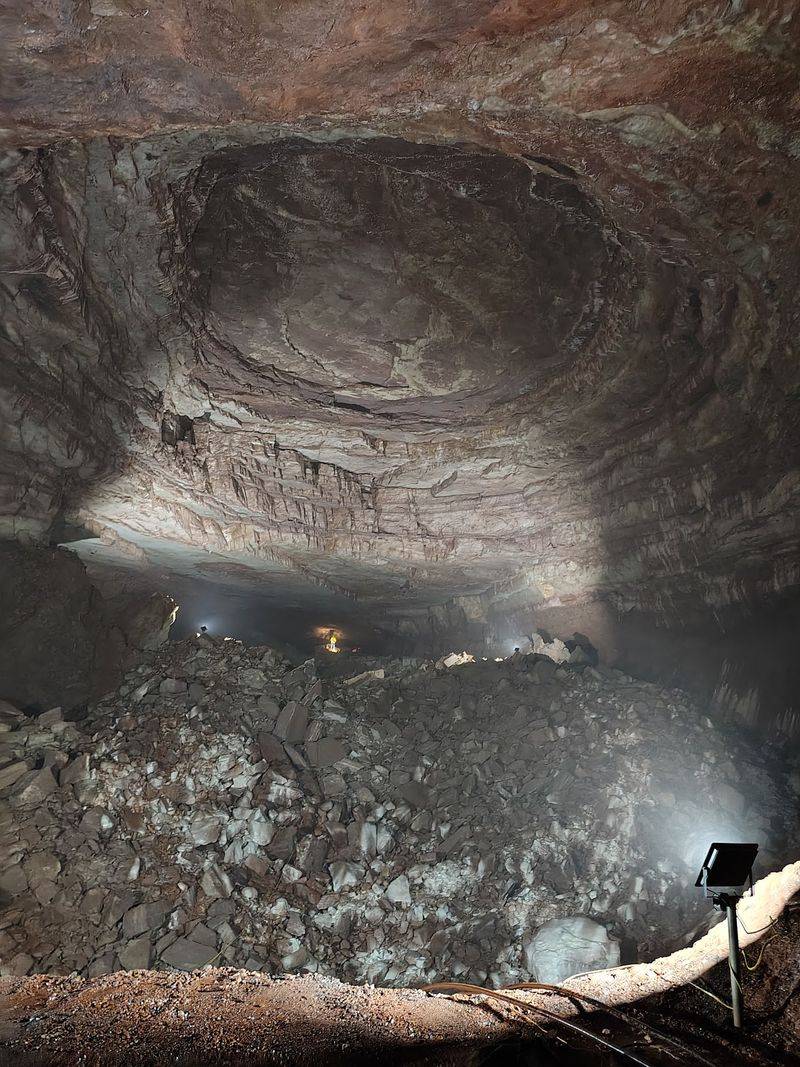
Get ready for the big stope. This man-made cavern measures 600 feet long, 300 feet wide, and 180 feet high.
That huge space supplied much of the mine’s ore. Over 68 years, the mine produced more than 21 million tons of iron ore.
Underground, it stays about 40 degrees all year. Staff hand out protective jackets and helmets, since water drips and rocks hang low.
Guides explain the old equipment and how miners worked. Photos are generally allowed in most areas, though flash may be limited.
The East Vulcan Mine began producing in 1877. Brothers Eugene and Albert Carollo, plus James Goullette, opened the attraction in 1958.
The train arrived in 1965, and kids still seem to love that part. Back up top, a gift shop focuses on rocks and minerals.
A small museum shows miners’ tools, and there’s a picnic area. The season runs Memorial Day weekend through mid-October, and individual visitors don’t need reservations.
Address: W4852 Hwy U.S. 2, Vulcan, MI 49892
5. Yates Cider Mill
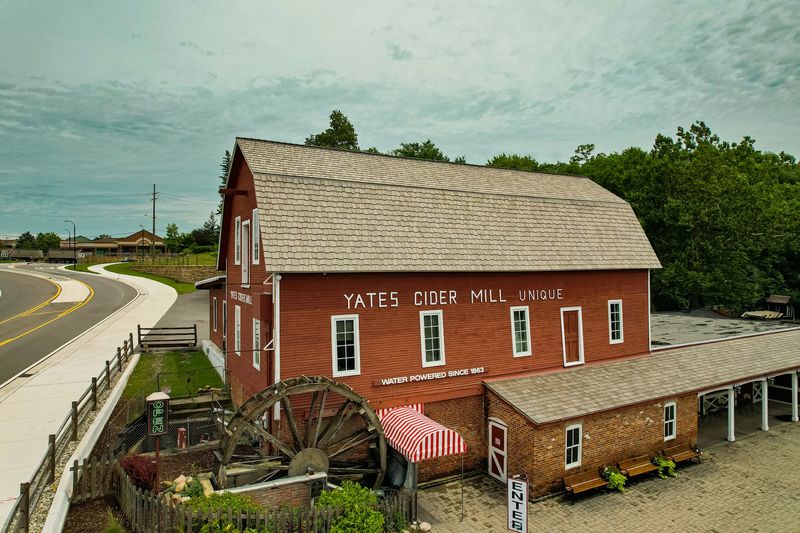
Some machines retire early, but not the turbine here. A 26-inch water-driven turbine installed in 1894 still helps press apple cider today.
The story began in 1863, when William and Caroline Yates bought 80 acres. They set up a water-powered sawmill and gristmill on the Clinton River.
A cider press arrived in 1876. Then, in 1894, a larger mill went up with that famous turbine.
You can watch cider being made right in the historic mill. The cider is 100 percent natural, with no preservatives.
Of course, you’ll probably want a donut too. Donuts joined the menu in the 1930s, and the bakery also offers pies, turnovers, cookies, and apple crisp.
Got room for more? The ice cream shop serves the Yates Donut Sundae, which sounds like a very smart idea.
In fall, an apple tent sells bagged apples, roasted corn, and Frankenmuth fudge. Fudge-making demonstrations happen most fall weekends.
Walkers and bikers can link up with the Yates River Walk and Clinton River Trail. The Macomb Orchard Trail connects too.
After Labor Day, weekends bring pony rides and a petting zoo with goats. Picnic areas along the river make a nice snack break.
The mill usually opens March through November. A second location at Canterbury Village in Lake Orion stays open year-round, if you need cider in January.
Address: 1950 E Avon Rd, Rochester Hills, MI 48307
4. Ford Rouge Factory Tour
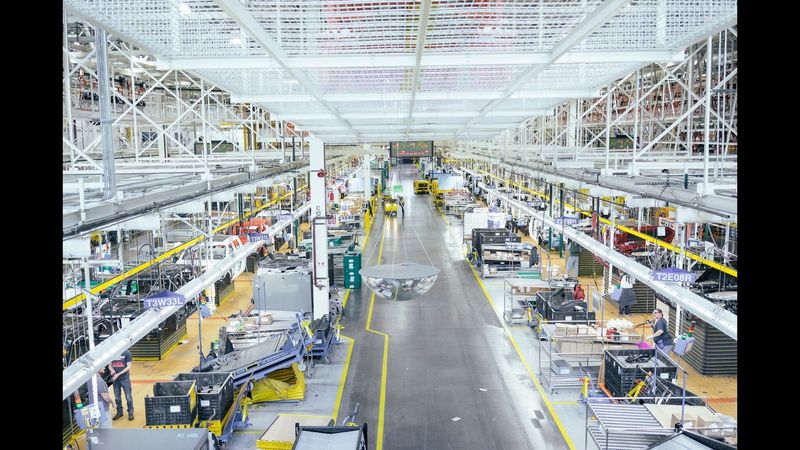
By 1928, Henry Ford had built the largest integrated factory in the world. It had 93 buildings and a 90-mile internal railway.
The goal was bold. Raw materials came in one side, and finished vehicles rolled out the other.
Your visit starts at The Henry Ford Museum in Dearborn. A bus carries you over to the Rouge Complex.
The tour has five parts. First, the Legacy Theater shows rare historic footage of the Rouge.
Next, a multi-sensory theater shows how the Ford F-150 gets made. It’s loud, bright, and a lot of fun.
From the observation deck, you’ll see the 10-acre living roof. It ranks among the largest eco-friendly roofs in the world.
Then you walk a suspended walkway above the F-150 final assembly area. Active assembly isn’t guaranteed, since it depends on Ford’s production schedule.
The Legacy Gallery wraps things up with historic Ford vehicles built here. One of them is the 20,000,000th Ford.
The Rouge built Model As, Mustangs, and World War I Eagle boats. During its peak years, it employed over 100,000 workers.
Michigan car history doesn’t get much bigger than this National Historic Landmark. Give yourself two to three hours and wear comfy shoes.
Tours run Monday through Saturday and close Sundays. The tour is fully accessible with elevators.
Address: 20900 Oakwood Blvd, Dearborn, MI 48124
3. Dousman’s Mill
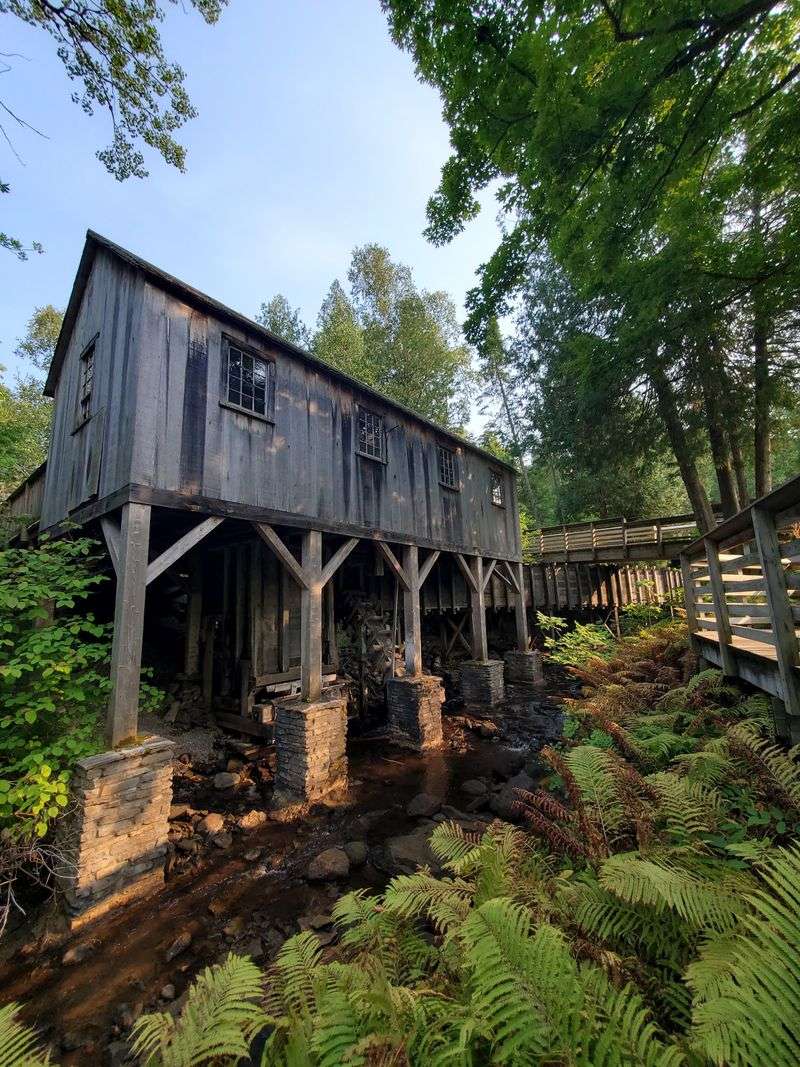
Long before cars and copper, Mackinac Island needed boards. Around 1790, Robert Campbell started a sawmill here to supply them.
That makes it one of northern Michigan’s earliest industrial businesses. The complex also had a gristmill and a farm.
Michael Dousman ran the mill from 1819 until it closed in 1839. The fur trade had slowed, and so did demand.
Then the site faded into the woods. An amateur archaeologist rediscovered it in 1972.
After careful archaeological work, it opened in 1984 as Historic Mill Creek. In September 2025, it got a new name, Dousman’s Mill.
Today you can watch Mill Creek power a reconstructed sawmill. Sawyers also show how lumber was cut by hand with axes and a pit saw.
Talk about an arm workout. The millwright’s house and workshop show off historic tools too.
Inside the visitor center, a 15-minute film tells the mill’s story. It’s a handy primer before you wander.
The park covers 625 acres with 3.5 miles of groomed trails. Bird fans, take note, since about 130 species have been spotted.
Climb the Treetop Discovery Tower for views of the Mackinac Bridge and Mackinac Island. Kids can burn energy at the Forest Friends Play Area.
The site opens seasonally from May through early September. Parking is free, and picnic spots are ready for lunch.
Address: 9001 W. US-23, Mackinaw City, MI 49701
2. Jackson Miners Park
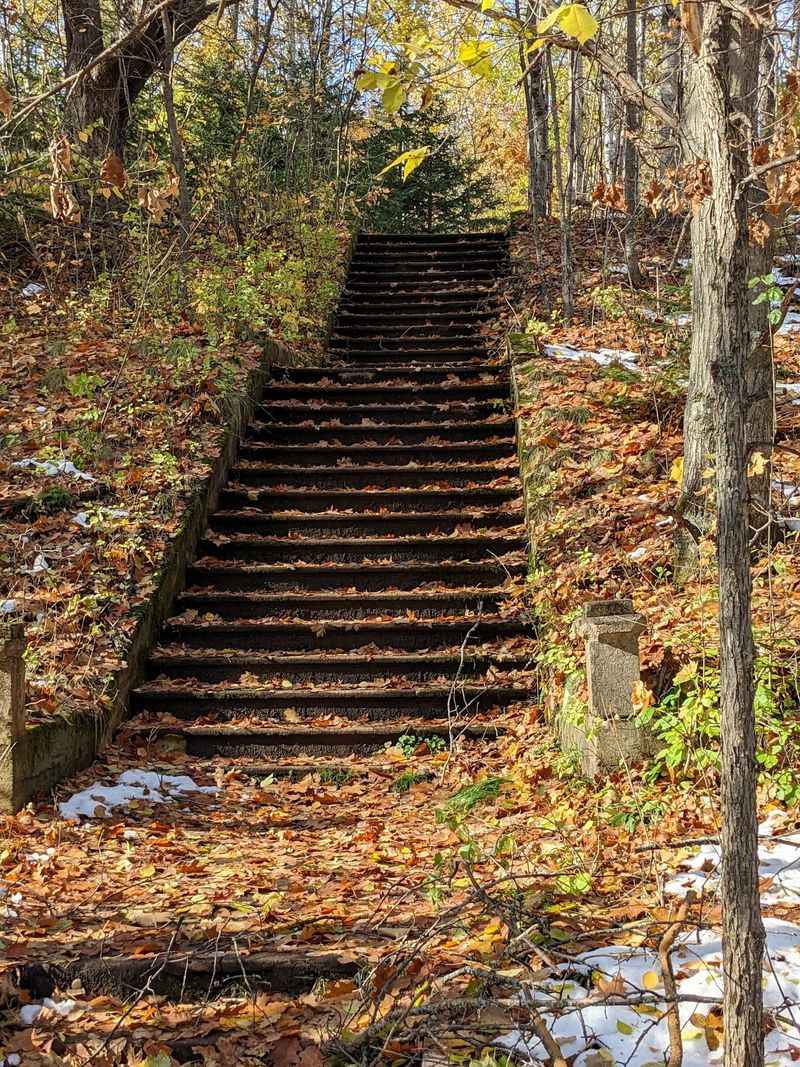
Michigan’s iron story started in this exact spot. The Jackson Mine was the first iron mine in the Lake Superior region.
Surveyor William A. Burt found iron ore near Teal Lake in 1844. Local Ojibwe people already knew about it.
The Jackson Mining Company formed in 1845. Mining began in 1847, and the first iron came from the nearby Carp River Forge.
By 1900, the mine had yielded over 3.6 million tons of ore. It closed for good in 1924.
Nature slowly took over after that. Now you can see the overgrown ruins of the early open pit.
Look closely as you walk. Foundations and stair steps from the original town of Negaunee still peek out from the landscape.
Interpretive signs explain the old mining sites and structures. Mining artifacts are on display around the park too.
The park doubles as a trailhead for the Iron Ore Heritage Trail. That mixed-use path runs 47 miles, with paved, accessible sections here.
Bringing kids? A new playground, a pavilion, and picnic areas make it an easy stop.
Accessible restrooms and parking are available. A section of the trail is even lit at night.
The city bought the site in 2003 and reopened much of West Old Town Negaunee in 2006. It’s free, open year-round, and full of quiet surprises.
Address: 199 Tobin St, Negaunee, MI 49866
1. Redridge Steel Dam
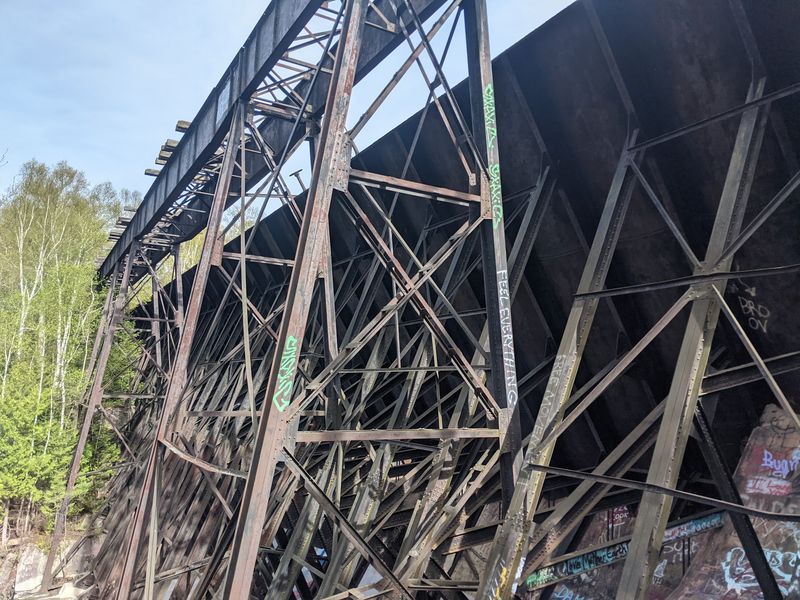
Rust never looked this impressive. Stretching 1,006 feet across the Salmon Trout River, this is considered the largest steel dam ever built.
It rises 74 feet at its center. Only a few flat slab buttress steel dams were ever built in the United States.
The Atlantic Mining Company finished it in 1901. It replaced a timber dam from 1894 that just couldn’t keep up.
Why build it at all? The dam supplied water to stamp mills that processed copper for the Atlantic and Baltic mining companies.
Once mining ended, upkeep slipped. A spillway broke during a flood in 1941.
In 1979, Copper Range Company cut large holes in the steel. That stopped the dam from holding water.
The lower water revealed a surprise upstream. You can now see the original 1894 timber crib dam.
Trails lead to the dam and even underneath it. Cement steps take you down to the river.
Spring melt brings the best show. Water pours through and creates a man-made waterfall.
Photographers and anglers both like this spot. You can walk on and around the structure too.
Stanton Township took ownership in 1992. That same year, the steel and log dams joined the National Register of Historic Places.
It’s a fitting final stop for a Michigan industrial road trip. Big steel, quiet woods, and a river that finally got its way.
Address: Liminga Road, Redridge, Stanton Township, Houghton County, MI