
These Michigan Waterfall Trails Are At Their Most Dramatic During April Melt
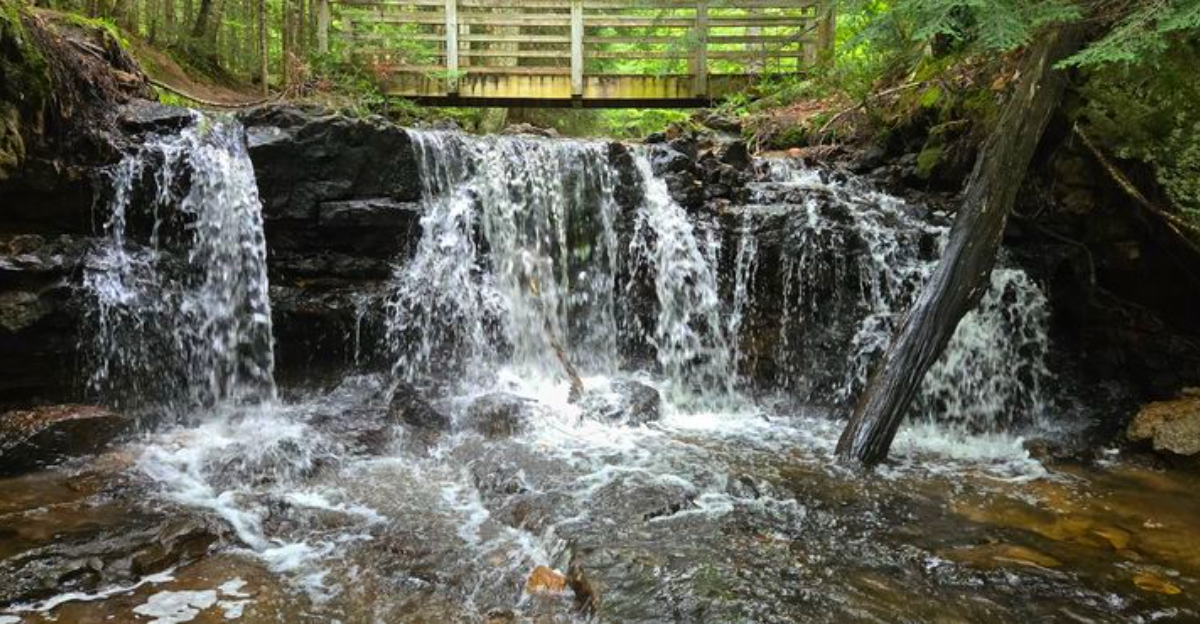
There is a specific, thundering rhythm that returns to the Michigan wilderness every April, acting like a hidden switch flipped by the first real thaw.
I’ve always found that this is the month the waterfalls truly “wake up,” shaking off their icy slumber with a loud, melodic roar that you can feel in your chest long before you see the drop.
I recently stood beside a familiar cascade and realized it looked twice as big and infinitely more alive than it ever does in the lazy haze of July. Michigan’s best spring waterfall hikes feature stunning views of the Upper Peninsula’s roaring cascades and scenic river trails.
You should definitely lace up your sturdiest waterproof boots and bring a healthy dose of curiosity, because these routes are currently at their most dramatic.
It is a raw, powerful spectacle that makes the entire forest feel brand new. Pack a raincoat, find a quiet perch, and let the mist remind you why spring in the North is worth the wait.
1. Tahquamenon Falls State Park, Paradise
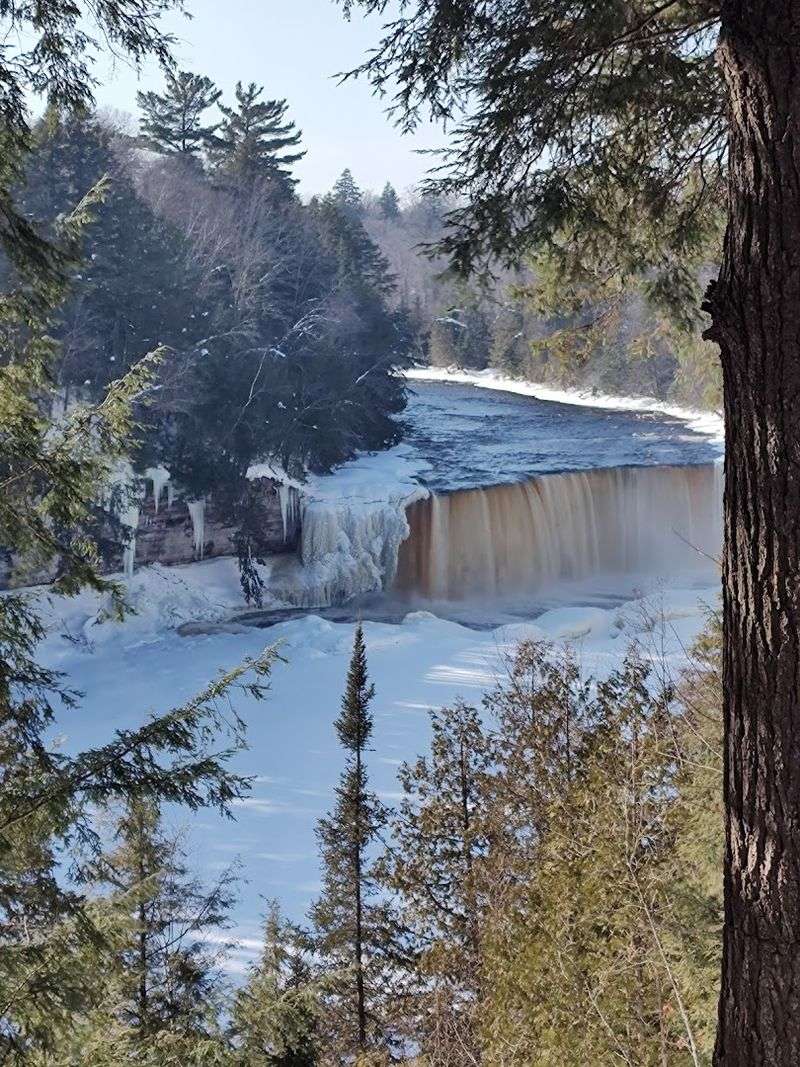
Cold mist hangs like a ghostly curtain above the amber torrent at Tahquamenon Falls State Park, and the sturdy boardwalk hums faintly under the sheer force of rushing water nearby.
In April, the Upper Falls swell until the lip of the cascade looks almost muscular.
The water is a deep, rich chocolate color thanks to the tannins leached from surrounding cedar swamps. It is often called the Root Beer Falls.
During the spring melt, that root beer looks like it is being poured from a very large, very agitated keg. The Lower Falls, located just a few miles downstream, spread into a series of lively curtains and rushing rapids.
They are easy to admire from multiple landings and island viewpoints.
The trails here are exceptionally well-graded, featuring short flights of stairs and sturdy railings. That allows families and early-season hikers to keep a comfortable pace even when the ground is damp.
History lingers in the old logging routes that once fed this mighty river. You can still catch fascinating remnants of that era through the interpretive signs scattered along the path.
When you make the trek to Paradise, try to go early in the morning to beat the crowds. It is a wise move to bring an extra pair of dry socks in the car.
2. Bond Falls Scenic Site, Paulding
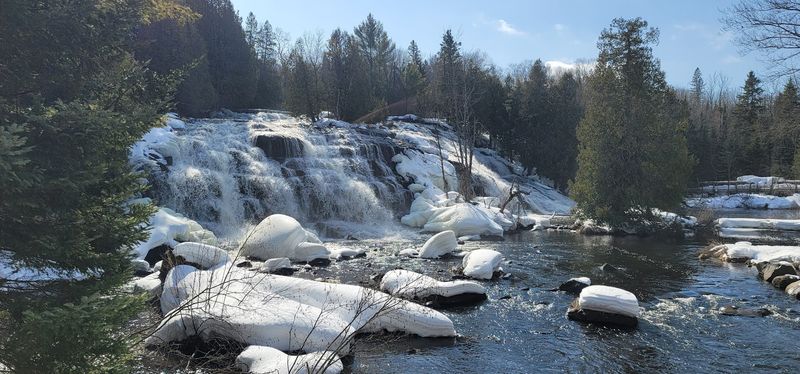
Deep in the western reaches of the Upper Peninsula, Bond Falls Scenic Site offers what many consider to be the most photogenic water in the state. While some falls are a single, violent drop, this one is a complex, 50-foot tumble over a wide fractured-rock face.
In April, the water does not just fall. It explodes outward in a shimmering lace pattern.
The history of this site is intertwined with power, literally, as the flow is regulated by a nearby dam. But during the spring melt, Mother Nature is clearly the one in charge of the volume.
You will notice the park is incredibly accessible. A level boardwalk leads from the parking lot to the base of the falls.
If you are feeling a bit more adventurous, follow the hiking trails that climb up along the side of the falls to the top. The view looking down over the Ontonagon River is spectacular in the spring light.
Wear boots with good traction, as the mist can make the wooden surfaces a bit slick. This is the kind of place where you will want to linger with a thermos of tea.
3. Agate Falls Scenic Site, Trout Creek
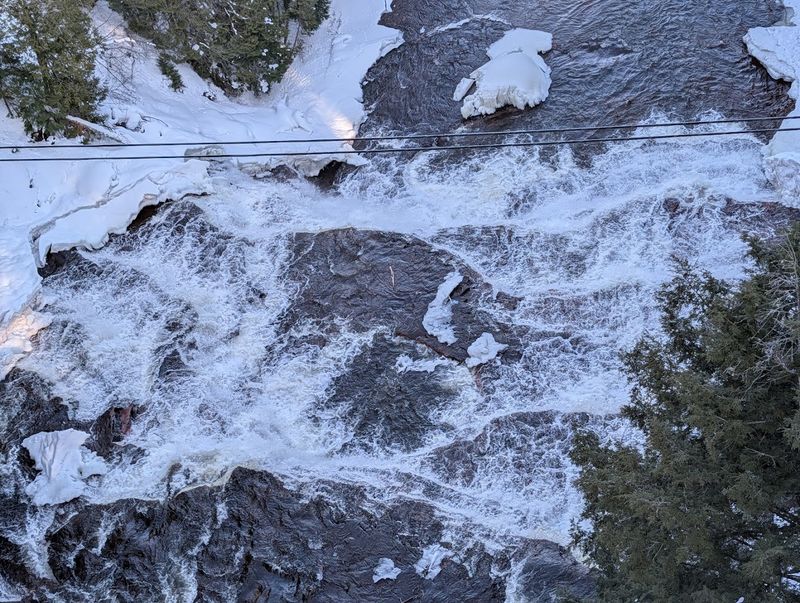
A low, guttural thunder threads through the stands of towering pines long before Agate Falls Scenic Site actually appears, fanning wide across a jagged rock shelf. April turns the water sheet muscular and bright.
It looks like polished ivory against the backdrop of dark, ancient basalt. One of the most striking features here is the old rail trestle that sits high upstream.
It frames the entire scene with a sense of quiet, industrial grace. It also reminds you of the UP’s rugged past.
This corridor once pulsed with the heavy transit of timber and iron ore. Today, that old rail grade still guides your feet down toward the main overlook.
Visitors tend to drift between the bridge views and the various riverside angles. They quietly compare the curve of the flow as the spring clouds shift and change overhead.
The path to the falls is relatively short, but do not let that fool you into complacency. Gnarled roots often hide under the thick layer of thawing leaf litter.
It is a good rule of thumb to look down at your feet as often as you look up at the scenery.
4. O Kun De Kun Falls, Bruce Crossing
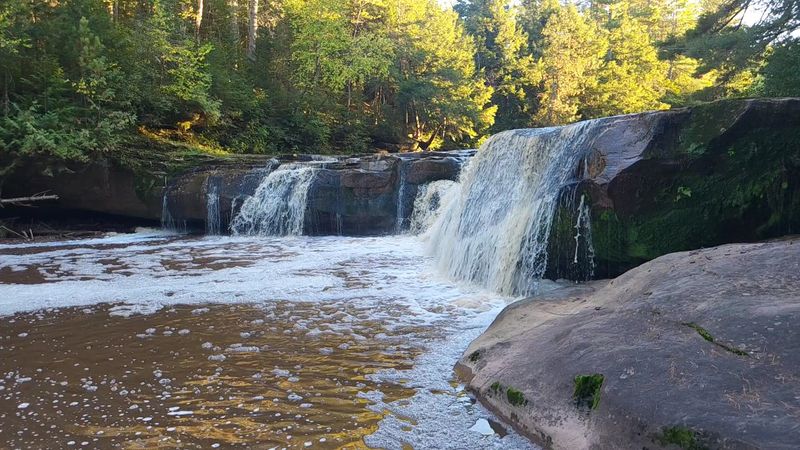
The North Country Trail breathes the scent of fresh pine and cold river air as it leads you toward the twin drops of O Kun de Kun Falls. Spring is the season that makes the undercut plunge truly throb with energy.
Brown-green water tears past the stubborn ice collars that cling to the rock in the permanent shadows. A small, bouncy suspension bridge spans the river here.
It adds a playful sense of adventure to every careful step you take across the gorge.
Named after a respected Ojibwe leader, the site holds deep layers of indigenous story alongside its fascinating geology. You will find most hikers posting up on the large boulders near the base.
They watch driftwood wrestle in the powerful eddies and trade silent nods of appreciation whenever the sun breaks through the canopy.
To find this hidden gem, start your hike from the trailhead off US-45. You should definitely give yourself plenty of time for the out-and-back trek.
Go in expecting a fair amount of mud in the low-lying swales. Waterproof gaiters are a massive help here.
5. Miners Falls, Munising
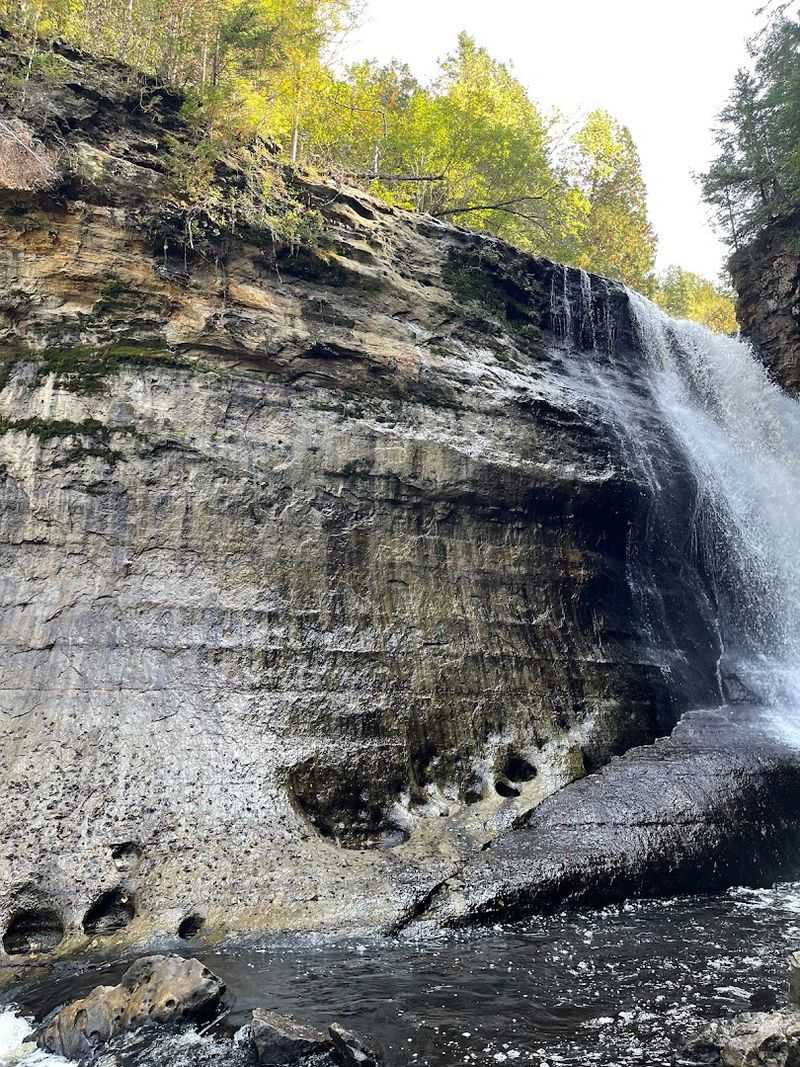
A narrow, high-pressure chute punches through the sandstone at Miners Falls, sounding significantly louder than you would ever expect for a single column of water.
The spray drifts like cold, refreshing confetti across your cheeks. April is the month that truly sharpens the contrast between the pale, weathered rock and the tea-tinted surge of the Miners River.
The route to the falls traces the legacy of nineteenth-century explorers who first mapped these formidable cliffs. Yet the habit for modern visitors is one of simple, unadulterated delight.
I find myself constantly swapping between the upper viewing platform and the lower end of the spur trail. I keep weighing which perspective carries more visual muscle.
The path is generally firm and features manageable stairs. But keep a sharp eye out for hidden ice that lingers in the shadows during the early part of the month.
I highly recommend bringing a microfiber lens cloth for your camera. Also bring a hat with a sturdy brim.
The combination of the waterfall spray and the Lake Superior wind can turn a leisurely sightseeing stop into a very brisk, very memorable sprint back to the warmth of the car.
6. Chapel Falls, Munising
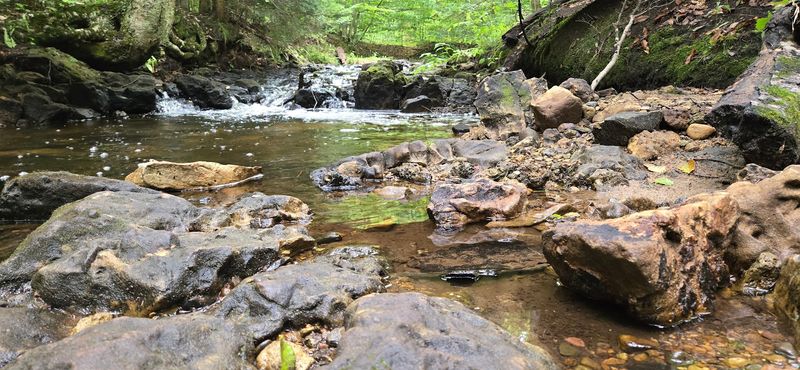
A profound quiet builds along the Chapel Falls trail until the forest suddenly splits open to reveal a clean, elegant ribbon of water, falling airy and exact over a high cliff. April melt thickens that ribbon significantly.
It stitches a constant white noise through the forest basin without completely drowning out the returning birdsong. The sandstone lip of the falls looks newly rinsed and pristine.
Its edges appear much sharper after the heavy winter snow finally retreats.
This tucked-away corner of the Pictured Rocks National Lakeshore carries ancient stories of shoreline camps and the legendary Chapel Rock pine. It still clings stubbornly to its sandstone pedestal nearby.
Visitors often find themselves pausing here much longer than they originally planned. They are hushed by the almost perfect, balanced geometry of the water and the cliffside.
You would be wise to start this hike early in the day to avoid the trailhead crunch. It also helps you navigate the slick spots that tend to form near the small bridges.
7. Wagner Falls Scenic Site, Munising
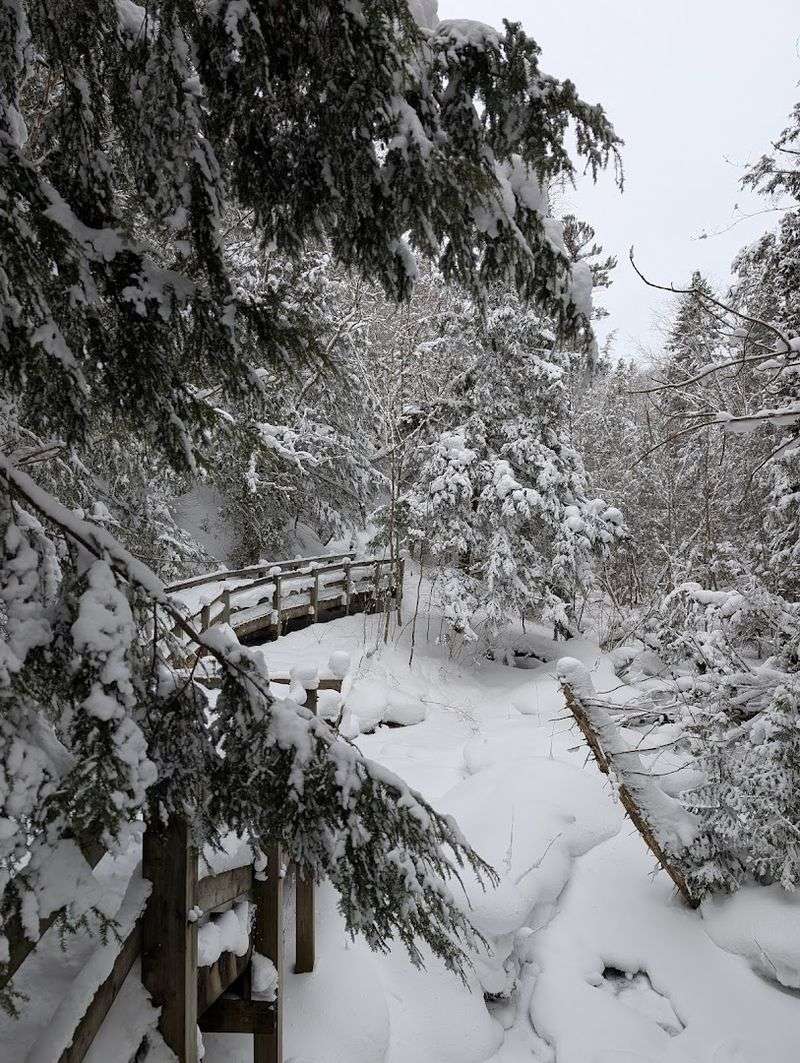
Wagner Falls Scenic Site whispers to you at first, only revealing its tidy, picturesque tiers just off M-28. It is a compact, beautiful lesson in the fluid dynamics of a spring thaw.
In April, the water volume gets a significant bump. That turns each rocky step of the falls into a small, white-water theater.
The surrounding cedar grove smells intensely like pencil shavings and fresh rain. It is a welcome, aromatic pause between the bigger, more strenuous hikes of the day.
Remnants of the old lumber era dot the entire region. Though this specific site feels perfectly preserved for wandering eyes and quick breathers.
Because the walk from the parking lot is so short, you will see people rotating politely at the railing. They share the limited space for photos and a collective minute of forest stillness.
The wooden boardwalk does a great job of keeping your boots out of the mud. But be careful, as the edges can glaze over with an overnight freeze.
I like to arrive here early and linger briefly to soak in the sound. The steady rhythm resets my pace before I tackle the longer routes nearby.
8. Sable Falls, Grand Marais
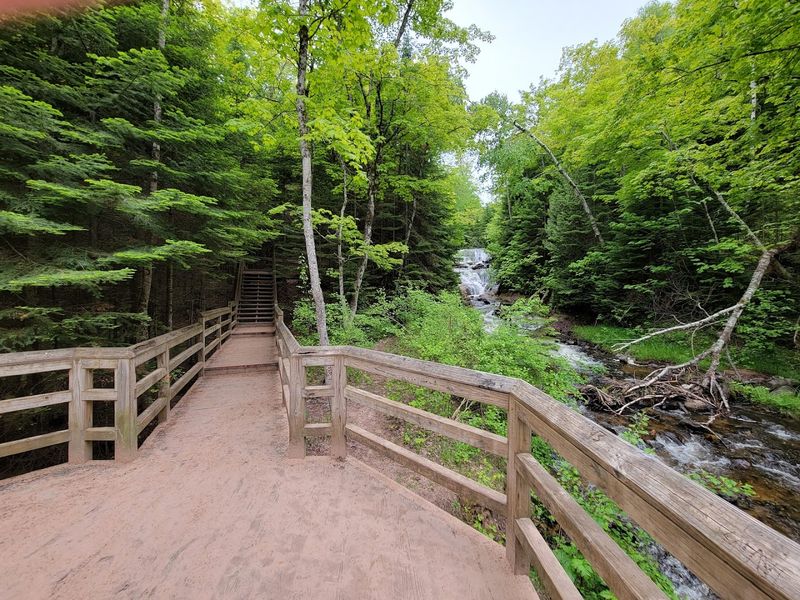
A long flight of wooden steps traces the winding path of the creek at Sable Falls, and the sound of the rushing water keeps you company all the way down to the bottom.
April muscles the water through a series of tight sandstone notches. Eventually it irons the flow flat as it reaches the mouth and spills out toward the massive, dune-backed beach.
In this part of the park, the long-standing tradition is a simple, beautiful migration between the lake, the dunes, and the woods. It is a rhythm that the locals have ridden for generations.
I find myself stepping from stair to platform, then finally to the cobbles of the beach. I am essentially chasing the exact moment where the cold creek meets the churning surf of Lake Superior.
You should expect a lot of stairs on the way back up. You should also expect a bit of a wind tunnel effect as you get closer to the shoreline.
Bring a heavy warm layer and pocket a few extra minutes for a contemplative beach walk. Please watch your footing on the wet sand.
9. Hungarian Falls, Hubbell
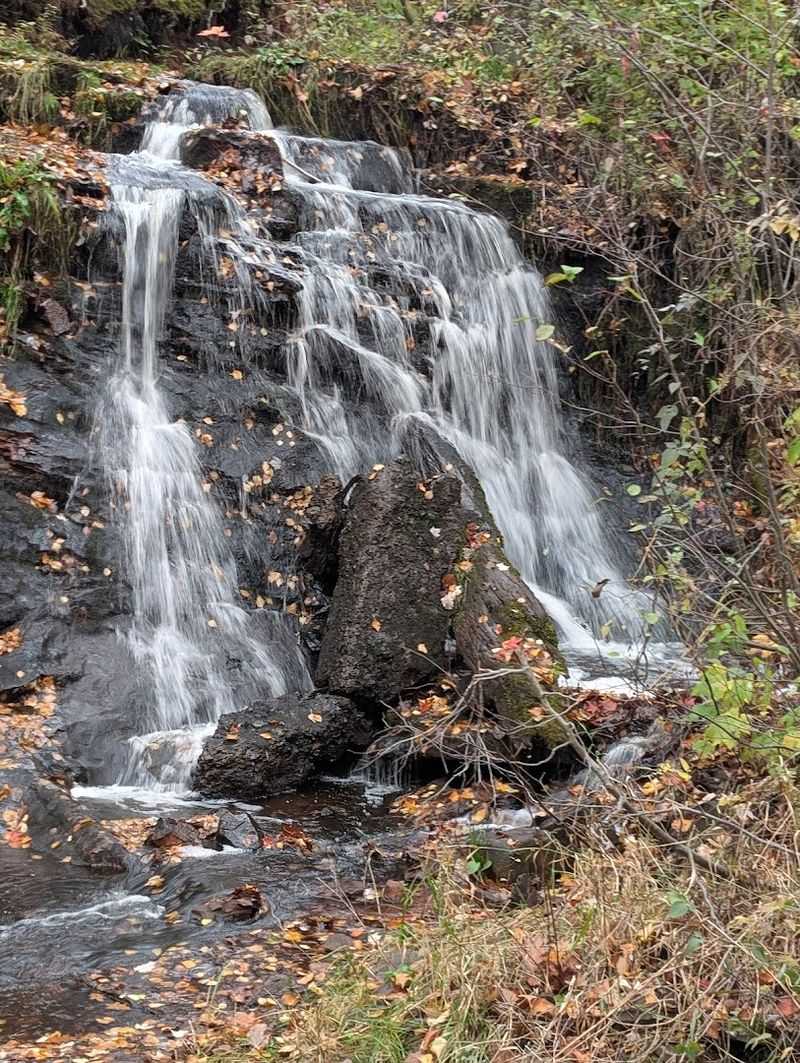
The rock walls of the gorge tighten significantly along Dover Creek until Hungarian Falls unfurls in a series of three distinct, beautiful surprises. The combination of spring rain and snowmelt stacks the sound of the water into a heavy roar.
Side seeps stitch delicate silver threads of water down the mossy, lichen-covered cliffs. The upper, middle, and lower drops each carry a slightly different personality in the shifting April light.
The local mining history sits quietly in the background here. That includes the fascinating remnants of an old dam that once shaped the flow of the creek and determined human access to the water.
The locals are well-acquainted with the various social paths that crisscross the area. Weekend habits often send folks hopscotching between the different viewpoints in a friendly, unhurried sequence.
Parking can be a bit scattered and informal. So be sure to check current access points and always respect the neighborhood signs.
The footing grows notoriously tricky near the edges of the gorge. There, the local clay turns into something resembling grease after a spring shower.
Personally, I tend to linger at the middle drop the longest. I trace the intricate braids of water that feel like they are being newly written with every passing hour.
10. Black River Scenic Byway Falls, Bessemer
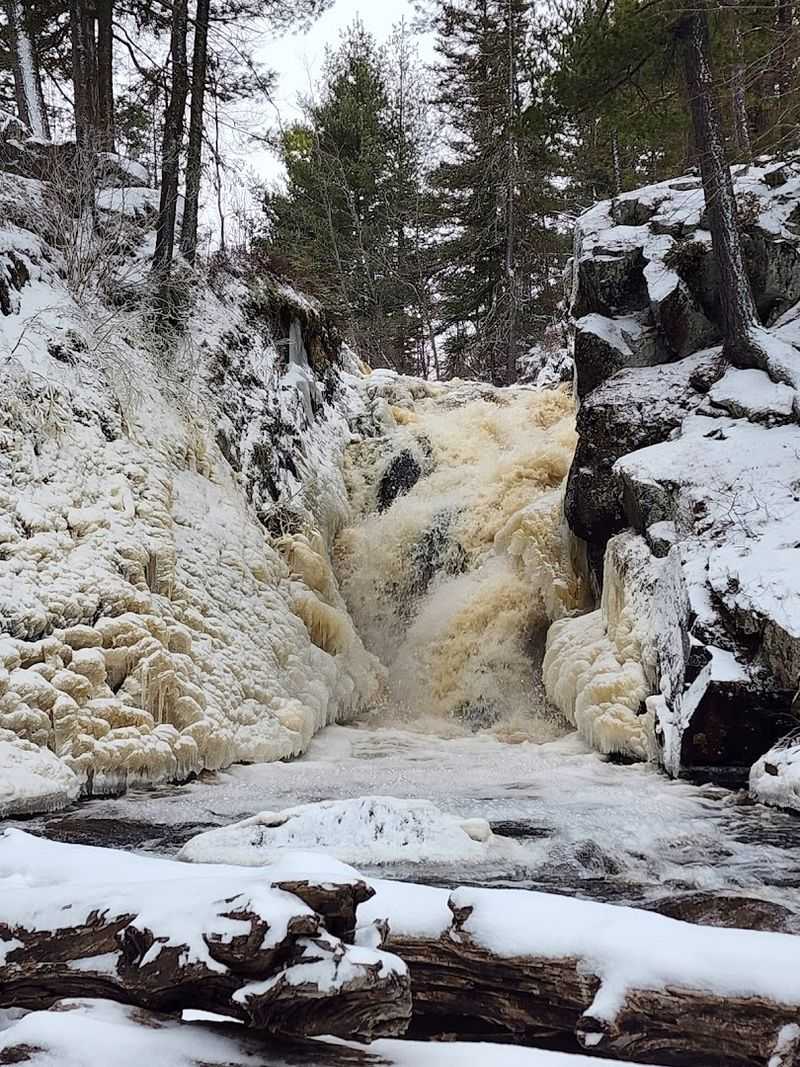
The Black River Scenic Byway strings five very distinct personalities along one powerful river, with each one seemingly louder and more boisterous than the last in the peak of April.
Potawatomi Falls offers easy-access viewing platforms. Gorge Falls compresses the entire river’s roar into a terrifyingly tight sandstone hallway.
Sandstone Falls and Rainbow Falls close out the set with a level of natural showmanship. They frequently draw cheers from hikers without a single word being spoken.
The Civilian Conservation Corps left behind a legacy of sturdy stone-and-wood stairs and rails. They now guide visitors through a patient, multi-stop waterfall crawl.
You will see a common ritual developing here. People car-hop from lot to lot, collecting their favorite photos and angles as the day slowly warms up.
A pro move is to start at the southernmost trailhead and work your way north toward the mouth at Lake Superior. Or reverse the order if the lake winds look like they are going to be rough.
11. Munising Falls, Munising
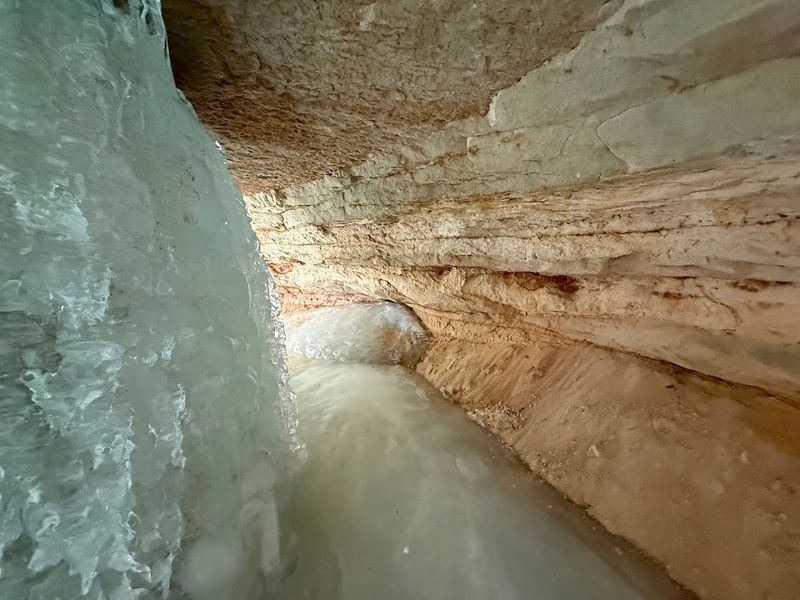
A delicate, vertical thread of water drops from a deep sandstone alcove at Munising Falls, looking stark and incredibly elegant when the surrounding snow is still patchy and white.
April melt thickens that thread into a streaming, translucent veil. Tiny side rivulets etch the dark cliff face like temporary, watery handwriting. The natural alcove acts as a megaphone.
It amplifies the sound of the drop into a gentle, amphitheater-like hush that feels surprisingly private.
The early efforts of the park service protected these fragile sandstone formations from erosion. The common habit for visitors now is one of slow looking.
That is characterized by frequent, quiet glances upward at the towering canopy. People tend to drift aimlessly between the main paved path and the various short spurs. They compare the intensity of the spray on each of the viewing platforms.
If you can, try to arrive near the break of morning to hear the returning forest birds over the sound of the distant city traffic. It also helps you avoid the inevitable bottlenecks at the railings. I always make it a point to stop by the nearby visitor center for the most current trail notes.