
These Ohio Mill And Covered Bridge Stops Make Spring Road Trips Feel Historic
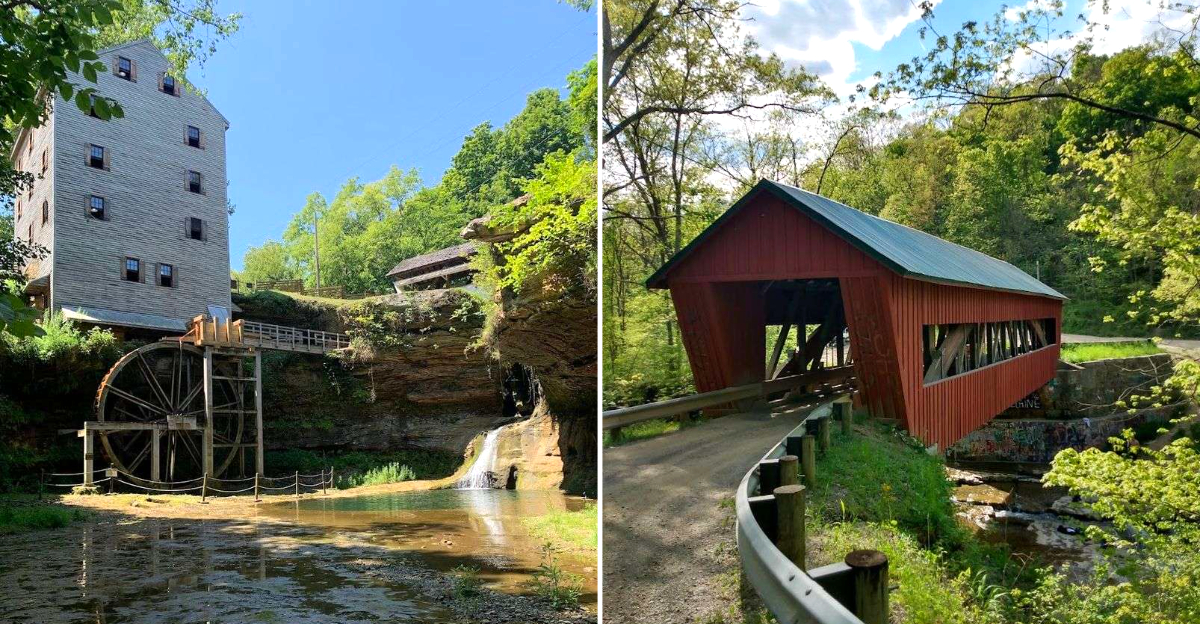
Spring gives Ohio’s old mills and covered bridges a little extra drama. Creeks run louder, trees turn bright again, and suddenly a weathered wooden span over moving water feels less like a history lesson and more like the opening shot of a cozy period film.
These 12 stops bring together the best parts of a spring road trip: scenic back roads, working gristmills, quiet bridges, fresh greenery, and plenty of places where the past still feels close enough to touch.
There is something especially satisfying about hearing water rush beneath old planks or watching a millwheel turn the way it has for generations. Add a camera, comfortable shoes, and a little curiosity, and Ohio handles the rest beautifully.
1. Lanterman’s Mill and Covered Bridge, Youngstown
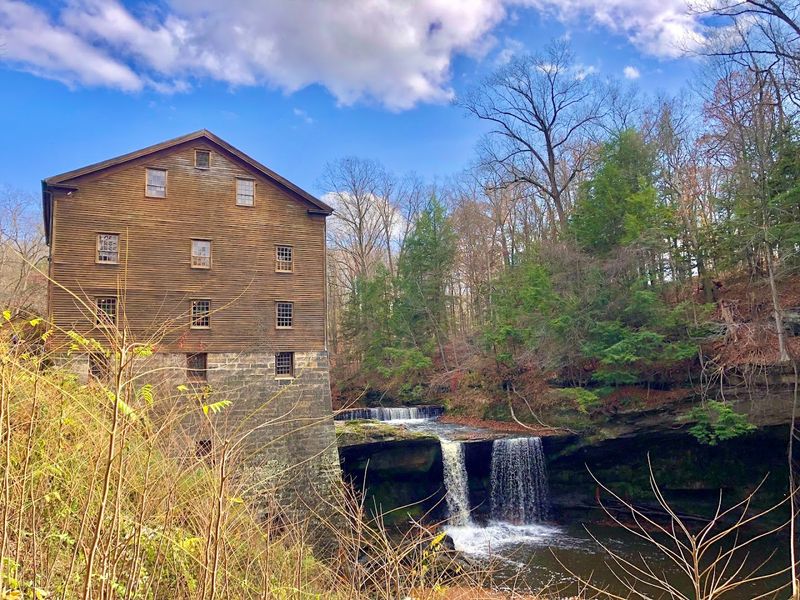
Tucked inside Mill Creek Park in Youngstown, this spot feels like one of the city’s most beloved historic treasures.
The current Lanterman’s Mill was built in 1845–46, and the restored structure still grinds corn, wheat, and buckwheat using waterpower from Mill Creek.
Watching the massive millstone turn is genuinely fascinating, even if you have zero interest in flour.
The adjacent covered bridge adds a storybook quality to the whole scene, arching gracefully over the creek just steps from the mill entrance.
The bridge itself was completed in 1989 and was designed after an earlier bridge once used by farmers bringing grain to the mill.
Spring is one of the best times to visit because the creek runs high and fast, giving the whole area extra movement and sound.
The surrounding park trails are lined with fresh greenery in April and May, turning every walk into a nature highlight reel.
You can buy freshly ground cornmeal and flour at the mill store, which makes for a very satisfying souvenir.
Parking is easy, admission to the mill is affordable, and the whole experience moves at a wonderfully unhurried pace that northeastern Ohio does so well.
2. Stebelton Park at Rock Mill, Lancaster
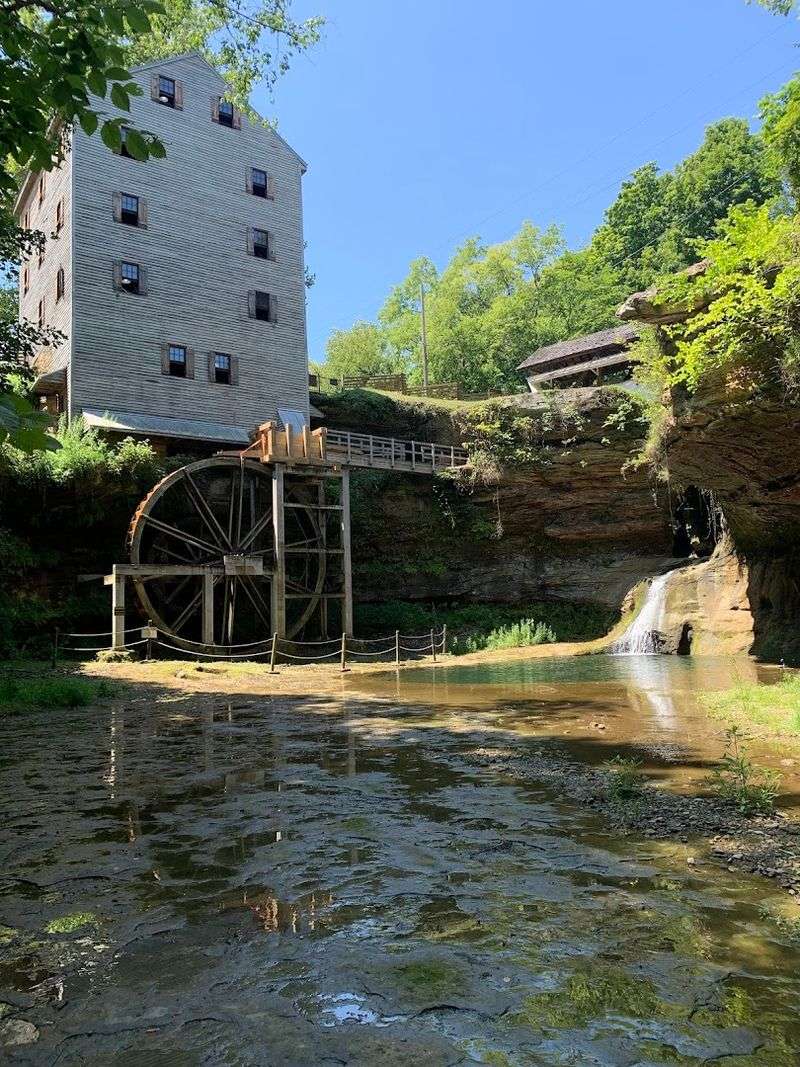
Not many mills in the country sit directly above a dramatic river gorge, but Rock Mill pulls it off with total confidence.
Located just outside Lancaster in Fairfield County, this 1824 mill stands above the Hocking River, and the view from the bridge is genuinely jaw-dropping.
The covered bridge next to the mill was built in 1901, restored in 2008, and is no longer open to traffic, which makes it a peaceful place to pause and take in the scene.
Stebelton Park surrounds the mill with well-maintained walking areas that give you multiple angles to appreciate the falls, gorge, and historic buildings.
Spring runoff can add serious drama to the already picturesque setting, especially when the water is moving strongly near the mill.
Rock Mill itself is open seasonally during Rock Mill Days from May through October, so checking the schedule before you go is a smart move.
The park is free to visit and easy to find, so there is no excuse not to add it to your route this season.
3. Historic Clifton Mill, Clifton
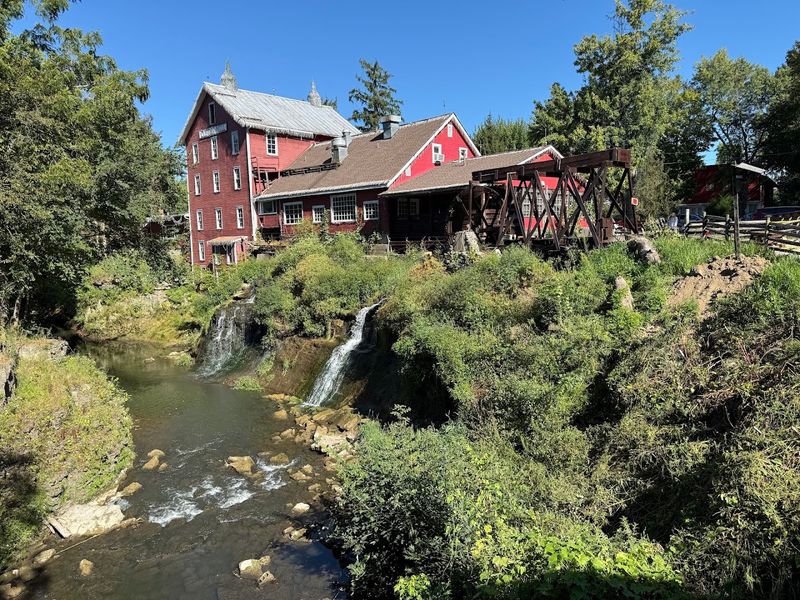
Few mills anywhere in the United States have the sheer visual presence of Clifton Mill, which rises six stories above the Little Miami River like it was always meant to be there.
Built in 1802, it is one of the largest remaining water-powered gristmills in the country, and it still produces stone-ground grits, cornmeal, and pancake mixes that you can buy on-site.
The restaurant inside the mill serves breakfast and lunch using their own products, so yes, you can eat freshly milled pancakes while listening to the river rush past.
Clifton, Ohio is a tiny village, but the mill draws visitors from across the state and beyond, especially in spring when the gorge below fills with trilliums and wild geraniums.
The viewing deck over the dam gives you a front-row seat to the waterfall, which is especially thunderous after spring rains.
The gorge trail nearby winds through one of Ohio’s most underrated natural areas, so plan to stay longer than you think you need to.
Clifton Mill is a working piece of American history that you can smell, taste, and hear all at once.
4. Historic Bear’s Mill, Greenville
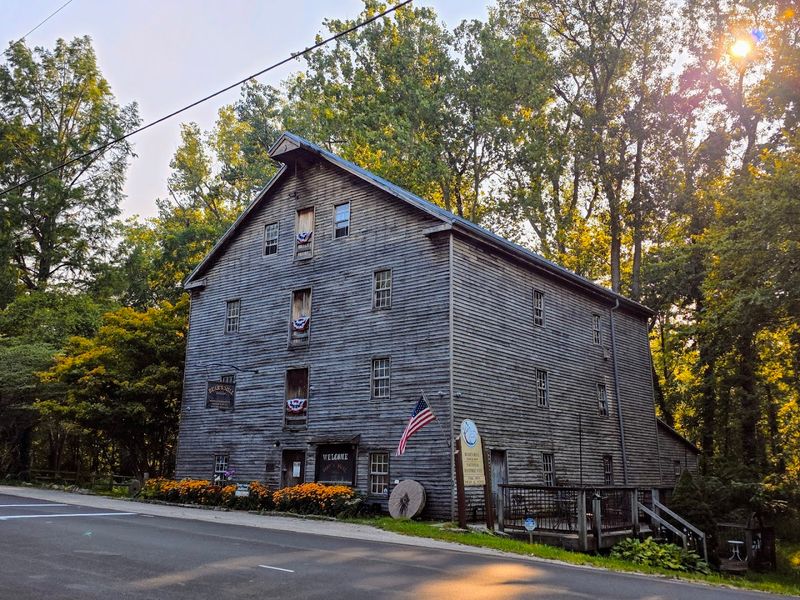
Standing four stories tall on the banks of Greenville Creek, Bear’s Mill has been part of Darke County history since 1849 and still feels wonderfully alive today.
Located near Greenville, this beautifully preserved mill is one of the few operating water-powered mills in Ohio, which is a title it wears with quiet dignity.
The old wooden structure, creekside setting, and working-mill character make the place feel both scenic and deeply practical.
Spring visits are especially rewarding because Greenville Creek runs full and strong, adding natural energy to the whole setting.
The surrounding creekside woodlands make a peaceful spot for a short walk before or after your visit.
The mill store stocks stone-ground products, gifts, and locally rooted items, making it easy to leave with both memories and groceries.
Bear’s Mill is the kind of place that makes you genuinely grateful someone worked hard to preserve it.
5. Providence Metropark and Isaac Ludwig Mill, Grand Rapids
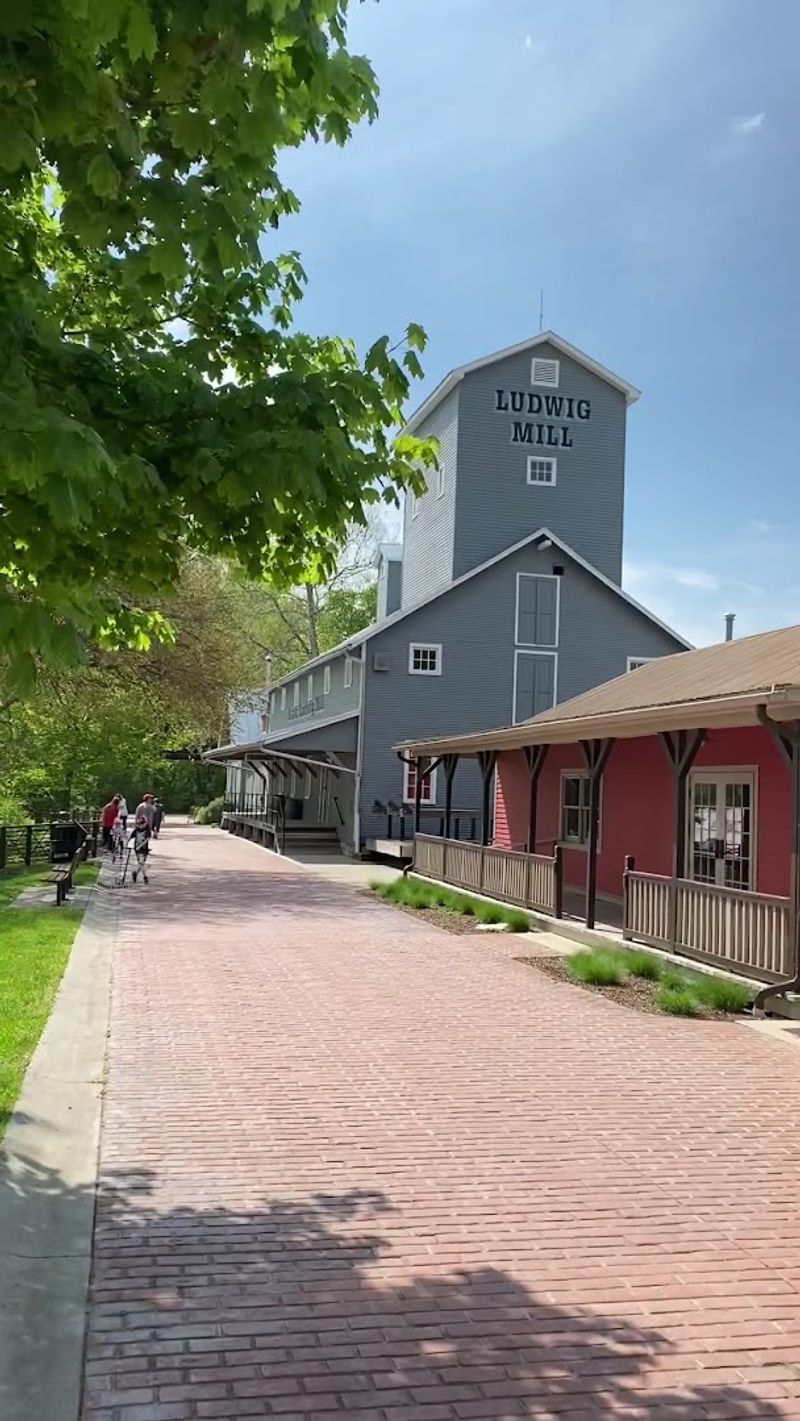
Grand Rapids, Ohio sits along the Maumee River in a part of the state where the canal era feels almost within living memory, and Isaac Ludwig Mill keeps that history alive in the most hands-on way possible.
Providence Metropark preserves a stretch of the historic Miami and Erie Canal, and the reconstructed Isaac Ludwig Mill operates as a working museum where staff in period clothing demonstrate how grain was milled using both water and canal power.
The canal boat rides that run in season let you glide along the original canal bed, pulled by a mule walking the towpath, which is a surreal and wonderful experience.
Spring is perfect here because the towpath trail bursts with wildflowers, and the Maumee River floodplain fills with migrating birds that birders travel from across Ohio to see.
The park grounds are beautifully maintained and easy to walk, with interpretive signs explaining canal history at every turn.
Combine the mill tour, the canal boat ride, and a walk along the river, and you have a full half-day of genuinely interesting history.
This stop rewards curiosity at every corner.
6. Black Covered Bridge, Oxford
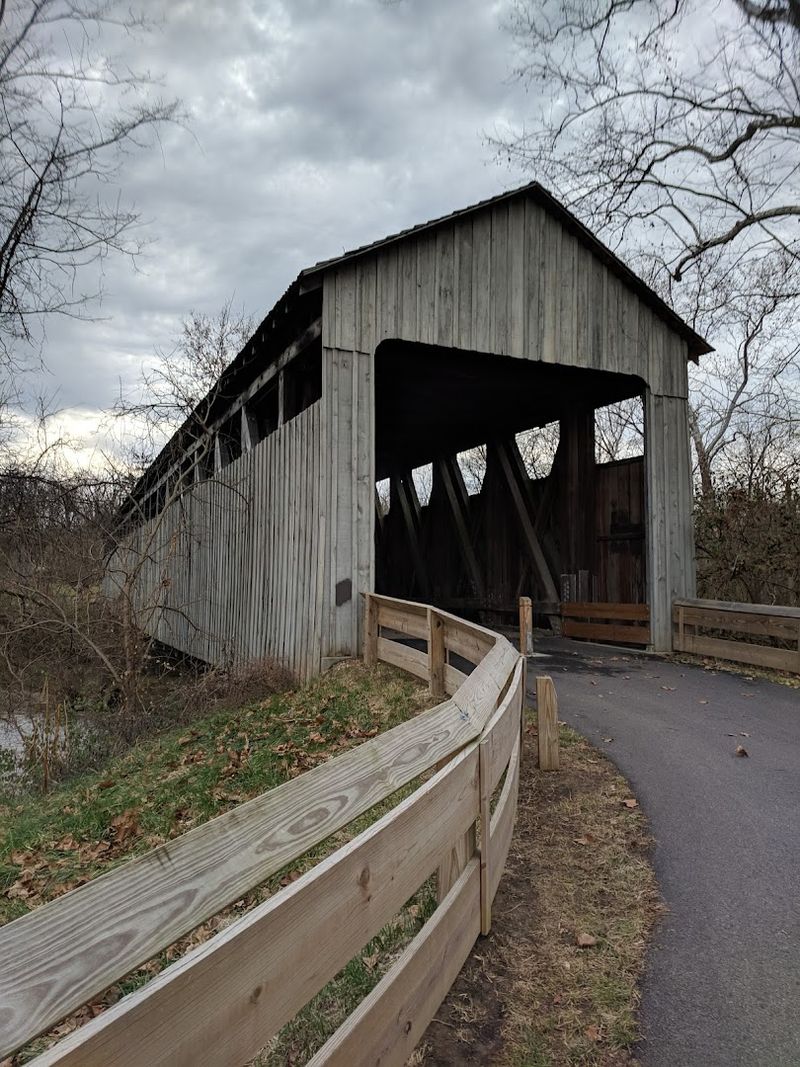
Originally known as Pugh’s Mill Covered Bridge, this historic span near Oxford carries a quiet charm that rewards anyone willing to leave the main road behind.
Spanning Four Mile, also known as Talawanda Creek, the Black Covered Bridge was built in 1868 to provide access to a saw and grist mill owned by James B. Pugh.
The name gradually changed to Black Bridge, likely because a white covered bridge once stood downstream.
The bridge is one of the few remaining covered bridges in southwestern Ohio and is especially notable for combining Childs and Long truss types within one structure.
Spring turns the creek corridor into a green tunnel, with trees leafing out over the water and wildflowers dotting the banks in every direction.
The bridge is a great place to slow down, listen to the creek below, and take in the kind of stillness that is increasingly hard to find.
Oxford is a college town with good food options, so you can pair this historic stop with a satisfying lunch before or after your visit.
The drive to the bridge through Butler County scenery is pleasant in its own right, with rolling fields and old fence rows that feel like a different century.
Bring a camera and take your time here.
7. Everett Covered Bridge Trailhead, Peninsula
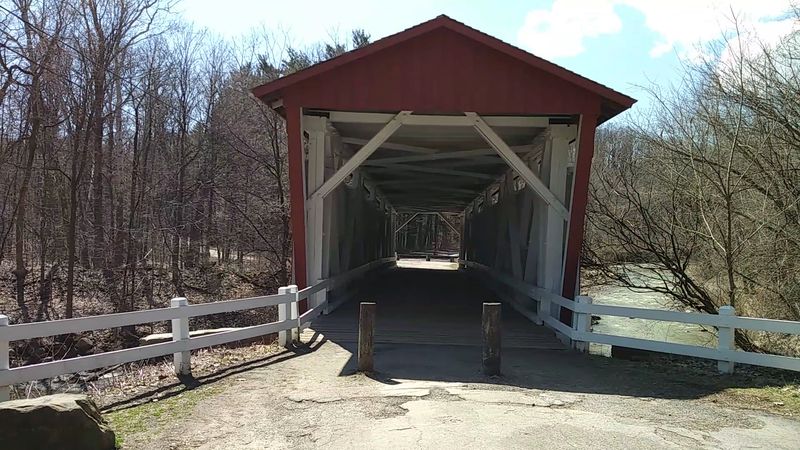
Sitting inside Cuyahoga Valley National Park, Everett Covered Bridge is the only remaining covered bridge in Summit County, and it earns that distinction by being absolutely beautiful in every season, but especially spring.
The bridge crosses Furnace Run near Peninsula, Ohio, and the surrounding meadows and woodlands make it one of the most scenic stops in northeastern Ohio.
The original bridge dated to the 1800s, suffered major damage over time, and was reconstructed by the National Park Service in 1986 as a historically accurate replacement.
The trailhead here connects to nearby park routes, giving visitors an easy way to turn a quick photo stop into a longer walk.
The bridge itself is open to foot traffic and makes for a genuinely peaceful crossing, with the creek gurgling below and spring greenery filling in around the path.
Because it is inside a national park, the whole area is well-maintained and easy to navigate, with clear signage and parking at the trailhead.
Spring weekends can get busy, so an early morning visit rewards you with softer light, quieter trails, and a better chance of enjoying the creekside setting without much company.
This one earns a long stay.
8. Harpersfield Covered Bridge, Geneva
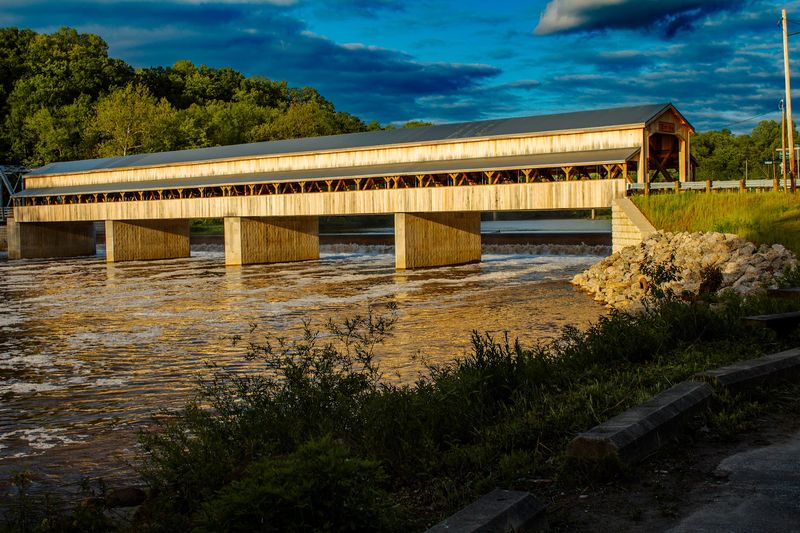
At 228 feet long, Harpersfield Covered Bridge is one of the longest covered bridges in Ohio, and standing at either end gives you a real sense of just how impressive that length actually is.
Located in Ashtabula County near Geneva, it spans the Grand River and sits within a beautiful county metropark that makes the whole visit feel like a reward for finding it.
The bridge dates to 1868, and after flood damage in 1913, a steel span was added to the structure.
A pedestrian walkway was added during a 1991–92 renovation, and the bridge reopened to traffic after a major renovation in 2024.
Spring brings the Grand River up to a lively height, and the park grounds around the bridge fill with blooming trees and birdsong that make lingering here very easy to justify.
Ashtabula County is known for its remarkable covered bridge heritage, with historic bridges scattered across its rolling countryside.
Harpersfield makes a natural anchor stop for a county-wide covered bridge tour, and the park’s picnic area is a great place to recharge between stops.
Length, history, and scenery all in one place.
9. Mechanicsville Road Covered Bridge, Geneva
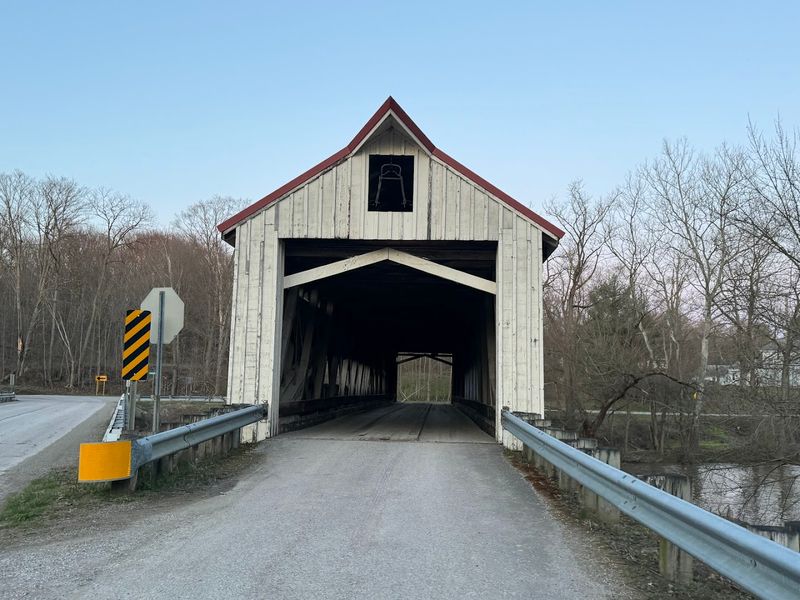
Just a short drive from Harpersfield, the Mechanicsville Road Covered Bridge offers a completely different atmosphere that makes stopping twice in the same county feel like a very good decision.
Spanning the Grand River in Ashtabula County, this 156-foot Howe truss with arch bridge was built in 1867 and is believed to be the oldest of the county’s covered bridges.
The bridge has a narrower, more intimate feel than its famous neighbor, and the surrounding landscape feels wilder and less developed.
Mechanicsville was renovated and reopened to traffic in the fall of 2003, giving visitors the rare pleasure of experiencing a historic covered bridge as part of a working rural road.
Spring light filters beautifully through the open portals of the bridge in the morning hours, casting long shadows across the wooden interior and making it a photographer’s favorite spot.
The Grand River below runs beautifully in April and May, and the sound of moving water adds to the old-fashioned charm of the stop.
Pairing this stop with Harpersfield on the same afternoon gives you a satisfying mini tour of Ashtabula County’s remarkable bridge heritage without too much driving between stops.
Two bridges, one great afternoon.
10. Roberts Bridge, Eaton
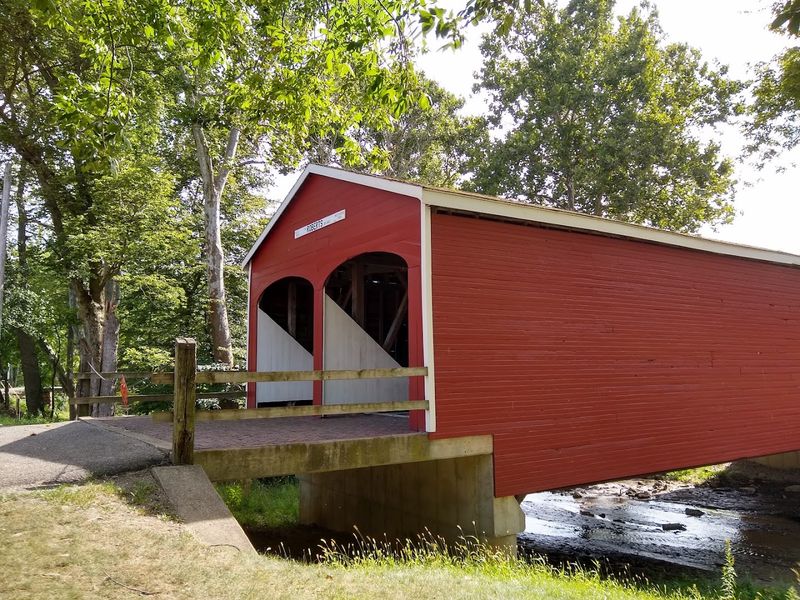
Roberts Bridge in Eaton is one of Ohio’s most important covered bridges, and its history makes the stop feel bigger than its quiet park setting might suggest.
Built in 1829, it is considered Ohio’s oldest covered bridge and one of the oldest covered bridges of any type in the United States.
The bridge is also one of only a handful of double-barreled, or dual-wagon-way, covered bridges still remaining in the country.
After nearly 160 years at its original location, Roberts Bridge was heavily damaged by fire in 1986 and later moved to its current site near Crystal Lake and Seven Mile Creek in Eaton.
Its current setting at 319 S. Beech Street makes it easier for visitors to appreciate the structure up close while still enjoying a peaceful creekside stop.
Preble County has a strong covered bridge heritage, and Roberts Bridge is often a highlight for visitors doing a county-wide bridge tour.
Eaton itself is a pleasant small town with enough lunch options to fuel the rest of your bridge-hunting afternoon.
History, scenery, and a peaceful setting make this stop a clear winner.
11. Helmick Covered Bridge, Warsaw
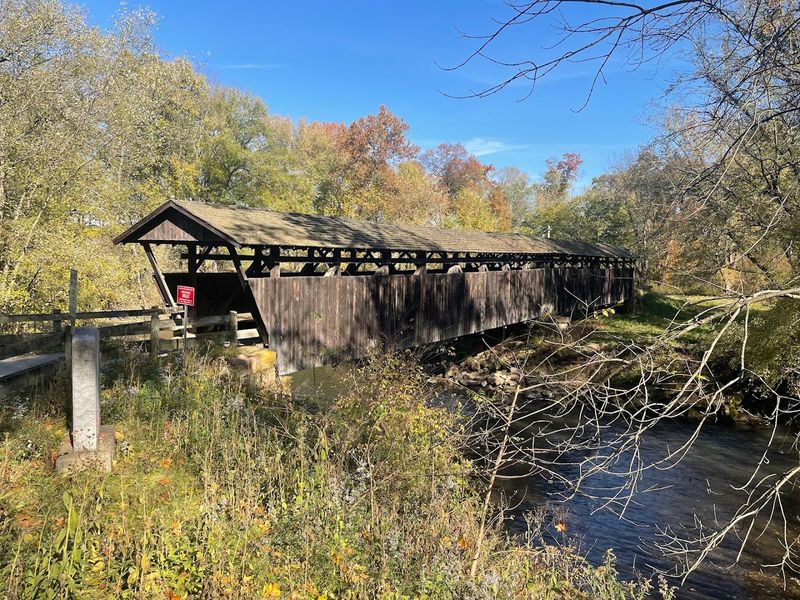
Coshocton County does not always make the top of Ohio road trip lists, but the Helmick Covered Bridge near Warsaw is a very good reason to correct that oversight.
Located on Township Road 25, this historic covered bridge was originally built in 1863 and later restored in 1996 after falling into decay.
The bridge once played an important role in local commerce, providing access to two grist mills used by farmers from as far as 25 miles away.
The setting is deeply rural, with farmland rolling away in every direction and the creek corridor providing a ribbon of green that feels especially vivid in early spring.
Its connection to the old village of Helmick and the area’s milling history gives the stop more context than a quick photo might suggest.
Warsaw is a small town with a friendly atmosphere, and the surrounding Coshocton County countryside is some of the most underrated scenery in the state.
Off the beaten path and absolutely worth it.
12. Helmick Mill Bridge, Malta
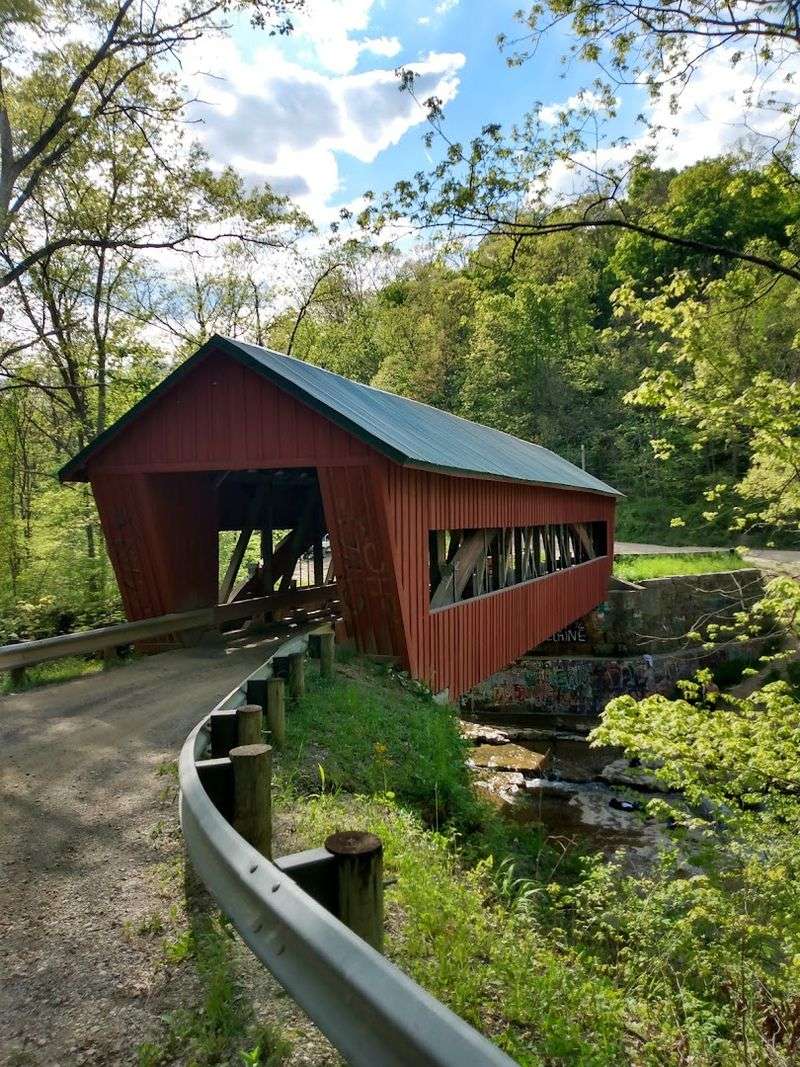
Not to be confused with its Coshocton County cousin, the Helmick Mill Bridge near Malta sits in Morgan County and carries its own distinct story worth knowing.
This bridge on Helmick Road once served a working mill operation along a tributary of the Muskingum River, and the remnants of that industrial history add an extra layer of interest to an already scenic stop.
Morgan County is quiet, hilly, and largely overlooked by visitors passing through southeastern Ohio, which means you are very likely to have this spot almost entirely to yourself on a spring weekday.
The rolling hills around Malta are carpeted in fresh green by mid-April, and the creek corridors fill with spring ephemerals that wildflower enthusiasts make special trips to see.
The bridge structure itself is a sturdy example of rural Ohio craftsmanship, and the weathered wood and iron hardware tell a story of practical engineering built to last generations.
Malta sits along the Muskingum River, and combining this bridge stop with a drive along the river valley makes for a full and satisfying day in a part of Ohio that genuinely deserves more attention.
Quiet, historic, and completely your own.