
These 10 Pennsylvania Churches Have Some Of The Most Unusual Architecture In The State
Pennsylvania has no shortage of churches that make you stop outside and wonder who dreamed up the design.
Some look grand enough to belong in another country, while others lean into shapes and details that feel completely unexpected. That is what makes exploring them so much fun.
You do not have to be an architecture expert to appreciate a building that immediately makes you look twice. The best church designs tell a story before you ever step through the door.
A strange roofline or unusual facade can turn an ordinary drive into an accidental sightseeing stop, and suddenly the building becomes the reason you pulled over.
I am especially easy to distract by architecture that does not fit my expectations.
If I spot a church that looks completely different from everything around it, I am already slowing down. More than once, I have taken a detour just to get a closer look.
Those unexpected stops usually end up being the ones I remember best.
1. Bryn Athyn Cathedral, Bryn Athyn
Stonemasons here worked without finished blueprints, changing details as the walls went up.
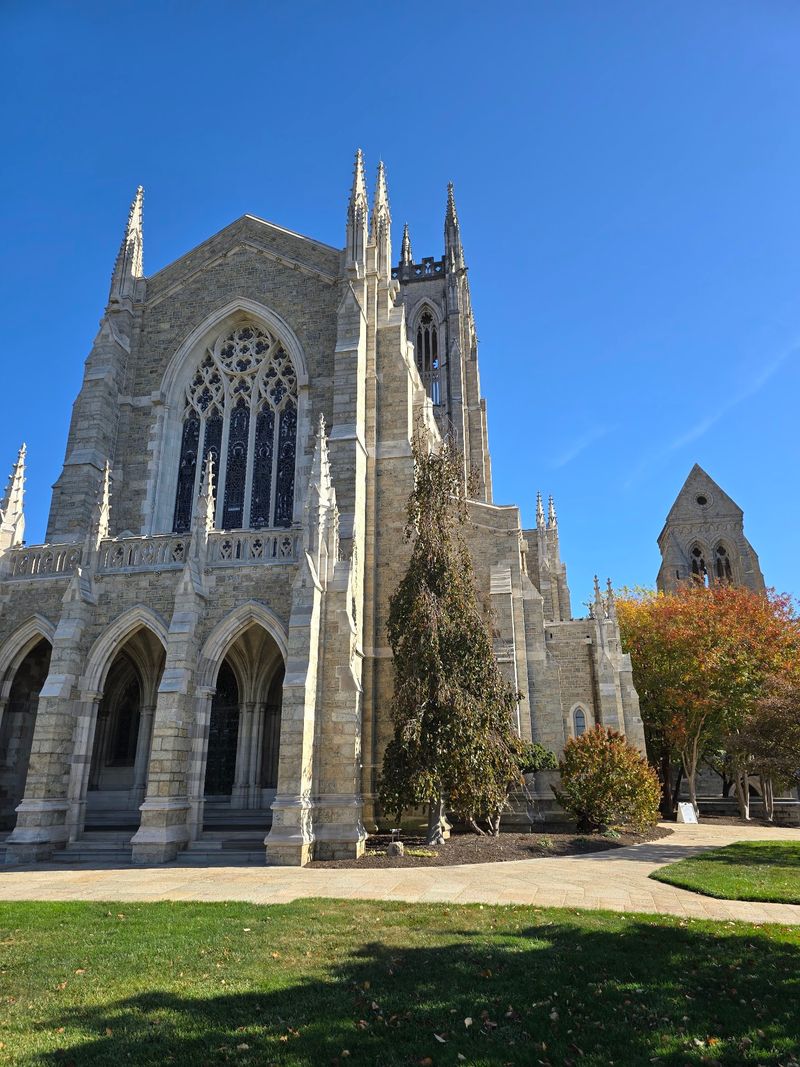
Bryn Athyn Cathedral was built for the General Church of the New Jerusalem starting in 1913, and its craftsmen were encouraged to improvise.
That is why almost no two windows, doorways, or carved capitals match. The style blends Gothic and Romanesque ideas, then bends them until the roofline looks slightly hand drawn.
Stained glass was made on site in a glass shop built just for the project, giving the colors a thick, uneven glow that modern factory glass cannot copy.
Walk the grounds slowly, because the exterior is half the show. Buttresses lean at odd angles, and small stone creatures peek out where you least expect them.
Guided tours run seasonally and are worth timing your visit around, since guides point out the intentional imperfections you would otherwise miss. Afternoon light through the west windows is the photographer’s favorite.
The hilltop setting north of Philadelphia adds to the effect, with lawns sloping away toward trees.
Bryn Athyn Cathedral sits at 900 Cathedral Road in Bryn Athyn, Pennsylvania, and admission to the grounds costs nothing at all.
2. St. Francis De Sales Church, Philadelphia
A tiled dome in West Philadelphia changed how American buildings were roofed.
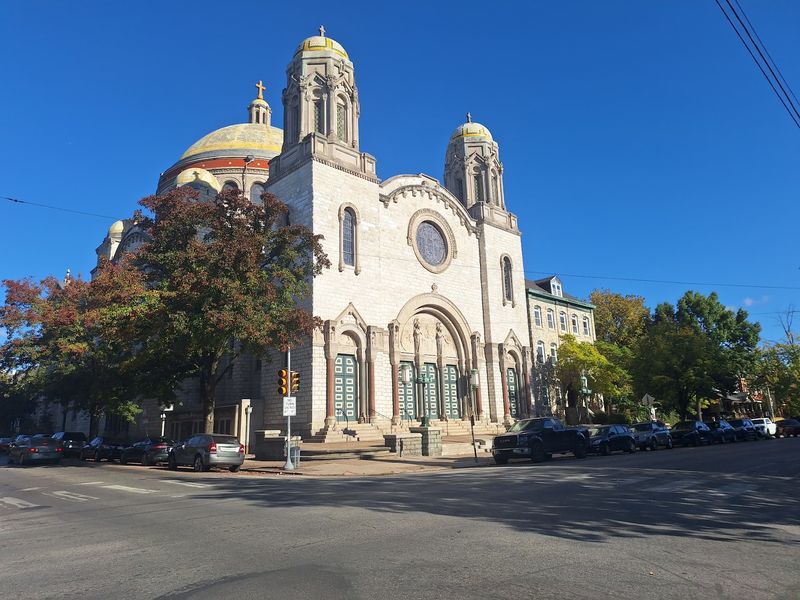
St. Francis de Sales Church opened in 1911 with a dome built by Rafael Guastavino, the Spanish engineer whose interlocking tile system shows up in Grand Central Terminal and dozens of landmarks. Here it was one of his early large scale religious experiments.
The result looks Byzantine rather than Gothic, which was unusual for a Catholic parish in this neighborhood at the time. Instead of soaring vertical lines, you get a wide, round, warmly lit space.
Later renovations added a modern altar arrangement, so the interior mixes old world tile with mid century simplicity. Some visitors find the combination jarring, and that is exactly what makes it memorable.
Try visiting on a bright weekday morning when sunlight hits the dome’s herringbone tilework. The acoustics are excellent, and the parish still hosts music programs.
Street parking around 47th Street can be tight, so patience helps. St. Francis de Sales Church stands at 4625 Springfield Avenue in Philadelphia, Pennsylvania, close enough to the university area that you can pair it with a longer walking loop.
3. Ukrainian Catholic Cathedral Of The Immaculate Conception, Philadelphia
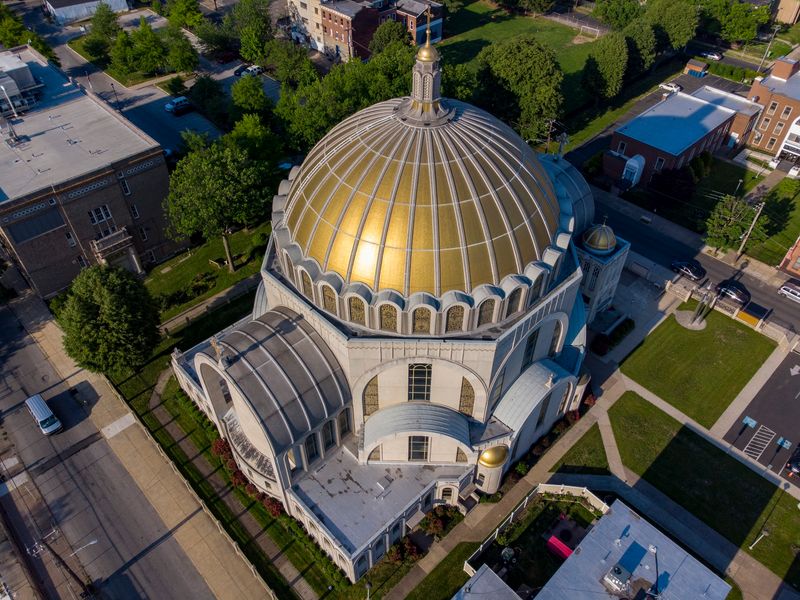
Gold domes over Philadelphia row houses turn heads on Franklin Street every single day.
The Ukrainian Catholic Cathedral of the Immaculate Conception was completed in 1966, and it borrows its silhouette from Hagia Sophia in Constantinople while using thoroughly modern concrete construction.
That mix of ancient shape and mid century engineering is what makes it so odd and so striking.
Its main dome wears Venetian glass tiles, with 22-karat gold fused into the glass so it catches light from blocks away. Inside, a vast mosaic program covers the walls in deep blues and golds.
Byzantine tradition shapes the iconography and sanctuary, while rows of pews fill the nave for worshippers, unlike the open standing arrangement found in some Eastern churches.
The interior still feels impressively spacious. Photographers should aim for late afternoon, when the dome practically glows.
Services follow the Eastern rite, with chant that fills the room beautifully.
Located at 830 North Franklin Street in Philadelphia, Pennsylvania, the Ukrainian Catholic Cathedral of the Immaculate Conception sits in the Northern Liberties area, an easy addition to a day of city wandering.
4. Church Of The Advocate, Philadelphia
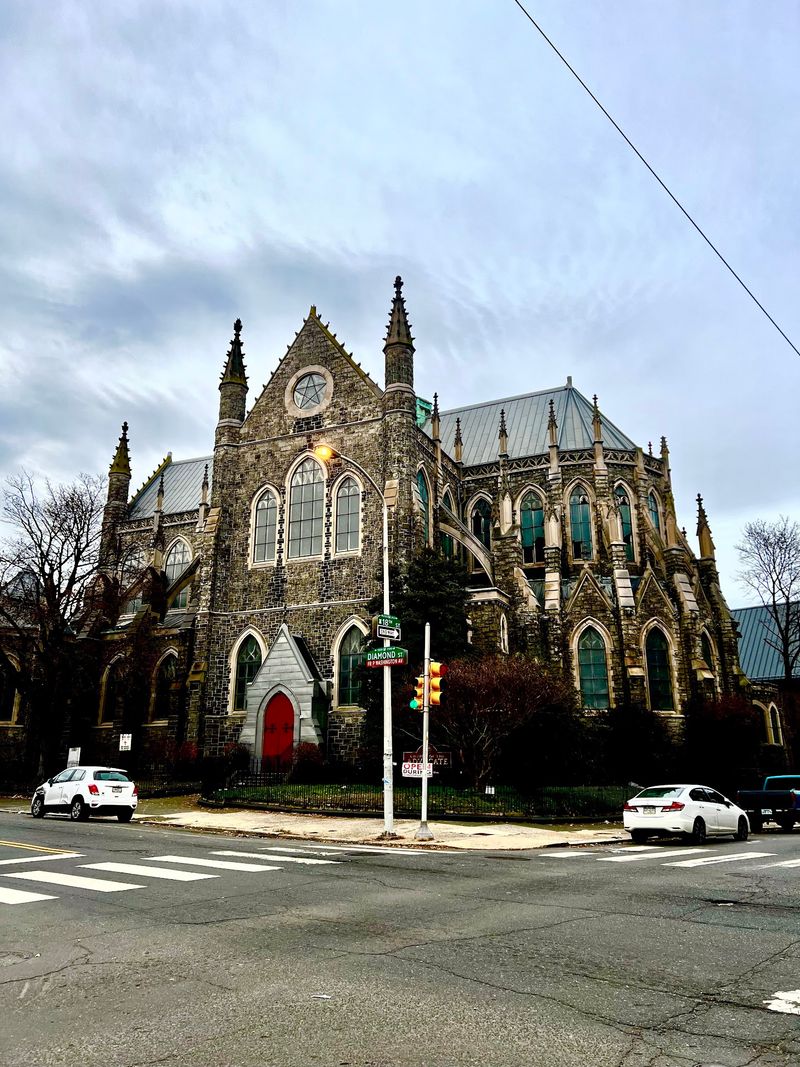
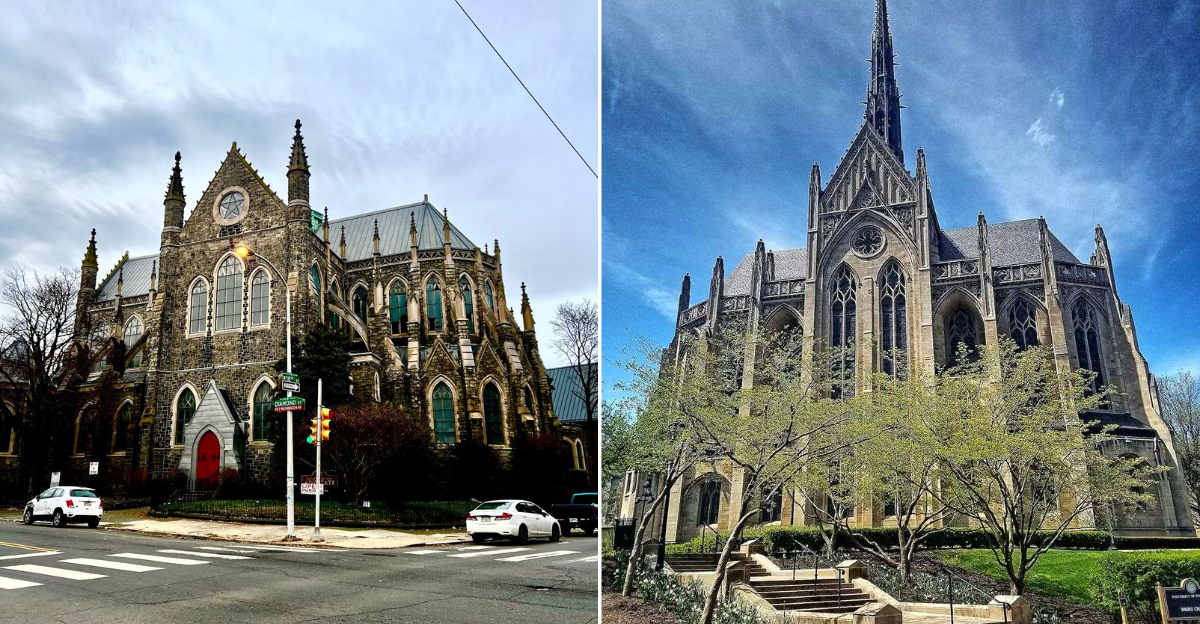
North Philadelphia holds a French Gothic cathedral most travelers never hear about.
The Church of the Advocate was finished in 1897 and modeled closely on thirteenth century French cathedrals, complete with flying buttresses and a soaring nave that feels far too grand for its city block.
Builders used Pennsylvania stone but followed European proportions almost exactly.
What sets it apart today is the art inside. During the early 1970s, murals were painted across the interior walls addressing civil rights and Black history, creating a powerful contrast with the medieval architecture surrounding them.
The building has also hosted major moments in American religious history, including the 1968 Black Power Conference and the 1974 ordination of the first women priests in the Episcopal Church.
The historic sanctuary has been closed to the public since 2024 because of building safety concerns. The congregation remains active and holds worship in other church spaces.
Preservation work continues toward reopening the historic landmark.
The Church of the Advocate stands at 1801 West Diamond Street in Philadelphia, Pennsylvania, and it remains one of the most quietly remarkable buildings in the city.
5. Cathedral Basilica Of Saints Peter And Paul, Philadelphia
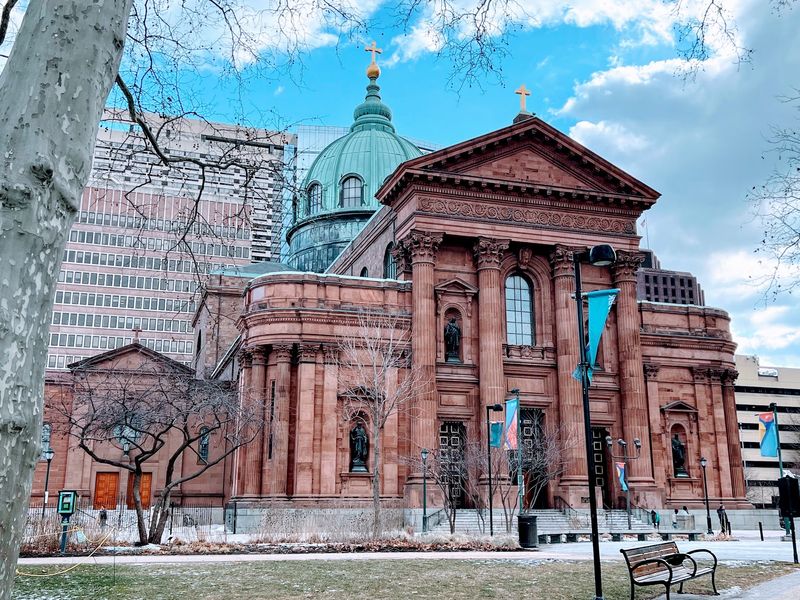
Windows were placed high up here on purpose, and the reason involves flying bricks.
The Cathedral Basilica of Saints Peter and Paul was built between 1846 and 1864 during a period of anti Catholic unrest in Philadelphia, so architects put the stained glass above the reach of any thrown object.
That defensive decision shaped the whole exterior. The style is Neo-Classical rather than Gothic, with a copper dome, brownstone walls, and a facade that looks more like an Italian civic building than an American church.
Few United States cathedrals took this route. Inside, the dome rises one hundred fifty seven feet and murals by Constantino Brumidi, who also painted in the United States Capitol, decorate the space.
Free to enter, it faces Logan Square, which means you can combine it with the fountain, the museums, and a stroll down the Benjamin Franklin Parkway.
Weekday visits are calmer if you want a look upward. The Cathedral Basilica of Saints Peter and Paul stands at 18th and Benjamin Franklin Parkway in Philadelphia, Pennsylvania, and it anchors one of the city’s grandest stretches.
6. Heinz Memorial Chapel, Pittsburgh
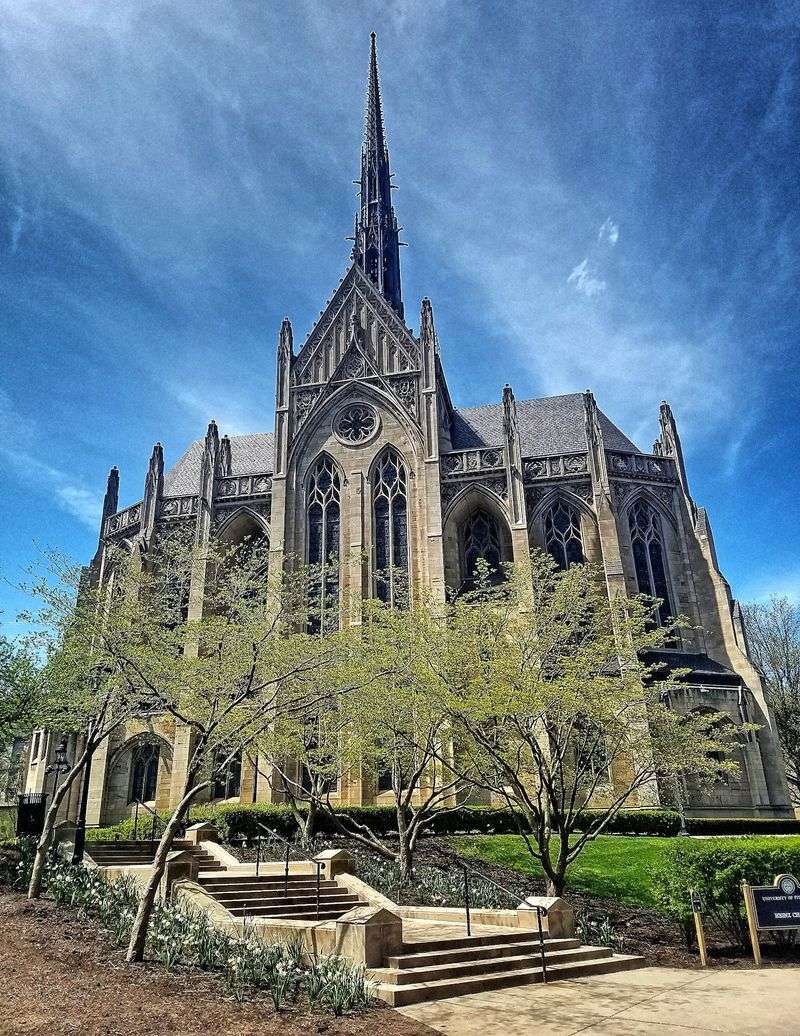
Some of the tallest stained glass windows on earth stand quietly on a college campus.
Heinz Memorial Chapel opened in 1938 on the University of Pittsburgh grounds, designed by Charles Klauder in a French Gothic style.
Its transept windows reach roughly seventy three feet, placing them among the tallest anywhere.
Those windows hold about 250,000 pieces of glass and depict nearly 400 figures, and not all of them are saints.
Charles Dickens, Florence Nightingale, and other secular figures appear among the panels, which was an unusual choice for a chapel.
The building seats around 350 people and is popular for weddings, with reservations available on weekends. Weekday afternoons are the sweet spot for a peaceful look.
Guided tours are offered, with fees for visitors, and the guides know exactly where to stand for the best light. Bring binoculars if you want to identify the upper figures.
Heinz Memorial Chapel sits at Fifth and Bellefield Avenues in Pittsburgh, Pennsylvania, steps from the Cathedral of Learning.
Two extraordinary buildings, one short walk, and visitor hours make both easy to explore.
7. St. John The Baptist Byzantine Catholic Cathedral, Munhall
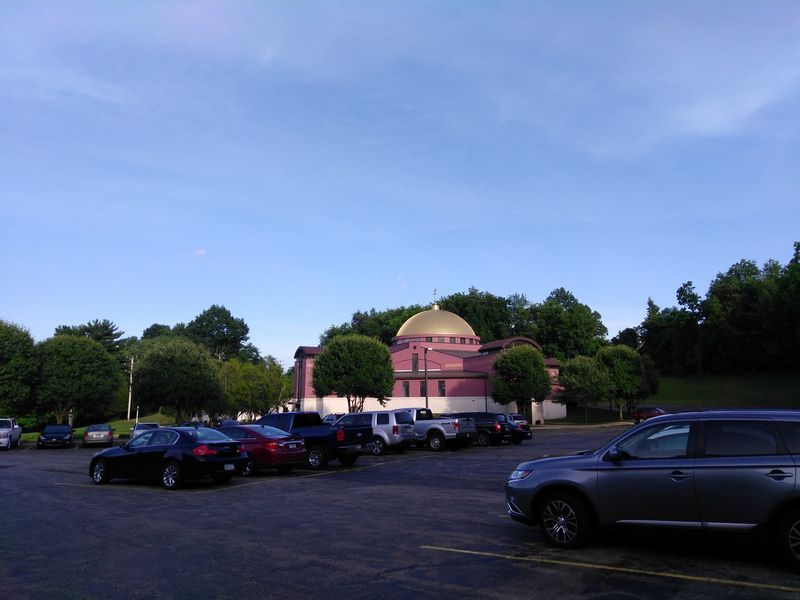
Carpatho Rusyn steelworkers founded the congregation whose cathedral rises above Munhall today.
St. John the Baptist Byzantine Catholic Cathedral opened in 1993 to replace an older parish structure, and was dedicated in 1994 for a congregation founded by Carpatho Rusyn immigrants who worked the mills along the Monongahela River.
Its stepped form and central dome look striking against the industrial landscape of the Homestead area.The design follows Eastern Christian tradition while using contemporary materials throughout.
Step inside and the icon screen, called an iconostasis, immediately signals that this is not a Western style sanctuary.
Chandeliers, gilded icons, and warm wood create a completely different mood from Gothic stone.
The neighborhood itself deserves a walk, since the surrounding streets still show the tight housing patterns of a working mill town from a century ago.
Sunday liturgy is sung, and visitors are generally welcome to observe respectfully from the back. Modest dress is appreciated.
You will find St. John the Baptist Byzantine Catholic Cathedral at 210 Greentree Road in Munhall, Pennsylvania, an easy detour from Pittsburgh and a genuine surprise for anyone expecting only smokestacks.
8. Saint Nicholas Of Myra Byzantine Catholic Chapel, Beaver
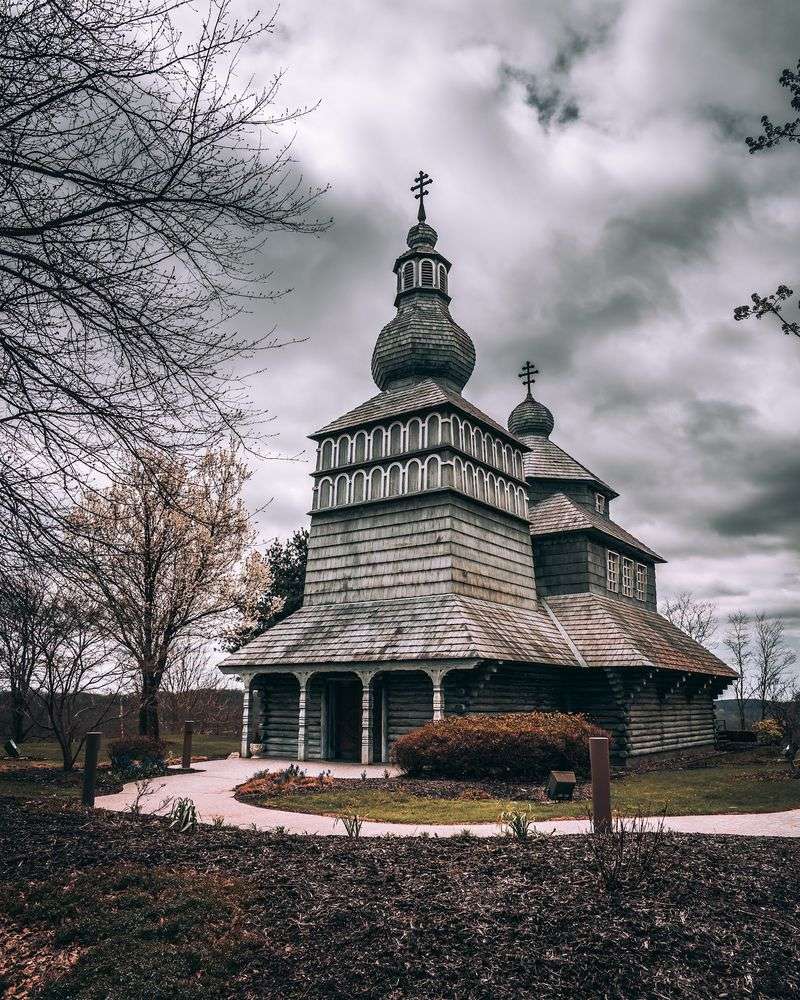
Small does not mean simple, and this Beaver County chapel proves it fast.
Saint Nicholas of Myra Byzantine Catholic Chapel serves a compact community in Beaver, Pennsylvania, and its scale is part of the charm.
Rather than a towering nave, you get an intimate room where every icon feels close enough to study.
Byzantine design rules still apply, which means a domed form, an icon screen separating the sanctuary, and hand painted images covering more surface than you would expect in a building this size.
Candlelight does a lot of work here. Services rely on chant rather than organ music, and the sound in a small space carries differently than in a big cathedral.
Public visits are free, but reservations are required, so calling ahead is more than the smart move.
The chapel also holds Divine Liturgy on Saturdays at five, giving visitors there a regular scheduled weekly service.
Beaver itself makes a pleasant stop, with a walkable main street and river views nearby.
Saint Nicholas of Myra Byzantine Catholic Chapel is located in Beaver, Pennsylvania, roughly forty minutes northwest of Pittsburgh by car.
9. Saint Vincent Archabbey Basilica, Latrobe
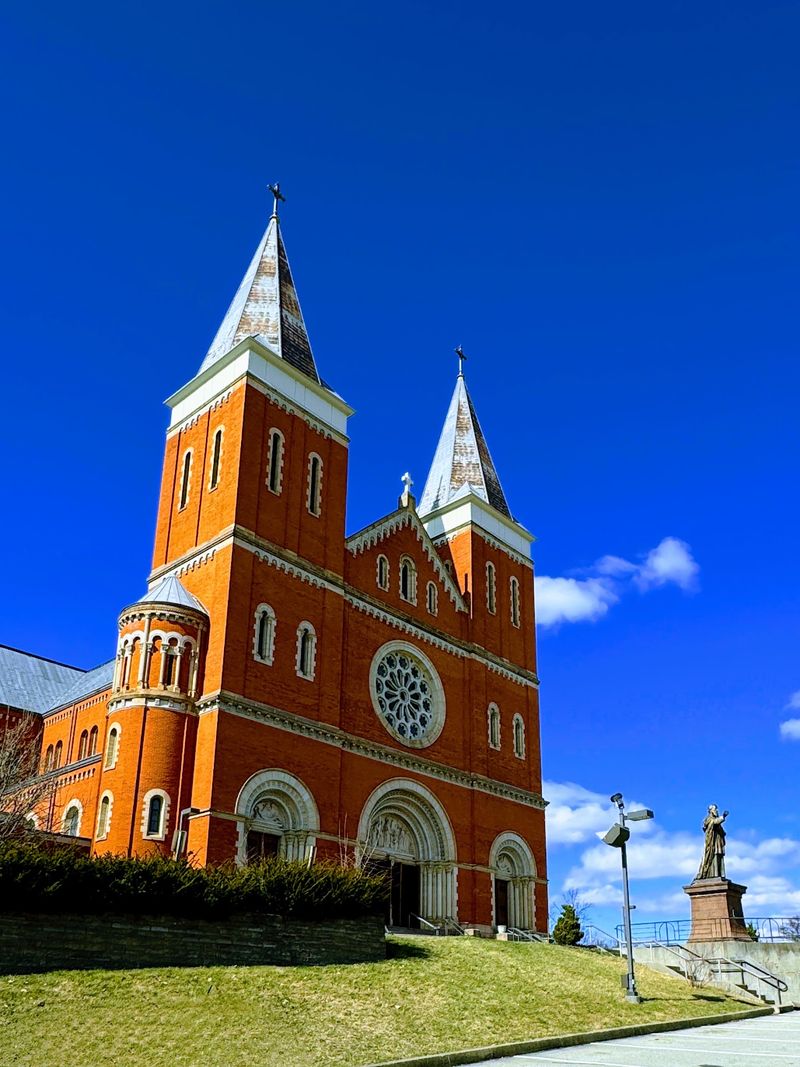
Benedictine monks have prayed on this Latrobe hillside since the 1840s without pause.
Saint Vincent Archabbey Basilica belongs to the oldest Benedictine monastery in the United States, founded in 1846, and the current basilica was completed in 1905 in a stripped down Romanesque style.
Brick towers and round arches give it a monastic seriousness rather than decorative flash. A major renovation in the 1990s reworked the interior, adding a striking modern altar area beneath the historic shell.
The result is a building that reads old from outside and unexpectedly contemporary within, which throws off first time visitors in the best way.
Grounds are open and pleasant to walk, with the college campus, gristmill, and rolling farmland all within reach. Autumn brings serious color to the surrounding hills.
Public tours and self guided visits are usually possible, and the monastic community keeps a daily prayer schedule that visitors may quietly attend.
Saint Vincent Archabbey Basilica sits at 300 Fraser Purchase Road in Latrobe, Pennsylvania, about an hour east of Pittsburgh. Give yourself a full morning here, because the hillside has a way of slowing everyone down.
10. St. Nicholas Croatian Catholic Church, Millvale
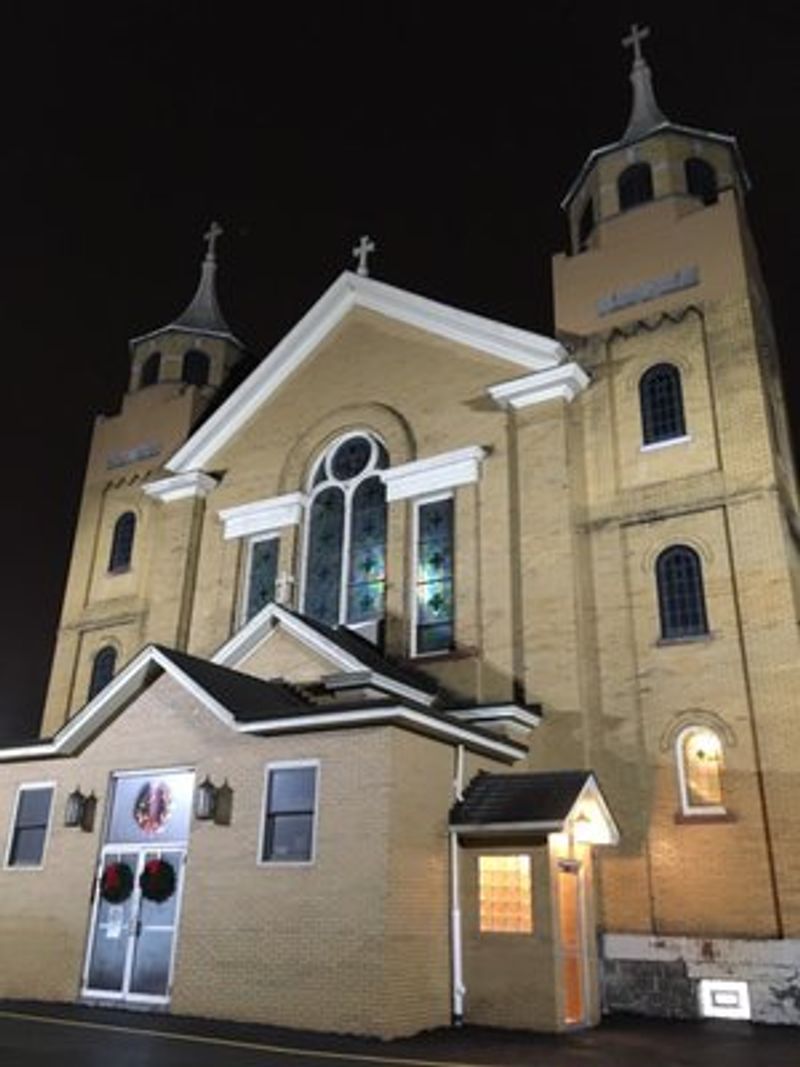
A plain Romanesque exterior gives no warning about what waits inside this Millvale church.
St. Nicholas Croatian Catholic Church was rebuilt in 1922 after fire destroyed most of the original structure. The parish itself dates to 1900 and remains active today, serving a community with deep Croatian roots.
The surprise comes from the walls. Croatian artist Maxo Vanka painted twenty-five murals here in 1937 and 1941, filling the sanctuary with religious scenes, immigrant stories, and powerful images about labor, family, justice, and war.
The paintings turn a modest church into something completely unexpected. Figures stretch across walls and ceilings, while dramatic color and scale make the interior feel closer to an art museum than a neighborhood parish.
Public guided tours currently run several days each week, with advance reservations encouraged or required depending on the time.
The church is also listed on the National Register of Historic Places, and conservation work continues to protect the murals.
St. Nicholas Croatian Catholic Church stands at 24 Maryland Avenue in Millvale, Pennsylvania, just across the Allegheny River from Pittsburgh for future visitors everywhere.