
These 14 Unique Travel Locations In Illinois You Should Check Out In 2026
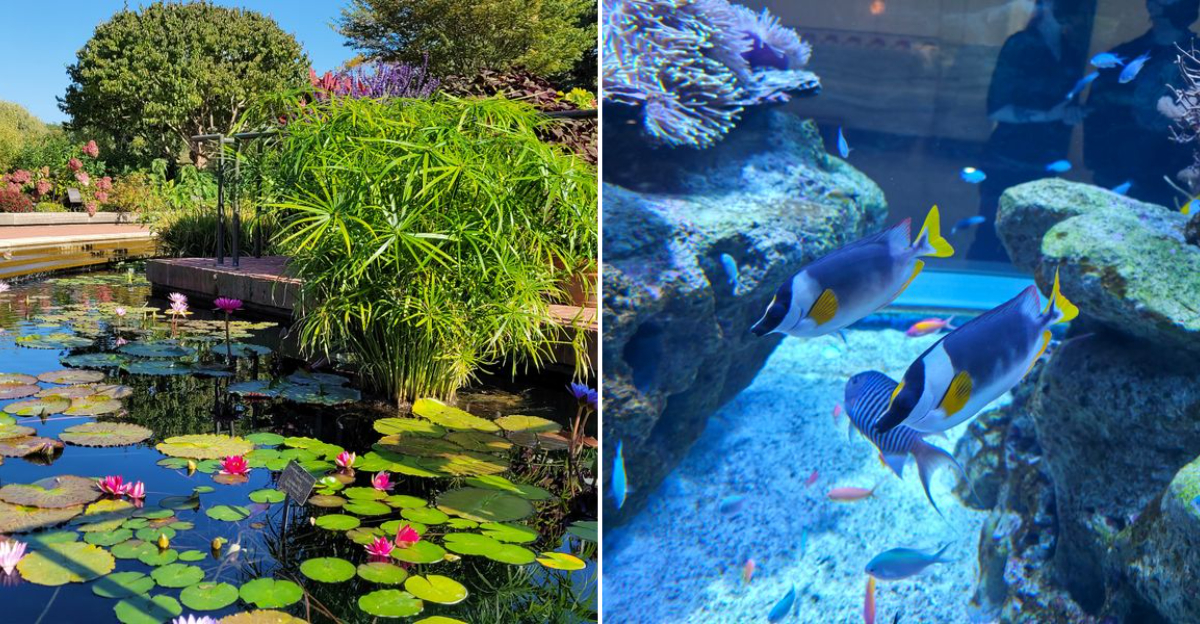
Illinois has a habit of surprising people. One minute it looks flat and familiar, and the next there’s a 100-foot mound built by an ancient city, a waterfall hiding in a sandstone canyon, or a glass floor that dares you to look straight down at the sidewalk.
Some of the most memorable places here don’t announce themselves loudly. They just sit there doing their thing, quietly impressive, a little weird in the best way, and hard to forget once you’ve seen them in person.
A Saturday afternoon can turn into a history lesson, a nature hike, and a mild adrenaline rush without ever leaving the state. After spending time wandering these spots, it’s clear 2026 is a good excuse to look at Illinois with fresh eyes.
Not as a place you pass through, but as a place that sticks with you long after the drive home.
1. Millennium Park – Chicago
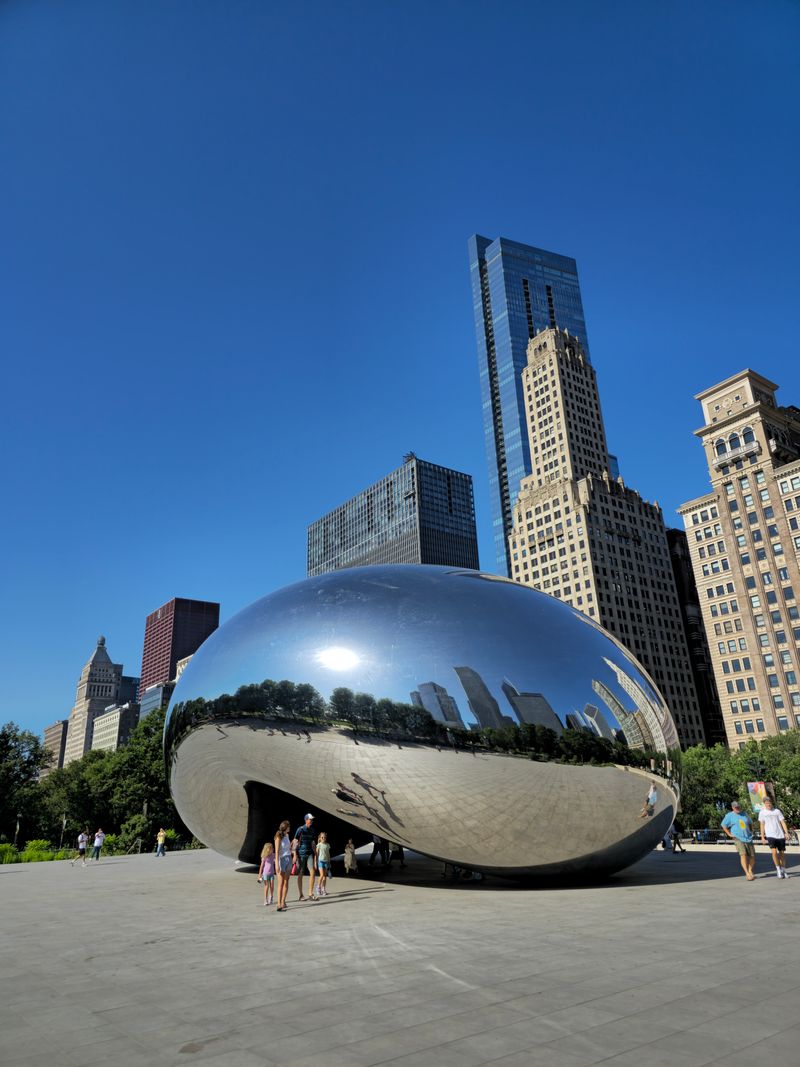
Cloud Gate (affectionately called “The Bean”) has probably photobombed more selfies than any other sculpture in America. This 110-ton stainless steel marvel at 201 E Randolph St, Chicago, IL 60602 reflects the city skyline in ways that’ll make your Instagram followers ridiculously jealous.
Frank Gehry’s Pritzker Pavilion hosts free concerts where the acoustics are so perfect you’ll forget you’re sitting outdoors.
Crown Fountain shoots water from giant LED faces that seem to spit at delighted children below. The Lurie Garden blooms with native prairie plants that somehow thrive amid all that urban concrete.
Winter brings seasonal ice skating to Millennium Park, with additional skating attractions located immediately next door.
Arrive early morning to dodge the selfie-stick wielding crowds and catch that perfect golden-hour Bean shot. The park opened in 2004 and instantly became Chicago’s living room where everyone gathers.
2. Art Institute of Chicago – Chicago
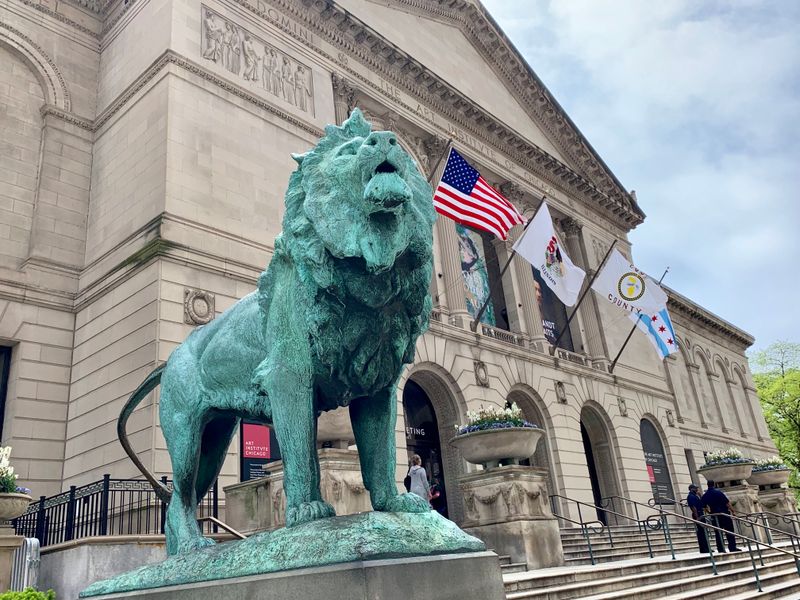
Those bronze lions guarding 111 S Michigan Ave, Chicago, IL 60603 have watched over one of the world’s greatest art collections since 1893. Grant Wood’s “American Gothic” lives here, along with Georges Seurat’s massive “A Sunday on La Grande Jatte” that inspired an entire Broadway musical.
Edward Hopper’s “Nighthawks” captures loneliness so perfectly you can practically taste the diner coffee.
The Modern Wing designed by Renzo Piano floats above the railroad tracks with natural light that makes contemporary art absolutely glow. Impressionist galleries overflow with Monet water lilies and Renoir dancers.
The Thorne Miniature Rooms showcase impossibly detailed dollhouse-sized period interiors that’ll have you squinting in wonder.
Thursday evenings offer extended hours until 8pm when the crowds thin out beautifully. The museum café serves surprisingly decent food considering it’s attached to a cultural institution.
3. Shedd Aquarium – Chicago
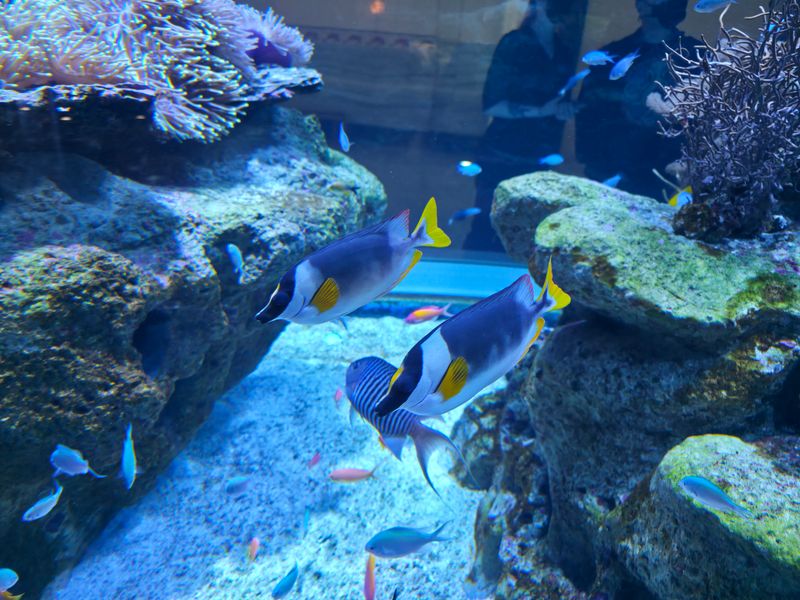
Beluga whales at 1200 S DuSable Lake Shore Dr, Chicago, IL 60605 smile at visitors like they’re in on some cosmic joke about land-dwelling mammals. Built in 1930, this was the world’s largest indoor aquarium and still houses 32,000 aquatic animals who never complain about Chicago winters.
The Caribbean Reef surrounds you with sharks, rays, and sea turtles in a massive 90,000-gallon cylindrical tank.
Pacific white-sided dolphins participate in educational presentations that highlight their intelligence and playful behaviors. The Wild Reef exhibit lets you walk through a Philippine coral reef where sharks glide overhead.
Penguins waddle around their rocky habitat looking perpetually overdressed for the occasion.
The lakefront location offers stunning skyline views between otter encounters and jellyfish meditations. Summer weekdays before 11am provide the most peaceful viewing experiences.
The 4D theater adds wind, mist, and scents to nature films for full sensory immersion.
4. Field Museum – Chicago
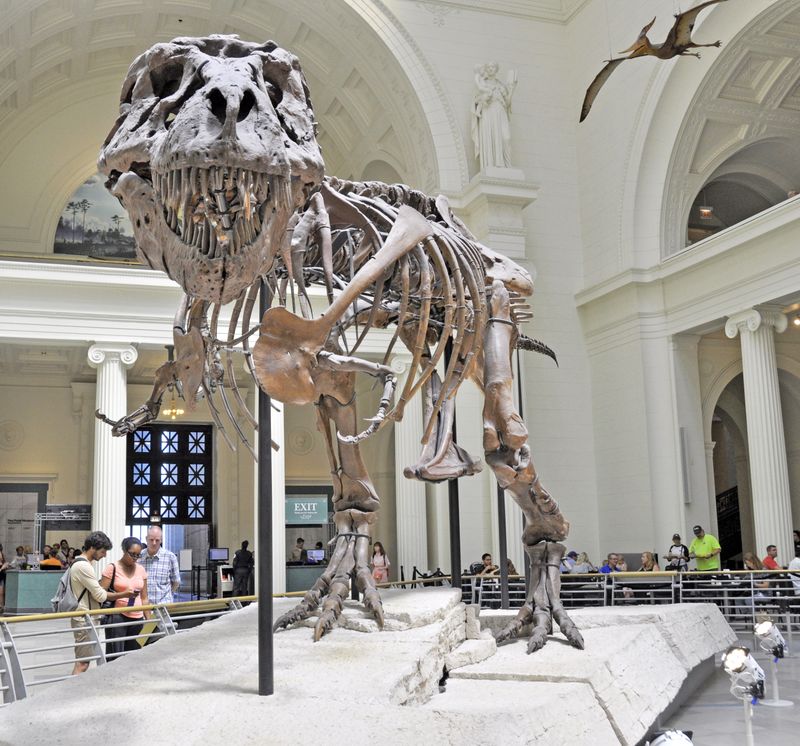
Sue the T-Rex reigns over 1400 S DuSable Lake Shore Dr, Chicago, IL 60605 as the largest and most complete Tyrannosaurus rex ever discovered. This 67-million-year-old celebrity measures 40 feet long and still has teeth that’ll make you grateful for the extinction event.
The Ancient Americas exhibit houses actual mummies and explains civilizations that thrived long before Europeans showed up.
Inside Ancient Egypt, you’ll find a working replica tomb and genuine artifacts that survived thousands of years. The Grainger Hall of Gems dazzles with meteorites, diamonds, and minerals that formed under unimaginable pressure.
Evolving Planet traces life from single-celled organisms through the age of dinosaurs to modern mammals.
The museum opened in 1921 to house collections from the 1893 World’s Columbian Exposition. Underground Adventure shrinks you to bug-size to explore soil ecosystems.
Free admission is offered on select days for Illinois residents, with schedules announced in advance.
5. Skydeck Chicago – Chicago
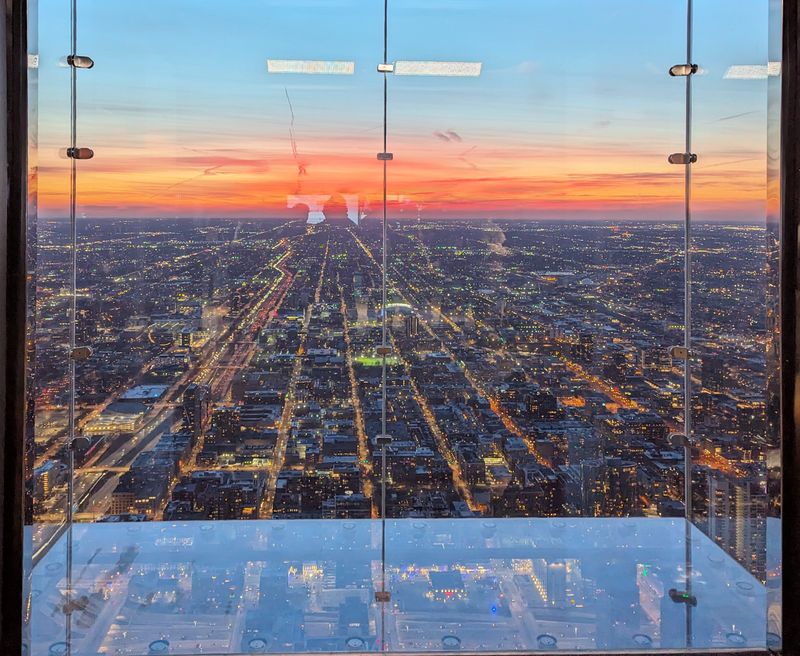
Standing on transparent glass boxes at 233 S Wacker Dr, Chicago, IL 60606 while suspended 103 floors above the sidewalk separates the brave from the sensible. The Ledge extends four feet outside Willis Tower (formerly Sears Tower) and supports your weight with 1.5-inch thick glass layers.
Your brain screams danger while your phone captures that must-have floating-above-the-city photo.
On clear days, visibility stretches for miles across the region from this 1,353-foot perch. Interactive exhibits explain Chicago’s architectural evolution from the Great Fire to modern supertall skyscrapers.
The building held the world’s tallest title from 1973 to 1998 and still dominates the skyline.
Sunset visits reward you with the city transforming from daylight bustle to twinkling night magic. Purchase tickets online to skip the tourist-packed lobby lines.
The gift shop sells “I survived the Ledge” merchandise for those who need proof of their courage.
6. Starved Rock State Park – Oglesby
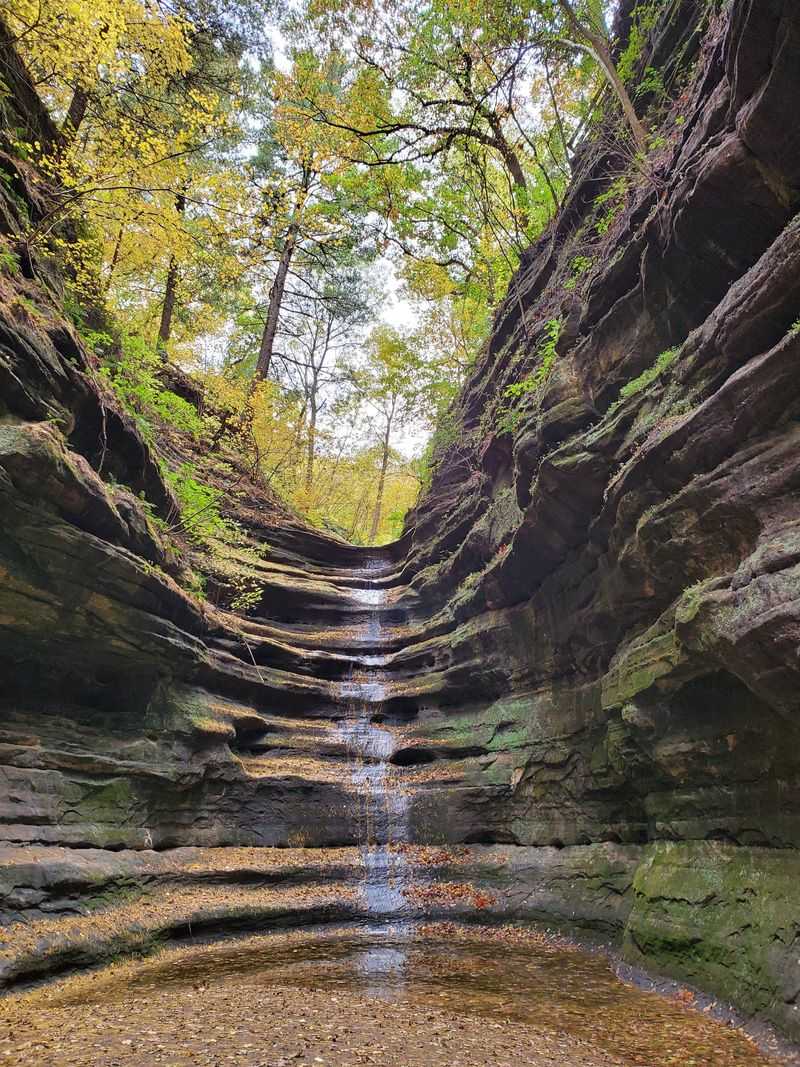
Eighteen canyons slice through 2668 E 875th Rd, Oglesby, IL 61348 like nature’s own maze carved by glacial meltwater over thousands of years. French explorers named this dramatic bluff after a tragic Native American legend involving a besieged tribe.
Spring snowmelt transforms dry canyons into spectacular waterfalls that crash over moss-covered sandstone cliffs.
Thirteen miles of trails wind through forests where bald eagles soar above the Illinois River below. St. Louis Canyon creates a natural amphitheater where frozen waterfalls in winter look like massive ice sculptures.
Wildflowers carpet the forest floor each spring while fall foliage explodes in orange and crimson.
The historic lodge built by the Civilian Conservation Corps in the 1930s serves comfort food with canyon views. Weekday visits avoid the weekend crowds that pack the most popular trails.
Winter hiking offers solitude and otherworldly ice formations worth the cold fingers.
7. Matthiessen State Park – Oglesby
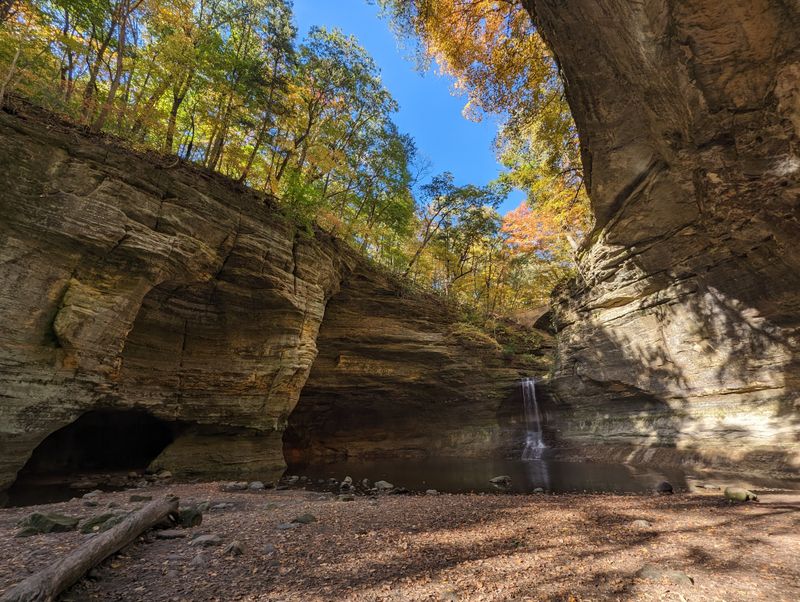
Just five miles from its famous neighbor at 2500 IL-178, Oglesby, IL 61348, Matthiessen offers equally stunning canyons with fraction of the crowds. Frederick William Matthiessen purchased this land in 1927 and eventually donated it for public enjoyment.
The Upper Dells feature layered sandstone cliffs in shades of tan, rust, and cream that photographers absolutely adore.
Lake Falls plunges into an emerald pool surrounded by fern-covered walls that feel like a secret grotto. The Lower Dells require more adventurous hiking through stream crossings and rocky terrain.
Cascade Falls creates a curtain of water you can walk behind when water levels cooperate.
Five miles of trails connect both dells through mature forests and prairie restorations. Spring brings roaring waterfalls while summer offers shaded canyon coolness.
The park closes at sunset, so time your visit to catch late afternoon light painting the canyon walls. Wear waterproof boots because you’ll definitely get wet exploring these magical formations.
8. Garden of the Gods Recreation Area – Herod
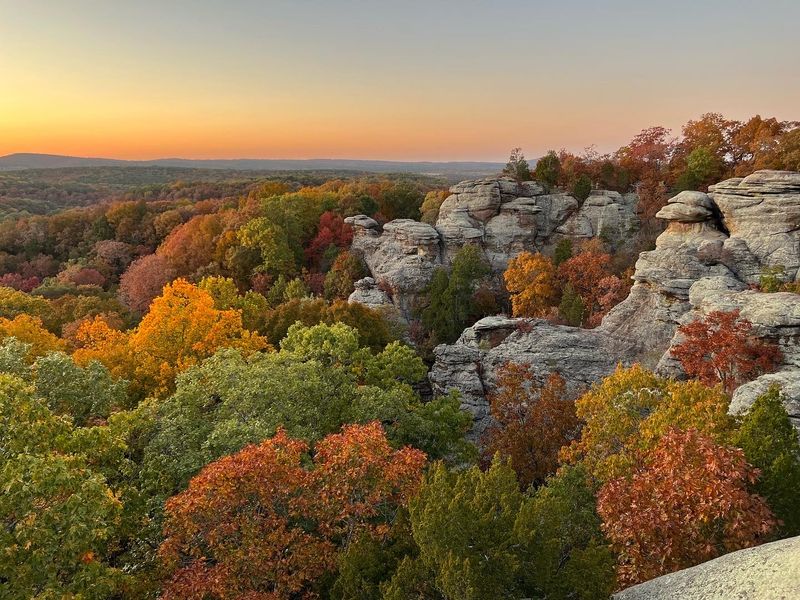
Sandstone sculptures at 1063 Garden of the Gods Rd, Herod, IL 62947 prove Illinois isn’t all flat farmland stereotypes. These 320-million-year-old formations jut from forested hilltops like ancient monuments to geological patience.
Camel Rock, Anvil Rock, and Mushroom Rock earned their names from obvious resemblances that spark imagination.
The quarter-mile Observation Trail loops through the main rock garden offering panoramic views across Shawnee National Forest. Sunrise and sunset paint these formations in colors that make landscape photographers weep with joy.
Native Americans considered this area sacred long before settlers arrived.
The rocks formed when this region sat beneath a shallow sea, then erosion carved away softer materials leaving these resistant remnants. Wilderness camping is available nearby for those wanting to catch dawn’s first light on the stones.
The short trail is natural sandstone with steps and uneven grades, so sturdy shoes are recommended.
9. Cahokia Mounds State Historic Site – Collinsville
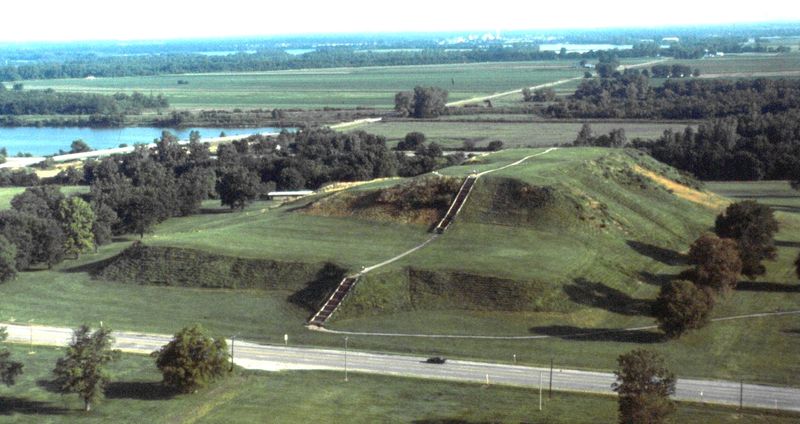
North America’s largest pre-Columbian city thrived at 30 Ramey St, Collinsville, IL 62234 centuries before Columbus got lost looking for India. Between 1050 and 1200 CE, roughly 20,000 people lived here in a sophisticated urban center complete with planned neighborhoods and astronomical observatories.
Monks Mound rises 100 feet tall, covering 14 acres at its base as the largest prehistoric earthwork in the Americas.
Climbing the 156 steps to the summit rewards you with views across the ancient plaza where ceremonies and games once captivated thousands. Woodhenge reconstructs the original cedar post circle used to track solstices and equinoxes with remarkable precision.
The interpretive center explains Mississippian culture through artifacts and exhibits that challenge everything you thought you knew about ancient America.
UNESCO designated this a World Heritage Site recognizing its global significance. Roughly 120 mounds once existed here, with about 80 surviving today and approximately 72 preserved within the protected site.
Free admission makes this archaeological treasure accessible to everyone curious about America’s deep indigenous history.
10. Abraham Lincoln Presidential Library and Museum – Springfield
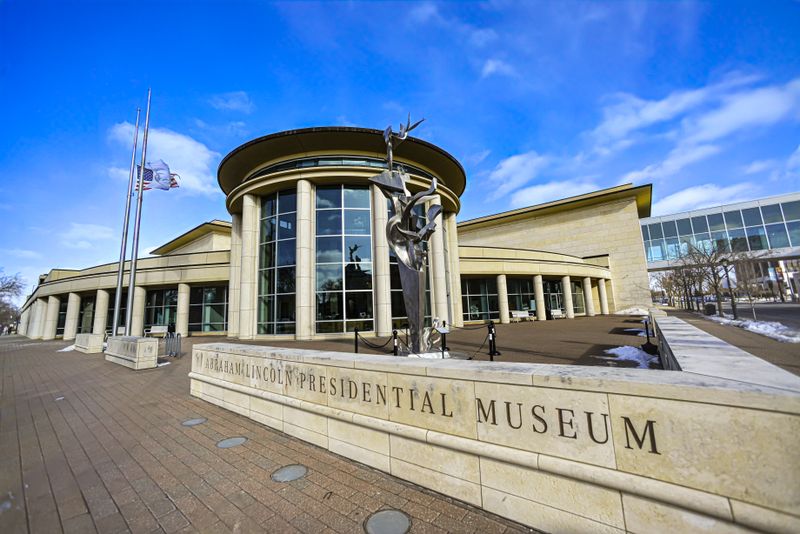
Lincoln’s life unfolds at 212 N 6th St, Springfield, IL 62701 through immersive exhibits that bring the 16th president beyond marble statue mythology. Holographic Lincoln debates Stephen Douglas using actual historical quotes that crackle with relevance today.
The museum opened in 2005 combining serious scholarship with theatrical presentations that engage even history-resistant teenagers.
Treasures Gallery rotates historically significant artifacts associated with Lincoln, with featured items changing over time. The White House Years exhibit recreates the pressures of governing during America’s bloodiest conflict.
Civil War battle sounds and period music create atmospheric time travel.
The separate library houses 52,000 books and 12 million documents for researchers diving deep into Lincoln scholarship. Mrs. Lincoln’s Attic uses special effects to explore Mary Todd Lincoln’s controversial life and struggles with mental health.
Journey theaters present Lincoln’s story through multi-sensory experiences. Springfield itself preserves Lincoln’s law office, home, and tomb for those wanting the complete pilgrimage.
11. Chicago Botanic Garden – Glencoe
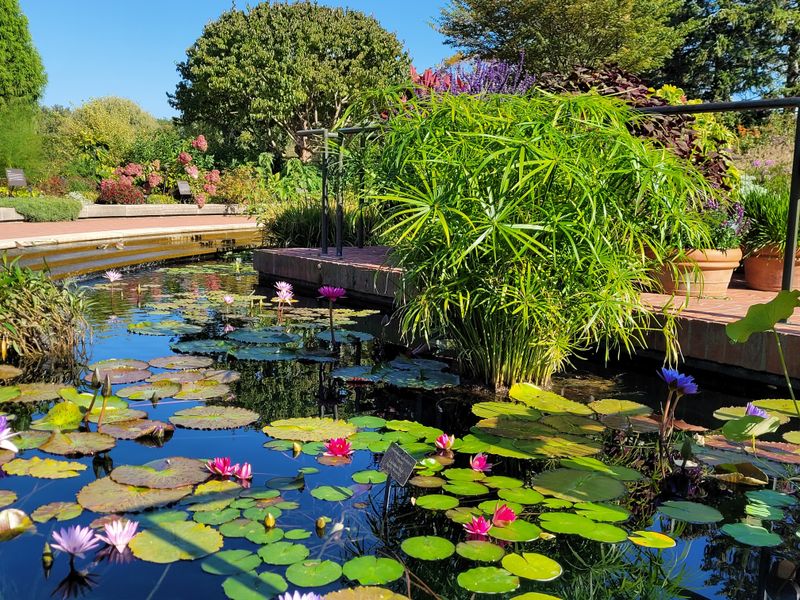
Twenty-seven gardens sprawl across 385 acres at 1000 Lake Cook Rd, Glencoe, IL 60022 proving paradise doesn’t require tropical climates. The Japanese Garden features authentic bridges, stone lanterns, and carefully pruned trees that embody centuries of horticultural philosophy.
Nine islands connected by bridges float on lagoons where herons hunt and turtles sun themselves on logs.
The English Walled Garden explodes with perennials arranged by color in patterns that change with seasons. The Grunsfeld Children’s Growing Garden lets kids plant, water, and harvest vegetables while learning where food actually originates.
Native Plant Garden showcases Illinois flora that thrives without fussy maintenance or chemical assistance.
Free admission makes this botanical wonderland accessible, though parking fees vary by day and season. The Garden opened in 1972 and now welcomes over one million visitors annually.
Tram tours carry those unable to walk the miles of paths. Evening Garden Walks during summer offer cooler temperatures and magical lighting.
Four seasons each bring different botanical dramas worth witnessing.
12. Anderson Japanese Gardens – Rockford
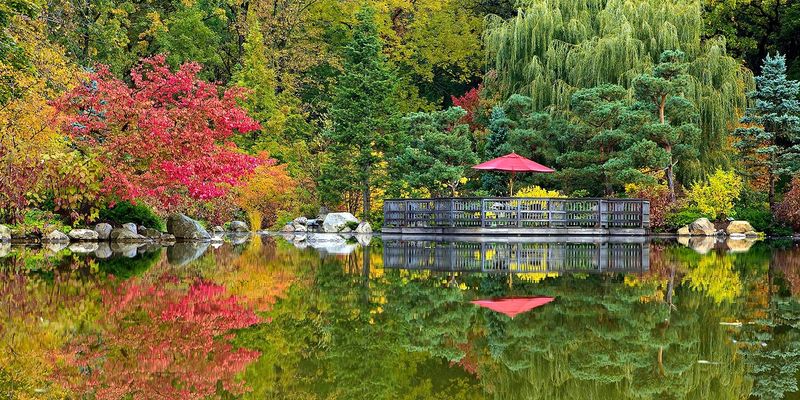
Consistently ranked among America’s finest Japanese gardens, 318 Spring Creek Rd, Rockford, IL 61107 creates tranquility through carefully orchestrated nature. John R.
Anderson began this project in 1978, eventually expanding it to 12 acres of ponds, waterfalls, and meticulously pruned vegetation. Every stone, plant, and water feature follows principles established centuries ago in Kyoto.
Koi swim in ponds crossed by authentic wooden bridges imported from Japan. The Guest House serves traditional tea ceremonies where ritual slows time to meditative pace.
Sukiya-style architecture blends seamlessly with landscapes designed to reveal new perspectives around every curve.
Spring brings cherry blossoms and azaleas in delicate pinks and whites. Summer’s lush greenery reflects in still water like nature’s mirror.
Fall ignites Japanese maples in scarlet and gold. Even winter’s bare branches and snow create stark beauty worth contemplating.
Guided tours explain the symbolism and philosophy behind seemingly simple arrangements. This garden proves Rockford contains unexpected sophistication beyond its industrial reputation.
13. Brookfield Zoo Chicago – Brookfield

Since 1934, 8400 31st St, Brookfield, IL 60513 has pioneered naturalistic habitats that revolutionized how zoos present animals. Tropic World recreates rainforests from three continents under a massive indoor canopy where monkeys swing freely overhead.
The Living Coast replicates Peruvian beaches complete with Humboldt penguins, sea lions, and diving birds.
Great Bear Wilderness houses grizzlies, polar bears, and Mexican gray wolves in sprawling environments mimicking their native territories. The Fragile Kingdom separates African desert and Asian rainforest cats in exhibits that educate about habitat loss.
Butterflies swarm the seasonal greenhouse landing on visitors like living flowers.
Dolphin Discovery presentations highlight intelligence and athleticism while emphasizing marine conservation challenges. The zoo spans 216 acres requiring comfortable shoes and realistic expectations about seeing everything in one visit.
The Hamill Family Play Zoo lets children burn energy while learning through interactive animal encounters. Motor Safari trams carry tired families between distant exhibits.
Summer concerts pair music with twilight animal watching for unique date nights.
14. Galena – Illinois
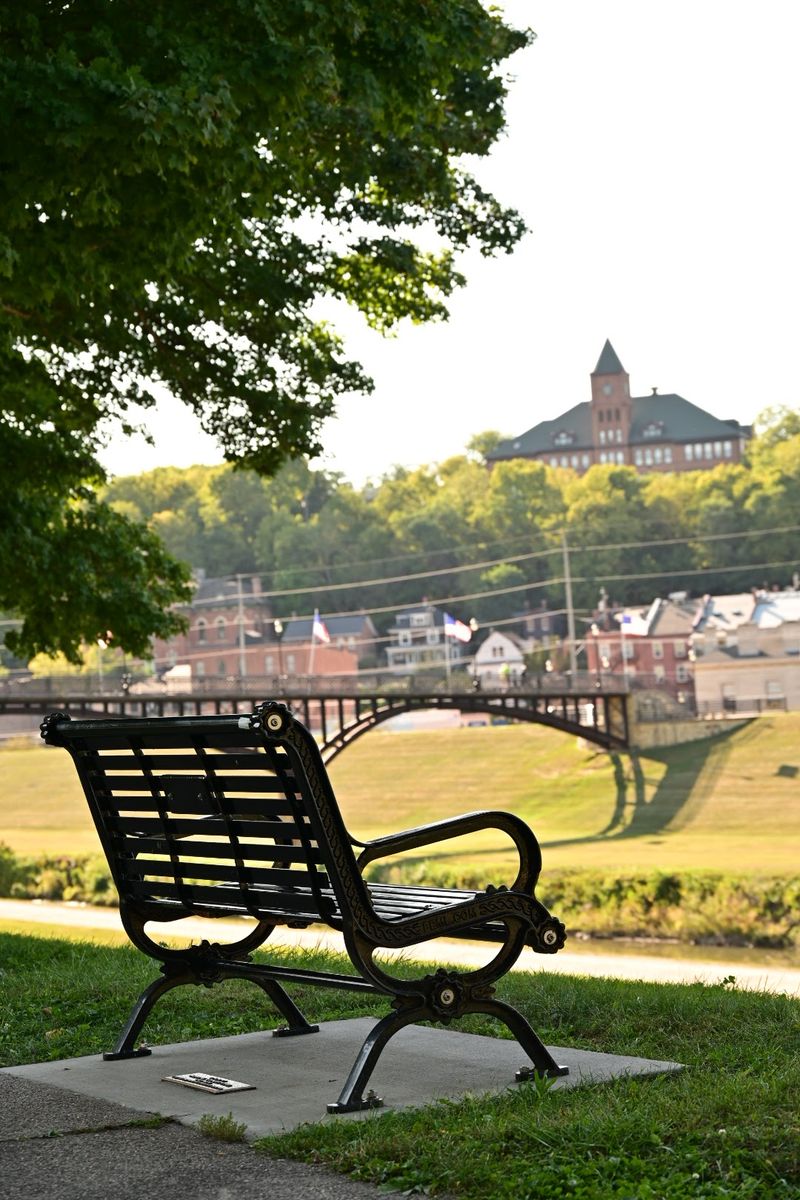
A large portion of this northwest Illinois town is preserved within a nationally registered historic district, with Main Street tumbling down a steep hill lined with 1850s brick storefronts housing antique shops, galleries, and restaurants.
Ulysses S. Grant lived here before the Civil War made him famous, and his preserved home welcomes visitors wanting to walk through presidential history.
Lead mining created this boomtown’s wealth before the ore ran out and the town essentially fossilized in architectural amber. Rolling hills surrounding the town explode with fall colors that rival New England’s famous foliage.
The Galena River still flows through downtown though steamboats no longer crowd its banks.
Trolley tours narrate the town’s rise, fall, and resurrection as a tourist destination. Ghost tours capitalize on centuries of history and supposed supernatural residents.
Boutique hotels occupy restored mansions where lumber barons once entertained.