
12 Things You Should Never Do During Your First Chicago Visit
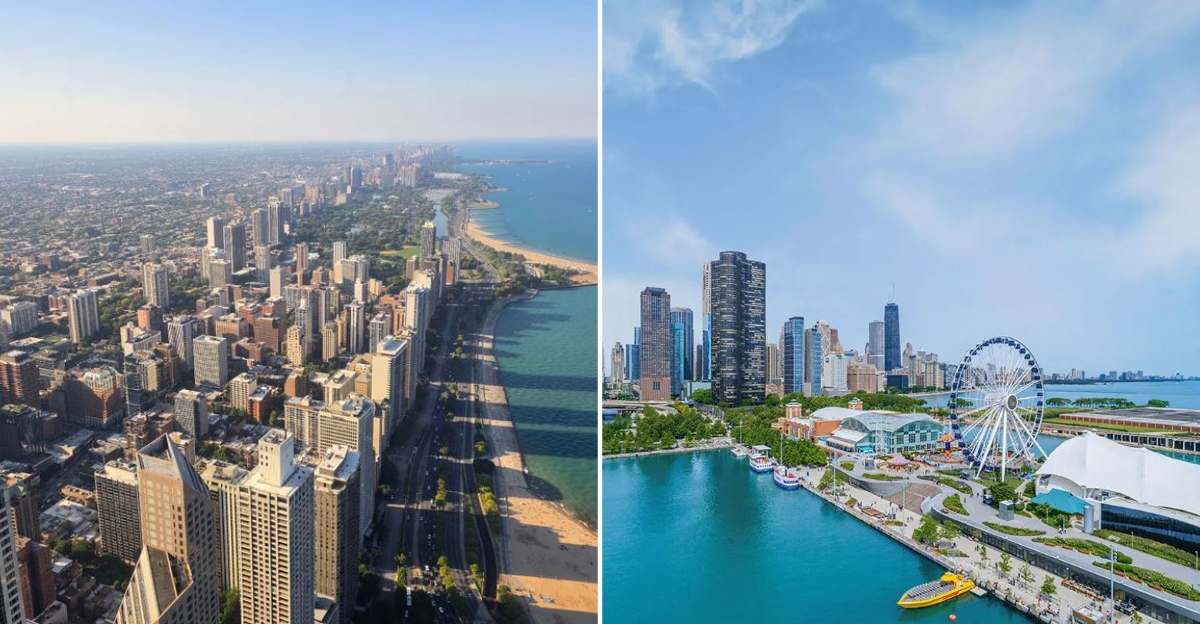
Chicago can turn a simple weekend plan into a full-blown strategy session before breakfast. Illinois’ biggest city packs so much into its streets that first-time visitors often lose time deciding where to go, how to get there, and what deserves a spot on the schedule.
The right timing can save you from long lines, crowded attractions, and unnecessary detours. It can also help you enjoy the lakefront, explore beyond downtown, and avoid spending half the day in traffic.
This guide covers the mistakes that can quietly drain time, money, and energy during a first visit. Skip them, and the city becomes much easier to enjoy.
You will see more, move around with less stress, and leave feeling like the trip lived up to the excitement.
Never Try To Drive Everywhere Downtown
Renting a car and driving yourself around downtown Chicago sounds convenient until you are stuck in bumper-to-bumper traffic on Michigan Avenue with nowhere to park and a meter ticking.
Chicago’s downtown grid is dense, parking garages are expensive, and street parking near major attractions is nearly impossible during peak tourist season.
The city’s public transit system, known as the CTA, covers almost every corner of the city with its L train lines and bus routes.
A single Ventra card gives you access to both trains and buses at a fraction of what you would spend on parking alone. Millennium Park and the Museum Campus are accessible from nearby train stops, while Navy Pier usually requires a bus connection or a longer walk.
Rideshare apps are also a solid backup when you need a direct trip late at night or with heavy bags. Locals almost never drive downtown for leisure, and that habit exists for a very good reason.
Save the rental car for day trips outside the city, like a drive up the North Shore or out to Galena, and let the CTA do the heavy lifting while you are in the thick of it.
Never Visit The Art Institute On A Tuesday
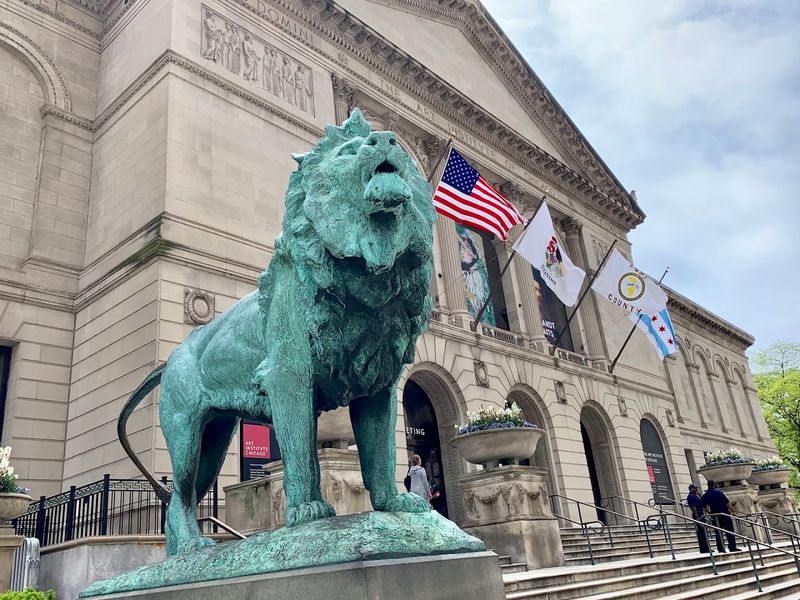
Here is a fact that catches a surprising number of first-timers off guard: the Art Institute of Chicago is closed on Tuesdays.
The museum, which sits on South Michigan Avenue in the heart of the Loop, is closed every Tuesday. Showing up on that day means you will be staring at those famous bronze lion statues from the outside with nowhere to go.
The Art Institute is one of the most celebrated art museums in the entire country, housing works by Georges Seurat, Grant Wood, and Edward Hopper, among hundreds of other masters.
Planning your visit for Wednesday through Monday gives you the full experience, and arriving early in the morning on a weekday keeps the crowds manageable. The museum spans two main buildings connected by the Modern Wing, which alone is worth an extra hour of your time.
Purchasing tickets online in advance is strongly recommended, especially during summer months when tour groups descend in force.
The Thorne Miniature Rooms on the lower level are a surprisingly delightful detail that many visitors overlook entirely. Block out at least three hours if you want to cover the highlights without feeling rushed.
Never Assume Cloud Gate Is All Millennium Park Offers
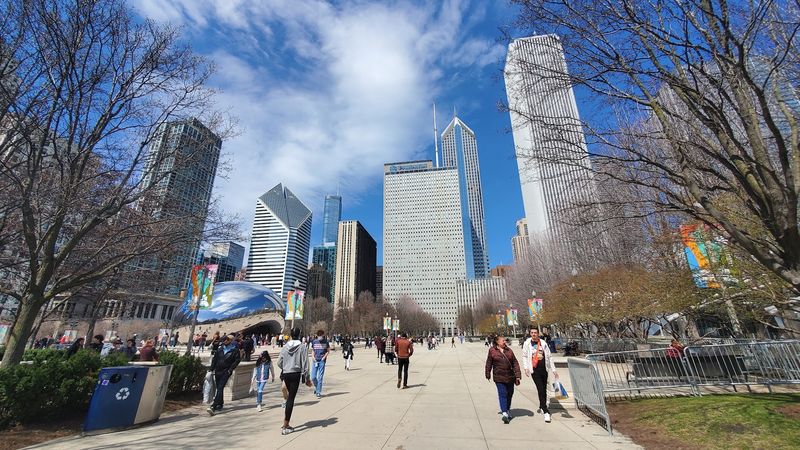
Cloud Gate, the giant reflective bean-shaped sculpture that everyone photographs the moment they arrive, is genuinely worth seeing.
But treating it as the entire point of Millennium Park means missing out on a seriously impressive public space that stretches across 24.5 acres in the heart of Chicago’s Grant Park neighborhood.
The Jay Pritzker Pavilion hosts free outdoor concerts throughout the summer, with a lawn that fills up with blanket-carrying locals on warm evenings.
Crown Fountain, the interactive water feature with giant video faces that spout water at unsuspecting kids, is one of the most playful public art installations in any American city.
The Lurie Garden sits quietly at the south end of the park, offering a peaceful green escape that feels worlds away from the surrounding skyline.
In winter, the park transforms completely, with an ice skating rink opening near Cloud Gate that draws both families and seasoned skaters.
The BP Bridge, designed by Frank Gehry, arches across Columbus Drive and connects Millennium Park to Maggie Daley Park, which has its own climbing walls and mini-golf course. Spending a full morning here before moving on gives you a much richer picture of what Chicago does best.
Never Arrive At Shedd Aquarium Without Checking Tickets
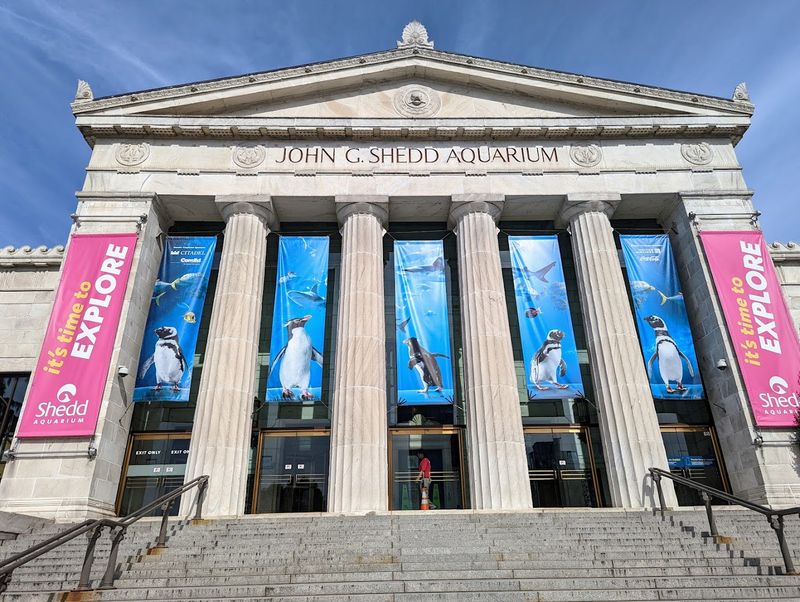
Few things deflate a Chicago itinerary faster than walking up to the Shedd Aquarium on a busy summer Saturday and discovering that same-day tickets are sold out or that wait times have stretched past two hours.
The Shedd, located on Museum Campus along the Lake Michigan shoreline at 1200 South Lake Shore Drive, is one of the most visited indoor aquariums in the world, and it fills up fast.
Booking tickets online before your trip is not just a suggestion, it is practically a requirement during peak season from Memorial Day through Labor Day.
The aquarium’s website allows you to select timed entry windows, which dramatically cuts down on waiting and gives your visit a smoother flow.
Members of the Chicago museums generally get discounted or free entry, so if you plan to visit multiple Museum Campus institutions, a Chicago Explorer Pass might save you real money.
Inside, the beluga whale habitat, the 4D theater experience, and the dolphin presentations are the most popular draws, so hitting those early in the day before crowds build is a smart move.
The aquarium also offers behind-the-scenes experiences for an additional fee that are genuinely memorable, especially for younger visitors making their first trip to Chicago.
Never Rush Through The Entire Museum Campus In One Afternoon
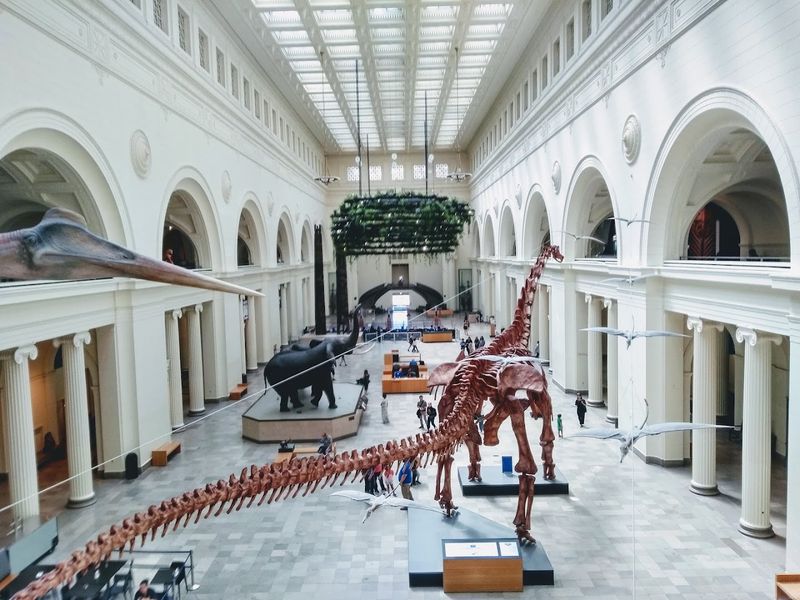
The Museum Campus sits on a gorgeous stretch of lakefront at the southern edge of Grant Park, and it holds three world-class institutions: the Field Museum of Natural History, the Shedd Aquarium, and the Adler Planetarium.
Trying to squeeze all three into a single afternoon is a classic first-timer mistake that leaves you exhausted and underwhelmed by all of them.
The Field Museum alone, at 1400 South DuSable Lake Shore Drive, could consume an entire day. Sue the T. rex, one of the most complete dinosaur skeletons ever discovered, lives here, and the ancient Egypt exhibit is detailed enough to hold adult attention for hours.
The Adler Planetarium offers immersive sky shows and has one of the best views of the Chicago skyline from its east-facing terrace.
A smarter approach is to dedicate a full morning to one institution and a full morning to another, spreading your Museum Campus visits across two separate days.
This keeps energy levels high and gives each museum the attention it actually deserves. If time is tight, pick the one that excites you most and commit to it fully rather than skimming all three and remembering nothing clearly afterward.
Never Skip An Architecture River Cruise
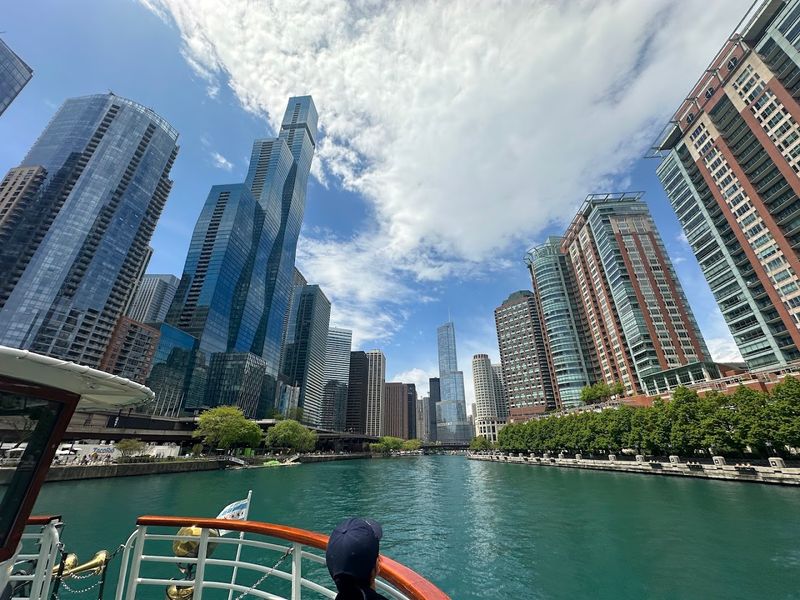
Chicago, Illinois is widely considered the birthplace of modern American architecture, and the best way to understand why is from the water.
The Chicago Architecture Center offers river cruises departing from the southeast corner of the Michigan Avenue Bridge and Wacker Drive, near 112 East Wacker Drive.
From the river, you see buildings that you simply cannot appreciate from street level. The Marina City towers, the Tribune Tower, 333 West Wacker Drive with its curved green glass facade, and the Wrigley Building all look completely different when viewed from below.
Expert guides provide context that turns what might otherwise be a pleasant boat ride into a genuinely educational experience about urban planning, architectural styles, and Chicago’s rebuilding after the Great Fire of 1871.
Cruises run from spring through fall, with the most comfortable conditions typically found in late May, early June, and September. Evening cruises offer the added bonus of watching the city lights reflect off the water as the sun goes down.
Booking in advance is wise since popular departure times fill up quickly, especially on weekends. This is one experience that earns its price tag without any debate.
Never Treat Navy Pier As The Entire Chicago Waterfront
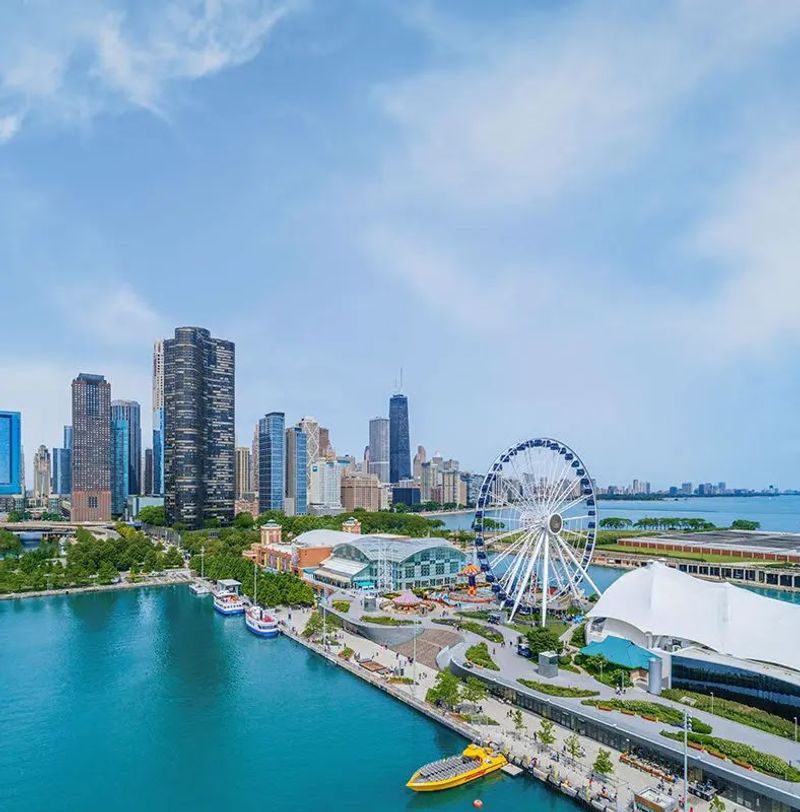
Navy Pier is hard to miss, and it is genuinely fun, with its Ferris wheel, festival pavilions, and sweeping views of Lake Michigan from 600 East Grand Avenue.
But if Navy Pier becomes your only lakefront stop, you are missing a shoreline that stretches for 26 miles and includes some of the most accessible urban beaches in the country.
Oak Street Beach, at the foot of Oak Street just east of Lake Shore Drive, is where locals actually go on hot summer days.
North Avenue Beach is livelier, with volleyball courts and a boathouse that has a rooftop deck. Montrose Beach, farther north, is quieter and has a natural area that attracts birdwatchers during migration seasons.
The Lakefront Trail runs the entire length of the shoreline and is shared by cyclists, joggers, and walkers who use it year-round. Renting a bike and riding even a portion of this trail gives you a perspective on Chicago that most tourists never get.
The city’s relationship with its lakefront is something locals are deeply proud of, and experiencing more than just one pier helps you understand why Chicago residents consider the lake an essential part of daily life rather than just a backdrop.
Never Visit Skydeck Without Booking Ahead
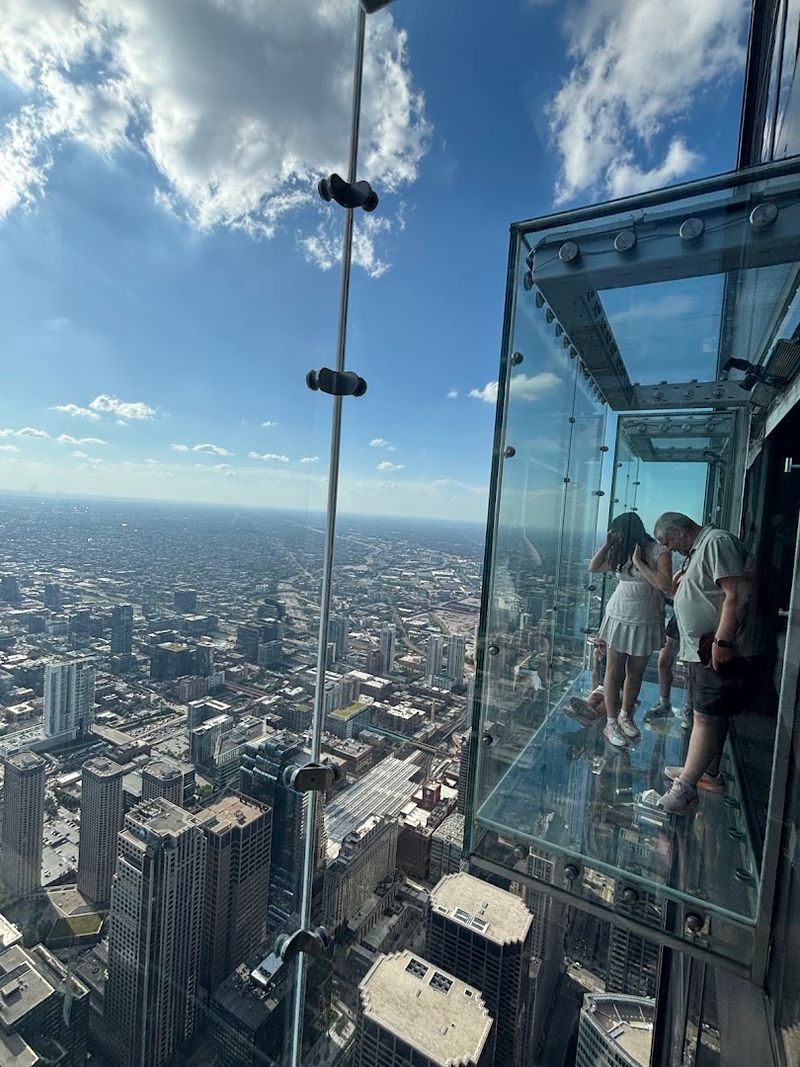
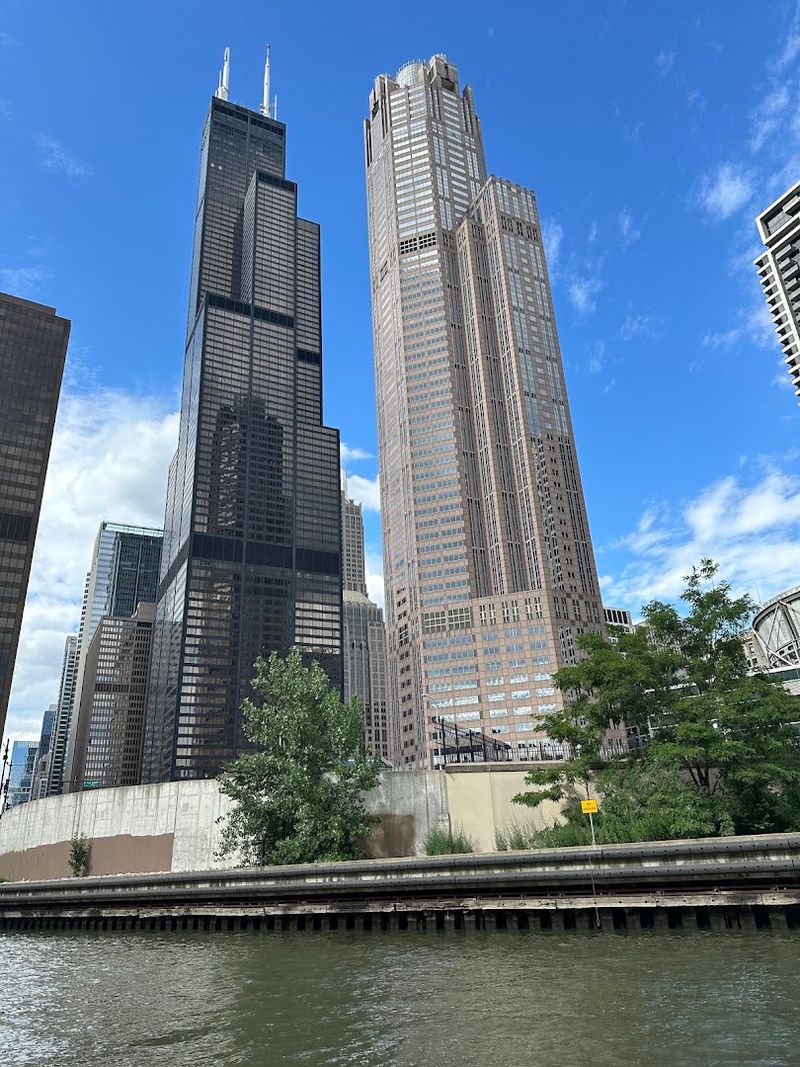
Standing on the glass-floored Ledge at Willis Tower’s Skydeck, 1,353 feet above the streets of Chicago, is one of those experiences that genuinely stops people mid-sentence.
The Skydeck is located at 233 South Wacker Drive in the Loop, and the view from the 103rd floor stretches across four states on a clear day. But walking in without a reservation during peak season is a gamble that often results in waits of 45 minutes or more just to get through the line.
Booking tickets online in advance locks in your entry time and lets you skip the longest queues. The Skydeck website also provides a real-time visibility forecast so you can plan your visit for a day when the view will actually deliver.
Going up on an overcast or foggy day is one of the most anticlimactic things a first-time visitor can experience.
Early morning visits on weekdays are the sweet spot for shorter crowds and better light for photographs. The Ledge itself, those glass boxes that extend four feet out from the building’s face, is thrilling even for people who consider themselves comfortable with heights.
Give yourself at least 45 minutes up top so you can absorb the view from multiple angles rather than rushing through for a quick photo.
Never Pay For Two Observation Decks Without Comparing Them
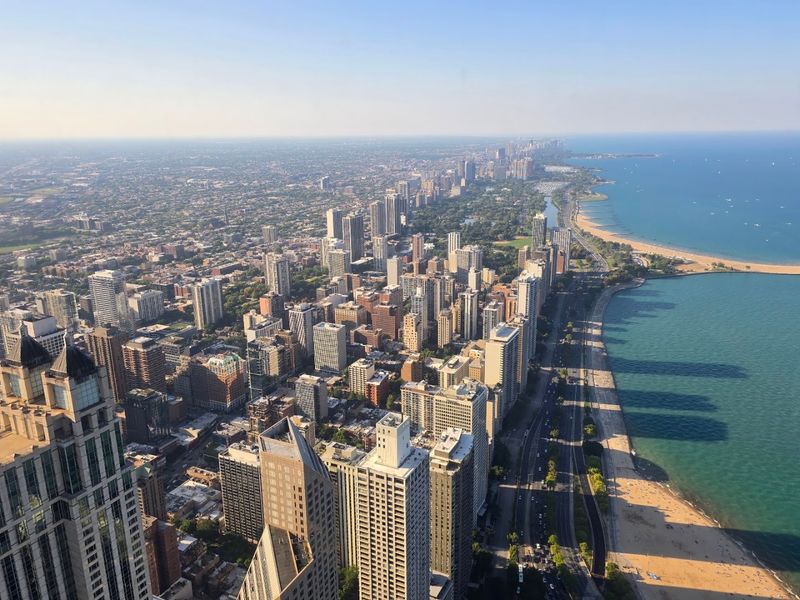
Chicago has two major observation decks, and many first-time visitors end up paying full price for both without realizing how different the experiences actually are.
Willis Tower’s Skydeck at 233 South Wacker Drive sits at 1,353 feet and offers the city’s highest public vantage point.
The 360 Chicago observation deck, located on the 94th floor of the John Hancock Center at 875 North Michigan Avenue, sits lower but offers a different angle of the city with arguably better views of the lakefront and North Side neighborhoods.
The Hancock deck also features TILT, an experience where the observation windows slowly lean you outward at an angle, which is a completely different kind of thrill from the Skydeck’s glass ledge.
Ticket prices for both are significant, so deciding which one aligns better with your interests before you arrive saves real money and avoids the feeling of redundancy.
If the skyline view from above the lake matters most to you, the Hancock location wins on that front. If maximum height and the glass ledge experience are your priorities, Willis Tower is the clear choice.
Travel forums and recent visitor reviews can help you make this call based on current conditions and pricing. Picking one and fully enjoying it beats splitting your attention and budget across both.
Never Expect The Chicago Riverwalk To Be A Five-Minute Stop
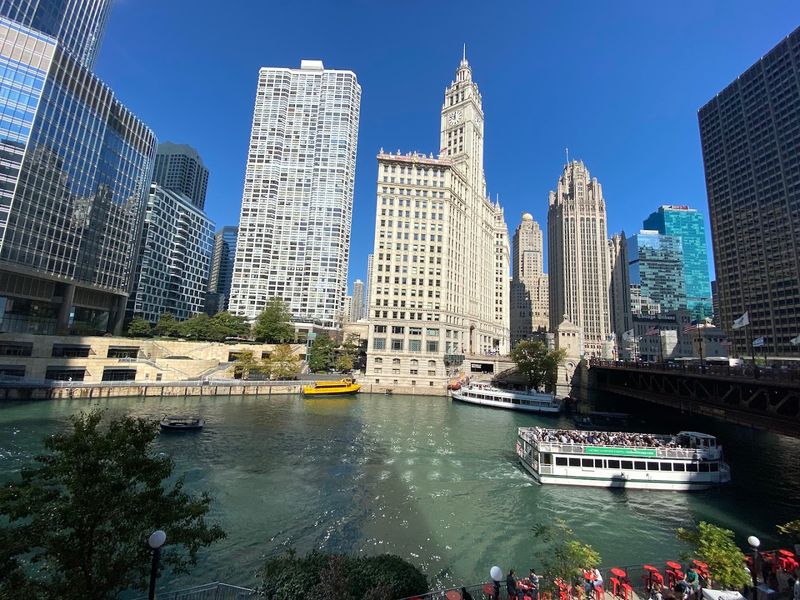
A lot of visitors pass over the Chicago Riverwalk assuming it is just a narrow strip of concrete beside the water.
In reality, it is a 1.25-mile pedestrian promenade that runs along the south bank of the Chicago River from Lake Shore Drive to Lake Street, and it is packed with restaurants, kayak rentals, boat tour launches, and public art installations that reward slow exploration.
The Riverwalk is organized into four districts known as The Confluence, The Arcade, The Civic, and The Esplanade. The Marina section near the lake end has docking facilities and watercraft rentals.
The Cove area curves inward and creates a quieter spot for sitting and watching river traffic. The Market section buzzes with food vendors and pop-up events throughout the warmer months.
On a warm afternoon, the Riverwalk fills with office workers eating lunch, tourists snapping photos of the bridges, and kayakers threading their way through tour boats.
The best time to visit for a relaxed pace is a weekday morning when the food spots are just opening and the light hits the water at a flattering angle. Budget at least 90 minutes if you want to walk the full length, stop for a meal, and take in the architectural views from multiple bridge vantage points.
Never Limit The Trip To The Loop
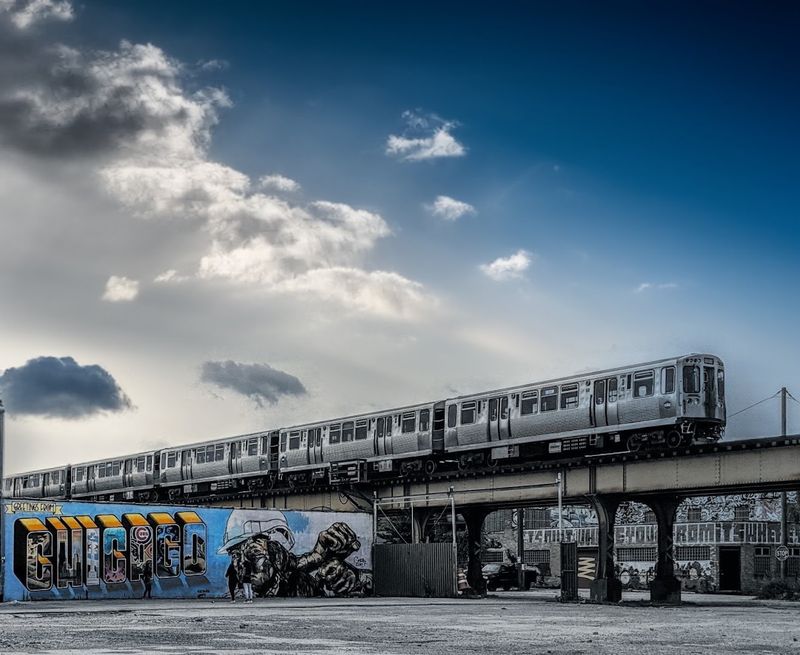
The Loop is where Chicago’s most famous landmarks cluster, and it makes sense that first-timers spend most of their time there. But Chicago’s real personality lives in its neighborhoods, and staying exclusively downtown means you are seeing the city’s formal face rather than its actual character.
Wicker Park, Lincoln Park, Pilsen, and Logan Square each offer something the Loop simply cannot replicate.
Wicker Park, centered around the intersection of North, Milwaukee, and Damen Avenues, is packed with independent bookstores, vintage clothing shops, and restaurants that earn lines out the door without any tourist marketing.
Pilsen, on the Lower West Side, is home to one of the country’s most vibrant Mexican-American communities, with murals covering entire building facades and free admission to the National Museum of Mexican Art whenever it is open.
Logan Square, anchored by the Logan Square Boulevard roundabout, has become one of the city’s most talked-about food destinations over the past decade.
Taking the CTA Blue Line or Brown Line out to even one of these neighborhoods for a few hours adds real depth to your Chicago story. The city rewards the visitors who are curious enough to look past the obvious attractions and spend time where locals actually live and eat.
Never Assume Lake Michigan Is Safe For Swimming Anywhere
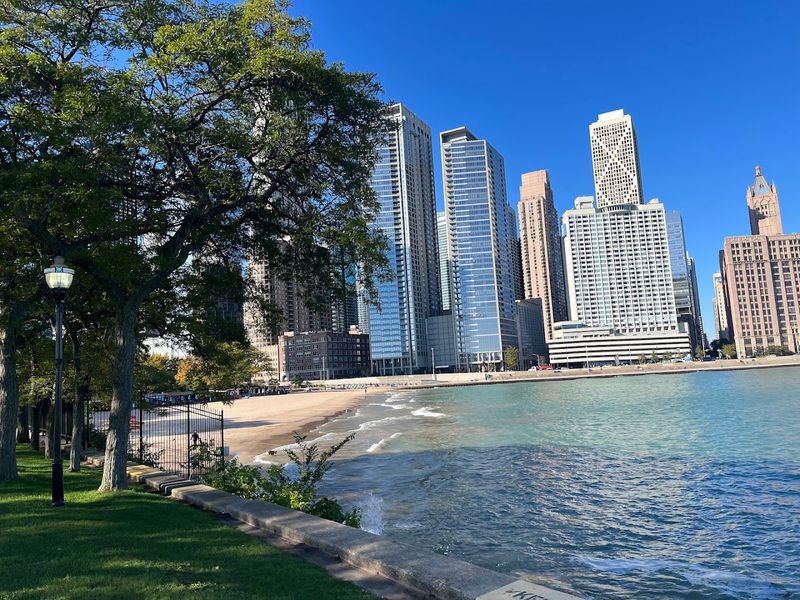
Lake Michigan looks inviting on a warm Chicago summer day, with clear water stretching to the horizon and beaches full of people soaking up the sun.
But the lake has real hazards that catch visitors off guard, and assuming any stretch of shoreline is automatically safe for swimming is a mistake that Chicago’s park district works hard to warn against.
Rip currents form along the Chicago lakefront with surprising frequency, particularly after strong winds shift direction.
The city posts colored flags at its supervised beaches to communicate current conditions: green indicates normal conditions, yellow signals caution, and red means swimming is prohibited. These flags are not decorative, and locals pay close attention to them.
Chicago Park District lifeguards supervise 22 public lakefront beaches during the summer season, and swimming is permitted only when lifeguards are on duty.
North Avenue Beach and Oak Street Beach are the most consistently monitored options. Wading near rocky areas, piers, or unsupervised stretches of shore carries significantly higher risk.
Checking the Chicago Park District website or their social media accounts before heading to the beach gives you real-time information about which beaches are open and what the water conditions look like for that specific day.