
This 1 Mile Michigan Hike Leads You Through An Ancient Cliff Dwelling Village
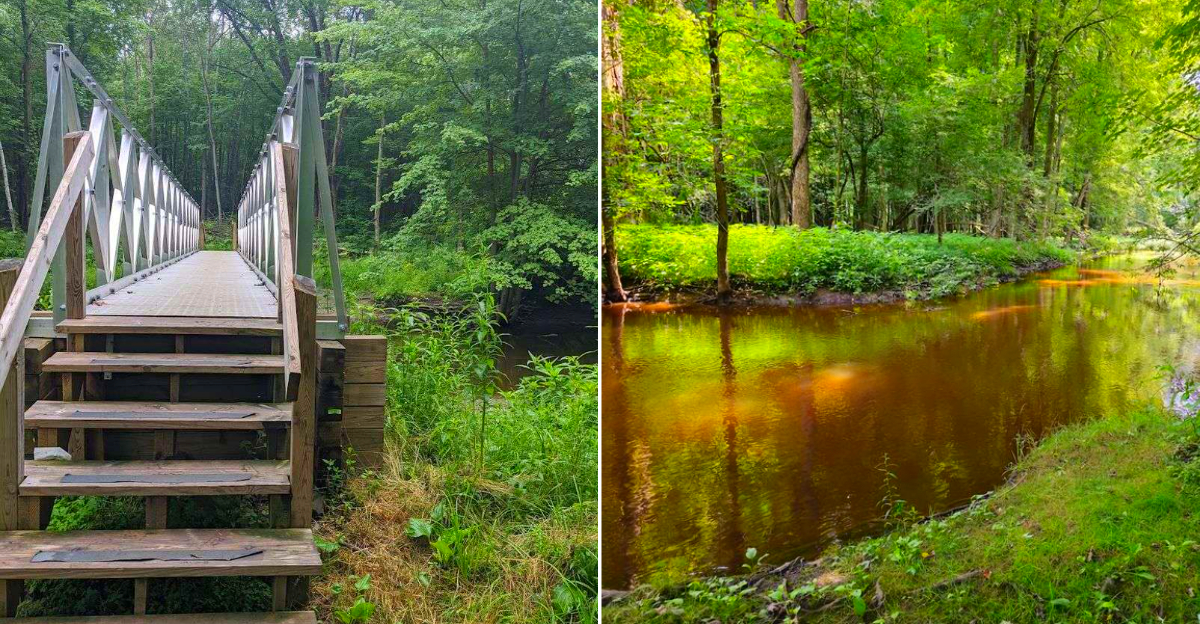
I am constantly surprised by how a quiet Michigan forest can suddenly peel back its green curtain to reveal a sandstone storybook carved by centuries of hands. Walking the trail near Cass City, the air feels heavy with the kind of stillness that demands you turn your phone off and actually pay attention.
The approach is a scenic mile-long warm-up over tangled roots and small bridges, with riverbank overlooks that prepare your brain for something older and deeper.
When you finally reach the shelter, the carvings reveal themselves slowly through the play of light and shadow on the rock, requiring a patient eye to catch the ancient textures etched into the earth.
Michigan historic sites like this one offer a profound connection to the past at this ancient petroglyph park where Native American carvings tell a timeless story. The guides here are masters of the “slow reveal,” providing careful context without ever rushing your personal encounter with the stone.
Roots, River, And a One Mile Loop
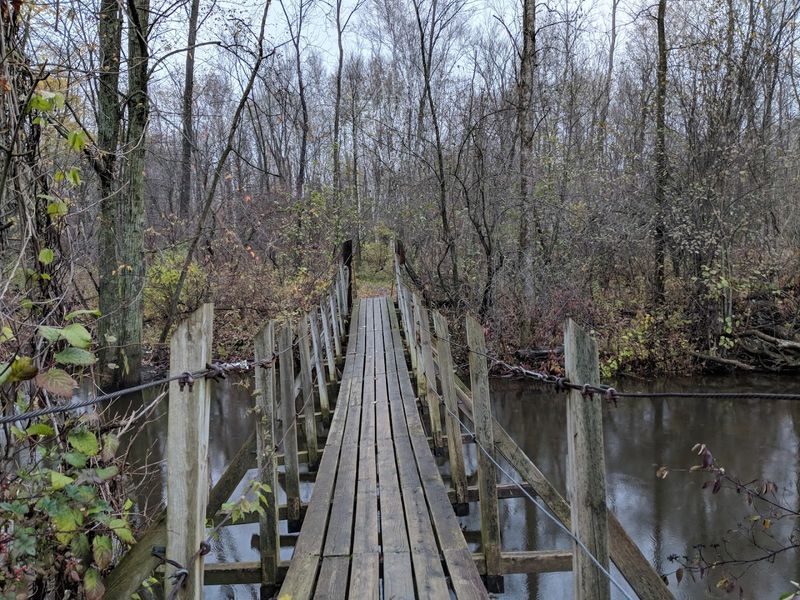
The loop feels humble at first, a sandy path tucked into mixed hardwoods beside the Cass River. Listen for red squirrels scolding you and woodpeckers threading percussion through the canopy. Roots braid underfoot like old ropes, so watch your step and slow down enough to notice ferns unscrolling.
Sunlight flickers off the river like pocket mirrors between leaves today. Small wooden bridges cross feeder channels, giving peeks of riffles and minnows holding in the current. Trail markers are modest but present, and the circuit returns neatly to the gravel lot without drama.
Wear shoes with grip, bring bug spray, and expect a mile that gains meaning rather than elevation. Benches along the trail make thoughtful listening posts where small moments gather without hurry for you.
The Journey To Ancient Rock Carvings
The route leads into the heart of the Thumb region, where the vast agricultural plains of Sanilac County are divided by quiet tributaries of the Cass River. Traveling through this rural landscape provides a peaceful transition from the open farmland into a dense, wooded sanctuary that has remained largely unchanged for centuries.
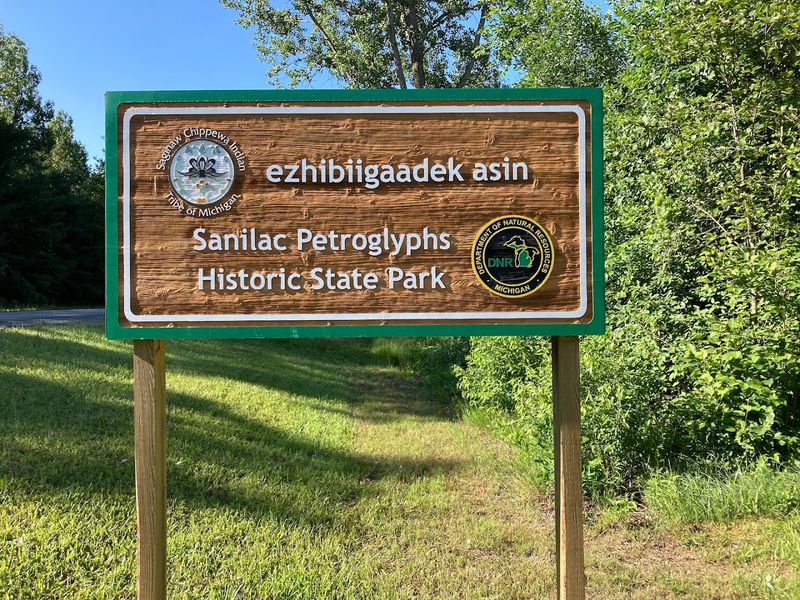
The destination is Sanilac Petroglyphs Historic State Park at 8251 Germania Rd, Cass City, Michigan. This address marks the entrance to a 102-acre park, where a sheltered pavilion protects the largest known group of ancient rock carvings in the state.
Reaching this location places you at a significant cultural landmark featuring the “ezhibiigaadek asin” or “knowledge written on stone.”
Reading Sandstone Like A Map
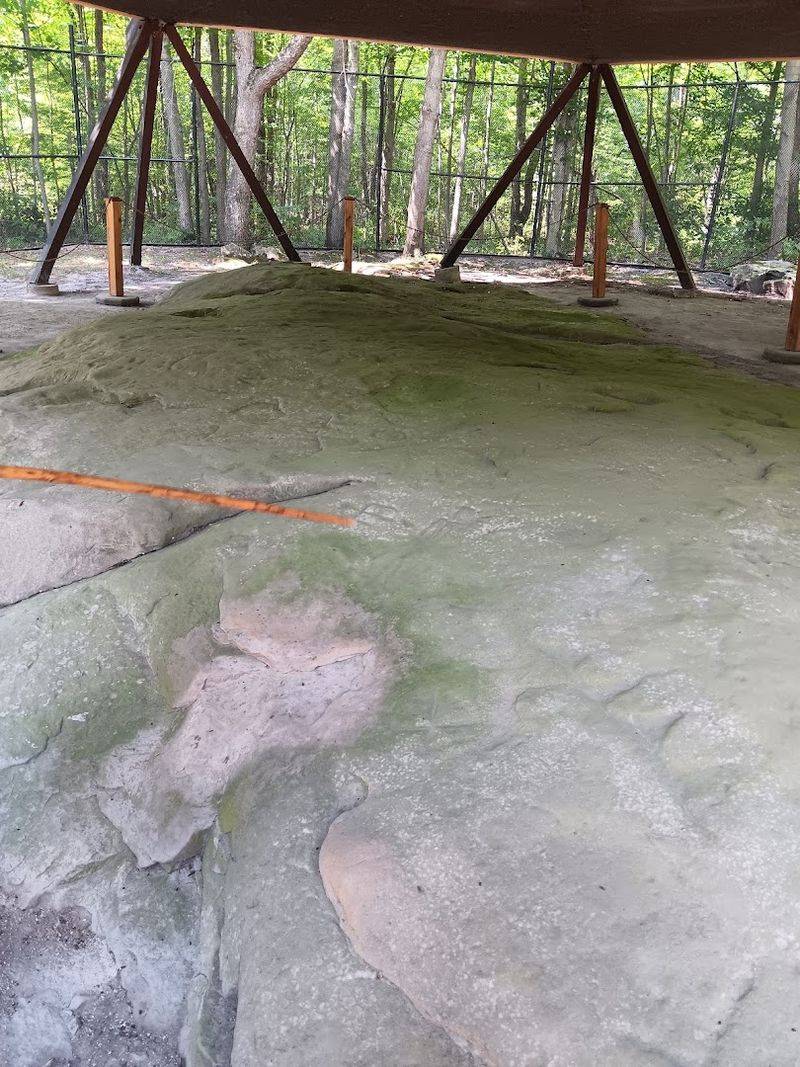
Look closely and the rock reads like contour lines, its grains oriented by ancient wind and water. Natural cracks become borders that shapes lean against, guiding eyes toward carved figures. Shadows pool in grooves while lichen halos the margins, creating contrast without pigment.
Step back, then forward again, and patterns resolve like a patient puzzle. Archaeologists document the surface with raking light and tracings rather than cast rubbings, which would abrade fragile high points. Stand to the side at shoulder width from the panel, then adjust height for different symbols.
Visitors often whisper here, an instinct that preserves attention as well as atmosphere. Morning and late afternoon light help edges pop, while noon can wash details flat on bright days.
Seasonal Rhythm And Access
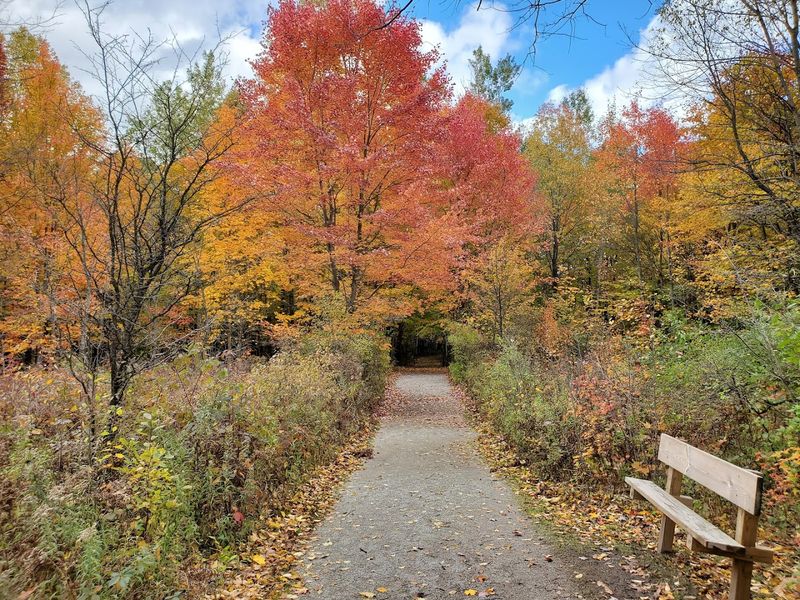
The carvings are viewable in warm months during staffed hours, generally Wednesday through Sunday, with protective tarps covering the panel in fall and winter. That rhythm honors preservation and turns the visit into a seasonal ritual.
Outside those months, the trail remains open, offering quiet river views and forest shade. Before driving, check the Michigan History Center website for current hours and tour times, then aim to arrive near opening to avoid crowds. Weather matters because glare, rain, or snow change visibility and footing.
Bring layers, a small umbrella for shade if sunny, and insect repellent in peak bug season. Parking is limited, so carpooling helps and keeps the lot from bottlenecking on busy summer weekends and during special programs.
Listening For The Quiet
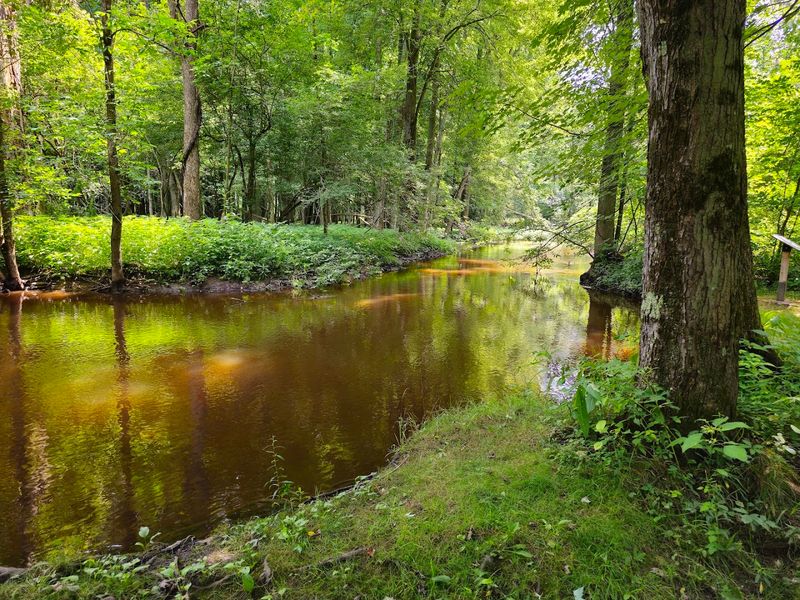
Birdsong layers over the soft shush of the Cass River, with wind catching leaves like a distant audience. On calm days, you can hear a guide’s voice rise and fall across the clearing. That soundscape gently asks for slower footsteps and lower conversations.
Benches along the trail make thoughtful listening posts where small moments gather without hurry for you. I like to pause by the railing and count breaths until the nearest wood thrush resumes singing. Silence is not absence here, just attention redistributing itself among water, wood, and stone.
If the shelter is busy, drift along the loop and return when voices fade. A pocket notebook helps catch details later, so phones can stay tucked away most of time.
Interpreting With Care
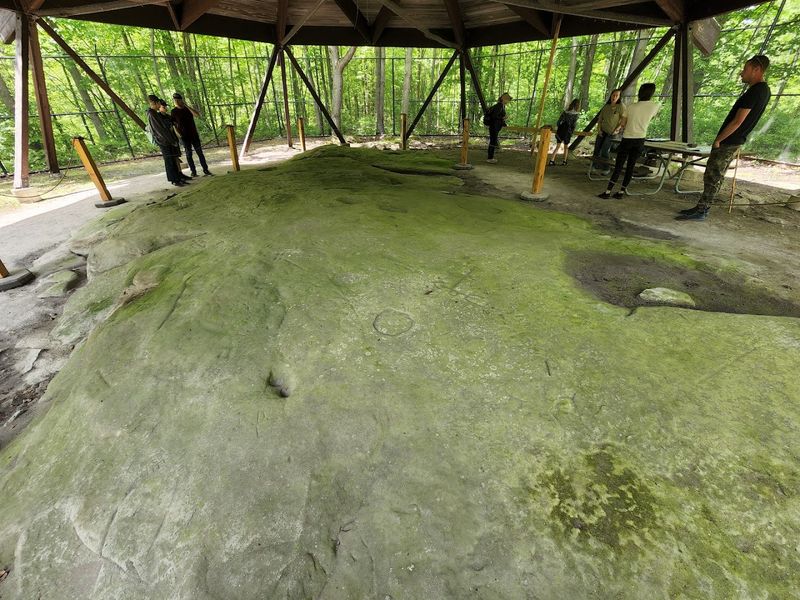
Volunteer guides interpret respectfully, situating the petroglyphs within Anishinaabe traditions and wider Great Lakes histories. They point out carved human figures, tracks, and motifs scholars discuss with humility because meanings are layered.
You are encouraged to look, compare, and settle into the ambiguity rather than chase a single answer. Questions are welcomed, and the best ones start with observation rather than assumption. Preservation ethics come first, so no rubbings, chalking, or touch-enhancing tricks are allowed.
Instead, raking light, measured photographs, and non-contact documentation techniques guide research. It is grounding to realize this record endures through restraint we practice together. If you photograph, note time of day, weather, and angle, so context travels with the image when you review later carefully.
Bridges, Floodplains, And Small Wonders
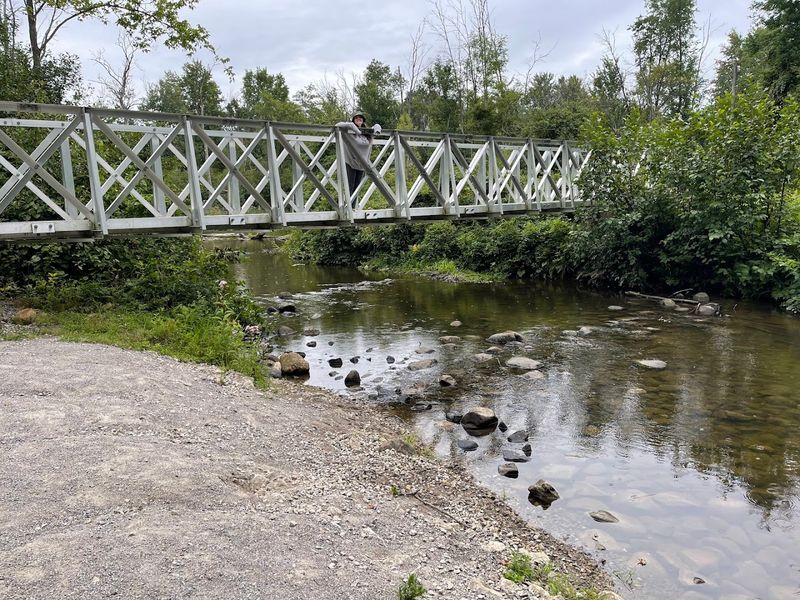
Short spans carry the trail over side channels where sedges lean like green quills. Look for raccoon prints in soft mud and dragonflies shuttling along sunny edges. Spring floods rework sandbars, reminding you this landscape edits itself every year.
Wildflowers shift through the season, from spring ephemerals to late asters buzzing with patient bees near open pockets of sun patches. I linger beside slow pools to watch water striders sketch invisible geometry. Stay on the boardwalks when posted so banks do not crumble under footsteps.
Tick checks after tall grass are smart, and long sleeves make the habit easier. Carry a small trash bag so litter leaves with you, keeping tiny miracle zones unspoiled for the next careful visitor too.
Architecture Of Protection
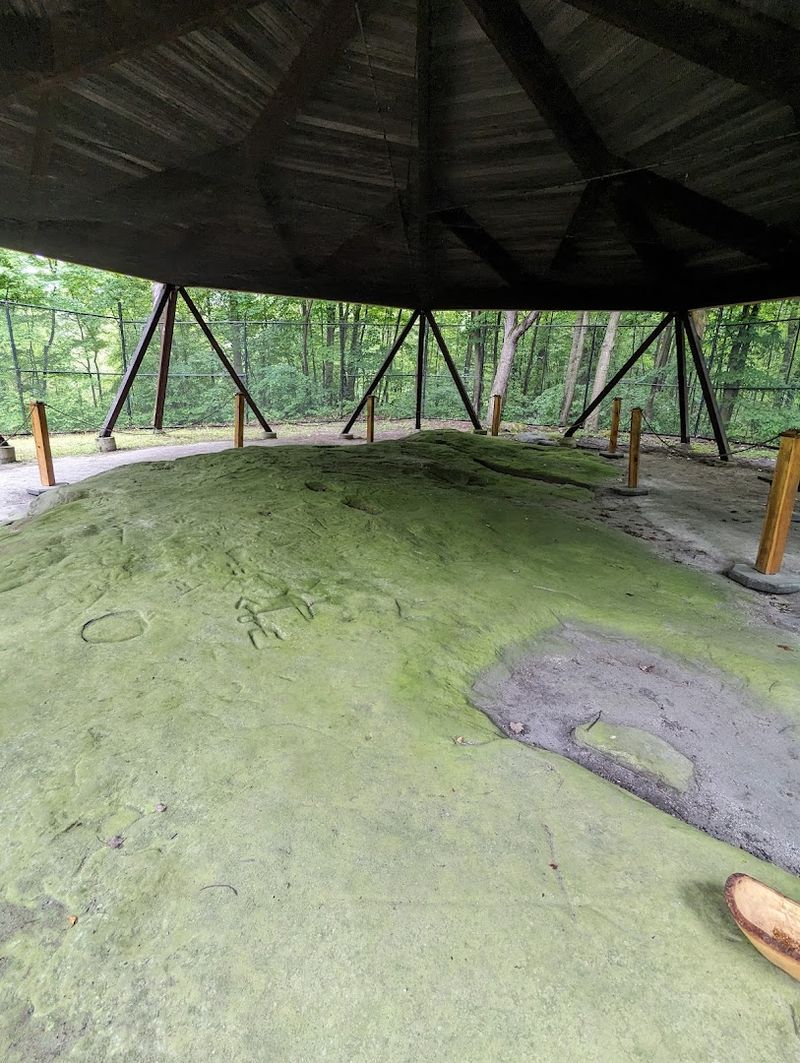
The shelter is utilitarian wood and metal, a roofline that sheds weather while inviting light from open sides. Railings hold visitors at a respectful distance, close enough for study without risk to the surface. Gravel underfoot keeps drainage moving and discourages careless footsteps from slipping toward the slab.
Interpretive panels share context without overwhelming the moment, a balance worth noticing as you move slowly around edges of the space. This is not spectacle architecture, and that humility suits the site. Bring a small flashlight to simulate raking light if clouds refuse to cooperate.
Aim from the side, not straight on, and keep beams brief to avoid distraction. Step back occasionally to read the structure as part of the landscape itself.
Practicalities: Parking, Facilities, Timing
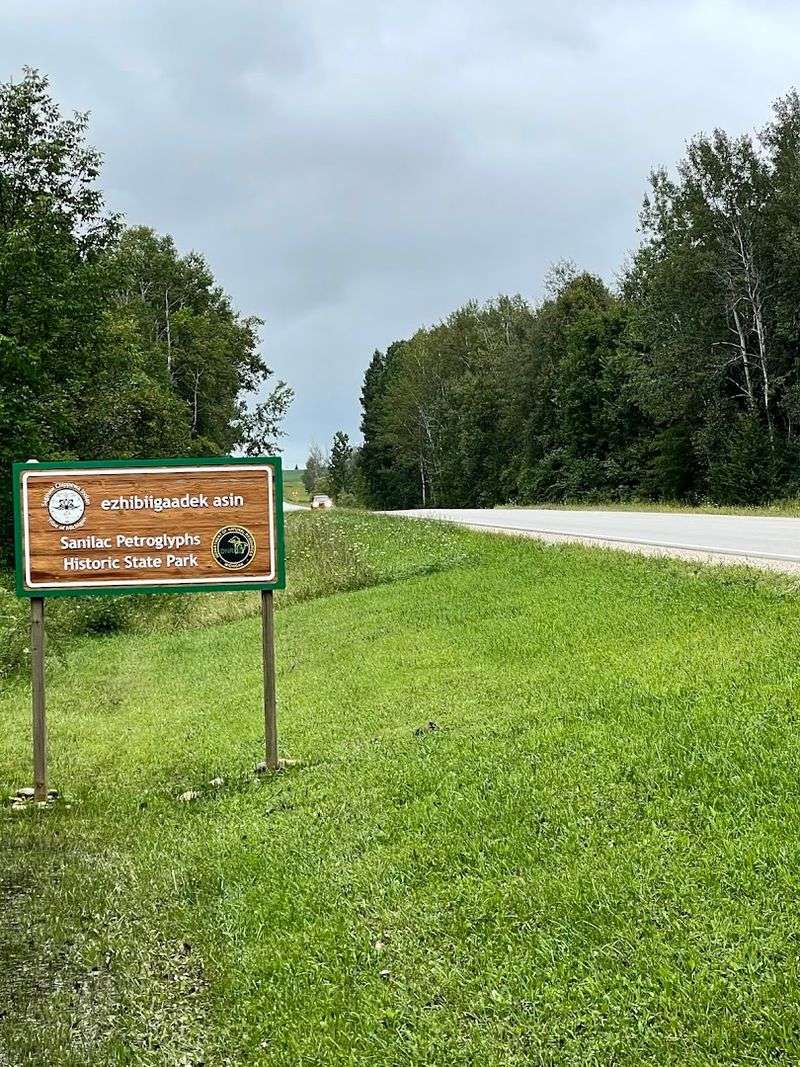
The entrance is a small gravel lot with a clear sign and kiosk, so arrivals feel straightforward. Picnic tables sit near the trailhead, and there are vault toilets rather than flush restrooms. Cell service can be patchy, which makes an offline map and a pre-saved webpage handy.
There is no playground, which keeps the tone quiet and focused around history and the surrounding woods for most visitors here.
Plan about two hours if you like to linger, less if you move briskly. Mosquitoes thrive after rain, so bring repellent and consider a head net in peak months. Evening light is beautiful, but be mindful of closing times, which are firm. Leave time to read panels and watch the river slowly.
Photography Without Fuss
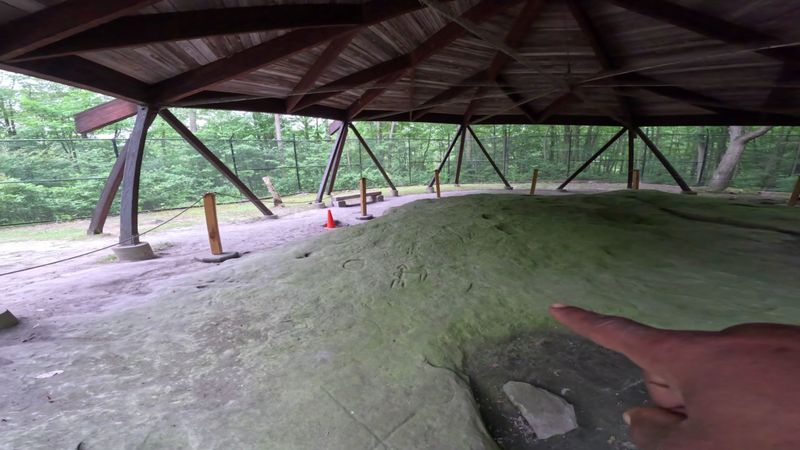
Raking light is everything, so aim for early or late hours when shadows carve definition. Turn off flash and avoid polarizers that sometimes flatten stone texture. Wider lenses help include the shelter and surrounding trees for context.
Shoot a texture detail, then a wider establishing frame, so memory keeps scale honest when you look back later at home. I shoot a sequence from several heights, then bracket exposure lightly to guard against glare. Keep feet inside railings, and never lean equipment over the slab.
If light flattens, step aside for a minute and wait for a cloud to pass. Consider black and white edits to emphasize line and rhythm over color if midday tones feel muddy in camera previews today.
Kids, Accessibility, And Respectful Habits
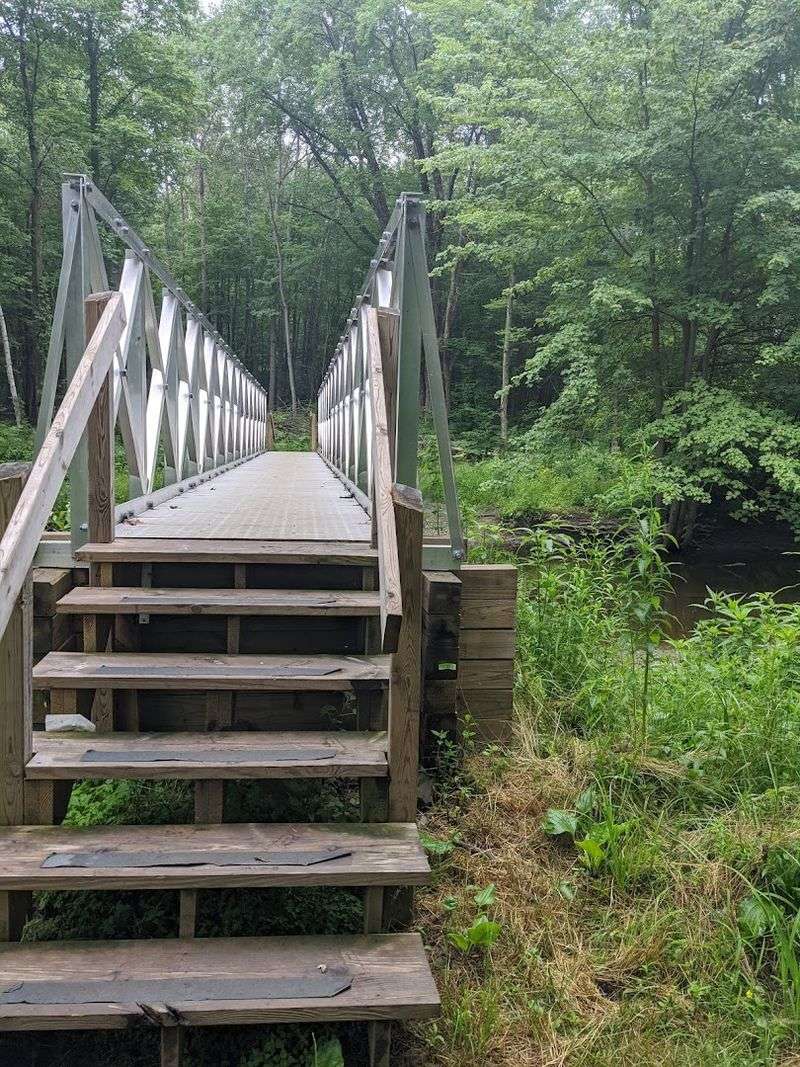
Families do well here because the walk is short, varied, and full of small discoveries. Strollers struggle with roots, so carriers suit better for toddlers. The petroglyph shelter has railings and even footing, but the surrounding loop includes uneven surfaces.
Expect mosquitoes and sun, so hats, sleeves, and repellent help everyone enjoy more and itch less during long summer afternoons here. Teach gentle viewing: eyes first, hands never, voices low. Snacks are fine at picnic tables, and pack out every wrapper without exception.
Leave offerings only if you are part of living traditions for whom this place remains active, otherwise leave the site undisturbed. Respect extends to staff and volunteers, who steward a fragile record with patience for tomorrow.