
This 12-Mile Tree Tunnel In Florida Feels Like Driving Through A Dream
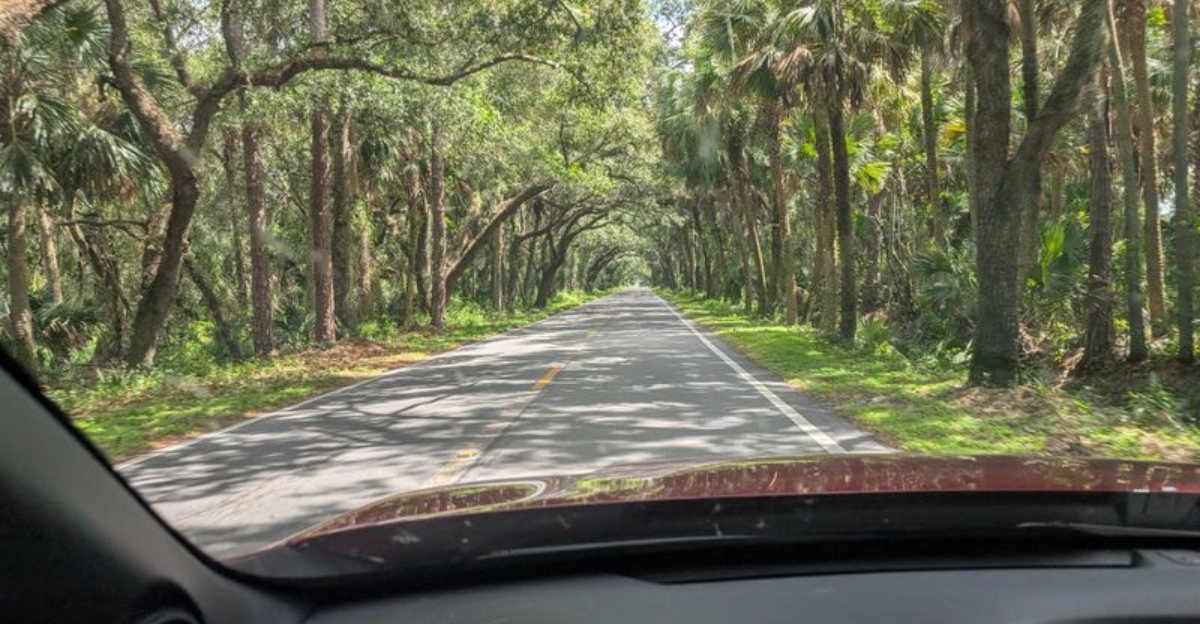
Trade the highway rush for a quieter kind of Florida, where time seems to slow with every mile. Along the Martin Grade Scenic Highway, arching oak trees form a living tunnel, wrapping the road in shade, history, and calm.
Sunlight dances through the leaves like a vintage film reel, shifting the mood from bright and busy to cool and dreamlike.
Here, the noise of modern Florida fades into the soft hum of tires and the gentle rhythm of the road. The air feels different.
Slower. Softer.
More nostalgic. This stretch of Old Florida feels untouched, like a hidden story unfolding one mile at a time.
Every curve reveals another postcard-worthy view. Every mile feels more beautiful than the last.
If you love scenic drives, quiet escapes, and places that feel timeless, this Florida highway is not just a road. It is an experience you will want to savor, mile after mile.
Finding The Grade: The Long, Green First Impression
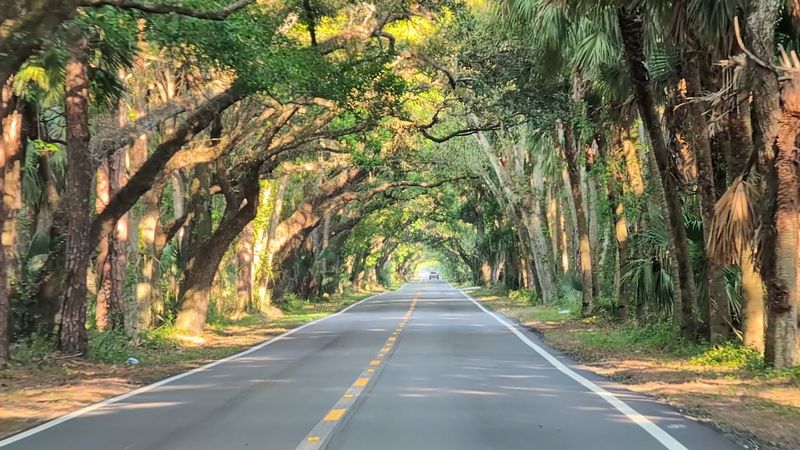
You roll onto SW Martin Highway and the canopy closes like theater curtains, and the noise of everything you left behind goes mute. The trees are tall and old, rough-barked and draped with a little moss, and the road draws a straight line through them.
The first breath you take feels cooler, a forest exhale that tastes faintly earthy and sweet.
The Grade runs about 12 miles, and you feel it more than measure it. Sunlight slices in stripes across the lane, and the whole scene flickers like an old reel.
You will want to slow down, and you should, but remember it is a public road with a posted 50 mph limit and drivers who treat it like a commute.
Look for light wind moving the canopy and the gentle sway of palmettos along fence lines. Cattle graze in patches of pasture beyond the trees, and birds lift from drainage ditches as you pass.
The first impression hits like a memory you did not know you had, a rush of Old Florida calm. Let the rhythm find you, hands light, eyes wide, ready to notice small things.
A Short History, Told By Oaks
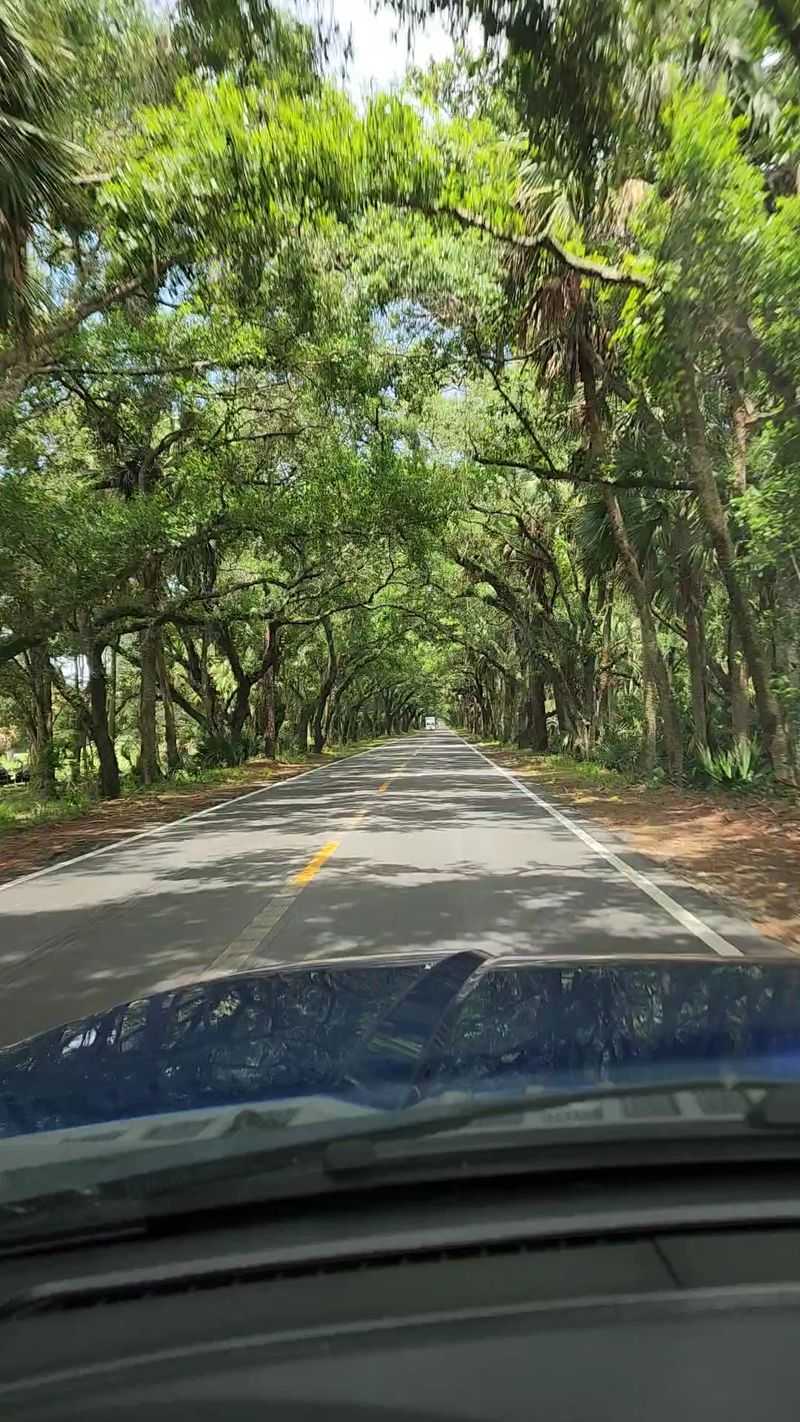
The trees are the storytellers here, long-lived live oaks that watched cattle seasons come and go. This corridor formed where ranchlands, wetlands, and old farm routes met, and the road later earned Florida Scenic Highway status.
That designation protects the character of the place while keeping it a working, lived-in route.
You are driving through a landscape shaped by ranch families, citrus, and the slow push of drainage projects that tried to tame wet prairie. The oaks endured the swaps of wet and dry years, grown gnarly and muscular.
They stand close because the soil and water patterns let them, and because people decided shade was worth keeping.
There is no big museum sign here and not much in the way of plaques. The history comes through in fencelines, cattle gates, and culverts carrying black water under the road.
You feel a countryside logic that is older than interstates and newer than wilderness. It is a quiet lineage, not loud about itself, and that restraint makes it feel real.
Timing The Light: When To Go
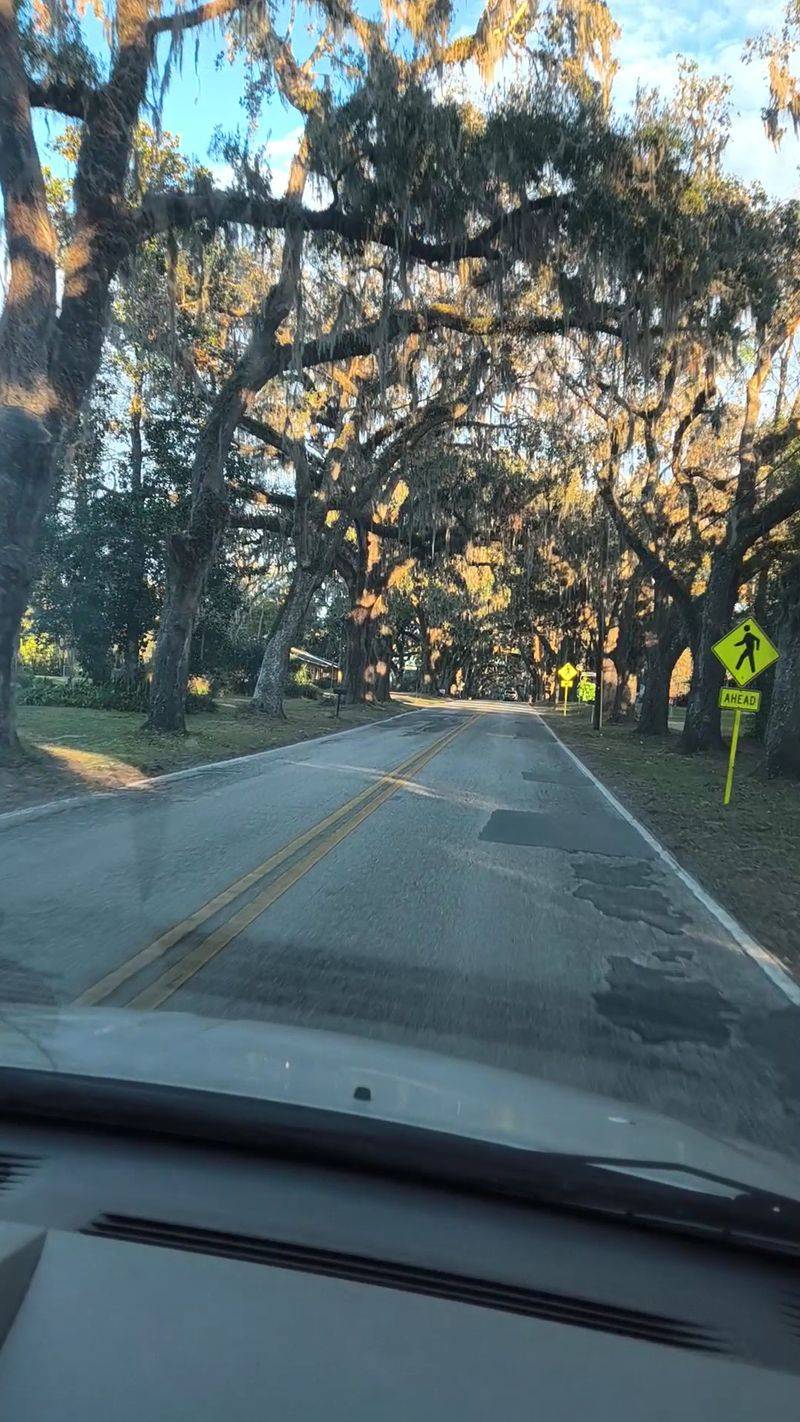
Morning is gentle here, with dew still perched on grass and the light low enough to paint the trunks in gold. Late afternoon hits differently, throwing long shadows and flickering sun down the lane.
Midday can be bright and flat, though the canopy still cools the air.
If storms roll in, the oaks sway and the smell of wet bark and clean rain sweeps the road. That mood is lovely, but visibility drops fast, and puddles collect along the edges.
Night brings a pocket of darkness that feels rural and a little spooky in the best way, headlights cutting narrow tunnels.
There are no posted visitor hours because it is a public highway, but seasonal changes matter. In summer, storms pop late and humidity can be thick.
In winter, light is cleaner and the air can feel crisp by Florida standards, which makes windows down even better.
Driving It Smart: Safety And Flow
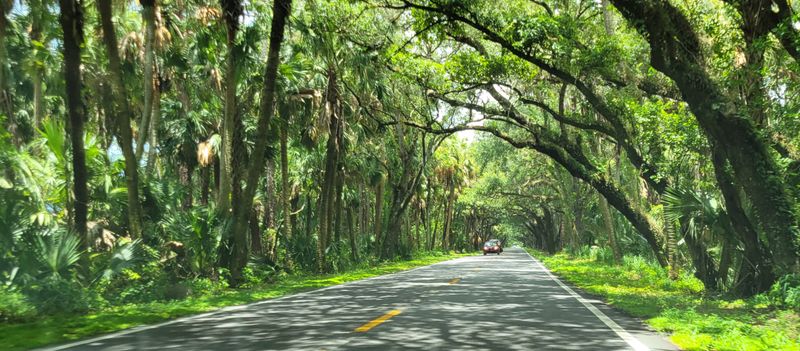
This is a two-lane country road with a posted 50 mph limit, and local traffic uses it daily. You might feel the urge to crawl or stop for photos, but that is not the move.
Keep to the flow, leave space, and use pull-offs or side roads well beyond the canopy if you need to reset.
Some drivers pass fast, and that can rattle you. Hold your line, stay predictable, and do not brake hard unless you must.
If someone stacks behind you, find a safe spot to let them by when the road opens up.
There are no sidewalks, limited shoulders, and few formal turnouts. Treat it like what it is, a scenic corridor stitched into ranch country.
The reward for mindful pacing is simple: you get to enjoy the hush without white-knuckle drama, and you leave the place a bit better for whoever slips in behind you.
Textures Of Old Florida: Sights, Sounds, Smells
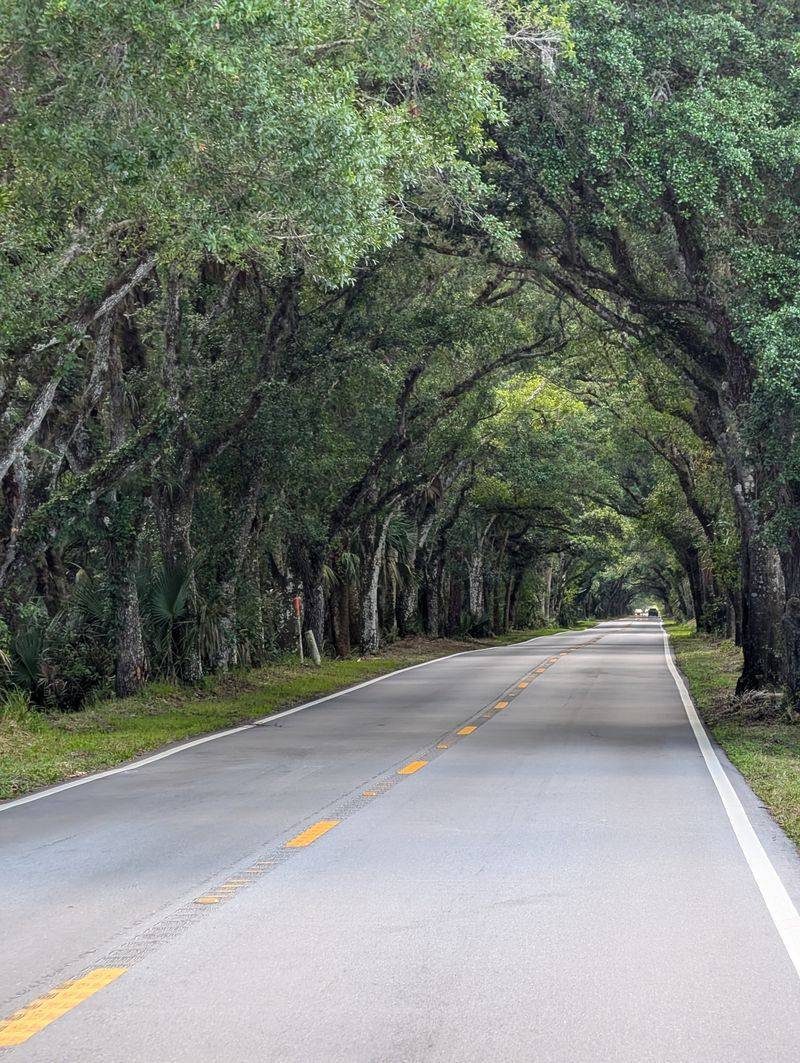
Listen for the chirr of insects hiding in palmettos and the dry rattle of fronds when a breeze sneaks through. You might catch a red-shouldered hawk crying from a limb, or cattle lowing across a pasture, just out of sight.
The ditches smell like clean tannin and leaf tea, dark water reflecting a slice of sky.
The oaks wear bark like armor, fissured and cool to the touch. Spanish moss hangs in careful tatters, catching light and shadow.
When sun breaks, the leaves sparkle briefly as if washed in tiny mirrors.
Look down and the pavement is peppered with small leaves and blossom bits after a wind. You feel the temperature drop a notch under the canopy, and the steering goes light because you are not muscling through heat.
Your memory saves this sense mix, not just the look but the air itself, and that is what lingers.
Wildlife Watch: What Might Cross Your Path
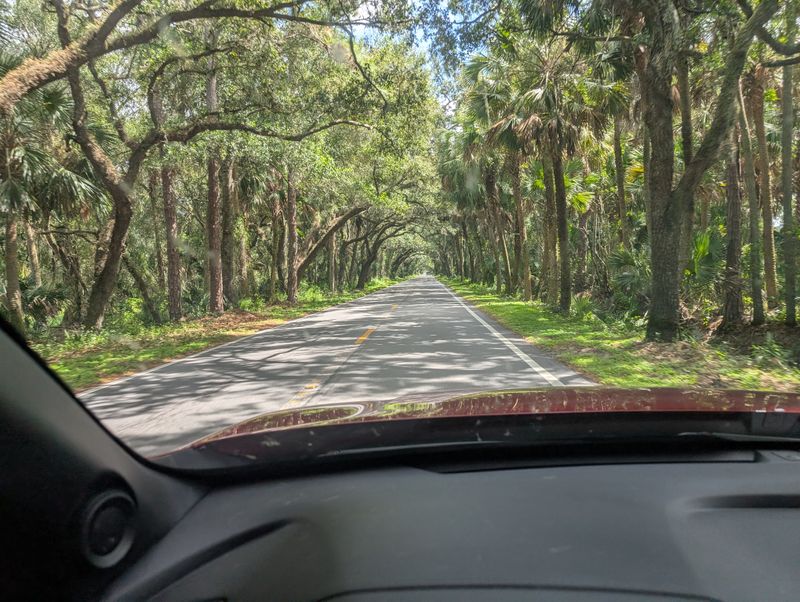
Keep your eyes open and you will stack small sightings through the drive. Hawks post up on branches, scanning the ditches, and egrets work the wet edges like patient fishermen.
Turtles sometimes wander too close to the shoulder, and you might spot a softshell slipping away like a brown frisbee.
In the pastures, cattle drift like slow shadows, and birds surf the air above them. On hot days, reptiles stay low and keep to the shade, but they move when storms cool the ground.
Deer can surprise you at dusk, and that is more reason to keep a relaxed, steady pace.
Do not feed anything, and do not stop in the lane to admire a heron because it will probably stand there indefinitely. Let the place be itself and keep distance.
The best wildlife moment is the one that leaves the animal unbothered and you with a quiet grin.
Pairing The Drive With Nearby Stops
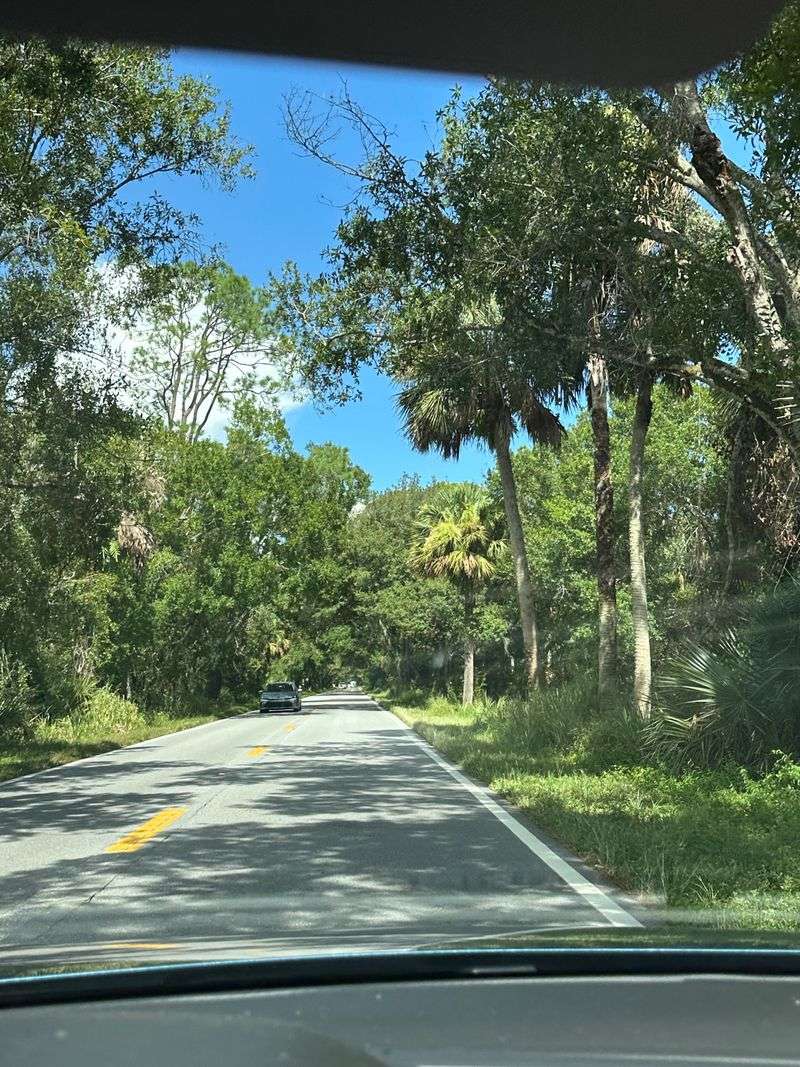
A good way to stretch the experience is to bracket the drive with small-town stops. East toward Stuart, you find coastal cafés and a breezy, historic downtown.
West toward Okeechobee, the big lake waits with wide water views, levee trails, and classic fish-camp vibes.
Indiantown sits closer and keeps it low key. You can refuel, grab iced tea, and swap heat for air conditioning before rolling back through the oaks.
Prices vary, but a casual lunch runs moderate, and you will not need tickets for the Grade because again, it is just a public road with extra charm.
Give yourself time to breathe between legs of the trip. A slow drive, a lake stop, another slow drive, then dinner in town makes a simple, satisfying loop.
The canopy will feel new again when you turn back through, which is part of the magic.
Motorcyclists And Convertibles: The Breeze Factor
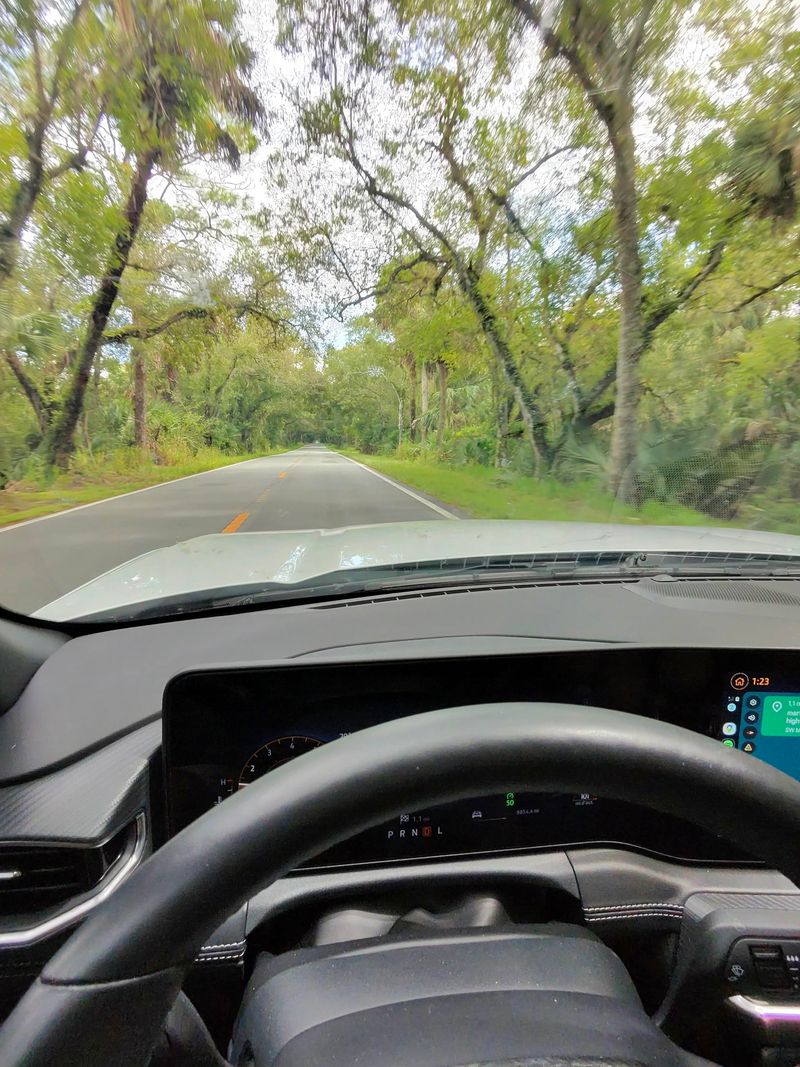
Riders talk about this stretch like a rite of passage, and you will see why the minute the shade drops the temperature. On a motorcycle or in a convertible, the canopy turns the breeze into part of the story.
The scent changes every few yards, from warm grass to cool oak to clean water.
Helmets and eye protection make sense even at easy speeds because grit and small insects ride the air. Keep a generous following distance so the road feels roomy, and do not let the tunnel tempt you into riding too slow for traffic.
When the corridor tightens, hold a smooth line and enjoy the rhythm.
For photos, park off-route where it is safe, not in the tunnel. If you are caravanning, agree on signals and regroup points.
The simplest plan is the best plan: start fueled, end fueled, and leave space for a little wonder.
Before You Go: Practical Notes And Friendly Reminders
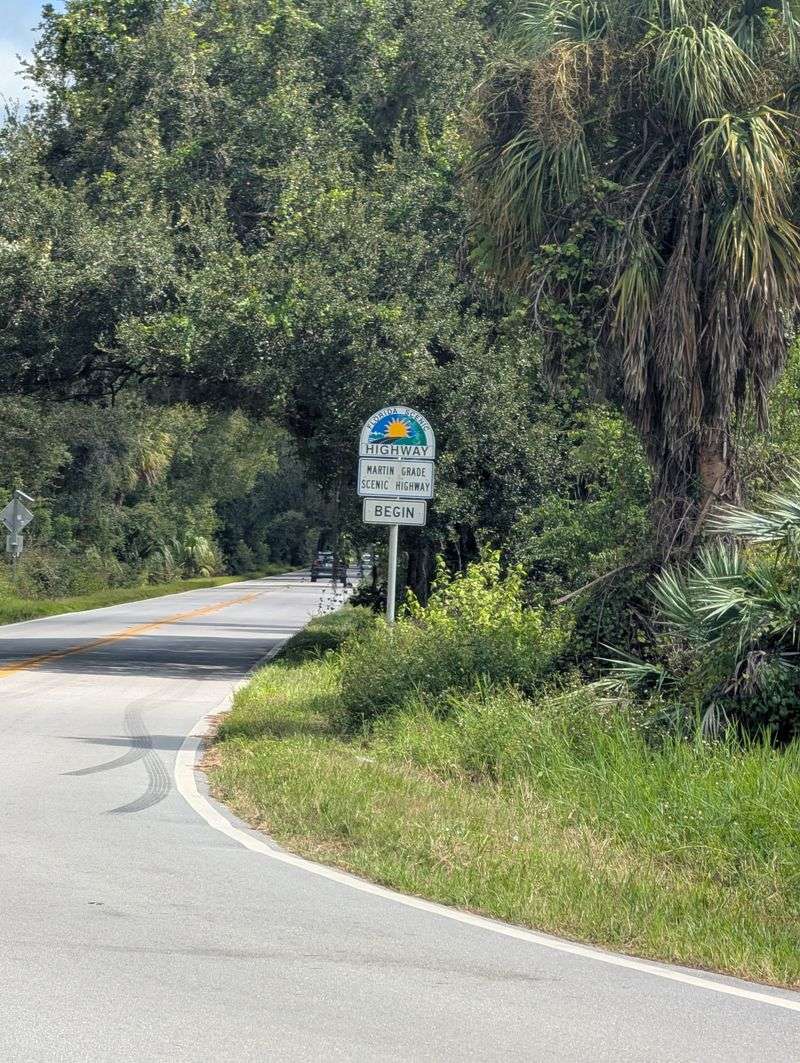
Treat this as a rural drive with a scenic bonus. Fuel up before you enter, carry water, and set your nav while you still have strong signal.
Expect a posted 50 mph limit, potential fast passers, and stretches with no services.
There is no ticket price to worry about, and there are no official hours beyond normal road rules. Seasonal variations matter, so in summer pack patience for pop-up storms and glare, while winter brings crisper air and softer light.
Parking is scarce along the canopy, so plan photo stops where the road opens and sight lines are long.
Leave no trace, even if it is only you and a coffee cup. Keep tires checked because debris happens, and nobody loves fixing a flat in the shade while mosquitos hold a meeting.
Do those few things, and the Grade gives you back something you cannot buy: a quiet lane that rearranges your mood.