
This 1890 Michigan Library Looks Ordinary Outside And Stunning Inside
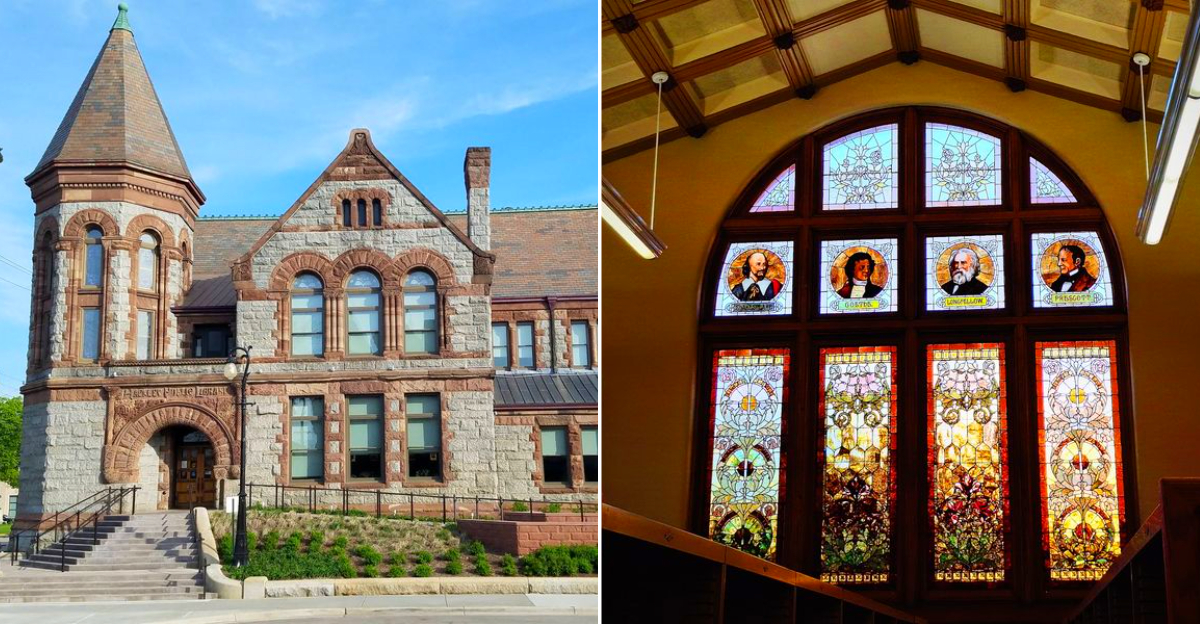
Brick on the outside, something close to a cathedral on the inside. That contrast hit me the moment I stepped through the front door of this 1890 library.
The exterior gives almost nothing away. Sandstone and brick, a modest arch, a name carved above the entrance.
Walk past it and you would assume offices or a community center. But the reading room stretches overhead with vaulted wooden ceilings, and the carved oak details are so intricate I stood with my neck craned for five minutes before opening a single book.
Stained glass filters colored light across the reference desk. The staircase banister alone has more craftsmanship than most buildings completed this century.
My library card has never felt this unnecessary. I came for the architecture and stayed for silence.
An 1890 Michigan library hides a stunning interior behind a modest brick exterior, and walking in feels like discovering a secret.
Pause At The Mosaic Entryway
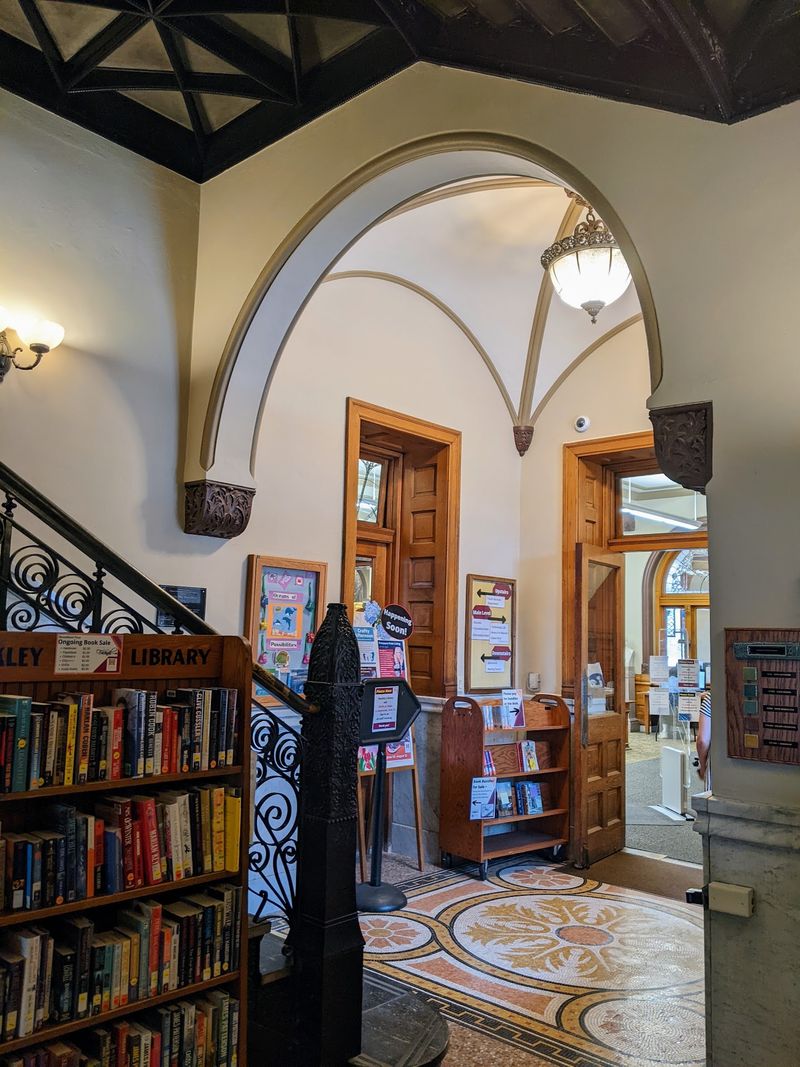
Underfoot, the restored mosaic entryway gives the first hint that the interior has different plans. Small pieces form a detailed surface that rewards a pause, especially after the broad stone outside.
Look down before looking up, or the ceiling and arches may distract you immediately.
Charles H. Hackley announced his library gift in 1888, and the building opened in 1890.
He required that it be maintained forever as a library, so the entrance still welcomes people for its original public purpose.
Stand to one side while studying the floor so others can pass comfortably. A close photograph can capture the pattern, but avoid creating a traffic jam near the doors.
Webster Avenue Leads To Muskegon’s Stone Landmark
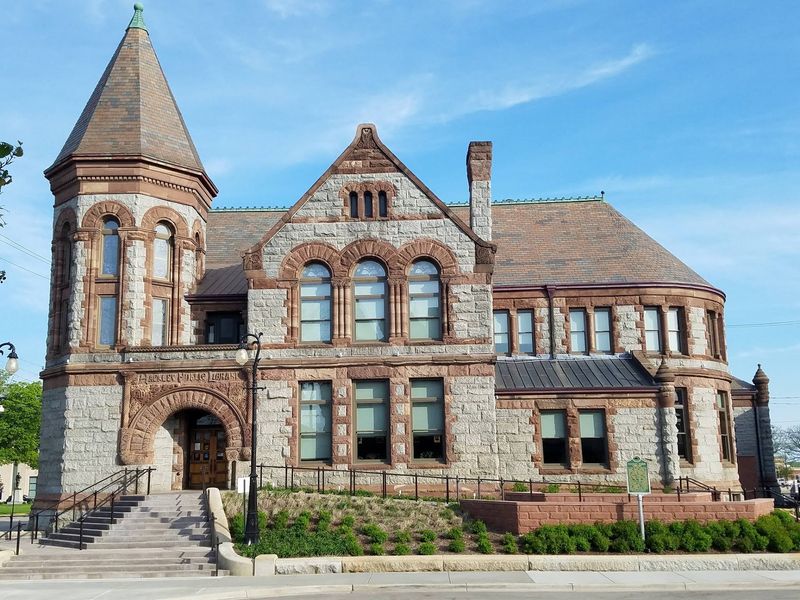
Hackley Public Library is located at 316 West Webster Avenue in downtown Muskegon, Michigan, a few blocks east of the city’s waterfront district. Webster Avenue provides the direct final approach through the downtown street grid.
Continue along West Webster Avenue toward the 300 block, where the library’s granite-and-sandstone exterior and tower make the building easy to recognize. The main entrance faces Webster Avenue, while the library’s Local History Department occupies the Torrent House directly across the street.
Parking spaces are available in front of the library and along the side of the building, with additional downtown parking nearby. From there, walk to the main Webster Avenue entrance, or use the accessible rear entrance from the parking area.
Follow The Stained Glass Light
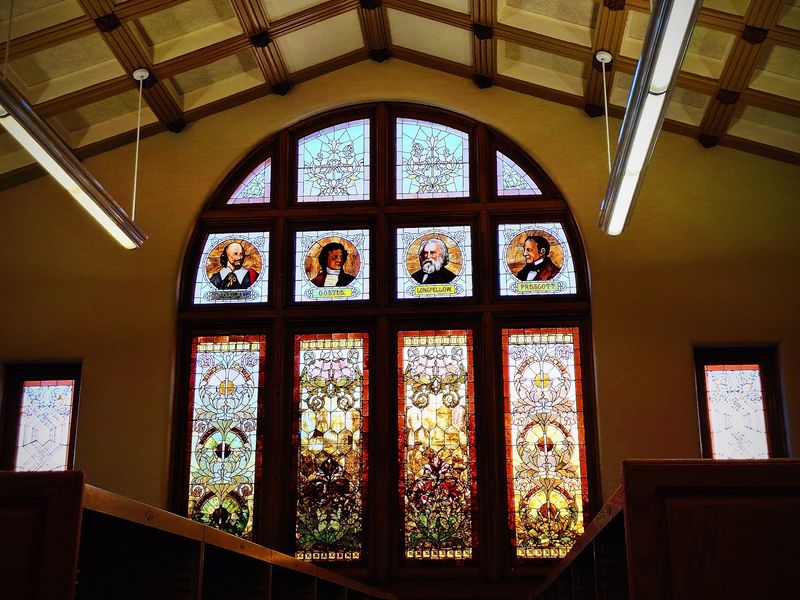
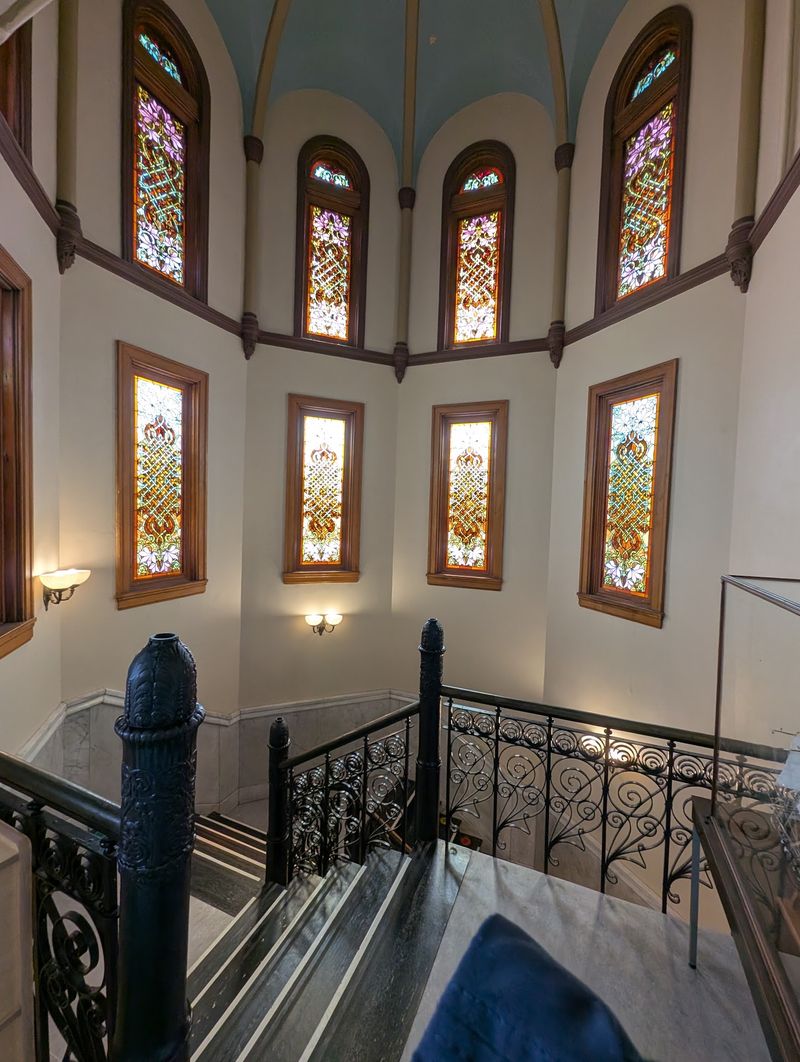
Colored light slips across the rooms with more personality than any ordinary reading lamp. More than 40 stained glass windows by Louis Millet decorate the library, bringing rich color into spaces shaped by stone and dark wood.
Their glow changes with daylight, so every visit can look slightly different. Pause near different windows and notice how individual colors land on nearby surfaces, especially when sunlight is strong.
The effect makes the interior feel less static and encourages visitors to slow down, look closely, and appreciate details beyond the shelves.
In the main reading room, seek windows depicting literary figures including Shakespeare, Goethe, Longfellow, and Prescott. Identifying them turns a beautiful feature into a small lesson in reading history.
Late morning or afternoon light may reveal different tones, but weather matters. Keep flash turned off, stay clear of readers, and ask staff about photography rules before taking several pictures.
Look Up At The Ceilings
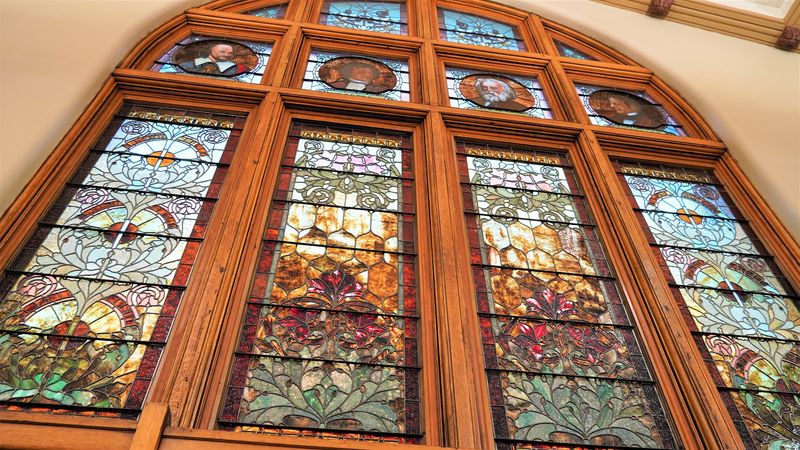
Necks are tested here because the best decoration often sits overhead. Towering stone arches frame ornate ceilings, making the interior feel taller and far more elaborate than the reserved exterior suggests.
Give your eyes time to adjust before tracing the shapes above the reading areas.
Try viewing the arches from several safe positions rather than stopping in a doorway. Each angle shows how stone, wood, painted surfaces, and windows were arranged as one design.
I found that a slow lap worked better than rushing toward a single feature. Remember that it remains an active library.
Speak softly, avoid leaning over occupied tables, and choose uncrowded moments for upward photographs.
Step Carefully Onto The Glass Floor
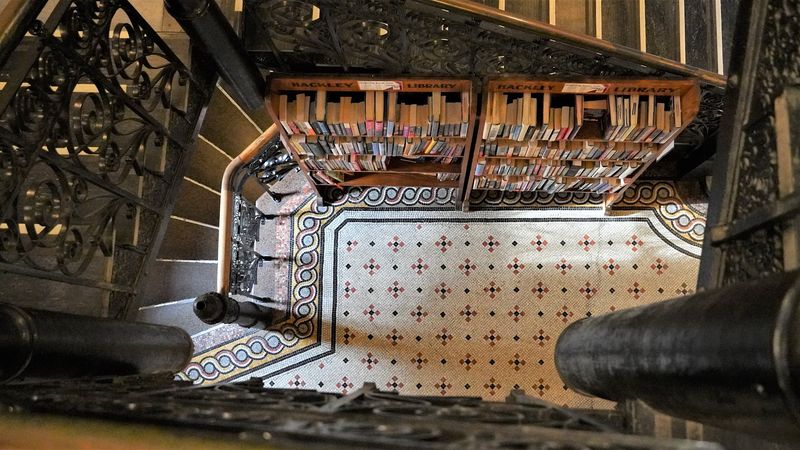
A floor that lets light travel between levels is not standard library equipment. In the area known as the Stacks, glass squares create one of Hackley’s most unusual architectural experiences.
Some panels are frosted, while openings beside shelving can provide views toward the floor below.
Take the first steps calmly and use normal walking paths. The sensation may feel strange, particularly if heights make you uneasy, but there is no prize for staring downward longer than feels comfortable.
Notice how the feature helped carry light through a book storage area before modern lighting became common. Keep bags close, let working patrons pass, and ask staff which parts visitors may explore.
Inspect The Carved Woodwork
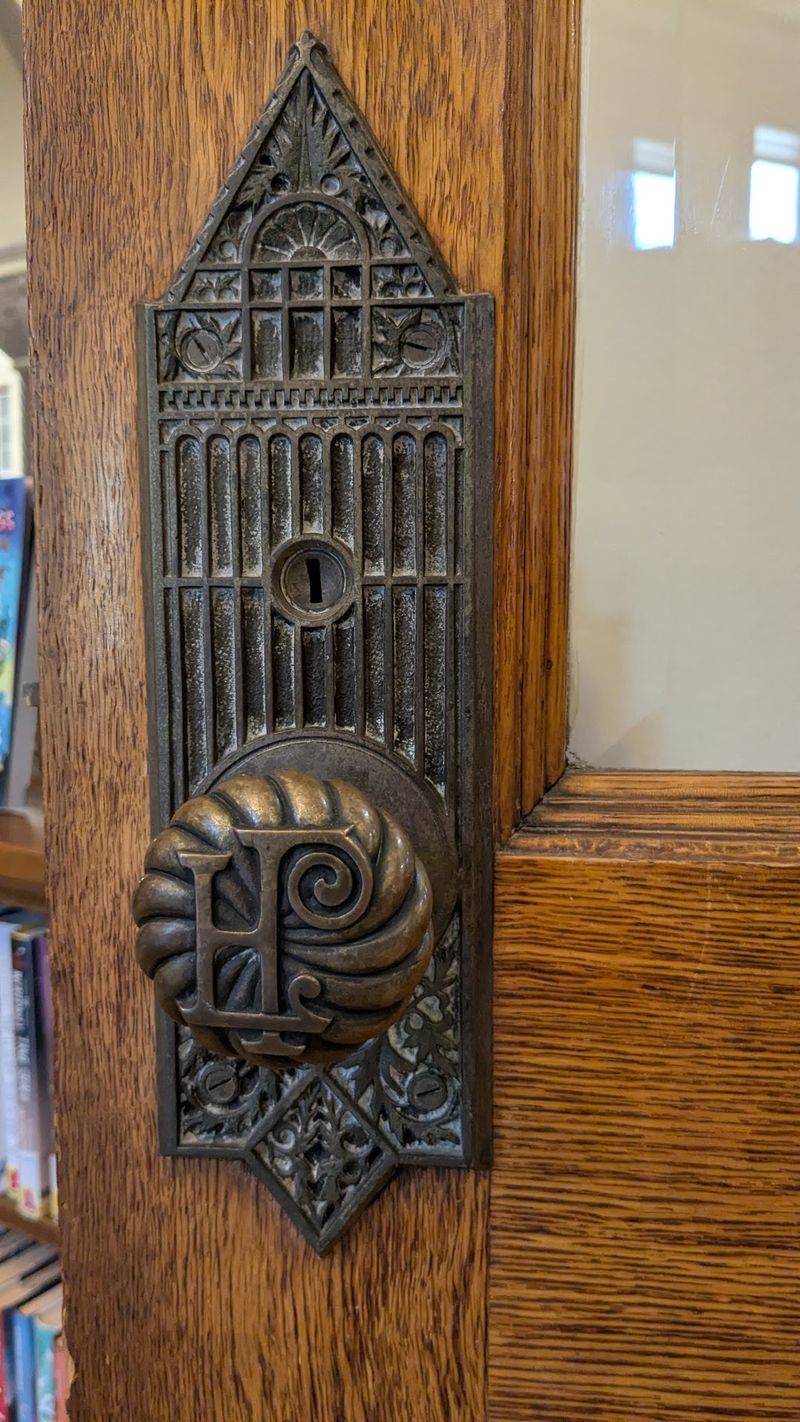
Wooden doors at Hackley deserve the attention usually saved for paintings. Intricate carving appears throughout the interior, from door panels and trim to shelves and other built features.
The craftsmanship adds warmth beside the cool stone and makes ordinary passages feel carefully planned.
Move close enough to study the patterns without touching delicate surfaces. Look for changes in depth, repeated shapes, and the way light settles inside carved lines.
Such details are easier to appreciate when viewed from an angle.
Preservation depends partly on visitor habits, so keep hands, bags, and damp clothing away from historic wood. Photographs taken without flash can record texture while protecting the calm atmosphere for nearby readers.
Find The Literary Figures
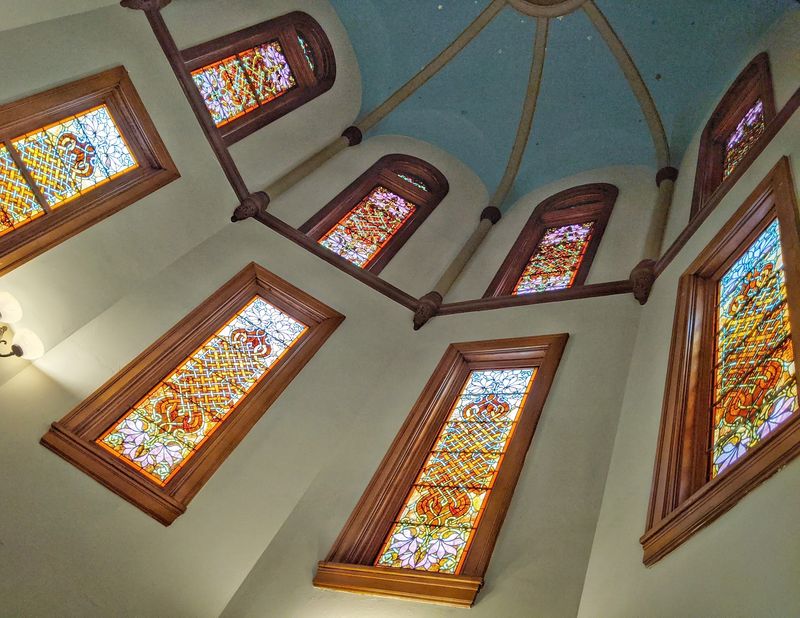
Shakespeare has a seat in the reading room, although he occupies a window rather than a chair. The stained glass includes literary figures such as Shakespeare, Goethe, Longfellow, and Prescott.
Finding each portrait adds a quiet scavenger hunt to an architectural visit.
Bring a short list of the names or save it on your phone before arriving. Once located, consider why these writers and historians may have represented learning to people in the late nineteenth century.
Avoid holding your phone above another person’s workspace while searching. Step back for a complete view, then move closer only when the path is open.
The game should remain gentle, curious, and respectful.
Seek Out The Book Of Kells
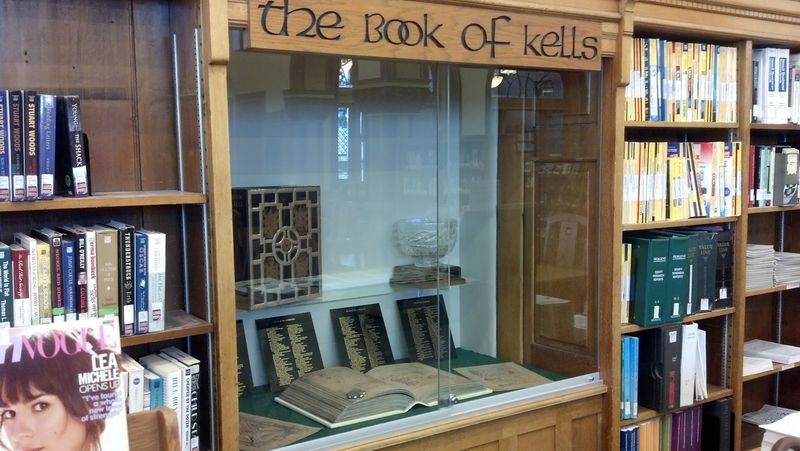
Among all the shelves, one displayed book carries an especially unusual story. Hackley holds one of only two facsimile editions of the Book of Kells publicly displayed in a United States library.
The richly decorated reproduction rewards close attention to color, lettering, and tiny patterns.
It was acquired for the library’s 100th anniversary through a campaign supported by the Muskegon Irish-American Society and the Friends of Hackley Library. That community effort gives the object a meaningful local connection.
Ask a staff member where the facsimile is displayed because locations or access conditions can change. Read nearby information first, avoid touching the case, and check whether photography is currently permitted.
Notice The Murals And Quiet Room
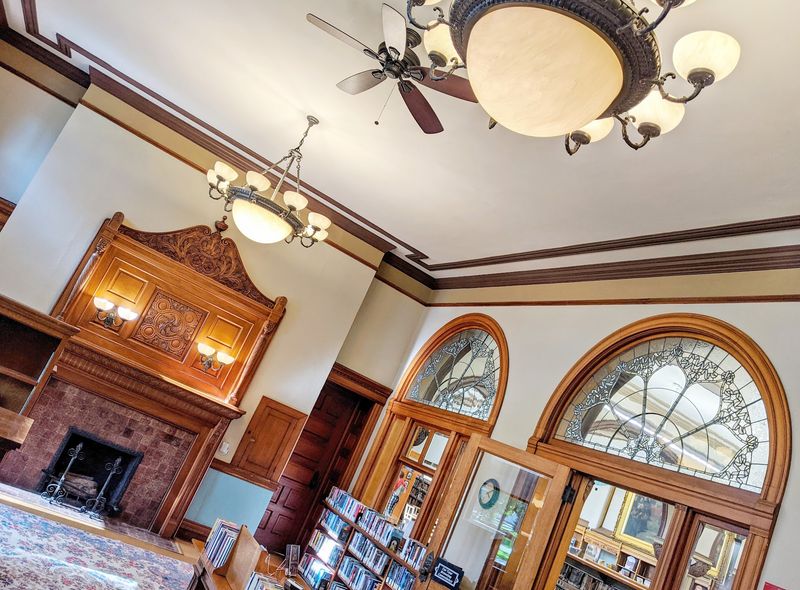
Painted scenes and antique furnishings soften the building’s grand stone framework. Canvas murals by local artist Wilfred Berg connect the rooms with Muskegon’s creative history, while a quiet study room includes a fireplace, antique pieces, and a vintage roll-top desk.
Pause long enough to compare the mural colors with nearby stained glass and wood. The materials play different roles, yet together they make the library feel layered rather than overly formal.
Access to particular rooms can depend on library use, programs, or preservation needs. Ask before entering or photographing a quieter space.
If someone is studying, enjoy the view from a respectful distance instead of turning the room into a photo set.
Explore The Children’s Area Thoughtfully
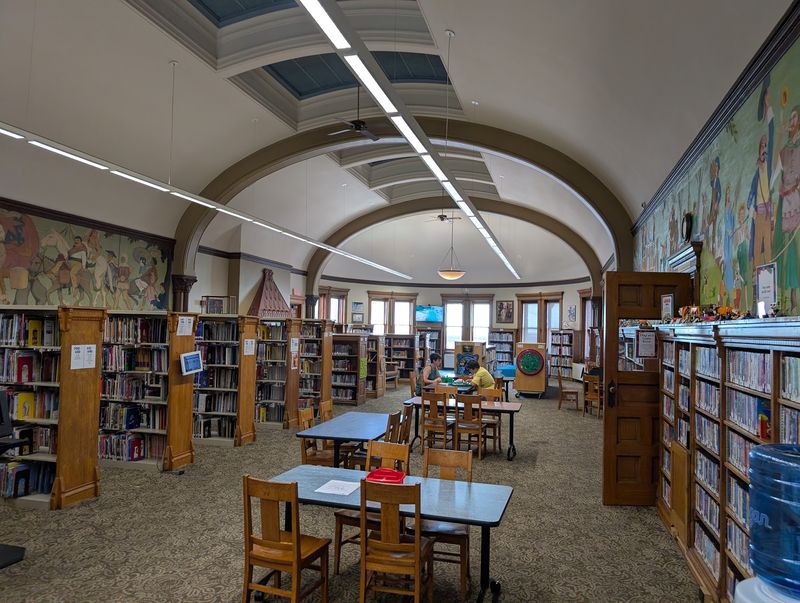
Upstairs energy changes the mood without erasing the building’s history. The children’s area uses literature-themed murals, books, and activity spaces to welcome younger visitors.
It shows how a nineteenth-century landmark can serve modern families instead of becoming a room where nobody may wiggle.
Check the library calendar for story times, summer reading activities, or programs where children read to therapy dogs. Offerings and schedules vary, so confirm details directly before promising a particular event.
Families should leave extra time for browsing rather than treating the area as an architectural shortcut. Visitors without children can admire available artwork quietly, avoid photographing young patrons, and give scheduled activities plenty of room.
Plan Time For History And Programs
The building becomes more interesting when treated as a living civic space, not a decorative stop. Hackley hosts lectures, creative writing gatherings, seasonal reading programs, cultural celebrations, and activities for several age groups.
Consult its official calendar because dates, registration rules, and room locations may change. Even a short visit shows how naturally the historic setting still accommodates community life, from quiet study to public events that bring visitors back.
Local history and genealogy materials are housed in the historic Torrent House across the street. That department follows its own schedule, so confirm hours before planning research.
Researchers may want extra time, especially when tracing family connections or exploring Muskegon-area history through collections.
Major restoration work in 2014 and later accessibility and efficiency improvements helped preserve the library while supporting current use. Allow time for books and services alongside architecture.
That balance best reflects Charles Hackley’s public-minded gift.