
This 1912 Illinois University Reading Room Looks Like It Was Borrowed Straight From Hogwarts
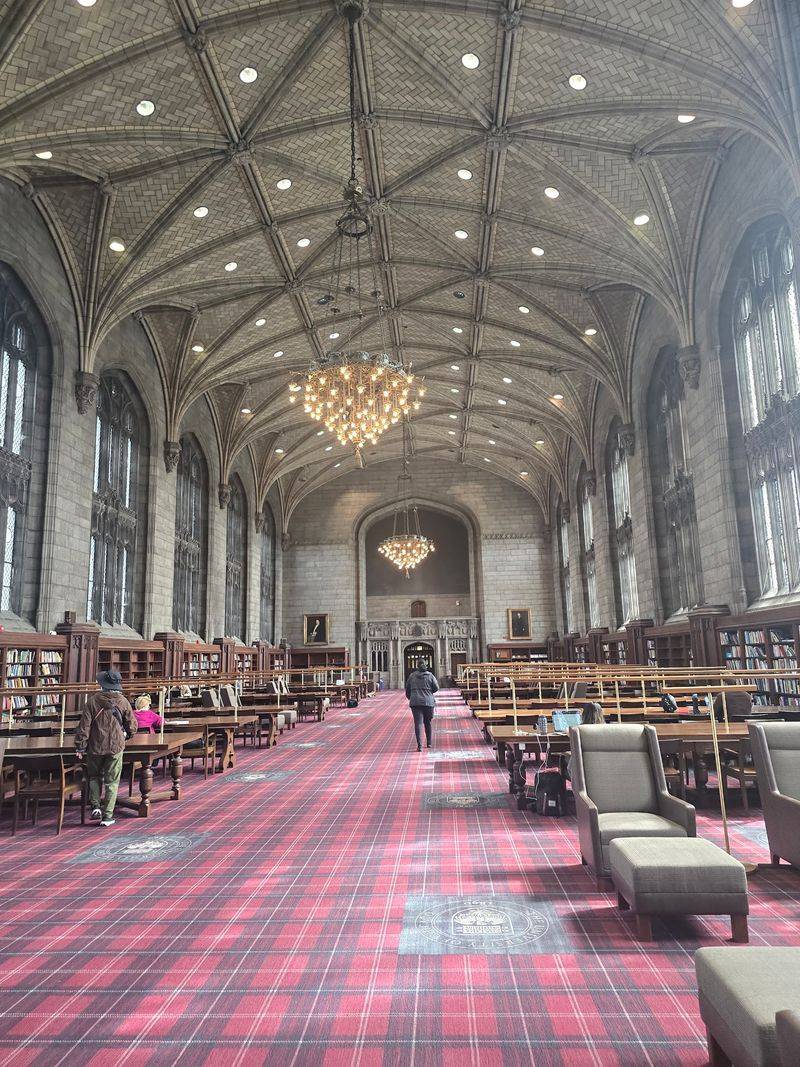
Students in Illinois study every weekday under a soaring Gothic ceiling that people keep comparing to Hogwarts. The room sits on a third floor, and part of the trick to finding it involves passing through a cafe.
The building dates to 1912. It was raised in memory of a university’s very first president, and its design borrows from the old colleges of Oxford and Cambridge.
I like how this place never became a museum piece. Laptops glow under arched windows, and students still read beside tall walls of dark wood and stone.
I can’t imagine a better free outing for a family of book lovers or anyone who adores old architecture. So how does a century-old reading room in Illinois end up feeling like a wizarding school’s great hall?
A Gothic Landmark On Chicago’s South Side Campus
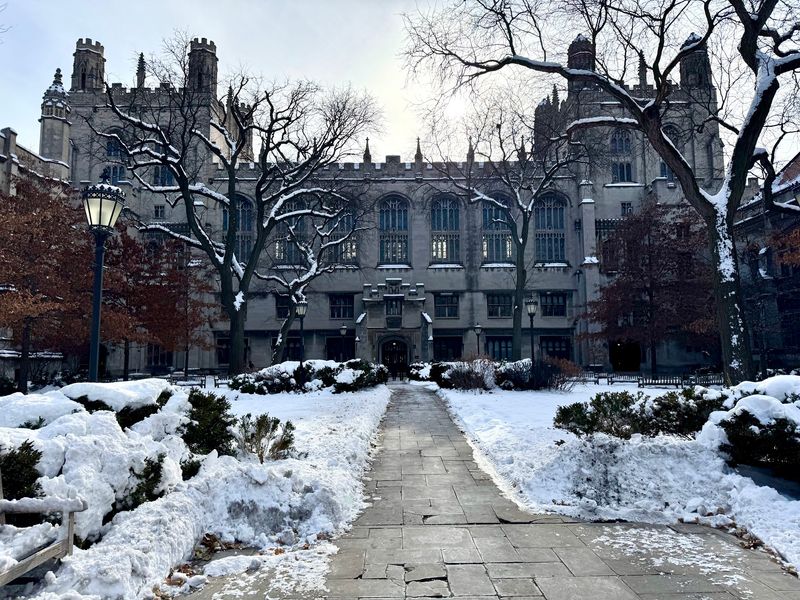
Harper Memorial Library stands on the University of Chicago campus in the Hyde Park area of Chicago, Illinois. It’s one of those buildings that grabs your attention as you stroll past the quads.
The limestone exterior looks serious and old-world, with tall windows and towers. Nothing about it whispers modern Midwest, and that’s exactly the appeal.
Inside the building waits the real showstopper, a grand reading room on the third floor. People often compare it to the great hall at Hogwarts, and the comparison isn’t much of a stretch.
Here’s the fun part for budget-minded families. This is a working university building, not a paid attraction with tickets and turnstiles.
That means the experience rests on architecture, atmosphere, and a little curiosity. You come to admire, maybe read quietly, and soak in more than a century of scholarly history.
The campus itself is full of handsome buildings, so the library makes a great anchor for a longer walk. Think of it as the centerpiece of an Illinois day trip built around stone, ivy, and old-school charm.
Kids who love wizard stories will probably grasp the magic fast. Grown-ups who love history will find plenty to appreciate too.
The Story Behind A Library Built To Honor A First President
Back in 1912, the University of Chicago completed this building in memory of William Rainey Harper. He was the university’s first president, so the tribute carried real weight.
For many years, the building served as the main campus library. Stacks of books, busy readers, and long study sessions filled its halls for generations.
Eventually, most of the collection moved to the Regenstein Library, known around campus simply as the Reg. That shift changed the building’s role, but it didn’t erase its character.
Today, the space works mainly as study areas, classrooms, and university offices. The grand reading room remains the beating heart of the place.
I believe that second life is what makes the story so satisfying. Plenty of historic buildings get roped off and preserved behind glass, which can feel a little lonely.
Here, students still open laptops and textbooks beneath the same arches their predecessors used. The history isn’t something you only read about on a plaque.
It’s a quiet continuity that stretches more than a century. For anyone who loves old traditions, that kind of staying power is pretty hard to resist.
Oxford And Cambridge Inspiration Carved Into Every Corner
England’s oldest universities served as the blueprint for this building’s look. The architecture draws on the colleges of Oxford and Cambridge, those famous temples of learning.
Gothic style can sometimes feel like a costume slapped onto a modern box. That’s not the case here, because the decoration actually connects to the building’s purpose.
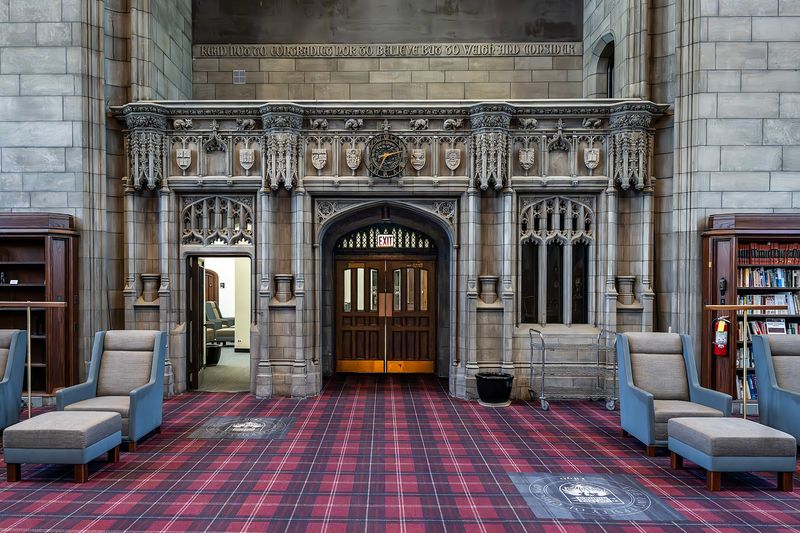
Throughout the interior, decorative details reference universities, books, printing, and scholarship. The ornament tells a story about learning itself.
So when you look closer at the stone and wood, you’re reading a kind of visual essay. The building seems designed to express the very idea of a university.
Dark wood paneling warms the stone, keeping the whole effect from feeling cold. Tall windows pull in daylight and give the room its dramatic height.
It’s a lovely place to slow down and notice small things. Bring a curious kid and challenge them to spot every book or scholarly symbol they can find.
That little game turns a quiet visit into a scavenger hunt. Best of all, it costs nothing but sharp eyes and a bit of patience.
Why That Vaulted Ceiling Steals The Whole Show
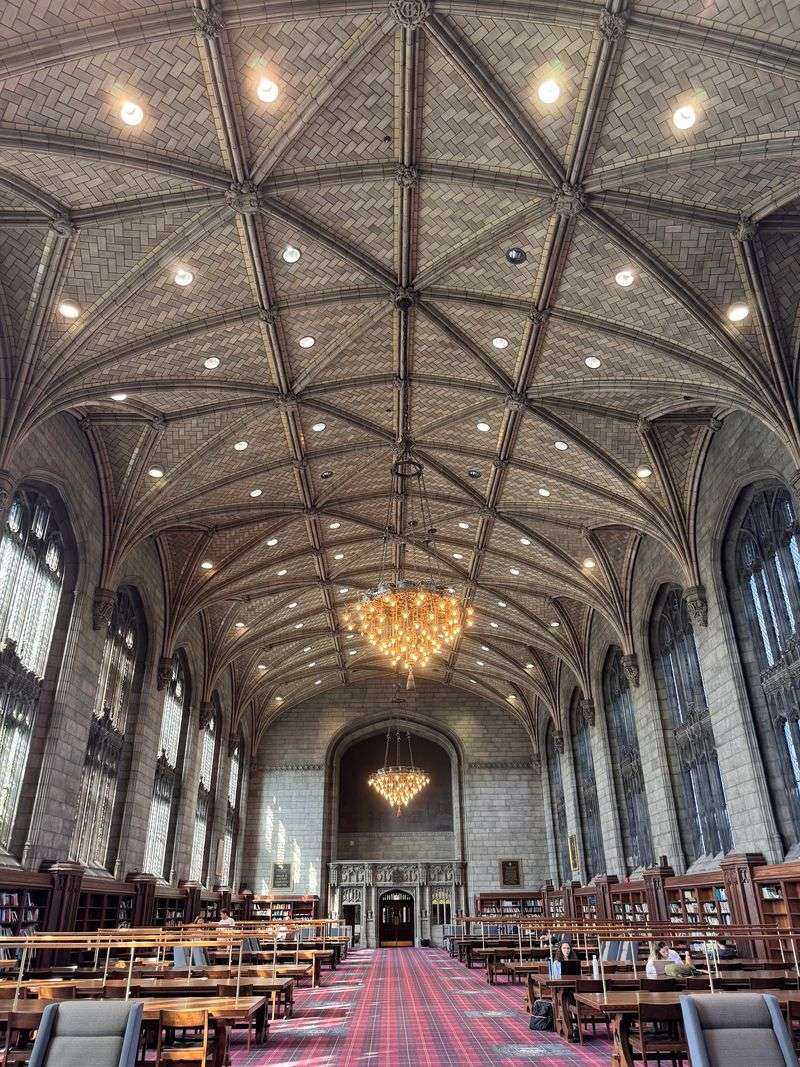
Look up. Seriously, that’s the first instinct inside the third-floor reading room, officially known as the Arley D.
Cathey reading room.
The high arched ceiling is the feature that earns all those Hogwarts comparisons. It rises over long rows of study tables like the roof of a medieval hall.
Many describe the ceiling as almost magical, the kind of sight that pulls you back through time. It’s easy to understand why phones come out the moment people arrive.
Tall windows line the walls, stretching the room even higher in your imagination. Paired with dark wood and stone, they create that classic old-university mood.
The room also draws a crowd of fans online who call it the home of campus dark academia vibes. That’s a fancy way of saying it looks like a novel about brilliant, brooding students.
Still, the space feels less like a movie set in person. It reads as a serious, quiet academic room with real history behind it.
That authenticity is exactly why the ceiling hits so hard. Nothing here is fake, and you can tell.
Shelves Of Free Books Waiting Around The Reading Room
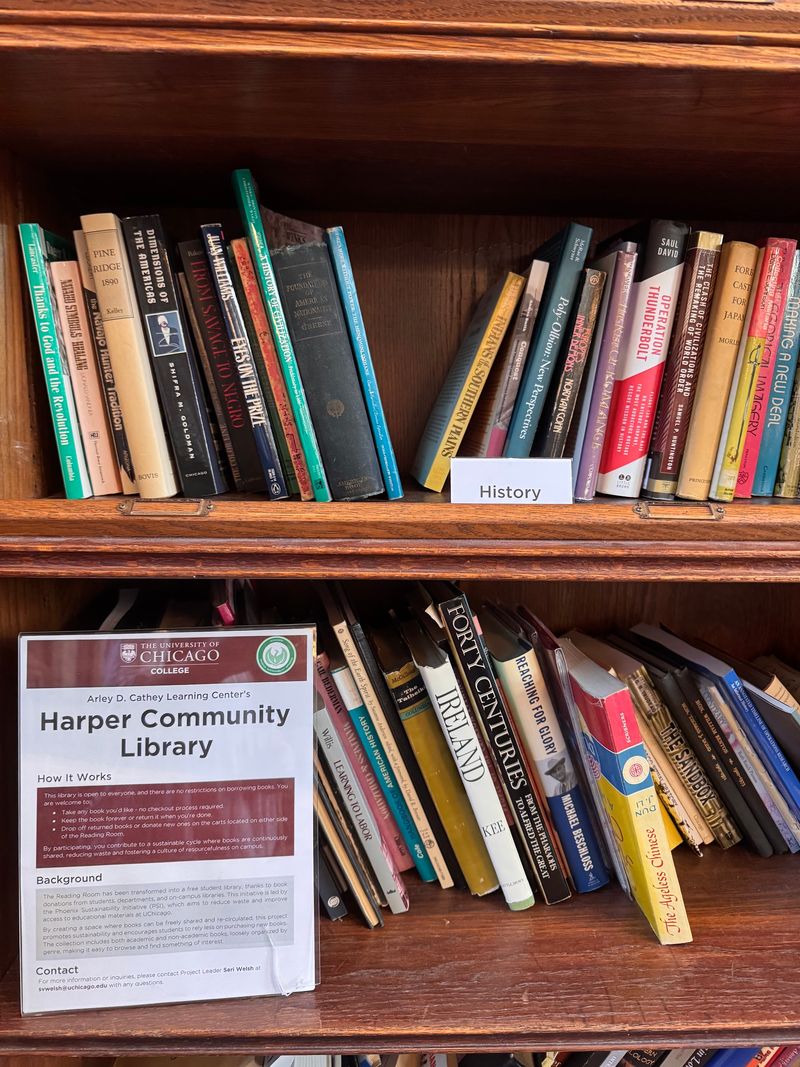
Book lovers, brace yourselves for a delightful bonus. The reading room is surrounded by books that are free to take.
That detail turns a sightseeing stop into a tiny treasure hunt. The selection spans many eras and genres, so browsing can easily eat up a happy chunk of time.
It also fits the budget-friendly spirit of the outing perfectly. A beautiful room, a quiet afternoon, and maybe a new book to carry home, all without opening your wallet.
Remember that the main research collection moved to the Regenstein Library years ago. Harper today functions more as a reading room than a traditional lending library.
So don’t expect rows of catalogued stacks for checkout. The charm lies in the shelves around the edges and the setting itself.
Grandparents who once spent hours in old libraries will likely feel right at home. Kids, meanwhile, get a memorable lesson in why libraries can feel like special places.
Choose something, find a quiet spot, and read a chapter under that ceiling. It might become the book your family talks about long after the trip.
The Quiet Is Real, So Plan Your Visit Around It
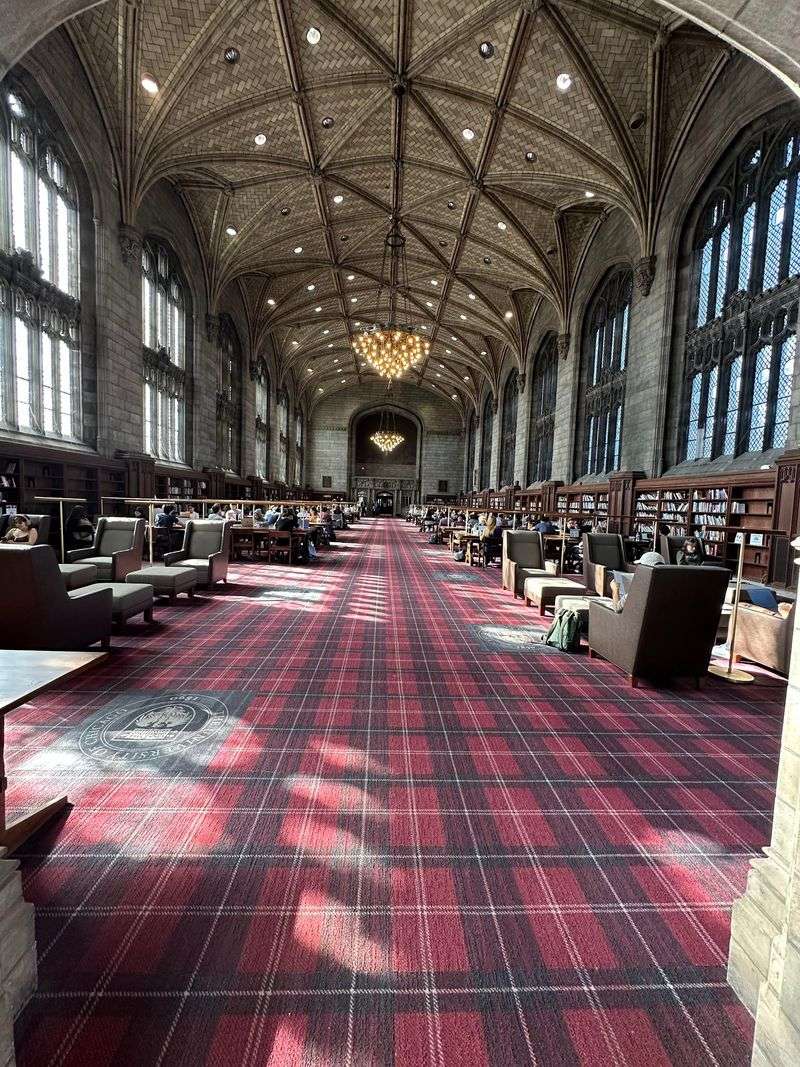
Silence is the house specialty at Harper Memorial Library. Quiet atmosphere comes up again and again as the room’s defining mood.
Students still use this space every day for serious work. You’ll likely notice people on laptops, reading, or chatting softly with one another.
That makes it a fantastic stop for focused readers and anyone craving calm. It’s a space built for heads-down concentration, and the atmosphere can feel intense in a productive way.
Because of that, families should keep things low-key. This works best for older kids who can whisper, admire, and move gently.
A pair of headphones helps if you want to settle in and study. Even in a quiet library, a little extra focus never hurts.
Food and photography rules have been noted as restricted in the reading room at times, so check signs on arrival. Snacks fit better in the nearby cafe.
Respect goes a long way in a working academic room. Treat it like borrowing someone’s favorite study spot, because that’s exactly what it is.
Finding The Room Takes A Little Detective Work
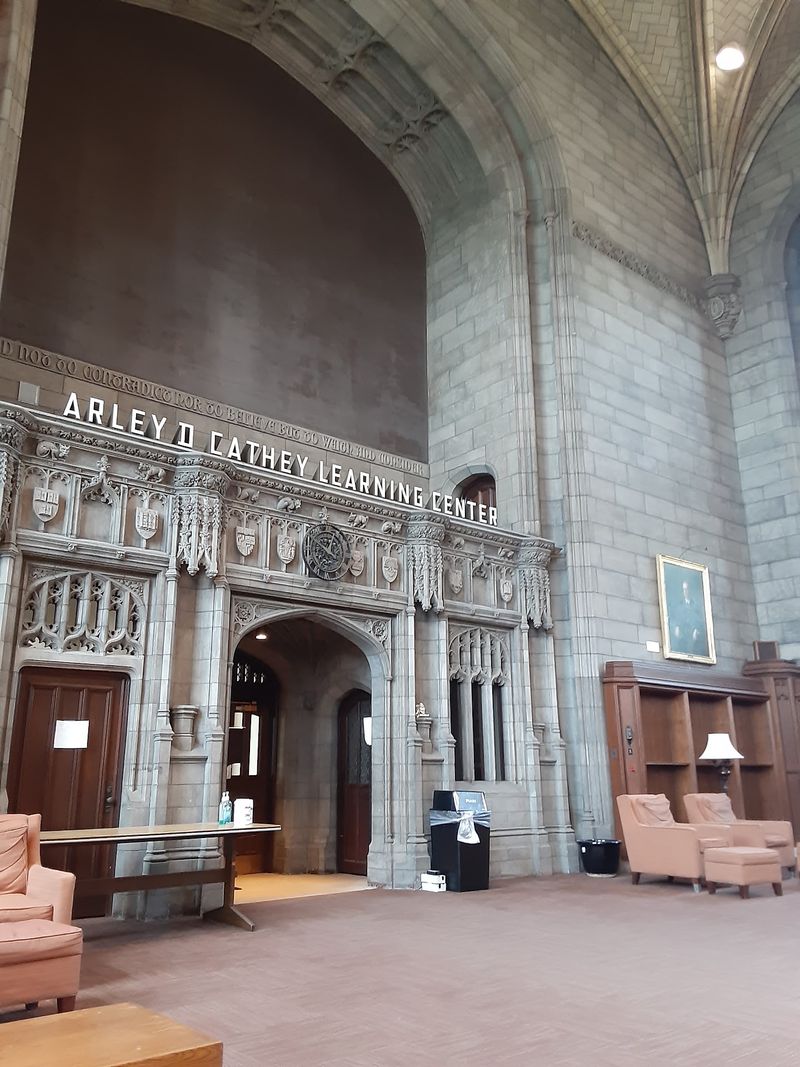
Getting to the famous hall feels a bit like solving a riddle. The reading room can be tricky to find on a first visit.
The key clue involves Harper Cafe on the third floor. The cafe sits by the elevator in the east tower, right next to the reading room.
A handy tip is to walk through the cafe to reach the grand space. Staff are also happy to point lost visitors in the right direction.
The cafe adds a nice practical perk too. It gives you a spot to grab a bite before or after quiet time in the hall.
Wobbly wooden chairs have been mentioned in the reading room, so choose your seat thoughtfully. Old buildings come with a few quirks.
Wi-Fi is another detail worth knowing. Non-students have needed to visit a different campus library location to get a guest code.
Plan around that if you need to get work done online. Otherwise, enjoy the excuse to unplug beneath a century-old ceiling.
Hours, Address, And A Campus Walk Worth Adding
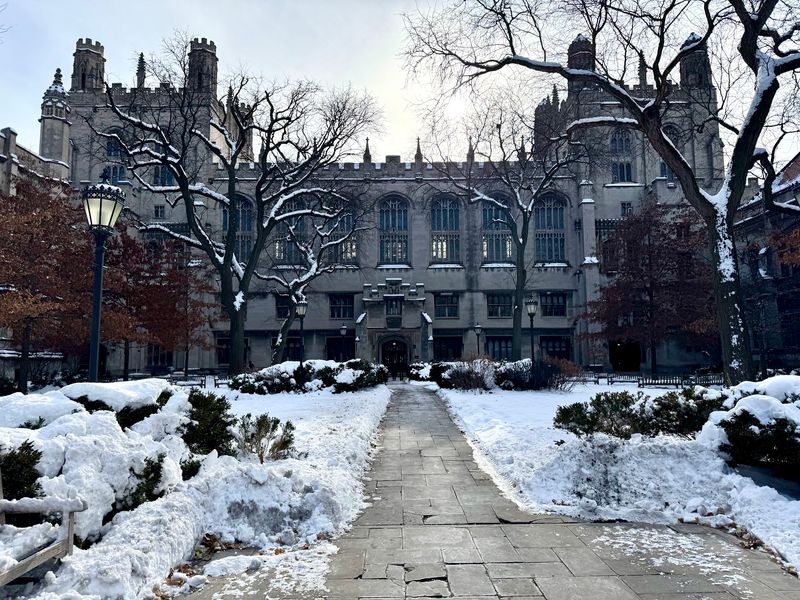
Timing matters, because this isn’t a seven-day spot. The building sits at 1116 E 59th St, Chicago, IL 60637.
Hours run from 8 am to 11 pm Monday through Thursday. On Friday, the doors close earlier at 6 pm.
Saturday and Sunday are closed, which surprises weekend planners. A weekday school break or a Friday daytime trip makes the most sense for Illinois families.
The location faces toward the Midway Plaisance, the long green stretch across the road. A statue there sometimes catches the eye of passersby.
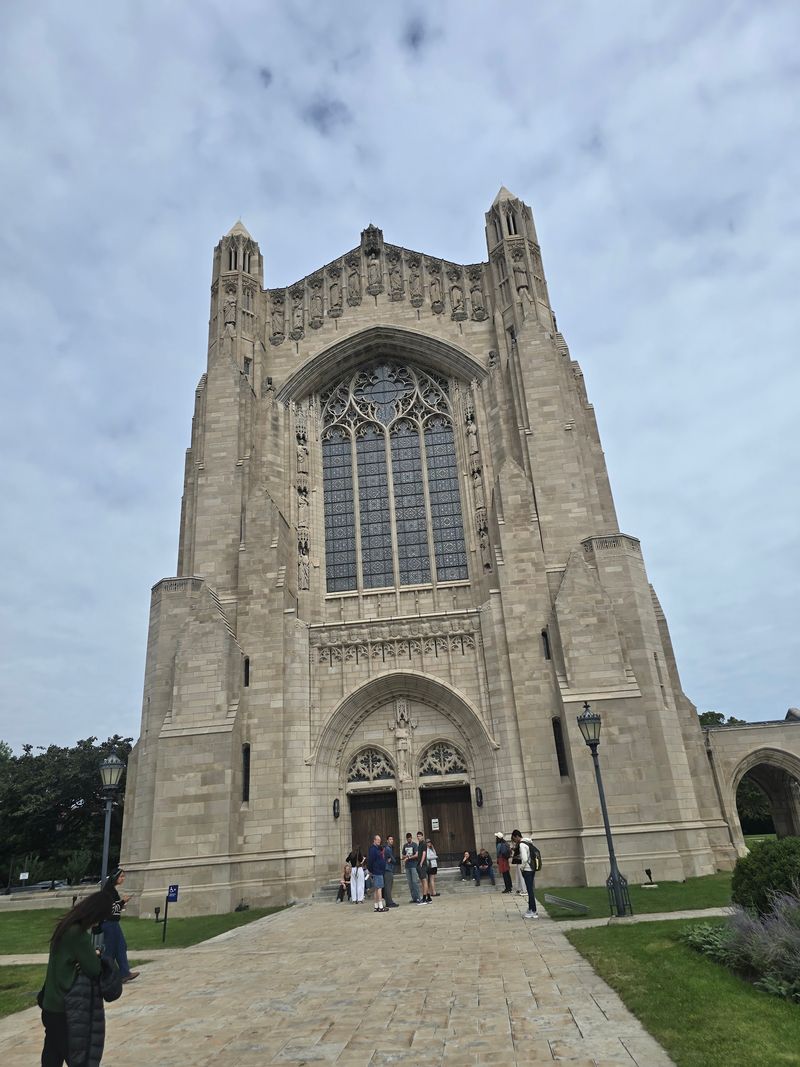
Once you’ve seen the reading room, the wider campus is worth a wander. Robie House and Rockefeller Chapel bring even more dramatic architecture nearby.
The ultramodern Mansueto Library adds a striking contrast. It features automated underground book storage, a fun counterpoint to Harper’s old-world wood and stone.
Putting these together creates a full, low-cost day of architecture spotting. You get centuries of style in one compact walk.
A Free Dose Of Wizard-School Wonder Close To Home
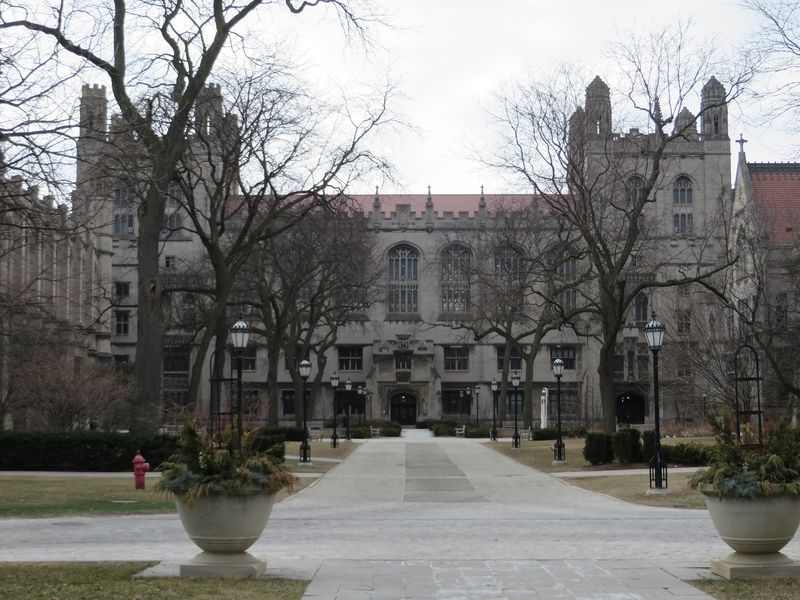
Plenty of Illinois families dream about a trip to see famous film sets overseas. Harper Memorial Library offers a taste of that grandeur much closer to home.
It’s not a theme park, and that’s part of its charm. The magic here comes from real stone, real wood, and real students still learning inside.
The building is loved as one of the most beautiful Gothic libraries around. Many campus fans call it their favorite building at the university.
Is it the single defining landmark on campus? Maybe not, with Robie House and Rockefeller Chapel nearby, but it may be the most livable one.
The best memories here will likely be simple. A child staring up at the ceiling, a grandparent recalling old libraries, a free book carried home.
Go on a weekday, keep voices low, and let the room do the talking. Find the cafe, follow the clues, and take your time.
Somewhere between the arches and the tall windows, you might feel a little spellbound. Not bad for an afternoon in Chicago, Illinois.