
This 42-Foot Lighthouse On The Ohio Coast Keeps Visitors Driving In From Every Direction
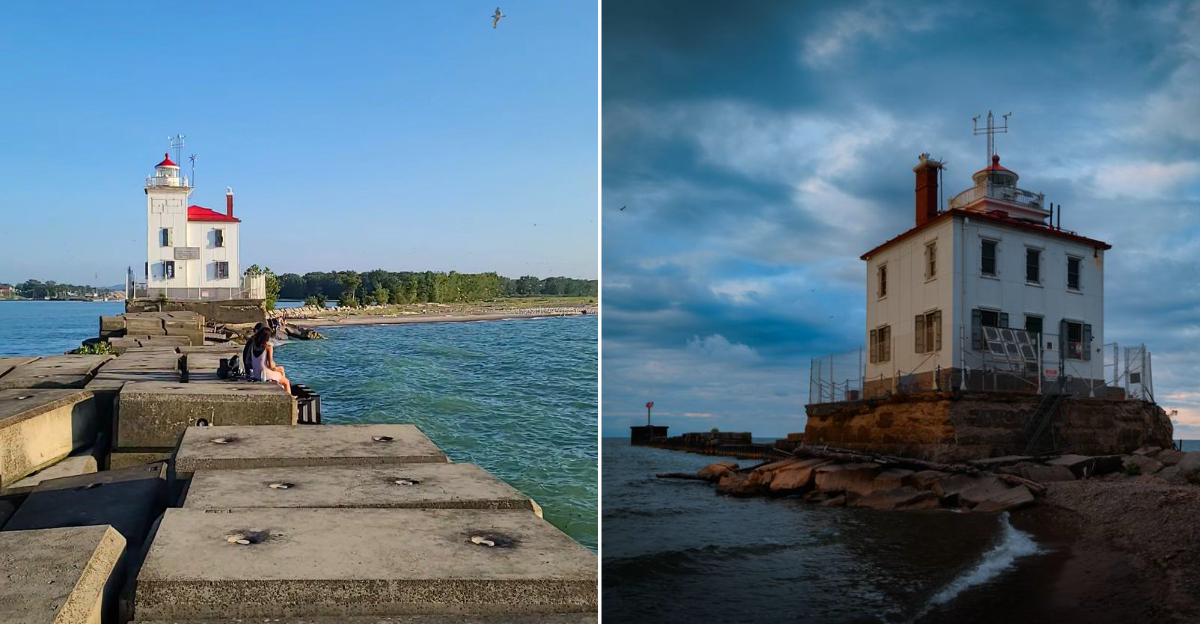
The vast and unpredictable expanse of Lake Erie remains deceptively calm until the seasonal winds decide to change their mind with a sudden, forceful shift that commands your full attention toward the sturdy silhouette of the Fairport Harbor West Breakwater Light.
Perched with a singular and defiant grace at the extreme terminus of a long, weather-beaten breakwater, this forty-two-foot beacon serves as a vital navigational anchor that feels simultaneously immovable and surprisingly elegant against the shifting backdrop of the Great Lakes horizon.
Your journey toward the light begins with a soft, beachy approach along the sandy shoreline of Headlands Beach State Park, but it quickly transitions into a deliberate trek across concrete blocks that hum with the rhythmic vibration of crashing waves.
As you move further from the shore, the world seems to open up like a quiet and panoramic stage where the sky meets the water in a seamless blue arc, offering a rare sense of isolation and clarity.
Every step forward brings you into closer contact with the working history of the Ohio coast, revealing the small, industrial details of a structure that was built for the blunt necessity of maritime safety rather than the simple vanity of coastal decoration.
To walk this path is to engage in a sensory conversation with the elements, where the smell of mineral-rich freshwater and the cry of circling gulls frame a day of exploration that rewards the unhurried traveler with a deep sense of place.
It is a destination that demands a slow pace and a keen eye, ensuring that by the time you reach the base of the tower, the lighthouse has transformed from a distant landmark into a tangible and heroic witness to a century of Lake Erie’s restless and powerful history.
Finding Your Footing On The Breakwater
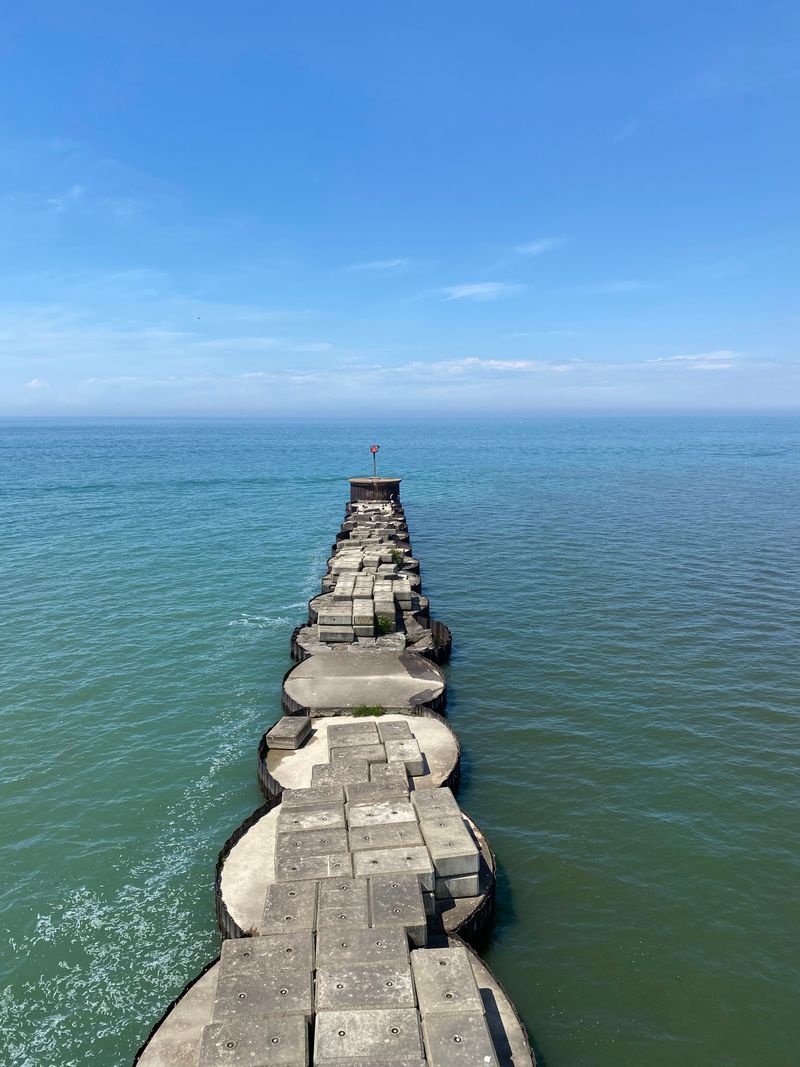
Your very first step onto the massive concrete breakwater feels oddly and delightfully theatrical, as if you are leaving the scattered chatter of the public shoreline behind and entering a long, quiet hallway that leads directly into the heart of the lake.
The heavy concrete blocks are generally level but remain far from polished, featuring deep seams that catch smooth pebbles and hold small, shimmering pools of rainwater which reflect the vast and uncluttered sky above your head.
The wind carries the distinctive, sharp mineral scent of Lake Erie while the local gulls seem to announce your arrival with a series of piercing calls that echo long before any other human presence is felt in this isolated aquatic corridor.
This linear approach is architecturally designed to frame the lighthouse squarely against the horizon, creating a vibe that feels crisp and focused rather than touristy, much like a meaningful errand carried out in a place of great natural power.
I recommend wearing shoes with particularly grippy soles and keeping a vigilant watch for the dark, wet patches left behind by passing swells that can make the industrial surface surprisingly slick without any warning.
Giving yourself ample time to pause and turn around allows you to check your line back to the distant shore, helping you to accurately gauge your distance and the changing mood of the water as you prepare for the return walk.
The experience of navigating this stony path requires a steady physical presence that grounds your thoughts in the immediate reality of the waves, turning a simple stroll into a mindful exercise in coastal navigation and environmental awareness.
A Compact, Workmanlike Beauty
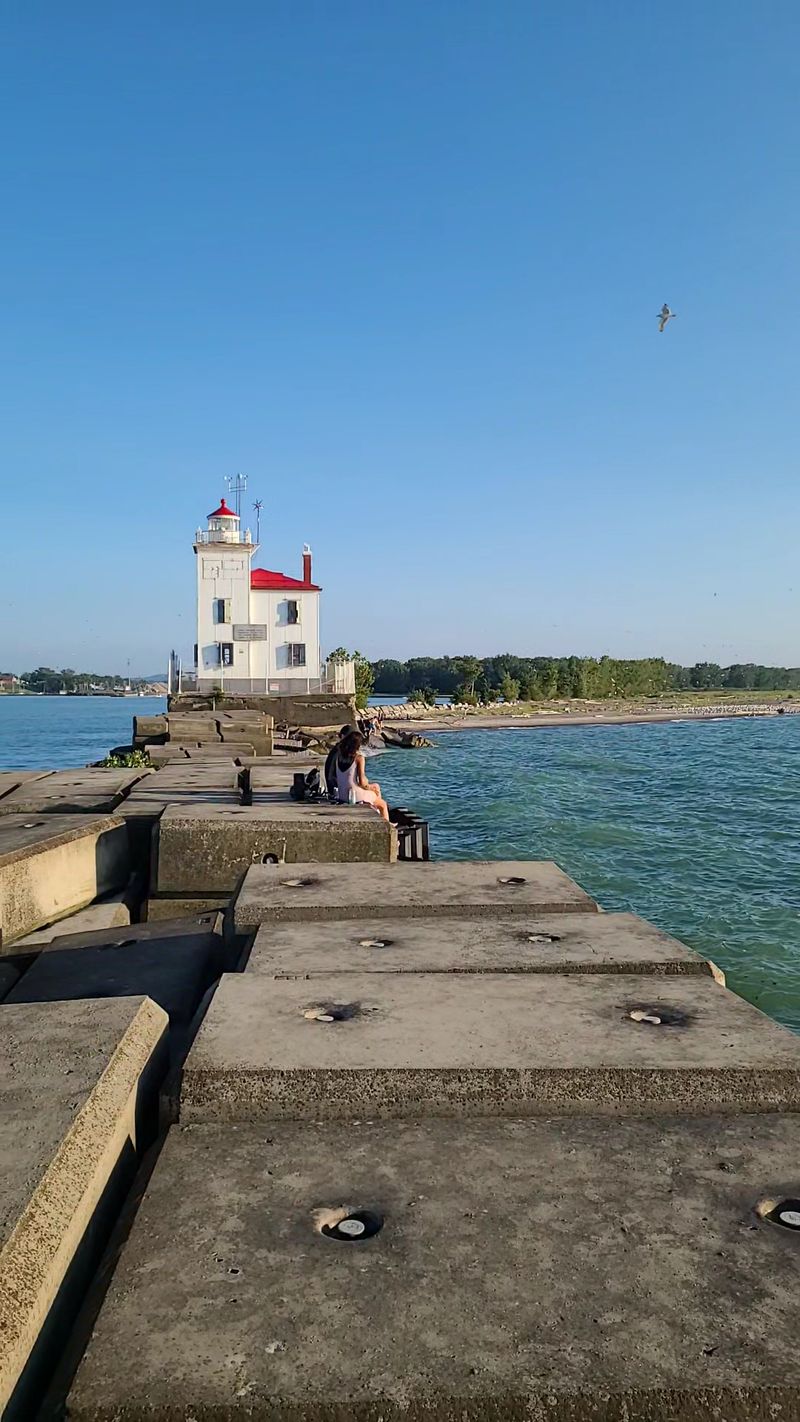
The lighthouse structure is not particularly tall by the soaring standards of the Atlantic or Pacific oceans, yet its compact proportions feel incredibly deliberate and perfectly suited for the specific demands of the Great Lakes shipping lanes.
A sturdy square house sits firmly under a vibrant red roof, and the entire composition is topped by a functional lantern room that resolves the building into a classic maritime silhouette that has guided freighters for a century.
As you draw closer, you begin to notice the intricate details of railings, vertical ladders, and heavy service doors that speak in practical, industrial verbs rather than the unnecessary flourishes of more ornamental coastal architecture.
Constructed originally in 1925 to replace an earlier light at the river’s mouth, this beacon belongs to an era when Lake Erie shipping was a busy and bluntly efficient enterprise that powered the industrial heart of the American Midwest.
That history lives in every heavy bolt and weathered seam of the tower, reflecting a time when the United States Coast Guard once tended the light with daily routines that eventually turned into a local cultural rhythm.
I found that moving slowly along the exterior lines of the building allowed me to appreciate the craftsmanship of the masonry while photographing the sharp corners rather than the flat fronts to capture the true character of the site.
The building stands as a testament to the idea that true beauty often emerges from the fulfillment of a vital purpose, where the strength of the foundation and the clarity of the signal matter more than any architectural trend.
Hearing The Weather Before You See It
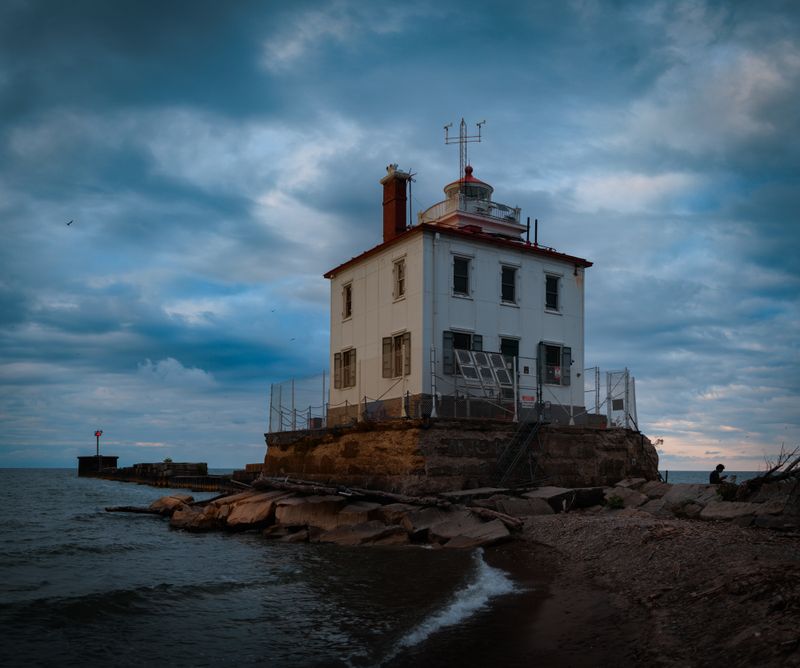
Long before the gathering clouds show their hand or the first drops of rain begin to fall, the soundscape of the breakwater undergoes a profound change as the low thumps of the water grow steady and the wind begins to howl.
The local gull calls seem to lift and reorder themselves in response to the shifting pressure, while the cooling breeze begins to thread through your jacket like a careful tailor fitting a garment to your frame in the open air.
This is the kind of subtle sensory oddity that you only truly notice once you stop talking and allow the natural environment to dictate the terms of your presence on the edge of the lake’s vast stage.
That sharpened, atmospheric vibe fits the lighthouse’s historical job perfectly, as mariners for generations trusted the signals emanating from this spot when their physical sight failed in the thick of a Great Lakes storm.
The breakwater still carries the hushed gravity of listening work, and I believe that allowing the sound of the churning water to slow your pulse is the best way to honor the legacy of those who served here.
Checking the hourly forecast on your phone is a modern necessity, but you must also look at the lake with your own eyes, as whitecaps that stack quickly indicate it is time to plan a shorter and safer visit.
Safety feels like a sensible and quiet choice rather than a dramatic one when the concrete begins to get slick with spray and the wind pushes sideways with enough force to remind you of the lake’s immense power.
A Thread Of History You Can Trace
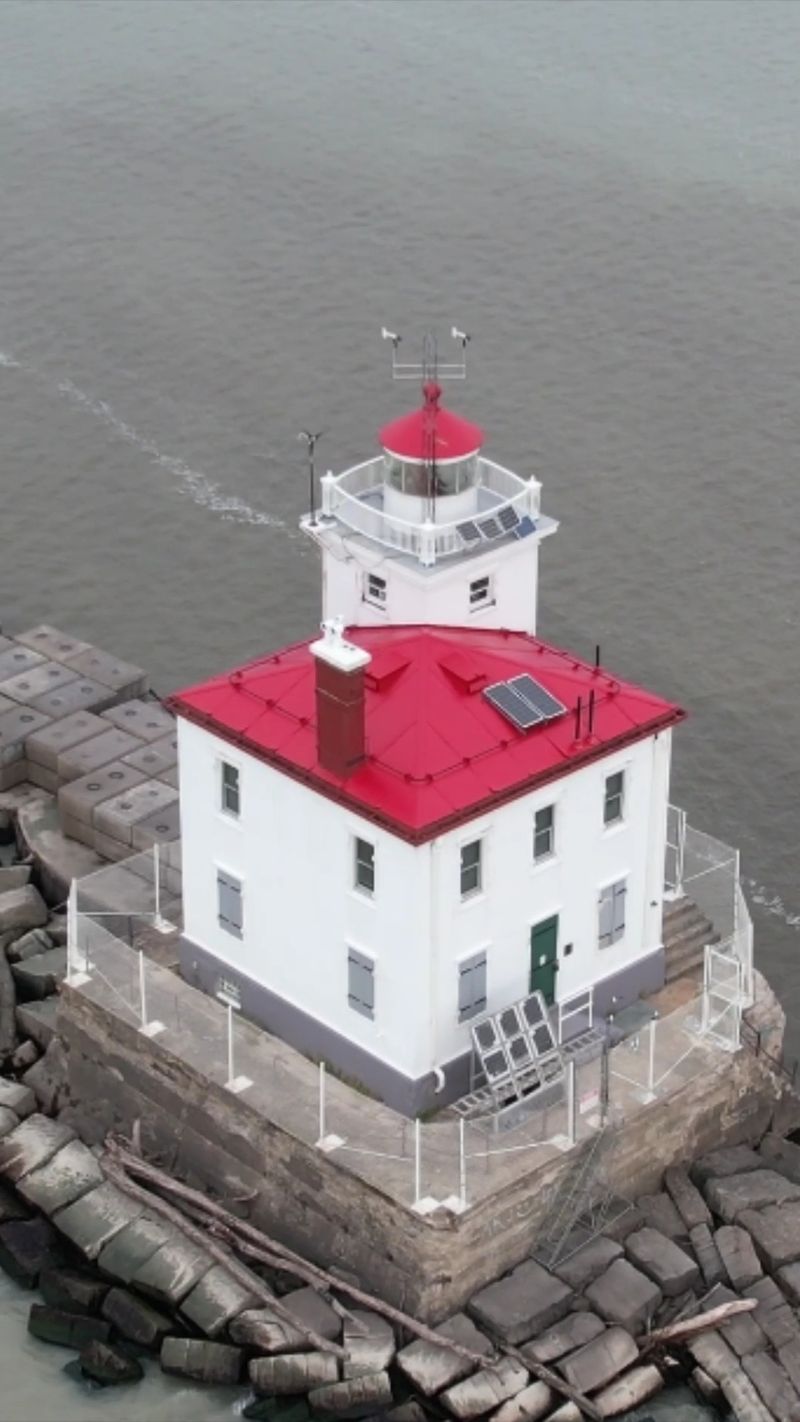
The history of this harbor reveals that there was a predecessor lighthouse located much closer to the mouth of the Grand River, but the steady march of harbor improvements eventually nudged the light out to this breakwater in 1925.
That strategic move was made to align the navigational guidance with the deeper channels required for the growing traffic of massive iron ore freighters that were essential to the regional economy during the early twentieth century.
The resulting structure answered the cold demands of commerce rather than the romantic notions of coastal living, which is why the building feels so grounded and focused on its primary task of saving lives and ships.
Over the ensuing decades, a dedicated line of keepers and later members of the Coast Guard turned the maintenance of the light into a sacred ritual involving endless layers of white paint and glass polishing.
These routines were kept honest by the lake’s relentless feedback in the form of ice, salt, and wind, and the local memory of Fairport Harbor holds these quiet acts of service in a very kind and respectful light.
I suggest reading a bit about the Fairport Harbor Marine Museum before you arrive, as the context you gain from that inland archive will help you spot the clues hidden in the vent pipes and lantern seams.
Every weathered fastener and rusted hinge maps out the working biography of a light that has stayed true to its mission through world wars, economic shifts, and the transition from manual labor to modern automation.
The Lantern Room’s Clean Geometry
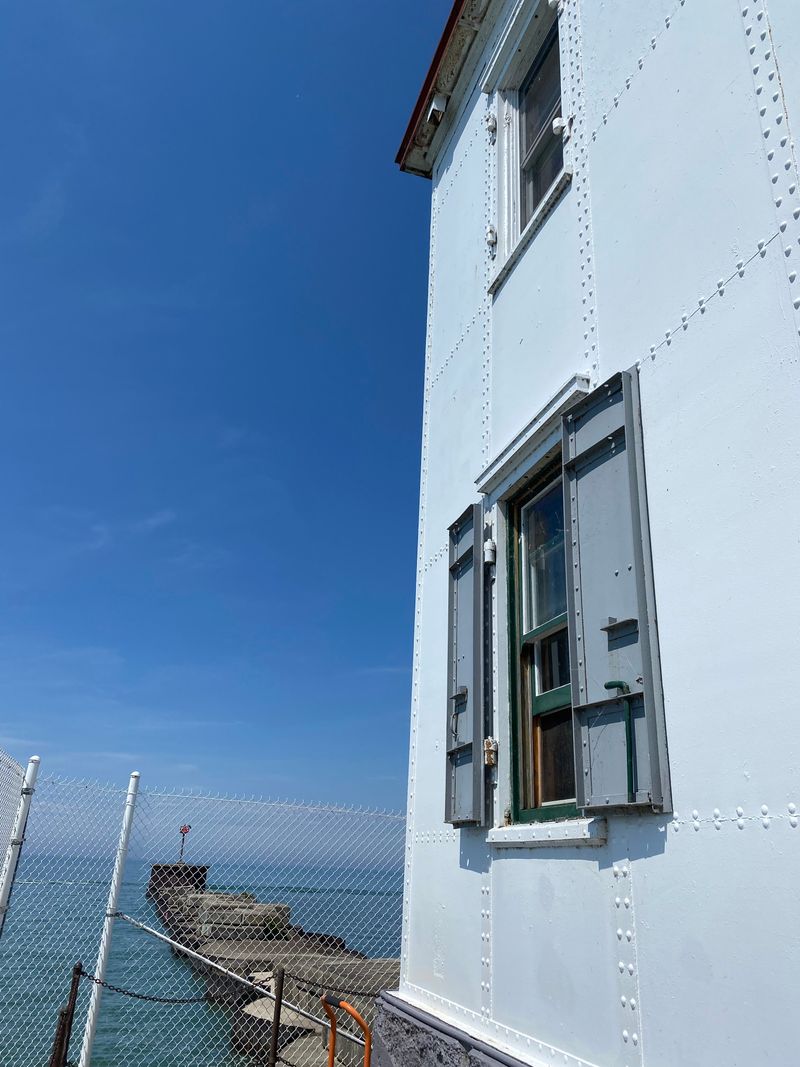
From the height of the gallery rail to the thick glass of the lantern room, the geometry of the lighthouse stays remarkably honest through its use of straight lines, repeatable curves, and heavy metal fittings.
Everything about the upper works looks as though it was placed there by a craftsman who enjoyed the quiet satisfaction of measuring twice and cutting once, resulting in a study in clarity rather than decorative excess.
Originally, the optics inside this room would have featured a magnificent Fresnel lens, which is a complex and elegant stack of glass prisms designed to provide maximum light punch with minimal physical weight.
Even though technology has since evolved to include modern LED signals, the housing still announces a heritage of precision that continues to command the respect of every sailor who enters the harbor at night.
I found that bringing a high-quality lens that can handle the intense glare of the lake is essential for capturing the sharp angles of the glass without losing the detail to the bright afternoon sun.
Using a polarizer can help manage the reflections on bright days, but you should also be prepared to wait a few minutes for the Lake Erie light to shift, as it moves faster than most apps predict.
Standing to one side of the lantern room allows you to appreciate the mathematical beauty of the structure while also providing a better perspective on how the light interacts with the surrounding water and sky.
Guides, Rangers, And Good Neighbors
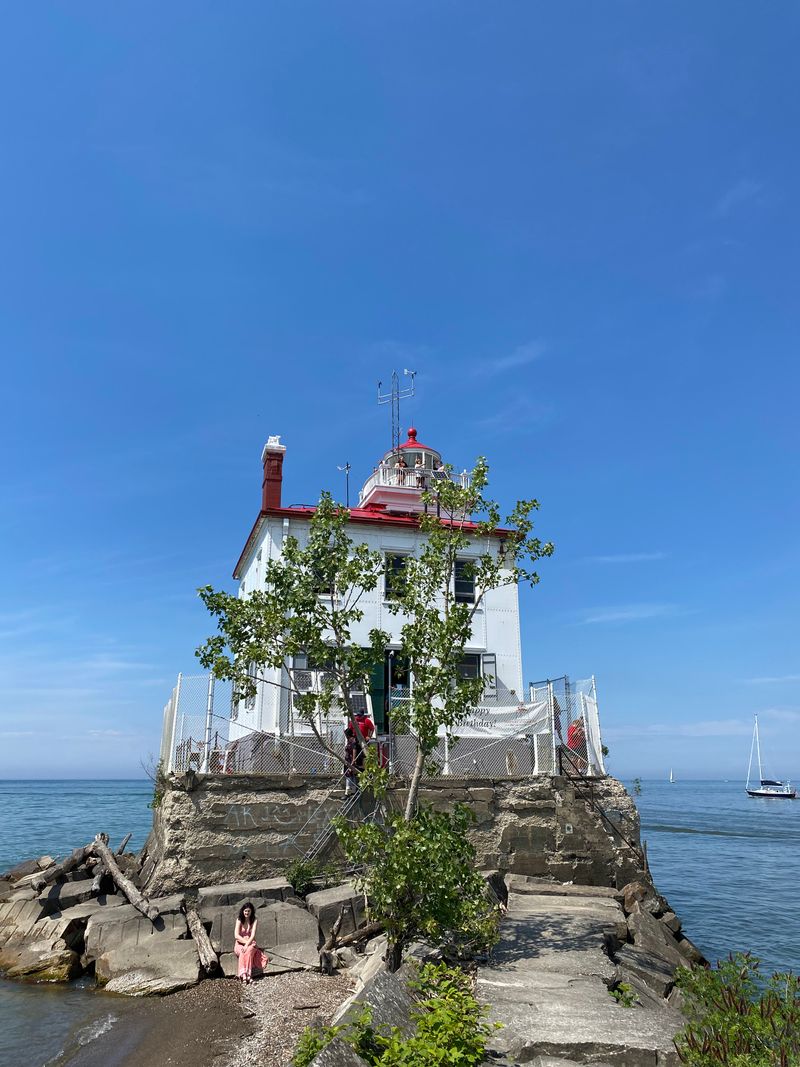
On many days you will encounter a friendly volunteer or a dedicated park staffer near the start of the approach who possesses the distinctive cadence of someone who genuinely cares for this historic maritime landmark.
They will often point you toward the safest path across the concrete and share small, practical updates about the current wind speeds or the fluctuating lake levels that might impact your ability to reach the light.
This interaction feels less like a formal tour and more like a neighborly stewardship, where the local knowledge of the water is passed down with a sense of pride and a commitment to visitor safety.
The culture of Fairport Harbor leans heavily into its maritime roots without any sense of swagger, as fishing chatter and beach walkers coexist naturally with the sighting of a thousand-foot freighter on the horizon.
People in this community instinctively look up when the distant foghorn sounds, acknowledging the signal with a brief pause before returning to their picnics or their games on the wide expanse of the sand.
I found it incredibly helpful to listen closely to their advice and pocket their suggestions, as their experience with the lake’s moods ensures that your visit remains smooth and enjoyable from start to finish.
If a local suggests turning back before the final stretch because the spray is becoming too intense, you will be glad you listened once you see how quickly the conditions can change on the walk back.
Winter Makes The Edges Glow
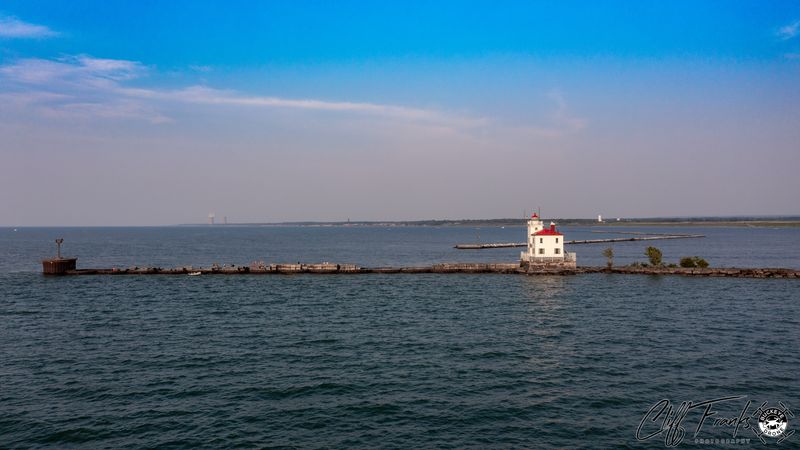
When the winter temperatures drop, the heavy spray of Lake Erie can rim the iron railings in thick ice and transform the entire length of the breakwater into a jagged and brilliant sculpture garden.
The low winter sunlight finds these frozen edges and throws a quiet, ethereal glow across the structure that professional cameras absolutely love even as the footing becomes a serious challenge for your boots.
The air during these cold months smells incredibly sharp and clean, reminding me of the scent of fresh metal coins and cedar trees breathing in the silence of a landscape that has been hushed by the snow.
Locals treat the practice of winter lake watching as a steady and necessary tradition, viewing it less as a spectacle and more as a habitual check-in with the horizon to keep the season feeling honest.
The lighthouse becomes a silent metronome for the community during these months, standing as a fixed point of reference against the chaotic movement of the ice floes and the grey, churning waters of the lake.
You must react to these conditions with a deep sense of humility, making sure to stay off any sheeted surfaces and keeping a respectful distance from the spray zones where the ice can form in an instant.
While microspikes can help on the legal and open paths near the shore, the very best views of the winter glow are often found from the safety of the beach where you can appreciate the scene in warmth.
Small Details Worth Your Pause
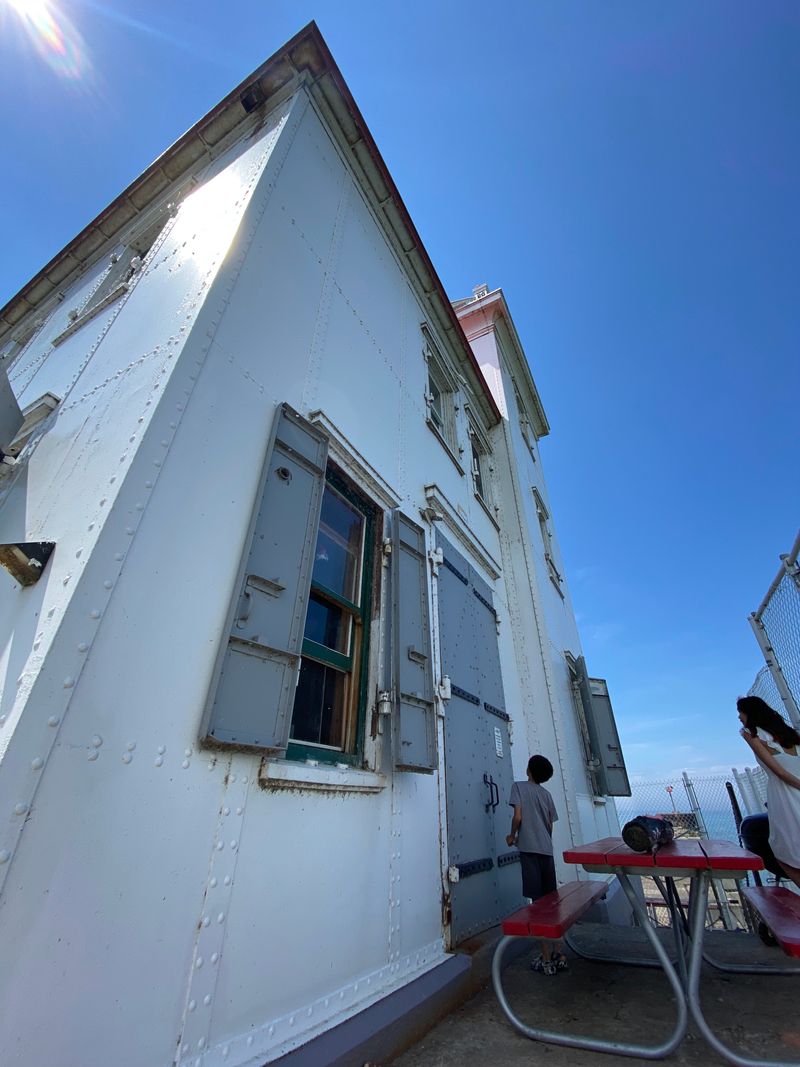
The many layers of white paint on the tower show their long history like the rings of an ancient tree, particularly in the corners where the wind has scoured the surface down to the original masonry.
The heavy iron bolts wear tide lines of orange rust that never quite seem to win the battle against the maintenance crews, yet they serve as a visual record of the lake’s persistent and corrosive power.
The door hardware and the hatch fittings look utilitarian in a way that actually photographs much better than fancy or ornamental hinges, as they convey a sense of strength and durability that fits the site.
Preservation here is a deeply practical and recurring task involving a cycle of sealing, scraping, and repainting that is dictated by the harsh reality of a climate that teaches through constant abrasion.
Most visitors tend to pause for one quick and hurried selfie before turning around to head back to the car, but I believe that lingering for ten slow minutes is much more rewarding for the soul.
Giving your full attention to the textures and the shadows of the building repays you with a set of visual memories that far outlast any generic wide-angle shot taken from a distance in the parking lot.
Your final gallery of images will feel much more earned and personal if you take the time to notice the small, quiet ways that the lighthouse has survived a century of Lake Erie’s most difficult weather.
Reading The Water Like A Local
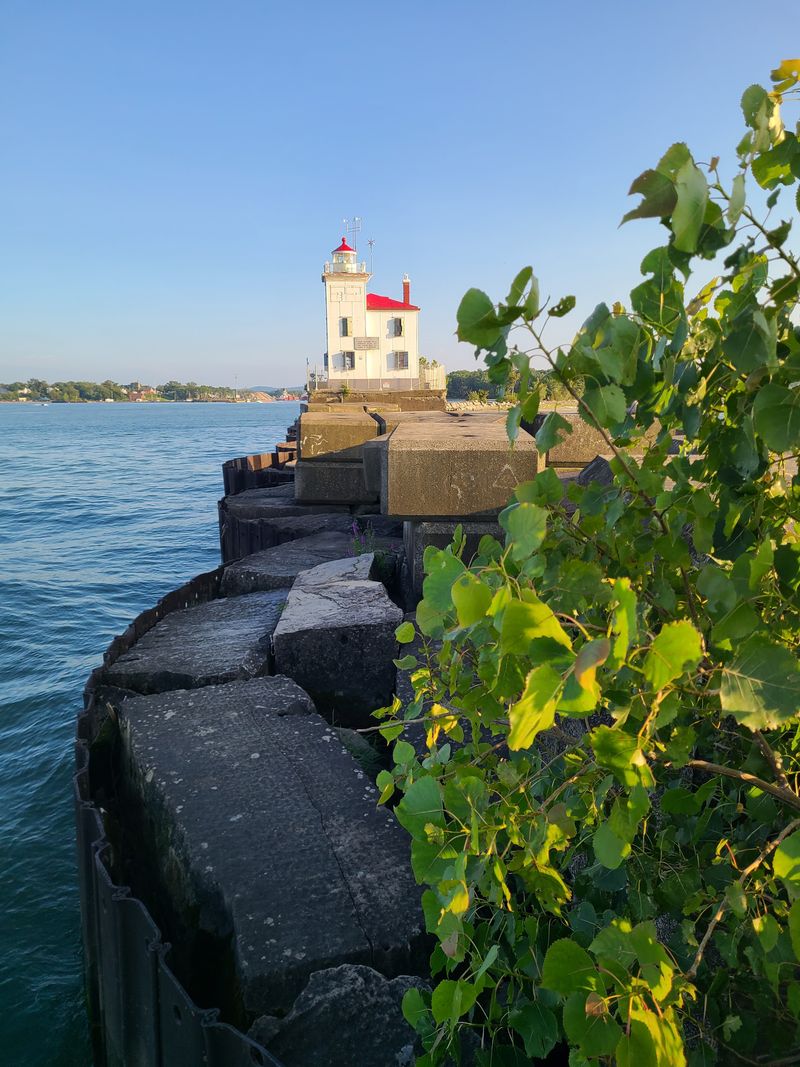
To visit this place safely you must learn to watch the water in sets rather than focusing on single waves, as the locals always look for a consistent rhythm before they step out onto the exposed concrete.
The specific spray pattern against the side of the breakwater will tell you much more about the safety of your walk than any general weather forecast or digital blurb on a smartphone screen can provide.
You will eventually start to sense the safe lulls in the wave action almost like the timing of a city crosswalk, allowing you to move with a confidence that comes from an understanding of the lake’s pulse.
This habit grows from years of listening to local fishing reports and participating in dock talk, where the lighthouse serves as the ultimate reference point for the community’s shared wisdom about the water.
If the foam from the crashing swells begins to reach the third seam of the concrete blocks, most people will instinctively turn back, and following this uncomplicated crowd wisdom is always a smart move.
Adopting this local practice ensures that your visit feels much calmer and more professional, especially if you keep one hand free and walk in single file when other groups appear in the narrow passage.
Nobody in Fairport Harbor treats a strategic retreat as a failure of courage because they understand that a smart choreography with the lake is the only way to enjoy its beauty for years to come.
Golden Hour, No Hurry
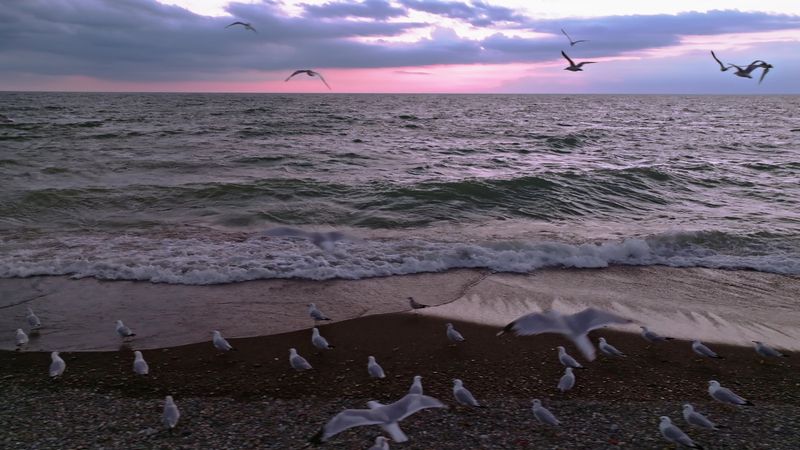
The late-day light warms the white walls of the tower until they appear to blush slightly against the deepening blue of the sky, while the red roof takes on a mellow and earthy brick tone in the sun.
Long shadows begin to stretch across the surface of the breakwater like quiet, dark banners that mark the end of another working day for the light and the community that surrounds it on the shore.
This is the most forgiving and beautiful time for both your camera and your conversations, as the harsh glare of the midday sun gives way to a soft, golden clarity that highlights every detail.
The long history of the lighthouse sits comfortably in this warm glow, where the hard work of a century softens into a beloved cultural emblem without losing any of its original industrial backbone.
I found that arriving early enough to claim a safe spot for the sunset allowed me to stay mindful of the path back, which is important because the temperature by the lake can drop very quickly at twilight.
Let the last few frames of your photographic journey happen naturally instead of chasing them, and enjoy the final moments of stillness as the horizon begins to fade into a dark and starry night.
The long walk back to the shore feels like closing a lovely and well-read book, leaving you with a sense of peace and a renewed appreciation for the steady, guiding presence of the Fairport Harbor light.