
This 55-Foot Michigan Crucifix Is One Of The State’s Most Striking Sacred Sites
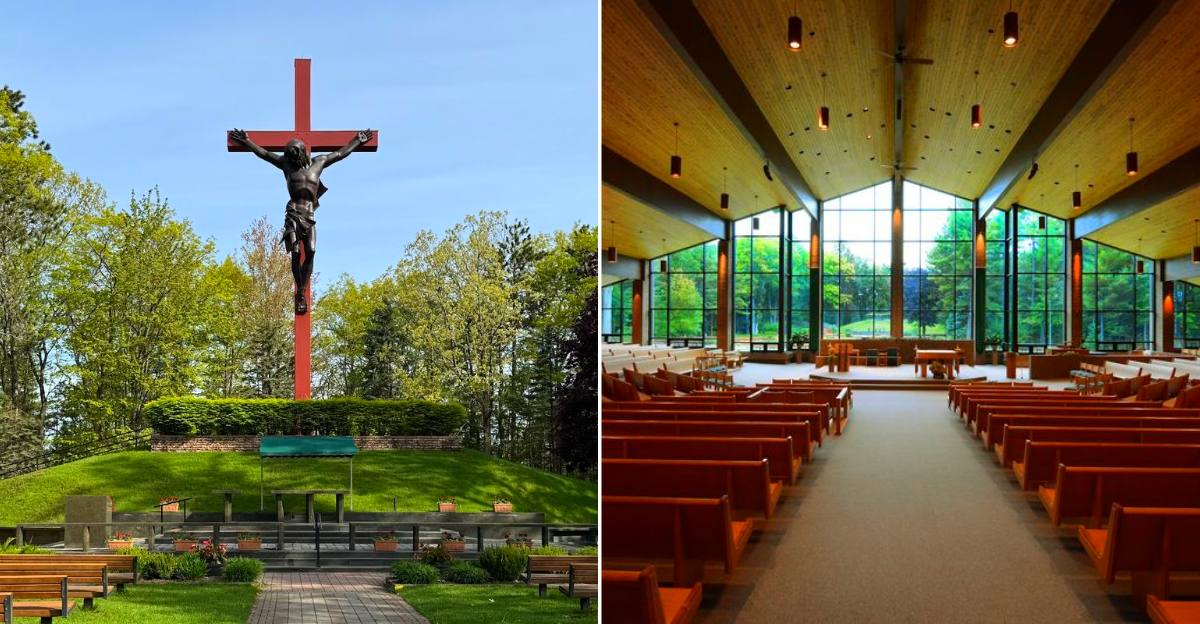
Most highway stops are about the rush, but pulling off the pavement here feels like a sudden, grace-filled exhale. You expect a landmark you can check off a list; instead, you’re met with a cathedral made of towering pines and a silence so thick it’s almost tactile.
The center of it all is a staggering 55-foot redwood crucifix that stands against the sky, a monumental piece of sacred art that stops your heart and then restarts it with a different rhythm. Standing at the feet of that bronze Christ, I felt the noise of the road simply evaporate into the branches.
It’s a sanctuary for the weary, where the craftsmanship of man meets the raw majesty of the Father’s creation in a way that feels deeply intentional and profoundly calm.
Experience a powerful spiritual pilgrimage at this world-famous northern Michigan shrine, home to the immense redwood cross and peaceful forest chapels perfect for prayer and reflection.
Let The First Glimpse Do Its Work
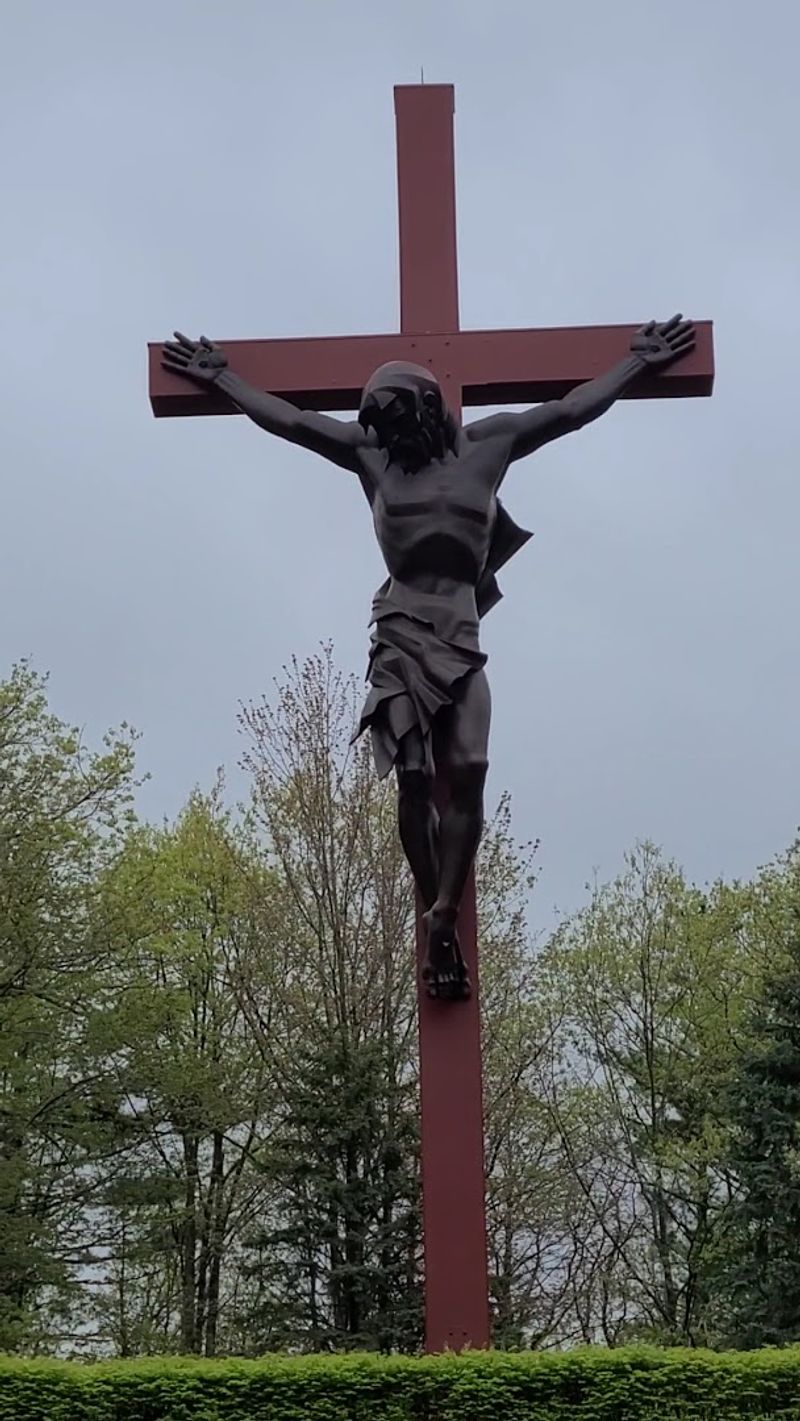
The approach matters here. You do not meet the crucifix all at once, but through the trees, with pine trunks acting like a curtain before the full 55-foot structure finally appears. That slow reveal gives the place much of its emotional force.
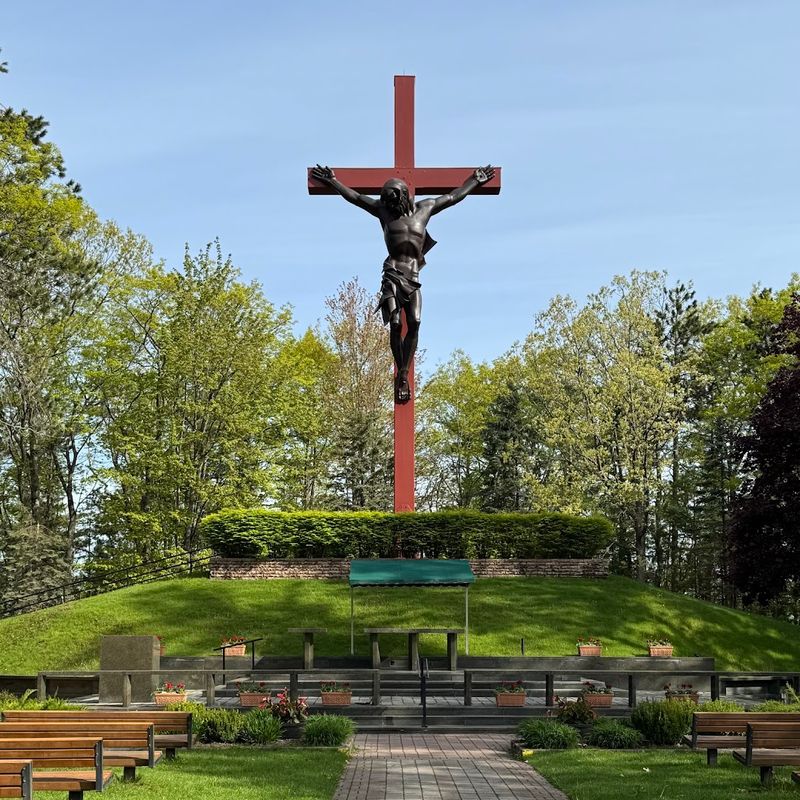
Built from redwood and raised in 1954, the cross is large enough to feel improbable, yet the setting keeps it from turning theatrical. The outdoor seating and altar below it make clear this is an active shrine, not just a sculpture stop.
If you can, pause before walking straight down the path. The scale lands differently when you let the woods frame it first, and the site becomes quieter and more striking because of that.
Finding Your Way
Getting to the Cross in the Woods National Shrine at 7078 M-68, Indian River, MI 49749 involves a steady trek toward the tip of the Mitt via I-75. The drive is defined by the transition from the rolling hardwoods of central Michigan to the vast, pine-heavy corridors of the north, where the highway eventually intersects with the winding stretches of M-68.
As you exit the main thoroughfare, the landscape shifts into the quiet, lake-studded terrain of Indian River. The pace slows as you navigate the gentle curves of the state highway, passing through a pocket of the North Woods where the traditional commercial strip quickly gives way to a more secluded, heavily forested environment.
Your arrival is signaled by a sudden opening in the timber and the towering silhouette of the world’s largest crucifix rising above the tree line. Turning off the pavement and into the sprawling, manicured parking grounds, the shift from the hum of the road to the profound silence of the open-air sanctuary marks your arrival.
Notice How The Woods Shape The Mood
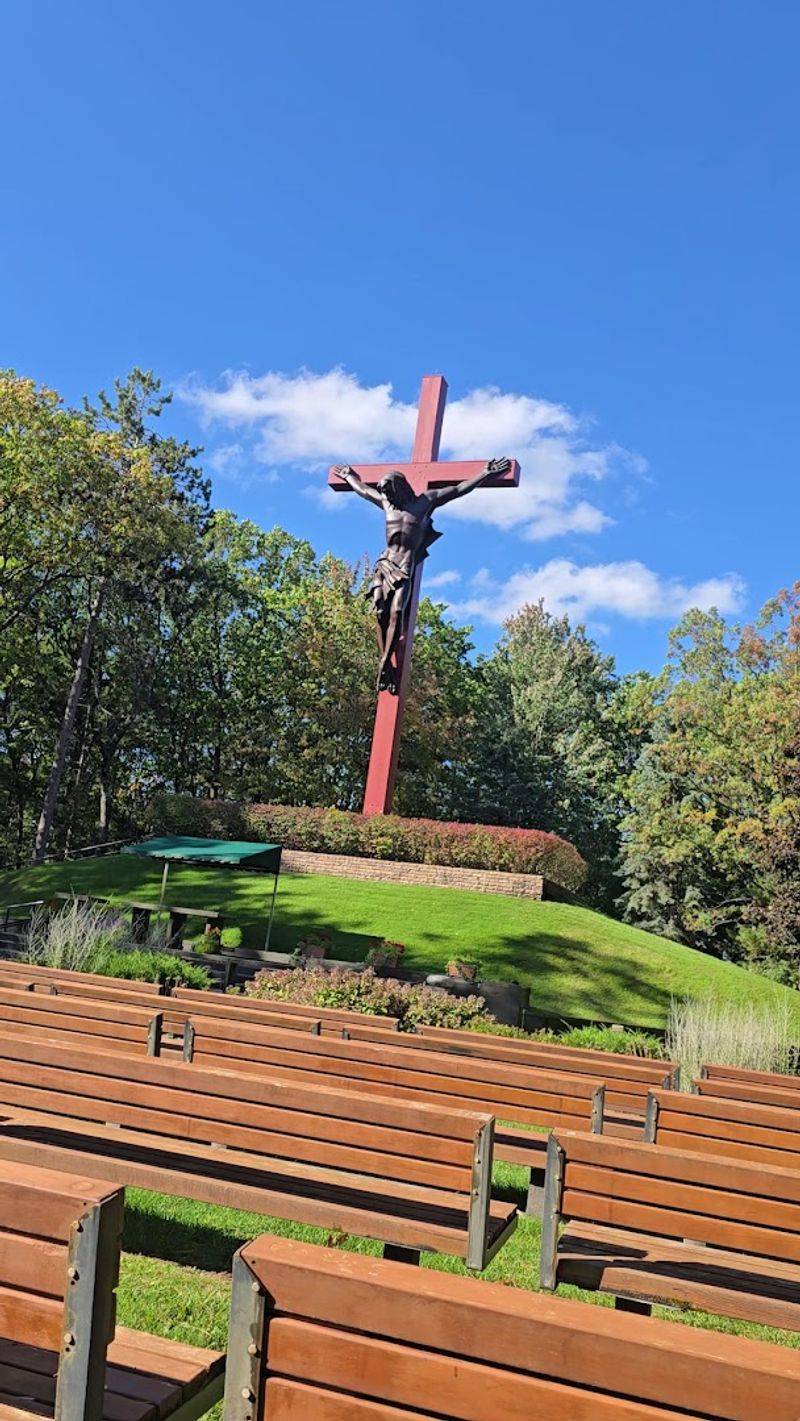
The shrine works because the forest never feels like a backdrop. Tall pines surround the main sanctuary area so completely that the grounds seem less landscaped than gently cleared from the woods. Wind in the branches and birdsong do as much as architecture to set the tone.
That atmosphere connects to the shrine’s origin story. Father Charles D. Brophy envisioned an outdoor crucifix inspired in part by Saint Kateri Tekakwitha, who was known for placing small crosses in the woods, and the site still honors that woodland spirituality.
Come expecting a sacred place, but also a sensory one. Resin in warm weather, shade across the path, and the hush under the trees make even a short visit feel slower than the clock suggests.
Give The History A Few Minutes
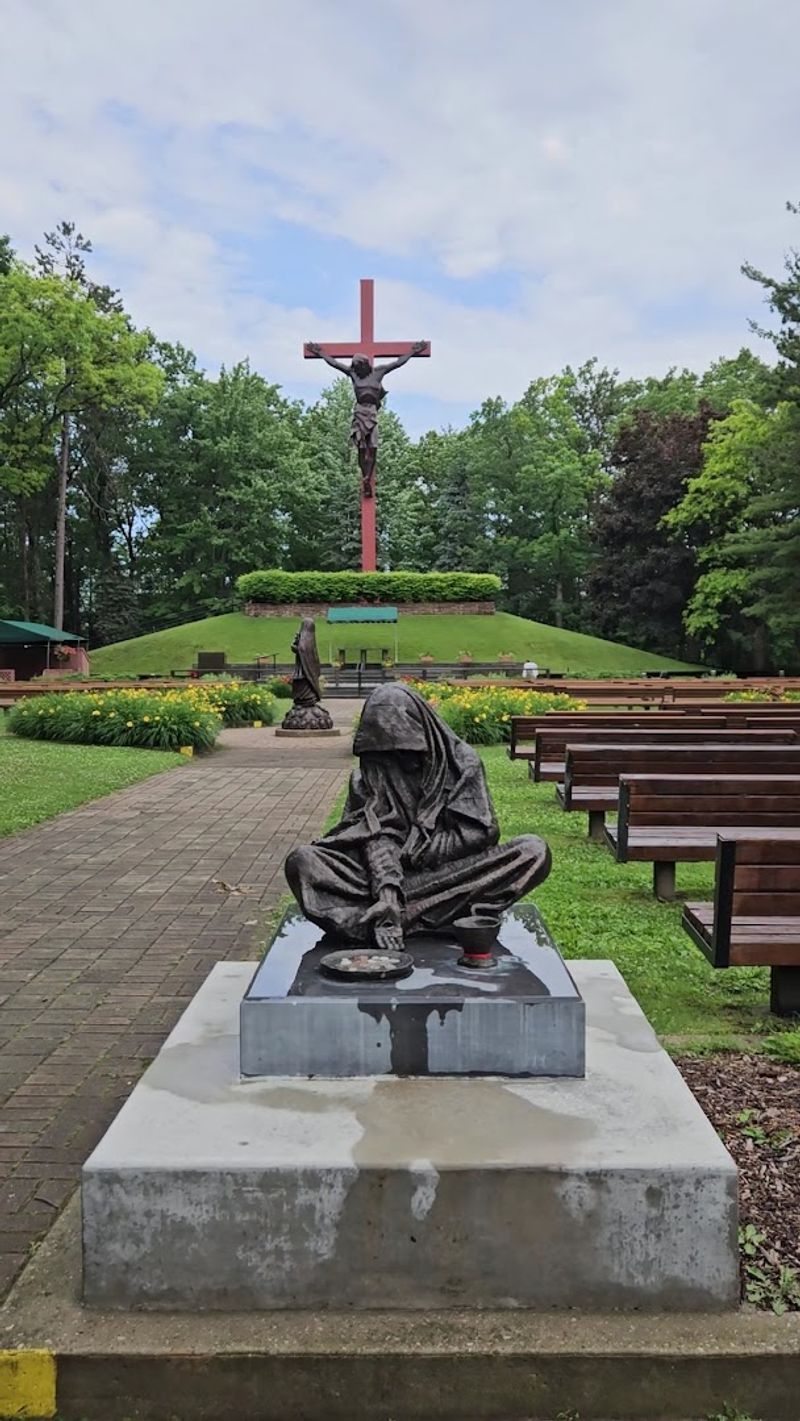
Some places improve once you know how unlikely they were. The shrine began after Bishop Francis J. Haas sought land in the Indian River area in 1946, and it eventually took shape through persistence, vision, and a rather memorable land arrangement with the state in 1948.
The Michigan Department of Conservation granted the property for one dollar and a box of candy for the secretary, a detail so specific it sounds invented, but it is part of the documented story. By Memorial Day weekend of 1949, the first church building was already in use.
Knowing that timeline changes the visit. The giant cross feels less like a roadside novelty and more like the result of decades of deliberate devotion and regional ambition.
Step Inside The Original Long House
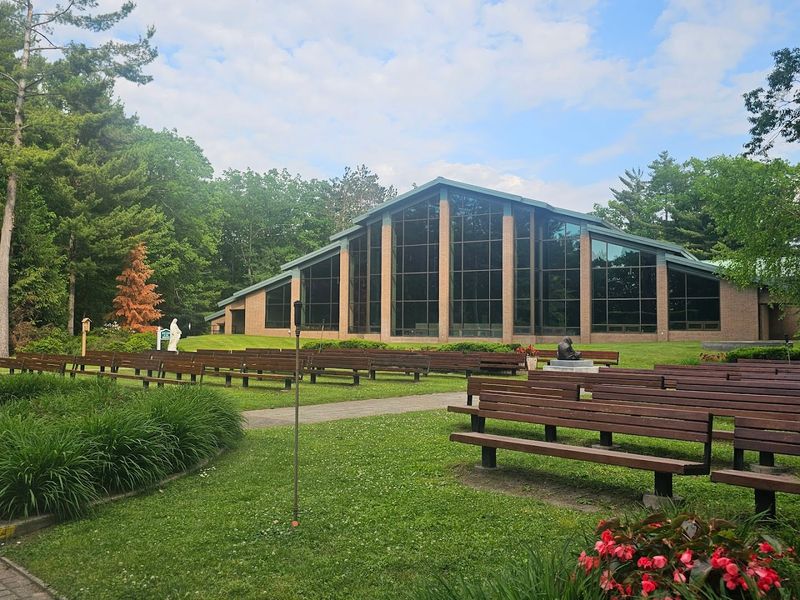
Before or after the main cross, spend time with the original church building. Designed by Alden B. Dow, the long house structure has a low, grounded presence that fits the trees instead of competing with them. Its lines are modern but not cold, which is harder to pull off than it sounds.
Dow had studied under Frank Lloyd Wright, and you can sense that influence in the building’s relationship with the landscape. Today the structure serves practical purposes, including offices and the gift shop, so it remains part of the shrine’s daily life rather than a sealed historic artifact.
The contrast is worth noticing. One building reaches quietly outward, while the great crucifix rises dramatically above the woods, and each makes the other more interesting.
Do Not Skip The Holy Stairs
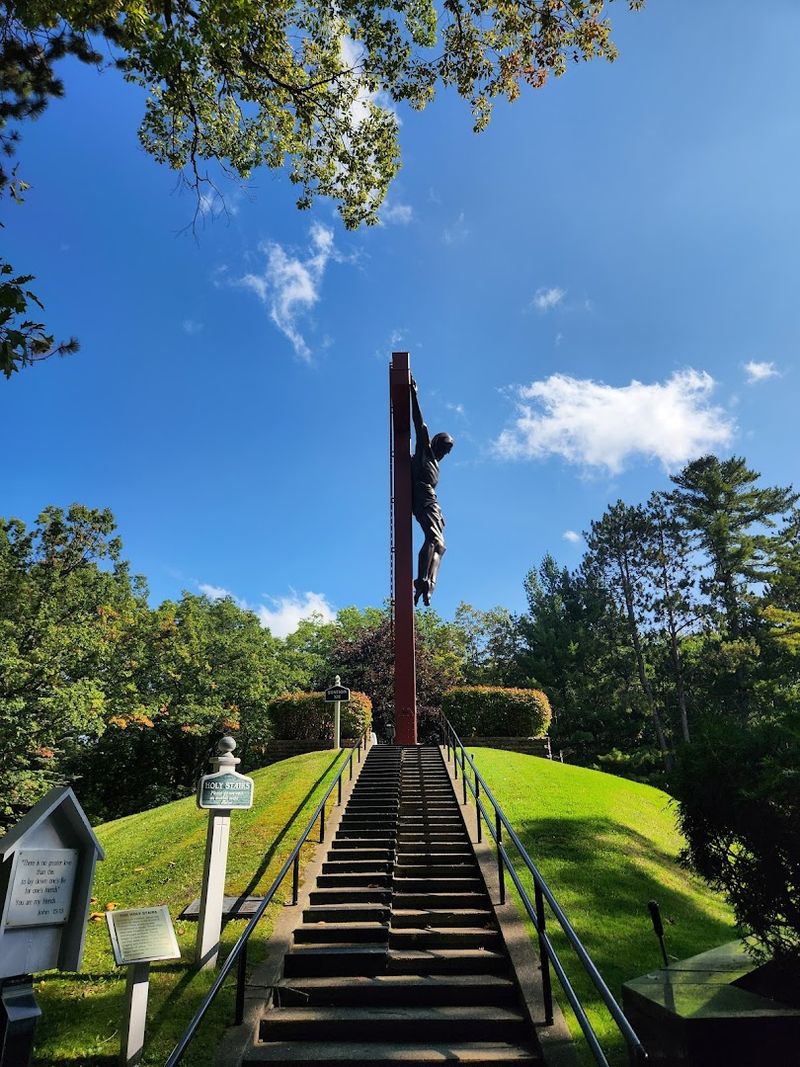
Just beyond the main sanctuary, the Holy Stairs add a very different texture to the visit. They are modeled symbolically on the Sancta Scala associated with Jesus’ steps to Pontius Pilate’s judgment hall, and many visitors ascend them in prayer, sometimes on their knees.
That act of devotion gives the steps a palpable gravity. Even if you are not taking part, the worn and polished areas speak clearly about repeated human ritual, which can be more affecting than any plaque.
I would approach this corner quietly and without hurry. The stairs are not visually grand in the way the crucifix is, but they reveal another side of the shrine, where scale gives way to intimacy, repetition, and personal discipline.
Make Room For The Side Shrines
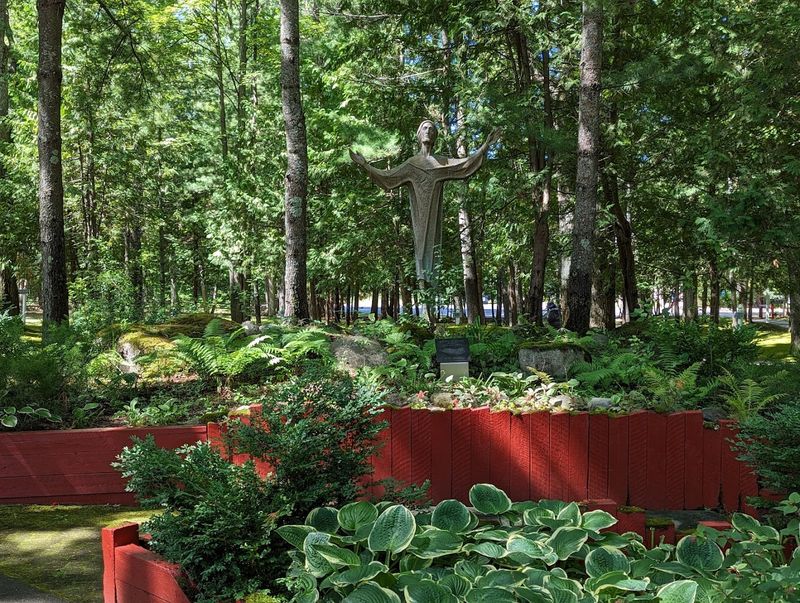
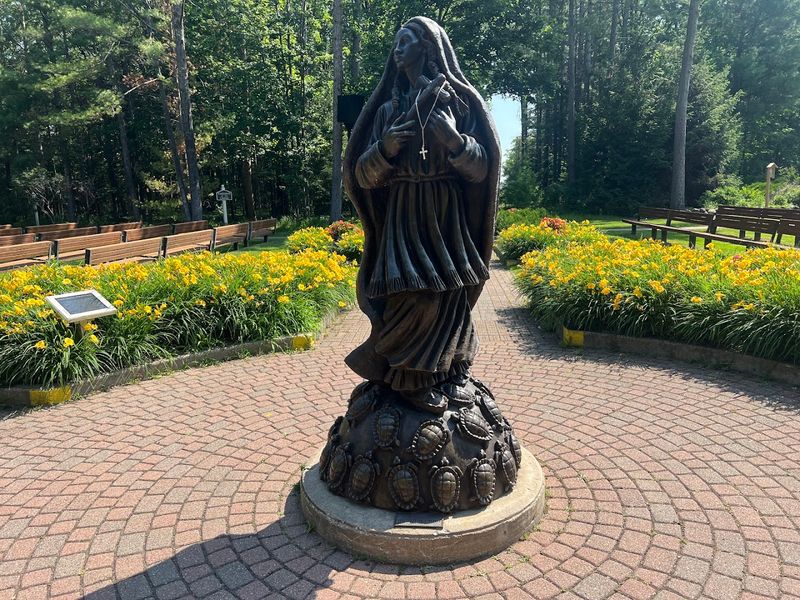
The main crucifix dominates attention, but the smaller devotional spaces give the grounds their rhythm. One of the most notable is Our Lady of the Highway, marked by a Carrara marble statue that was given to the shrine in 1957 and placed with travelers in mind.
That roadside connection fits the location unusually well. Indian River is a place many people pass through on northern Michigan trips, and the shrine understands that a brief stop can still be meaningful, especially for drivers and families already in motion.
These side shrines are worth visiting slowly rather than as checklist items. Their scale softens the experience, and they keep the grounds from feeling centered on one overwhelming object alone.
Walk The Stations Under The Pines
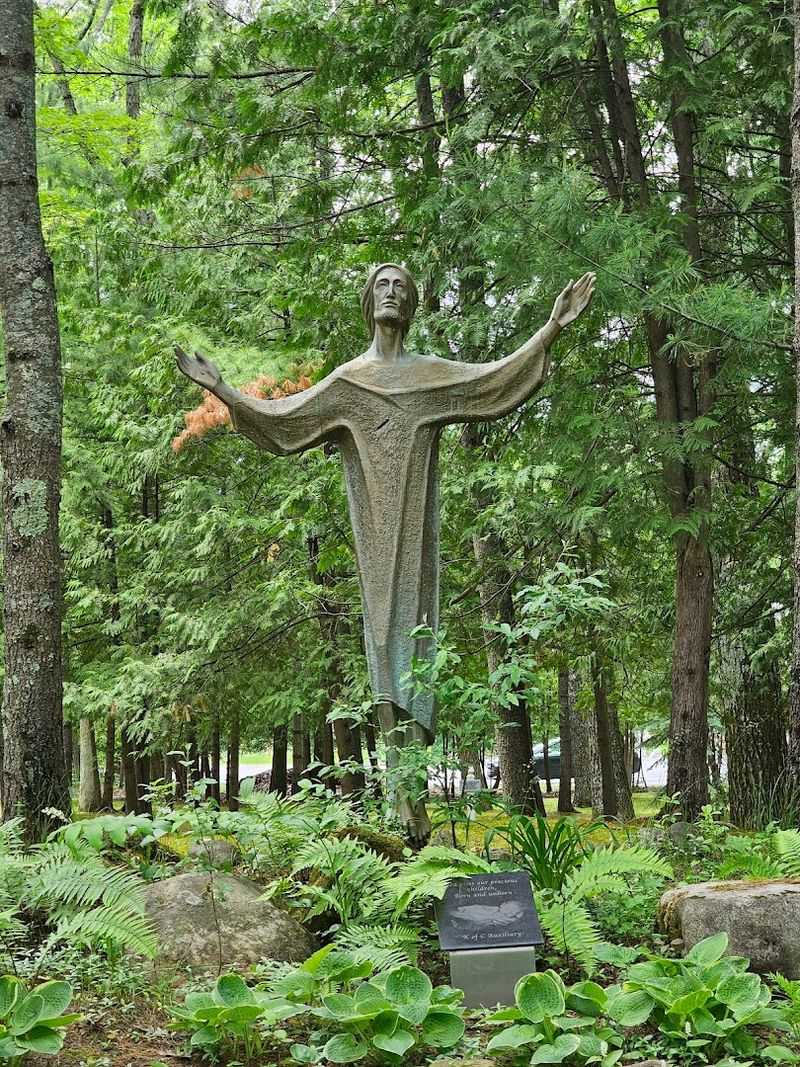
A paved walk loops you deeper into the property, where the outdoor Stations of the Cross unfold among the trees. That setting matters. Instead of encountering the stations inside a dim church, you move through changing light, birdsong, and open air while following the sequence.
The shrine includes the traditional fourteen stations and culminates with a statue of the resurrected Jesus as a fifteenth station, shifting the emotional register toward hope. The progression feels carefully considered rather than merely installed, and the forest gives each stop a little breathing room.
Bring comfortable shoes and a patient pace. The path is accessible for many visitors, and it rewards attention far more than speed, especially when the grounds are quiet.
Expect One Wonderfully Unusual Museum

Then there is the Nun Doll Museum, which sounds like a joke until you see it. Housed in the lower level of the original building, it contains hundreds of dolls dressed in the habits of religious orders from Michigan, across the United States, and around the world.
The collection began in 1964 and now reads as both devotional and anthropological. Different fabrics, veils, colors, and silhouettes reveal how varied Catholic religious life can be, and the effect is more informative than kitschy once you start noticing the distinctions.
I liked this part more than expected because it broadens the visit. After the solemnity of the crucifix and paths, the museum adds texture, curiosity, and a very specific kind of Midwestern shrine charm.
Use The Newer Church In Bad Weather
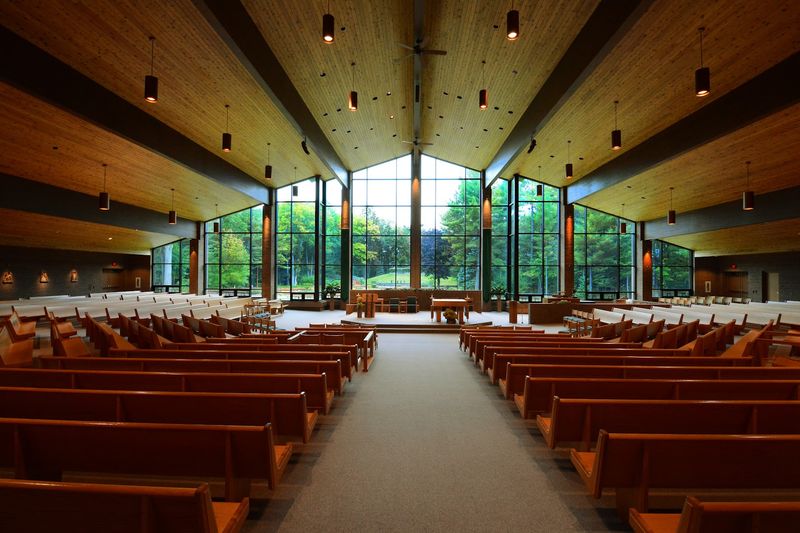
Northern Michigan weather can change its mind quickly, and this shrine is prepared for that. The newer church, dedicated in 1997, seats about 1,000 people and uses a broad wall of clear glass so the outdoor crucifix remains visually present during indoor worship.
That design decision is clever in both practical and spiritual terms. Snow, rain, and cold do not sever the connection to the main cross, and the building avoids feeling sealed off from the grounds. You are still oriented toward the central image, just from shelter.
If the day turns wet or windy, do not treat the indoor space as a fallback. It is one of the shrine’s strongest architectural ideas, and the framed view of the crucifix can be remarkably powerful.
Plan For A Calm, Practical Visit
The logistics here are refreshingly straightforward. The grounds are open daily from 7 AM to 7 PM, with paved paths leading to the main crucifix and much of the site, which makes access easier than the wooded setting might suggest. Parking is free, and the visit itself does not require a long time commitment.
Still, this is not a place to rush. Between the cross, side shrines, Stations of the Cross, original church building, and museum, an unhurried hour disappears quickly, especially if you stop to sit under the trees or step into the church.
My best advice is simple: go with enough margin to linger. Cross in the Woods is most affecting when it feels less like an attraction and more like a pause.