
This Abandoned Amusement Park In Arkansas Is Now A Ghost Town
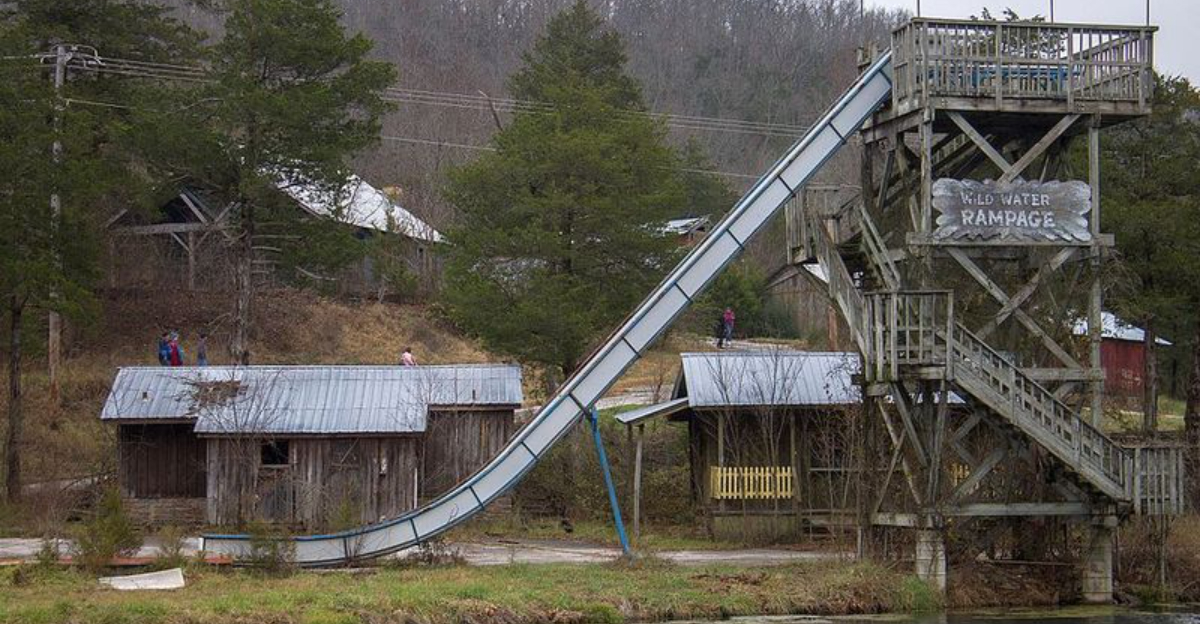
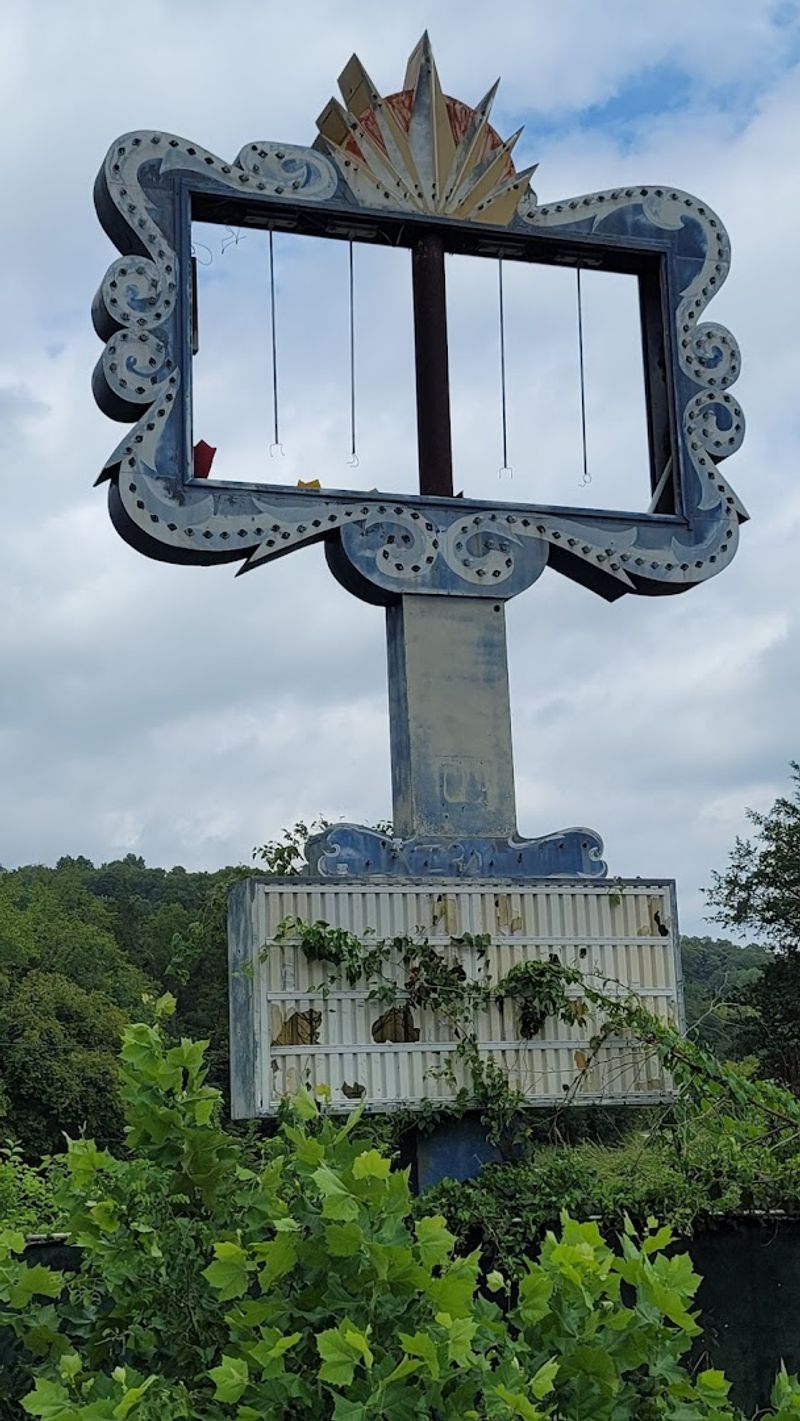
Ever wandered into a place that feels like it fell straight out of a time machine? That’s exactly what this place in Arkansas feels like today. Once a bustling amusement park full of laughter, quirky rides, and cartoon-inspired fun, it now stands silent, with rusted rails jutting from the grass and faded signs sagging where kids once ran. Walking through the empty paths, I felt like I’d stepped into someone else’s memories, a mix of nostalgia, eeriness, and curiosity swirling in the air. Every abandoned structure, every forgotten ride whispers stories of the past, and I couldn’t help but imagine the joy that once filled these spaces. Some ghost towns are quiet.
This one practically shouts its secrets.
The Day I First Laid Eyes On This Place
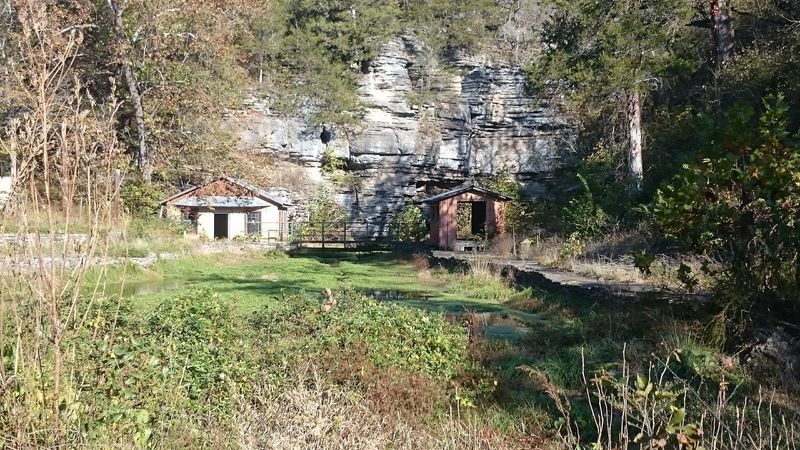
There is something about driving down a road that feels like it belongs in a horror movie and still not being able to stop yourself. Highway 7 through the Ozarks is one of the most stunning stretches of pavement in the whole country, all dramatic curves, limestone bluffs, and forests so green they almost hurt your eyes.
But I was not there for the scenery, at least not the kind most people stop for.
I had been reading about Dogpatch USA for months before I finally pointed my car toward Marble Falls, and the anticipation was almost unbearable.
When I finally spotted the remnants of the old entrance, my stomach did a full somersault. The sign was long gone, but the bones of the place were unmistakable.
Weeds had pushed through the cracked pavement, and trees had grown up in places where families used to park their cars on hot summer days.
Standing at the edge of that property for the first time felt like stepping into a time capsule that someone had shaken really hard and then left on a shelf.
The air smelled like pine and old wood, with just a hint of something metallic that I could not quite place. I pulled out my camera, took a deep breath, and thought to myself that this was going to be one of those days I would talk about for a very long time.
What Dogpatch USA Actually Was, And Why It Mattered
Before I get into the creepy stuff, let me back up and give you some context, because this place had a genuinely fascinating origin story. Dogpatch USA was built along AR-7 in the area now known as Marble Falls, AR 72648, and it opened its gates in 1968 with a concept that was totally unique for its time.
The whole park was themed around “Li’l Abner,” a wildly popular newspaper comic strip created by cartoonist Al Capp that ran from 1934 all the way to 1977.
The strip followed the fictional hillbilly residents of Dogpatch, a tiny mountain town full of colorful, larger-than-life characters.
At its peak, “Li’l Abner” was read by over 70 million people daily, which meant the park had a massive built-in fanbase right from the start. Dogpatch USA leaned hard into that identity, with log cabin buildings, costumed characters, themed rides, and attractions that celebrated Ozark culture in a big, loud, joyful way.
For about a decade, the park thrived. Families drove from all over the South to experience it, and it became a genuine point of Arkansas pride.
Knowing all of that history made walking through the ruins feel even more emotional than I expected, because this was not just an abandoned park, it was an abandoned dream that had once been very much alive and very much loved.
The Roller Coaster That Nature Reclaimed
Okay, so the roller coaster. I need to talk about the roller coaster, because nothing else on that property hit me quite the same way.
When I pushed through the overgrowth and caught my first glimpse of the old coaster structure, I genuinely stopped walking and just stared for a solid minute. The steel and wood frame was still standing, which felt almost miraculous given how many Arkansas winters had passed through since the last rider climbed aboard.
Vines had wrapped themselves around every beam and rail like the forest was giving the whole thing a very slow, very patient hug.
Trees had sprouted up through gaps in the track bed, and moss covered the supports in thick, velvety patches of green. From certain angles, it almost looked intentional, like some kind of wild art installation designed to make you feel small and wonderstruck at the same time.
I tried to imagine what it sounded like when this thing was running, the screams of excited riders, the clatter of wheels on the track, the smell of popcorn drifting over from a nearby stand.
Instead, all I heard was birdsong and wind moving through the leaves above me. There is a particular kind of quiet that only exists in places that used to be loud, and standing next to that coaster, I felt it all the way down to my bones.
That silence spoke volumes.
Log Cabins Frozen In A Different Era
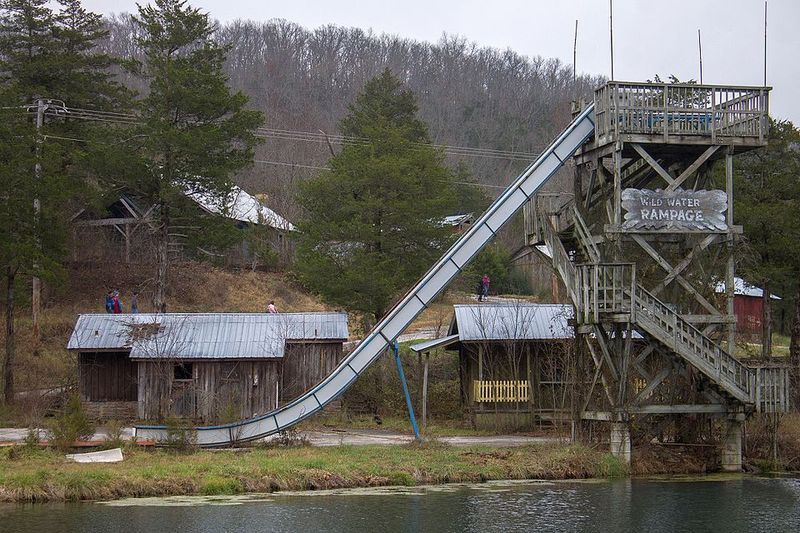
One of the things that made Dogpatch USA so visually distinct from other theme parks of its era was the architecture.
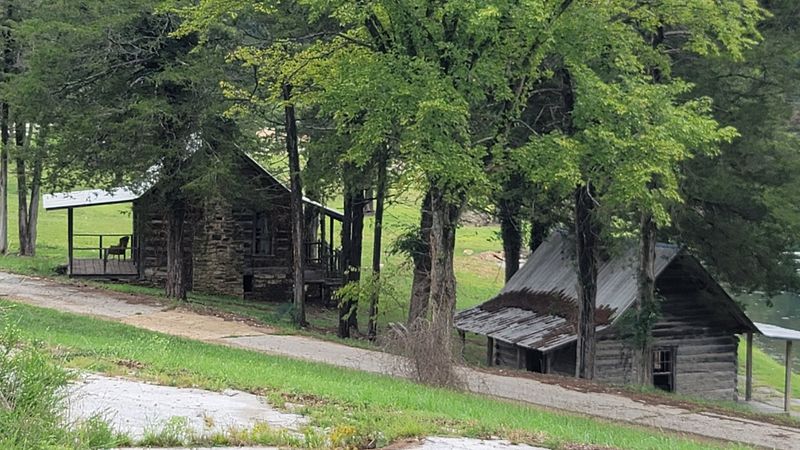
Instead of the sleek, modern buildings you would find at a Six Flags or Disney park, Dogpatch leaned fully into Ozark authenticity, with log cabins, rough wood, stone foundations, and a look that felt pulled straight from the Appalachian backcountry.
Walking through what remained of those cabins was one of the most surreal parts of my trip. Some walls were still standing, holding their shape with a stubborn dignity that felt almost defiant.
Others had collapsed inward, with roofs caved in from years of rain, snow, and the steady pressure of growing trees.
Inside one of the larger structures, I found an old wooden counter that may have once been a ticket booth or concession stand, its surface warped and gray but still easy to recognize.
The craftsmanship that went into building these structures was obvious even in their current state. These were not cheap, prefabricated buildings slapped together to meet a deadline.
Someone had put real care and intention into making this place feel like a genuine Ozark village, and in a strange way, that care was still visible in every weathered plank and mossy stone. Respect for the builders felt like the only appropriate response.
Train Rides Through The Ozarks, Now Just A Memory
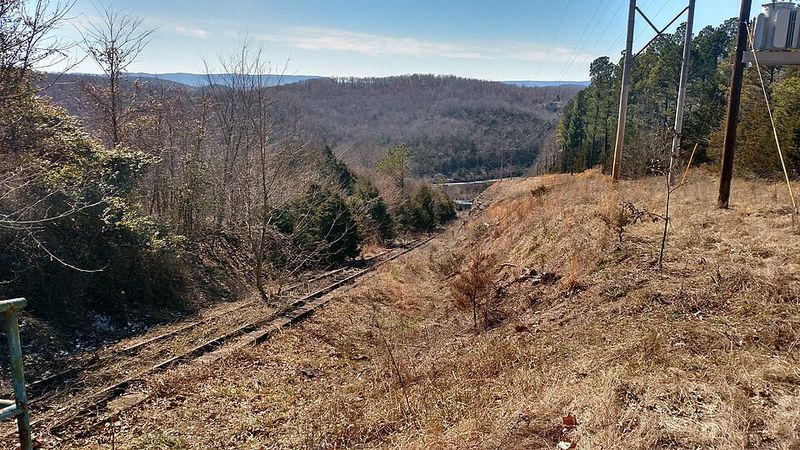
Few things at an amusement park carry the same nostalgic weight as a train ride. There is something about a little locomotive chugging through themed scenery that appeals to every single age group simultaneously, and Dogpatch USA knew this.
The park featured a train ride that wound through the surrounding Ozark landscape, giving passengers a scenic tour that doubled as one of the more genuinely beautiful experiences the park had to offer.
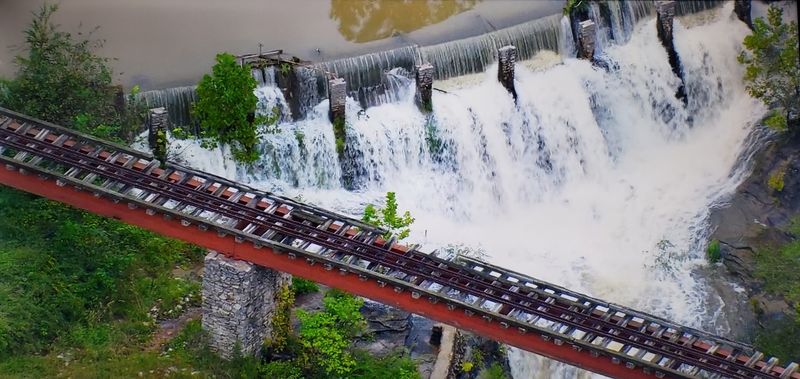
When I found the old train tracks, they were barely visible beneath layers of fallen leaves, moss, and encroaching undergrowth.
The rails themselves were still there in places, rusted a deep reddish-brown that almost matched the color of the autumn leaves scattered around them. Following the track line through the trees felt like following a trail of breadcrumbs through a fairy tale, except the fairy tale had taken a pretty dramatic turn somewhere around 1993.
At one point, the track curved around a rocky outcropping and opened up to a view of the valley below that genuinely took my breath away.
The Ozarks have this way of ambushing you with beauty when you least expect it, and standing there on that old train route, surrounded by nature in full possession of what it had reclaimed, I felt a complicated mix of sadness and wonder that I still have not fully sorted out.
Some feelings are just too layered to fit neatly into words.
The Comic Strip That Started It All
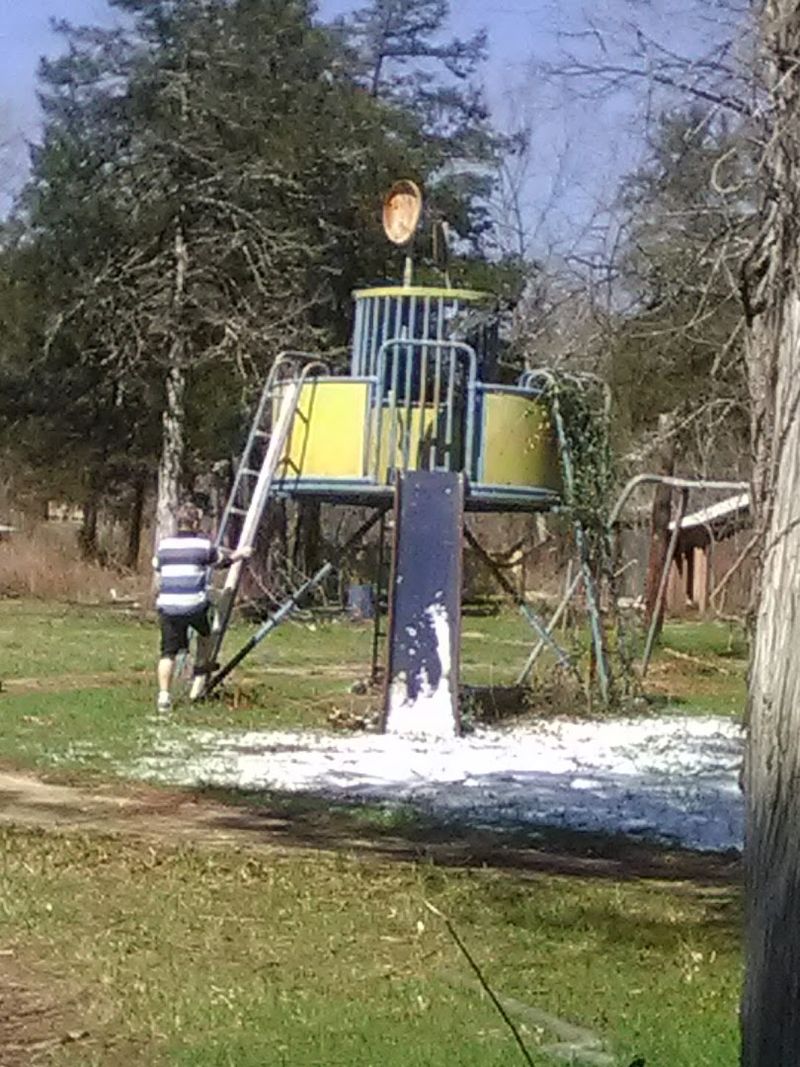
You cannot fully appreciate what Dogpatch USA was without understanding the cultural phenomenon that inspired it, and “Li’l Abner” was absolutely a phenomenon.
Al Capp launched the strip in 1934, and for the next four decades it was one of the most widely read and talked-about comics in American history. At its peak it appeared in over 900 newspapers and was read by an estimated 70 million people every single day.
The strip was set in the fictional Appalachian town of Dogpatch, populated by a cast of eccentric, lovable hillbilly characters who somehow managed to satirize American politics, pop culture, and society with a sharpness that would make modern late-night hosts jealous.
Li’l Abner himself was a big, good-natured mountain boy who stumbled through life with an endearing lack of sophistication that readers found completely irresistible.
By the time Dogpatch USA opened in 1968, the strip was still enormously popular, and the park capitalized brilliantly on that cultural connection.
Walking through the ruins, I kept thinking about how much of the park’s identity was tied to a piece of intellectual property that eventually faded from mainstream memory, and how that fading might have contributed to the park’s own decline.
The lesson there is a little sobering: even the biggest cultural moments have an expiration date, and when they go, they can take a lot of other things with them.
How Dogpatch USA Went From Thriving To Forgotten
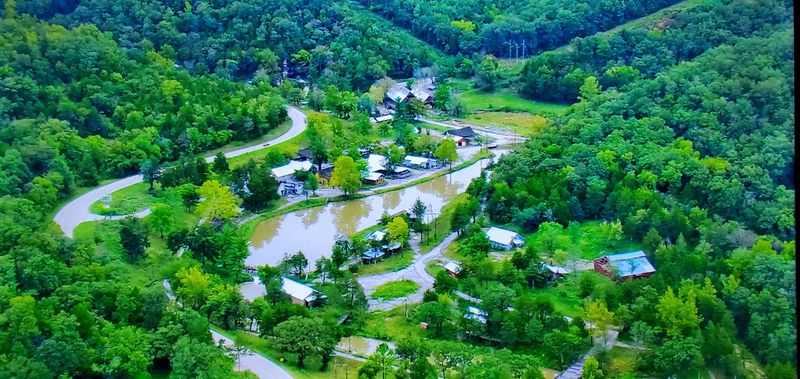
The story of how Dogpatch USA went from a beloved regional attraction to a crumbling ghost town is not a simple one, and honestly, it is a little heartbreaking when you trace it all the way through.
The park had a genuinely strong run through the late 1960s and into the 1970s, drawing visitors from across Arkansas and the surrounding states with its unique themed experience and beautiful Ozark setting.
But the 1980s brought a series of challenges that the park never quite managed to overcome.
Attendance began to decline as newer, flashier theme parks opened across the country and the “Li’l Abner” comic strip itself faded from cultural relevance after its final publication in 1977.
Without the built-in marketing engine of a popular ongoing comic, Dogpatch struggled to maintain its identity and attract new generations of visitors.
Financial difficulties mounted steadily through the late 1980s and early 1990s, and in 1993 the park closed its gates for the last time. What followed was a long, slow process of deterioration that I was now witnessing firsthand, decades later.
Several attempts at revival were made over the years, including a 2014 purchase by someone with ecotourism ambitions, but none of them gained traction.
Watching something that people once loved fall apart in slow motion is a particular kind of sad that does not have a clean, easy name.
This Forgotten Park Still Feels Worth Remembering
By the time I walked back to my car at the end of that day, my boots were muddy, my camera roll was full, and my brain was doing that thing where it refuses to stop processing something it found genuinely meaningful.
Dogpatch USA is not just an interesting ruin or a cool spot for an Instagram photo, though it is both of those things. It is a real piece of American cultural history, a place where an entire generation made memories that they still talk about decades later.
The park represented something genuinely optimistic about its era, the belief that you could take a beloved piece of popular culture and a spectacular piece of natural landscape and combine them into something that brought real joy to real people.
For about twenty-five years, it worked. And then it did not, because that is how things sometimes go, and the honesty of that outcome is part of what makes the story worth telling.
What I hope is that the next chapter, whatever form it takes, keeps some of that original spirit alive. Not the rides, costumes, or comic strip characters, but the deeper idea of creating a place where people can arrive, slow down, and feel truly glad they came.
It has the kind of history and atmosphere that could still make people think differently about the past, about nature, and about how quickly time can reshape a place.