
This Alabama Tunnel May Be The Most Unique In The State, With A History Few Expect
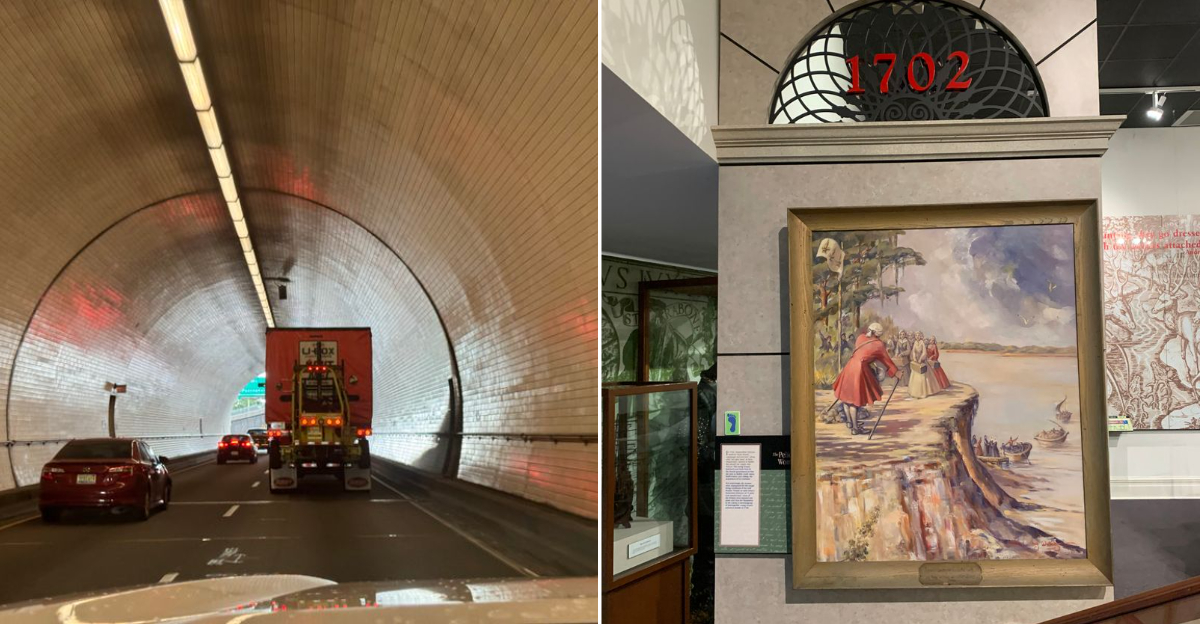
If you’ve ever blasted down I-10 with the windows up, music on, and momentum fully committed, then suddenly dipped beneath the waterline, you already know the strange, fleeting thrill of the George Wallace Tunnel.
It lasts barely a minute, yet it has a way of imprinting itself on memory, that exact moment when the radio fizzles, daylight sharpens and dims, and Mobile’s river quietly closes in above you while traffic continues its steady, collective hum.
The tunnel doesn’t announce itself as special, which is part of the charm.
You’re moving fast, focused on lanes and distance, and then, without ceremony, you’re underwater, enclosed by concrete, light strips, and the shared patience of everyone around you.
What makes the passage memorable isn’t just the engineering, impressive as it is, but the subtle sensory shift.
Sound compresses.
Light becomes rhythmic.
The outside world dissolves into motion and purpose, and for a brief stretch, everyone inside is doing the same thing at the same pace. Locals barely think about it anymore, but travelers often feel a small jolt of wonder or curiosity that sneaks up before logic catches up.
This guide is designed to slow that moment down just enough to appreciate it.
You’ll find practical tips to make the drive smoother and safer, but also context that adds texture, from how the tunnel came to be to the small local habits that surround it.
It turns out that even a minute underground can carry more meaning than you expect if you know how to look for it.
Time Your Drive To Glide
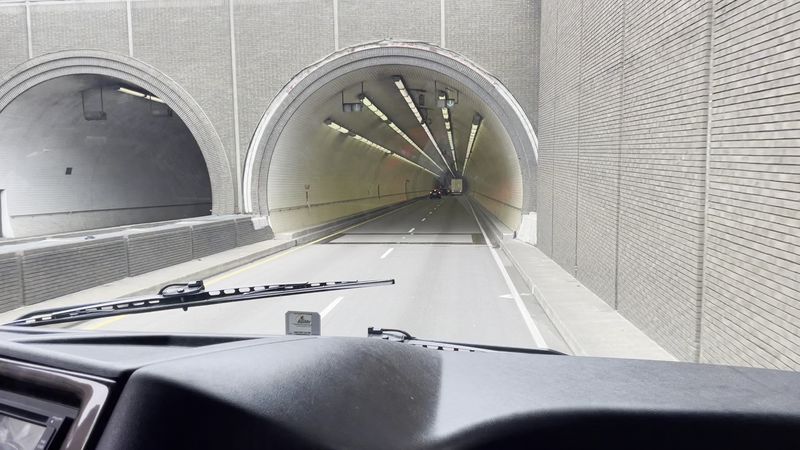
Choosing when to enter matters because traffic volume directly shapes whether the tunnel feels like a seamless slide beneath the river or a frustrating compression of brake lights and hesitation.
Early mornings tend to offer a calmer approach, when daylight is softer, traffic spacing is generous, and the descent feels smooth rather than abrupt.
Late evenings can deliver a similar effect, with fewer vehicles allowing the tunnel’s rhythm to assert itself without interruption.
Weekend afternoons, especially during beach season, often flatten the experience into stop-and-go movement long before the entrance comes into view.
Local commuters quietly adjust their schedules because steady speed reduces braking waves inside the confined lanes.
Checking live traffic conditions helps avoid unnecessary stress without turning the trip into a rigid plan.
If slowdowns do occur, the extra time allows for noticing how light, sound, and motion subtly shift as the roadway slips under water.
Know The Layout Before You Go
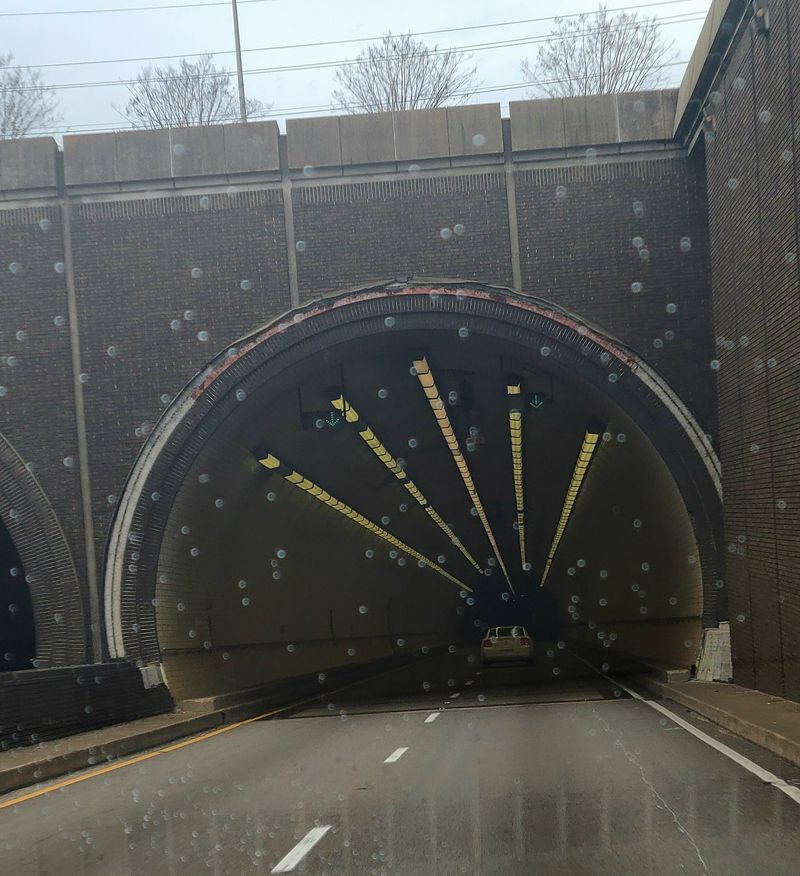
Confidence improves when the road ahead feels predictable rather than surprising, especially as the highway suddenly dips below river level.
Separate tubes carry traffic in opposite directions, limiting shoulders and increasing the importance of lane commitment.
A pronounced curve in the westbound direction explains many slowdowns that appear without obvious cause.
Stretching roughly 3,000 feet, the tunnel feels shorter because its lighting and grades guide attention forward.
The descent eases gently before leveling out near the midpoint, then rises again toward daylight.
Expecting that rhythm reduces late braking and unnecessary lane movement.
Understanding the structure reframes the crossing as a designed sequence rather than an unexpected interruption.
Set Expectations For Signal Loss
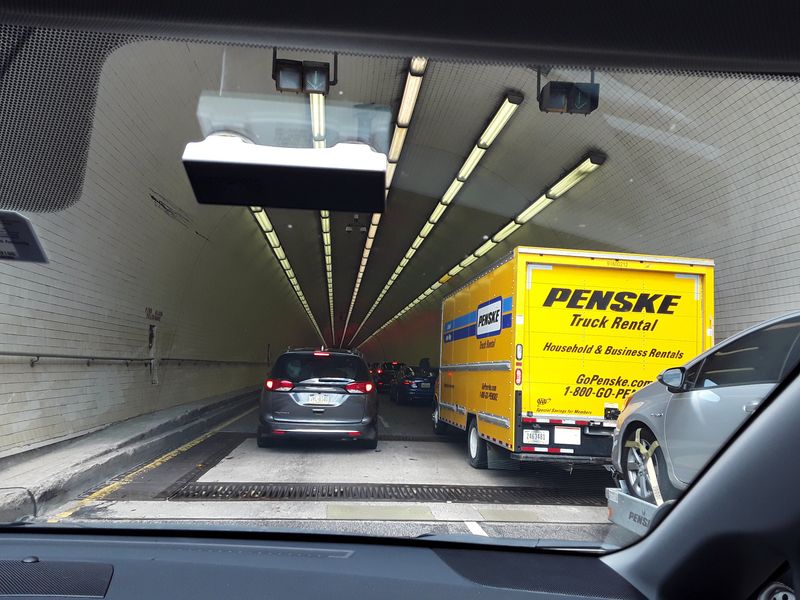
Brief radio and cellular dropouts occur because concrete and river water sit directly overhead, not because anything has gone wrong.
Preparing for that moment prevents instinctive fiddling with controls while navigating a confined space.
Downloaded navigation and offline audio options preserve continuity without demanding attention.
The sudden quiet often shifts focus back to the sound of the engine and the movement of surrounding vehicles.
Passengers tend to notice the hush first, reacting to the way noise softens and echoes.
Children often point it out instinctively, sensing the change before understanding it.
When connectivity returns at the exit, the outside world feels momentarily sharper by contrast.
Drive Defensively In The Curve
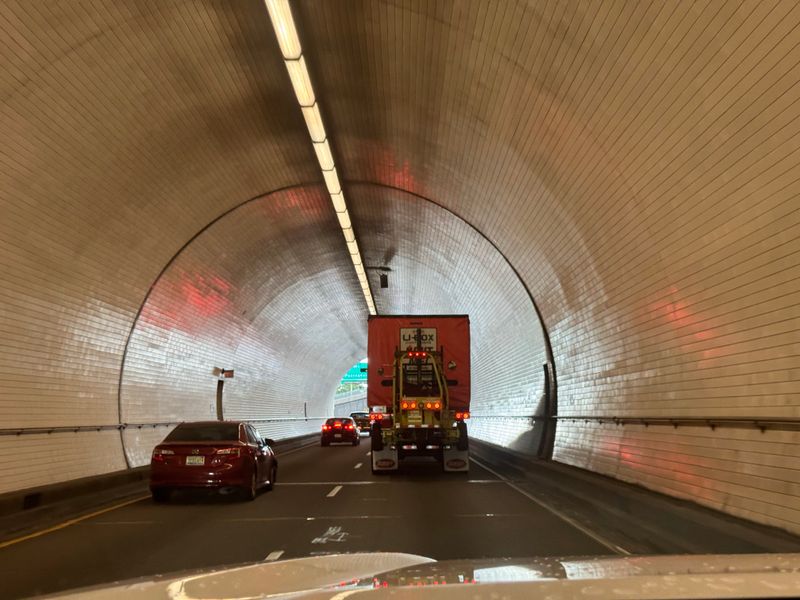
As the roadway bends beneath the river, the sensation of narrowing space often causes drivers ahead to tap their brakes instinctively, even when no real obstacle exists, which is why maintaining a calm, steady pace becomes more effective than reacting to every flicker of red light.
Visual compression inside the tunnel makes distances feel shorter than they are, encouraging overcorrection unless you consciously trust your lane position and keep your eyes forward rather than chasing movement at the edges.
Signals used early and predictably reduce the quiet chain reactions that can ripple backward through traffic in a confined tube.
Holding consistent spacing matters more here than speed, because abrupt acceleration or braking multiplies stress for everyone within the enclosed curve.
The temptation to drift toward perceived daylight near the exit often leads to unnecessary lane wandering, which only compounds congestion.
Patience inside the tunnel almost always results in a smoother emergence than aggressive maneuvering ever does.
Treating the curve as a shared negotiation rather than a competition helps the entire line of cars flow out together with less friction.
Capture The Moment Safely
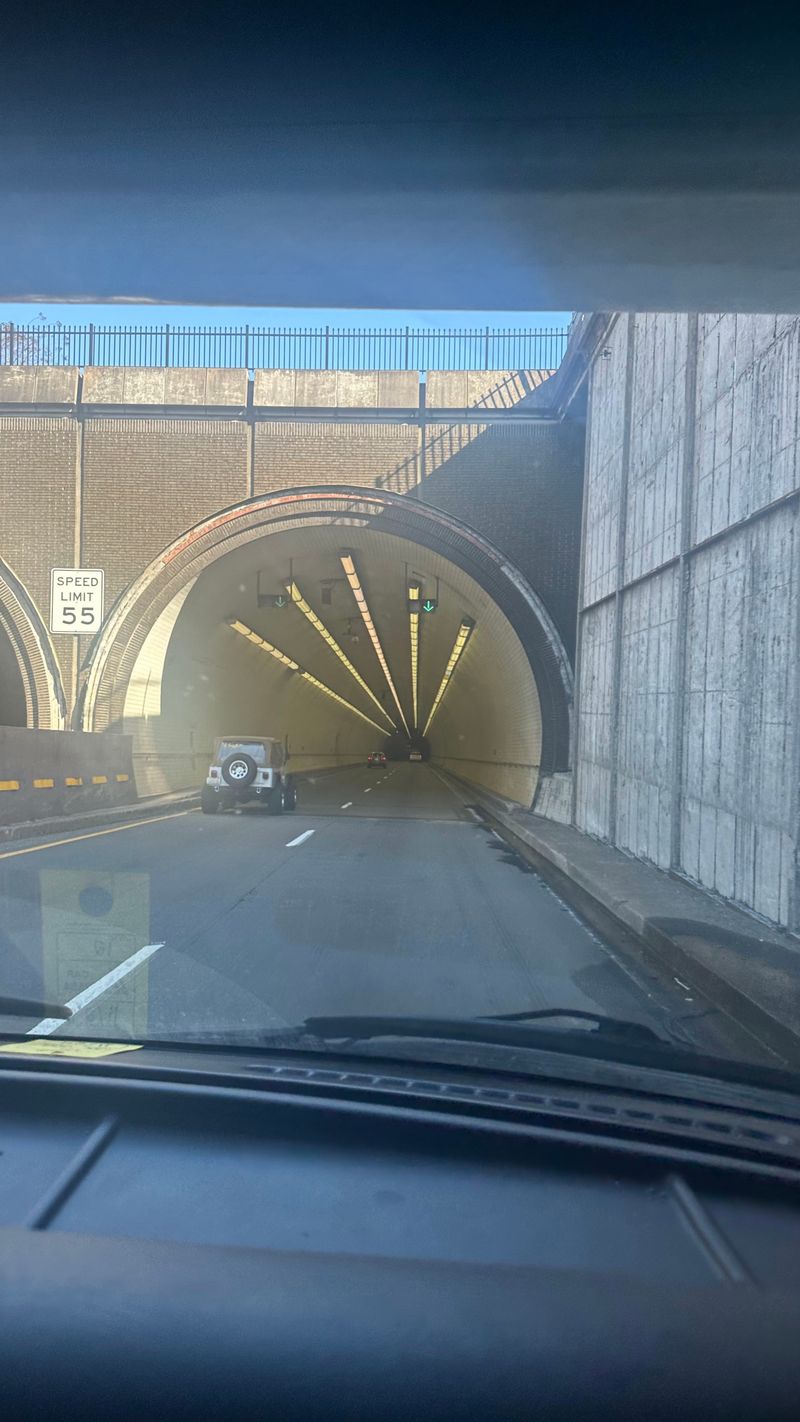
The impulse to document a first pass beneath the river is understandable, but safety improves dramatically when that responsibility is assigned before the descent rather than improvised in the dim light.
A passenger filming through the windshield can capture the rhythmic glow and auditory shift without distracting the driver or altering vehicle control.
Slowing significantly or stopping inside the tunnel is dangerous and unnecessary, given the absence of shoulders and the tight spacing between vehicles.
Exterior photos near the portals offer a better visual record without interfering with traffic flow.
Children often enjoy narrating the experience aloud, turning it into a shared memory rather than a visual one alone.
Keeping hands on the wheel and attention forward preserves the smoothness that makes the tunnel moment distinctive in the first place.
The best recording often ends up being the sensation itself, replayed later through description rather than footage.
Tune Into The Acoustics
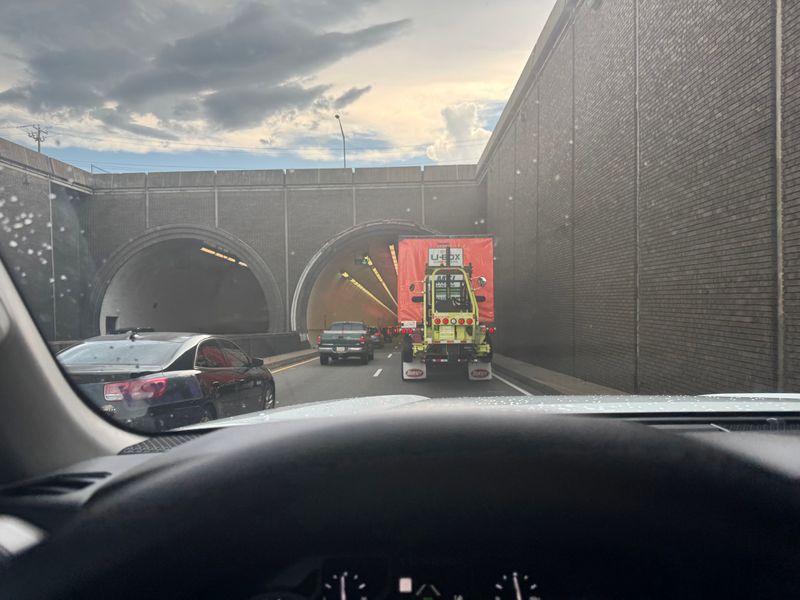
Sound behaves differently once concrete walls replace open air, compressing engine noise and reflections into a dense, almost musical hum that reshapes familiar audio cues.
Horn taps and tire echoes rebound quickly, stacking layers of sound in a way that feels momentarily amplified and theatrical.
Windows cracked slightly can reveal this shift more clearly without overwhelming volume.
The midpoint of the tunnel often produces the richest resonance, where reflections overlap most fully.
Children instinctively test the acoustics, noticing how voices and noises return altered.
Courtesy remains essential, as the confined environment magnifies every sound shared by others.
When daylight returns and the tonal landscape opens again, the outside world often feels unexpectedly quiet for a breath or two.
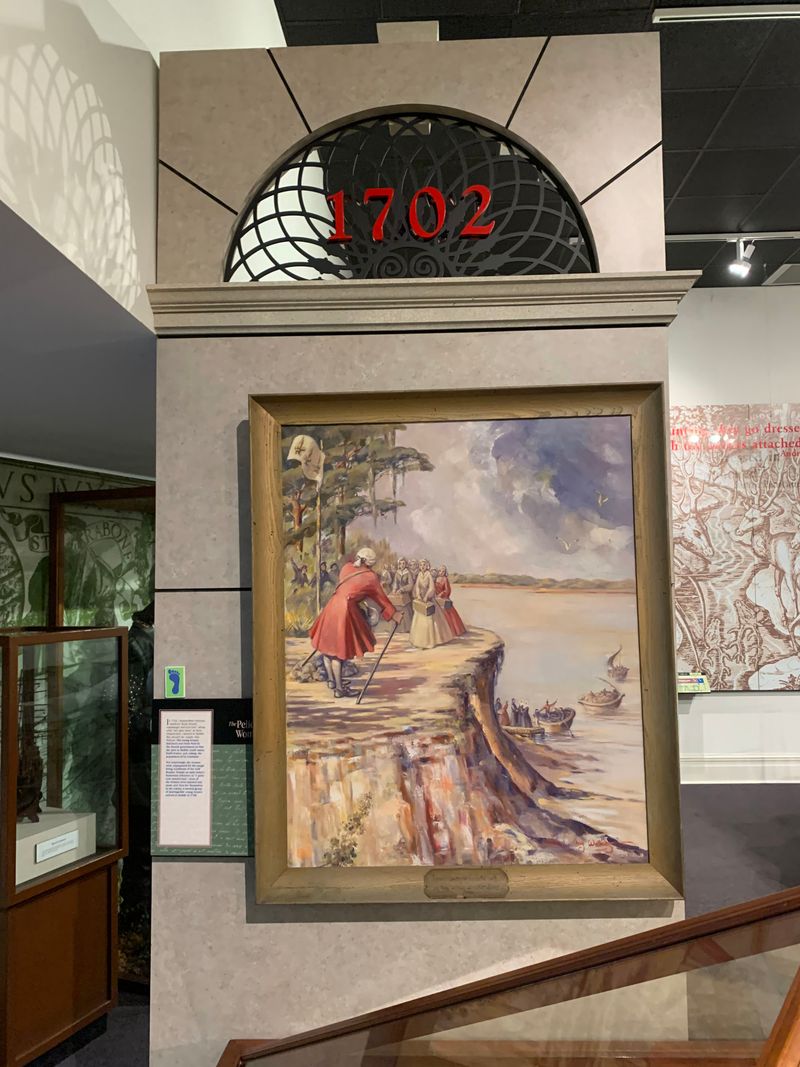
Learn The History In Minutes
Sound behaves differently once concrete walls replace open air, compressing engine noise and reflections into a dense, almost musical hum that reshapes familiar audio cues.
Horn taps and tire echoes rebound quickly, stacking layers of sound in a way that feels momentarily amplified and theatrical.
Windows cracked slightly can reveal this shift more clearly without overwhelming volume.
The midpoint of the tunnel often produces the richest resonance, where reflections overlap most fully.
Children instinctively test the acoustics, noticing how voices and noises return altered.
Courtesy remains essential, as the confined environment magnifies every sound shared by others.
When daylight returns and the tonal landscape opens again, the outside world often feels unexpectedly quiet for a breath or two.
Plan For Family-Friendly Fun
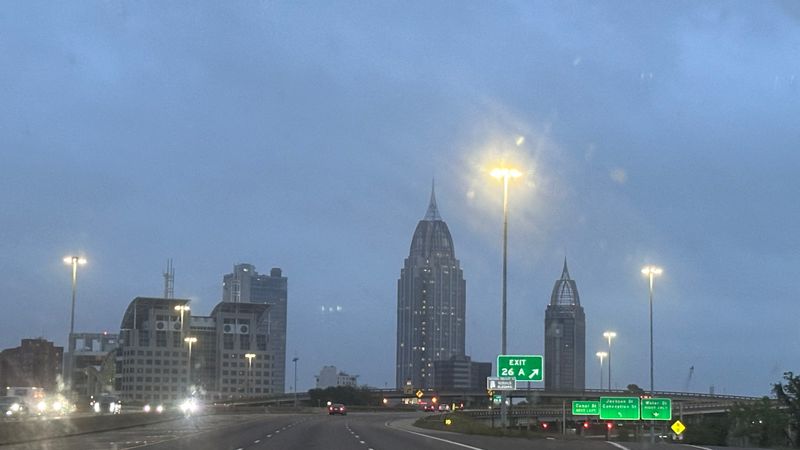
A little anticipation transforms the descent into something playful, especially when a countdown or shared ritual marks the approach to the portal.
Songs timed to begin at entry and end at daylight give younger passengers a sense of participation that anchors the memory.
Simple questions about sound, light, or radio signals turn the drive into a rolling curiosity lesson.
Children often remember the way their voices sounded more vividly than the view itself.
Snacks and water help keep energy steady without pulling attention away from the driver.
Small traditions repeated on future trips create continuity rather than novelty.
What could feel like an interruption in a long drive becomes a moment everyone looks forward to instead.
Navigate Downtown And Bay Connections
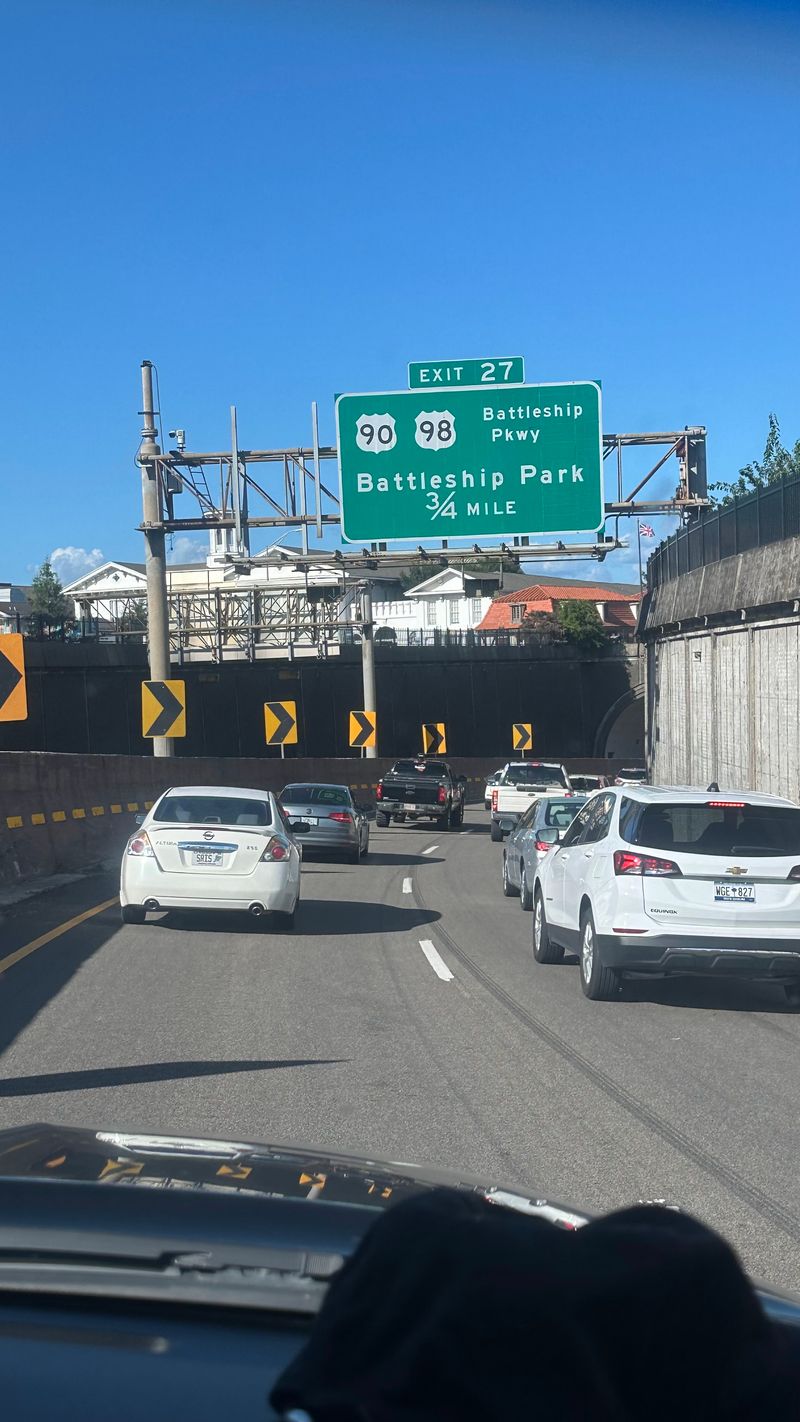
Emerging lanes appear quickly, making it useful to visualize your next move long before the tunnel begins.
Traffic naturally compresses near the exit, which is where hesitation or sudden decisions tend to ripple outward.
Downtown Mobile sits close enough that a detour feels effortless rather than planned.
The waterfront and causeway connect seamlessly if you allow the signage to guide you without second guessing.
Long-haul travelers benefit from trusting the flow instead of darting between options at the last second.
Services cluster nearby, offering natural pause points if the sensory shift lingers.
A short reset after exiting often restores calm before the next stretch of road unfolds.
Respect The Shared Space 24-7
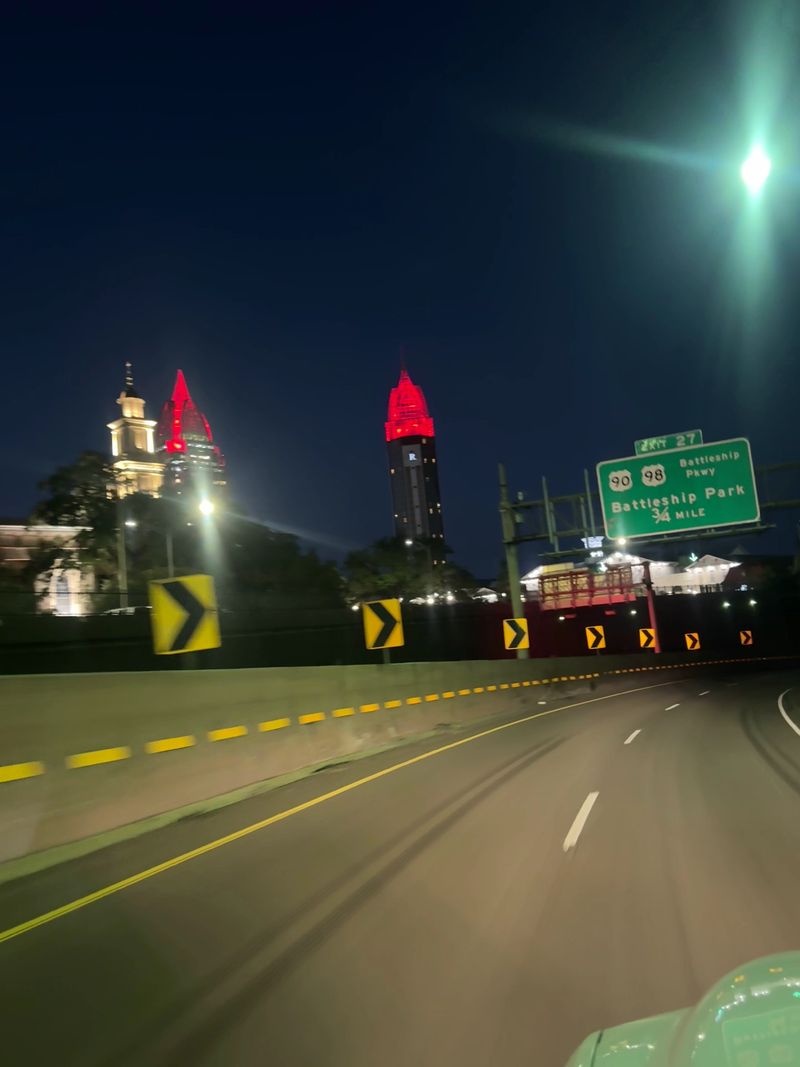
All hours of the day and night bring a different mix of people through this passage, from long-haul truckers keeping schedules to families squeezing travel into quiet nighttime windows when the road feels calmer.
Late crossings can feel almost meditative, but that calm only holds when speeds stay measured and attention stays sharp despite the reduced visual clutter.
Clean headlights, clear windshields, and generous following distance matter more here than on open stretches of highway because depth and reflection subtly distort perception.
Weather from the bay can shift conditions quickly, sending spray, glare, or fog into the entrance with little warning.
Smooth steering and gentle braking help everyone behind you far more than quick reactions ever could.
The structure functions as both landmark and lifeline, carrying daily routines as faithfully as it carries visitors passing through for the first time.
Leaving space, signaling early, and moving through with patience is a quiet acknowledgment that thousands of shared moments depend on mutual care beneath the river above.