
This Ancient Emerald Rainforest Is One of Washington’s Most Unexpected And Magical Places
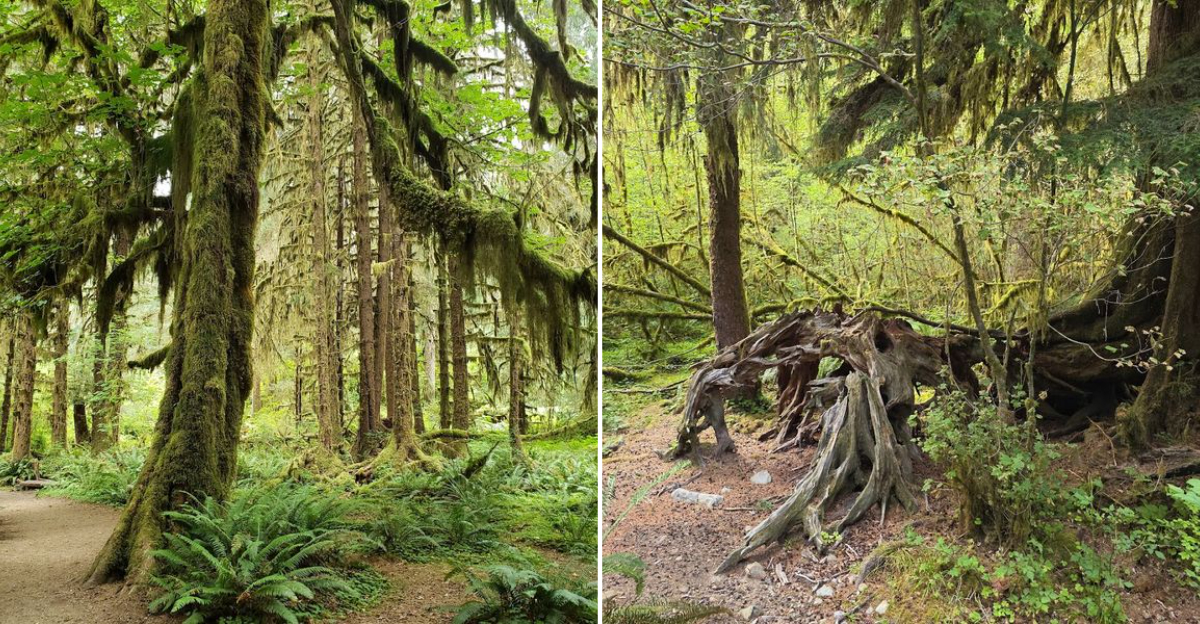
I have a theory that this rainforest is actually powered by pure, concentrated magic, because there is no other explanation for how everything manages to be this impossibly neon green.
Walking through these towering, lichen-draped sentinels makes you feel like you’ve accidentally stumbled onto the set of a fantasy movie where the main character is definitely about to go on a life-changing quest.
While most folks associate the vibe of Washington with rainy afternoons spent huddled over a laptop, this emerald wonderland proves that the state is actually the ultimate playground for people who enjoy feeling small in the presence of giants.
I’m currently accepting applications for someone to come out here and build me a tiny, mossy hobbit hole so I never have to leave. Located on Washington’s Olympic Peninsula, this temperate rainforest is unlike anything else in the continental United States.
It’s a place where trees have stood for over a thousand years, where silence is so profound you can hear your own heartbeat, and where nature puts on a show that feels almost too magical to be real.
A Living Cathedral Of Moss
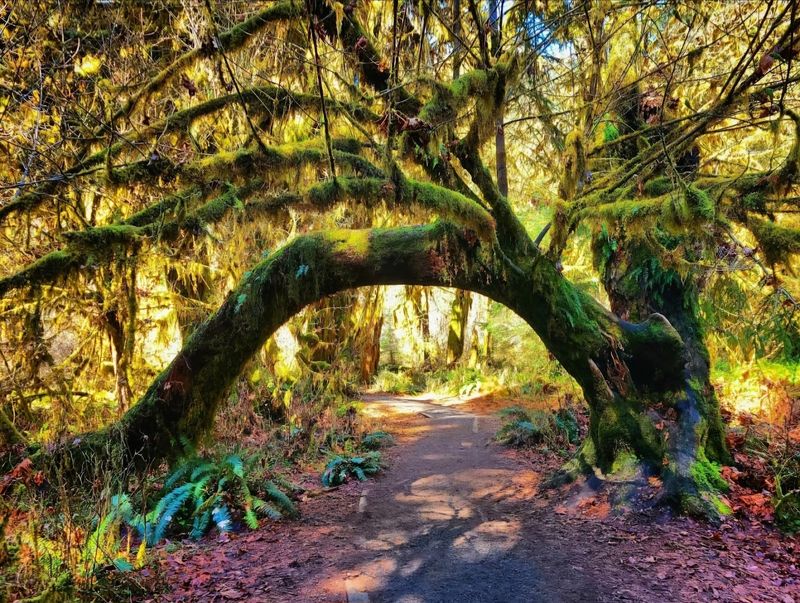
Walking along the Hall of Mosses trail felt like entering nature’s most elaborate cathedral. The Bigleaf Maples here wear coats of club moss so thick and lush that branches bend under the weight, creating cascading curtains of living green that hang down like nature’s chandeliers.
I touched one of these moss-covered trunks and was amazed at how soft and spongy it felt. The moss isn’t just decoration; it’s a crucial part of the ecosystem, absorbing moisture from the air and providing habitat for countless tiny creatures.
Some of these moss drapes can weigh hundreds of pounds. The trail itself is an easy loop that takes about an hour, making it perfect for families.
Every few steps revealed something new: ferns sprouting from nurse logs, mushrooms in impossible colors, and light filtering through the canopy in ethereal beams. I found myself walking slower and slower, not wanting to miss a single detail of this enchanted forest scene.
Ancient Giants That Touch The Sky
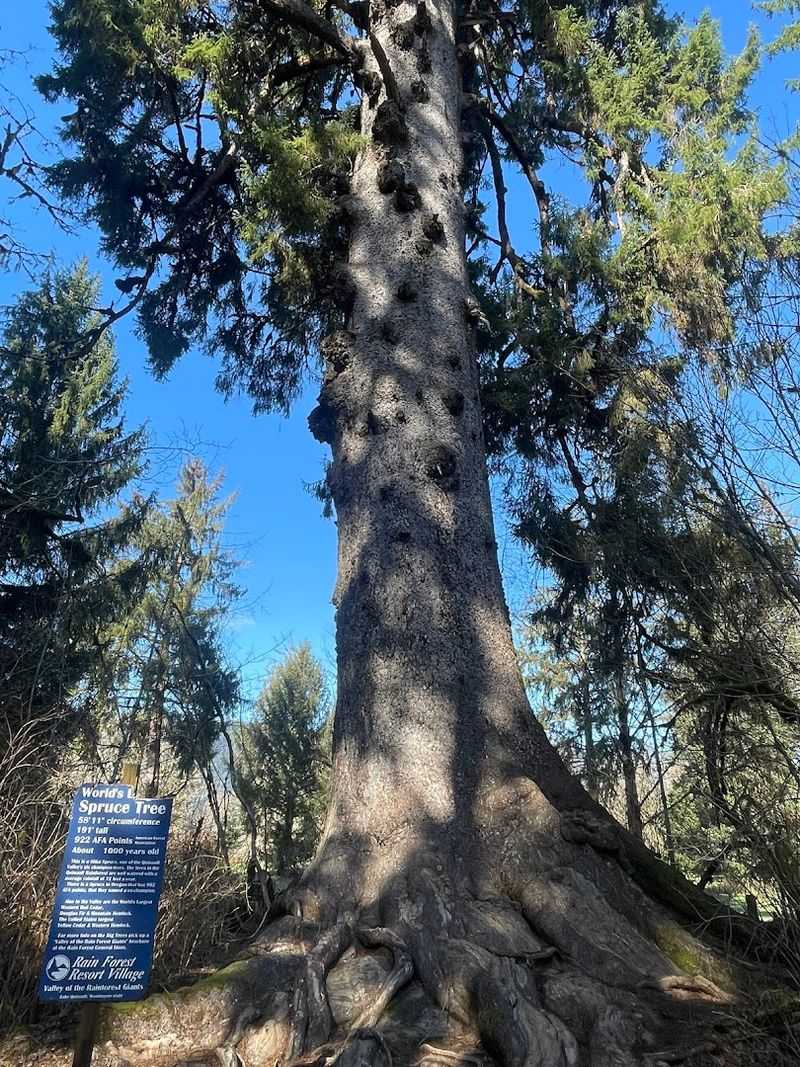
Standing at the base of a 300-foot Sitka Spruce, I had to crane my neck back so far it hurt just to see the top. These ancient giants have been growing here for centuries, some Western Hemlocks for over 1,000 years, and they create a forest canopy so dense that the understory exists in perpetual twilight.
What struck me most was the sheer size of the trunks. Seven feet in diameter means these trees are wider than most people are tall. I tried to hug one and my arms didn’t even make it a quarter of the way around.
The bark was deeply furrowed and covered in its own miniature ecosystem of lichens and tiny ferns.
These trees are survivors of an era long past. Some Douglas firs in protected pockets have lived 1,300 years, witnessing centuries of Pacific Northwest history. Walking among them, I felt incredibly small but also connected to something timeless and profound.
Where Rainfall Measures In Feet, Not Inches
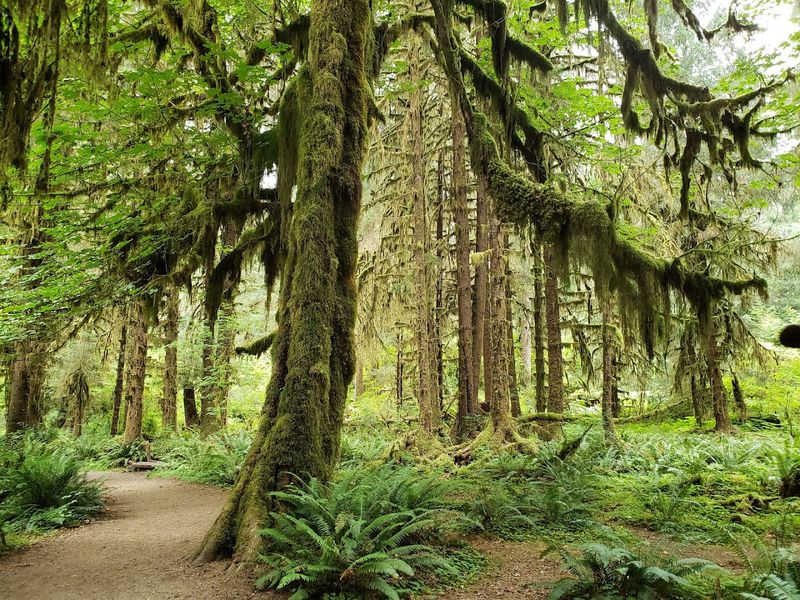
The Hoh Rain Forest receives between 140 and 170 inches of precipitation every year. That’s 12 to 14 feet of rain, which is hard to even imagine until you’re standing there in the mist. During my visit, a light drizzle started, and instead of running for cover, I just stood there and let it happen.
The constant moisture is what makes this place so incredibly lush. Fog and mist contribute an additional 30 inches of moisture annually, meaning the forest is almost always damp and cool. The air felt heavy and alive, and I could practically see the plants growing before my eyes.
This exceptional wetness creates one of the world’s most productive ecosystems. Every available surface becomes a home for something green. Fallen logs sprout gardens of ferns, tree branches host entire communities of moss and lichen, and the forest floor is a spongy carpet of vegetation.
The rain isn’t an inconvenience here; it’s the lifeblood that makes the magic possible.
The Quietest Place In America
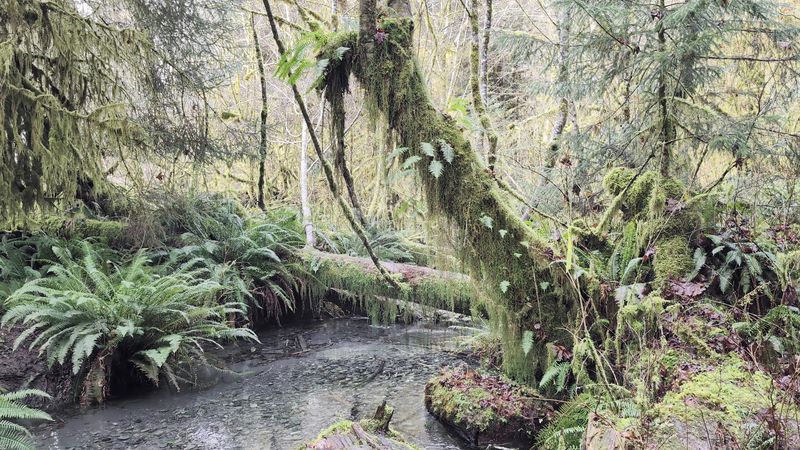
I’ve been to quiet places before, but the Hoh Rain Forest introduced me to a new level of silence. The forest is home to the “One Square Inch of Silence,” a designated spot that’s considered one of the quietest places in the United States.
The thick moss acts like nature’s soundproofing, absorbing noise so effectively that it creates an almost eerie hush.
When I stopped walking and just listened, the silence was so complete I could hear my own breathing and heartbeat. No traffic, no machinery, no human chatter, just the occasional drip of water from a leaf or the distant call of a bird. It was profoundly peaceful and slightly unsettling at the same time.
This quietness isn’t just pleasant; it’s scientifically significant. Researchers study this natural silence to understand how noise pollution affects ecosystems.
Standing there in that profound stillness, I understood why people describe the Hoh as otherworldly. It’s a reminder of what the world sounded like before humans filled it with noise.
Roosevelt Elk In Their Natural Kingdom
Rounding a bend in the trail, I froze. There, not fifty feet away, stood a massive Roosevelt elk, his antlers spread wide like a crown.
The Hoh Rain Forest is home to the largest unmanaged herd of these magnificent creatures in the Pacific Northwest, and seeing them in their natural habitat was breathtaking.
Roosevelt elk are the largest of the four surviving subspecies of elk in North America. The bulls can weigh up to 1,000 pounds and stand five feet tall at the shoulder.
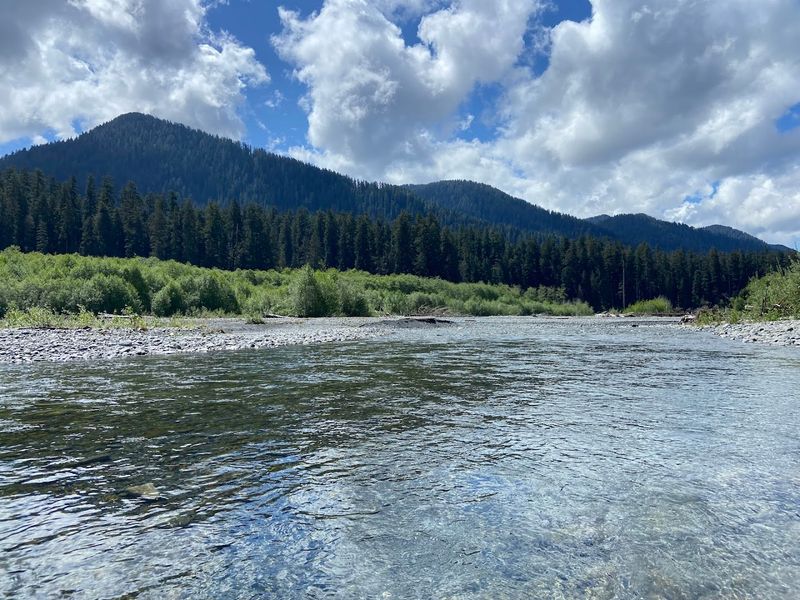
They move through the forest with surprising grace despite their size, browsing on ferns and shrubs along the riverbanks.
I watched this particular bull for nearly twenty minutes as he grazed, completely unconcerned by my presence. His coat was a rich brown, and moisture from the mist clung to his fur in tiny droplets. The Hoh River valley provides perfect habitat for these elk, with abundant food and shelter.
Seeing them here felt like witnessing something ancient and unchanged.
Banana Slugs And Other Unexpected Residents
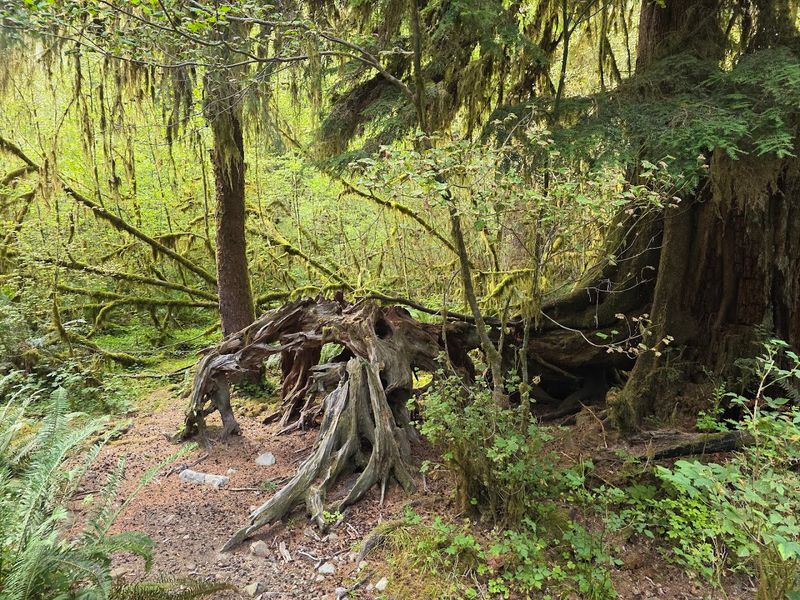
I’ll admit, I wasn’t expecting to get excited about slugs. But then I encountered my first banana slug in the Hoh, and I was genuinely fascinated.
These slimy yellow creatures can grow up to 10 inches long and weigh a quarter of a pound, making them one of the largest slug species on Earth.
The banana slug’s bright yellow color helps it blend in with the fallen leaves and decaying wood of the forest floor. They’re actually crucial to the ecosystem, breaking down dead plant material and recycling nutrients back into the soil.
I watched one slowly making its way across a moss-covered log, leaving a glistening trail behind it. Beyond the slugs, the forest hosts black bears, river otters, northern spotted owls, and marbled murrelets. The diversity of life here is staggering.
Every rotting log, every pool of water, every layer of the forest canopy supports its own community of creatures. The Hoh isn’t just beautiful; it’s a functioning ecosystem where every organism plays a vital role.
Glacial History Written In The Landscape
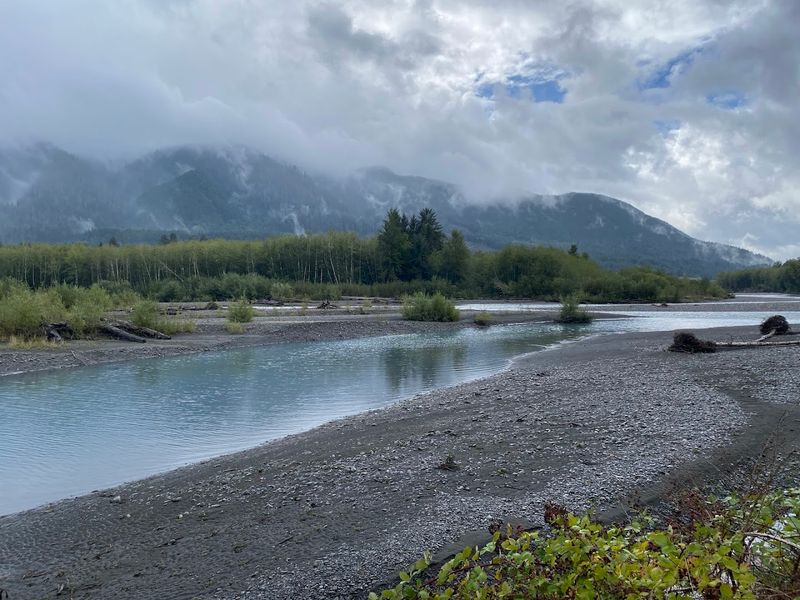
The Hoh River valley itself tells a story written by ice. Thousands of years ago, massive glaciers carved through this landscape, creating the distinctive U-shaped valley that now cradles the rainforest.
Standing on the riverbank, I tried to imagine the immense power it took to shape these mountains and valleys. The river still carries glacial meltwater from the Olympic Mountains, giving it a distinctive gray-green color from suspended rock flour.
I watched it rush past, knowing that every drop had begun its journey high in the mountains as ice and snow. The constant flow of this water helps maintain the moisture that makes the rainforest possible.
What amazed me was realizing that this ecosystem has remained essentially unchanged for thousands of years. While glaciers reshaped the land, the forest adapted and persisted. The oldest trees here were seedlings when medieval Europe was just emerging.
Walking these trails connects you to deep time in a way few places can.
A UNESCO World Heritage Treasure
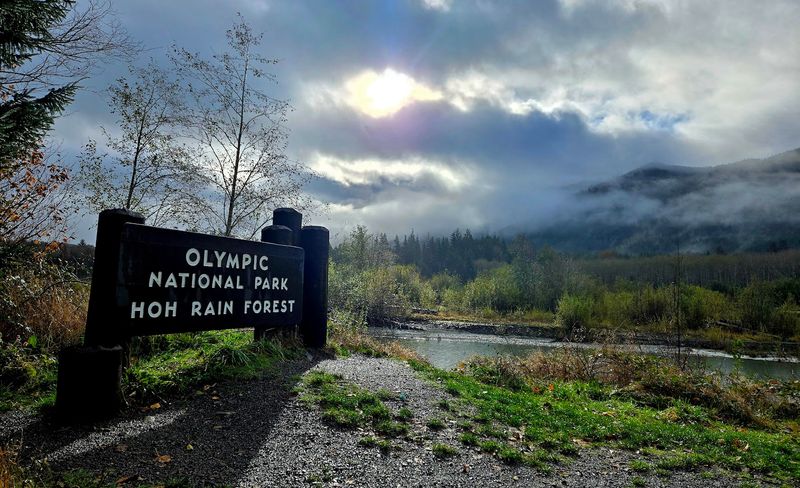
The Hoh Rain Forest isn’t just beautiful; it’s globally recognized as one of the finest remaining examples of temperate rainforest in the United States.
It’s part of Olympic National Park, designated as both a UNESCO World Heritage Site and a Biosphere Reserve. This recognition means the world acknowledges its exceptional value.
What makes it so special is how well preserved it is. This is considered the most carefully protected temperate rainforest in the northern hemisphere. While other forests have been logged or developed, the Hoh remains largely as it has been for millennia.
Walking here, I felt the weight of that preservation responsibility. The designation also means scientists from around the world come here to study how old-growth temperate rainforests function.
The data gathered helps protect similar ecosystems globally. I met researchers measuring tree growth and cataloging species during my visit.
Standing in this living laboratory, I understood why people call it magical. It’s not just the emerald beauty; it’s knowing this irreplaceable ecosystem is protected for future generations.