
This Arizona Botanical Garden Lets You Wander 140 Acres Of Rare Desert Blooms
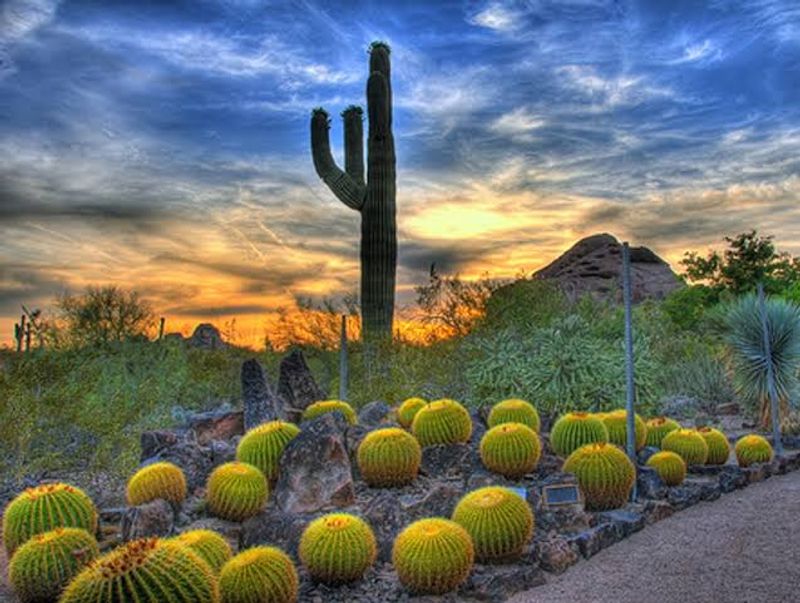
Roadrunners dart across gravel paths while towering cacti stretch toward the Arizona sky, and it all happens on 140 acres you can explore in a single afternoon. This living museum in Phoenix holds over 50,000 desert plants, including hundreds of rare and endangered species you won’t easily spot anywhere else.
Whether you come for a sunrise stroll or a glowing evening walk, there’s a reason locals keep coming back. Here’s everything that makes it worth the drive.
Where the Desert Comes Alive in Papago Park
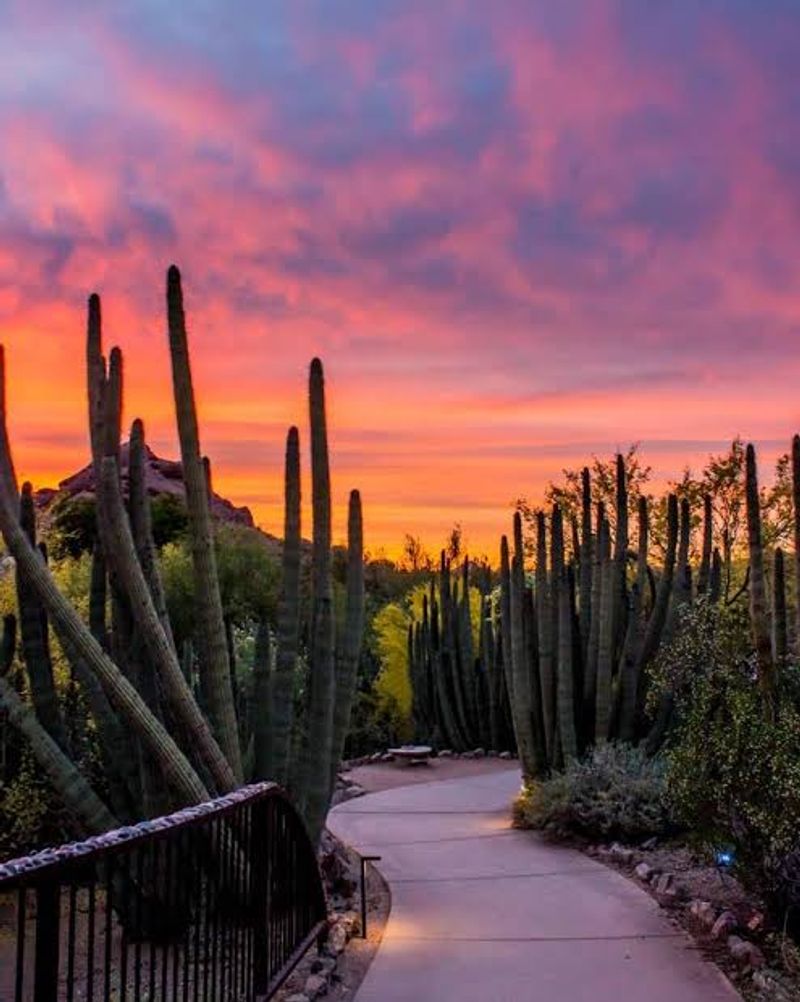
Sitting inside Papago Park at 1201 N Galvin Pkwy in Phoenix, this sprawling garden claims 140 acres of pure Sonoran Desert scenery. About 55 of those acres are actively cultivated, filled with plants that thrive where most gardens would wither.
Officially, it’s known as the Desert Botanical Garden, but locals simply treat it as one of the Valley’s crown jewels. The setting alone does a lot of the work, with rugged red buttes framing the plant collections and giving every photo a dramatic backdrop.
What sets it apart from an ordinary park is its status as an accredited living museum. That means the plants aren’t just pretty; they’re studied, protected, and cared for by people dedicated to desert conservation.
The garden holds more than 50,000 plants representing over 4,000 species, and somewhere between 379 and 520 of those are considered rare, threatened, or endangered. Regulars mention that no matter the season, there’s always something new blooming or a critter scurrying past.
It’s the kind of place that rewards slow wandering.
A Living Museum Built on Conservation
Back in its early days, a handful of desert enthusiasts wanted to protect the fragile plants they saw disappearing from the landscape. That spirit still drives everything here decades later.
The garden isn’t just about looking good. It functions as a research and education center devoted to desert flora from around the globe.
Scientists study these plants, and volunteers help keep the collections thriving through Arizona’s toughest heat.
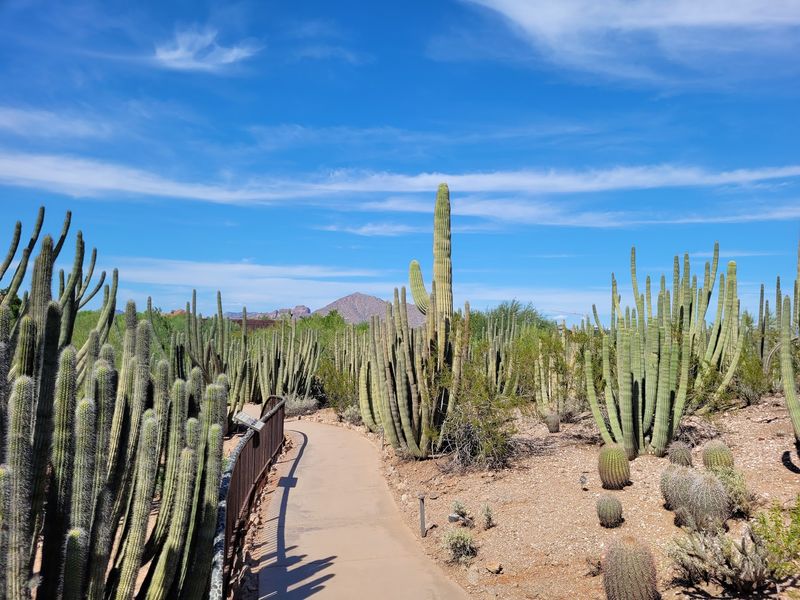
Signs throughout the grounds explain what you’re seeing, and visitors say the interpretation makes the whole visit feel educational rather than just scenic. You leave understanding a little more about how life adapts to harsh, arid conditions.
Because so many species here are rare or endangered, walking the trails feels a bit like touring a plant sanctuary. Some of these specimens are genuinely hard to find anywhere else in the world.
Did you know? The garden holds the world’s most complete collection of the genus Agave, with more than 4,000 agave plants spread across 248 different taxa.
That dedication to a single plant family gives you a sense of just how serious the mission truly is.
Cacti and Agave Beyond Counting
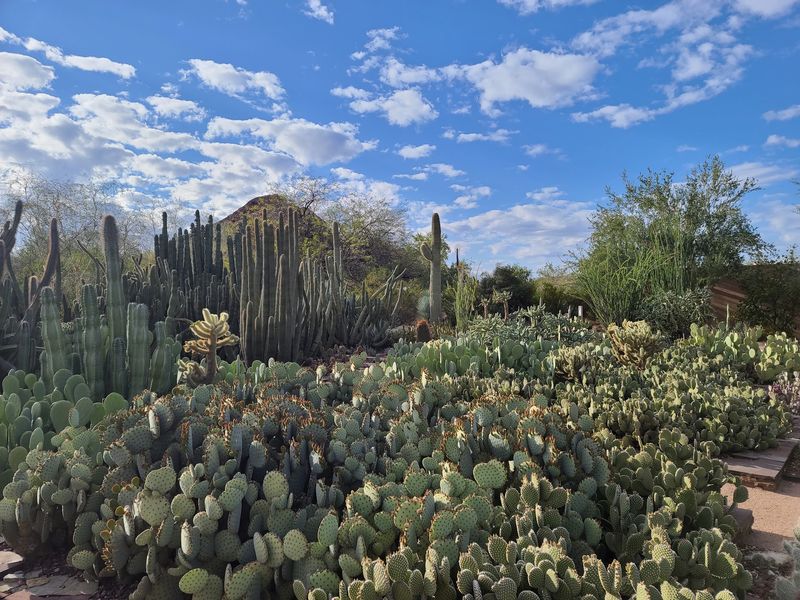
Cactus lovers, brace yourselves. The numbers here are almost hard to believe: nearly 14,000 cacti plants representing 1,320 taxa, alongside that record-setting agave collection.
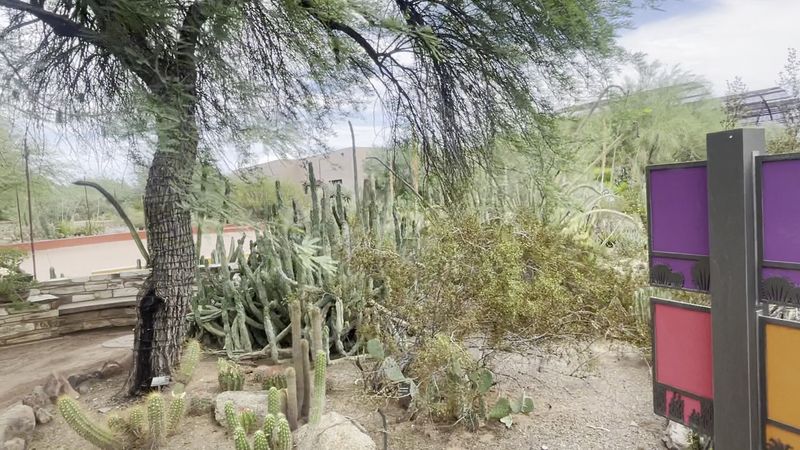
Row after row reveals spiny giants, squat barrels, and delicate succulents you’d never expect to survive in the open desert. Visitors frequently point to the sheer variety of cactus and succulent species as the highlight of their trip.
The garden doesn’t stop at Sonoran natives, either. You’ll find desert plants gathered from far-flung places like Australia, Baja California, and South America, each adapted to its own corner of the arid world.
Walking among them, you start noticing the small differences: the way one species curls its spines, or how another stores water in fat, waxy leaves. The interpretive signs point out these clever survival tricks.
Photographers especially love this section, calling out the textures, shapes, and colors that shift with the light. Whether you’re a serious plant nerd or just someone who thinks a golden barrel cactus looks cool, there’s plenty here to keep your eyes busy for hours.
Five Trails, Five Different Desert Stories
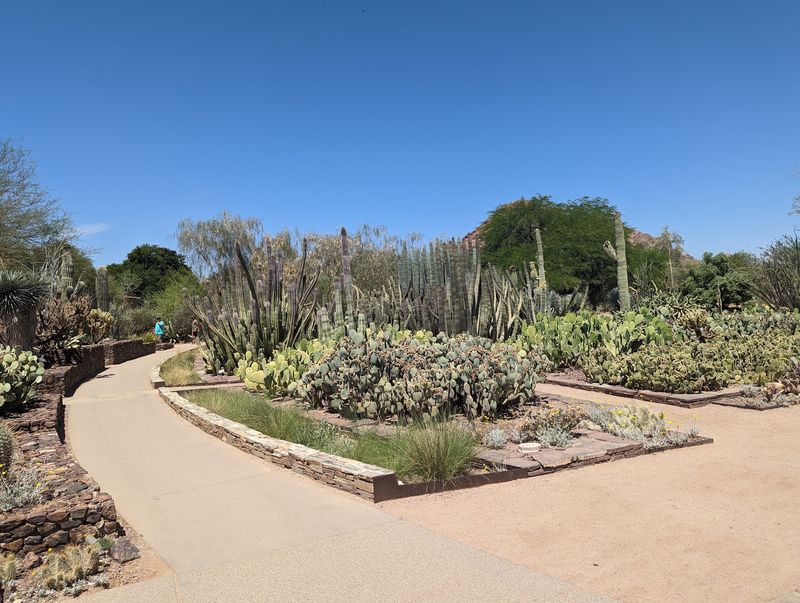
Rather than one long loop, the garden splits into five themed trails, each telling its own story about desert life. That design keeps the walk feeling fresh instead of repetitive.
The Sonoran Desert Nature Trail leans into the local landscape, while the Desert Discovery Trail introduces plants from arid regions worldwide. The Center for Desert Living Trail shows how people grow food and thrive in dry climates.
For flower chasers, the Harriet K. Maxwell Desert Wildflower Trail bursts with color in the right season.
And the Plants and People of the Sonoran Desert Trail digs into how Indigenous communities historically used these plants for food, medicine, and daily life.
Most pathways are paved, which visitors appreciate for easy walking, and some even mention seeing guests use motorized wheelchairs comfortably along the fine gravel sections. A few dirt paths branch off for those wanting a closer look.
Regulars suggest budgeting two to four hours to enjoy it all without rushing. Each trail offers a slightly different rhythm, so you can linger where your curiosity pulls you and breeze past what interests you less.
Wildlife That Shares the Paths
You might arrive for the plants, but the surprise stars often turn out to be the animals. Hardly anyone leaves without spotting some kind of critter darting through the greenery.
Visitors regularly mention roadrunners strutting across the trails, baby quail scampering behind their parents, and rabbits nibbling in the shade. Ground squirrels sometimes pop out of burrows right beside the path.
Hummingbirds get plenty of love here, buzzing between blooms while bees do their busy work nearby. One guest described watching aloe vera flowering and red fairy dusters swaying, all while lizards sunned themselves on nearby rocks.
The dedicated butterfly exhibit draws its own crowd, letting you stand among fluttering wings up close. It’s a favorite for families and photographers alike.
Early morning tends to be prime wildlife hour, since the cooler air brings out more activity before the crowds show up. Regulars who arrive around 8 in the morning say they spot the most animals and enjoy the quietest trails.
Keep your eyes peeled and move slowly. Half the fun is noticing the little movements you’d miss if you rushed through.
After Dark, the Garden Starts to Glow
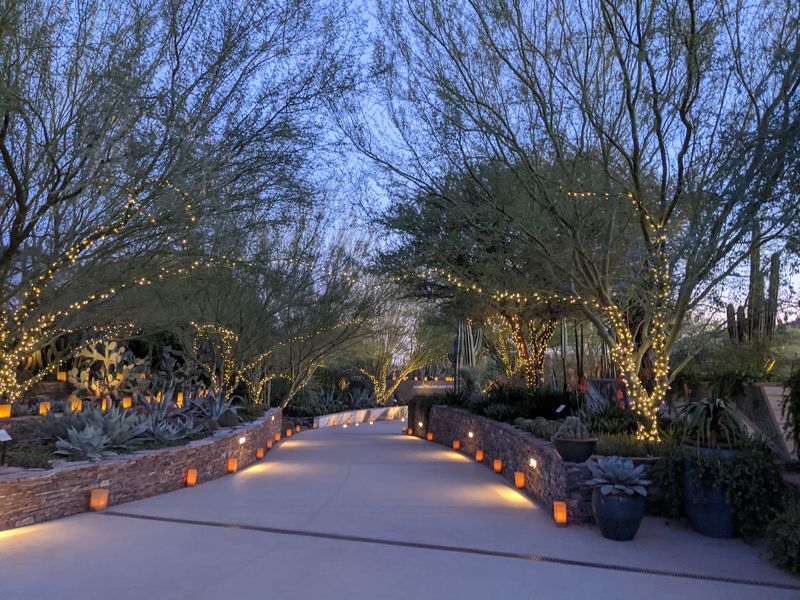
Something magical happens once the sun dips below the buttes. During the hot months from May through September, the garden lights up with shimmering displays that turn the desert into a dreamscape.
Events like “Flashlight Nights” and “Garden: After Dark” bring illuminated pathways, live music, and themed activities to the cooler evening hours. Visitors describe the color palette as almost psychedelic, giving the whole place a soft, otherworldly feel.
One guest who came in July raved about how well-placed lighting revealed the textures and shapes of the plants in ways daylight never could. Another mentioned catching Latin night, complete with music drifting through the warm air.
Here’s a handy tip regulars swear by: your daytime ticket often lets you return in the evening, so hold onto your receipt. That means you can beat the heat in the morning, take a break, and come back for the glow.
The garden stays open late, closing at 10 PM, making evening strolls a comfortable summer option. If you visit during peak heat, the after-dark experience might just be the best part of your whole trip.
Where Glass Art Meets Living Cacti
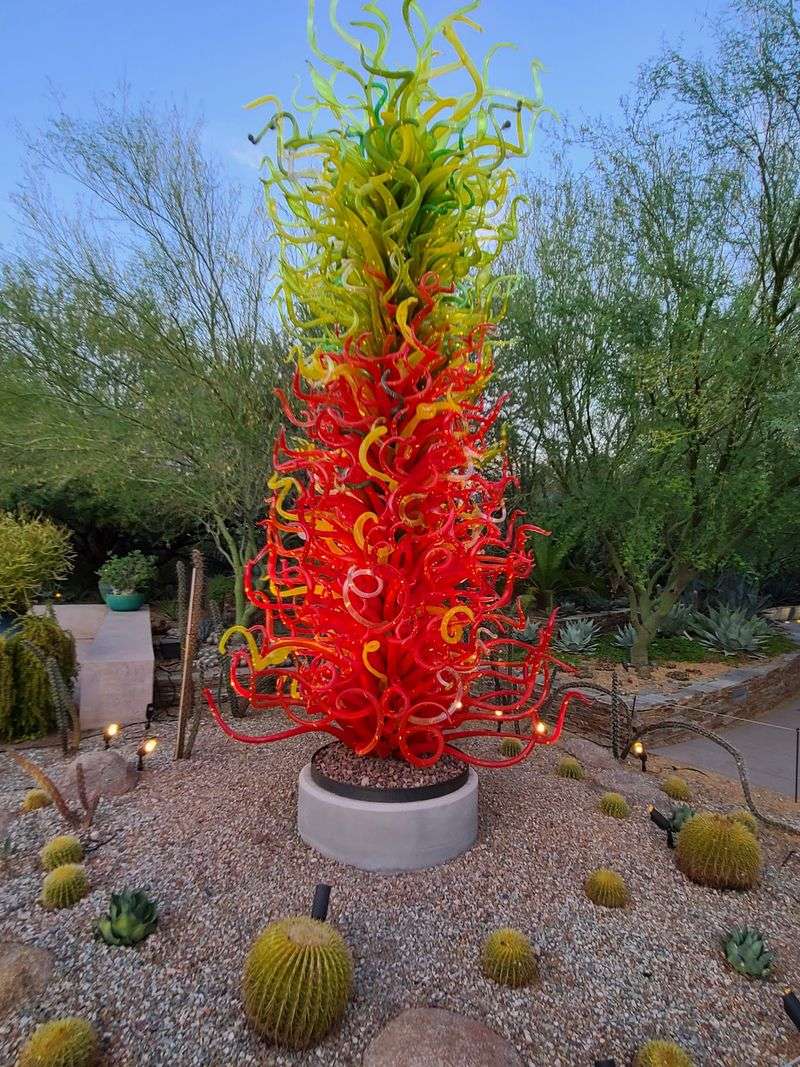
Just when you think it’s all plants, you round a corner and spot something dazzling made of glass. Art installations are woven right into the garden’s landscape, and they steal plenty of attention.
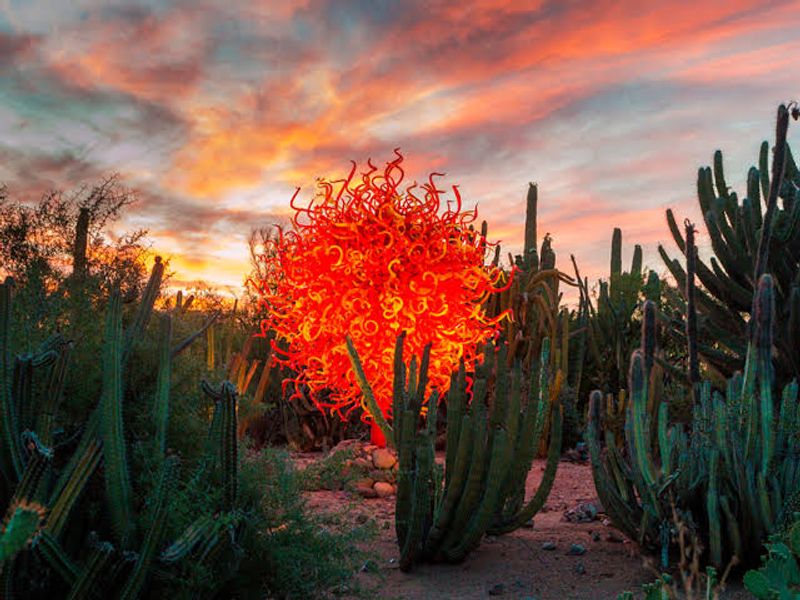
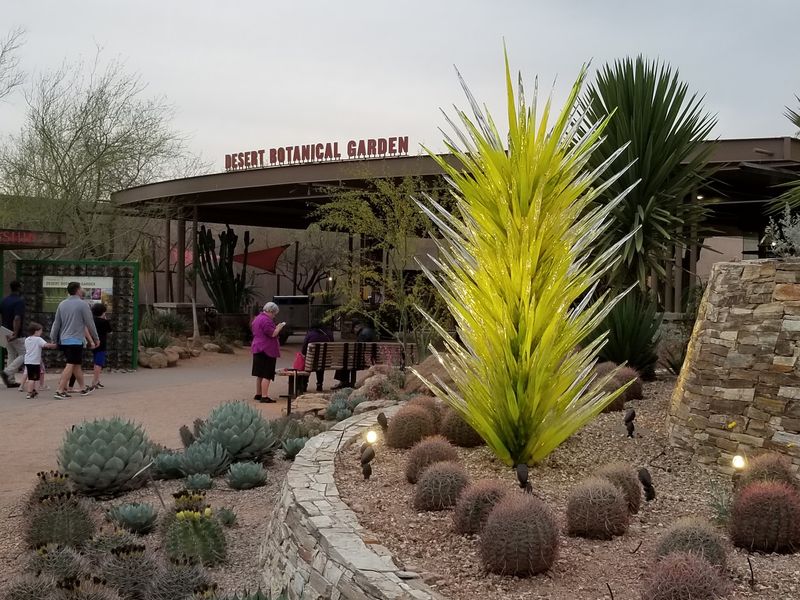
The Chihuly glass pieces get mentioned again and again by visitors, who call them a delightful bonus to the natural scenery. Vibrant, swirling sculptures nestle among the cacti as if they’d grown there themselves.
By day, the glass catches the sunlight and throws color across the desert plants. But many guests insist the real treat comes at night, when the pieces are lit up and glow along your path toward the exit.
Beyond the glass, thoughtfully placed sculptures and fountains dot the grounds, giving you little moments of surprise as you wander. There’s even an immersive video experience included with admission that guests found memorable.
The blend of art and nature is what makes this garden feel different from a plain nature walk. It’s part outdoor gallery, part desert sanctuary, and the two halves complement each other beautifully.
Bring your camera, because these installations practically beg to be photographed against the cactus-studded backdrop.
Seasonal Blooms and Super Bloom Magic
Timing your visit can completely change what you see, because this garden shifts dramatically with Arizona’s seasons. Spring brings one of the most beloved spectacles of the year.
When wildflower season arrives, the landscape erupts in color as desert blooms open across the trails. Petals in reds, yellows, and purples transform the usually earth-toned scenery into something almost festive.
The “Super Bloom” exhibit runs from October through May, lining up perfectly with the cooler, more comfortable months for outdoor exploring. Fall, winter, and spring are when regulars say they enjoy the garden most, spending unhurried hours soaking in the flowers.
Beyond the blooms, the garden fills the calendar with experiences like Sunrise Yoga and Sunset Sound Meditation for those craving a peaceful, wellness-focused visit. There’s also a “Music in the Garden” concert series that adds a soundtrack to the scenery.
One longtime visitor learned the hard way that summer afternoons can feel brutally hot, so they now stick to the milder seasons. If you can, plan your trip around the cooler months to catch the blooms at their showiest and walk in the most pleasant weather.
Tickets, Free Days, and Money-Saving Tricks
Let’s talk dollars, because a little planning here can save you a nice chunk of change. General admission for adults typically runs between $25 and $39.95, while kids ages 3 to 17 pay somewhere around $14.95 to $19.95.
The best deal of all? Little ones two and under get in completely free.
And the garden hosts a free community day on the second Tuesday of each month, though you’ll need to grab an advance timed-entry ticket to take advantage.
Here’s a trick locals love: you can check out a Culture Pass from a participating library for free admission for two people. Several visitors mentioned using their Phoenix Library card this way and being thrilled they did.
Some guests admit the price feels a touch steep at first, but many change their tune once inside, calling it completely worth it. Booking online ahead of time is recommended, especially during busy seasons.
Since your ticket can let you return the same evening, you’re really getting a full day of value from one entry. For a slightly magical outing that stretches your budget, that flexibility makes a real difference.
Why This Desert Escape Earns the Drive
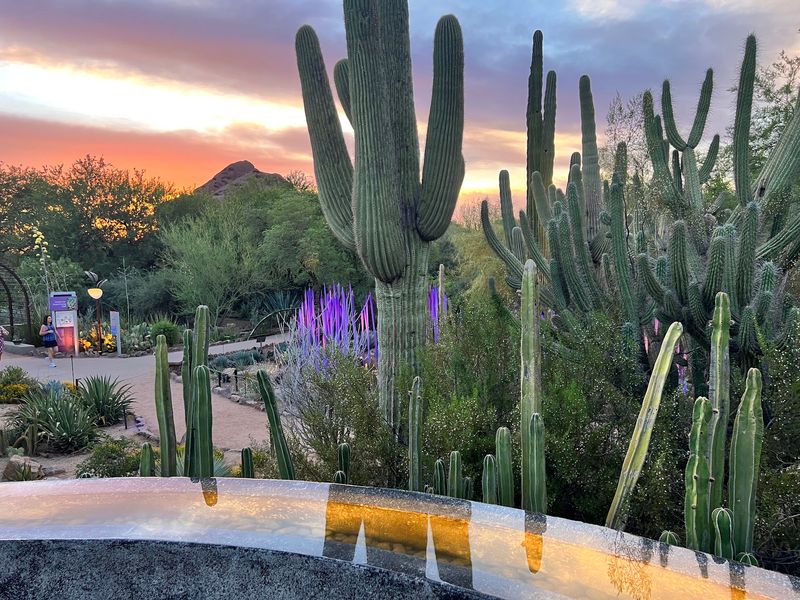
By the time you’ve wandered the trails, spotted a roadrunner, and watched the cacti glow at dusk, it’s easy to see why people plan return trips before they even leave.
Getting here is simple: the garden sits in Papago Park at 1201 N Galvin Pkwy, and parking is both plentiful and free. Guests consistently praise the friendly, helpful staff and the spotless grounds, right down to the restrooms.
Practical touches make the visit comfortable, too. Water refill stations dot the paths, shaded areas offer relief on hot days, and indoor cooling spots give you a break when needed.
When hunger hits, Gertrude’s restaurant and the Patio Cafe are on site, and the Garden Shop sells souvenirs and even plants to take home.
The garden welcomes visitors every day from 6 AM to 10 PM, giving you total freedom over when to go. Early birds beat the heat and crowds; evening visitors catch magic hour and the lights.
Whether you’re a lifelong local or just passing through Phoenix, this is one desert gem that lives up to every bit of its reputation. Bring water, sunscreen, and your camera.