
This Arizona Burger Joint Pays Tribute To Navajo Code Talkers
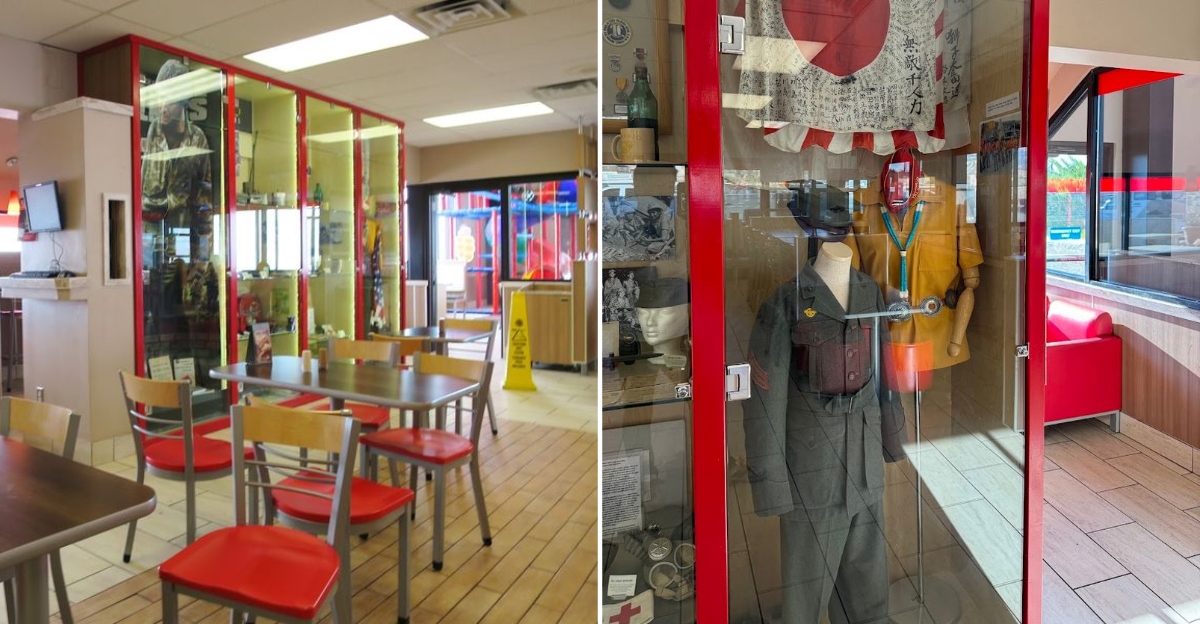
Usually, when I stop for a quick bite while exploring rural Arizona, I’m just looking for a decent fries-to-ketchup ratio and maybe a working bathroom. But every once in a while, you stumble upon a spot that serves up a side of profound history along with your lunch.
It’s a little dramatic to say a fast-food stop changed my perspective on world history, but walking into this humble eatery felt more like entering a secret museum than a simple burger joint.
This unique destination pays a beautiful, heartfelt tribute to the legendary Navajo Code Talkers. It’s the kind of Arizona find that reminds you there’s real magic hidden in the most unassuming places, and honestly, your meal tastes a lot better when it’s surrounded by absolute heroes.
The Story Behind
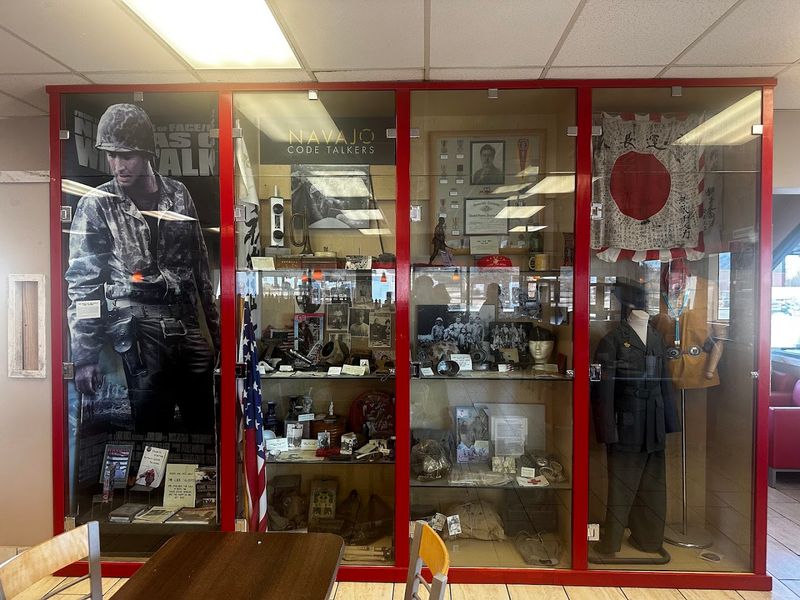
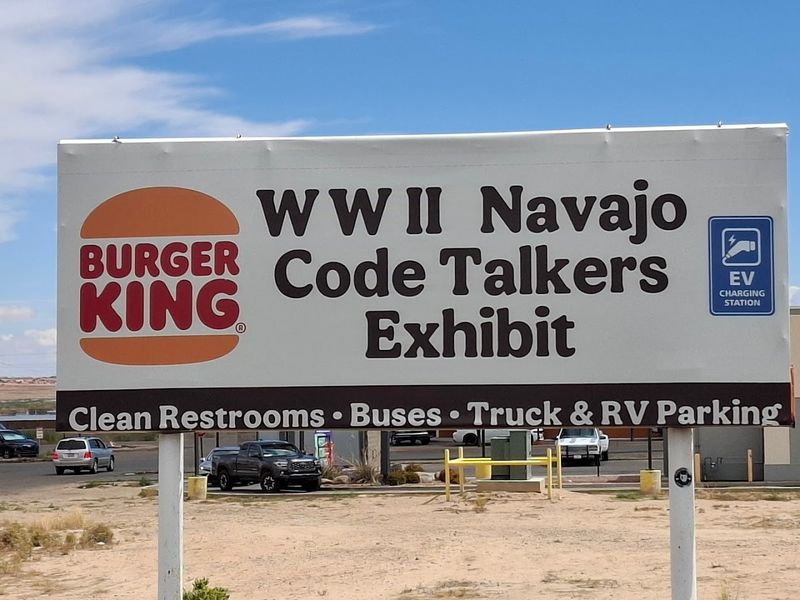
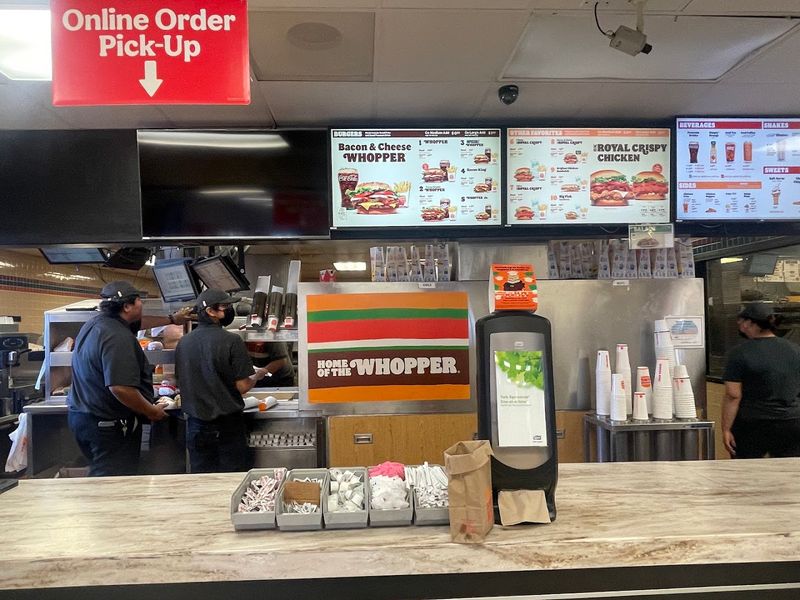
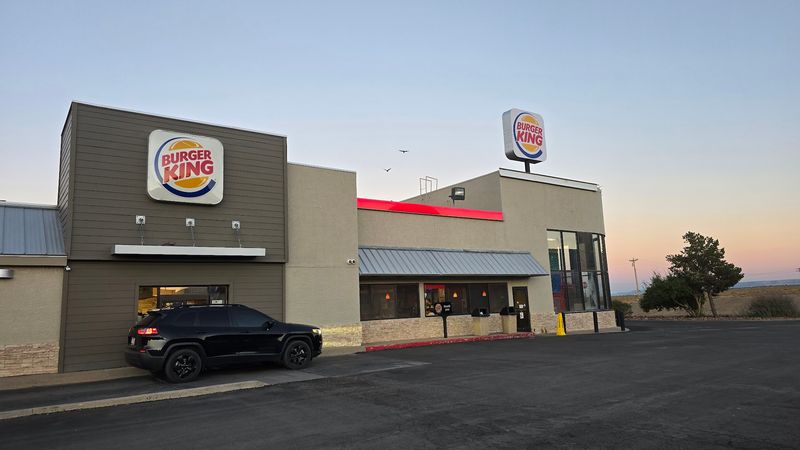
Some fast food restaurants give you a toy with your meal. This one gives you a history lesson that stays with you for life. The Burger King located at 253 Peabody Drive on Highway 160 in Kayenta, Arizona, is owned by Richard Mike, whose father King Mike was a proud Navajo Code Talker.
Richard decided to honor his father and fellow Code Talkers by displaying the war memorabilia he had collected over the years right inside the restaurant. The result is something genuinely unexpected and deeply moving.
Visitors walk in expecting fries and leave with a profound appreciation for American history.
Richard himself has said, “We have here in Kayenta more Code Talker memorabilia than the Pentagon does.” That is a bold claim, but once you see the exhibit, you will not doubt it for a second. Few fast food stops carry that kind of weight.
Who Were The Navajo Code Talkers
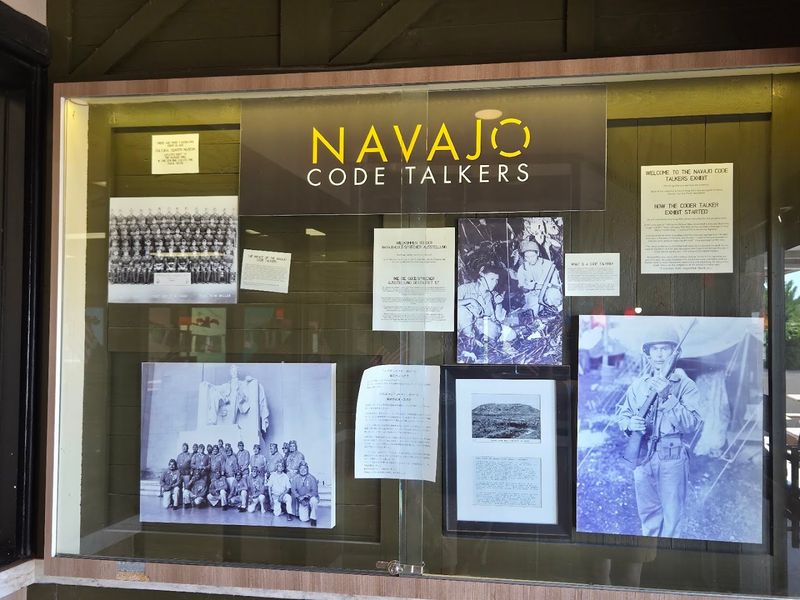
Picture a group of young men from the desert Southwest, speaking a language so complex that enemy forces never cracked it. The Navajo Code Talkers were Indigenous Marines who used their native Navajo language to transmit classified military messages during World War II.
Their contribution was so vital that commanders in the Pacific theater credited them with turning the tide of key battles.
The Navajo language was chosen because it had no written form and was spoken by very few people outside the Navajo Nation. That made it virtually impossible for enemy forces to decode. The Code Talkers developed a special coded vocabulary within the language, adding another layer of protection.
When I first learned about their story as a kid, I remember thinking it sounded like something from a movie. Standing inside that Burger King in Kayenta and seeing real photos of these men, it hit completely differently.
Their bravery deserves every bit of recognition it gets.
Walking Into The Exhibit: What To Expect
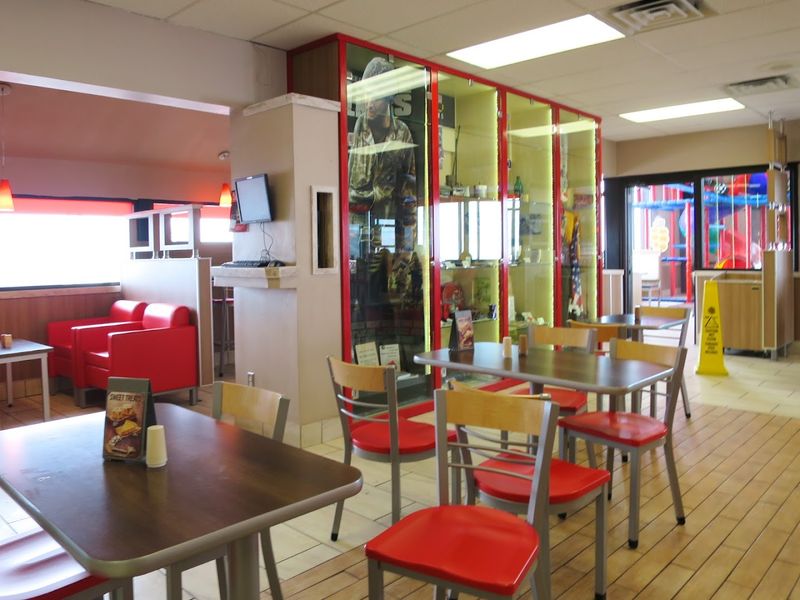
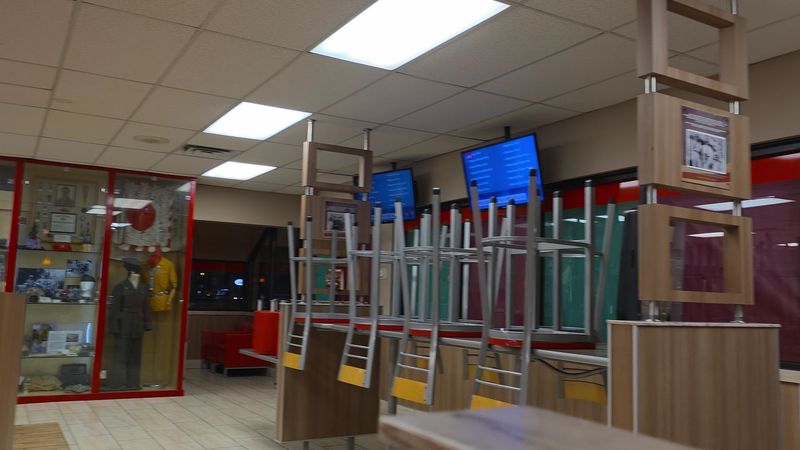
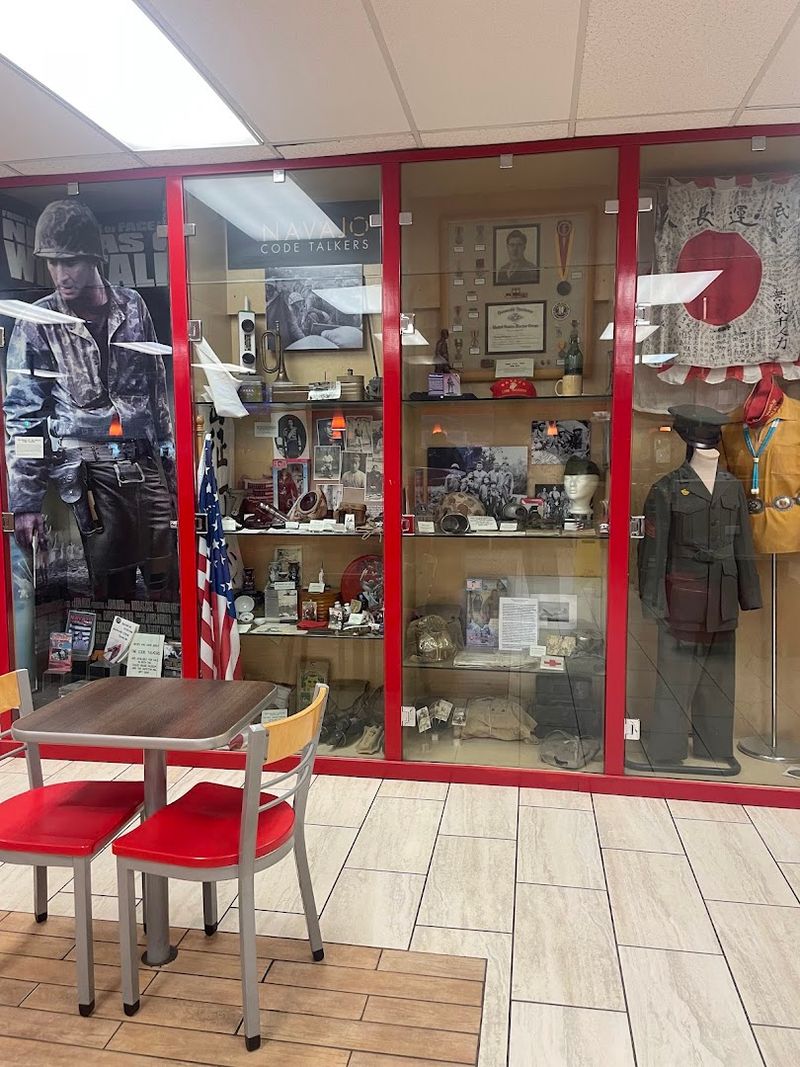
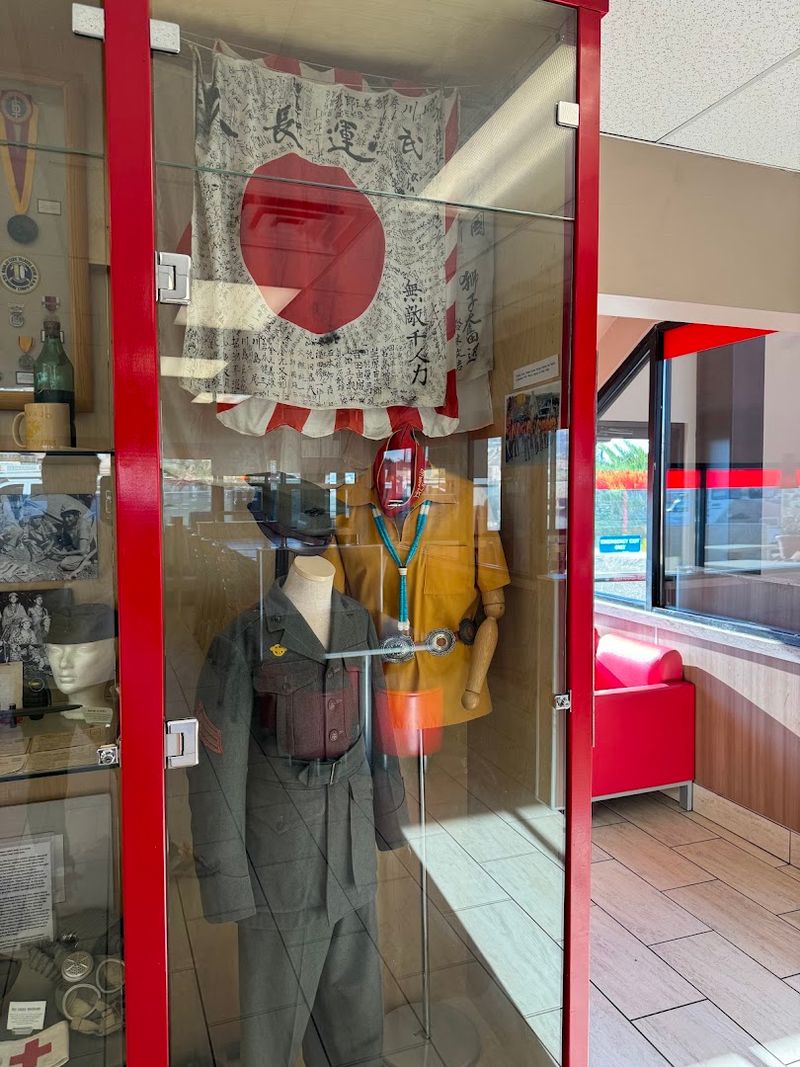
Stepping inside feels like crossing a threshold between a fast food restaurant and a genuine museum. The walls are lined with framed photographs, news clippings, medals, and uniforms that tell the full story of the Code Talkers in vivid detail. Everything is thoughtfully arranged and clearly labeled.
The exhibit wraps around much of the dining area, so you can read and eat at the same time without missing a single panel. Families with kids will find it especially engaging because the storytelling is visual, accessible, and genuinely gripping.
You do not need a history degree to feel the impact of what is on display. One thing that surprised me was just how many artifacts are packed into this space. It is not a small corner display or a single poster.
This is a full, immersive experience that rewards slow, careful attention. Plan to spend at least twenty to thirty minutes just taking it all in properly.
The Photographs That Tell A Thousand Stories
Photography has a way of making history feel personal, and the photos in this exhibit do exactly that. Each framed image shows real men in real moments, whether training, communicating on the radio, or posing proudly in uniform.
These are not stock images. They are personal records of extraordinary lives.
Many of the photographs come directly from family collections, which gives them an intimacy you rarely find in a traditional museum setting. Seeing a young man in uniform knowing he went on to help protect an entire nation is quietly powerful.
The images are organized in a way that guides you through the timeline of the Code Talkers’ service naturally. Richard Mike has built something that feels deeply personal and communal at the same time.
These photographs represent not just his father, but an entire generation of Navajo men who answered the call. Every face on that wall deserves to be known and remembered.
Medals, Uniforms, And Real Military Artifacts
There is something about seeing a real medal under glass that no documentary can replicate. The exhibit includes actual medals and military decorations earned by Navajo Code Talkers, displayed alongside folded uniforms and personal items that once belonged to these men.
It brings a tangible, three-dimensional quality to the history. Touching history, even just visually, changes how you understand it.
The Congressional Gold Medal, awarded to the original 29 Code Talkers in 2001, is among the most prestigious honors the United States government can give a civilian or veteran. Knowing that recipients of such recognition are honored right here in Kayenta feels right and overdue.
The uniforms are especially striking. Seeing the actual fabric, the patches, and the cut of the clothing makes you realize these were ordinary young men who did extraordinary things.
The exhibit treats every artifact with the care and respect it deserves, and that thoughtfulness shows in every detail of the presentation.
News Clippings And The Paper Trail Of Heroism
Newspaper clippings have a charm that digital archives simply cannot match. The yellowed edges, the old-fashioned fonts, and the urgency of wartime headlines all come together to create something that feels genuinely alive.
The exhibit features framed articles from various publications that reported on the Code Talkers during and after World War II.
For decades, the Code Talkers’ mission was classified. The public did not know the full story until 1968, when the program was officially declassified. That makes the later news coverage especially meaningful, because it represents the long-overdue recognition these men deserved from the very beginning.
Reading through those old headlines while sitting in a fast food booth is a surreal and wonderful experience. The contrast between the casual setting and the weight of what is on the wall creates a kind of productive tension that keeps you engaged.
You find yourself reading every word instead of scrolling past it the way you might online.
Richard Mike: The Man Who Made It Happen
Behind every great exhibit is a person with a vision and a reason to care. Richard Mike grew up hearing stories about his father King Mike and the other Code Talkers, and he decided that those stories deserved a permanent, public home.
His decision to display the collection inside his Burger King franchise was both unconventional and inspired. Richard has spoken openly about his motivation, noting that the memorabilia he collected from his father and fellow Code Talkers rivals what you would find at major national institutions.
That is not a boast. It is a statement of fact backed up by the sheer volume and quality of what is on display inside the restaurant. What makes Richard’s contribution especially meaningful is its accessibility.
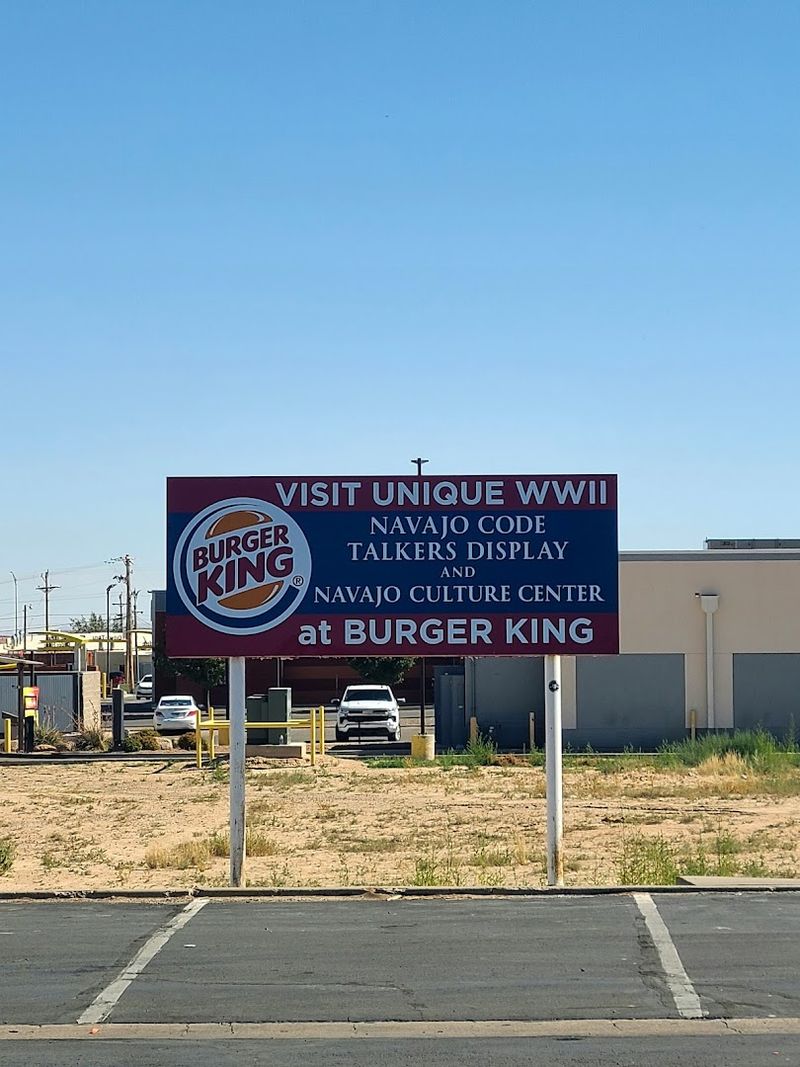
He did not build a separate museum with admission fees and limited hours. He put history in a place where anyone passing through Kayenta on Highway 160 can walk in, grab a meal, and connect with something genuinely important.
Kayenta, Arizona: The Town That Sets The Scene
Kayenta sits in the heart of the Navajo Nation in northeastern Arizona, and the landscape alone is worth the drive. Red sandstone formations rise in every direction, Monument Valley is just a short hop away, and the sky stretches wider than you think possible.
This is a town shaped by deep Indigenous heritage and breathtaking natural beauty.
Highway 160 runs right through Kayenta, making it a natural stopping point for travelers heading between Monument Valley, Mesa Verde, and the Grand Canyon. The Burger King sits conveniently between the Hampton Inn and Taco Bell, with plenty of free parking and easy access from the highway.
It is the kind of stop that turns a road trip pitstop into a highlight. Spending time in Kayenta gives you a real sense of the Navajo Nation today, a living, breathing community with a rich cultural identity.
The town is welcoming, the scenery is jaw-dropping, and the Burger King exhibit adds a layer of historical depth that makes your visit feel meaningful on multiple levels.
Operating Hours And How To Plan Your Visit
Planning a visit is refreshingly simple because the exhibit is right inside a working restaurant. The Burger King in Kayenta is typically open from 6:00 AM to 10:00 PM, which gives you a wide window to stop in whether you are starting a morning road trip or wrapping up an afternoon of sightseeing.
No tickets, no reservations, no fuss. The location at 253 Peabody Drive on Highway 160 is easy to find and offers free parking, which is always a bonus.
If you are traveling with a group or a family, the dining area is spacious enough to spread out comfortably while everyone takes in the exhibit at their own pace. Kids especially love having something to look at while they eat.
One practical tip: try to visit on a weekday morning if you want a quieter experience. The restaurant is popular with locals and travelers alike, so weekends can get lively. Either way, the exhibit is always worth the stop regardless of how busy the dining room gets.
Why This Exhibit Stands Out From Traditional Museums
Traditional museums ask you to be quiet, stand at a respectful distance, and move in a designated direction. This exhibit asks you to sit down, order a Whopper, and take your time. That relaxed atmosphere actually makes the history more approachable, not less meaningful.
There is something radical about putting serious historical content in an everyday setting. It sends a clear message that this history belongs to everyone, not just to people who seek out formal cultural institutions.
A trucker stopping for coffee on Highway 160 can walk away knowing more about the Code Talkers than many college graduates do.
Visitors consistently describe the exhibit as museum-quality, and that description is accurate. The artifacts are genuine, the curation is thoughtful, and the context provided by the text panels is clear and informative.
The difference is that you can enjoy all of this with a side of fries, which honestly makes the whole experience a little more fun and a lot more memorable.
The Broader Legacy of the Navajo Code Talkers
The Navajo Code Talkers were not recognized officially by the United States government until 2001, when Congress awarded the original 29 Code Talkers the Congressional Gold Medal. The remaining participants received the Congressional Silver Medal.
It was a long time coming, but the recognition opened a door to broader public awareness that has only grown since.
Today, the Code Talkers are celebrated in books, documentaries, and monuments across the country. The Navajo Nation has worked hard to preserve and share this history, and places like the Burger King exhibit in Kayenta are a vital part of that effort.
Grassroots preservation often reaches people that official institutions miss.
Understanding the Code Talkers also means understanding the broader story of Indigenous Americans serving in the U.S. military despite facing discrimination at home. Their loyalty and courage in the face of that contradiction is one of the most compelling chapters in American history.
The exhibit in Kayenta honors all of that complexity with dignity and pride.