
This Arizona Foundry Tour Is Worth Taking For A Surprisingly Cool Day Trip
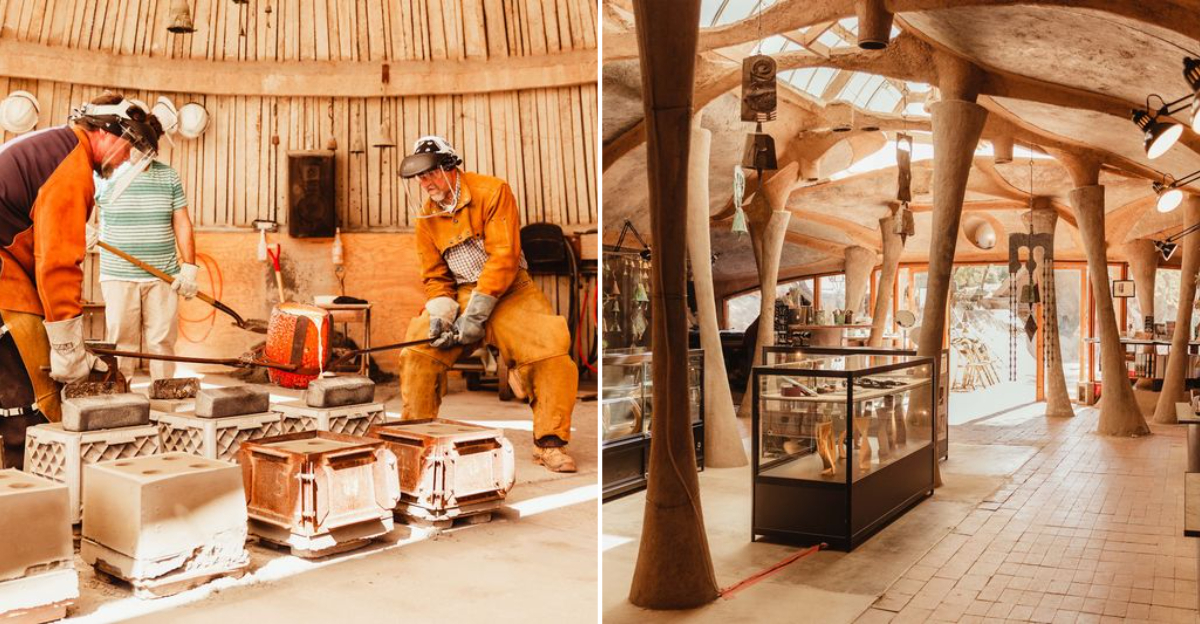
I drove into a quiet Paradise Valley neighborhood expecting nothing more than a gift shop, and instead found myself ducking under a concrete arch while hundreds of bronze bells rang above my head.
Cosanti Originals is the desert workshop of architect Paolo Soleri, a place where buildings were shaped by piling up dirt, pouring concrete over the mound, and digging the soil back out by hand.
Molten bronze still gets poured here most weekday mornings, and the shaded, half-buried structures stay noticeably cooler than the parking lot. I spent about ninety minutes wandering, listening, and asking far too many questions of the staff.
Here is what I learned about the history, the sounds, the foundry work, and the small practical details that make a visit go smoothly.
If you want an Arizona outing that feels quiet, creative, and genuinely strange in the best way, keep reading, because this one earns every minute you give it.
A Vision Shaped From Arizona Dirt
Paolo Soleri, born in Italy, studied under Frank Lloyd Wright before settling on this patch of Arizona in 1955. A year later, he started experimenting with what he called earth-casting, and the results are still standing.
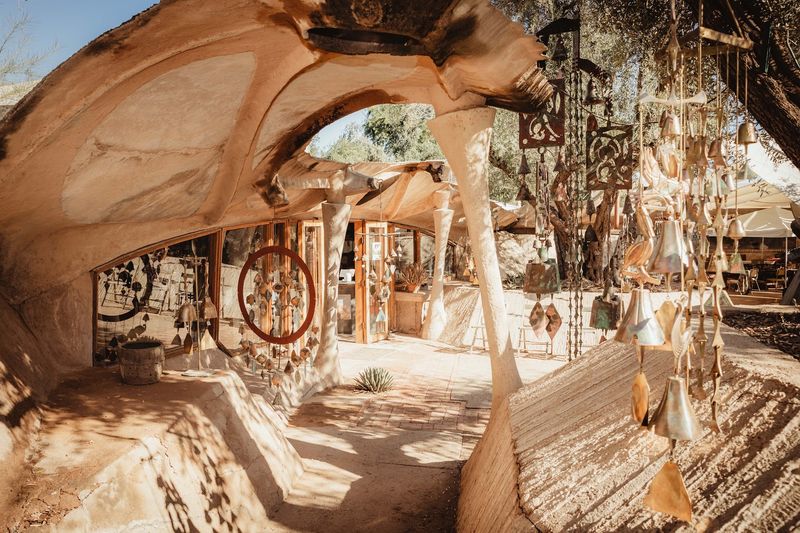
The method sounds almost too simple. Workers mounded up dirt into the shape they wanted, poured a concrete shell over the top, let it cure, then hand-dug the soil out from underneath. What remained was a curved wall and roof with the texture of the desert pressed into it.
Soleri wrapped all of this inside a bigger idea he named arcology, a blend of architecture and ecology meant to keep the built world in balance with the natural one. The name Cosanti comes from Italian words meaning against things, a nudge toward living fully with less stuff.
Standing on the terraces, I could see the philosophy in physical form. Nothing here shouts for attention, yet every surface has been thought about carefully.
Where To Find It And How To Get There
Punch 6433 E. Doubletree Ranch Rd., Paradise Valley, AZ 85253, USA into your phone and you will end up on a calm residential street that gives no hint of what sits behind the hedges. I nearly drove past the entrance twice.
Public transit does not reach this pocket of the Phoenix area, so driving or booking a rideshare is really your only sensible option. There is a free open-air dirt lot on site, though it runs narrow and fills quickly on pleasant winter mornings.
Scottsdale sits just minutes away, which makes Cosanti an easy half-day addition to a bigger Valley itinerary. I paired mine with lunch nearby and still had the afternoon free.
Give yourself roughly an hour to ninety minutes on the grounds. Rush it and you will miss the etched symbols, the tunnels, and the small courtyards that reward slow walking more than quick photographing.
Bells That Turn The Breeze Into Music
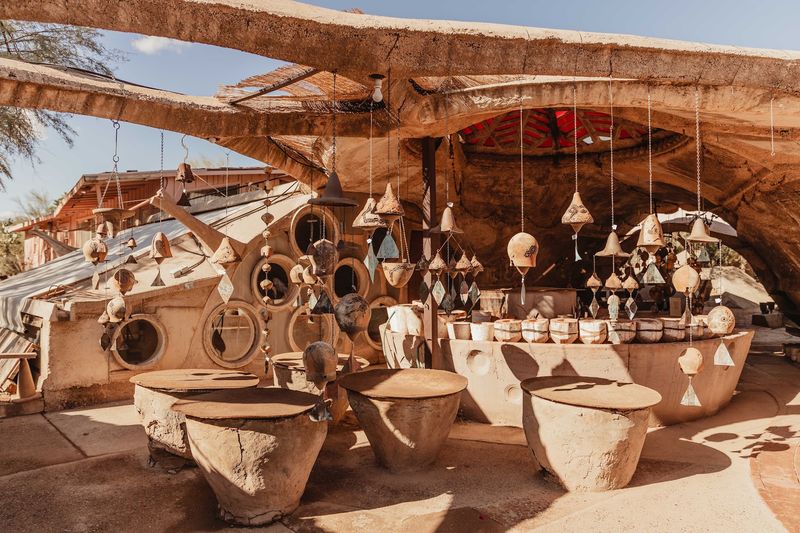
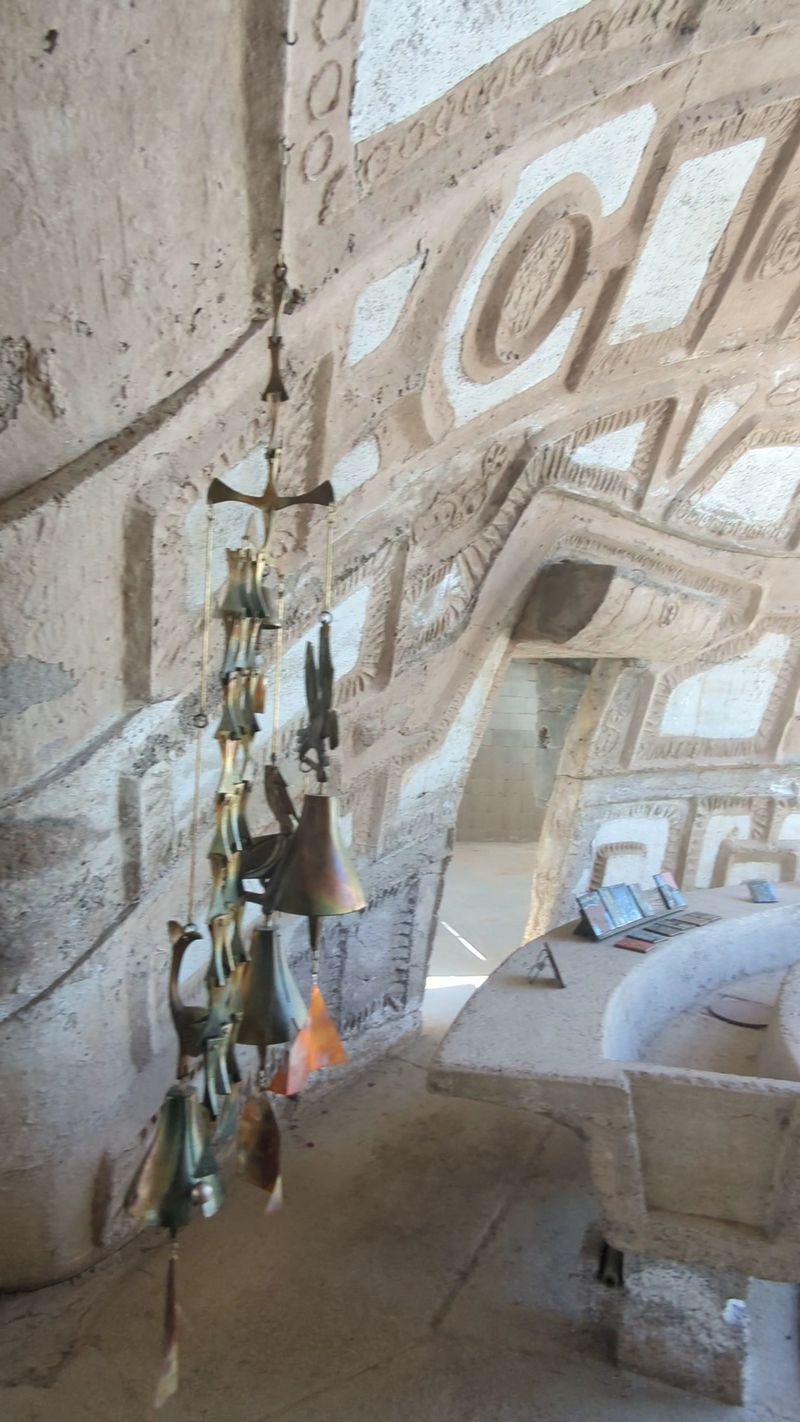
Sound arrives before sight here. Hundreds of bronze and ceramic windbells hang from beams and frames across the terraced grounds, and even a lazy breeze sets off a low, layered chime that follows you everywhere.
No two bells ring exactly alike. Bronze pieces produce a deep, lingering tone, while the ceramic ones answer back with something lighter and clearer. Staff encouraged me to tap them gently and compare, which turned browsing into something closer to instrument shopping.
The bells are the reason Cosanti supports itself. Sales fund the foundation behind the site, so buying one is less souvenir shopping and more direct patronage of a working studio.
I stood under one cluster for a solid five minutes doing absolutely nothing productive. In a state known for heat and noise and freeways, finding a shaded corner filled with soft metallic ringing felt like a small act of rebellion, and I recommend it wholeheartedly.
Watching Molten Bronze Meet Silt Molds
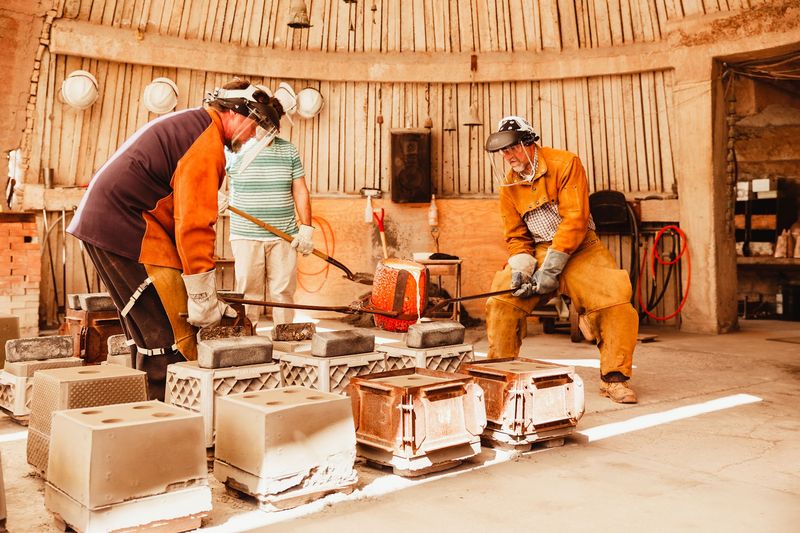
Nothing prepares you for the first crucible tilting forward. Skilled artisans melt copper and pour glowing bronze into silt molds carved with original designs, and the heat rolls outward far enough that you feel it from behind the rope.
Pours happen on weekday mornings, generally between 9:00 AM and 11:00 AM, and they are not scheduled or announced. Showing up early on a Tuesday or Wednesday gives you a decent chance; arriving at two in the afternoon gives you none.
Each mold gets carved by hand, which means every bell that leaves this property carries a slightly different pattern. That variation is the whole point rather than a flaw in the process.
I watched two pours back to back and understood immediately why the finished bells cost what they do. Seeing raw metal become a ringing object in a matter of minutes reframed the entire gallery for me.
Tunnels, Domes And Carved Concrete Surfaces
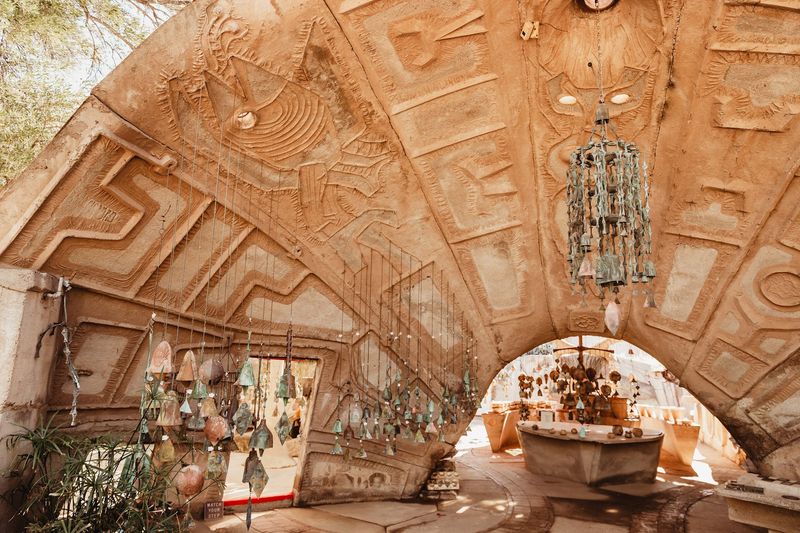
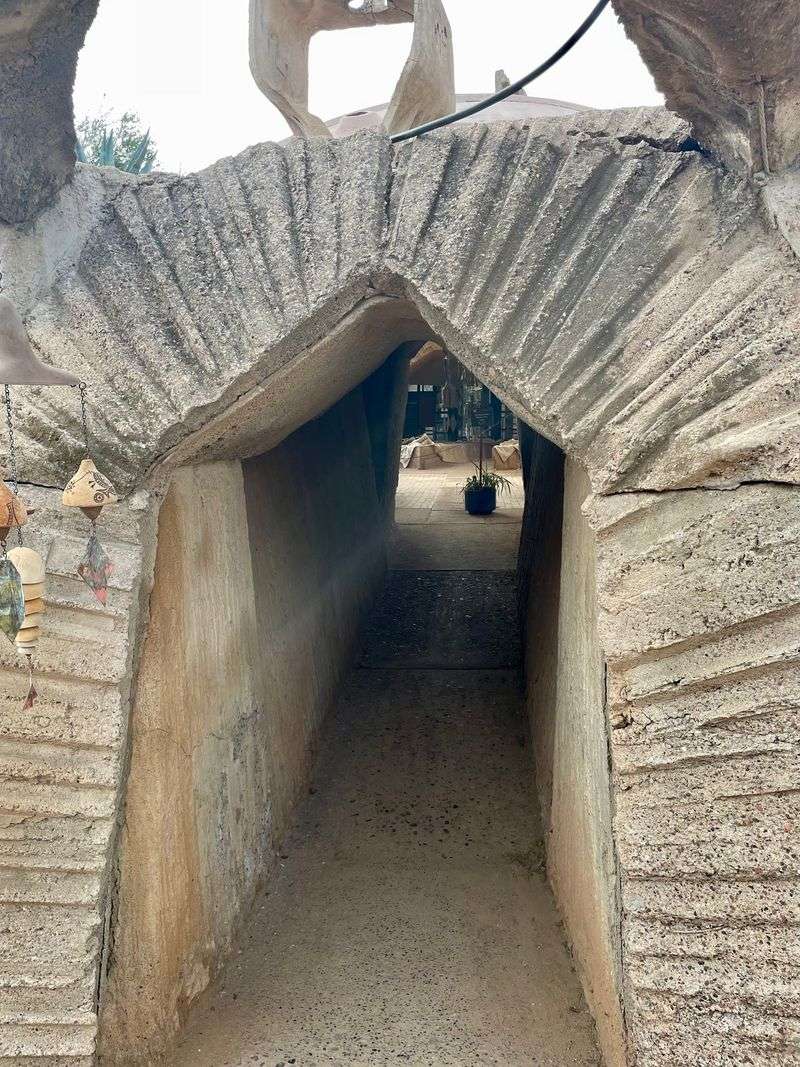
Duck your head. Many of the structures sit partly underground, connected by narrow passages and uneven dirt steps that make exploring feel like poking around someone’s very inventive backyard.
Run a hand along the concrete and you will find symbols, human figures, and animals pressed into the surface. Soleri and his crew treated every wall as a place for marks rather than blank filler between rooms.
The main outdoor gallery holds my favorite detail: a red stained-glass dome that throws warm colored light down onto handmade ceramics arranged below. Late morning seemed to hit it best.
Being partly buried also keeps these spaces genuinely cooler than the open lot, thanks to passive solar design rather than any air conditioning unit. I stepped into one apse in June and felt the temperature drop right away.
Bring a small bag or leave yours in the car, because tight corridors and hanging bells do not mix well with bulky backpacks.
Guided Tours And Hands-On Workshops
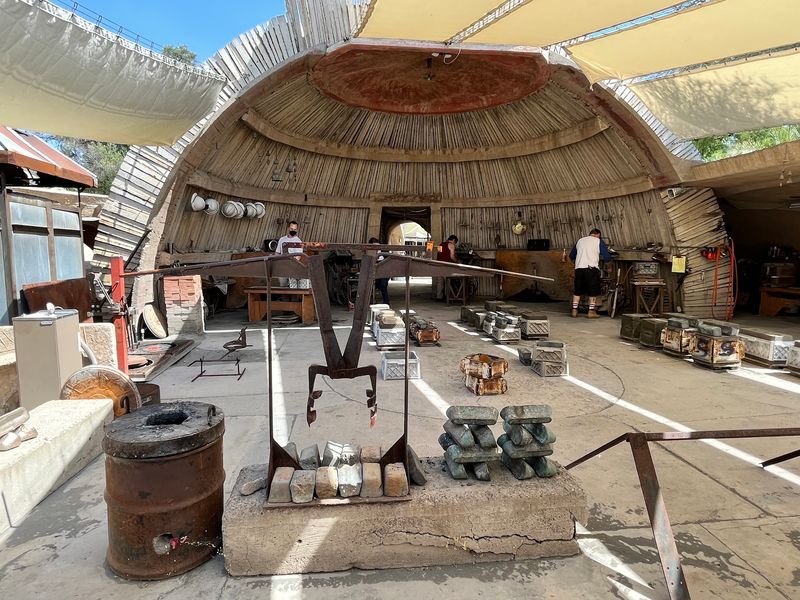
The gallery and shop areas are free to walk into, which surprised me. Guided tours carry a fee and range from a standard walk-through to longer specialty options that go deeper into Soleri’s thinking.
My guide explained the arcology concept in plain language and pointed out construction details I would have walked straight past, including how the silt-casting process transfers a carved design onto hot metal.
Cosanti also runs occasional hands-on workshops. Casting Cosanti lets participants silt-cast a plaster tile, and a separate ceramic bell-making session puts clay in your hands. Both fill up, so check the schedule before you plan around one.
Even without a tour, staff in the shop answered questions freely and let me listen to individual bells side by side.
If you have any interest in how objects get made, book the guided option. Paying a little turned a pleasant stroll into something I still think about months later.
Timing, Access And Smart Visitor Tips
Cooler months from October through April make everything easier. Aim for a weekday between roughly 9:30 AM and 11:30 AM and you stack the odds toward catching a pour while dodging midday desert heat.
Accessibility deserves an honest mention. The earth-cast buildings involve uneven steps, sloped dirt paths, and low, narrow passages, so most of the site is not wheelchair friendly, and taller visitors will duck more than once.
Closed-toe shoes with grip beat sandals here. Water helps too, since shade is plentiful but drinking fountains are not the main attraction.
Photography is welcome, and the mix of shadow, concrete texture, and hanging bronze gives you plenty to work with.
Budget ninety minutes, keep your voice low near the foundry, and resist the urge to check off every corner in a hurry. Cosanti rewards visitors who slow down, and leaving with a bell in hand is a fine way to carry the trip home.
The Gift Shop And Bringing A Bell Home
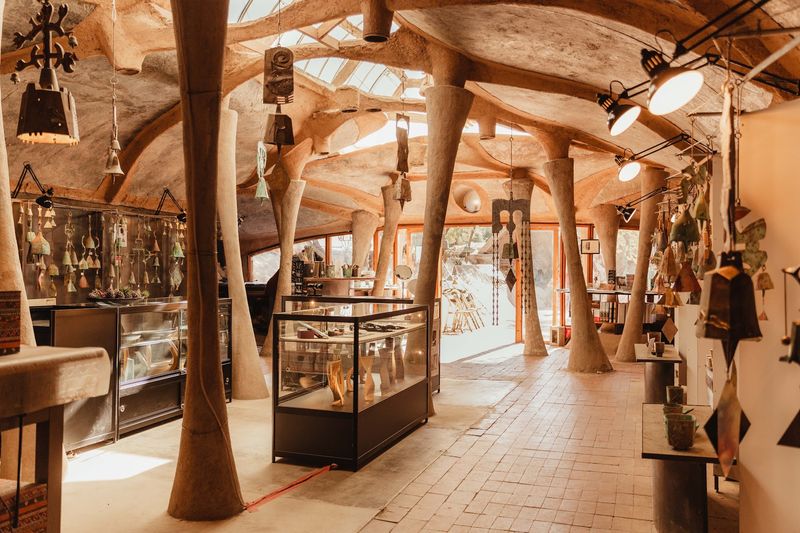
Most people walk in planning to browse and walk out carrying something wrapped in paper. The shop sits near the entrance, packed with bronze and ceramic bells hanging at every height, plus small sculptures and tiles.
Prices start around thirty dollars for a modest ceramic piece and climb into the thousands for big bronze assemblies. Staff will happily ring a few so you can compare tones before deciding.
Sales help fund the Cosanti Foundation and its ongoing work at Arcosanti up north. Ask about shipping if your bell is too heavy for a carry-on bag.
The shop is easy to linger in because every bell has its own shape, texture, and sound. I found myself comparing them much longer than I expected. Smaller pieces make an easy souvenir, while the larger bronze works feel more like serious art purchases.
Even if you are only browsing, hearing the different tones is part of the fun. It is the kind of stop where choosing one favorite can take longer than the rest of the visit.