
This Arizona Hike Leads To A 2,000-Year-Old Tree Few People Know About
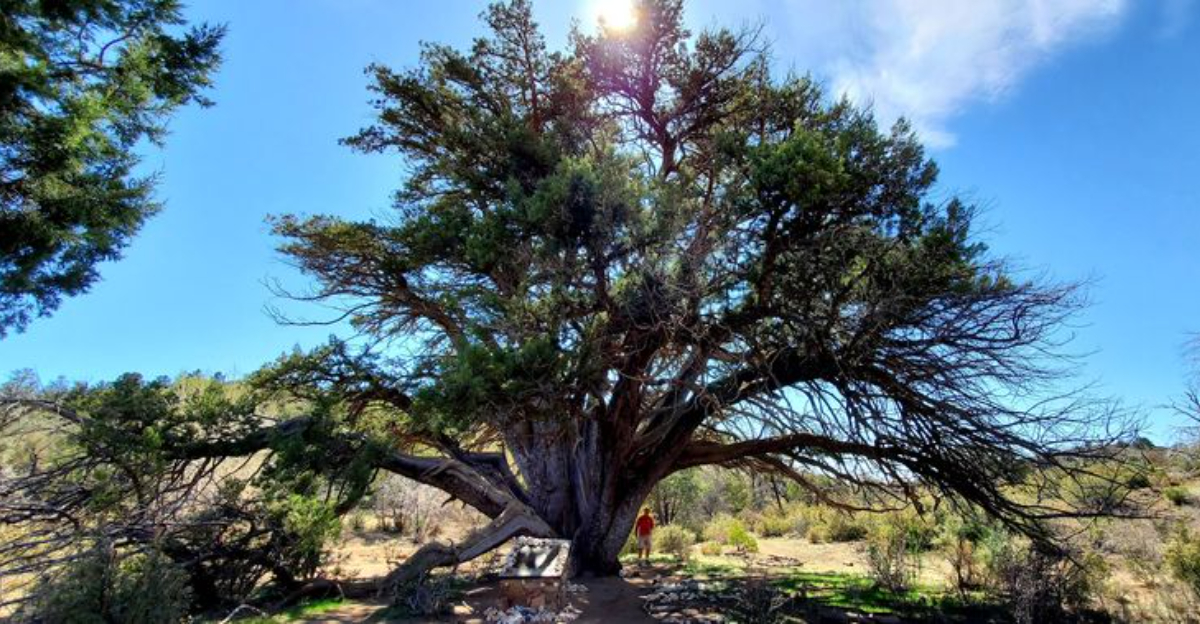
I have done enough Arizona hikes to know the loudest ones are not always the most memorable. Sometimes the place that stays with me is the quiet one, the kind where the trail feels almost secret and the payoff makes me stop walking for a second just to take it in. That is exactly the feeling here.
Instead of fighting for parking and weaving around crowds, I get to follow a quieter path toward something that has been standing for roughly 2,000 years, which is honestly hard to even wrap my head around.
There is something deeply humbling about coming face to face with a living piece of history that was already ancient long before any of us showed up with hiking shoes and water bottles. It feels dramatic in that effortless Arizona way, where the landscape does all the work and you are just lucky enough to be there to see it.
For me, this is the kind of hike that makes the whole day feel more meaningful, like I stumbled onto a place that puts everything back into perspective.
The Giant Alligator Juniper Tree Itself
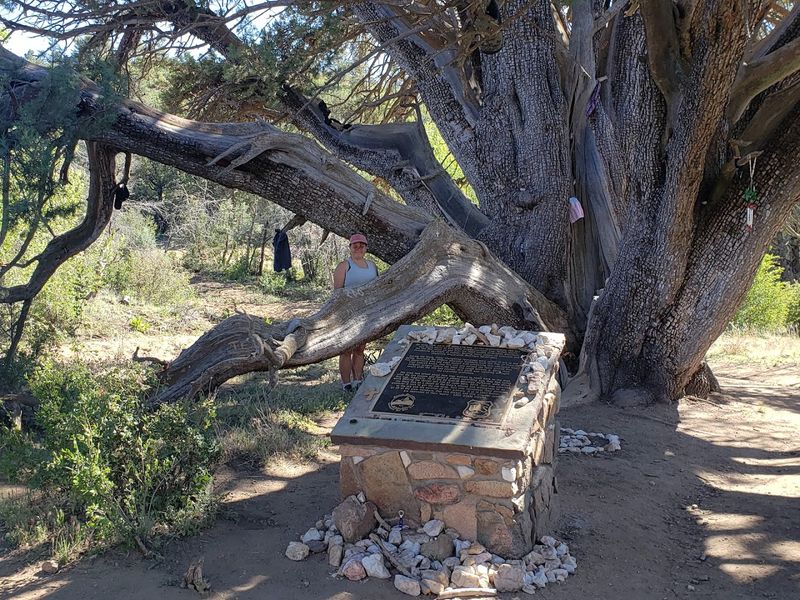
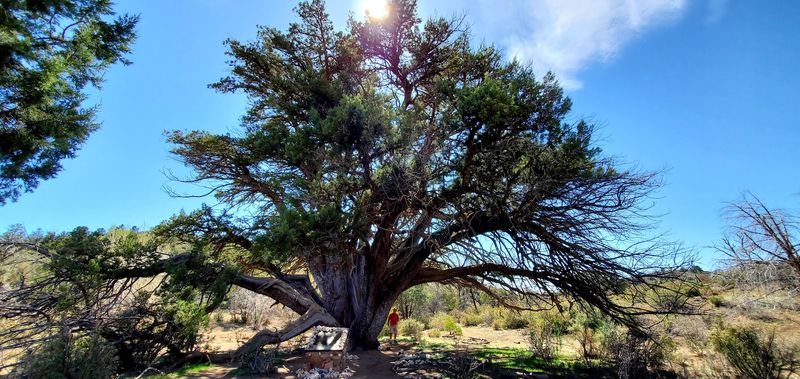
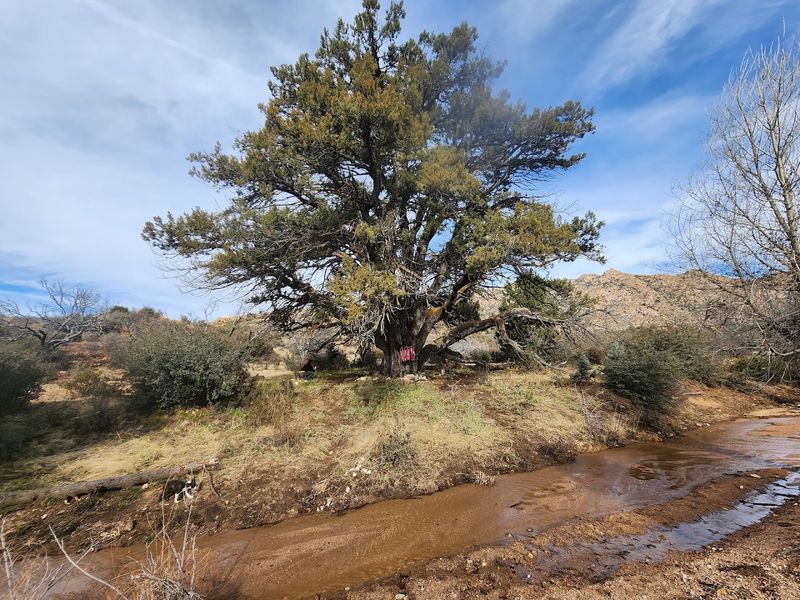
Standing in front of the Giant Alligator Juniper Tree for the first time feels like meeting a living monument. This is the largest known alligator juniper tree on the planet, and its numbers are genuinely hard to wrap your head around.
A trunk circumference of 324 inches, a height of 52 feet, and a crown spread of 70 feet make it an absolute giant by any measure.
The bark is what really grabs your attention first. It looks like the scaly hide of an alligator, broken into rough square plates that give the species its name. Up close, the texture feels ancient in a way that photos simply cannot capture.
Scientists estimate this tree sprouted around the time the Roman Empire was still growing, making every ring inside it a chapter of world history. Located near Prescott, AZ 86305, this is not just a tree worth seeing. It is a tree worth making the entire trip for.
The Giant Alligator Juniper Trail Experience
The trail that leads to this ancient tree is a 4.7-mile out-and-back route rated as moderately challenging, which means it rewards effort without punishing beginners who come prepared. The path winds through the Prescott National Forest, offering changing scenery at nearly every turn.
Granite Mountain looms in the distance for much of the hike, giving you a natural landmark to orient yourself.
You will notice the trail surface shifts between packed dirt, loose rock, and open meadow sections, so wearing proper hiking footwear makes a real difference. The elevation changes are steady rather than dramatic, giving your legs a workout without sending your lungs into full protest.
Accessible via Contreras Road, approximately 0.7 miles from Iron Springs Road, the trailhead is easy to find once you know where to look. Morning hikers tend to have the trail mostly to themselves, which makes the whole experience feel more personal and quieter.
Bring plenty of water because shade can be inconsistent along the route.
The Doce Fire Scars And Forest Recovery
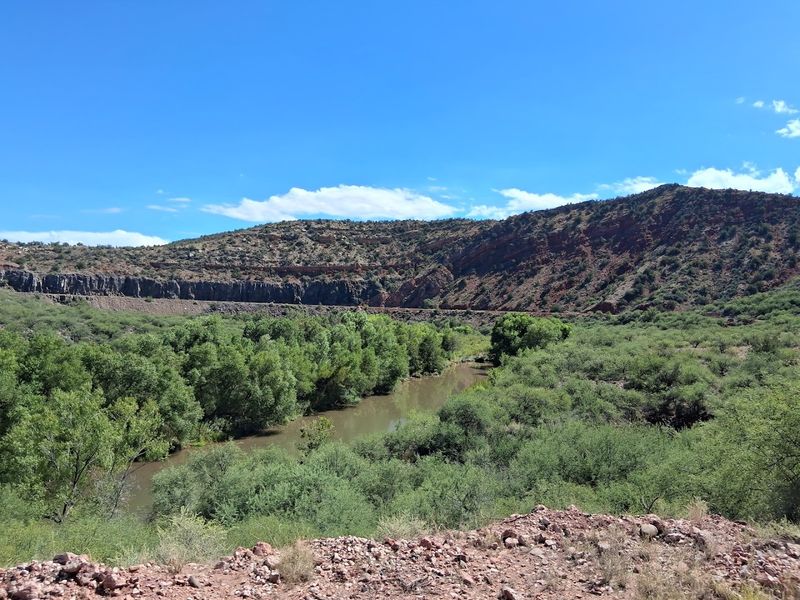
Parts of this hike tell a story of fire, survival, and slow renewal. The Doce Fire tore through this area in June 2013, and the evidence is still visible along the trail today. Charred trunks stand alongside younger growth, creating a striking visual contrast that feels both sobering and hopeful at the same time.
What makes this section of the hike fascinating is watching how the forest responds over time. New shrubs push up through the ash-darkened soil, and some trees that looked finished from the outside have sent out fresh branches from their bases.
Nature has a stubborn persistence that becomes very clear when you walk through a recovering burn zone. For younger hikers especially, this stretch of the trail opens up real conversations about wildfire ecology and how forests rebuild themselves over decades.
The Doce Fire also set the stage for the heroic effort that would define this trail’s deeper meaning, connecting the landscape to the people who risked everything to protect the ancient juniper waiting at the end.
The Granite Mountain Hotshots Memorial
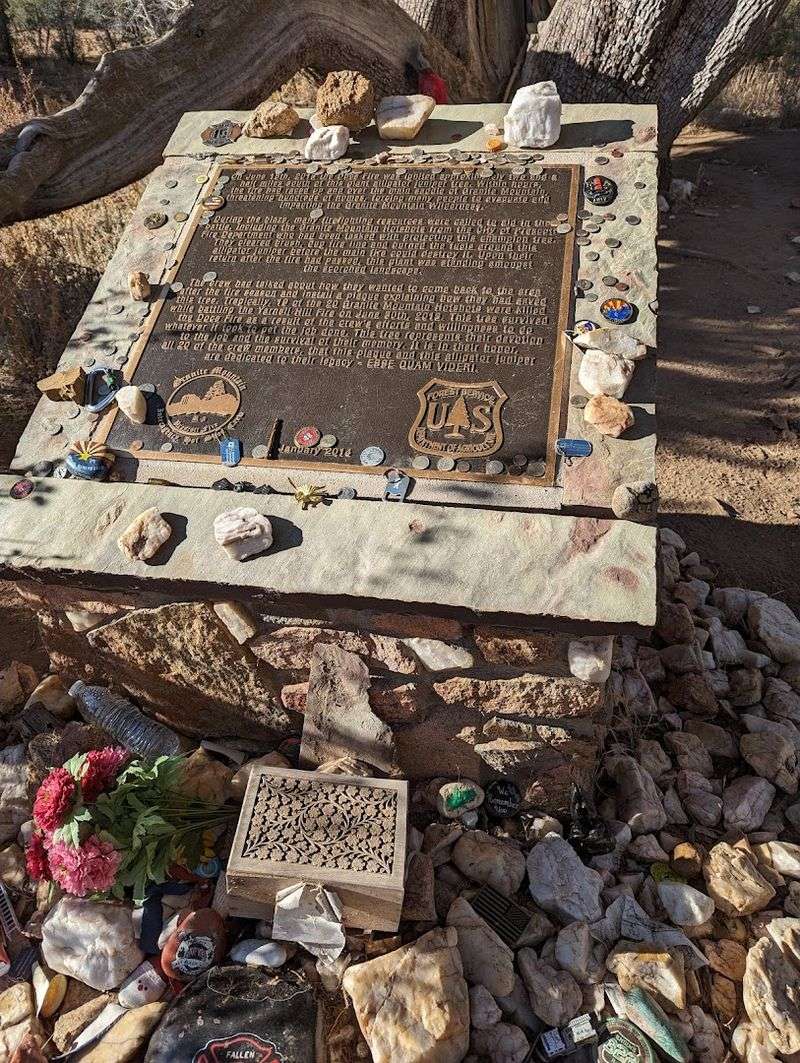
At the base of the ancient juniper, something quietly powerful waits for every hiker who makes it to the end of the trail.
A memorial honors the Granite Mountain Hotshots, an elite crew of wildland firefighters based out of Prescott who built a fire break around this very tree during the Doce Fire in June 2013, protecting it from the flames.
Just twelve days after saving the tree, nineteen members of that same crew were caught while battling the Yarnell Hill Fire. Visitors leave coins, patches, notes, and small tokens at the base of the juniper as personal tributes.
The collection of offerings grows steadily, and seeing them laid out quietly beneath those ancient branches carries a weight that is hard to shake.
This memorial transforms the hike from a simple nature walk into something far more meaningful. You are not just visiting a remarkable tree. You are standing in a place where bravery, sacrifice, and the endurance of nature all meet in one quietly powerful spot.
Practical Tips For Visiting The Hot Shot Juniper Tree
Planning ahead makes this hike significantly more enjoyable. The trail sits at an elevation where temperatures can swing sharply between morning and afternoon, so layering your clothing is a smart move regardless of the season.
Summer visits should start early, ideally before 8 a.m., to avoid the midday heat that builds quickly in the Arizona high desert. Carry at least two liters of water per person since there are no water sources along the route.
Trekking poles are optional but genuinely helpful on the rockier sections, particularly on the return leg when tired legs tend to get sloppy on uneven ground. Dogs are welcome on the trail but must stay on a leash at all times.
Cell service can be spotty near the trailhead on Contreras Road off Iron Springs Road, so downloading an offline map before you leave is worth the two minutes it takes.
The trail is open year-round, and spring and fall visits offer the most comfortable temperatures along with the best light for photography near the ancient tree.