
This Arkansas Wonder Reveals A Subterranean World Of Glistening Onyx Just Beneath Your Feet
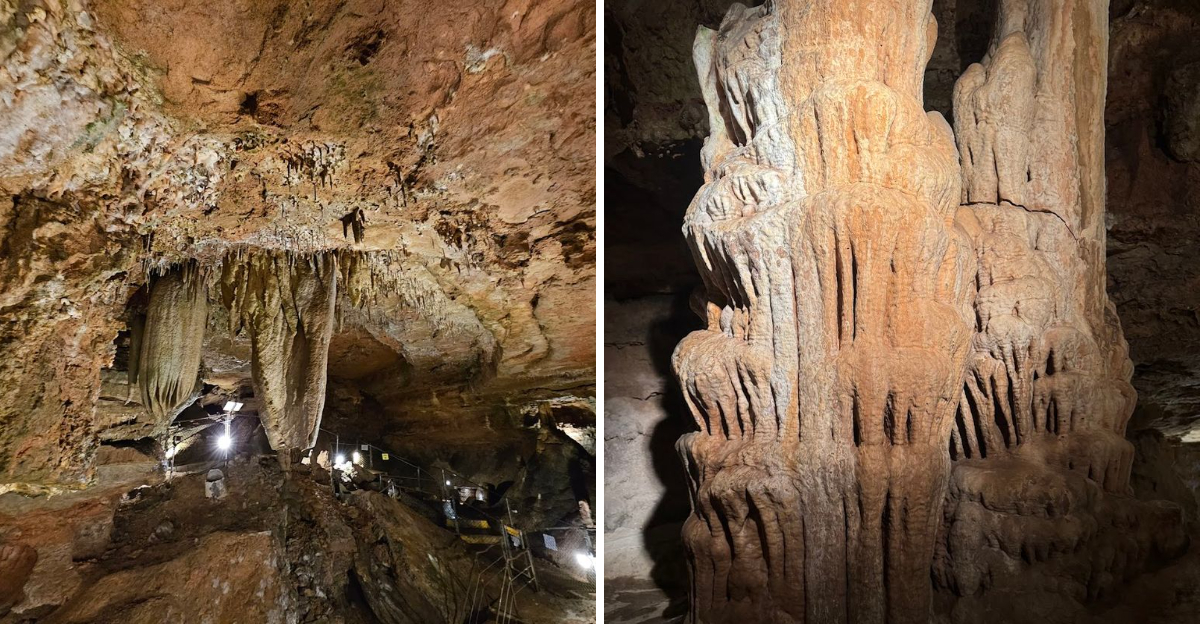
Driving through the Ozark hills near Eureka Springs, Arkansas, everything feels familiar. Rolling hills, trees, winding roads.
Then you notice the entrance. It doesn’t look especially dramatic.
Step inside anyway. Within seconds, the shift is real.
Cooler air, softer light, and walls that start reflecting like polished stone. It grabs your attention fast.
Mineral formations twist, stretch, and build into shapes that feel almost intentional, even though they formed slowly over time. It’s been open since 1893, which means generations have stood right where you are, taking that same pause.
That quiet moment of “this is actually here?” You don’t need to know anything about caves to appreciate it. Just being there is enough.
Ever pass through a place and wonder what’s happening just below the surface? This is one of those rare chances to find out.
And once you see it, you won’t look at the ground the same way again.
Ozark Hillside Entrance Concealing A Sparkling Underground Passage
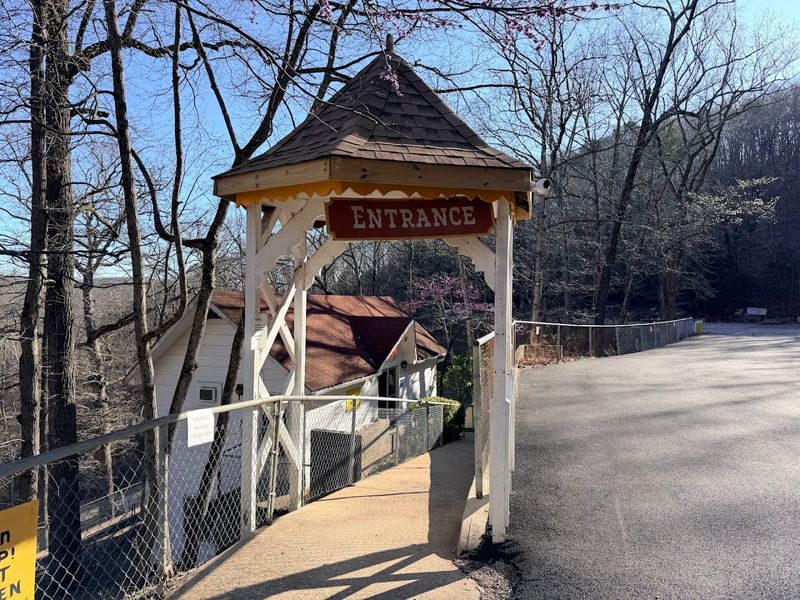
Standing at the top of the hillside path, nothing about the surrounding landscape gives away what is waiting underground.
The Ozark hills around this cave look like any other stretch of Arkansas countryside, covered in dense trees and textured with the kind of quiet that makes you slow your pace without even thinking about it.
Then the entrance appears, cut right into the earth, and the temperature immediately drops as you step inside.
That shift from warm outdoor air to cool cave atmosphere is one of those small moments that signals something genuinely different is ahead.
The approach involves a series of ramps and walkways that descend gradually toward the gift shop where tickets are purchased, and the whole setup feels intentional, like the cave is being slowly revealed rather than simply handed to you.
Visitors have noted that even the walk down to the entrance feels like part of the experience, building anticipation with every step.
The cave itself sits tucked beneath that deceptively ordinary hillside at Onyx Cave, 338 Onyx Cave Lane, Eureka Springs, AR 72632, where Arkansas keeps one of its most dazzling underground secrets.
Glossy Flowstone Layers Mimicking Polished Onyx Surfaces
Here is something that trips up almost every first-time visitor: the cave is not actually filled with true onyx.
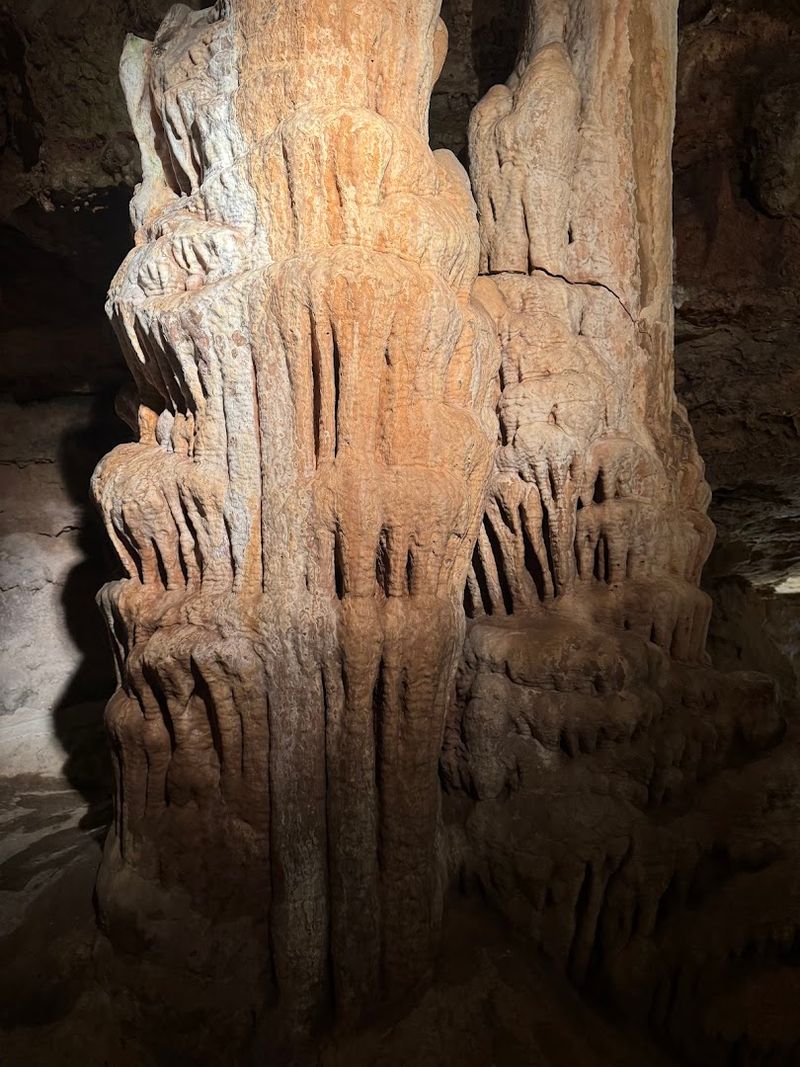
What coats the walls and floors in those gorgeous, layered sheets is called cave onyx, which is technically a type of flowstone made from calcite that has been deposited slowly by mineral-rich water over thousands of years.
The result looks remarkably like polished stone, with smooth, banded surfaces that catch the light and send it rippling across the cave walls.
Running your eyes along those glossy layers, it is easy to understand why early visitors reached for the name onyx, because the resemblance really is striking.
Flowstone forms when water carrying dissolved calcium carbonate flows across a surface and leaves behind a thin mineral film, and over time those films stack up into the thick, shiny sheets you see today.
Two of the cave’s resident cats are even named Flowstone and Onyx, which is the kind of charming detail that makes a place feel genuinely loved by the people who run it.
These glossy formations are among the most photographed features inside the cave, and honestly, the camera never quite does them justice.
Stalactite And Stalagmite Clusters Sculpted Over Millennia
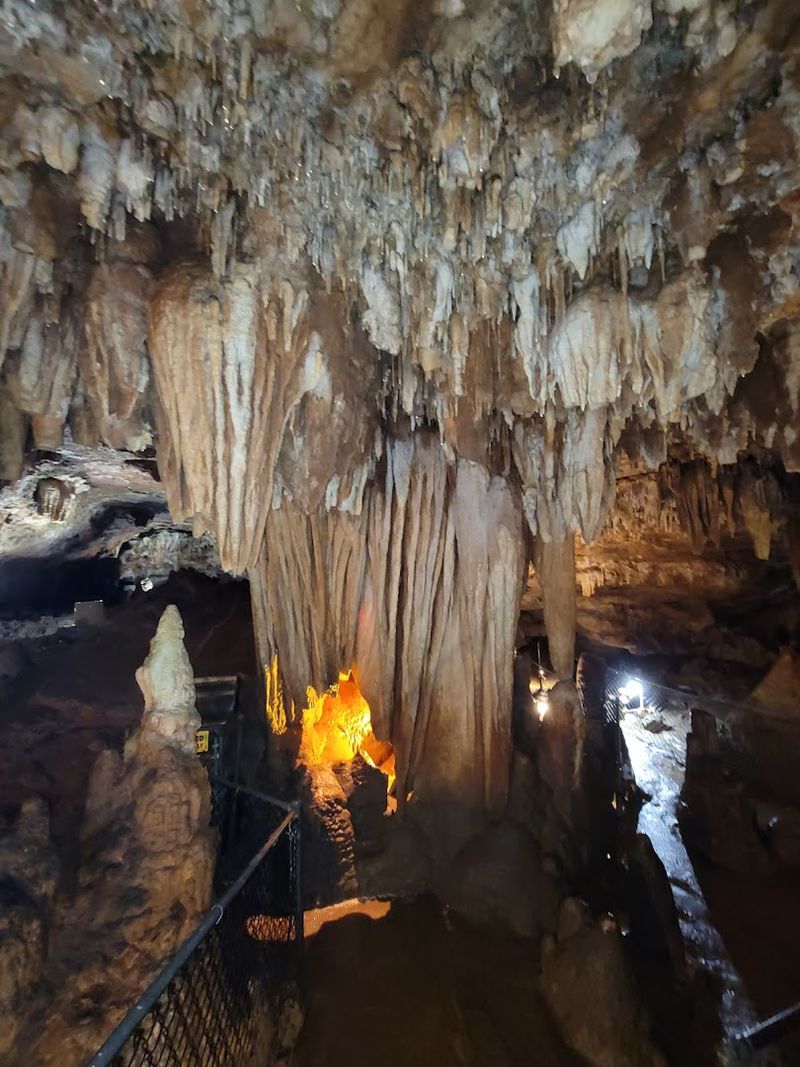
Patience is the real architect inside this cave, and the stalactites and stalagmites scattered throughout its chambers are proof of just how much time the earth has been quietly at work.
Each formation grew one microscopic mineral deposit at a time, shaped entirely by the slow drip of water carrying dissolved calcite through the limestone above.
Some of the formations here have taken centuries to reach their current size, which makes the story of the 1940s particularly sobering.
During a period when the cave was temporarily closed, vandals entered and destroyed priceless formations that had been growing for hundreds of years, reducing in seconds what nature had spent ages building.
That history adds a layer of meaning to every formation still standing, because the ones you see today represent both natural patience and the careful stewardship of the people who have protected the cave since.
Guides often point out specific formations with memorable nicknames like the Friendly Dragon and the Witches Fireplace, which help visitors connect emotionally with shapes that might otherwise just blur together.
Spotting those named formations becomes a small game, and it keeps the tour feeling lively from the first chamber to the last.
Narrow Guided Walkways Winding Through Illuminated Chambers
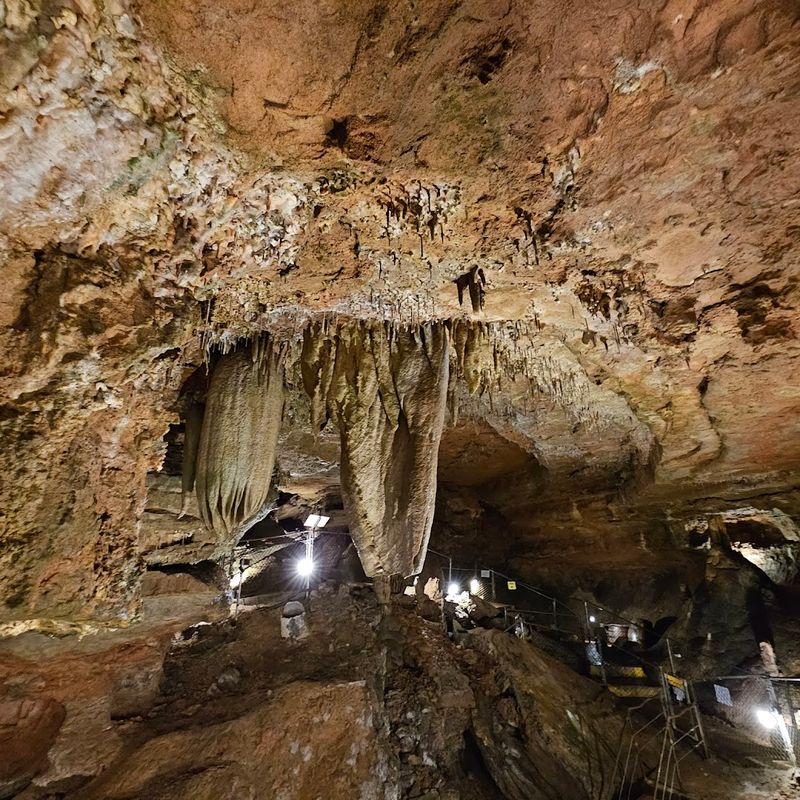
A walk through the interior of this cave feels a bit like following a trail that the rock itself designed, because the path curves and dips according to whatever space the geology allowed.
The walkways are narrow in places, particularly through the first section of the cave where formations cluster densely along both walls and the ceiling hangs low enough to remind you that you are very much a guest in someone else’s house.
Audio headsets guide visitors through the self-guided portion of the tour, with narration keyed to points along the route, so you can linger as long as you like at each point without feeling rushed.
That flexibility is something families with young kids especially appreciate, since there is no pressure to keep pace with a group.
For those who want a deeper look, an added guided-access tour reaches parts of the cave beyond the standard self-guided route, opening up chambers that are not included in the main experience.
The expanded access areas often stand out as a highlight of the whole experience, worth every bit of the modest additional cost.
The combination of audio narration and optional guided access creates a tour format that feels genuinely well thought out rather than just cobbled together.
Cool Stable Temperatures Offering Relief From Summer Heat
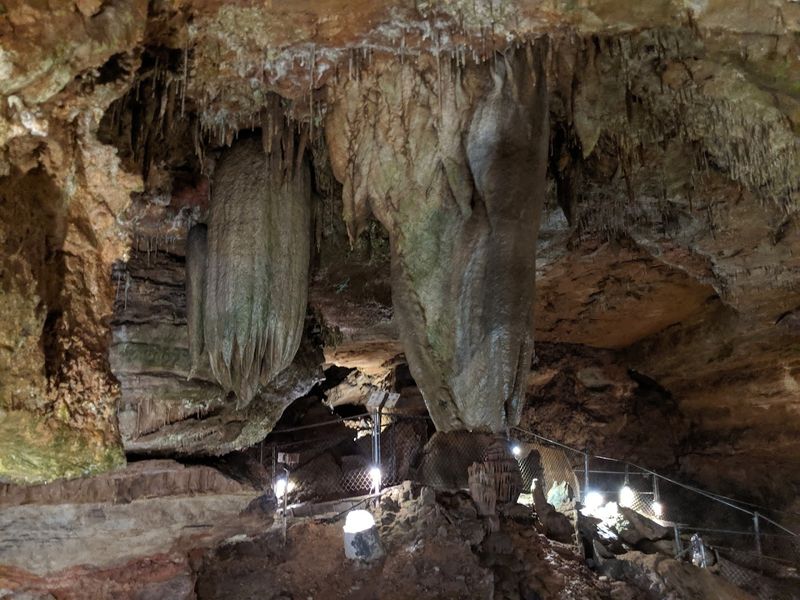
Stepping into this cave on a hot Arkansas summer afternoon feels like the earth itself decided to do you a favor.
The temperature inside holds steady at 57 degrees Fahrenheit year-round, which means no matter how brutal the heat outside gets, the cave stays reliably cool without any mechanical help at all.
That consistency is actually a geological feature rather than a coincidence, because caves of this type are insulated by the surrounding rock mass, which buffers them against seasonal temperature swings above ground.
In practical terms, it means you will want to bring a light layer even in July, because 57 degrees feels noticeably chilly after a few minutes, especially if you have been sweating on the walk down.
Visitors who come in winter find the cave feels almost warm by comparison to the cold air outside, which gives the temperature trick a fun seasonal flip.
The cave’s stable climate also supports a small ecosystem of bats, salamanders, and blind cave fish that have adapted specifically to these unchanging underground conditions.
That living community inside the rock adds a dimension to the visit that goes well beyond just looking at pretty mineral formations on the walls.
Early Public Tours Establishing A Long Running Attraction
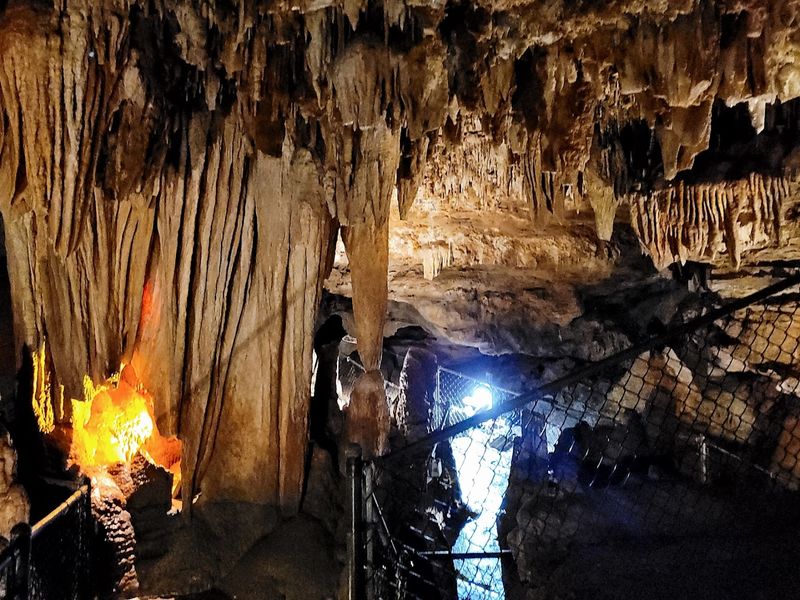
Few places in Arkansas carry as much historical weight per square foot as this particular stretch of underground passage.
Onyx Cave has been open to the public since 1893, which makes it the oldest show cave in the state and one of the longer-running tourist attractions in the entire region.
That kind of longevity means generations of Arkansas families have walked the same narrow passages, stood under the same stalactites, and felt that same drop in temperature on the way in.
Over the decades, changes in the cave’s formations can be seen, and guides point out areas where those differences are visible in the rock.
In 1969, the cave earned a small piece of pop culture history when it was used as a filming location for the B-movie called It’s Alive, which leaned hard into the cave’s naturally eerie atmosphere.
That film credit is one of those quirky footnotes that guides seem to enjoy sharing, and it often gets a reaction from visitors who appreciate a little unexpected trivia.
More than a century as a public attraction is a remarkable record for any destination, and this cave carries that history without making a fuss about it.
Compact Passageways Packed With Dense Mineral Formations
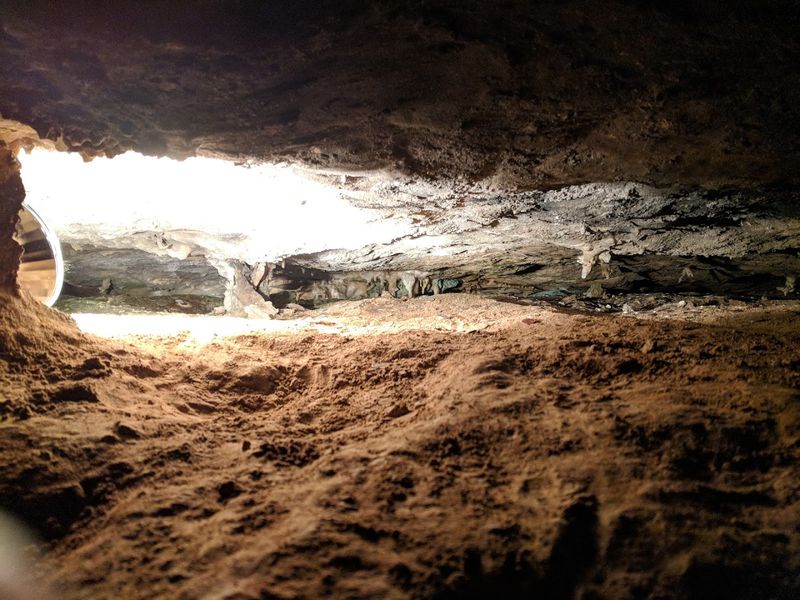
Tight spaces and spectacular geology turn out to be a surprisingly good combination inside this cave.
The compact nature of the passageways means that formations are never far from your face, and the density of mineral deposits along the walls gives even a short stretch of corridor a lot to look at.
Helictites, which are small, twisting mineral growths that seem to defy gravity by curving in unexpected directions, appear in sections of the cave and tend to stop visitors mid-stride because they look almost impossibly delicate.
Boxwork formations, which are extremely rare in caves worldwide, have also been documented here, adding a geological distinction that serious cave enthusiasts find genuinely exciting.
The cave is not enormous by the standards of famous caverns elsewhere in the country, but what it lacks in sheer scale it compensates for with the sheer variety and density of what is packed into its relatively modest footprint.
It is often described as a good beginner cave, and that framing actually captures something true: everything is accessible, well-lit, and close enough to appreciate without needing to peer from a distance.
Compact does not mean limited here, it just means the wonders are closer to your face than you might expect.
Careful Lighting Accentuating Textures And Natural Patterns
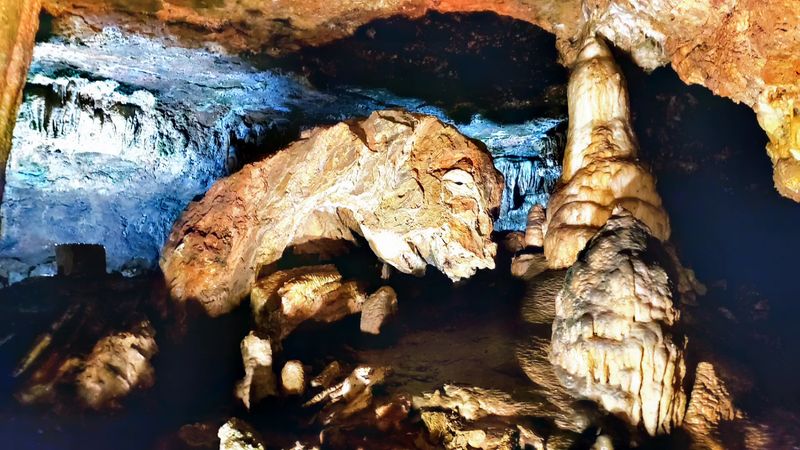
Good cave lighting is an art form that most visitors never consciously notice, which is actually the highest compliment you can pay to whoever designed it.
Inside this cave, the installed lighting is positioned to throw shadows across textured surfaces and highlight the banding in flowstone layers, turning what might otherwise look like plain rock into something that feels almost theatrical.
Black light effects appear in certain sections and cause calcium deposits to glow in ways that genuinely surprise visitors who are not expecting it, including people who have toured other caves and thought they had seen everything the underground had to offer.
Even those familiar with caves featuring dedicated black light displays often find the effect here unexpectedly striking, which speaks to how well it is executed.
The lighting also serves a practical purpose by keeping the walkways clearly visible without flooding the cave with harsh brightness that would flatten the natural textures on the walls.
Photography inside the cave is a genuinely rewarding challenge because the light creates interesting contrasts that a smartphone camera can sometimes capture in surprisingly vivid detail.
Every corner of this cave feels considered, and the lighting is a big part of why the experience feels curated rather than just functional.