
This Blue Ridge Trail In South Carolina Leads To Ghost Tunnels
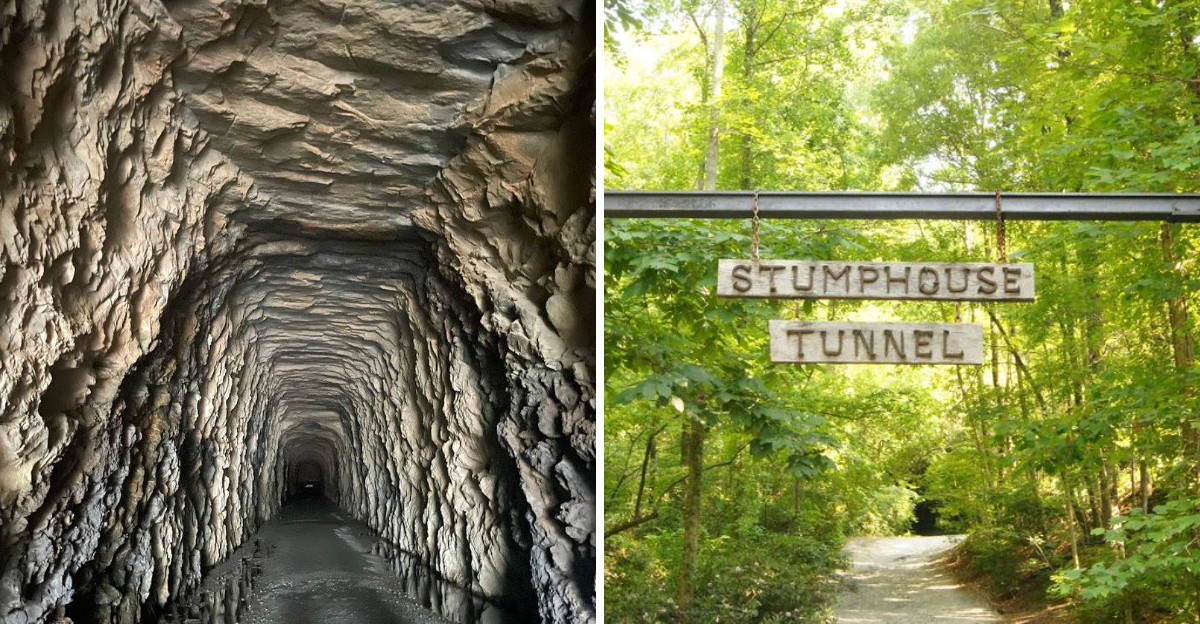
You don’t expect to see something like this on a quiet trail in South Carolina, but then the trees open just enough.
At first, it feels like any other walk. Shade, cool air, a path that doesn’t give much away.
Then the shape starts to appear ahead of you, and you realize this isn’t just another stop.
Cut into the rock of South Carolina, this tunnel looks like something that was started and never meant to be found again.
The entrance is wider than you expect, darker too. Water drips steadily from the ceiling, the temperature drops, and the space feels untouched in a way that stands out immediately.
People slow down without being told. Some step inside.
Others pause at the edge, taking it in before deciding how far they want to go.
It’s not just the size of it. It’s the feeling that it was left behind, exactly as it was.
The Unfinished Dream Behind The Tunnel
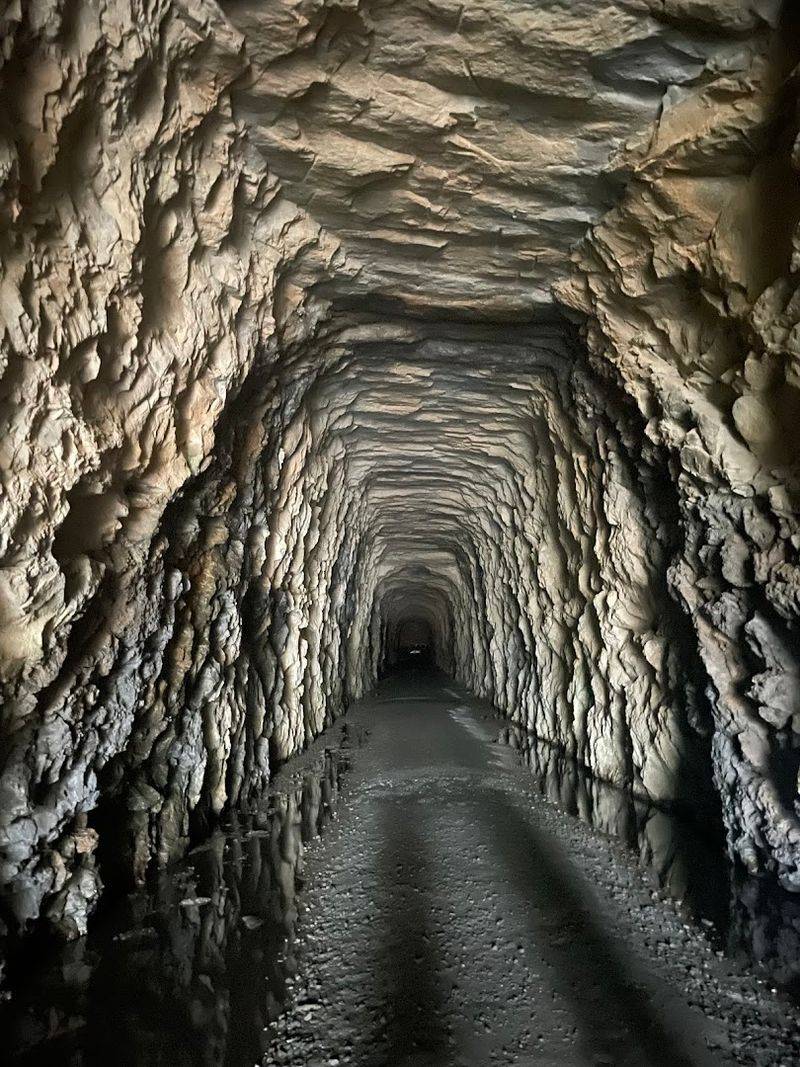
Before a single train ever rolled through it, Stumphouse Tunnel was already a story of ambition meeting reality head-on.
Construction began in 1856 as part of the Blue Ridge Railroad’s plan to connect Charleston, South Carolina, to the Midwest by cutting straight through the Appalachian Mountains.
Workers, many of them Irish immigrants, spent years chipping through solid granite by hand, using black powder to blast through rock that refused to cooperate easily.
The project called for a tunnel stretching 1,617 feet through the mountain, which was an enormous engineering challenge for the era.
Funding dried up before the tunnel could be completed, and the Civil War delivered the final blow to any hopes of finishing the work.
What remains today is about 1,600 feet of raw, hand-carved tunnel that was never used for its intended purpose, making it one of the most hauntingly beautiful construction failures in the entire American South.
Where Exactly You Can Find It
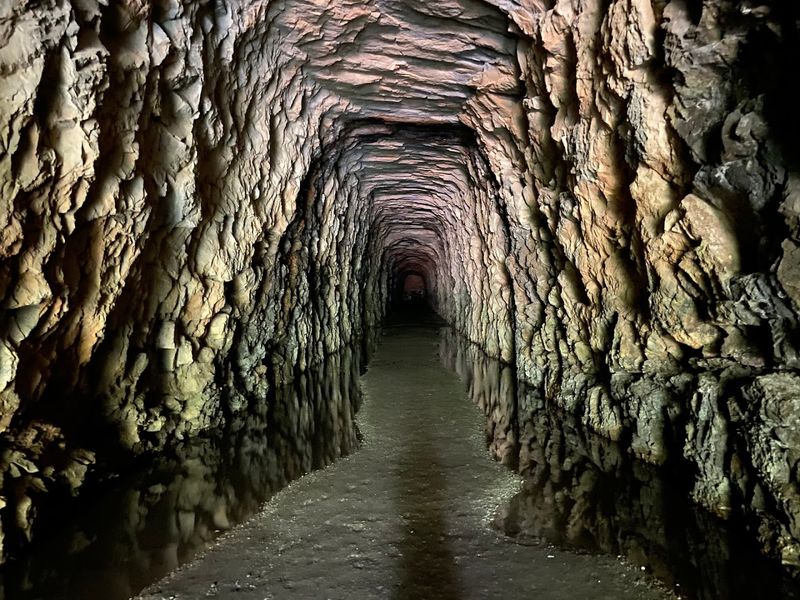
Finding Stumphouse Tunnel is half the fun, especially if you enjoy scenic drives through mountain towns that feel like they belong to a slower, quieter century.
The tunnel is located at Stumphouse Tunnel Rd, Walhalla, SC 29691, nestled in Oconee County just a few miles north of the charming town of Walhalla itself.
Walhalla sits in the upstate region of South Carolina, close to the Georgia border and within easy driving distance of Clemson and Greenville.
The surrounding area is part of the broader Blue Ridge foothills, so the landscape rolling up to the trailhead is already gorgeous before you even step out of the car.
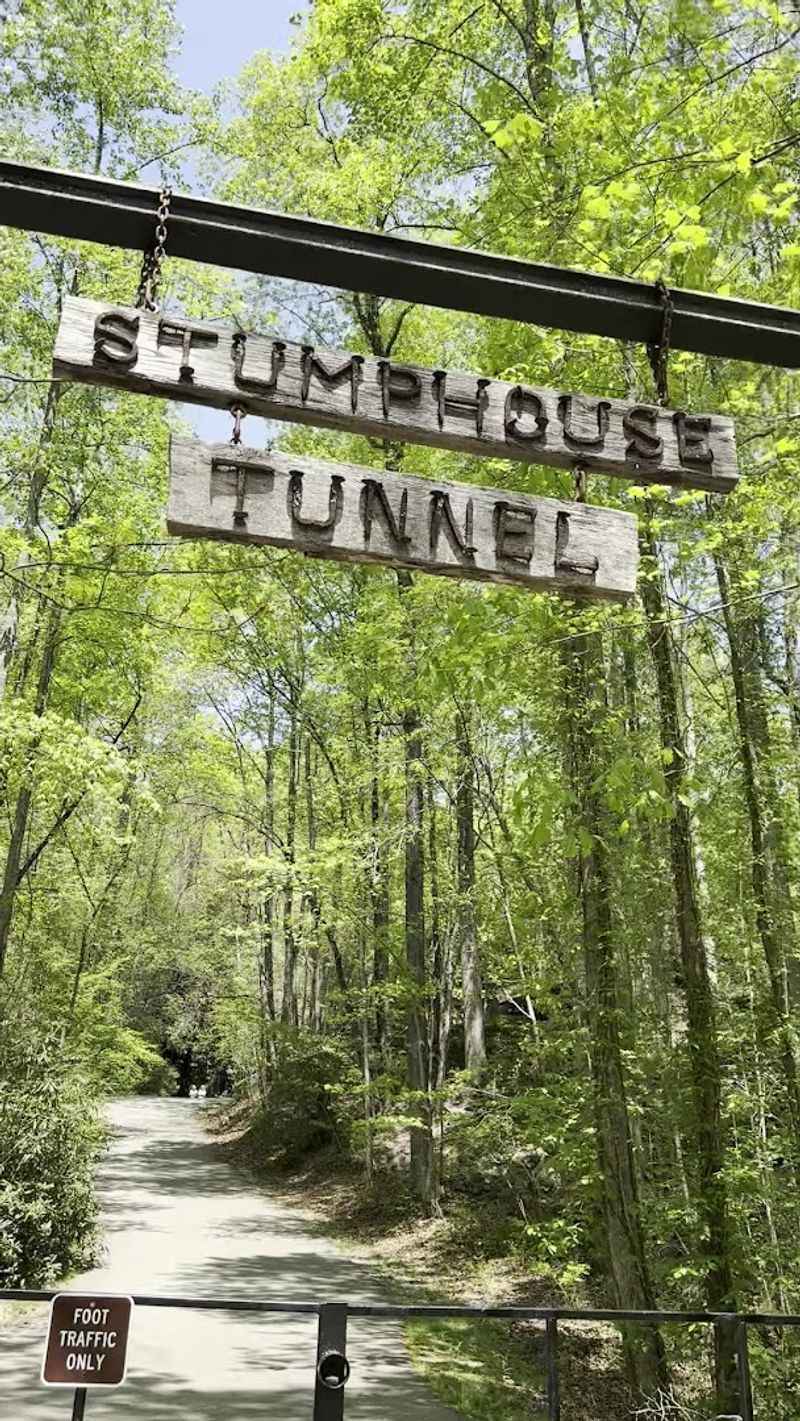
Parking is available near the entrance, and the short walk to the tunnel follows a well-maintained path through tall hardwood trees that shade you nicely on warm days.
Once you spot the stone archway ahead through the trees, you will know immediately that the drive was completely worth it.
The Sheer Scale Of The Stone Archway
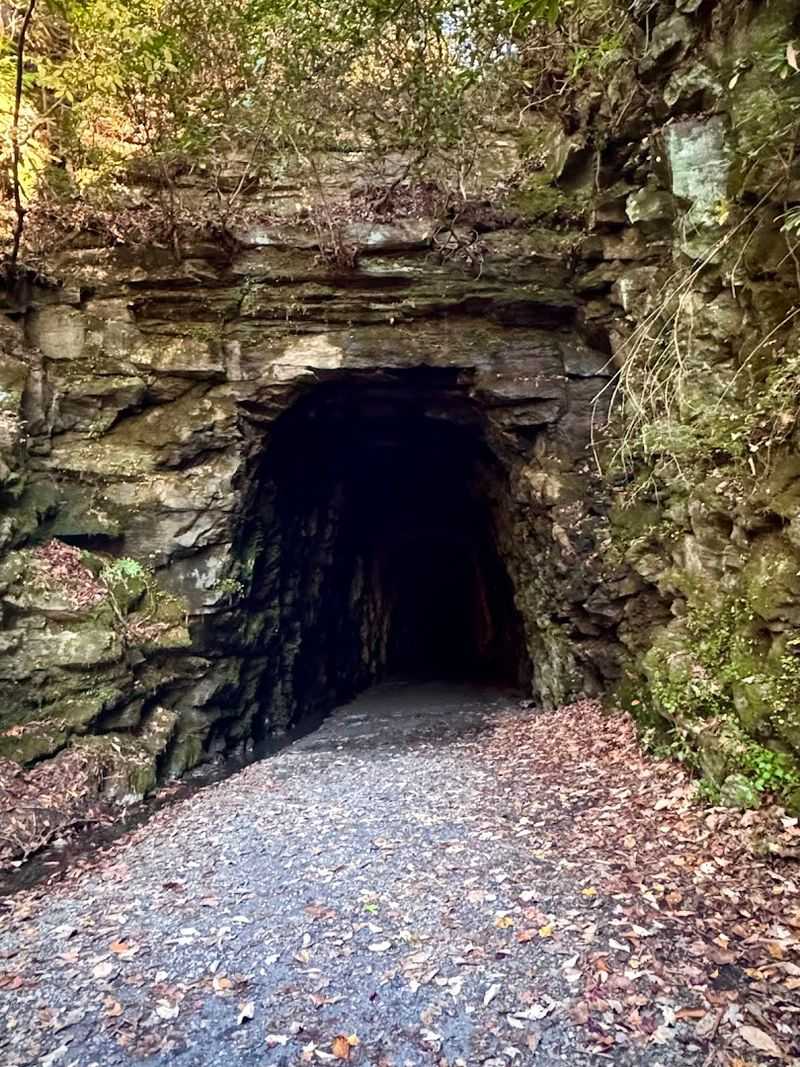
Standing at the entrance of Stumphouse Tunnel for the first time, I genuinely had no idea the opening would be so impressively large.
The arched entrance rises about 17 feet high and stretches roughly 14 feet wide, all framed by carefully laid stone that workers fitted together without modern machinery.
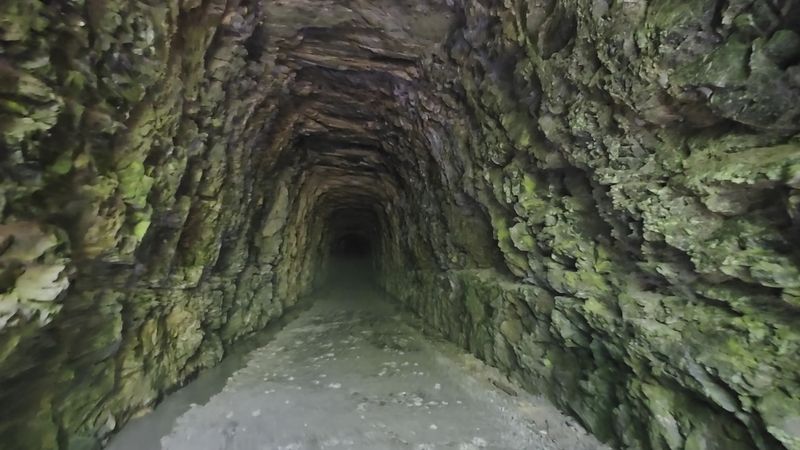
The granite walls inside the tunnel are rough and uneven, showing the marks of hand drills and blasting powder used by laborers more than 160 years ago.
Water seeps constantly through the ceiling and walls, creating a steady drip that echoes through the dark interior and adds to the tunnel’s mysterious atmosphere.
Temperatures inside hover around 50 degrees Fahrenheit year-round, making it feel shockingly cold even on a blazing summer afternoon.
Carrying a flashlight or turning on your phone light is a smart move, because the tunnel plunges into total darkness just a short distance from the entrance, and the effect is genuinely dramatic.
How Irish Immigrants Built It By Hand
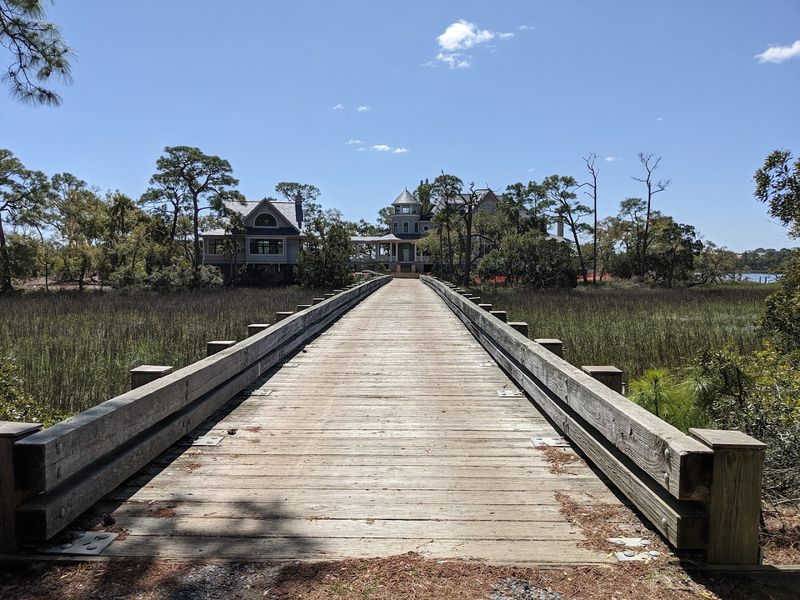
There is something deeply moving about knowing that the tunnel was carved almost entirely by hand by Irish immigrant workers in the mid-1800s.
Hundreds of laborers were brought in to do the backbreaking work, using hand drills, black powder charges, and sheer determination to cut through some of the hardest rock in the Appalachians.
Progress was slow and dangerous, averaging only about 7 inches of tunnel per day through the solid granite mountain, according to historical records from the period.
Workers lived in temporary camps near the construction site, far from the nearest towns, in conditions that were rough even by the standards of that era.
The physical demands of the job were extreme, and the isolation of the mountain location made the work even harder to sustain over time.
Today, walking through the tunnel and running your hand along those rough granite walls, you feel a real connection to the people whose labor shaped every inch of it.
The Cheese Cave Chapter Nobody Expects
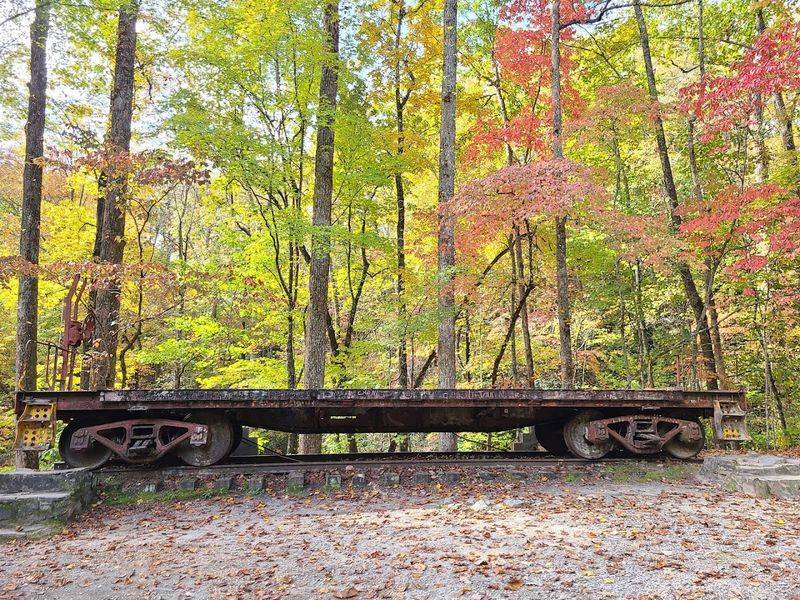
Here is a fact that tends to make people blink twice: Stumphouse Tunnel was once used to age blue cheese.
After the Civil War left the tunnel permanently abandoned as a railroad project, Clemson University researchers discovered in the 1940s that the tunnel’s constant cool temperature and high humidity created near-perfect conditions for aging Roquefort-style cheese.
Clemson began producing its own version of blue cheese inside the tunnel, and the product became well-known enough to earn a loyal following across the region.
The university eventually moved its cheese-aging operation to a more controlled facility on campus, but the tunnel’s brief career as a cheese cave remains one of the most delightfully unexpected stories in South Carolina history.
Clemson Blue Cheese is still produced and sold today, carrying on a tradition that started in a mountain tunnel that was supposed to carry trains.
You can actually buy it at the Clemson University dairy, which makes for a fun souvenir connected directly to this trail.
Isaqueena Falls Just Steps Away
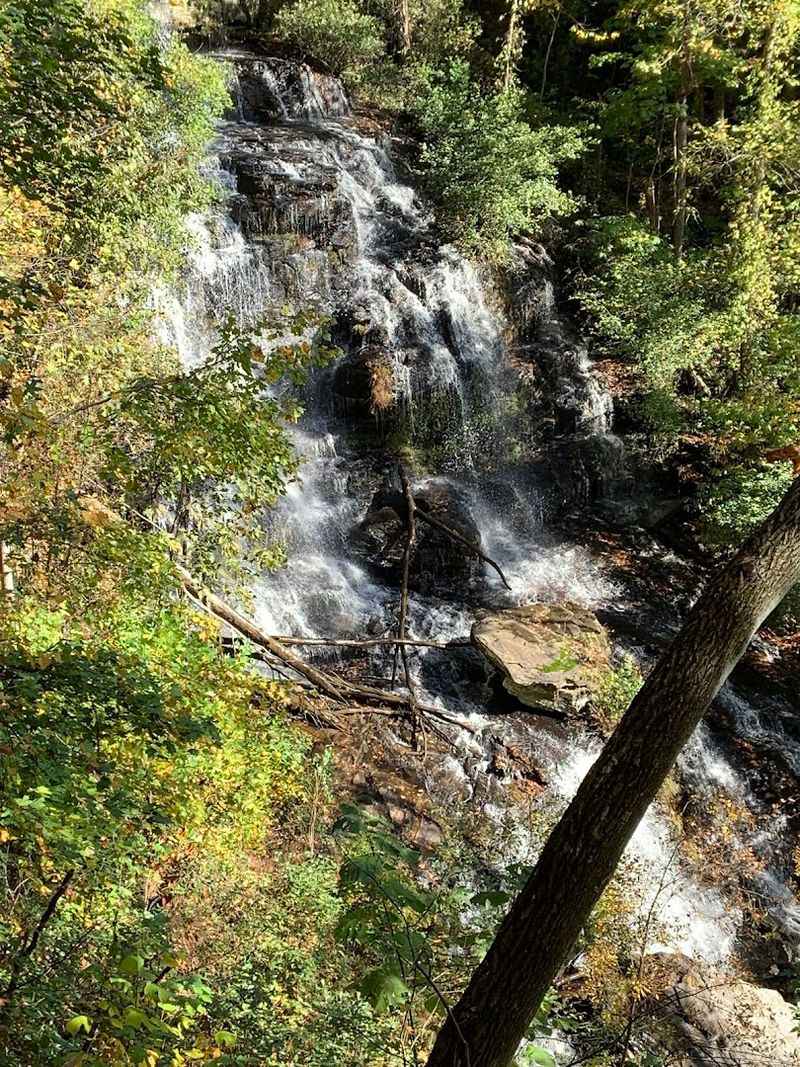
One of the best surprises waiting near Stumphouse Tunnel is a waterfall that most first-time visitors do not even know exists until they arrive.
Isaqueena Falls is located just a short walk from the tunnel entrance, tumbling down a dramatic rocky face into a creek below in a setting that looks almost too picturesque to be real.
The falls drop about 200 feet in a long, graceful cascade that changes character depending on recent rainfall, sometimes roaring with power and other times flowing in a quieter, more delicate stream.
The overlook platform near the falls gives you a solid view without requiring any technical hiking skills, making it accessible for visitors of nearly all fitness levels.
Local legend says the falls are named after a Cherokee woman named Isaqueena, who reportedly leaped from the cliff to escape pursuers, though historians debate the details of the story.
Pairing the tunnel with the waterfall makes for one of the most satisfying short hikes in all of upstate South Carolina.
The Trail Experience From Start To Finish
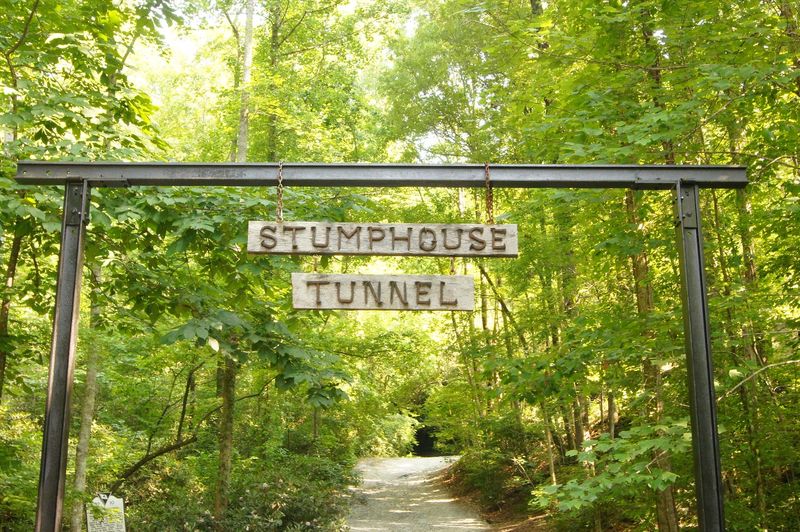
The trail to Stumphouse Tunnel is short, accessible, and rewarding in a way that makes it ideal for families, casual hikers, and history lovers all at once.
From the parking area, the path to the tunnel entrance is roughly a quarter mile, mostly flat, and well-marked with signage that gives you helpful historical context as you walk.
The forest surrounding the trail is a mix of hardwoods and pines, and depending on the season, you might walk through a canopy of golden leaves or an explosion of spring wildflowers along the path edges.
The sound of Cane Creek nearby adds a pleasant background soundtrack to the whole walk, and the air carries that clean, cool dampness that is so typical of the Blue Ridge foothills.
Extending your visit to include Isaqueena Falls adds only a bit more distance, keeping the total round trip well under two miles for most visitors.
The trail rewards a slow, curious pace far more than a rushed one, so plan to linger and soak in every detail.
Why People Call It A Ghost Tunnel
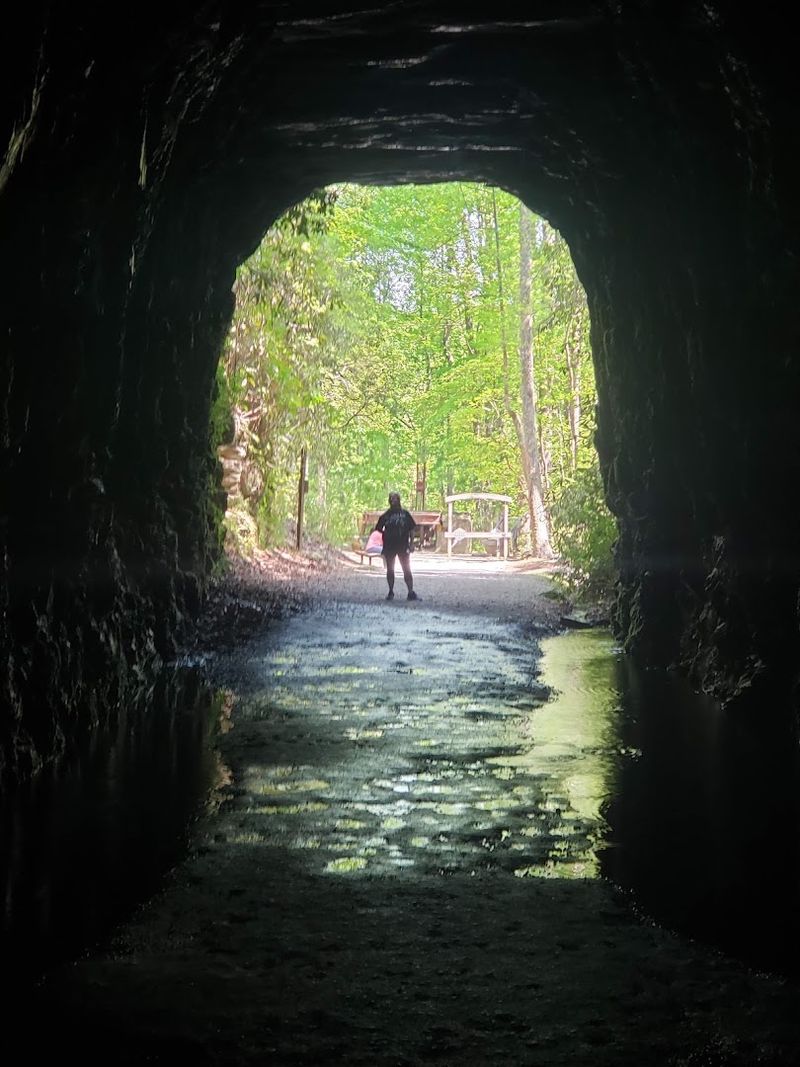
The nickname “ghost tunnel” did not come from any official source, but it fits Stumphouse Tunnel so perfectly that it has stuck around for generations.
Part of the ghostly reputation comes from the tunnel’s unfinished state, the sense that something was left incomplete and abandoned mid-sentence, frozen in time like a project the mountain simply swallowed.
The constant dripping water, the near-total darkness just inside the entrance, and the way sound behaves strangely in the stone chamber all contribute to an atmosphere that is genuinely eerie without being manufactured.
Local stories have circulated for decades about odd sounds and flickering lights inside the tunnel, though most of these are likely the result of acoustics and the way cold air moves through the passage.
Even on a sunny afternoon with a crowd of visitors around, stepping a few feet past the entrance into the dark makes your imagination work overtime.
The tunnel earns its ghostly reputation honestly, through atmosphere alone rather than any special effects.
Best Times To Visit And What To Bring
Timing your visit to Stumphouse Tunnel makes a real difference in how enjoyable the experience turns out to be.
Spring and fall are widely considered the best seasons, with spring bringing wildflowers and rushing waterfalls from snowmelt, while fall drapes the surrounding forest in warm shades of orange, red, and yellow.
Summer visits are perfectly fine but can feel crowded on weekends, especially since the cool tunnel interior becomes a popular escape from the heat of upstate South Carolina summers.
Weekday mornings offer the most peaceful experience, giving you more time to stand quietly at the tunnel entrance without a crowd pressing in around you.
A flashlight or headlamp is absolutely essential since the tunnel interior goes pitch dark quickly, and the ground can be slippery from moisture.
Wearing layers is a smart call since the outside temperature might be warm while the tunnel interior stays a steady 50 degrees, and that contrast catches many visitors off guard.
Why This Place Deserves A Spot On Your Travel List
Not every travel destination needs a resort, a gift shop, or a long list of amenities to be genuinely worth the trip, and Stumphouse Tunnel proves that point beautifully.
The combination of rugged history, natural beauty, a waterfall, and an atmosphere unlike anything else in the region makes this one of those places that stays with you long after you leave.
It appeals to hikers who want a quick but meaningful outing, to history enthusiasts drawn by the railroad story, and to anyone who simply wants to stand in a place that feels truly different from everyday life.
The fact that admission is free keeps the experience accessible for families and solo travelers alike, removing any barrier between you and one of South Carolina’s most unusual landmarks.
Located at Stumphouse Tunnel Rd, Walhalla, SC 29691, this trail sits within easy reach of other Oconee County attractions, making it a natural anchor for a full day of Blue Ridge exploration.
Few places pack this much history, mystery, and natural beauty into such a short and easy walk.