
This Burlington Supper Club Preserves a Long-Running Friday Fish-Fry Tradition
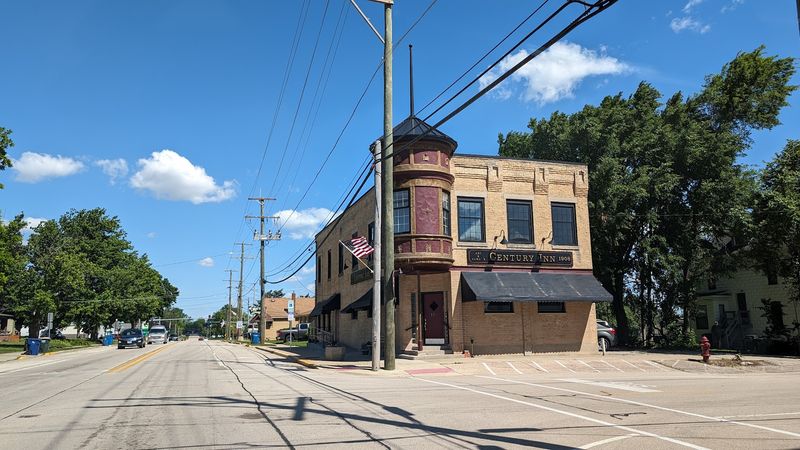
Tucked into the small town of Burlington, Illinois, Art & Alma’s Supper Club and Saloon has spent decades earning a reputation for its Friday fish fry. The building at 125 N.
Main St. has housed a bar or restaurant since 1908, making it one of the longest-running dining spots in Kane County. After a brief closure and a careful reopening in late 2023, the supper club is drawing visitors who want a meal that feels connected to something real and local.
A Burlington landmark predates the Art & Alma’s name
Burlington, Illinois is not a town that shows up on most restaurant maps, but at 125 N. Main St. there is a building that has quietly outlasted trends, ownership changes, and a century of small-town history.
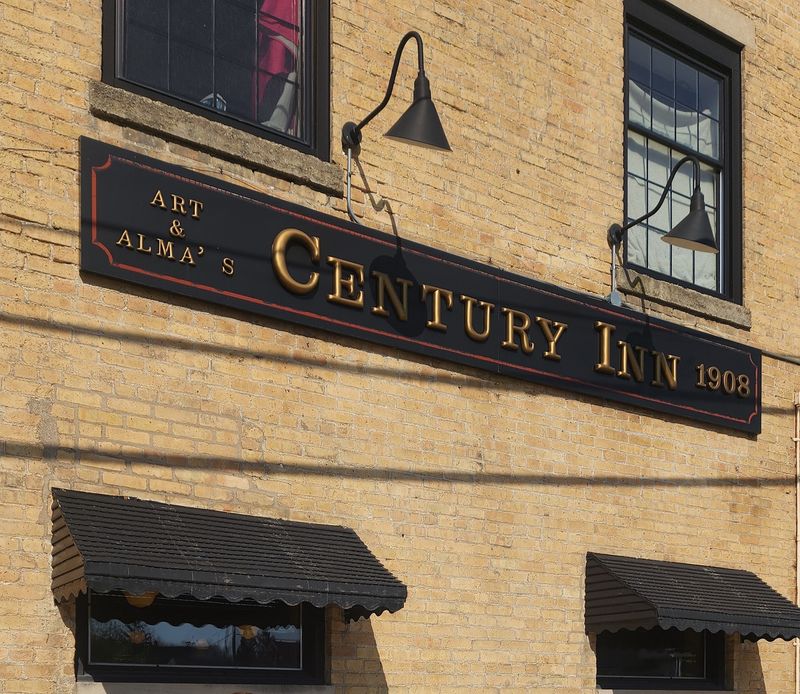
The restaurant’s own history page notes that the site operated as a bar or restaurant as far back as 1908, beginning as Rulhausen’s Tavern. That origin date tells you something about the building’s place in the community, though it does not mean Art & Alma’s has carried its current name since the early twentieth century.
The name Art & Alma’s traces to the ownership era of Art and Alma Stark, who took over the property sometime in the 1970s and gave the restaurant the identity it still carries today. Terry Kupp then ran the business from 1987 through 2022, a stretch of more than three decades that cemented the supper club’s reputation among regulars in Kane and Kendall counties.
Kupp’s long tenure is a significant part of why the place feels deeply familiar to so many returning visitors.
The restaurant closed in 2022 and sat quiet for more than a year before Illinois Crafted Hospitality acquired the business, its recipes, and its history, reopening in December 2023. The Daily Herald described the transition as a change in ownership that left almost everything else recognizable.
Framing the property accurately matters here: the building’s age as a bar and restaurant since 1908 is real and worth honoring, but that history belongs to the site itself, not to any single name or owner who operated within it.
The record confirms a long-running Friday specialty
Pinning down exactly when Art & Alma’s started serving a Friday fish fry is harder than the restaurant’s reputation might suggest. What the written record does confirm is that the tradition was already well established by 2010, when My Sunday News documented the restaurant’s Friday fish fry as a popular feature and specifically called out skillet-fried Canadian walleye as the Friday specialty.
That detail matters because it connects a named dish to a documented date, giving the tradition a traceable anchor rather than a vague origin story.
Walleye is not a fish you find at every neighborhood bar. Sourcing Canadian walleye for a weekly special reflects a deliberate menu choice, and its appearance in a 2010 write-up suggests the kitchen had already built a routine around it.
Whether the preparation, batter, supplier, or portion size stayed identical across every subsequent year is not something the available sources can verify. What can be said honestly is that the fish fry has been part of Art & Alma’s documented identity for at least fifteen years, spanning multiple ownership eras.
That span is meaningful even without proof of a single unbroken recipe. Restaurants that keep a weekly specialty on the menu through ownership transitions and a full closure are doing something more intentional than habit.
The fish fry survived not because no one noticed it, but because successive owners and regulars treated it as something worth keeping. Whether you call that tradition, continuity, or simply good business sense, the Friday walleye has earned its place at the center of the restaurant’s weekly rhythm.
Historic details create the time-capsule feeling
Walking into Art & Alma’s, the room does a lot of the storytelling before anyone says a word. The original bar, built when the property first opened in 1908, still anchors the saloon side of the space.
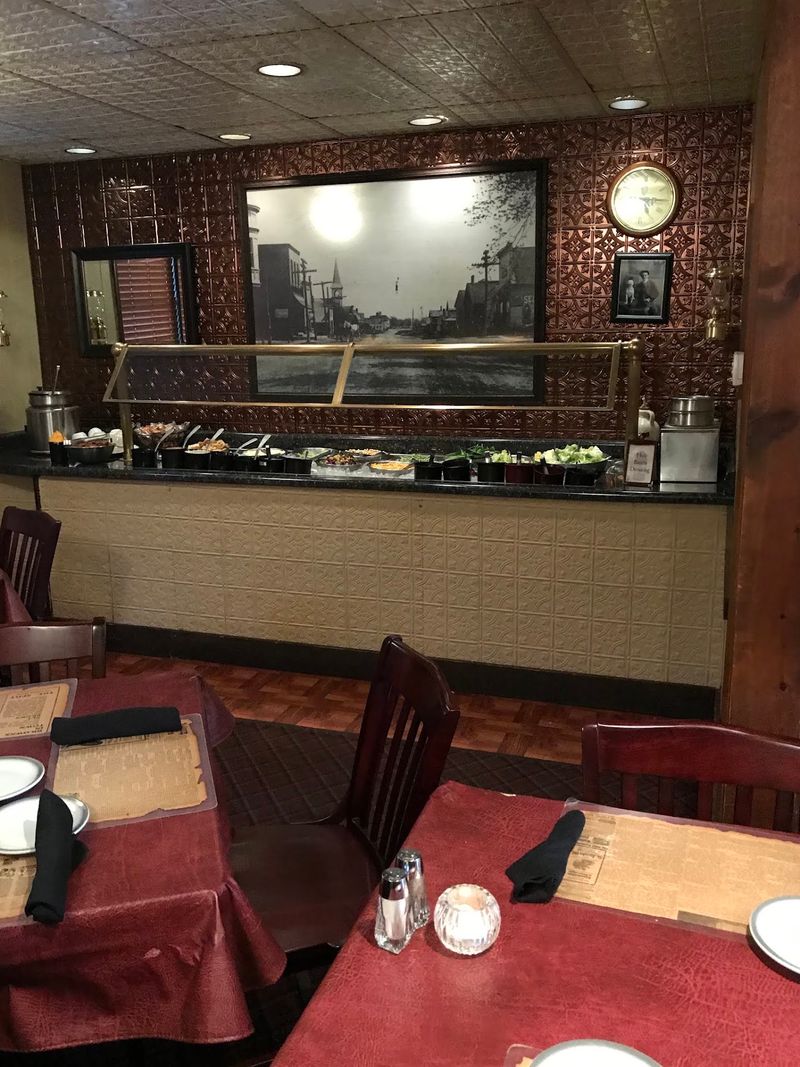
Wood that old carries a different weight than a reproduction, and its presence alone connects a Friday night dinner in 2024 to a century of people pulling up a stool on the same spot. The Daily Herald, in its January 2024 report, described the overall effect as “like a time capsule,” with the building’s antiques, historic photographs, and laminated newspaper placemats all surviving the ownership change intact.
Those newspaper placemats are a small but telling detail. Using actual historical pages from local papers as table coverings is the kind of quirk that either gets eliminated by a new owner trying to modernize or gets preserved by one who understands what makes a room feel irreplaceable.
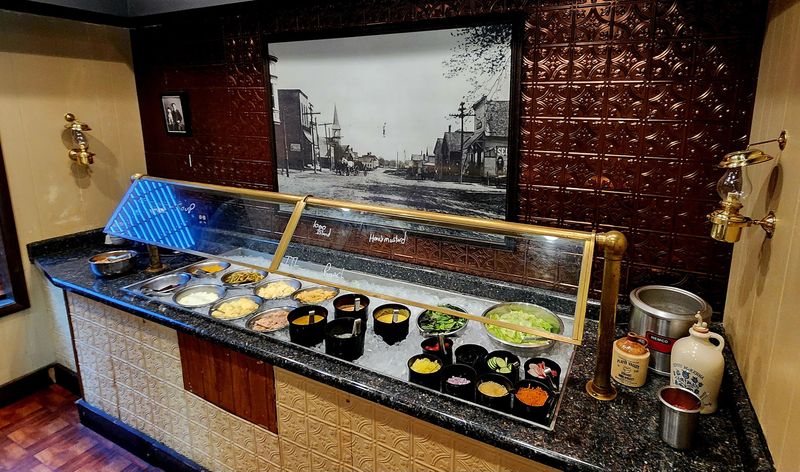
The current owners chose preservation. Historic photographs of Burlington and earlier restaurant eras line the walls, giving diners something to look at beyond the menu and turning the dining room into a low-key local archive.
None of this means every corner of the space is frozen in amber. Kitchens get upgraded, lighting gets adjusted, and any working restaurant adapts to practical needs over time.
The claim worth making is a narrower one: the physical features that define Art & Alma’s character, the bar, the photographs, the placemats, the layout, were deliberately carried forward rather than cleared out. For a diner who values atmosphere as much as food, that kind of continuity is not a small thing.
The reopening preserved character while introducing change
When Illinois Crafted Hospitality took over Art & Alma’s and reopened it in December 2023, the transaction included more than a building and a liquor license. The new owners acquired the recipes, the history, and the established menu, and they were public about their intention to keep the experience recognizable.
The Daily Herald’s January 2024 report confirmed that the ownership change was essentially the only visible difference for returning customers, at least in terms of the room and the core menu.
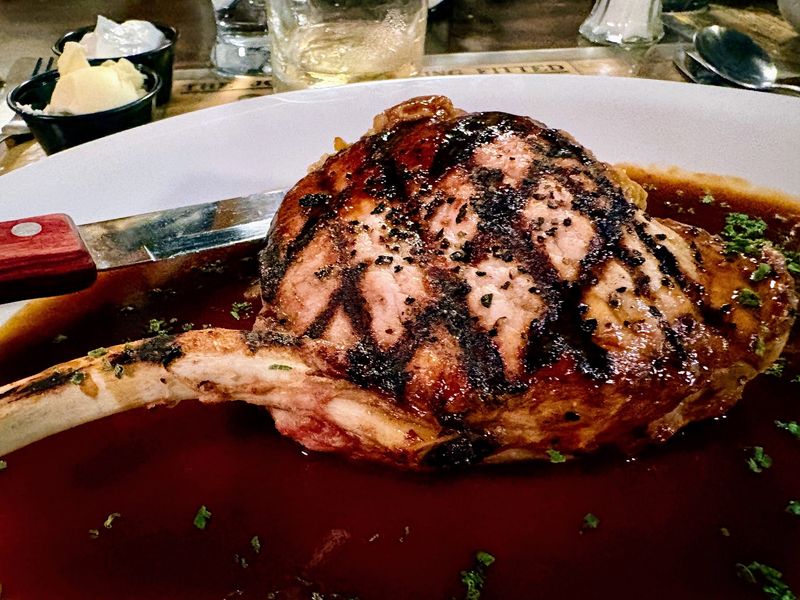
Legacy dishes came back with the reopening. Prime rib, double-cut pork chops, and the salad bar with hot bacon dressing, items that regulars associate with the Art & Alma’s experience, were all retained.
Those are not accidental choices. A new ownership group that wanted to reinvent the restaurant from scratch would not lead with a salad bar and a pork chop.
Keeping those dishes signals that the incoming team understood what the customer base came for and chose to honor it.
At the same time, the reopening was not a pure restoration. The kitchen received upgrades, some newer dishes joined the menu, and the cocktail and wine program expanded.
The restaurant’s own website describes its mission as keeping both the menu and the space the same, which is an owner’s statement of intent rather than an independent audit of every recipe and preparation. The honest picture is a restaurant that made deliberate choices to preserve what mattered most while also making practical improvements.
That is continuity, not stasis, and it is probably a more durable approach than trying to freeze everything in place.
The wider cultural history behind Friday fish fries
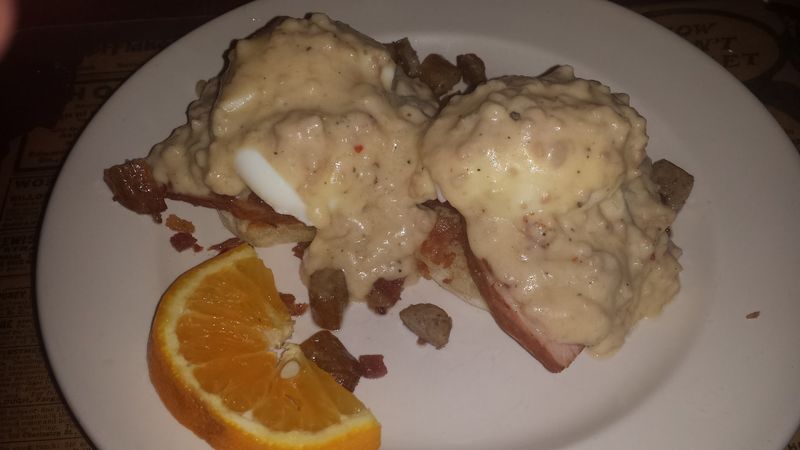
Friday fish fries did not start with supper clubs, and they have never belonged exclusively to any single community. The practice has deep roots in Catholic tradition: the U.S.
Conference of Catholic Bishops states that members of the Latin Catholic Church age 14 and older are required to abstain from meat on Fridays during Lent, and that fish and shellfish are permitted on those days. In communities with large Catholic populations, that religious requirement created a weekly demand for fish meals, and restaurants, church halls, and fire stations answered it.
Over time, the fish fry outgrew its strictly religious context. In the Upper Midwest and Great Lakes region, Friday fish fries became a social ritual that drew people regardless of religious affiliation.
The format, a communal meal, an affordable price, a predictable weekly schedule, made it useful for fundraising, neighborhood gatherings, and simply marking the end of the work week. By the time supper clubs like Art & Alma’s built their Friday specials around fried fish, the tradition was already a regional fixture with secular as well as religious meaning.
Saying that Art & Alma’s Friday fish fry is rooted in this broader cultural history is not the same as saying every diner there is observing Lenten abstinence. The restaurant serves its walleye to locals who grew up going there with their parents, to travelers passing through Kane County, and to anyone who simply wants a well-prepared piece of fried fish on a Friday night.
The cultural history adds depth to the ritual without limiting who gets to participate in it.
Check the details before making the drive
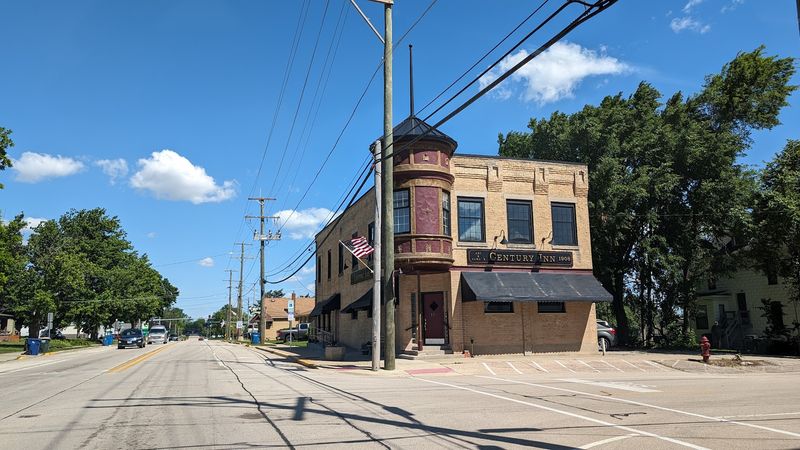
Art & Alma’s sits at 125 N. Main St., Burlington, Illinois 60109, and the restaurant can be reached by phone at 815-749-9186.
The official website lists current hours as Wednesday and Thursday from 4 to 8 p.m., Friday and Saturday from 4 to 9 p.m., and Sunday from 4 to 8 p.m., with the restaurant closed on Monday and Tuesday. Those hours are worth confirming directly before you make the trip, because restaurant schedules shift with seasons, staffing, and ownership decisions.
One practical question deserves a direct answer before you show up: whether or not you can make a reservation. The Daily Herald reported in January 2024 that Art & Alma’s did not accept reservations at that time, while the current website includes a reservation-request page.
Those two pieces of information do not fully agree, and reservation policies can change quickly after an ownership transition. Calling ahead is the only reliable way to know what to expect on a Friday evening.
A few other things are worth asking when you call. Confirm that the Friday fish fry is on the menu that week, since specials can rotate or pause without notice.
Ask whether the walleye is still the featured fish, or whether the preparation has shifted. Friday evenings at a well-regarded supper club can fill up faster than a first-time visitor expects, but making promises about a packed room or a guaranteed wait would go beyond what the available reporting can honestly support.
Go with a flexible plan, and the experience is more likely to meet your expectations.
What endures is a recognizable experience
Art & Alma’s does not offer proof that a single recipe has traveled unchanged through every decade since the 1970s. What it offers instead is something harder to manufacture: a room, a menu, and a Friday ritual that have survived ownership transitions, a full closure, and a careful reopening while remaining recognizable to the people who care about them.
A documented fish-fry identity going back at least to 2010, combined with reporting that described the post-reopening space as a time capsule, supports a real and specific claim about continuity, even if it stops short of proving generational sameness.
The distinction matters for anyone who values accuracy over a good story. Nostalgia is easy to sell and hard to verify.
What Art & Alma’s actually demonstrates is that a community institution can absorb change without losing its identity, provided the people taking it over understand what they are inheriting. That is a more interesting story than an unchanged recipe, and it is one the evidence actually supports.
Some restaurants trade on history without doing the work to preserve it. Art & Alma’s kept the bar, kept the photographs, kept the walleye, and kept the salad bar.
Whether you drove an hour to get there or grew up ten minutes away, that kind of intentional continuity is what makes a Friday night feel like it belongs somewhere specific.