
This California Desert Town On Route 66 Feels Frozen In Time Before A Big Comeback
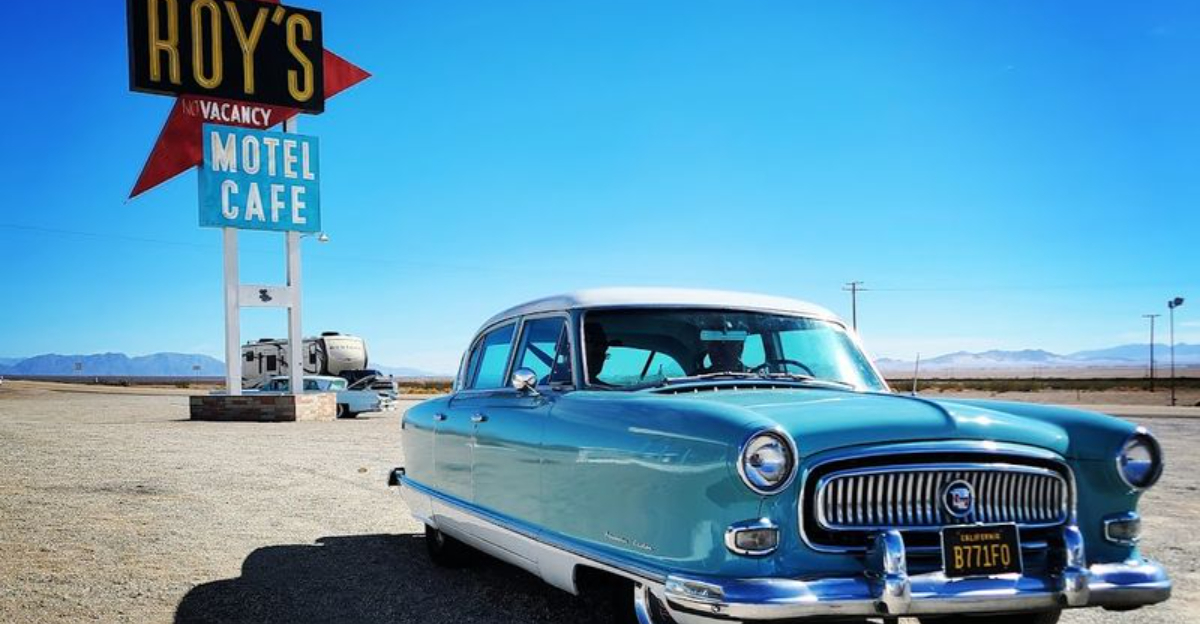
Imagine you’re cruising down a sun-scorched highway. Windows down.
Warm desert air rushing in. Then suddenly, it feels like you’ve driven straight into the 1950s.
No filters. No Hollywood set. Just pure roadside Americana frozen in time. Somewhere along the legendary Route 66 in California sits a tiny desert stop that the modern world somehow forgot.
Once, it buzzed with road-trippers, gas pumps, and late-night diners chasing the American dream. Then the interstate arrived in the 1970s, and the traffic nearly disappeared.
Most places would have faded, but this simply paused, and that pause is exactly why people keep coming back. Photographers.
History lovers. Route 66 wanderers.
Curious travelers searching for something real. They all detour for the same reason: this place still feels untouched, like a secret the desert kept for decades.
Now, restoration efforts are breathing new life into the old roadside icon. And if you listen closely, it feels like this forgotten stop might be getting ready for a second act.
Could this be the most fascinating comeback story on America’s most legendary highway? Keep reading.
The desert still has a few stories left to tell.
The Icon That Refused To Quit
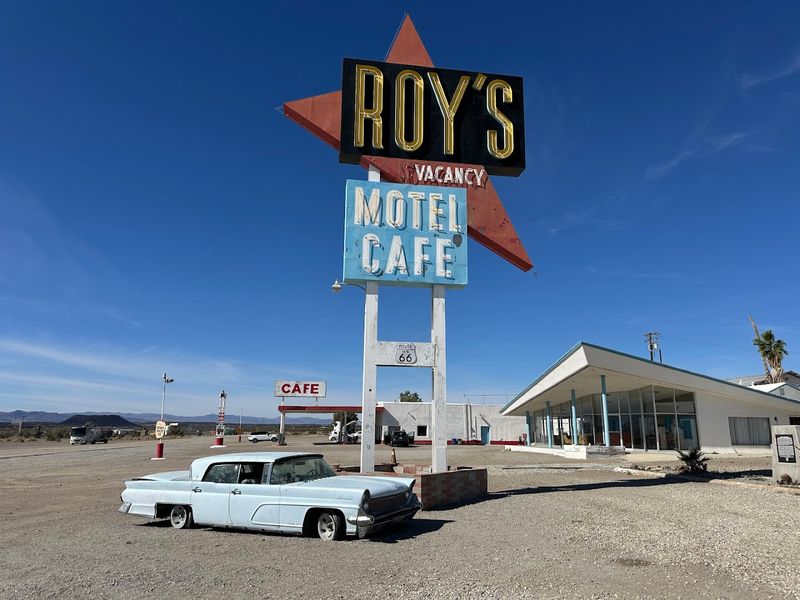
Some buildings are just structures. Roy’s Motel and Cafe is a full-on time capsule with a neon heartbeat.
Opened in 1938, this legendary stop on Route 66 became the beating heart of Amboy during its golden years. At its peak in the 1950s, it employed up to 70 people and served hundreds of travelers daily.
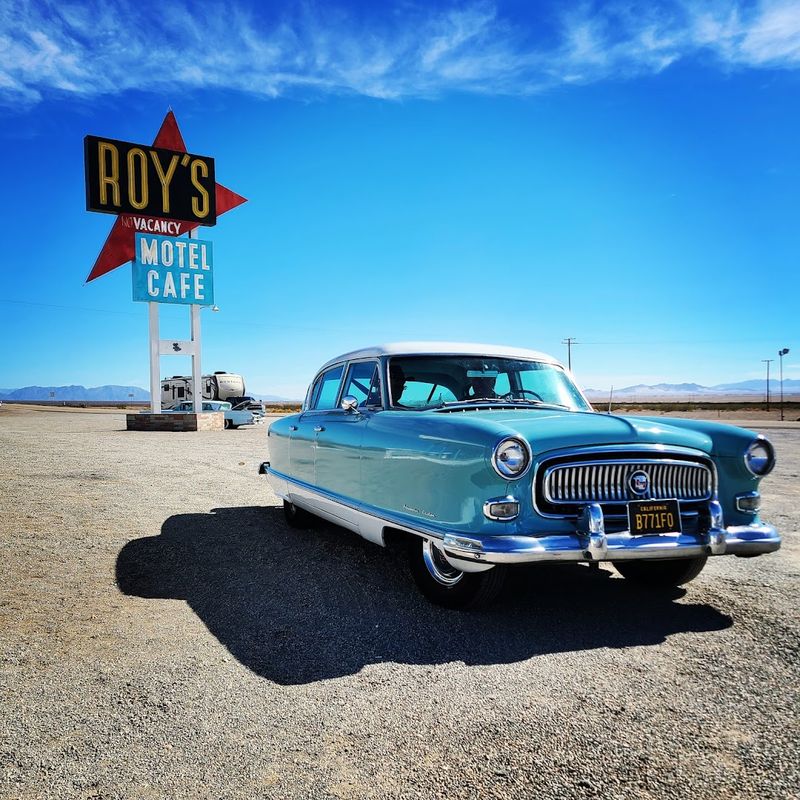
The famous boomerang-shaped neon sign, installed in 1959, towers above the flat desert floor like a beacon from another era.
It embodies Googie architecture, that wonderfully optimistic, space-age design style that screamed “the future is now” back in mid-century America. For decades, that sign sat dark and forgotten.
Then in November 2019, after 30 years of darkness, the sign was restored and re-lit. Standing beneath it at night, with the Mojave stretching endlessly around you, feels genuinely cinematic.
The gas station has been reopened, and ongoing restoration work continues to breathe life back into this iconic property. Roy’s is proof that some icons are simply too stubborn to disappear, and honestly, the desert is better for it.
A Volcano Walk You Will Never Forget
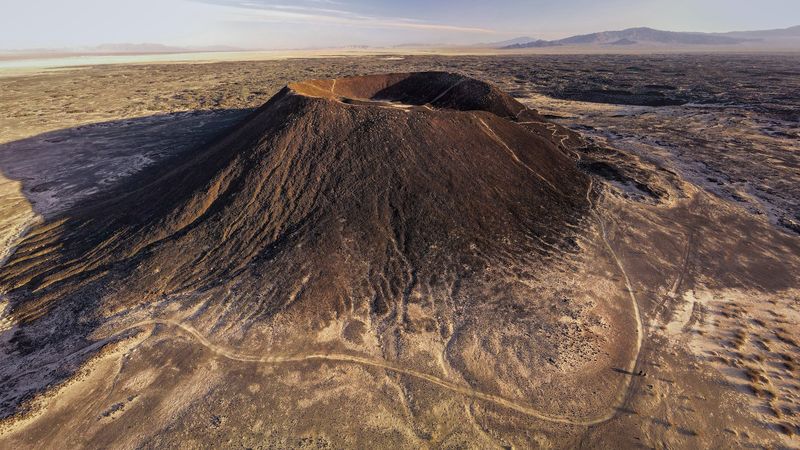
Not many towns can casually say they have a volcano next door, but Amboy pulls it off without even trying. Just outside the town sits Amboy Crater, a strikingly symmetrical volcanic cinder cone that is an official National Natural Landmark.
It looks almost too perfect, like someone sculpted it by hand and dropped it in the desert as a surprise.
The crater formed roughly 6,000 years ago and last erupted about 500 years back. The surrounding lava fields stretch across the landscape in dramatic black waves, creating a contrast against the pale desert floor that photographers absolutely lose their minds over.
A well-maintained trail leads hikers about 1.7 miles to the crater rim, where the views are nothing short of spectacular.
The hike itself is manageable for most fitness levels, though the desert heat demands an early morning start and plenty of water. Standing at the rim and looking down into the ancient volcanic bowl is one of those moments that makes you feel gloriously small.
Amboy Crater is the kind of natural landmark that turns a simple road trip detour into a full-blown adventure you will talk about for years.
Route 66 Road Trip Magic
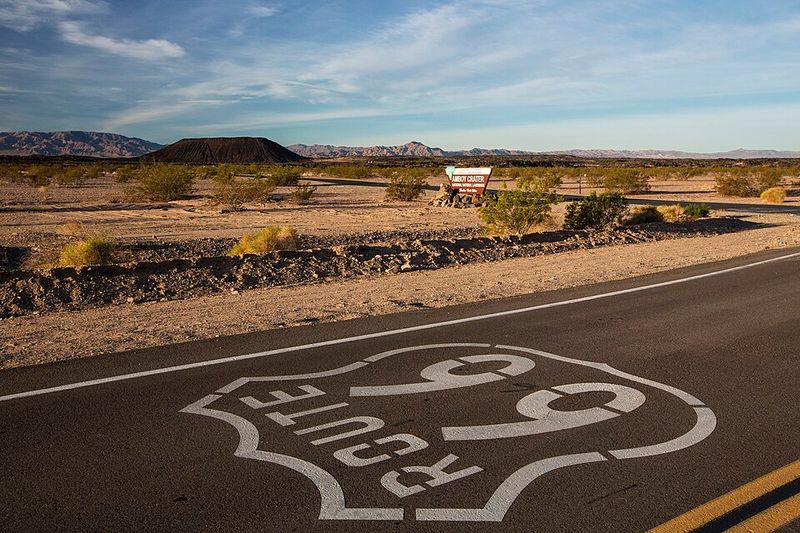
Route 66 is not just a road. It is a cultural institution, a symbol of freedom, wanderlust, and the open American highway that has inspired everything from Steinbeck novels to Pixar films.
Driving through Amboy on this historic stretch feels like flipping through a living history book, one with tumbleweeds and stunning desert light.
The section of Route 66 running through the Mojave near Amboy is one of the longest uninterrupted stretches of the original highway still in existence.
The pavement is cracked in places, the shoulders are dusty, and the silence is almost loud. That combination creates an atmosphere you simply cannot manufacture or replicate anywhere else.
Road trip culture has been making a massive comeback, and Route 66 is right at the center of that revival. Travelers from around the world are now making pilgrimages specifically to drive this stretch and experience what American highways once felt like before the interstate era homogenized everything.
Amboy sits right at the heart of this renewed fascination, and the town’s raw, unpolished character makes it one of the most authentic stops along the entire Mother Road.
Abandoned Beauty With A Story To Tell
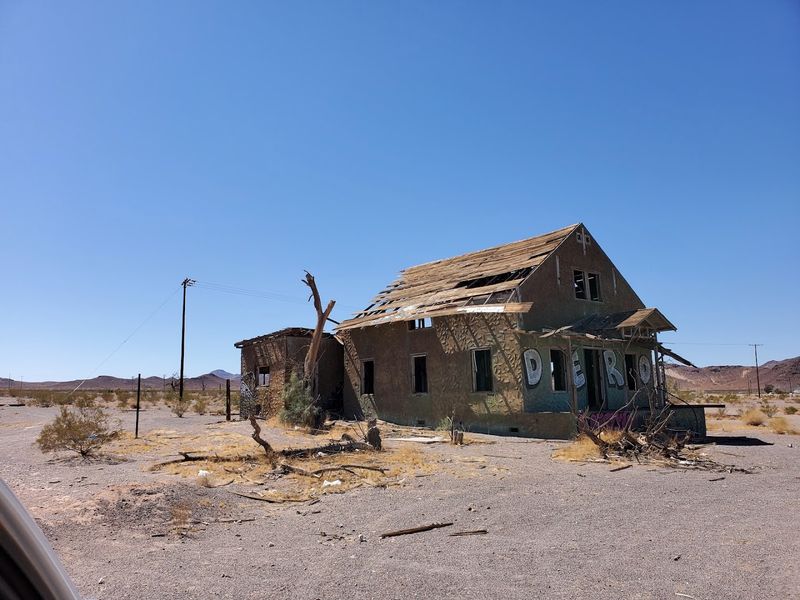
There is something undeniably magnetic about a place that time has gently set aside. Amboy’s collection of weathered buildings, faded signage, and crumbling roadside structures creates an atmosphere that is equal parts haunting and beautiful.
It is the kind of place that makes your camera finger twitch the second you step out of the car.
When Interstate 40 opened in the 1970s and bypassed Route 66 entirely, Amboy lost its lifeline almost overnight.
Businesses shuttered, residents relocated, and the town slowly transformed into the atmospheric near-ghost town it is today. What remained was essentially a preserved snapshot of mid-century American road culture, untouched by modern development.
That accidental preservation is now Amboy’s greatest asset. Urban explorers, fine art photographers, filmmakers, and documentary crews have all made the journey out to capture its unique visual character.
The textures, the silence, and the surreal quality of a town frozen mid-stride make every photograph feel deeply intentional.
Amboy proves that sometimes the most compelling stories are told not through what a place has gained, but through what it quietly, beautifully chose to keep.
Where The Sky Feels Bigger Than Everywhere Else
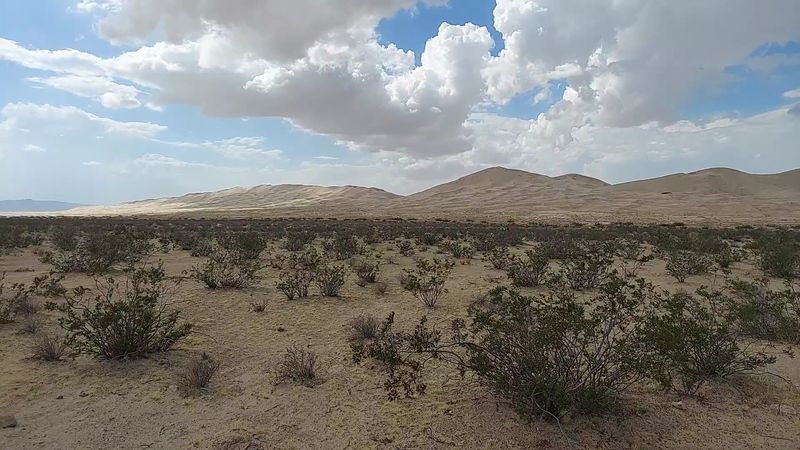
You have not truly understood the concept of wide open space until you have stood in the Mojave Desert near Amboy with nothing but horizon in every direction. The sky here does not just exist above you.
It surrounds you, pressing down in the best possible way with its overwhelming scale and impossible blue depth.
The Mojave is one of the driest and hottest deserts in North America, yet it pulses with life and character. Creosote bushes, Joshua trees, and scrubby desert plants dot the landscape in patterns that feel both random and perfectly arranged.
The light here shifts dramatically throughout the day, turning the desert floor from pale gold to deep amber as the sun arcs overhead.
Sunrise and sunset are particularly extraordinary near Amboy. The flat terrain means there are no hills or trees to interrupt the full spectacle of color spreading across the sky.
Astrophotographers also flock to this area because the darkness here is genuinely remarkable, far from city light pollution and perfect for capturing the Milky Way in full glory. The Mojave around Amboy is not just a backdrop.
It is the main event.
A Town Saved By Vision
In 2005, the entire town of Amboy was purchased for $425,000 by the owner of the Juan Pollo restaurant chain. Read that again.
An entire town. For the price of a modest house in many California cities.
That transaction became one of the most talked-about real estate stories in Route 66 history.
The motivation behind the purchase was preservation, not profit. The goal was to honor and protect Amboy’s historic legacy as a genuine Route 66 landmark rather than allow it to crumble into complete ruin.
That vision has driven the gradual restoration work that has been quietly transforming the property ever since.
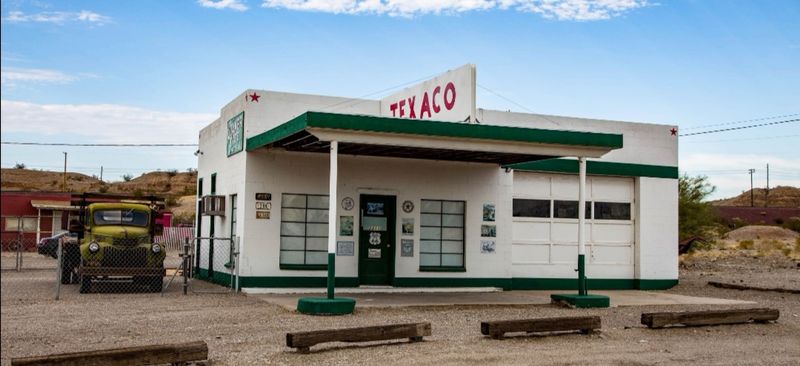
The gas station was reopened, allowing travelers to actually stop, fuel up, and connect with the town in a practical way. The re-lighting of Roy’s iconic neon sign in 2019 marked a symbolic turning point in the restoration journey.
Every improvement made to Amboy carries that same underlying philosophy: respect what was, restore what can be, and share it with anyone curious enough to make the drive.
This is preservation driven by genuine passion, and it shows in every carefully maintained detail across the property.
Every Shot Looks Like A Movie Still
Amboy might just be the most naturally photogenic town in California, and that is saying something in a state packed with visual drama.
Every angle offers something compelling: peeling paint, rusted metal, retro signage, vast desert sky, and that legendary neon sign that looks like it was designed specifically to be photographed at sunset.
The combination of Googie architecture, mid-century Americana, and raw desert landscape creates a visual language that feels both nostalgic and completely fresh. Film crews and commercial photographers have long recognized Amboy’s cinematic quality.
The town has appeared in music videos, advertising campaigns, and countless editorial spreads over the years.
For amateur photographers and social media enthusiasts, Amboy delivers effortless shots that look genuinely artful without requiring much technical skill.
The light does most of the heavy lifting. Morning visits offer soft, warm tones and long shadows that give structures incredible depth and texture.
Evening visits transform Roy’s sign into a glowing jewel against a darkening indigo sky. Bring your widest lens, your most dramatic filter, and a full memory card, because Amboy will fill it faster than you expect.
This town photographs like it was born for the spotlight.
Why Amboy Is Having Its Moment Right Now
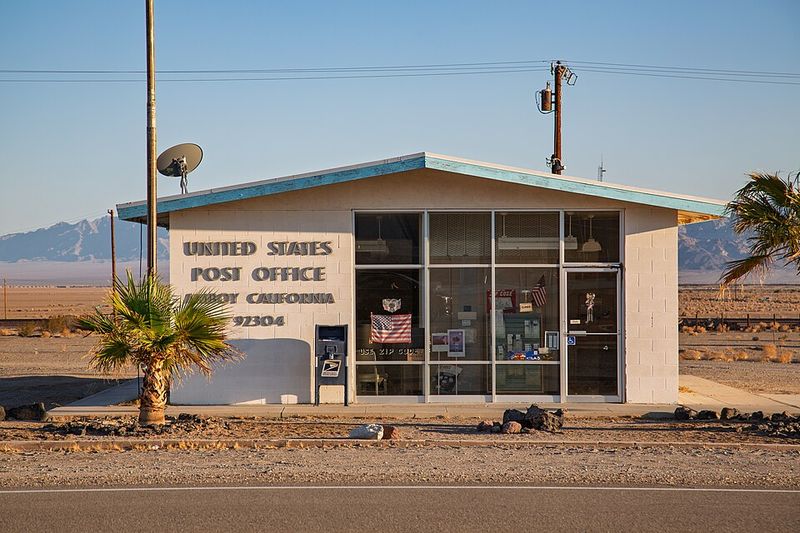
Every great story needs a second act, and Amboy’s is shaping up to be genuinely exciting. After decades of near-total silence, the town is experiencing a slow but unmistakable resurgence.
Travelers are rediscovering Route 66 with fresh enthusiasm, and Amboy keeps landing on best-of lists, travel blogs, and social media feeds with increasing frequency.
The cultural timing could not be better. There is a widespread appetite right now for authentic, unfiltered travel experiences that feel meaningfully different from the polished, predictable destinations that dominate mainstream tourism.
Amboy delivers exactly that, raw edges, real history, and a sense of discovery that feels genuinely earned when you make the drive out.
Restoration work continues to progress, with Roy’s Motel and Cafe remaining the centerpiece of the revival effort.
Each improvement adds another layer of accessibility and intrigue for visitors while carefully preserving the historic character that makes Amboy worth visiting in the first place. The town is not trying to become something new.
It is becoming more fully itself, and that distinction matters enormously.
Amboy’s comeback is not about transformation. It is about recognition of something that was always extraordinary.
How To Visit Amboy
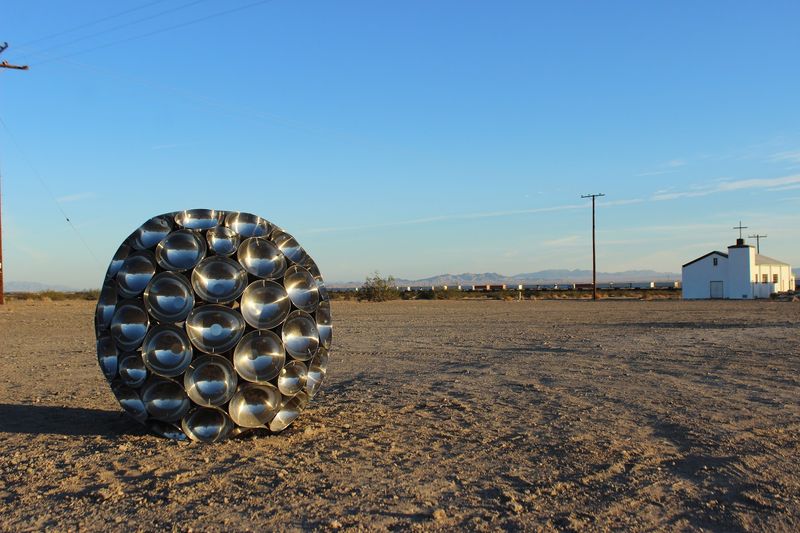
Planning a visit to Amboy requires a little more preparation than your average day trip, and that extra effort is absolutely part of the charm.
The town sits along National Trails Highway, which is the modern name for this section of Route 66, roughly 35 miles east of Twentynine Palms and about 75 miles west of Needles.
The gas station at Roy’s is operational, which is genuinely useful given how remote the location is. Cell service is limited to nonexistent in many spots around Amboy, so download your maps offline before leaving the main highway.
Carry more water than you think you need, especially during summer months when temperatures routinely climb well past 100 degrees Fahrenheit.
The best times to visit are spring and fall, when temperatures are more forgiving and the desert light is particularly stunning. Amboy Crater is accessible year-round and makes a natural pairing with a Roy’s stop for a full day adventure.
There are no restaurants or accommodations in Amboy itself beyond the historic property, so plan your meals and lodging in nearby towns. Come curious, come prepared, and come ready to be genuinely surprised by what this quiet desert town has to offer.