
This California Headland Lighthouse Feels Like Brushstrokes On The Sea
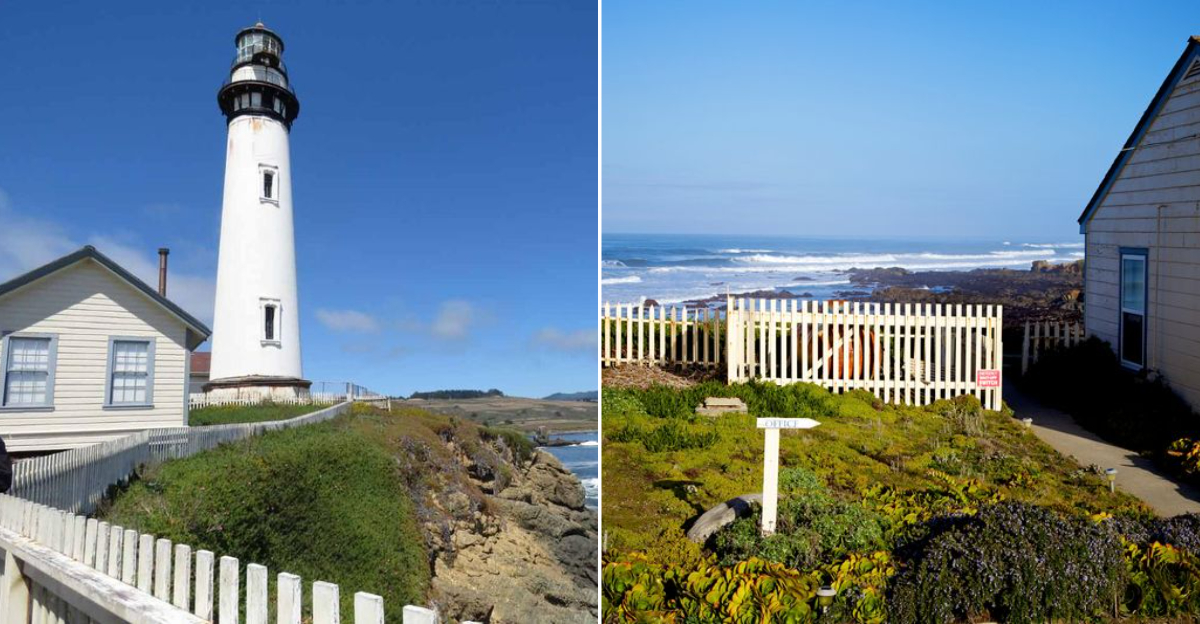
Along Highway 1, where the horizon blurs between sea and sky, Pigeon Point Lighthouse appears like a painted detail come to life: white tower, black cap, and the Pacific stretching endlessly behind it. The air smells of kelp and mist, and the steady rhythm of waves against the rocks feels like the coast breathing.
Visitors wander the bluff trails, watch gulls wheel in slow circles, or simply stand still, listening. Built in 1872, the lighthouse still guards its cliffside with quiet dignity, surrounded by wildflowers and salt wind. It’s the kind of stop that asks nothing but presence.
Bring a jacket for the ocean chill, a camera for the light, and time enough to let the scenery settle into memory.
Highway 1 Pullout With Ocean Overlook
The wind whips along the cliffside, carrying salt and fog across the car windows. Then the road bends, and the view opens: endless ocean stitched with light and foam.
This pullout north of Pigeon Point Lighthouse feels like a brief pause between miles, a pocket of quiet carved out for travelers chasing perspective and sea spray.
I always stop here when driving south. That first inhale of Pacific air reminds me why Highway 1 isn’t just a road, it’s an experience unfolding curve by curve.
115-Foot White Tower On A Rocky Headland
The lighthouse rises like a brushstroke against the sky, its white frame catching light even when fog blurs everything else. It’s tall, stately, and strangely calming to stand beneath.
Built in 1872, Pigeon Point once guarded sailors from the unseen rocks below, its beam stretching miles across the Pacific. The engineering still feels poetic in its purpose.
Even though climbing inside isn’t allowed, the moment you stand at its base, the waves crashing below, you sense the weight of history held in every gust.
Fog Signal Building Exhibits Open On Weekends
The old Fog Signal Building hums with memory, salt in the wood, faint echoes of machinery, and photographs that watch you from the walls. It smells like brine and oil lamps.
Here, the stories of lighthouse keepers unfold slowly: storms, loneliness, a life bound to duty. The foghorn once roared through endless gray, now replaced by museum hush.
Come on a Saturday, when volunteers bring those stories to life. Their warmth makes the room feel alive again, like the fog could roll back at any moment.
First Order Fresnel Lens Displayed Indoors
The old Fresnel lens looks like it belongs in a cathedral rather than a lighthouse. Each glass prism bends light into silent rainbows that scatter across the dim room.
Step closer and you’ll see its precision; dozens of panels, cast in France, built to send light twenty miles into the sea. It’s breathtaking in its calm complexity.
I lingered here longer than expected. The sunlight bouncing through the lens painted shifting halos on the wall, and for a moment, it felt like time had stopped.
Whale Watching Deck With Wide Horizons
Walk past the visitor center and you’ll find the deck that catches every gust of Pacific wind. The air smells clean, sharp, and full of possibility.
Winter brings the best surprise, gray whales moving south, flicking tails and blowing mist as they pass. The view itself, though, never disappoints, even without a fin in sight.
I stayed long after everyone else left. The horizon softened into silver, and it hit me how quiet wonder can be when you just let the ocean speak.
Wildflower Bluff In Late Spring
By April, color explodes along the cliffs: yellows, purples, and blues tangled in sea grass, waving toward the surf. Every petal trembles in the salt wind.
The bluff becomes a painter’s field that changes hourly with the light. Locals say it’s best right after rain, when the petals still glisten like polished shells.
It’s one of those places that rewards slowness. I walked the same ten feet three times just to take it in again, grateful for how alive stillness can feel.
Tidepools Revealed At Low Tide
By April, color explodes along the cliffs; yellows, purples, and blues tangled in sea grass, waving toward the surf. Every petal trembles in the salt wind.
The bluff becomes a painter’s field that changes hourly with the light. Locals say it’s best right after rain, when the petals still glisten like polished shells.
It’s one of those places that rewards slowness. I walked the same ten feet three times just to take it in again, grateful for how alive stillness can feel.
Short Path To A Fenced Cliff Rail
By afternoon, the light shifts gold, and the narrow path beyond the parking lot hums with wind. The air carries the deep rhythm of waves below.
The railing marks the edge of Pigeon Point’s heart, where countless travelers have stood before. It’s been here for decades, weathered but steady, just like the lighthouse itself.
Standing there, I couldn’t help gripping the rail harder than I meant to. The drop is dizzying, but the view swallows any fear. It’s the Pacific, unapologetic, infinite.
Picnic Tables Beside the Parking Lot
Most visitors rush straight to the bluff, but the small picnic area near the lot deserves a pause. The wood benches catch the afternoon warmth beautifully.
The tables have seen it all, birthday cakes, thermoses of coffee, road maps folded and refolded. A few even face the cliffs, framed by dunes and sea fennel.
I ate here with my sandwich still wrapped in paper. The wind kept tugging at the napkins, but that’s part of it—the coast never lets you sit too still.
Hostel Cottages At 210 Pigeon Point Road
Just beyond the lighthouse fence, a cluster of clapboard cottages faces the sea. They belong to HI Pigeon Point Lighthouse Hostel, one of California’s most atmospheric stays.
Each cabin hums with quiet, no TVs, no city buzz, just waves and wind pressing against the windows. Guests swap stories in the shared kitchen, mugs steaming.
I spent a night here once and slept harder than I have in months. The foghorn became a lullaby, the Pacific’s pulse an anchor pulling me home.
Golden Hour Light On Surf And Spray
Late afternoon transforms the coast. The cliffs turn copper, the lighthouse a pale flame above the tide. Spray catches the sun, scattering gold dust through the air.
Photographers gather silently near the bluff, tripods steady against the wind. The best shots come just before sunset, when the light softens and shadows stretch long.
Even without a camera, it’s worth lingering. That moment before the sun slips behind the water, when everything glows, is a quiet kind of magic you don’t forget.
Sea Lions And Seabirds On Offshore Rocks
If you listen closely, the rocks offshore sound alive. Sea lions bark over the crash of waves, and gulls cut the air with sharp cries.
Binoculars reveal a colony in motion, flippers sliding, wings catching salt spray, everything coated in a glint of sunlight. This stretch of coast is their theater.
It’s impossible not to smile watching them. They don’t care who’s looking, just living by instinct and tide. There’s something wonderfully grounding about their noisy confidence.
Restrooms And Small Park Store
Practical doesn’t have to mean dull. The small visitor center next to the restrooms sells maps, books, and windbreakers you’ll wish you’d brought sooner.
Volunteers often man the counter, happy to point out tide times or share which trails are clear of fog. It’s a refreshingly personal stop in an otherwise wild place.
Grab a coffee mug or postcard on your way out. It feels right to carry something small home, proof you stood where the ocean keeps rewriting the edges.
Easy Day Trip From San Francisco
From the city, it’s a straight, scenic drive down Highway 1, past redwoods and open pastures that spill toward the sea. It takes about ninety minutes.
Many locals make the trip for a few hours of horizon therapy, lighthouse first, picnic after, a slow walk before heading back north. It’s the perfect reset button.
I’ve done it more than once, and every time feels slightly different. The coast changes daily: fog one trip, firelight the next. It’s never just repetition, it’s renewal.