
This Charmingly Odd Arkansas Town Will Steal Your Heart The Moment You Arrive
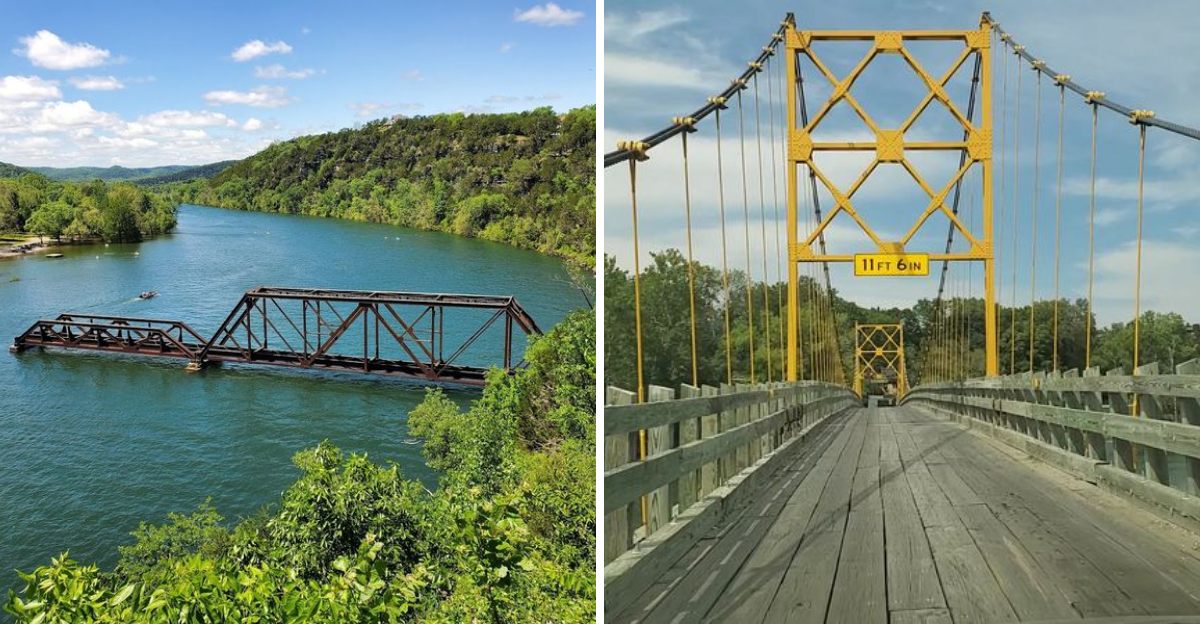
Some towns greet visitors with signs. This one does it with a bright yellow bridge stretched across glassy water.
The sight appears between Ozark hills and immediately gives the drive a sense of occasion. Beyond the crossing, everything slows down.
Roads stay quiet. Trees crowd the shoreline, and reflections ripple beneath the wooden span whenever a car passes overhead.
Arkansas has many places where nature and history meet, but this tiny community makes that connection impossible to miss. The bridge still carries traffic, yet it also feels like a doorway into another pace of life.
You may stop for one photo and find yourself lingering beside the river instead. Nothing here demands attention, which somehow makes it harder to look away.
Keep reading, because the town’s most memorable details are not loud or elaborate. They appear gradually, turning a roadside pause into the kind of visit that stays with you.
A Golden Bridge Above Still Water
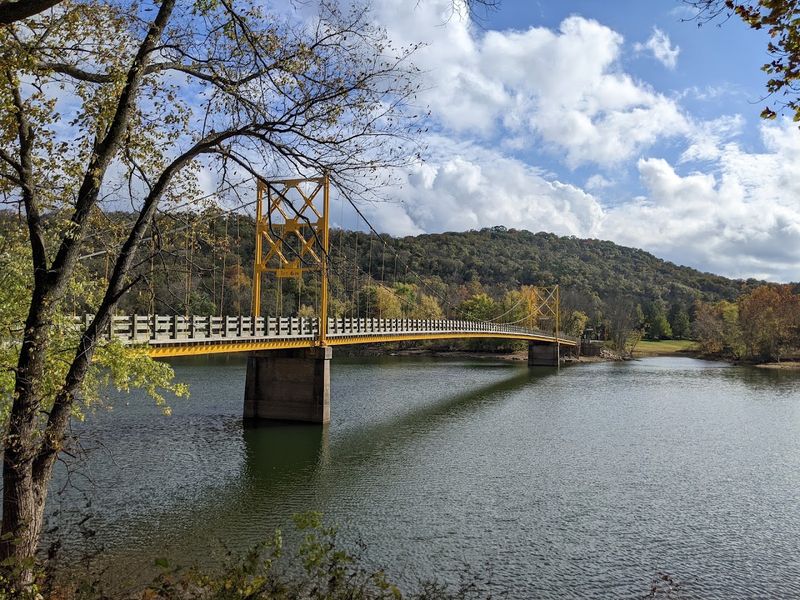
A single splash of color announces this place more boldly than you might expect. The Beaver Bridge stretches 554 feet across the White River, its bright yellow paint cutting a vivid line against the surrounding green of the Ozarks.
Built in 1949, it carries the proud title of the last suspension bridge in Arkansas still open to vehicular traffic, which means every crossing doubles as a small piece of living history.
On a calm morning, the still water below mirrors the bridge so cleanly that you almost feel like you are hovering between two worlds. The cables fan outward from twin towers in a pattern that is surprisingly graceful for a structure built with purely practical intentions.
Photographers tend to linger here far longer than they planned, and I was no different.
The light shifts constantly, painting the yellow frame in shades of gold, amber, and pale cream depending on the hour. Standing on the bank and watching a single car inch across the narrow one-lane span is oddly meditative.
This golden crossing sits at the beating heart of Beaver, Arkansas.
Where Wooden Planks Cross The River
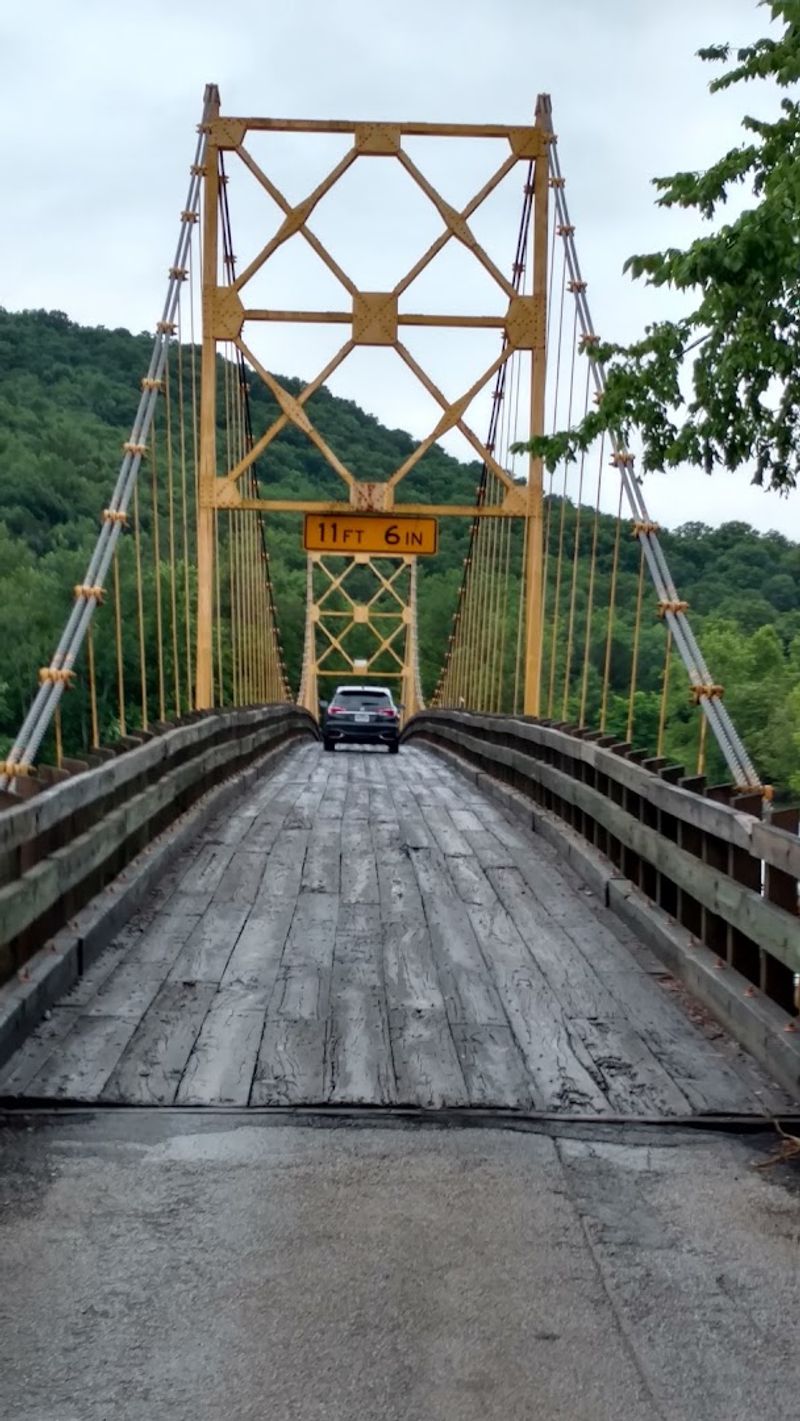
Step onto the Beaver Bridge on foot and you immediately notice the sound: a low, resonant creak from the wooden deck planks that feels nothing like the muffled silence of modern asphalt. That sound is not a warning, it is a welcome.
The timber deck has been part of this crossing since the bridge opened in 1949, and it gives every step a tactile, old-fashioned quality that concrete simply cannot replicate.
The wooden guard rails run along each side at a modest height, framing unobstructed views of the White River in both directions. Looking down through the gaps between planks, you can watch the current move below you in slow, unhurried swirls.
It is the kind of view that makes you stop mid-stride and just stare.
Driving across feels different too, with the planks producing a rhythmic rumble under the tires that you sense more in your chest than your ears. Modern bridges are engineered to be forgettable, but this one demands your full attention from the first plank to the last.
The wooden deck is a quiet act of preservation that makes the crossing genuinely memorable.
Quiet Roads Beneath The Ozark Hills
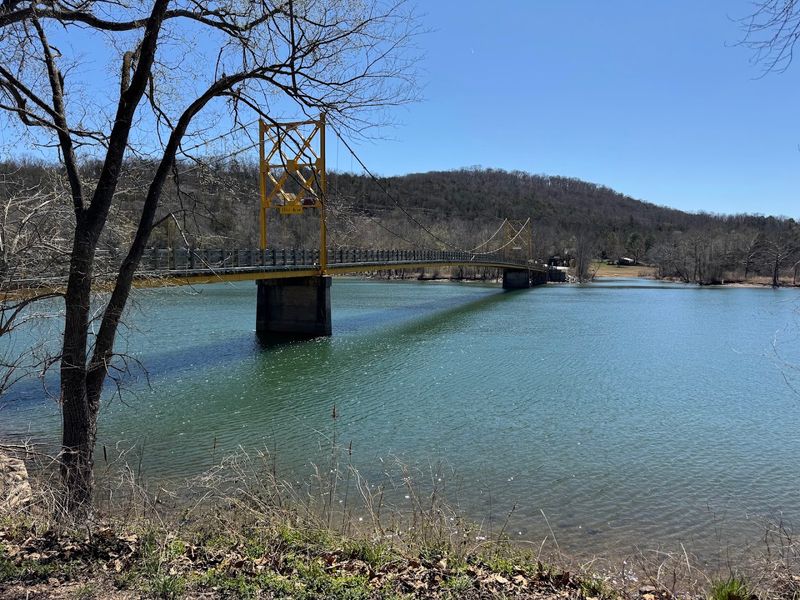
The approach to this town is half the reward. Highway 187 winds through Carroll County with the kind of unhurried curves that make you forget you were ever in a hurry to begin with.
Tall oaks and hickories press close on both sides, and the pavement narrows just enough to remind you that you are a guest in the landscape rather than its owner.
I rolled my windows down about five miles out and kept them that way. The air carries a particular freshness up here in the Ozark Mountains, cool and faintly green-scented, the sort that makes you breathe more deliberately just to get the full effect.
There is almost no commercial noise along this route, no billboards, no fast-food signs, just hills and trees and the occasional hawk riding a thermal overhead.
Traffic is sparse enough that you can pull over on a wide shoulder, step out, and simply listen. The roads around Beaver reward slow drivers and curious passengers equally, offering new details with every mile.
These quiet stretches are not just a route to the destination; they are a mood that settles over you before you even arrive.
Reflections Beneath A Historic Suspension Span
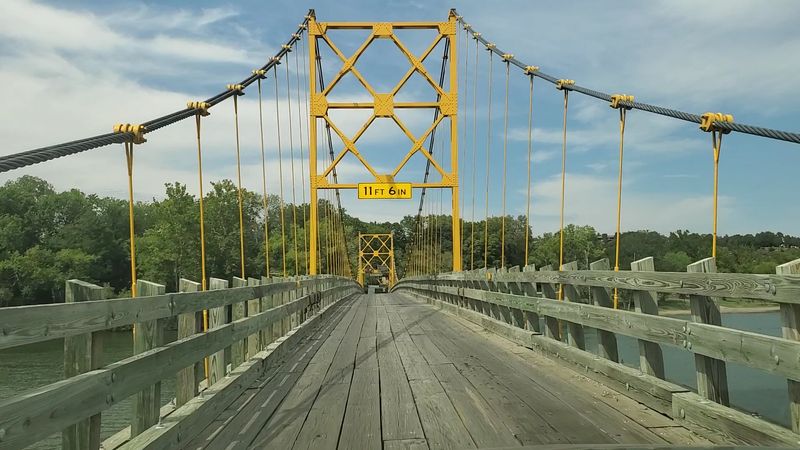
Added to the National Register of Historic Places in 1990, the Beaver Bridge earned that recognition not just for its age but for what it represents: a rare surviving example of a suspension bridge style that once dotted rural Arkansas but has largely disappeared. The designation feels right when you stand beneath the towers and look up at the cable geometry fanning outward above you.
On still mornings, the White River becomes a near-perfect mirror. The twin towers, the sloping cables, and even the yellow paint all reappear in the water below with startling clarity.
I spent a good twenty minutes just watching a great blue heron land in the shallows and temporarily shatter the reflection, then wait patiently while the river smoothed itself back out.
The interplay between the engineered structure above and the natural surface below creates a visual conversation that feels almost deliberate. Historic preservation can sometimes feel like a museum exercise, but here it feels lived-in and relevant.
Every time the light changes angle, the reflection shifts color, and the bridge offers a completely different portrait of itself.
A Tiny Waterfront Wrapped In Forest
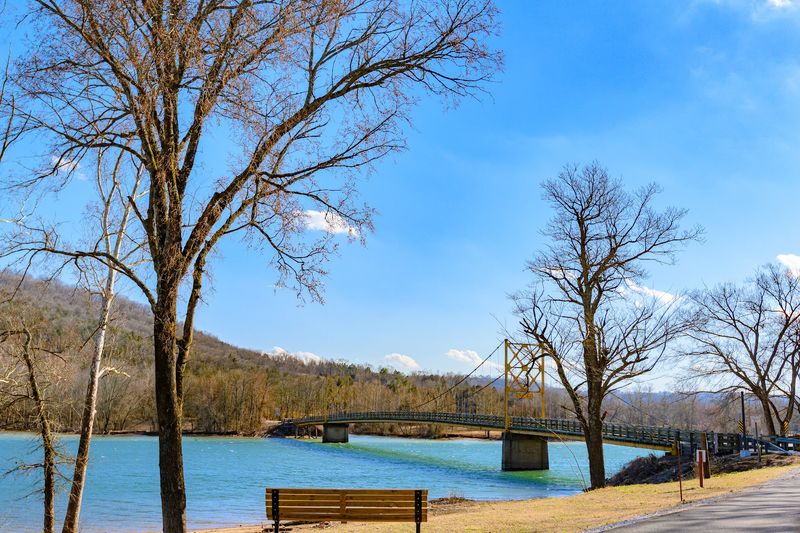
Beaver has a waterfront that matches the town in scale: small, unassuming, and surprisingly easy to love. The Beaver RV Park and Campground sits tucked among mature trees right at the river’s edge, offering a simple, shaded base for anyone who wants to spend more than a few hours here.
The canopy overhead is thick enough to keep things cool even on warm afternoons.
The forest wraps the shoreline so tightly that it feels less like a campground and more like a clearing someone thoughtfully carved out of the woods. Birdsong fills the air at dawn and dusk, and the river moves past at the kind of pace that makes your shoulders drop about two inches the moment you notice it.
There are no neon signs, no crowds, and no soundtrack other than the natural one.
Sitting at the water’s edge here, you get the sense that the forest and the river have simply agreed to share this small strip of land, and that humans are welcome to visit as long as they keep the noise down. This forested waterfront is the quietest kind of luxury.
The One-Lane Crossing That Defines The Town
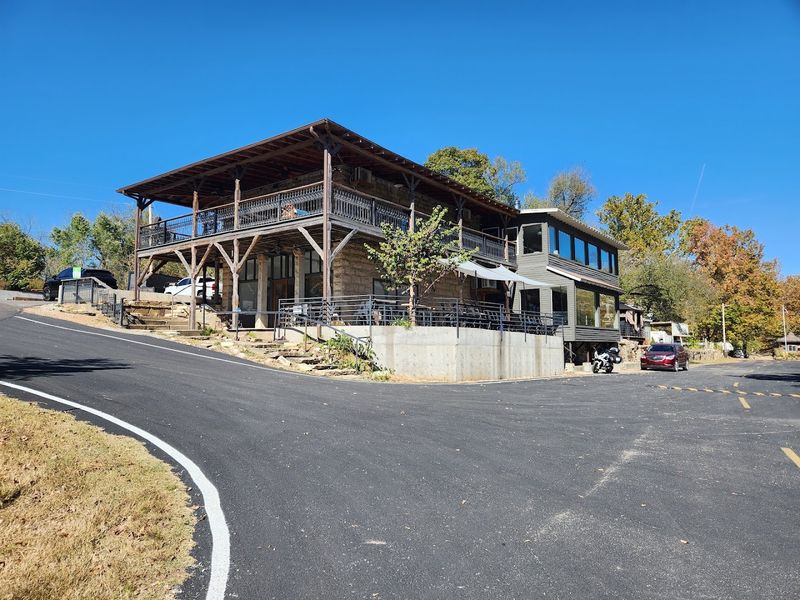
A one-lane bridge sounds like an inconvenience until you actually use one. At the Beaver Bridge, the single-lane design requires drivers on opposite ends to take turns, and what could be a source of frustration becomes something oddly civilized.
Strangers wave each other through with a patience that feels almost choreographed, a small daily ritual of courtesy that the town has practiced for over seven decades.
The narrowness of the span is also what makes the crossing so visually dramatic. From either bank, the bridge looks impossibly slender against the width of the White River, a yellow thread stretched tight between two wooded hills.
That tension between delicacy and durability is part of what makes it so photogenic and so beloved.
Local residents cross it the same way they always have, without fanfare, treating it as simply the way you get from one side to the other. For visitors, though, it never quite loses its novelty.
The one-lane crossing is not just a feature of Beaver; it is the feature, the thing that makes the town immediately recognizable and genuinely unlike anywhere else in the state.
Riverside Views With Old-Arkansas Character
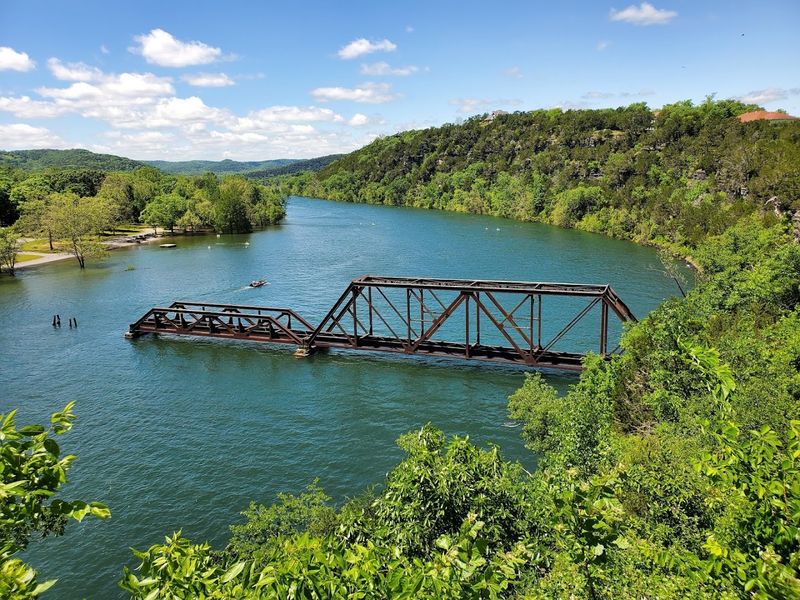
Beaver sits on the White River with the easy confidence of a town that has been here a long time and has no plans to change. The community traces its roots to early settlers, including Wilson A.
Beaver, who established a ferry crossing and small businesses along this very stretch of river. That founding energy still seems to linger in the air, in the worn paths, the unhurried pace, and the way the landscape feels genuinely inhabited rather than staged.
The riverbanks here have a texture that newer developments simply cannot manufacture. Old trees lean over the water at angles that suggest decades of slow growth, and the light in the late afternoon turns everything a warm, amber-tinted shade that makes even simple scenes look painterly.
I kept reaching for my camera and then putting it down, realizing I wanted to just look for a while.
The character of this place is rooted in a specific kind of rural Arkansas identity, self-sufficient, quietly proud, and deeply connected to the land and water that shaped it. Spending time here feels like reading a chapter of regional history that never made it into the textbooks.
A Peaceful Bend Along Table Rock Lake
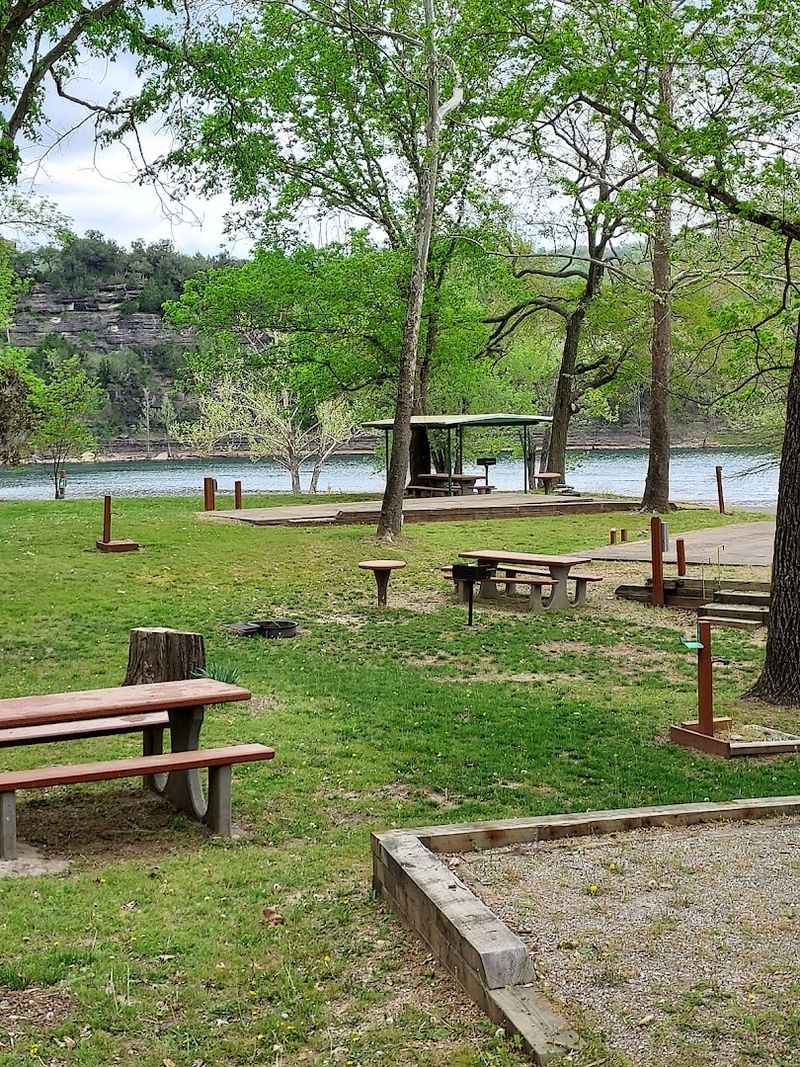
At the western tip of Table Rock Lake, where the White River widens and slows before merging into the lake proper, Beaver occupies one of the most quietly spectacular positions in the entire Ozark region. The water here is clear and calm, the kind of calm that feels earned rather than engineered.
On a still evening, the surface holds the color of the sky like a shallow bowl filled with light.
Fishing is a natural draw at this bend, with the White River tailwaters known for consistent trout populations that attract anglers from across the region. Boating is equally popular, though the pace tends to stay relaxed rather than competitive.
I watched a canoe drift past one afternoon at a speed that suggested the paddler had nowhere specific to be, which struck me as the correct approach.
Sunsets over this stretch of water deserve their own mention, with the fading light catching the ripples in a way that makes the whole surface look briefly gilded. Table Rock Lake covers a vast area, but this particular bend feels intimate and personal, a small reward for those willing to seek it out in a town of 67 people.