
This Classic Massachusetts Spot Is Home To The State’s Best Clam Chowder
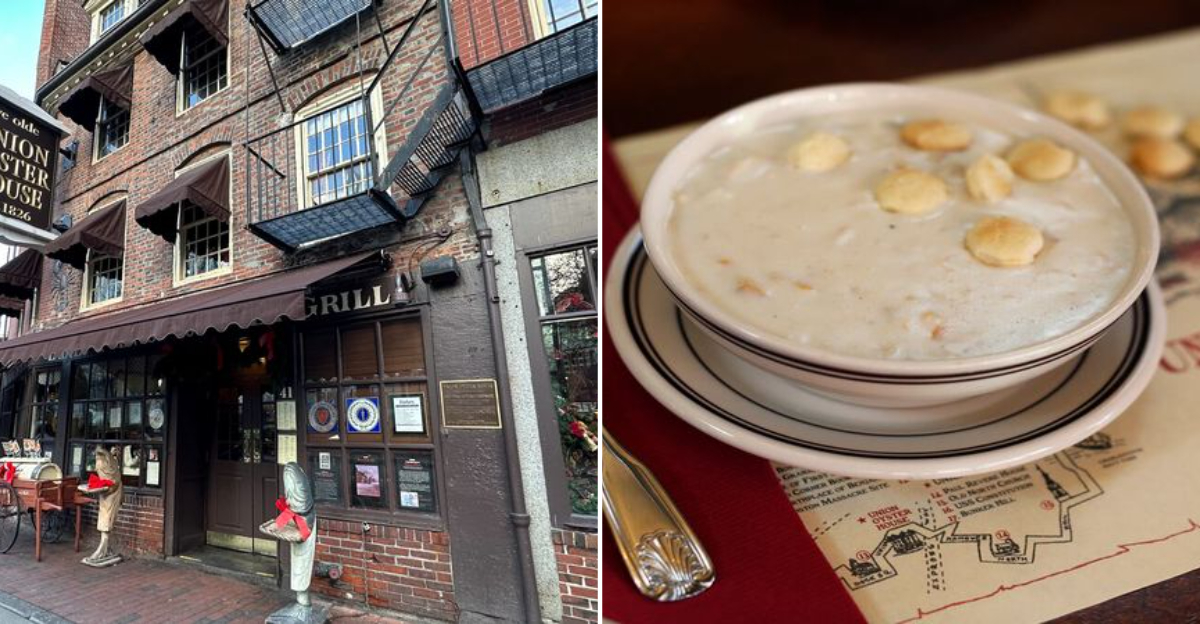
Union Oyster House has been serving hungry Bostonians since 1826, making it one of the oldest restaurants in America. Step through its doors and you’re not just ordering lunch, you’re joining a tradition that’s survived nearly two centuries of history, change, and hungry crowds.
Their clam chowder has become legendary across Massachusetts, drawing locals and visitors who want to taste what real New England flavor is all about.
The Building That Tastes Like Boston
Cobblestones crunch beneath your feet as you approach the weathered brick facade, and suddenly you’re stepping back in time. The wooden bar gleams under soft lighting, polished by generations of elbows and stories, while brass fixtures catch your eye from every corner.
History seeps into everything at Union Oyster House, even the way your spoon feels in your hand. That first taste carries weight because you know Daniel Webster once sat in this same room, probably slurping the same creamy bowl. The continuity matters here.
Knowing the chowder recipe has survived wars, depressions, and countless food trends makes every spoonful feel like a small act of preservation.
The Moment The Chowder Wins You Over
Heat blooms across your tongue the second the spoon touches your lips, and the texture is just right, thick without being gluey. Cream and brine dance together in perfect balance, neither overpowering the other, while chunks of tender clam practically melt as you chew.
That single spoonful converted me into a believer, no exaggeration needed. The potatoes are soft but not mushy, holding their shape just enough to give the soup body and heft.
Everything about this bowl feels deliberate, like someone who truly understands chowder crafted it with care and respect for tradition.
Why It Tastes Like Massachusetts: Ingredients, Technique, And Tradition
Local clams bring that unmistakable briny sweetness you can only get from Massachusetts waters, where cold currents make shellfish taste cleaner and more vibrant. The potatoes are cut just right, tender enough to thicken the base naturally without turning into paste.
This chowder’s relationship to place runs deep, connecting harbors to kitchens through centuries of seafood culture and pride. The creaminess is generous but measured, letting the clams remain the star instead of drowning them in dairy.
Every ingredient choice reflects the geography and history of coastal Massachusetts cooking.
The People And The Plates: Service, Portions, And The Ritual Of Ordering Chowder Here
Our server smiled knowingly when I asked what to order, pointing straight to the chowder without hesitation or sales pitch. The bowl arrived moments later, steam rising in lazy curls, flanked by a basket of oyster crackers and thick slices of cornbread.
Around us, fellow diners were doing the same thing, cracking crackers over their bowls and leaning in close to catch the aroma before diving in. Portions here are generous without being ridiculous, sized perfectly for a satisfying lunch that won’t leave you uncomfortably stuffed.
The ritual of ordering chowder at Union Oyster House feels almost ceremonial, like you’re participating in something bigger than just a meal.
Small Details I Fell For: The Things That Made The Visit Personal
A corner seat at the bar gave me a front-row view of the oyster shuckers working their magic, shells clinking like tiny bells. Salt crystals clung to the rim of my bowl, catching the light and adding a subtle crunch with each spoonful.
The way afternoon sunlight filtered through old windows made the chowder glow golden, almost holy in its richness. Last winter, I noticed how the room hushed for just a second whenever someone pushed through the heavy front door, cold air rushing in.
The gravy-thick spoon felt substantial in my hand, like a tool built to last generations instead of cheap disposable cutlery.
Who Should Go (And When): Tips To Get The Most Out Of It
Weekday lunches offer the best balance between atmosphere and elbow room, when tourists thin out and locals claim their favorite spots. Grab a seat at the bar if you want to watch the action and chat with staff who know their stuff inside and out.
Order oysters or steamers alongside your chowder to make it a proper New England feast, or add a lobster roll if you’re feeling ambitious.
Early dinners around five work well too, before the evening rush turns the place into a packed house of hungry visitors. Reservations help but aren’t always necessary for smaller groups on off-peak days.
Pairing Perfection: What To Order Alongside Your Bowl
Fresh oysters on the half shell make an obvious companion, their cold brininess cutting through the chowder’s richness like a palate cleanser between spoonfuls. Steamers arrive in a bucket with drawn butter, giving you another way to celebrate local shellfish while keeping the meal cohesive.
A lobster roll adds heft if you’re truly hungry, though honestly the chowder and oysters might be plenty for most appetites.
Cornbread comes with most meals and soaks up every last drop of creamy broth clinging to your bowl. Skip anything too heavy or complicated, this meal works best when you let the seafood shine without competition.
Leaving Satisfied: Why This Bowl Stays With You Long After The Last Bite
Stepping back onto the chilly Boston street, warmth still radiates from your belly like a secret you’re carrying home. The memory of that texture lingers on your tongue, creamy and comforting in a way that makes you understand why people return here generation after generation.
Bowl counts as a small pilgrimage now, a checkpoint on your Massachusetts food journey that you’ll measure other chowders against forever. Make the trip, even if it means battling tourist crowds or waiting for a table on busy afternoons.
This particular bowl represents something bigger than lunch, it’s a taste of history, place, and tradition all mixed together.