
This Coastal Road Trip Uncovers Maine’s Most Breathtaking Hidden Beaches
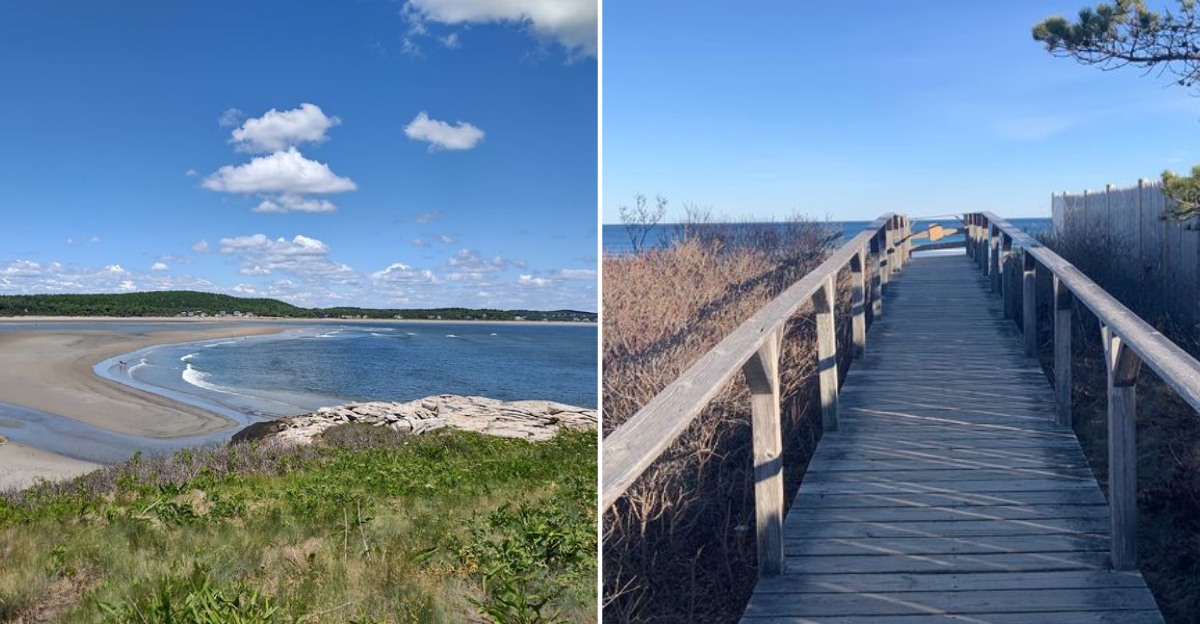
Maine’s coastline runs close to 3,500 miles if you count every cove, inlet, and rocky stretch, but most people end up seeing the same handful of well-known spots. I spent a few weeks driving the coast from Saco all the way up to Machiasport, and it completely changed how I think about a beach road trip.
Some of these places have soft sand that squeaks under your feet, others are covered in smooth stones that clatter together with the waves, and a few feel so quiet and out of the way it’s like you’ve got the whole Atlantic to yourself.
Throw a cooler in the car, queue up a good playlist, and map out a route, because these stops show just how much incredible shoreline Maine is still keeping a little under the radar.
1. Laudholm Beach, Wells
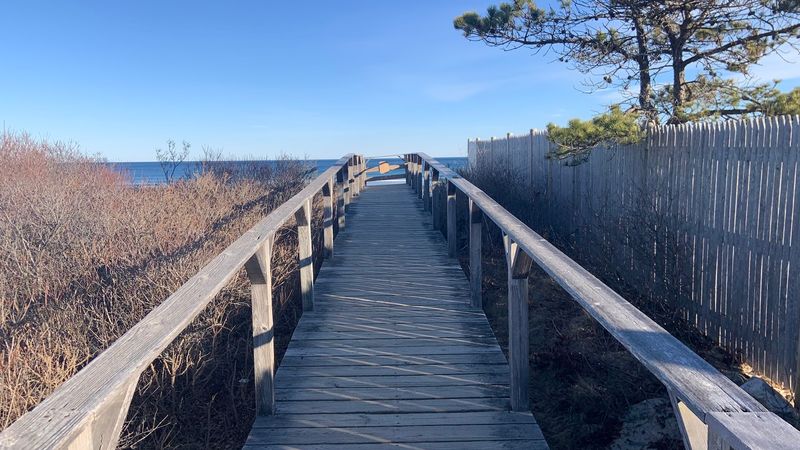
Right at the end of a peaceful trail through the Wells National Estuarine Research Reserve, Laudholm Beach rewards patient hikers with one of the most unspoiled stretches of sand in southern Maine.
The walk through salt marshes and coastal forest is part of the experience, and by the time you reach the shore, you genuinely feel like you have earned it. Shorebirds dart along the waterline, and the absence of nearby parking lots keeps the crowds thin even on warm summer weekends.
The reserve itself covers over 2,000 acres, so there is plenty of exploring to do before and after your beach time. Trails wind past tidal creeks where herons stand perfectly still, hunting with remarkable patience.
Bring binoculars because the birdwatching here rivals any dedicated wildlife refuge on the coast.
Water temperatures in Wells tend to be cold even in August, so most visitors wade rather than swim, which honestly makes the whole experience more relaxing.
Bring a blanket, a good book, and a snack, and plan to stay longer than you originally intended. Laudholm Beach has a quiet way of making time disappear.
2. Half Mile Beach, Georgetown
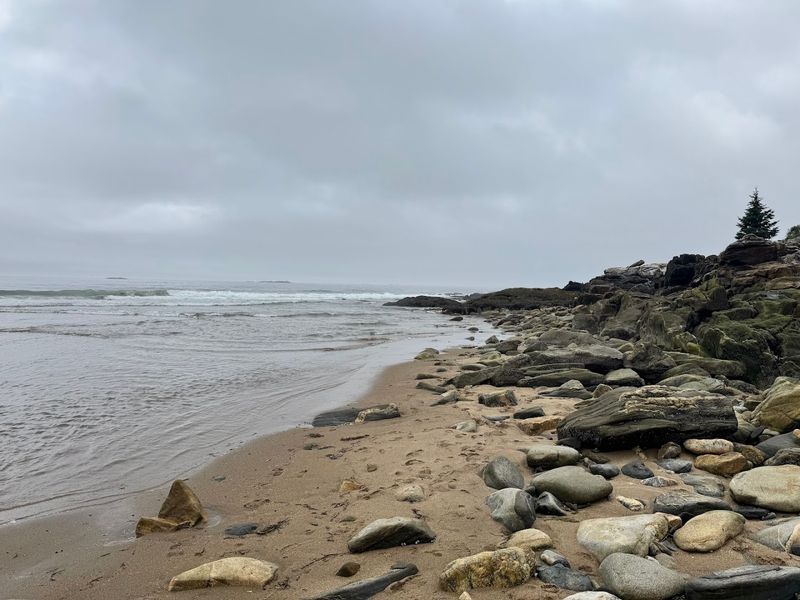
Half Mile Beach sits on Georgetown Island, a place that already feels like it belongs to a quieter era, and the beach itself doubles down on that feeling.
You reach it by driving down a narrow road through dense spruce forest, and the transition from dark woodland to bright open sand is genuinely dramatic. The beach faces the open Atlantic, with stronger surf and wide tidal flats that are better suited for exploring than calm-water swimming.
Georgetown Island is connected to the mainland by a bridge, so you do not need a ferry, but the island still manages to feel delightfully off the map. The surrounding waters are popular with kayakers who paddle out to explore the nearby islands and rocky outcroppings scattered across the bay.
Low tide reveals a wide, flat expanse of sand perfect for searching out periwinkles, crabs, and the occasional sea star tucked into rocky pools at the beach edges.
The light here in the late afternoon turns the water a warm copper color that photographers absolutely love. Half Mile Beach is the kind of place that locals mention only when they really trust you.
3. Seawall Beach, Phippsburg
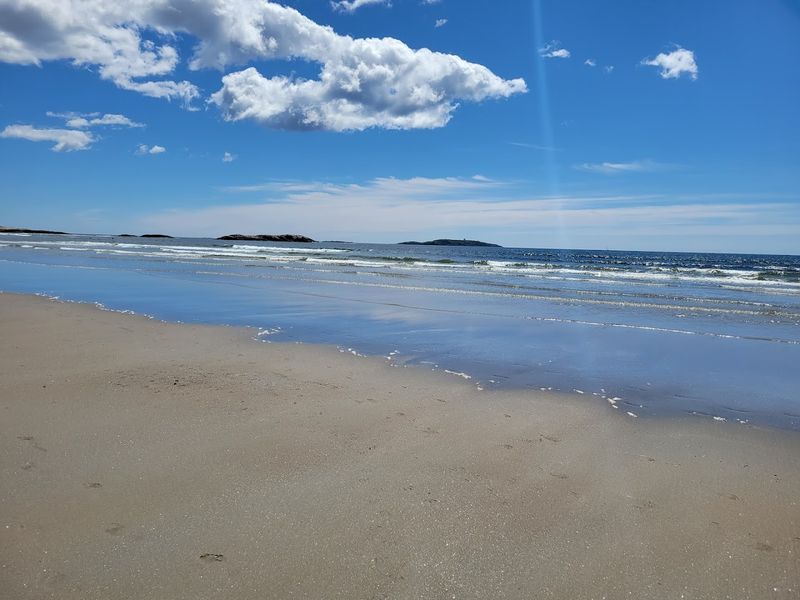
Bold, windswept, and gloriously undeveloped, Seawall Beach in Phippsburg stretches for nearly a mile along a thin barrier spit that separates the open Atlantic from a quiet salt marsh.
The contrast is striking: on one side you get full ocean surf rolling in with real force, and on the other side a peaceful marsh hums with bird activity. Standing at the center of the spit, you can practically see both worlds at once.
Seawall Beach is part of the Bates-Morse Mountain Conservation Area, and access requires a roughly 2-mile walk each way from the parking area along a trail that winds through coastal meadows. Dogs and other pets are not allowed anywhere in the conservation area, so plan accordingly before visiting.
The piping plover nests here every summer, making Seawall one of the more important shorebird habitats in the entire state. That conservation focus also means the beach stays beautifully clean and natural.
The surf can be strong, so swimming is best left to confident ocean swimmers, but the sheer drama of standing on that narrow strip of sand with the Atlantic crashing in front of you is worth every step of the walk.
4. Little Hunters Beach, Acadia
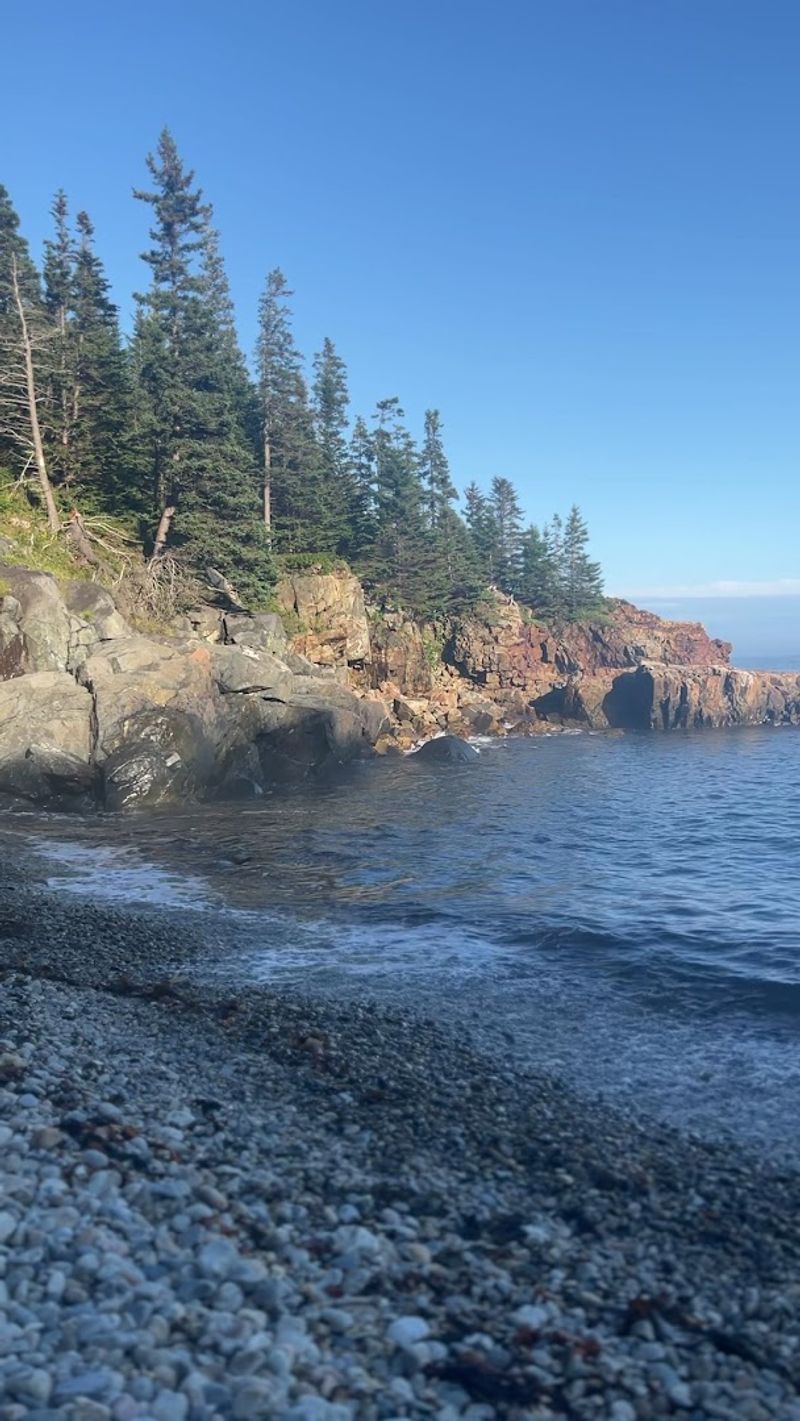
Most people drive right past Little Hunters Beach on the Park Loop Road in Acadia National Park without realizing what they are missing. Pull over at the small roadside turnout, walk down the short path, and you will find a cobblestone cove that looks almost too perfect to be real.
The beach is entirely made up of smooth, rounded stones that have been polished by centuries of wave action, and when the surf rolls over them, they produce a soft, hollow rattling sound unlike anything you will hear on a sandy beach.
The cove is small and somewhat sheltered, which makes it a calmer spot than some of Acadia’s more exposed shoreline. The surrounding forest of spruce and birch comes right down to the waterline, framing the rocky beach in a way that makes every photograph look professionally composed.
Sunrise visits are especially magical here. The early light catches the wet stones and turns them a dozen shades of amber, rust, and silver all at once.
Little Hunters Beach is just a short drive from the more famous Sand Beach, but it attracts a fraction of the visitors and offers a completely different kind of coastal experience that feels genuinely intimate and surprising.
5. Seawall, Acadia
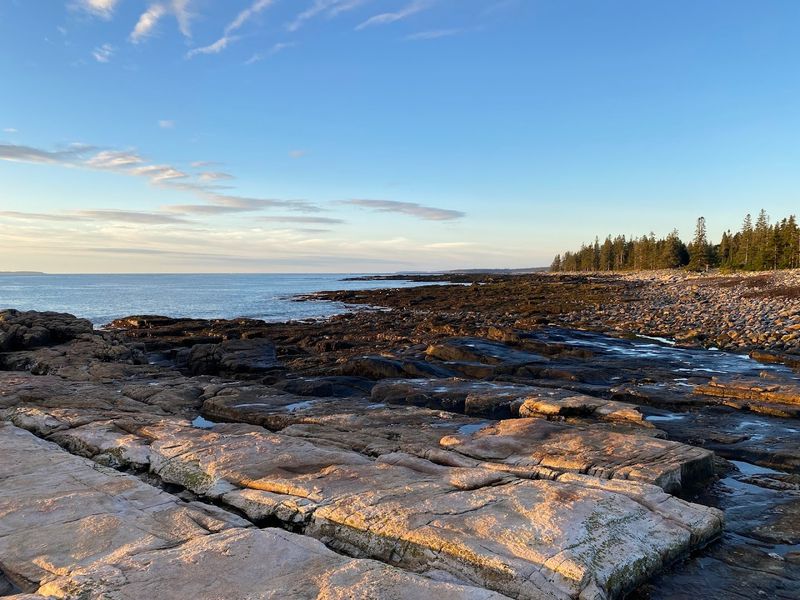
On the quieter western side of Mount Desert Island, the Seawall district of Acadia National Park offers a shoreline experience that feels genuinely different from the park’s busier eastern side.
A natural barrier of boulders and cobblestones forms a long, low wall between the forest and the sea, and walking along it while waves push and pull against the rocks gives you a powerful sense of just how dynamic this coastline really is.
The campground at Seawall is one of the best-positioned in the park, putting you within easy walking distance of the shore for early morning and evening visits when the light is softest.
Nearby trailheads on the west side of Mount Desert Island lead to quieter hikes, including Ship Harbor and Wonderland, which wind through mossy spruce forest to rocky coastal viewpoints.
Seawall sits near Bass Harbor on the southwestern tip of Mount Desert Island, and the famous Bass Harbor Head Lighthouse is just a short drive away.
Combining a sunset visit to the lighthouse with an evening walk along the Seawall shoreline makes for one of the most satisfying days you can put together anywhere in coastal Maine. The pace here is slower, the crowds are thinner, and the scenery loses nothing by comparison.
6. Roque Bluffs State Park Beach, Roque Bluffs
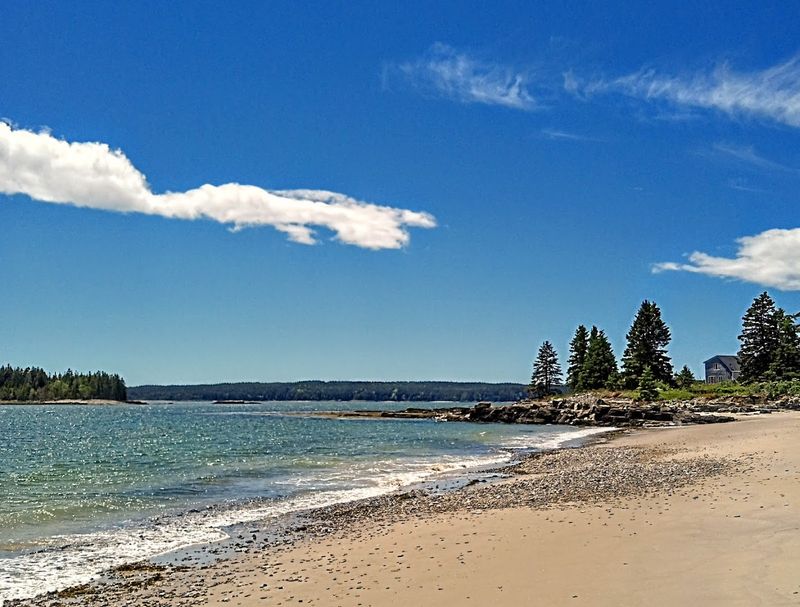
Roque Bluffs State Park sits in Washington County, which is the easternmost county in the entire United States, and the beach here has an end-of-the-world quality that is impossible to fake.
The park features something genuinely unusual: a freshwater pond sits right next to the ocean beach, separated only by a narrow strip of land. Families often use the pond for warmer, calmer swimming while the ocean side offers that classic cold Maine surf experience just a short walk away.
The beach itself is a mix of smooth pebbles and coarse sand, curving around a wide bay with low bluffs providing a gentle backdrop.
The remoteness of Washington County means visitor numbers stay low even during peak summer months, and the park has a peaceful, unhurried atmosphere that feels increasingly rare along popular coastlines.
Roque Bluffs sits south of Machias, with access via Roque Bluffs Road from either Jonesboro or the Machias area, and the drive through the blueberry barrens and spruce forests of Downeast Maine is a road trip experience all on its own.
Getting here takes commitment, but that commitment is precisely what keeps this beach so beautifully uncrowded. The reward for making the trip is a stretch of coast that feels honest, raw, and completely your own.
7. Kettle Cove State Park, Cape Elizabeth
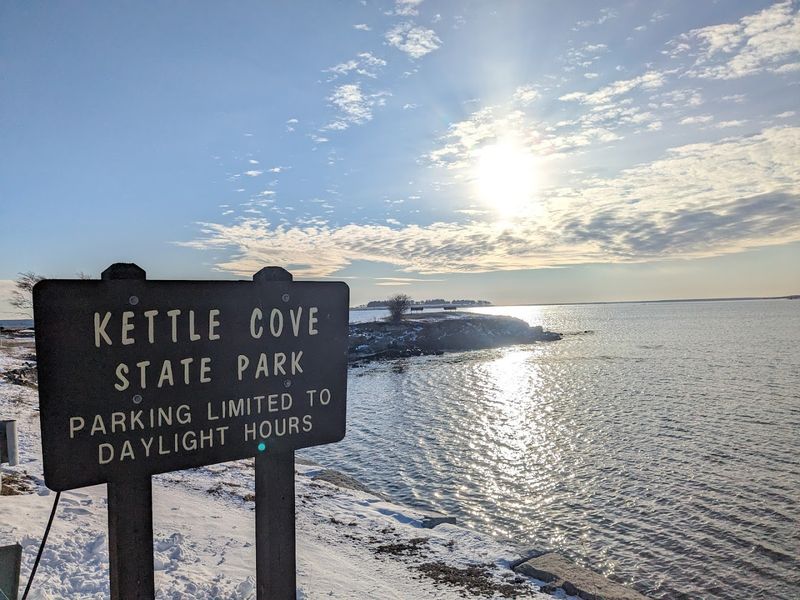
Cape Elizabeth is already well known for Two Lights State Park and the iconic Portland Head Light, but Kettle Cove tends to slip under the radar despite sitting just minutes away from those famous landmarks.
The cove is small and sheltered, which gives it a calm, almost lagoon-like character on days when the rest of the coast is getting pounded by swell.
The sandy beach is modest in size, and while it offers calmer conditions than more exposed areas, it is better known for its scenic shoreline and coastal views than as a primary swimming destination.
The adjacent Crescent Beach State Park shares a parking area with Kettle Cove, and together the two areas offer a satisfying mix of sandy swimming beach and rockier, more dramatic shoreline.
Tidepools at the edges of Kettle Cove reward anyone willing to crouch down and look carefully, with green crabs, hermit crabs, and anemones putting on a show at low tide.
Cape Elizabeth is only about 10 miles south of downtown Portland, making Kettle Cove an easy day trip from the city.
The combination of easy access, calm water, and proximity to one of New England’s most beloved lighthouse views makes this cove a smarter choice than most visitors realize. Come on a Tuesday morning in July and you might have the whole sandy pocket nearly to yourself.
8. Popham Beach State Park, Phippsburg
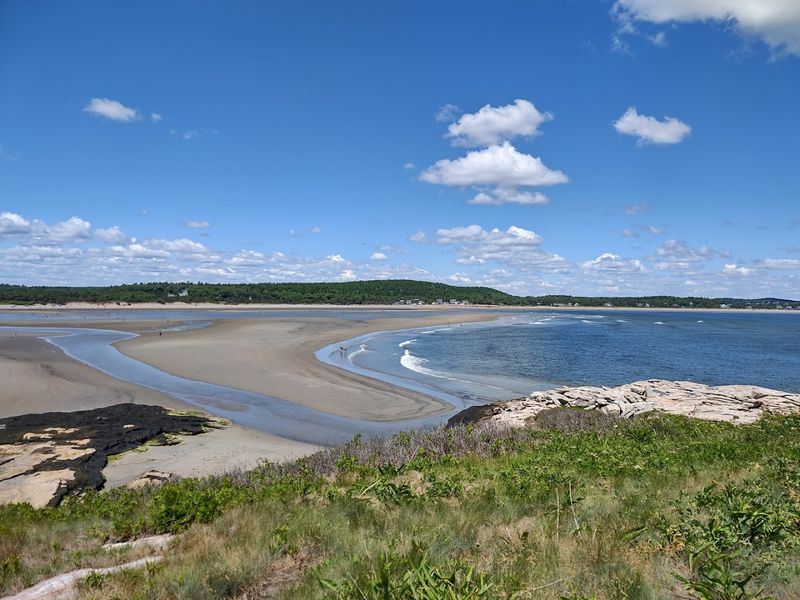
Popham Beach State Park regularly earns a spot on lists of the best beaches in New England, and spending even one afternoon here makes it clear why.
The beach at Phippsburg stretches for nearly three miles of pale, fine sand, and at low tide, sandbars and tidal channels create a constantly shifting landscape, and conditions can change significantly from year to year.
The Kennebec River meets the Atlantic just to the north, adding a layer of visual drama to an already spectacular setting.
Fort Popham, a Civil War-era granite fortification, stands at the northern end of the beach and is worth a short detour. The fort was built to guard the mouth of the Kennebec River, and walking through its arched granite chambers while the ocean crashes just outside the walls is a genuinely memorable experience.
Popham Beach can get busy on peak summer weekends, but its sheer size means the crowds spread out and rarely feel oppressive.
Early morning visits in late August hit a sweet spot: the summer warmth still lingers, the parking lot is half-empty, and the low-angle light turns the sandbar reflections into something that looks almost painted. Popham is the kind of beach that earns its reputation honestly and then exceeds it.
9. Ferry Beach State Park, Saco
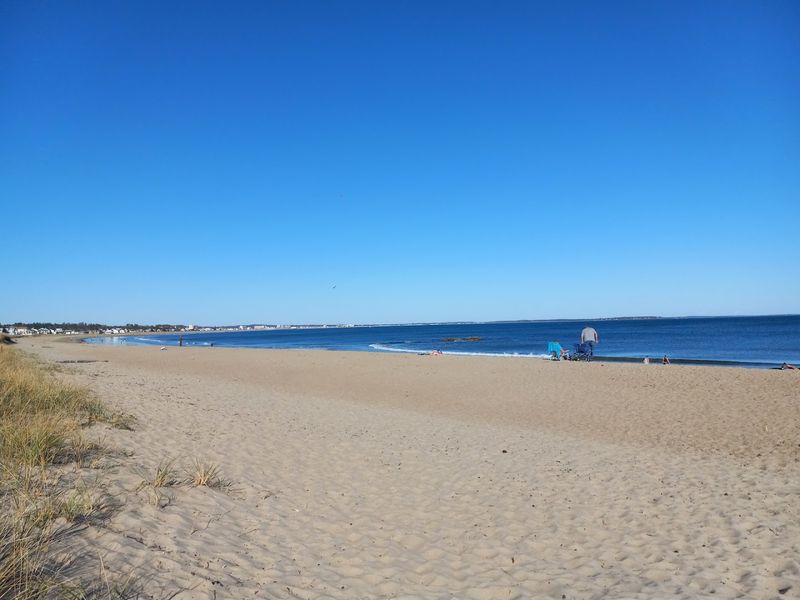
Ferry Beach State Park in Saco holds a quiet botanical secret that most beachgoers walk right past: the park contains one of the northernmost stands of tupelo trees in the entire United States.
These broad-leafed trees, more commonly found in the South, turn a brilliant scarlet in October, making Ferry Beach one of those rare places where fall foliage and coastal scenery overlap in a single location.
The beach itself is broad and sandy, with gentle surf that makes it one of the most family-friendly spots on the Maine coast.
The park sits between Old Orchard Beach and Camp Ellis, two of the more developed coastal communities in southern Maine, which makes Ferry Beach feel like a calm oasis by comparison.
Trails loop through the forest behind the beach, passing through the tupelo grove and alongside a freshwater marsh where frogs and red-winged blackbirds compete for acoustic dominance on summer evenings.
Saco is about 15 miles south of Portland, making Ferry Beach one of the most accessible state parks on this list.
The combination of a solid swimming beach, interesting ecology, and that spectacular autumn color display gives Ferry Beach a personality that extends well beyond the typical summer season. Plan a visit in early October and you will see this place in its most underrated form.
10. Jasper Beach, Machiasport
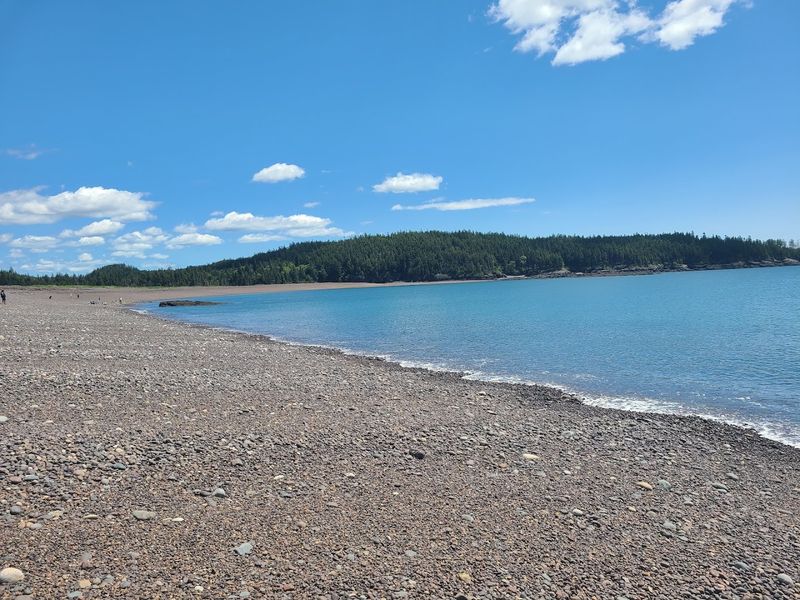
Jasper Beach in Machiasport might be the most geologically fascinating strip of coastline in all of New England. Instead of sand, the beach is carpeted in millions of smooth, polished stones, including colorful jasper, in shades ranging from deep red to green and purple.
The stones have been tumbling against each other in this protected cove for thousands of years, and the result is a beach that looks like a jeweler’s display case scaled up to shoreline size.
The cove sits along Howard Cove Road in Machiasport, a small community in Washington County about 90 miles east of Bangor. Getting here requires real commitment, but that remoteness is a big part of what makes Jasper Beach so extraordinary.
You will likely share the shoreline with only a handful of other visitors, and the silence is broken only by the clicking and rolling of stones as waves push through them.
Please note that removing stones from Jasper Beach is prohibited, which is worth mentioning because the temptation is real.
The beach is best enjoyed in the morning when the wet stones catch the light and their colors are most vivid. Jasper Beach is not the easiest destination on this list, but it is almost certainly the most unforgettable one.