
This Colorado Lookout Takes A Little Climb, But The View At The Top Is Worth Every Step
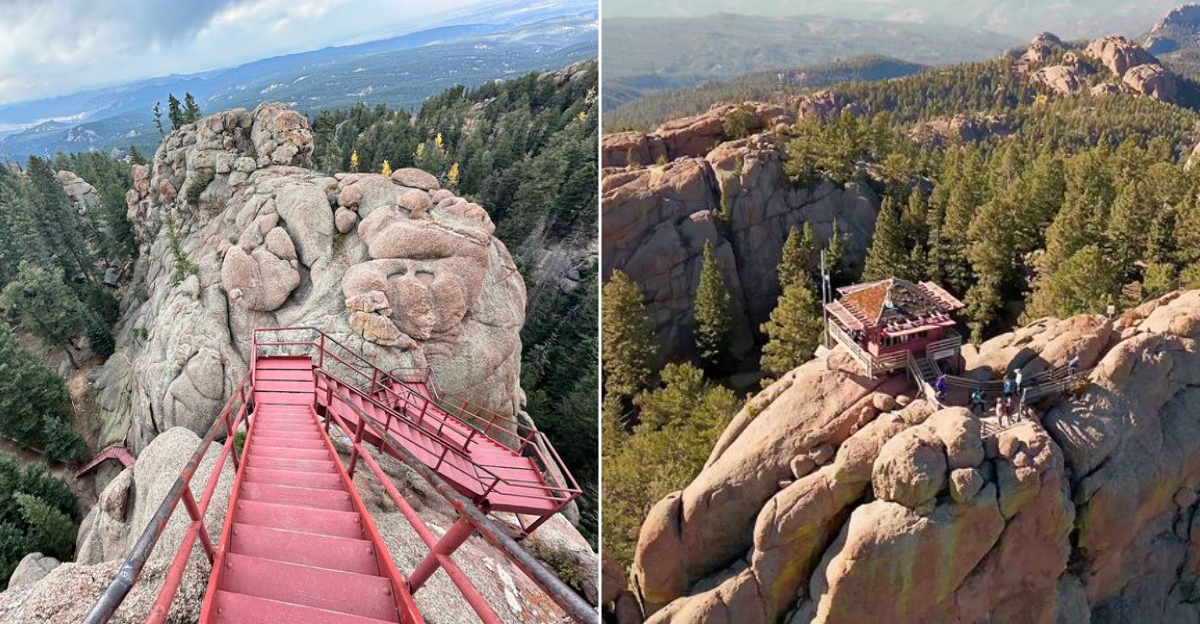
A short hike feels different when the payoff looks like you cheated the mountain. After miles of rough dirt road and enough washboard bumps to make your dashboard nervous, this trail delivers a summit view that feels wildly generous for the effort.
High above the trees in Colorado, hikers are rewarded with open sky, long ridgelines, and a full-circle panorama that makes every dusty mile suddenly seem reasonable. The route is manageable, well kept, and just adventurous enough to make the day feel earned without turning it into a survival story.
At the top, an old fire lookout adds the perfect bit of character, giving the whole climb a sense of history, height, and weekend bragging rights.
For anyone craving Colorado’s mountain energy without committing to an all-day expedition, this is the sign to lace up, pack water, and let the road lead somewhere unforgettable.
The Road In Deserves Its Own Warning Label
Before you even lace up your boots, the road to this spot has a personality of its own. The roughly eight-mile stretch of gravel leading to the trailhead off South Rampart Range Road is best described as enthusiastically unpaved.
It rattles your coffee, tests your suspension, and occasionally makes you wonder if you misread the directions entirely.
Visitors consistently recommend a vehicle with decent ground clearance, and that advice is worth taking seriously. Low-clearance sedans can manage it in dry summer conditions, but the washboard texture is real and persistent.
Plan for a slow, deliberate drive rather than a quick cruise.
The payoff for tolerating the bumpy approach is a well-organized trailhead with restrooms available at the parking lot, which is a detail worth knowing before you start. Parking fills up fast on weekends, especially after 9 a.m., so an early arrival is not just a suggestion.
Overflow parking exists farther back up the road, but adding extra walking distance to an already uphill hike is the kind of bonus most people prefer to skip.
Pro Tip: Arrive before 9 a.m. on weekends to secure a main lot spot and avoid the overflow shuffle entirely.
What the Trail Actually Feels Like on Your Legs
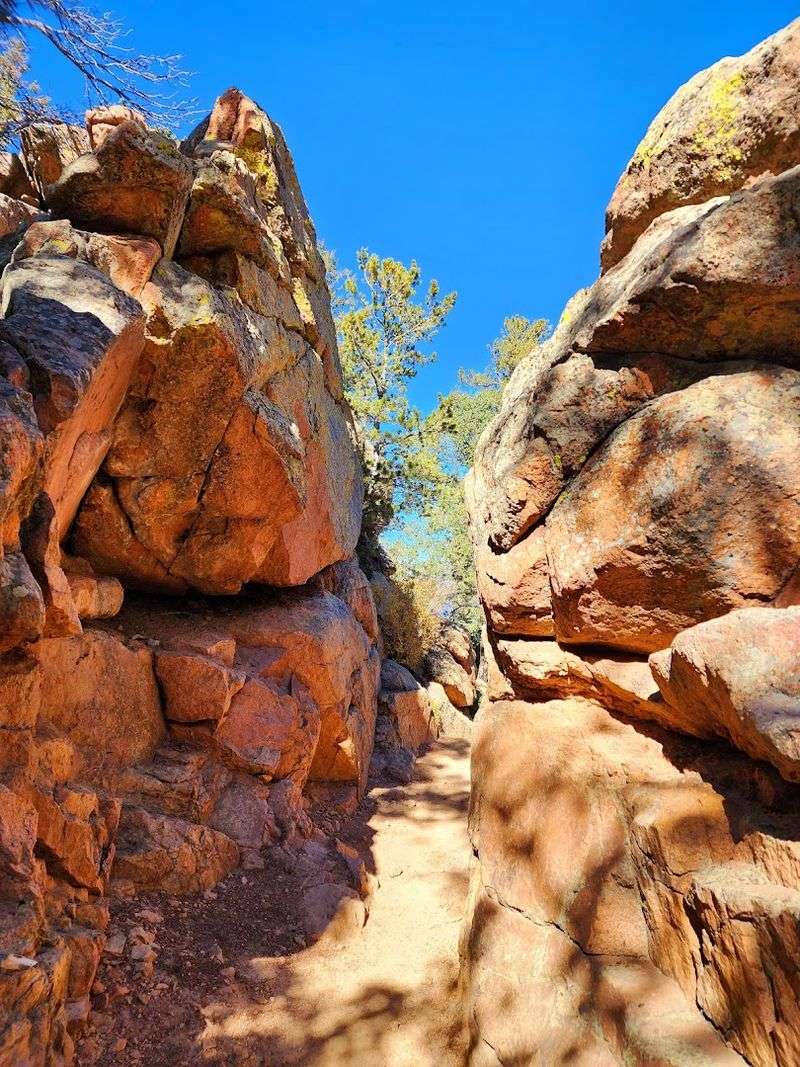
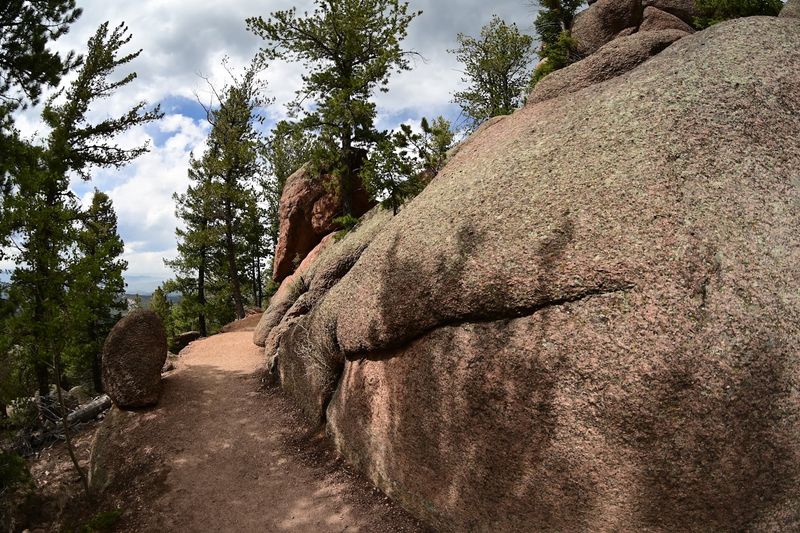
The trail to Devil’s Head Lookout is listed as moderate, which in Colorado hiking terms can mean anything from a pleasant stroll to a personal reckoning with your fitness choices. Here, it lands somewhere honest in the middle.
The path climbs steadily through shaded switchbacks lined with tall pines, and the tree coverage makes the elevation gain feel more manageable than the numbers suggest.
The round trip runs approximately three miles, and the trail is clearly marked and well-maintained throughout. Elevation gain is the main challenge rather than technical terrain, so hikers who are comfortable with a sustained uphill walk will find this very approachable.
Benches appear at intervals along the route, which is genuinely useful and not just decorative.
Children as young as six or seven have completed this hike, and visitors have spotted elderly hikers reaching the top without drama. Dogs are welcome on leash.
Proper footwear with grip matters more than athletic pedigree here, and two to three liters of water per person is the standard recommendation regardless of fitness level.
Best For: Families, beginner-to-intermediate hikers, dog owners, and anyone who wants a meaningful workout without technical scrambling or specialized gear.
Those Red Stairs Are the Main Character
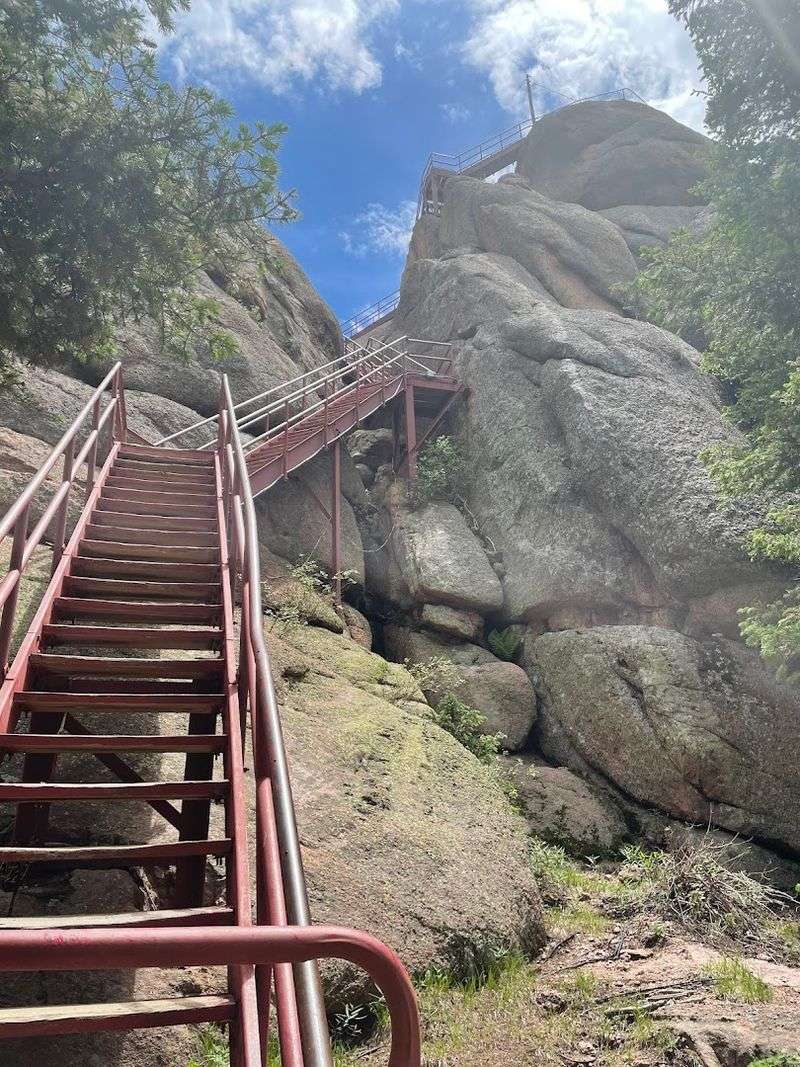
You will see photos of these stairs before you go, and they will still catch you off guard when you arrive. The red metal staircase leading up to the Devil’s Head fire lookout tower is steep, narrow, and dramatic in the best possible way.
There are roughly 143 to 150 steps depending on which visitor you ask, and climbing them while trying not to look down is its own small adventure.
The stairs are sturdy and well-built, so the intimidation factor is mostly psychological rather than structural. Visitors who are nervous about heights report gripping the railings firmly and moving quickly, which turns out to be a perfectly reasonable strategy.
Once you reach the platform at the top, the anxiety tends to dissolve immediately upon seeing the view.
A park ranger is sometimes stationed in the tower and has been known to share information about the surrounding area and the history of the fire lookout operation. The lookout itself is a functioning fire detection station, which adds a layer of genuine purpose to the whole climb that most scenic viewpoints simply cannot offer.
Insider Tip: Keep pets leashed and be mindful of space at the top. The platform area is compact, and a confident cat has reportedly held down the interior on at least one occasion.
The View That Makes Every Complaint Irrelevant
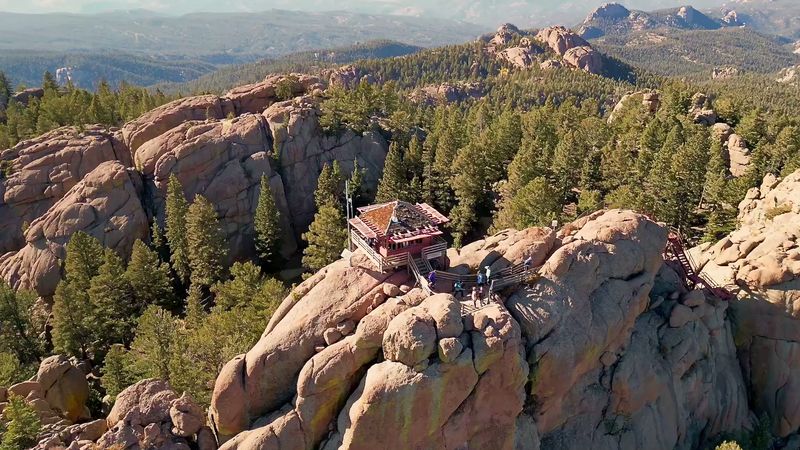
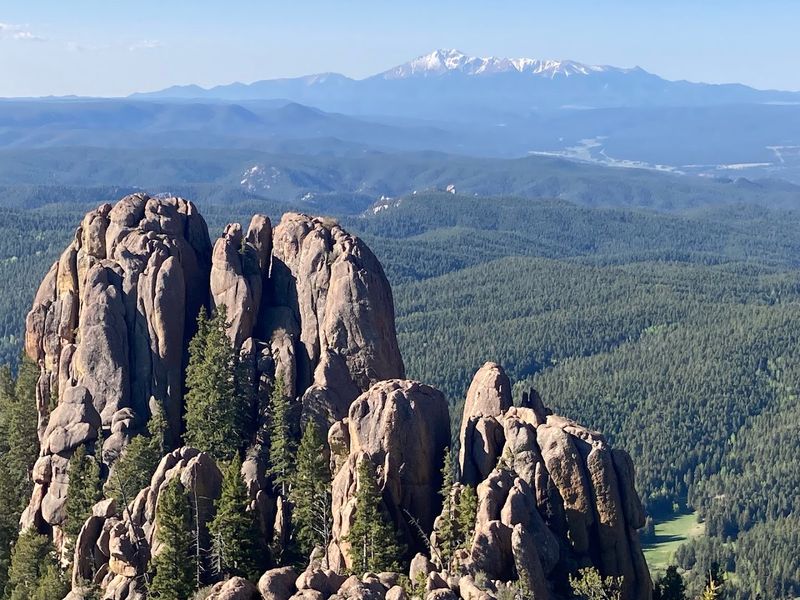
Standing on the platform of Devil’s Head Lookout Tower and turning slowly in a full circle is the kind of moment that makes you forgive the bumpy road, the parking stress, and the burning in your calves from the final push uphill. The 360-degree view stretches across forested ridges, distant peaks, and open sky in every direction without a single obstruction.
Sunrise visits are particularly praised by those willing to time their arrival accordingly. The light across the mountain landscape at that hour produces the sort of photographs that genuinely surprise people when they look at them later.
Even mid-morning on a clear day delivers views that feel almost disproportionately generous for a hike of this length.
Wildlife sightings along the trail are common, with woodpeckers being a frequently mentioned highlight. The forested approach keeps things interesting on the way up, so the summit view does not have to carry the entire experience on its own.
That said, it absolutely could. Bring extra storage space on your phone because the temptation to photograph everything from every angle is essentially unavoidable up there.
Why It Matters: The 360-degree summit view is among the most accessible high-reward panoramas in the greater Denver area, making it worth planning around rather than stumbling into.
Making a Proper Morning of the Whole Thing
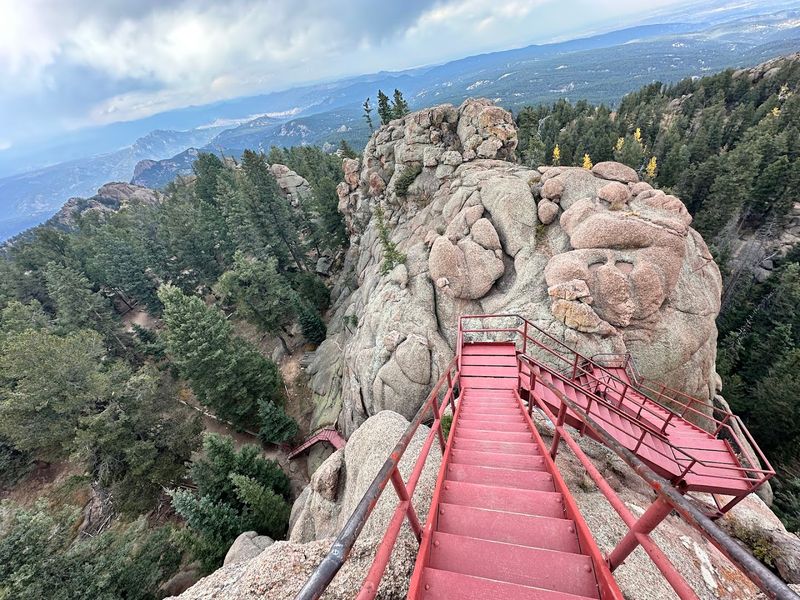
Devil’s Head Lookout rewards the people who treat it like a real outing rather than an afterthought. Getting there before 8 a.m. on a weekend morning means securing parking, enjoying the trail before the crowd density peaks, and arriving at the summit with enough time and energy to actually absorb the view rather than just photograph it and hustle back down.
The hike takes most visitors between one and two hours to complete depending on pace and break frequency. That timeline makes it realistic to finish by late morning, leaving the rest of the day open.
Pairing the hike with a stop somewhere in the Sedalia area on the way back turns a single trail into a satisfying full morning with a natural endpoint.
Families with kids who are eight and older tend to have the smoothest experience, particularly on the stairs. Couples find the trail length comfortable for a side-by-side conversation pace.
Solo hikers report the shaded switchbacks and regular bench placements making the climb feel less solitary and more like a well-designed experience with good company built in.
Planning Advice: Pack snacks, at least two liters of water per person, and dress in layers since temperature drops noticeably as elevation increases, even on warm mornings.
What the Lookout Tower Itself Has to Say
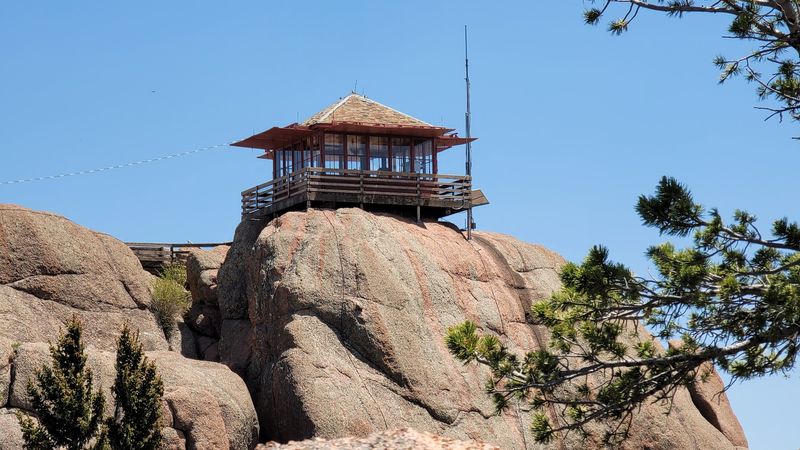
The Devil’s Head Fire Lookout Tower has been standing since 1951, and it carries that history quietly, without trying to turn itself into a monument. Perched high above the surrounding forest, it feels practical, weathered, and purposeful, the kind of place that has earned its importance through decades of daily use.
During the summer months, a volunteer host typically staffs the tower and is often genuinely happy to talk with visitors about fire detection, local wildlife, changing weather, and what it is like to spend an entire season watching the horizon from such a remote point.
Inside the glass-enclosed cab at the top, the Osborne Fire Finder remains one of the most fascinating features. This circular map device is still used to pinpoint the location of smoke across the forest, linking old methods with an ongoing responsibility.
Seeing it in place, and understanding that it is not just an exhibit but a working tool, makes the history feel immediate and real.
That is what makes Devil’s Head special. It is not preserved only for nostalgia.
It is alive, useful, and still doing the job it was built to do.
The Kind of Quiet You Actually Forget Exists
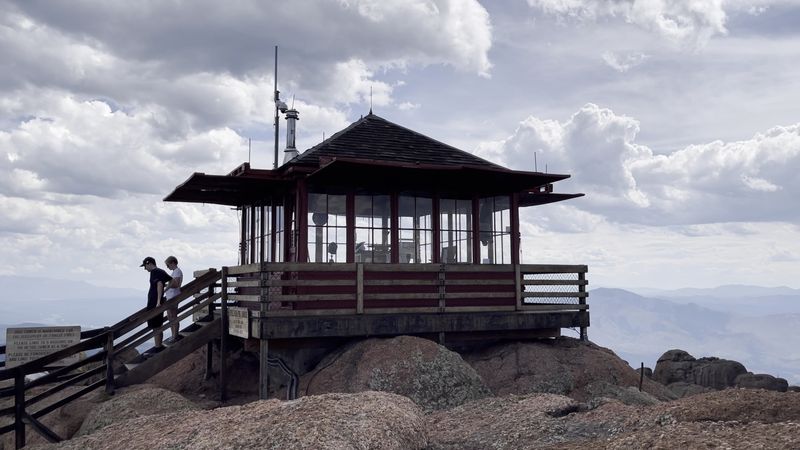
Somewhere between the trailhead and the summit, the noise of ordinary life begins to fall away. There is no traffic pressing in from a distance, no notifications pulling your attention sideways, and no steady background hum of anything electric.
What takes its place is simpler and much easier to trust: wind moving through ponderosa pines, the occasional bird calling from somewhere unseen, gravel shifting under your boots, and the steady rhythm of your own breathing as the trail climbs higher.
People who make this hike regularly often say the silence is half the reason they return. It is not empty silence, exactly, but a kind of wide-open quiet that gives your mind room to loosen.
After a while, the worries you carried from the parking lot start to feel smaller, as if the altitude and the trees are quietly putting them in perspective.
You do not need to meditate, journal, or make the moment meaningful on purpose. Up here, the place does most of that for you.
Just standing still for a minute, listening to nothing in particular, is enough to feel something inside you reset.
What to Stuff in Your Pack Before You Go
Hydration is non-negotiable here, especially if you are visiting between June and August, when temperatures at altitude can feel deceptively mild. The air may be cool, and the breeze might keep you comfortable, but your body is still working harder than you realize.
Bring more water than you think you need, and make sure it is easy to reach while you hike. A snack with real staying power, like nuts, trail mix, or a protein bar, is also worth packing, especially for the climb back down.
Layers matter too. Choose pieces you can peel off, shove into a bag, and pull back on quickly when the weather shifts.
Sunscreen deserves more attention than most people give it, even on cloudy days. UV exposure at elevation is genuinely no joke, and a hazy sky will not protect you as much as you think.
Trekking poles are optional, but they become quietly appreciated on the descent, right around the time your knees start having opinions.
Sturdy shoes with ankle support will take you farther, safer, and with far less complaint than anything chosen simply because it looks fast.