
This Deep Washington Canyon Hides The Secret Entrance To A Real-Life Forest Wonderland
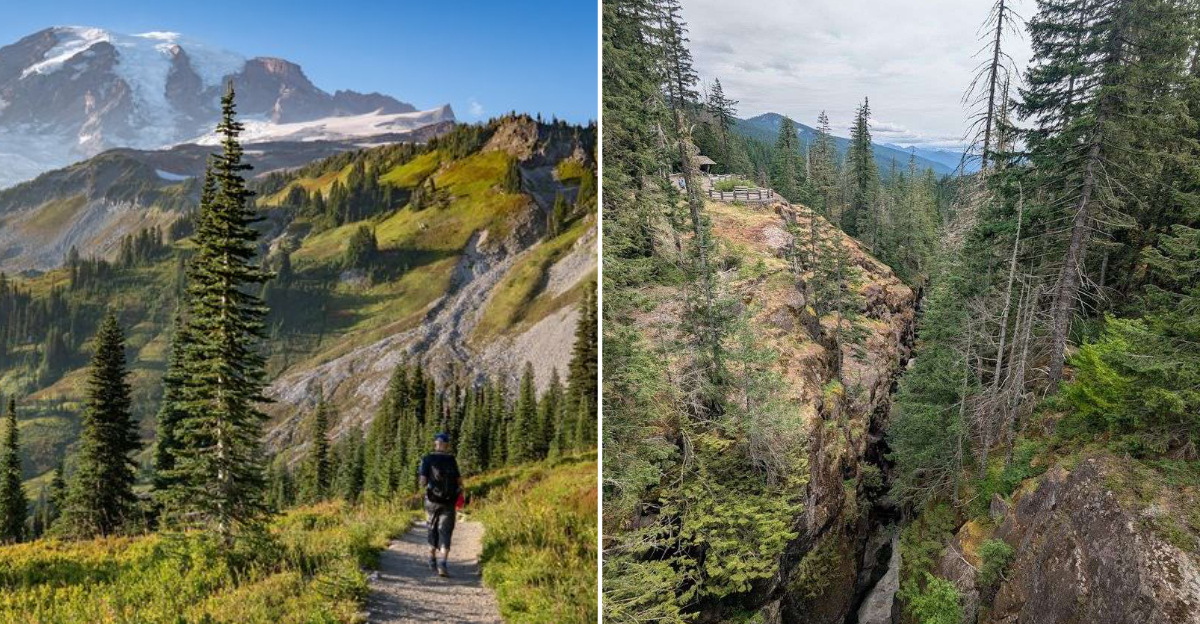
There I was, standing at the edge of something that looked like the earth had simply cracked open in front of me. The canyon carved deep into the landscape like a secret kept for eons, its walls rising on either side in shades of ancient stone.
Local hikers call this place something special—this deep Washington canyon holds a mystery that most travelers miss entirely. I had heard whispered legends about a hidden entrance, a gateway to what feels like another world entirely.
The morning mist was just beginning to lift when I realized why people speak in hushed tones about this spot. What awaited beyond that secret threshold was the kind of natural wonder that makes you forget everything outside these trees existed at all.
The Canyon That Drops 180 Feet Into The Earth
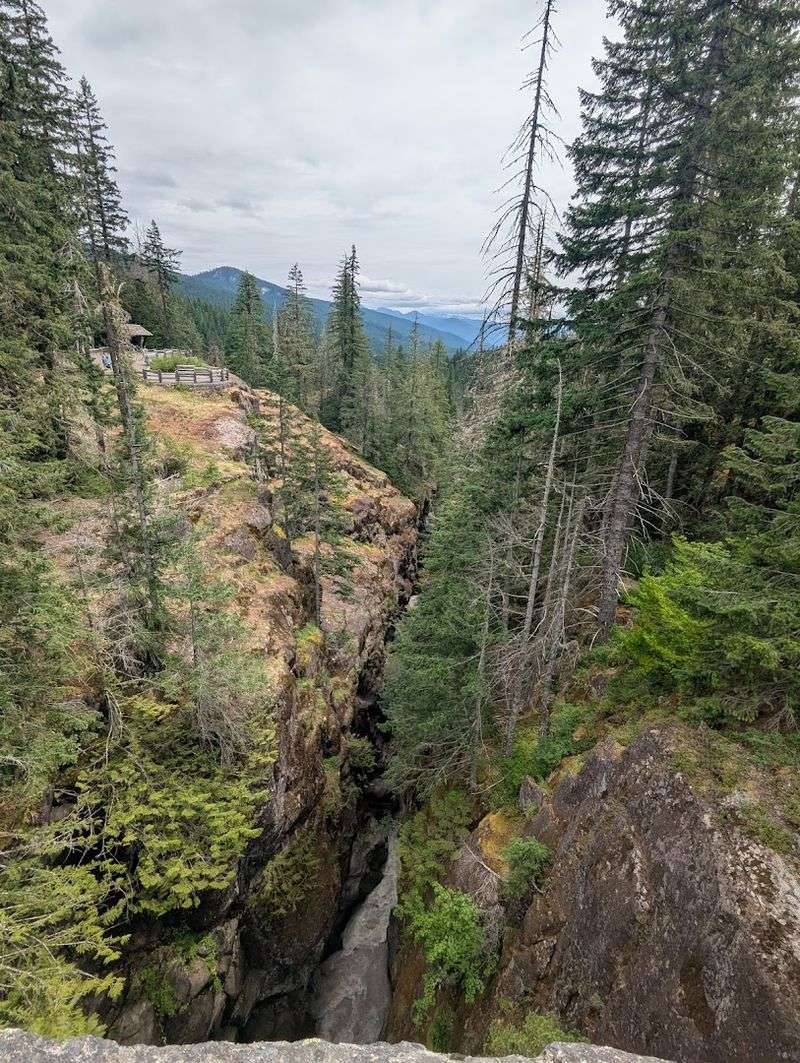
Standing on the bridge over Box Canyon for the first time, you get the kind of stomach-drop feeling that no photograph can fully prepare you for. The Muddy Fork of the Cowlitz River has been grinding through this rock for thousands of years, and the result is a slot canyon so narrow and deep that sunlight barely touches the water below.
The canyon reaches depths of 180 feet, and the walls are so close together in places that the roar of the river echoes upward like something alive. Mosses and ferns cling to every crack in the basalt, painting the stone in shades of deep green even in late summer.
What makes this spot especially rewarding is how accessible it is. You do not need to be an experienced hiker to appreciate the view from the bridge.
Interpretive panels nearby explain the geology behind how the canyon formed, giving the whole experience an educational layer that kids and adults both enjoy.
Stevens Canyon Road And The Drive That Sets The Stage
Getting to Box Canyon is half the adventure, and Stevens Canyon Road makes sure of that. This winding stretch of pavement cuts through one of the most visually striking corridors in all of Mount Rainier National Park, and every curve seems to reveal something worth pulling over for.
The road is typically open to vehicles from late May through September, so timing your visit around those months is key. During peak summer, the drive offers views of towering old-growth trees, distant ridgelines, and occasional glimpses of cascading waterfalls threading down rocky hillsides.
Driving this road feels deliberate, like the park itself is asking you to slow down and pay attention. The pavement is smooth enough for standard vehicles, and the Box Canyon parking area is clearly marked with a small lot that includes a picnic area and restrooms.
Arriving early in the morning on weekdays gives you the best chance of finding a quiet, uncrowded experience at this underrated entry point.
The 0.5-Mile Loop That Packs A Big Punch
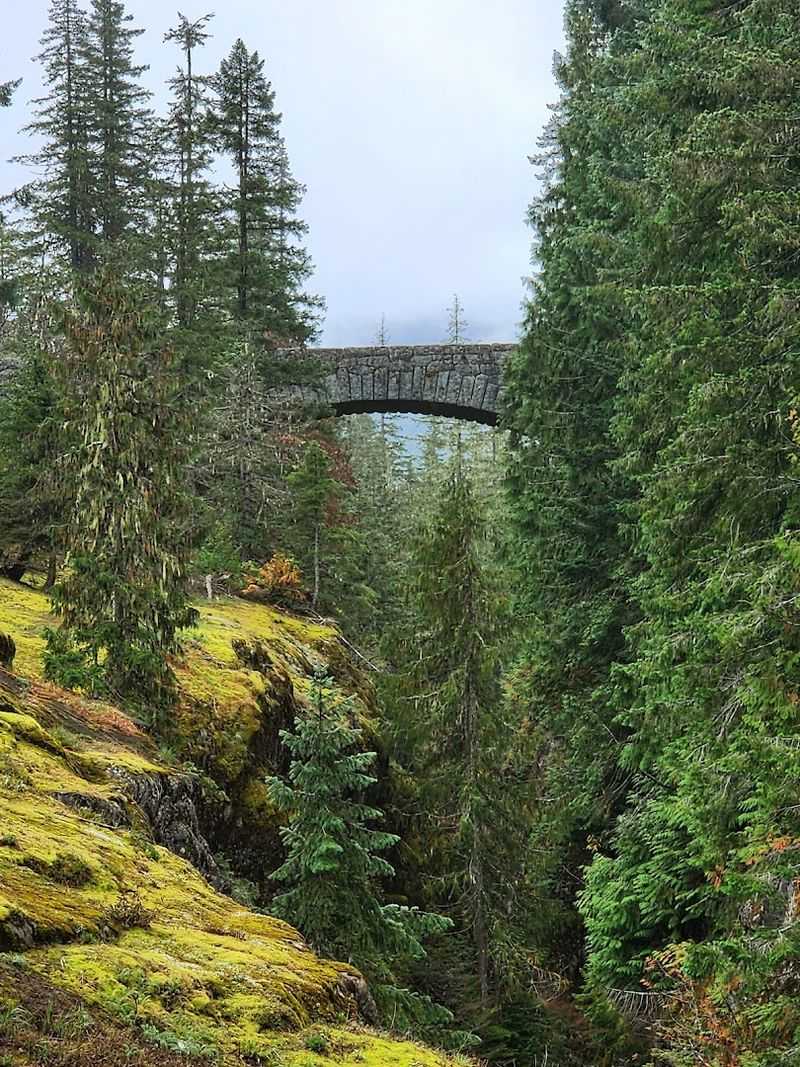
Not every great hike has to be long, and the Box Canyon Loop Trail proves that convincingly. This 0.5-mile paved path is one of those rare short walks that earns its place on a must-do list through sheer scenic payoff rather than distance or difficulty.
The loop begins at the parking area and takes you along the rim of the canyon, offering multiple vantage points where you can peer down into the gorge and watch the river churn far below. The pavement makes it accessible for families with strollers or visitors with mobility considerations, which is a thoughtful touch in a park that can sometimes feel geared only toward serious athletes.
Where the loop connects to the Wonderland Trail, a small sign marks the junction, and it is easy to feel the pull of the longer path even if you only planned a short visit.
Many hikers end up exploring a little further than intended, which is exactly the kind of happy accident this place seems designed to create.
Entering The Wonderland Trail From A Quieter Door
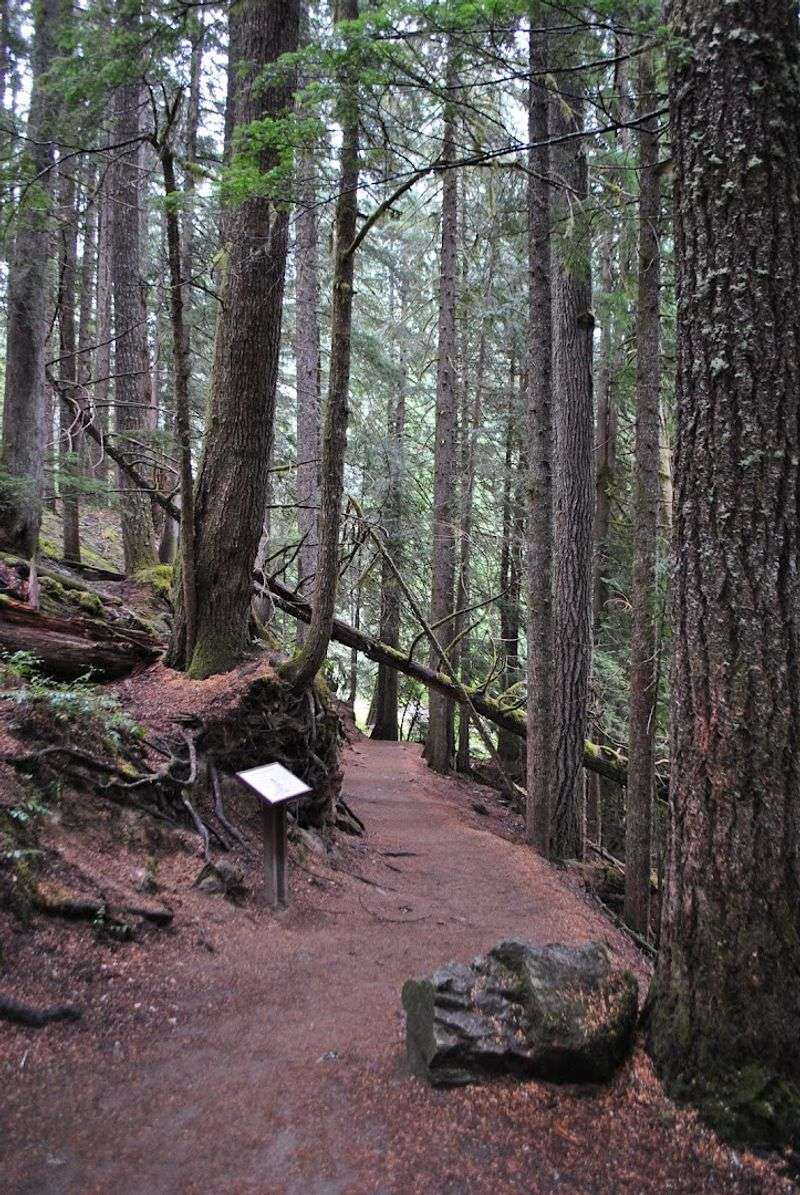
The Wonderland Trail is one of the most celebrated long-distance hiking routes in the Pacific Northwest, circling the full 93-mile perimeter of Mount Rainier. Most hikers enter from more popular trailheads like Longmire or Sunrise, but Box Canyon offers a quieter, less crowded alternative that experienced hikers genuinely appreciate.
Starting here puts you in an immediate old-growth forest environment, which sets a tone of quiet immersion from the very first steps. The trail heading west from Box Canyon leads past Maple Creek camp, a backcountry campsite that makes an excellent first overnight stop for those doing a multi-day section hike.
Continuing further west eventually brings hikers to Reflection Lakes, Louise Lake, and the spectacular Narada Falls, one of the most photographed waterfalls in the entire park.
The route in the other direction heads toward Martha Falls and Sylvia Falls, both of which reward hikers with dramatic cascades tucked into forested ravines. Box Canyon is a genuinely smart starting point for anyone who values solitude on a world-class trail.
Waterfalls Hidden In The Forest On Either Side
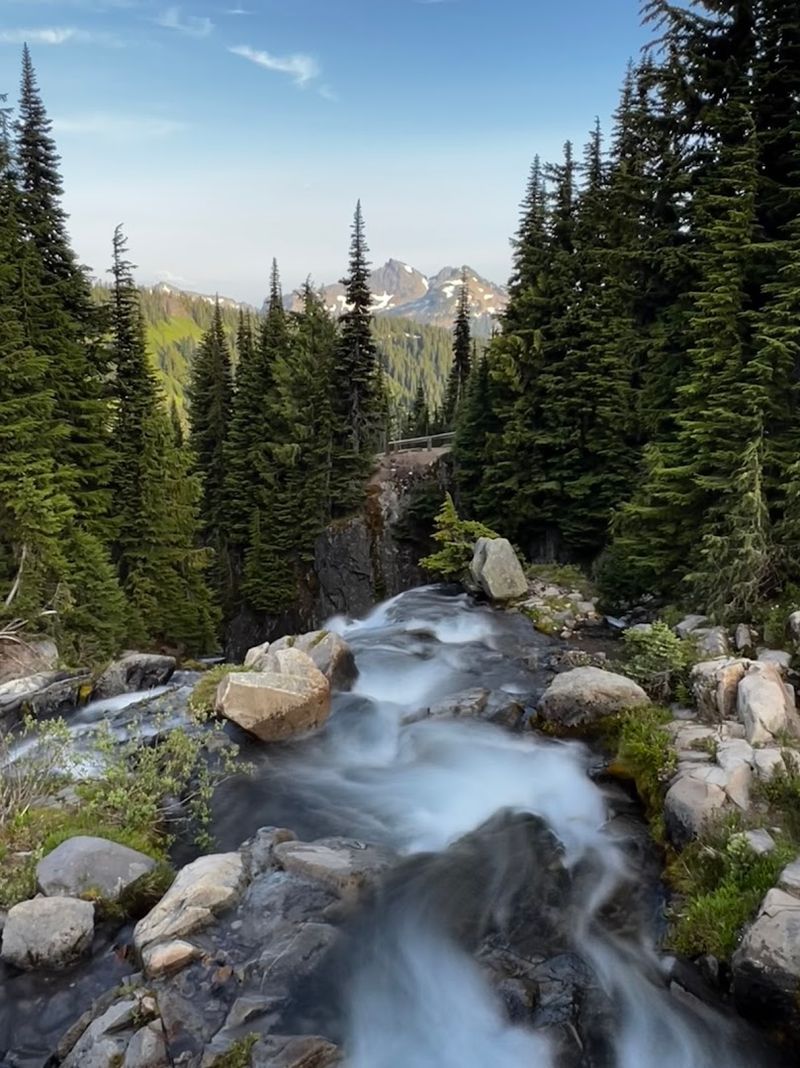
One of the most rewarding surprises about hiking out of Box Canyon is how quickly the waterfalls appear. Martha Falls and Sylvia Falls are both accessible along the Wonderland Trail heading east from the trailhead, and neither one gets the tourist traffic that Narada Falls or Christine Falls attracts.
Martha Falls drops in a wide curtain over a mossy ledge, and the trail brings you close enough to feel the cool mist on your face. Sylvia Falls is slightly more tucked away, requiring a short side trip, but the payoff is a peaceful, intimate waterfall experience that feels like a private discovery.
These falls are best visited in late spring and early summer when snowmelt keeps the flow strong and dramatic. By late August, the volume decreases noticeably, though the surrounding forest remains beautiful.
Packing a light rain jacket is always a smart move near any of these cascades, since the spray can soak you faster than the actual weather does on most summer days.
Old-Growth Forest, Alpine Tundra, And Wildflower Meadows
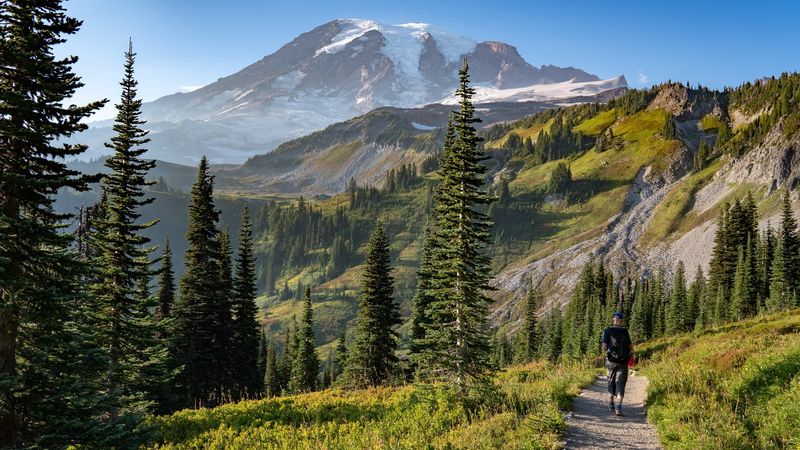
The Wonderland Trail accessed from Box Canyon passes through a remarkable range of ecosystems within just a few miles, and that ecological variety is a big part of what makes this trailhead worth choosing.
Ancient Douglas firs and western red cedars form a cathedral-like canopy in the lower sections, where the forest floor stays cool and shadowed even on warm days.
As elevation increases, the trees thin out and the landscape opens into alpine tundra and subalpine meadows that burst with wildflowers in July and August. Lupine, Indian paintbrush, and avalanche lilies create sweeping carpets of color that photographers plan entire trips around.
Wildlife sightings are common in these open zones. Black-tailed deer graze near the meadow edges at dawn, and marmots whistle warnings from rocky outcrops above the treeline.
The transition from dark old-growth forest to bright open meadow happens gradually but noticeably, and it gives long-distance hikers a satisfying sense of moving through a living, changing landscape with every mile gained.
Planning Your Visit To Box Canyon Trailhead
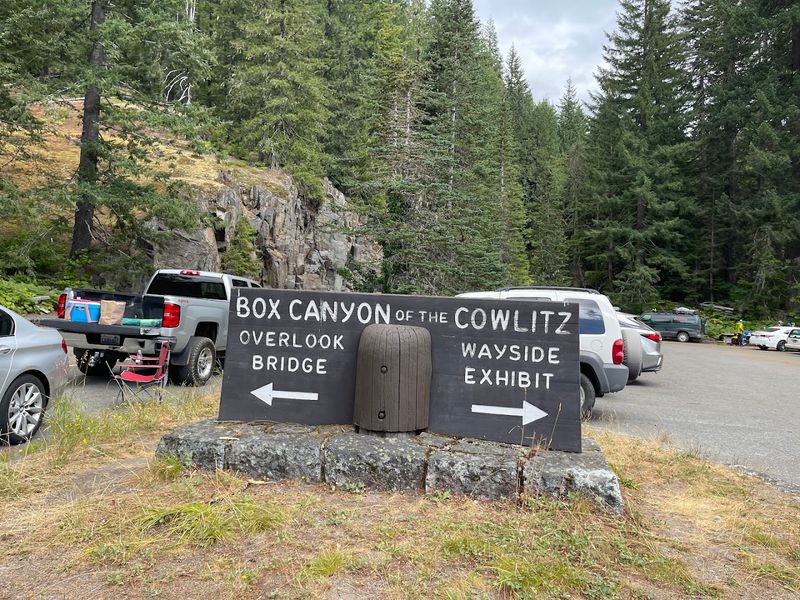
Knowing a few practical details before you go makes the Box Canyon experience much smoother and more enjoyable. The trailhead is located on Stevens Canyon Road in the southeast section of Mount Rainier National Park, and the park entrance fee applies to all visitors.
Parking is free once inside the park, and the small lot at Box Canyon fills up quickly on summer weekends, so arriving before 9 a.m. is a reliable strategy.
The site includes a picnic area with tables, a comfort station with restrooms, and interpretive panels at the canyon overlook. Cell service is minimal to nonexistent in this area, so downloading offline maps before you leave home is strongly recommended for anyone planning to hike beyond the loop.
Backcountry permits are required for overnight stays on the Wonderland Trail and can be reserved through the park’s permit system, which opens in the spring.
Day hikers can explore several miles of trail without a permit, making Box Canyon an excellent option for spontaneous summer visits to one of America’s most iconic national parks.