
This Detroit Church Was Once Known As The “Church Of The Grottos”
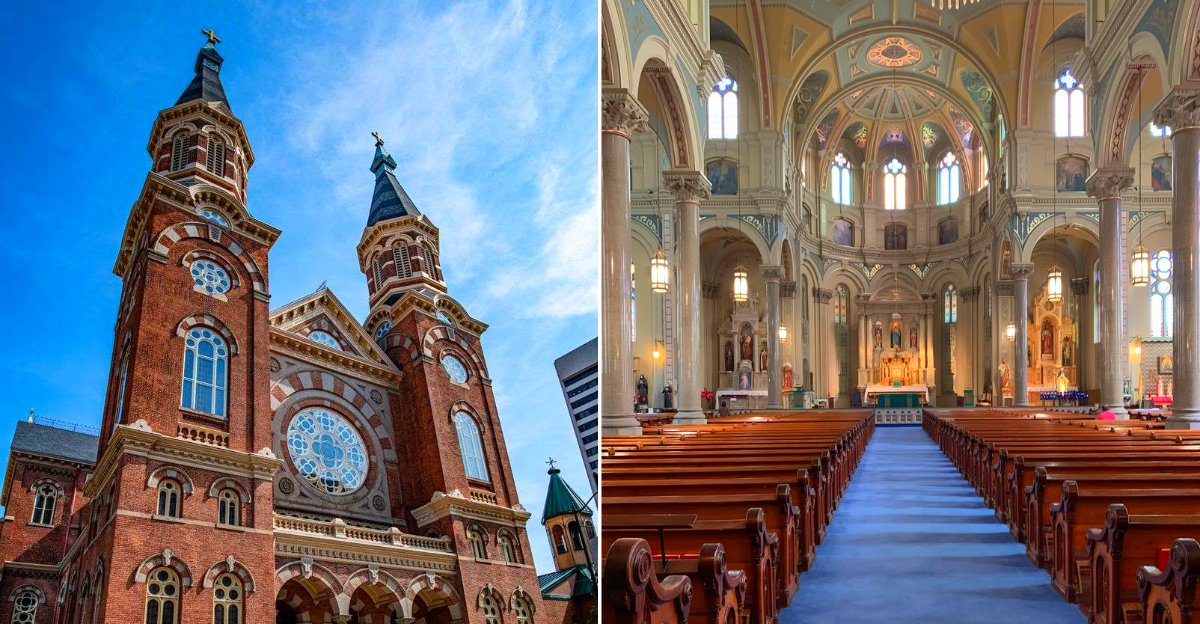
Greektown is usually all movement, restaurant noise, and traffic, which makes the silence inside this historic Detroit church feel almost dramatic.
Step through the doors and the city seems to soften, replaced by painted ceilings, stained glass, granite columns, and devotional spaces that reward a slow look.
Founded for German Catholics in 1834, the parish eventually moved into its grand red brick home, consecrated in 1885, and generations of worship left layers of history throughout the interior.
Elaborate architecture, historic grottos, stained glass, and deep immigrant history make this Detroit church one of the city’s most fascinating hidden landmarks.
The nickname “Church of the Grottos” begins to make sense once you notice the unusual devotional spaces tucked inside.
What stays with me, though, is the contrast: ornate beauty surrounded by one of downtown Detroit’s liveliest districts. It feels less like escaping the city than discovering another version of it.
Pause Before Exploring The Interior
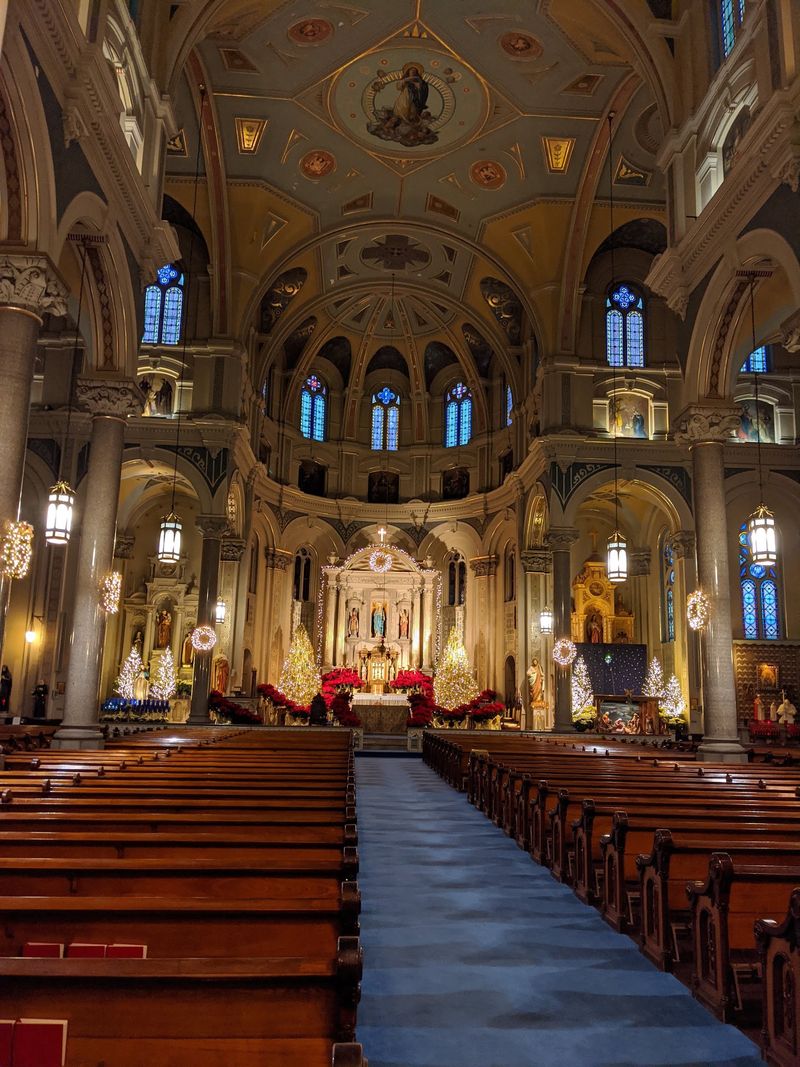
Street noise seems to loosen its grip just beyond the entrance. Instead of immediately raising a camera, pause near the back and let your eyes adjust to the darker nave.
The church measures about 176 feet long, while the ceiling rises roughly 90 feet, so its scale becomes clearer slowly.
Notice how polished granite columns guide attention toward the sanctuary and how colored light shifts across walls and pews. Keep voices low, silence your phone, and avoid walking through areas where people are praying.
I found that one quiet minute provided a better introduction than any hurried lap could. Old St. Mary’s remains a sacred place first, and respectful stillness reveals its architecture without turning worshippers into part of the scenery.
The Twin Spires Mark The Right Greektown Block
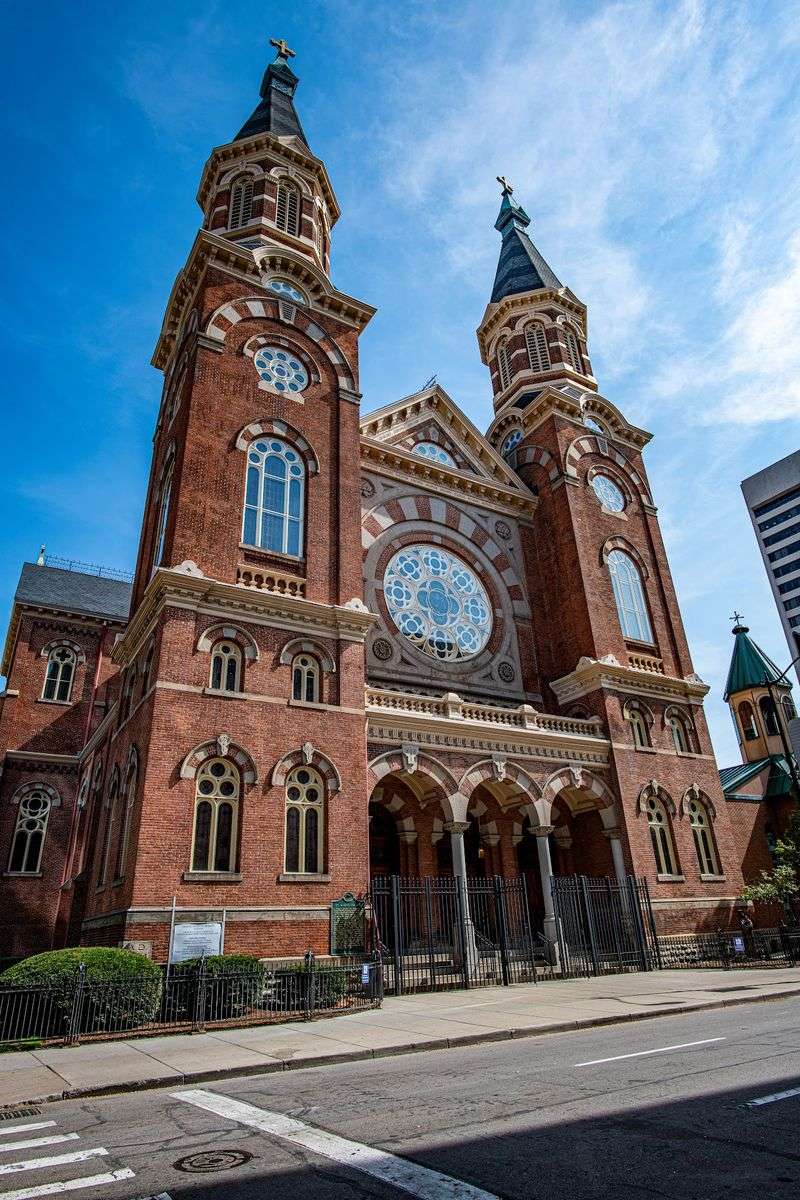
Old St. Mary’s Catholic Church stands at 646 Monroe Street in Detroit, Michigan, in the heart of Greektown at St. Antoine Street. Aim for the Monroe Street corridor downtown, with the church’s tall twin spires providing an unusually helpful landmark above the surrounding blocks.
As you reach Greektown, work toward Monroe and St. Antoine rather than searching for a separate visitor entrance. The red-brick church occupies the corner, so once the towers rise above Monroe Street, the final walk or drive is easy to orient.
Parking in Greektown is easiest handled before reaching the church door, then finishing the last block on foot. For weekend Masses, the parish specifically provides free parking through one hour after the Sunday 11:30 a.m.
Mass and after the Saturday 5:30 p.m. Mass.
Verified with Old St. Mary’s official website, Visit Detroit, and current mapping for the address, Monroe/St. Antoine location, and weekend parking policy.
Find The Gethsemane Grotto
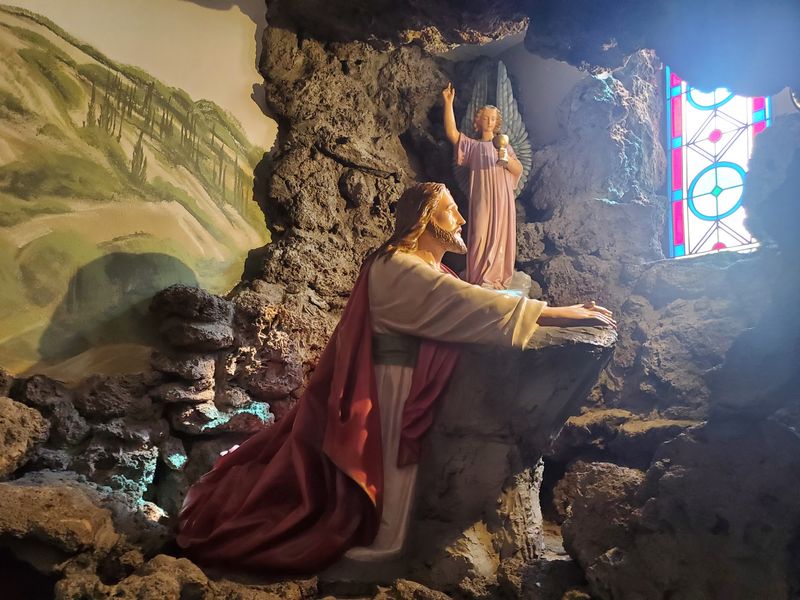
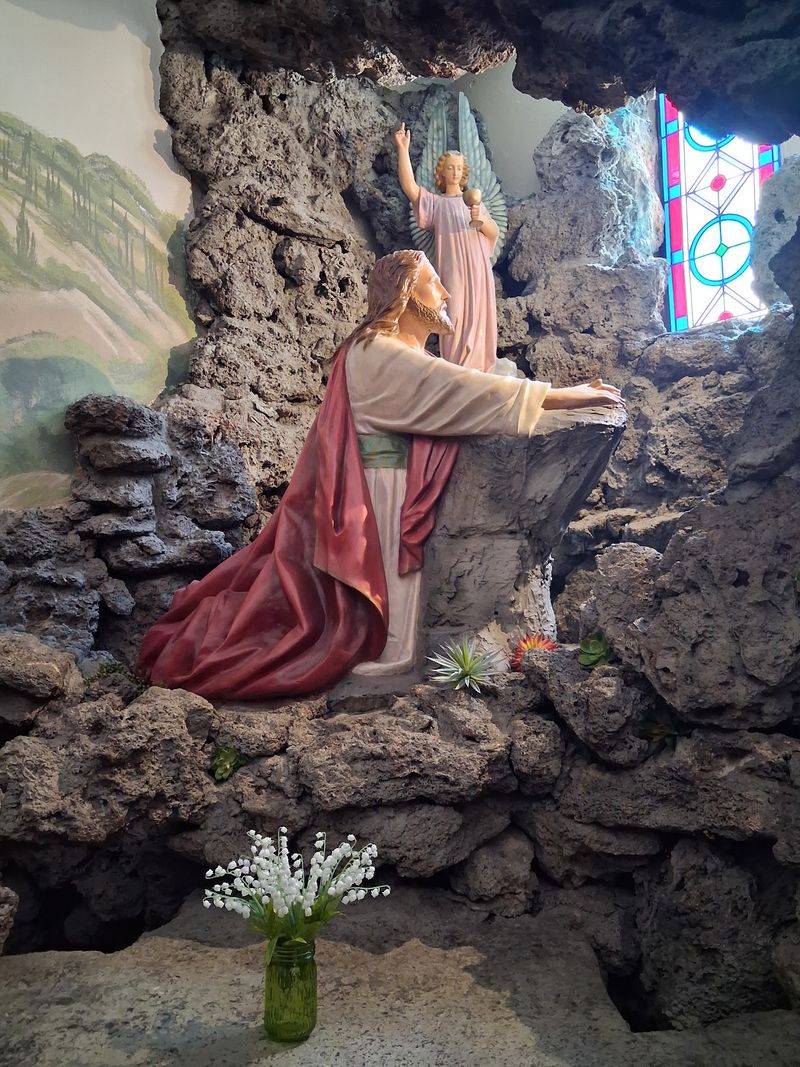
Rockwork and sculpted figures create one of the church’s most absorbing corners. The Gethsemane Grotto portrays Christ praying in the Garden of Olives while the apostles sleep nearby.
A related view toward the tomb adds another layer to the scene, rewarding visitors who stop rather than glance from the aisle.
Father Joseph Wuest directed the creation of the church’s grottos during the early twentieth century, helping inspire the memorable Church of the Grottos nickname. Examine the arrangement from a respectful distance, since the space supports prayer rather than theatrical display.
Avoid flash photography and do not touch rocks, statues, or devotional objects. Small details become easier to read when your visit is unhurried, making this grotto feel intimate despite the immense sanctuary around it.
Spend Time At The Lourdes Grotto
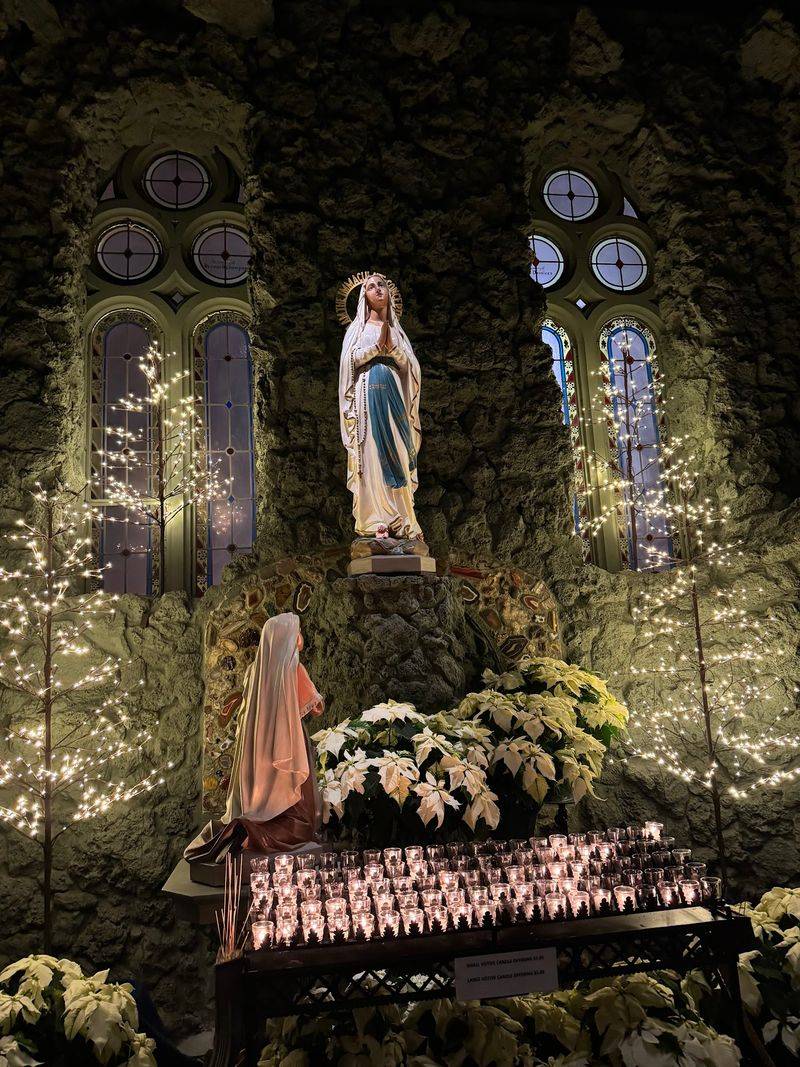
One rocky sanctuary feels unexpectedly far from downtown Detroit. The Lourdes Grotto recalls the famous French shrine associated with the Virgin Mary’s apparitions to Saint Bernadette.
Its altar is not merely decorative, since Mass has been celebrated within this devotional setting.
Local parish history connects Father Joseph Wuest closely with the grotto project, and accounts say he gathered some stones while visiting Lourdes. Whether studying its construction or pausing for prayer, give anyone already present generous space.
Stand back first to understand the full composition, then notice individual figures, textures, and devotional offerings without handling them. Softer light can make photographs difficult, but that is no reason to use disruptive flash.
Patience suits the shrine and preserves its reflective mood for the next person.
Listen Near The Baptismal Grotto
Moving water gives the Baptismal Grotto a sensory detail that photographs cannot fully capture. Its sculpted scene represents John the Baptist baptizing Christ in the Jordan River, placing a familiar biblical moment inside a rocky setting.
Restoration work has renewed the grotto while allowing it to continue serving parish life.
Unlike a display sealed behind museum glass, the space may be used for actual baptisms, including those of infants. That living purpose makes careful behavior especially important.
Look for the way water, figures, and stonework combine to guide attention toward the sacrament, but never cross barriers or disturb preparations. If a ceremony is underway, step away completely and return another time.
The best observation here comes with quiet ears, patient eyes, and an awareness of continuing tradition.
Study The Ten Granite Columns
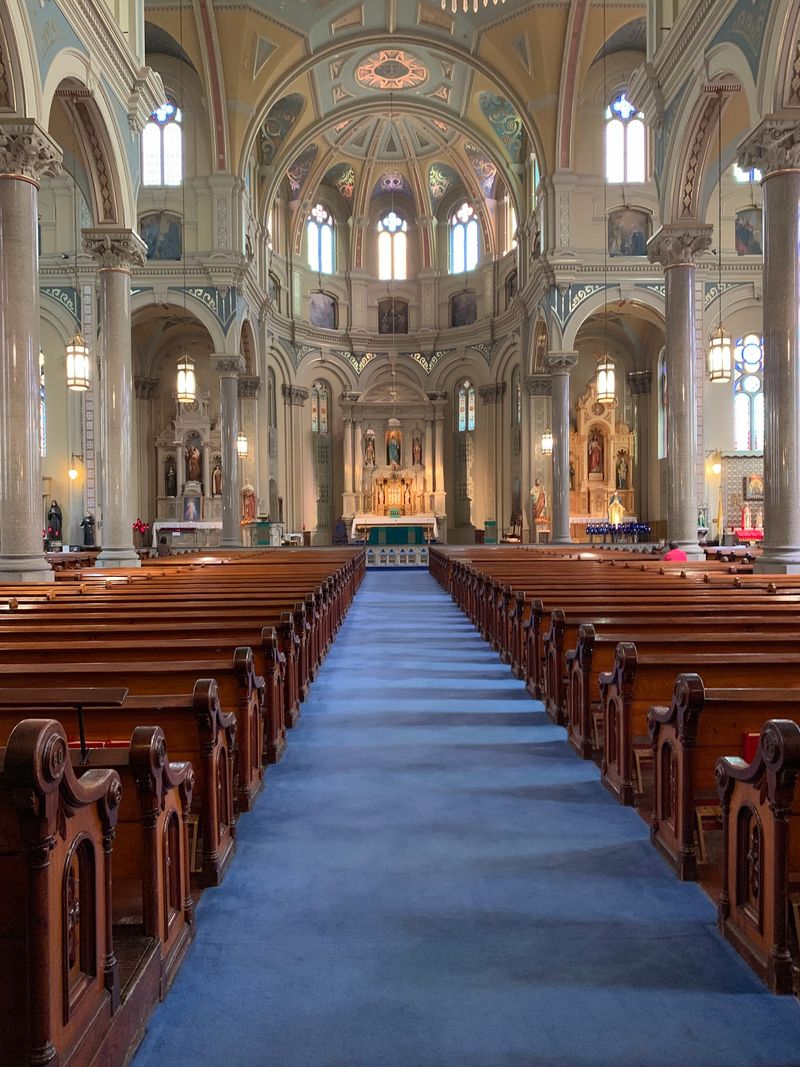
Ten polished granite columns give the nave a stately rhythm, almost like a stone procession. Each column was cut from a single piece of granite, an impressive feat before modern lifting equipment.
Historical accounts connect them with stone originally intended for the Michigan State Capitol project, adding a curious statewide link.
Walk along a side aisle rather than standing in the central path during services. From there, compare the columns’ smooth surfaces with the painted ceiling, carved wood, and textured grottoes.
Their spacing also helps explain how the broad interior is divided into a central nave and side aisles without losing openness. Try viewing them from both the entrance and sanctuary end when access permits.
The changing perspective turns practical supports into one of the building’s strongest visual signatures.
Look Up At Painted Stories
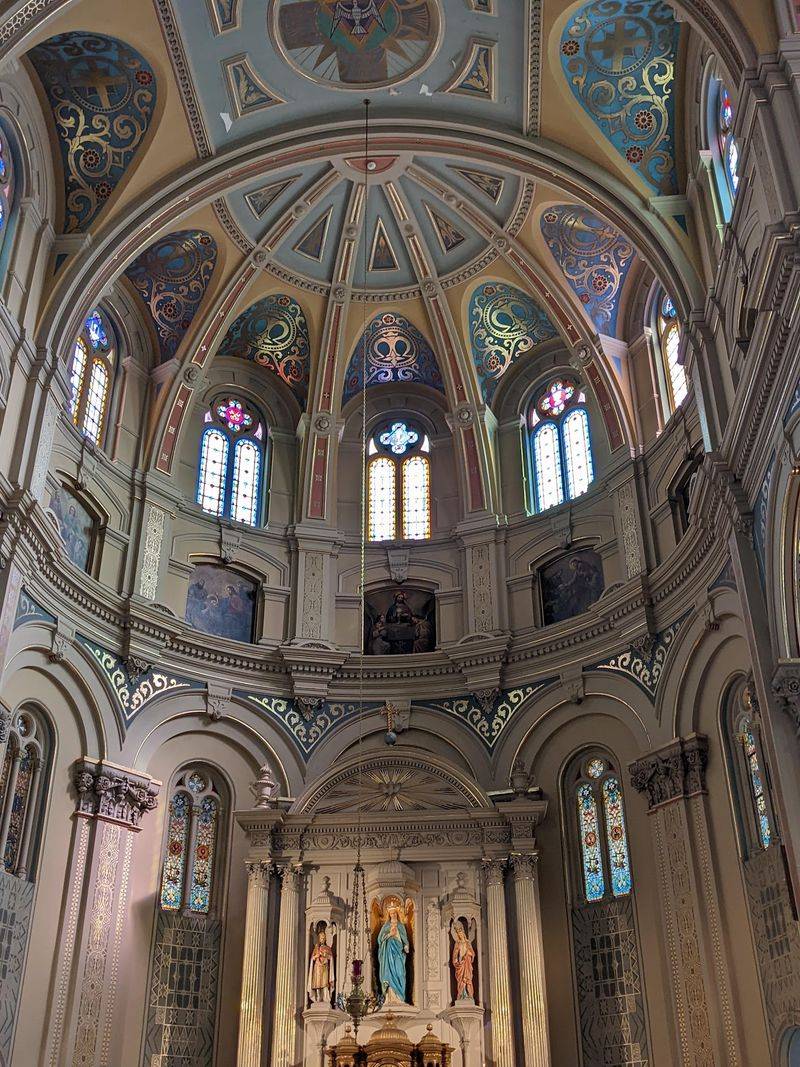
Your neck may request a brief negotiation, because much of the artwork sits overhead. Painted decorations cover the vaulted ceiling and walls, including representations connected with the seven Sacraments and fifteen Mysteries of the Rosary.
Together, they turn the interior into a visual lesson as well as an ornate worship space.
Begin near the rear, where a wider angle makes the overall plan easier to understand. Then move gradually along a side aisle and compare scenes instead of trying to absorb everything at once.
Binoculars are unnecessary, but a camera with moderate zoom can help record details when photography is permitted. Keep equipment compact and avoid tripods unless parish staff approve them.
Changing daylight alters the colors, so even a short pause can reveal painted forms that first blended into the ceiling.
Notice The Historic Stained Glass
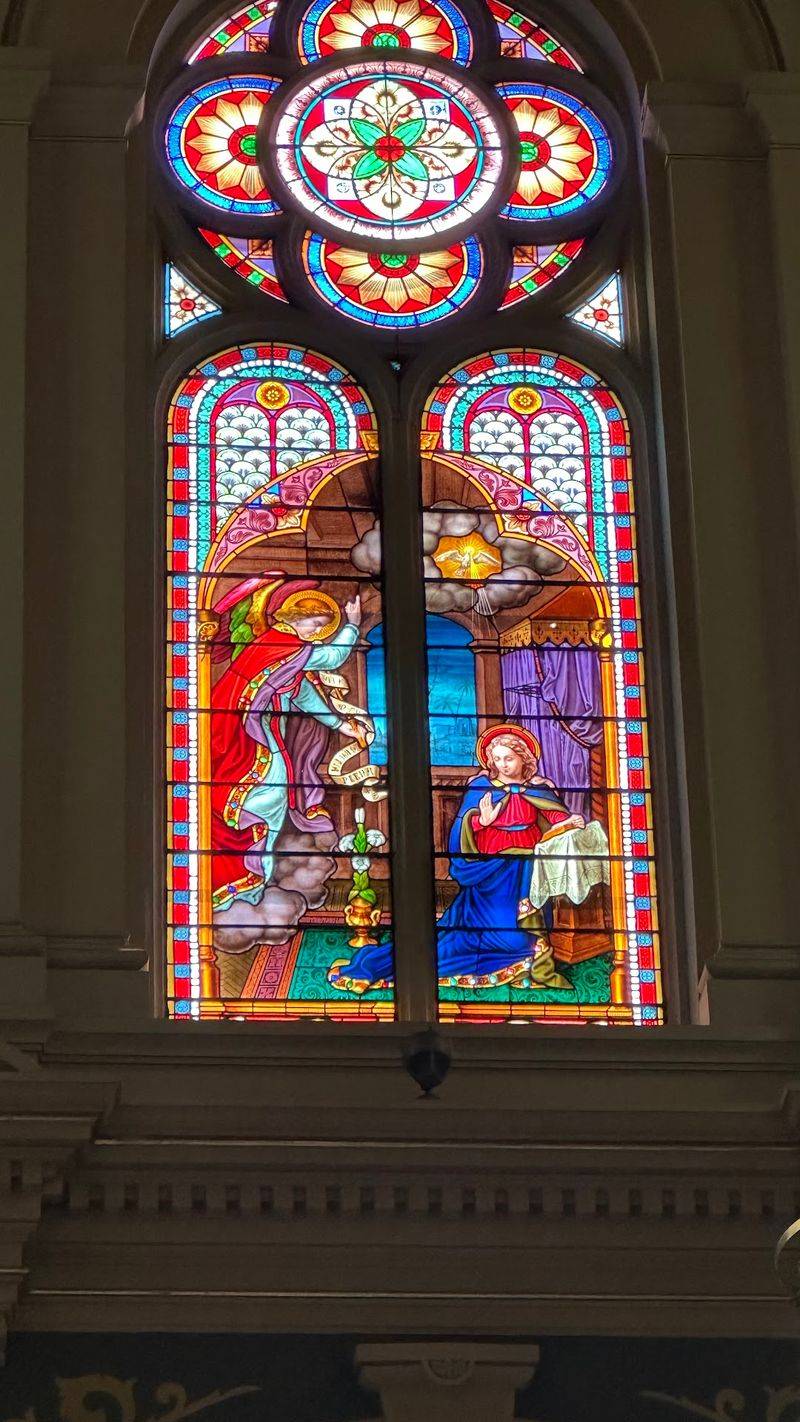
Colored light behaves like a quiet visitor here, moving without asking permission. The stained-glass windows were made by the Detroit Stained Glass Works in 1885, the year the present church was consecrated.
Delicate tracery frames their scenes and patterns, while changing sunlight throws different tones across nearby surfaces.
For richer color, visit when daylight is strong, but understand that weather and season shape the result. Expose photographs for the bright glass rather than the darker room, or simply put the phone away and watch.
Do not press against windows, ledges, or surrounding decoration for a closer angle. Pair each window with the painted artwork around it, since the interior was designed as a connected whole.
Slow viewing prevents vivid glass from becoming colorful background noise.
Admire The High Altar Carefully
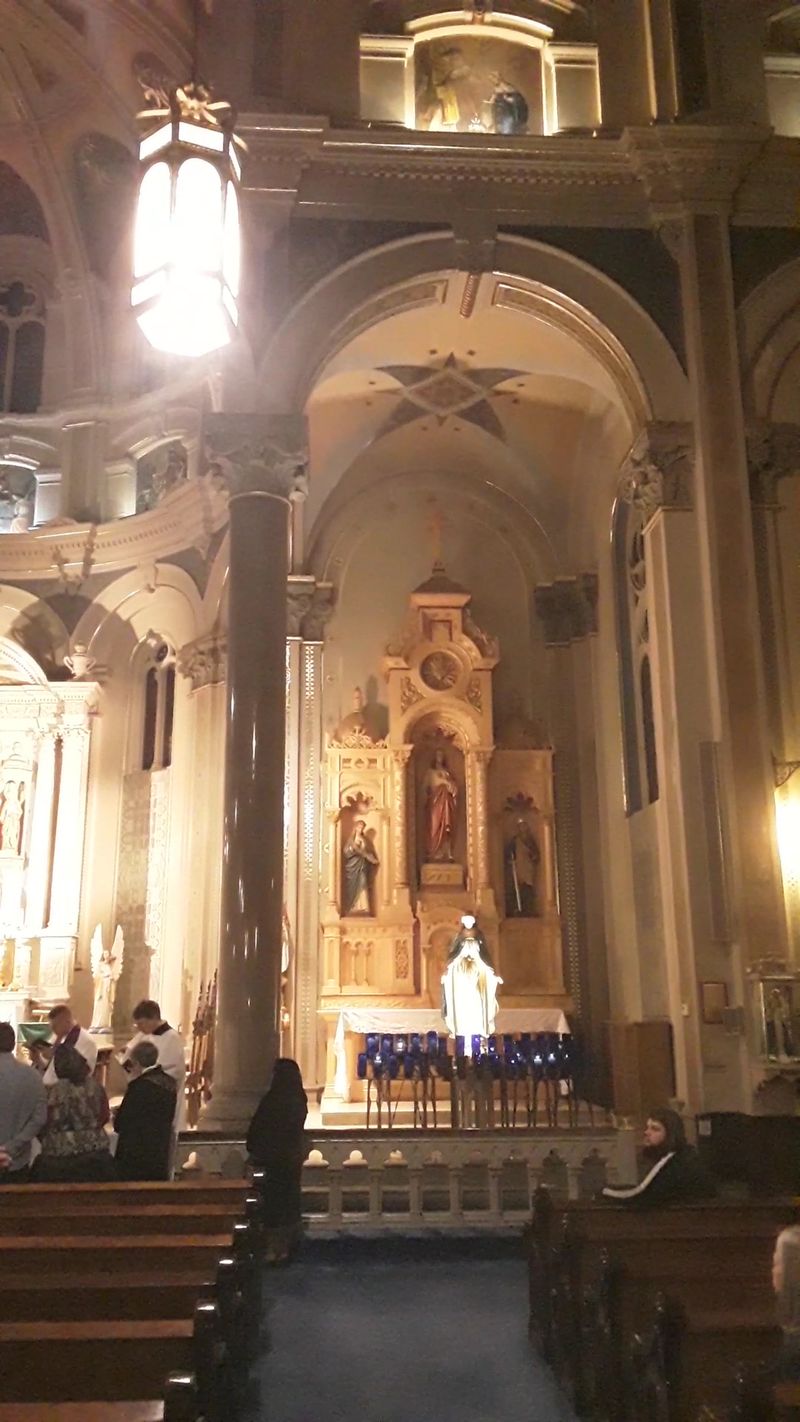
At the far end of the nave, carved wood and gold-colored trim command attention without needing modern sparkle. The original high altar dates from 1885 and remains a major link to the present building’s early years.
Its vertical details draw the eye upward, connecting the sanctuary furnishings with the church’s soaring architecture.
View the altar from the center aisle only when no liturgy or private prayer would be disturbed. A side angle often reveals carving depth more clearly and keeps visitors away from restricted sanctuary steps.
During Mass, remain seated or follow the congregation rather than sightseeing. Afterward, allow worshippers time to finish praying before taking pictures.
Respectful distance protects historic craftsmanship and preserves the altar’s religious role. Beauty here is inseparable from purpose, which makes careful observation especially rewarding.
Read The German Parish Story
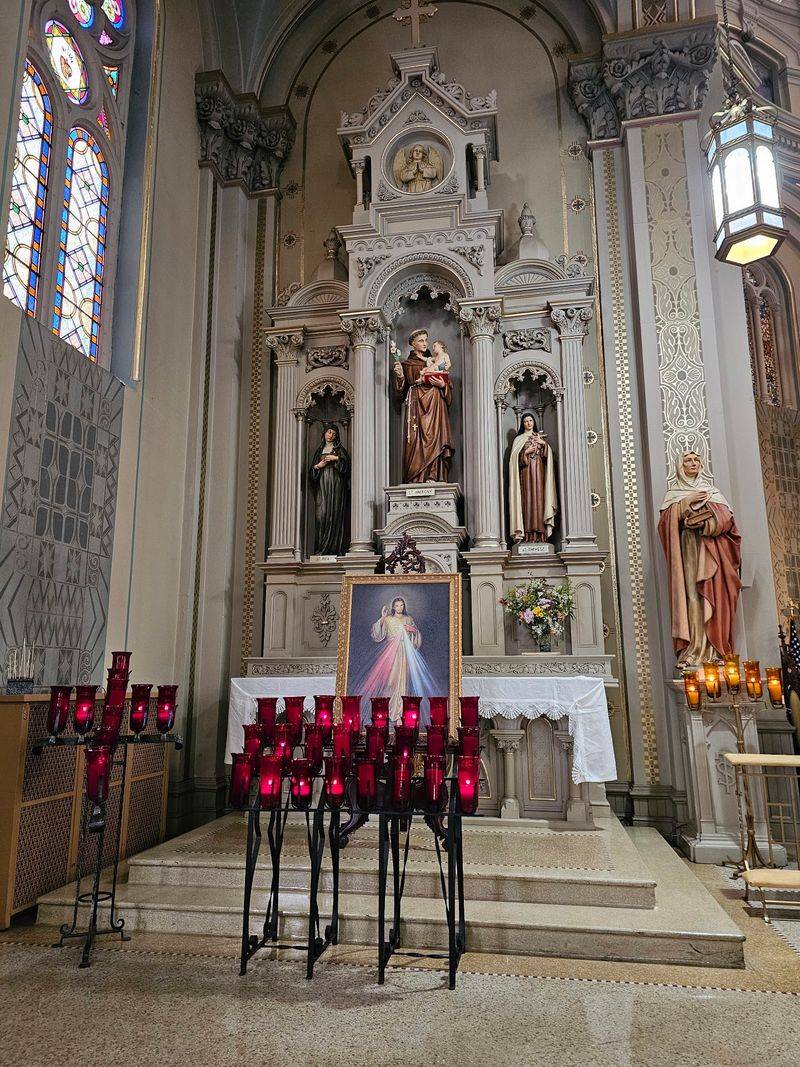
Greektown holds an older German chapter beneath its modern identity. Father Martin Kundig founded the parish in 1834 to serve Detroit’s German-speaking Catholic community, and the surrounding area became known as Germantown.
A church completed in 1843 eventually proved too small, leading to the monumental building consecrated in 1885.
Religious communities serving the parish over time have included Redemptorists, Franciscans, and Spiritans. Reading this history before entering changes the visit from decorative sightseeing into a study of migration, faith, and neighborhood change.
Outside, compare the church’s enduring red brick presence with the busy Greektown streets around it. Inside, consider how generations adapted the parish while protecting major features.
The contrast explains why Old St. Mary’s belongs to Detroit’s living story, rather than only its architectural past.
Frame The Towers And Rose Window
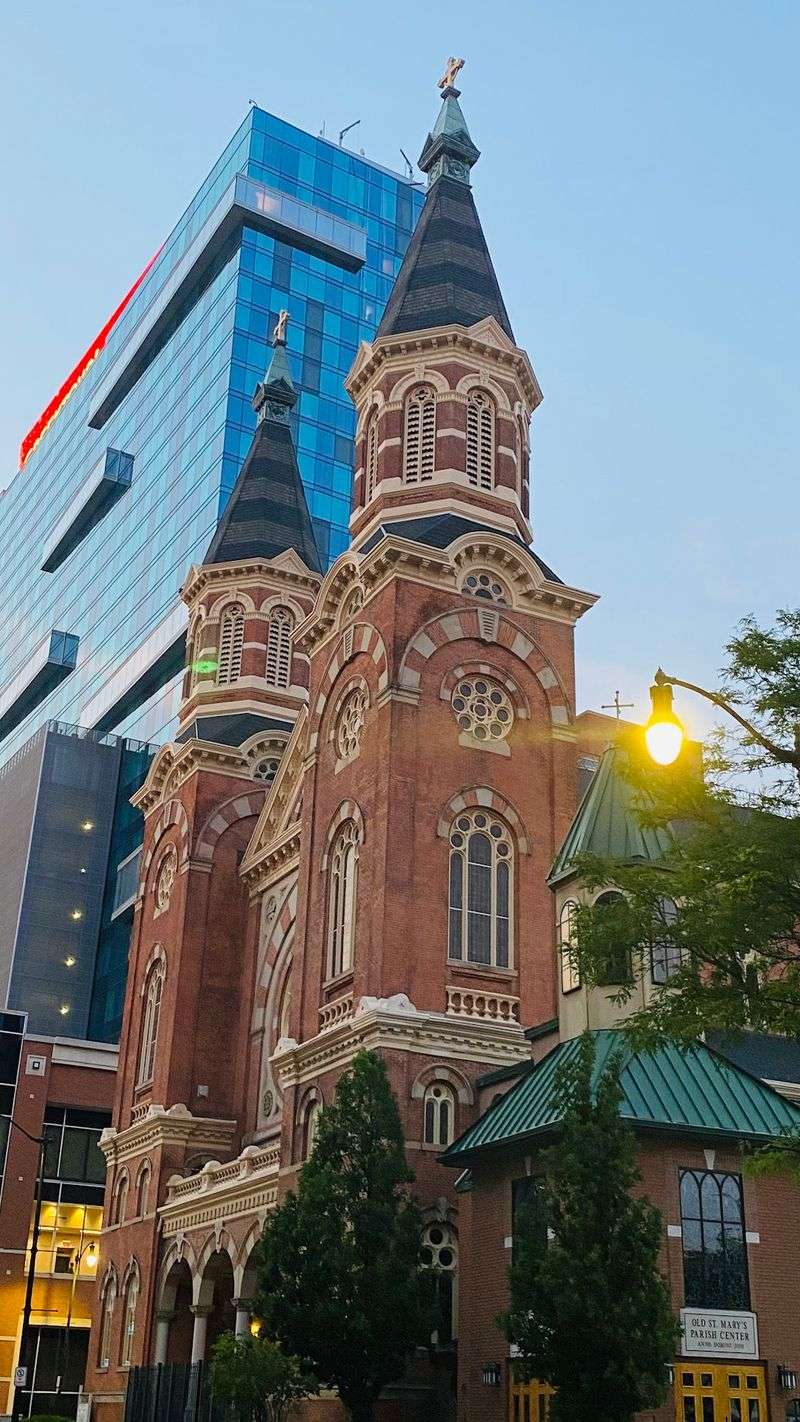
Across Monroe Street, the facade finally fits together like a well-planned stage set. Four-stage twin towers flank a large rose window, while red brick and pale limestone trim sharpen the building’s strong outline.
The design is commonly described as Pisan Romanesque or High Victorian Romanesque, labels that suit its arches, masonry, and commanding proportions.
Step back only from a safe public spot, watch traffic, and avoid blocking nearby entrances while composing photographs. Morning or late-day light may bring out brick texture better than flat midday sun.
A vertical image emphasizes the towers, while a horizontal frame includes more of Greektown’s setting. Finish outside after seeing the interior, if possible.
Familiarity with the nave, grottos, and altar makes the exterior feel less like a landmark and more like their protective shell.