
This Eclectic Illinois Art Village Feels Like A Living Dreamscape
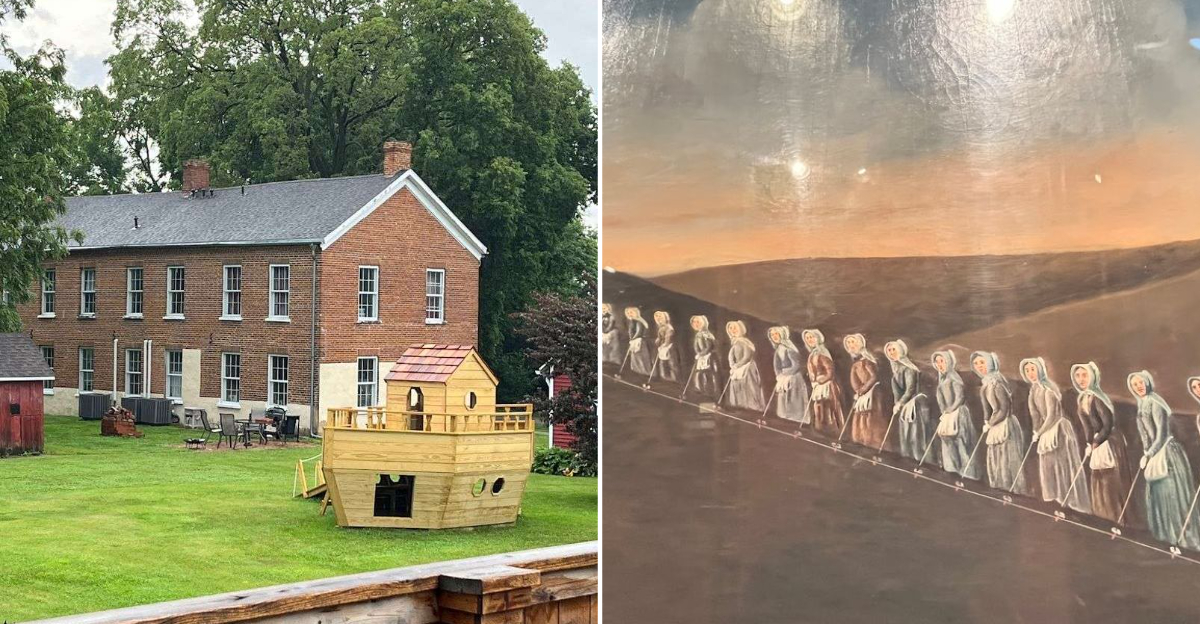
I almost drove right past it. Just a small hand-painted sign pointed left off the highway, slightly faded, nothing flashy, but something about it made me slow down and turn anyway.
A few minutes later, I ended up somewhere I wasn’t expecting at all. It’s tiny, a little unusual, and full of creativity in a way that feels completely natural.
I spent the rest of the afternoon just wandering, moving slowly, stopping every few steps, trying to take it all in. It sits out in the prairie with only about a hundred people or so, but it somehow holds more artistic energy than places ten times its size.
What follows is a walk through its history, its art, its buildings, and all the small details that make it feel less like a destination and more like stepping into something quietly imagined.
A Swedish Dream Planted In Illinois Soil
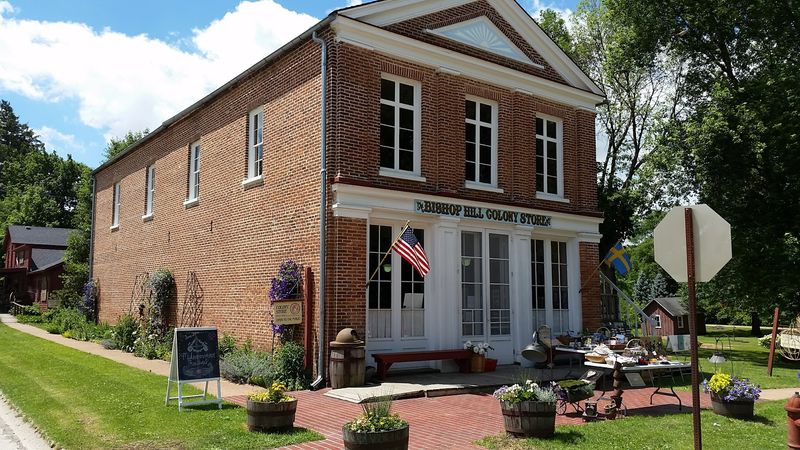
Back in 1846, a religious reformer named Eric Janson led more than 1,000 Swedish immigrants across the Atlantic Ocean and deep into the Illinois prairie to build a utopian colony.
They called it Bishop Hill, named after his hometown of Biskopskulla in Sweden. What they created was one of the most remarkable communal settlements in American history.
The colonists built everything by hand, often using handmade bricks fired right on the property. They constructed dormitories, a church, workshops, and farms, creating a self-sustaining world that operated entirely on shared labor and shared resources.
At its peak, the colony was producing furniture, textiles, and brooms that were sold across the Midwest. The colony officially dissolved in 1861 after financial troubles and internal conflicts, but the buildings stayed standing.
Today, Bishop Hill is recognized as a National Historic Landmark, and several of its original structures are preserved as part of the Bishop Hill State Historic Site. Walking through the village, you can feel the weight of that original ambition, stubborn, hopeful, and completely unforgettable.
The Architecture That Refuses To Be Forgotten
Most small towns in Illinois look like they were built quickly and updated even faster. Bishop Hill went the opposite direction entirely.
The buildings here were constructed to last, and they have, standing for nearly 180 years with a kind of quiet dignity that makes you stop and stare.
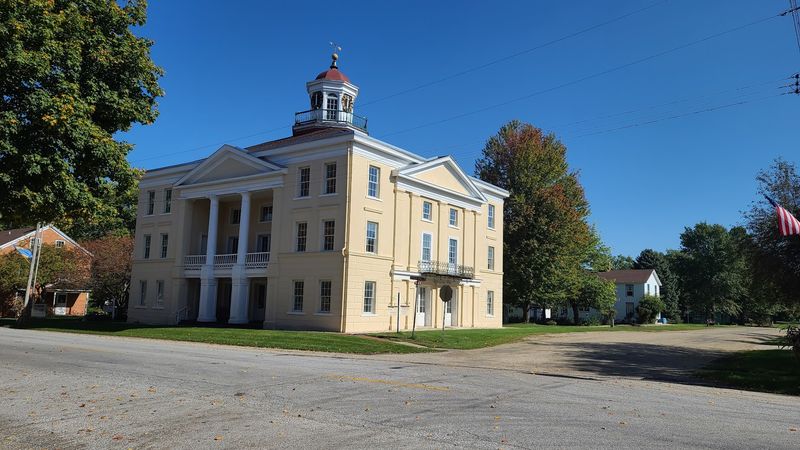
The Steeple Building, completed in 1854, is the most recognizable structure in the village. Its central tower rises above the rooftops like a landmark in a sea of flat prairie, and the building’s historic structure has been preserved through decades of Illinois winters.
The Colony Church, another anchor of the village, has a spare, almost meditative interior that reflects the practical spirituality of the original settlers.
The brick used throughout the village has a warm reddish-orange tone that catches the light differently at different times of day. Early morning gives the facades a rosy glow, while late afternoon turns them a deep amber.
Photographers visit from all over the Midwest specifically to capture this light on these walls. The architecture alone could justify the drive, but Bishop Hill has so much more waiting once you step through those old wooden doors.
Olof Krans And The Paintings That Captured A Lost World
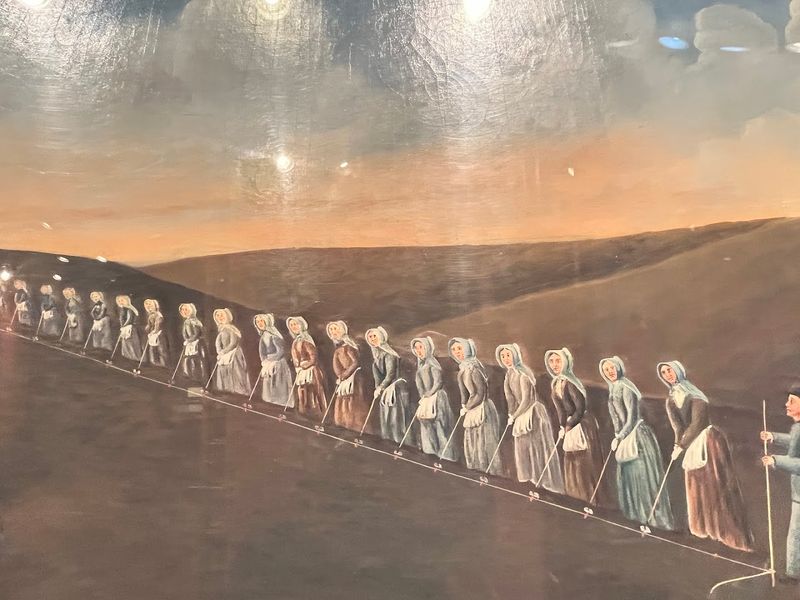
One of the most extraordinary things about Bishop Hill is that someone actually painted the whole story. Olof Krans arrived in Bishop Hill as a child with his family in 1850, and decades later, as an older man, he began recreating the scenes he remembered from his childhood in the colony.
The result is one of the most remarkable bodies of folk art in American history.
His paintings are flat, colorful, and full of life. He showed colonists harvesting crops, women spinning thread, men building structures, and children playing in the fields.
His style was entirely self-taught, with a directness and honesty that professional training might have actually ruined. There is no pretension in his work, only memory, rendered with complete sincerity.
A significant collection of Krans paintings is housed at the Bishop Hill State Historic Site, and seeing them in the context of the actual buildings he painted is a genuinely moving experience. You look at a painting of the Colony Church, then turn around and see the real building through the window.
That kind of layering, art inside history inside a living place, is rare anywhere in the world. Krans gave this village a visual memory that will outlast all of us.
The Village Square And Its Unhurried Rhythm
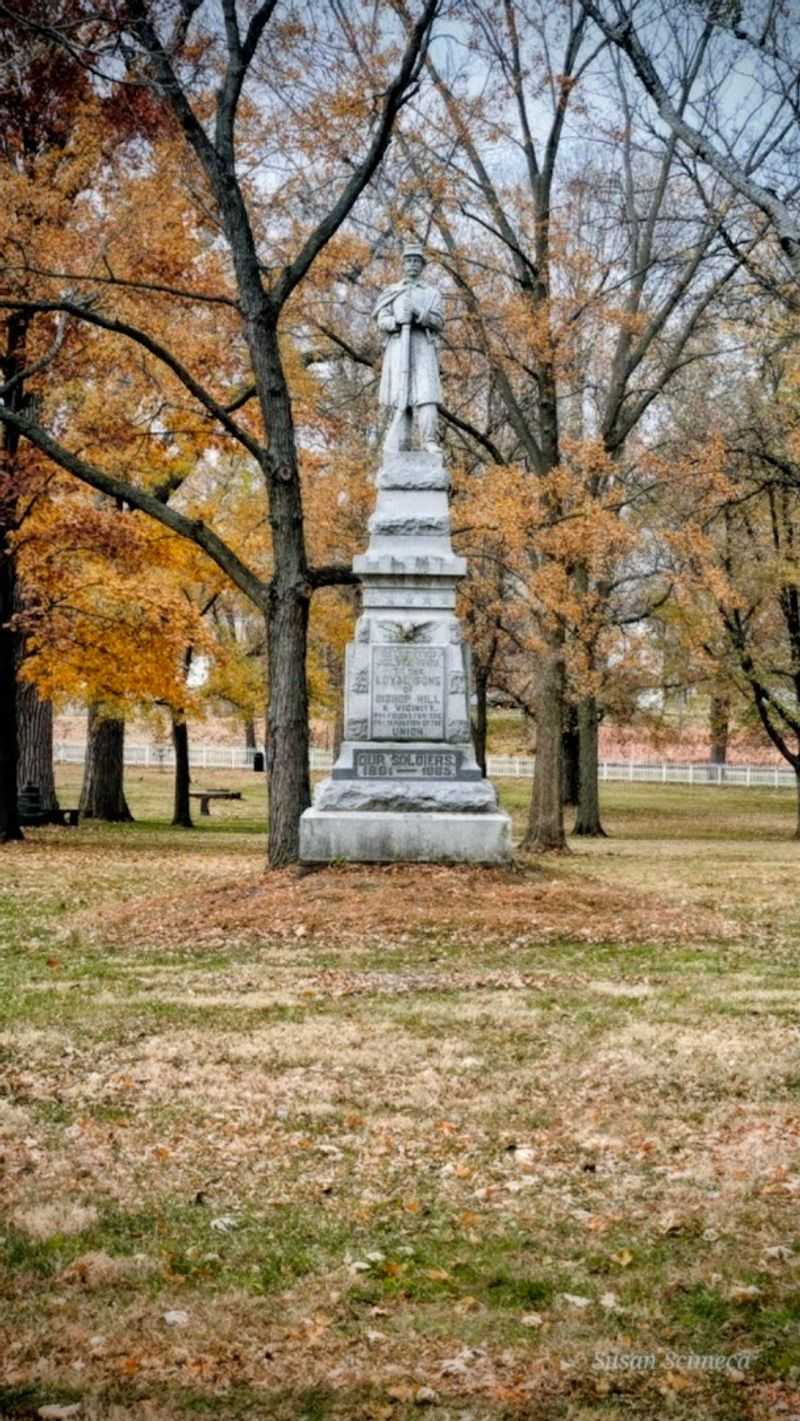
There is a village square at the center of Bishop Hill that operates on a completely different clock than the rest of the world.
On the afternoon I visited, two older men were sitting on a wooden bench having a slow conversation, a dog was napping under a tree, and absolutely nobody was rushing anywhere. It was the most peaceful square I have stood in since I started traveling.
The square is ringed by original colony-era buildings, many of which now house small shops, studios, and galleries.
The grass is well-kept, the trees are mature and generous with their shade, and the whole layout feels intentional in a way that modern planned spaces rarely do. It was designed for community, and it still functions as one.
Seasonal events bring the square to life in different ways throughout the year. The Midsommar Festival in June draws visitors from across the region for Swedish folk music, traditional dancing, and crafts.
The Julmarknad Christmas market in December transforms the square into a glowing winter scene with handmade goods and warm food. But even on an ordinary Tuesday in September, the square has a presence that most places work very hard to manufacture and never quite achieve.
Art Studios And Galleries
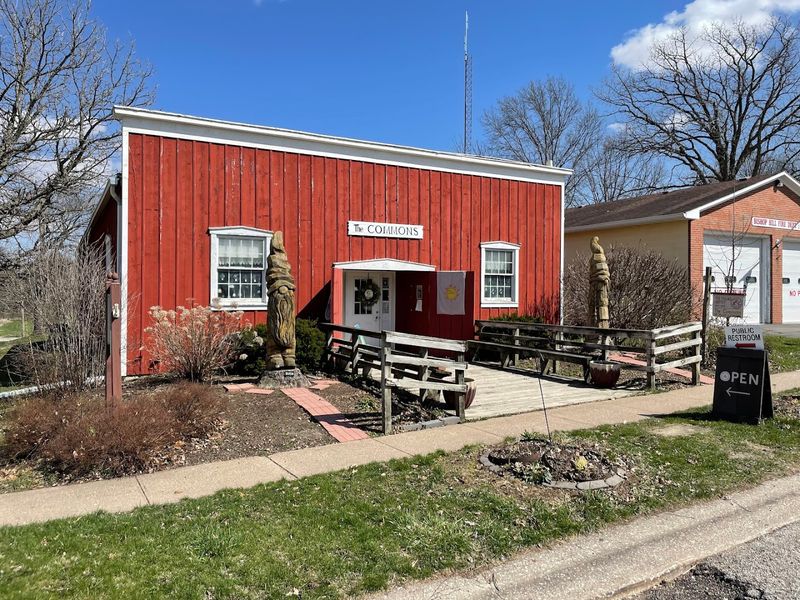
Bishop Hill has somehow managed to attract a steady community of working artists who have set up studios and galleries in the old colony buildings.
Walking through the village is less like visiting a museum and more like wandering through a living creative neighborhood, where the people making the art are often right there, working while you browse.
You will find painters, potters, textile artists, woodworkers, and printmakers all operating within a few blocks of each other.
The work tends to reflect the landscape and history of the area, earthy colors, prairie motifs, Scandinavian patterns, and folk-art influences that feel completely at home in this setting. Nothing here feels mass-produced or generic.
One studio I stepped into had hand-thrown pottery stacked on wooden shelves, and the artist was at the wheel in the back of the room, completely absorbed in what she was doing. She paused to answer a question, gave a thoughtful answer, and went right back to work.
That kind of access to the creative process is something you almost never get in a big-city gallery. Bishop Hill offers it as a matter of course, which makes every visit feel genuinely personal and worth the detour.
The Prairie Landscape That Frames Everything
Henry County, Illinois is not a dramatic landscape. There are no mountains, no ocean cliffs, no dramatic geological formations.
What there is instead is a flat, open prairie that stretches to the horizon in every direction, and once you spend some time in it, you realize it has its own very specific kind of beauty.
The sky above Bishop Hill is enormous. Clouds move across it in slow, cinematic formations, and during golden hour the light turns the fields surrounding the village into something that looks almost painted.
In spring, wildflowers push up through the roadside grasses.
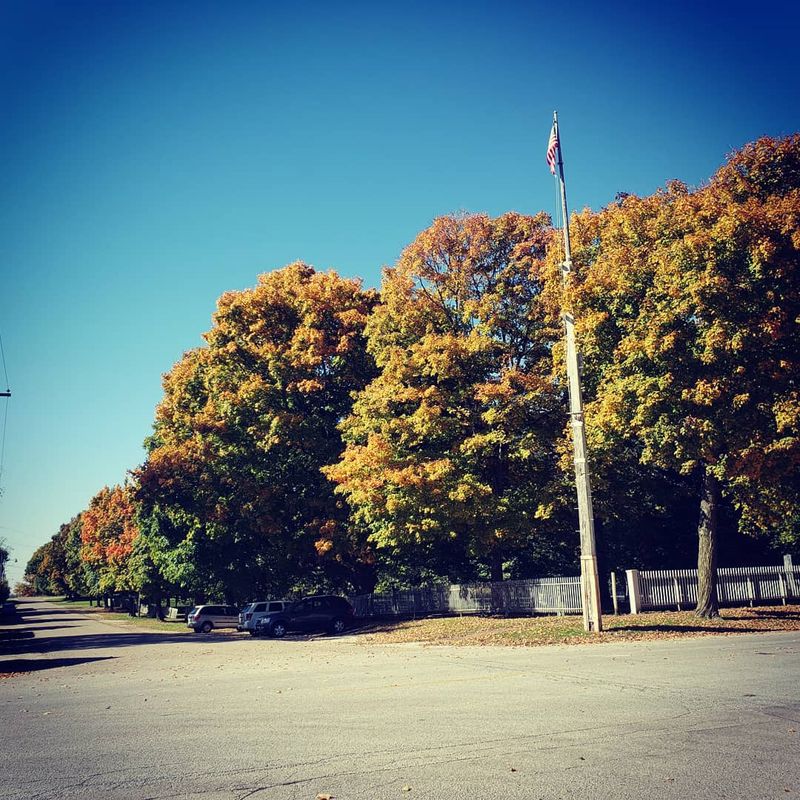
In autumn, the cornfields surrounding the village go golden and rust-colored, and the contrast with the red brick buildings creates a color palette that feels almost too good to be real.
The South Edwards River runs nearby, adding a quiet natural soundtrack to the area for those who venture out on foot. Birdwatchers find the surrounding farmland and river corridor productive, especially during migration season when the skies above the prairie become busy with movement.
The landscape is not the kind that shouts for attention, but it rewards the people who slow down enough to actually look at it, which, as it turns out, is exactly what Bishop Hill teaches you to do.
Practical Tips For Planning Your Visit
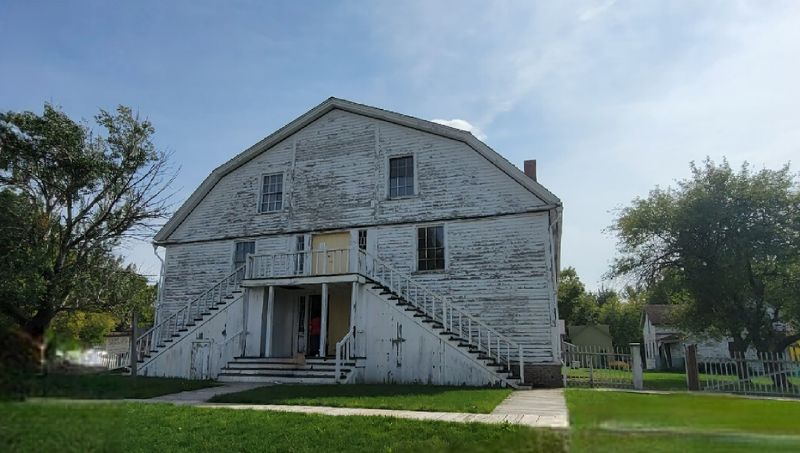
Bishop Hill is located in Weller Township, Henry County, Illinois, roughly 160 miles west of Chicago and about 45 miles southeast of the Quad Cities.
The village itself is very small, so plan to arrive by car, as there is no public transit serving the area. Parking is easy and free along the main streets near the village square.
The Bishop Hill State Historic Site is operated by the Illinois Historic Preservation Agency and offers free admission to its museums and historic buildings.
Hours vary by season, so checking their official website before your trip is a smart move. Most of the site is accessible on foot, and the entire village can be explored comfortably in a half-day, though a full day allows you to linger in the galleries and catch more details.
Spring through fall is the most rewarding time to visit, with summer festivals and autumn foliage both offering strong reasons to make the trip.
The village has a small number of dining options, including a cafe serving homemade food in a historic building, so you will not go hungry.
Wear comfortable shoes, bring a camera, and leave your schedule as open as possible. Bishop Hill rewards the unhurried traveler more than almost any place I have visited in Illinois.
Why This Village Stays With You Long After You Leave
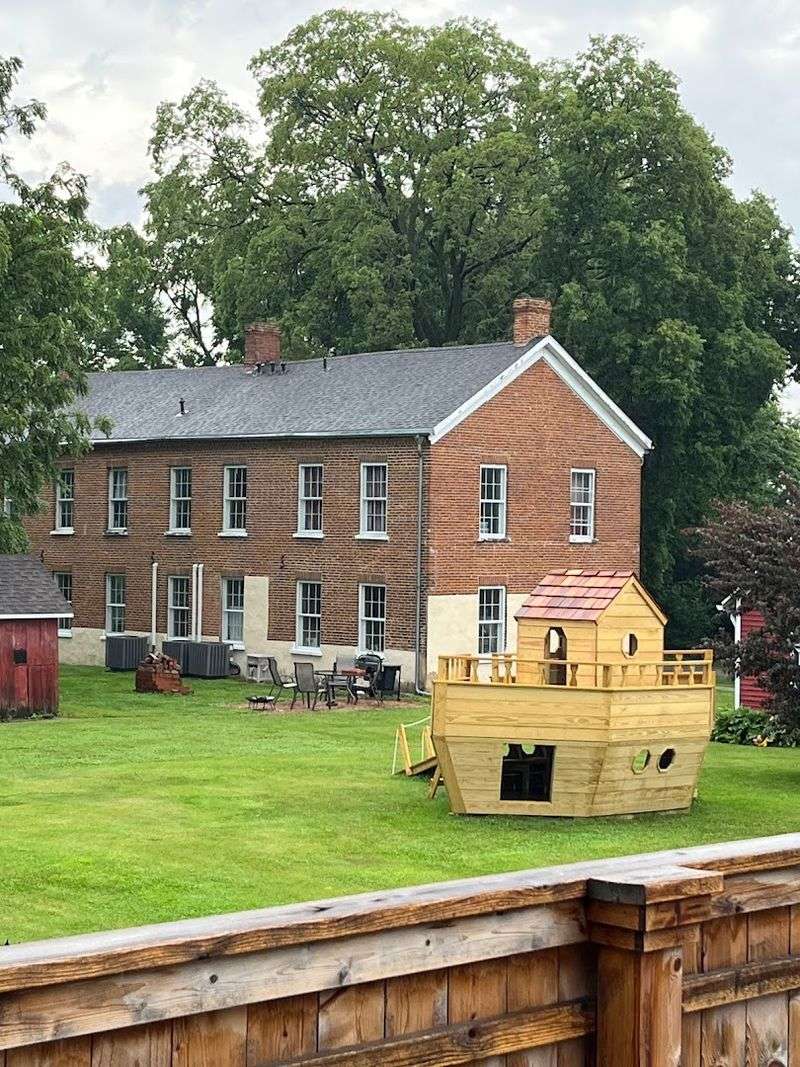
There is something about small, intentional places that tends to stick in the memory longer than grand tourist destinations. Bishop Hill is exactly that kind of place.
It was built by people with a vision, maintained by people who cared about preserving it, and is now inhabited by artists and residents who continue to give it a living identity rather than letting it become a frozen relic.
I drove away from Bishop Hill feeling oddly calm, like I had spent the afternoon somewhere that operated by better rules than the rest of the world.
The pace was slower, the details were richer, and the people I spoke with seemed genuinely connected to where they lived. That combination is harder to find than you might think.
The village does not try to impress you with size or spectacle. Instead, it earns your attention through accumulation, one beautiful building, one honest painting, one hand-thrown pot, one conversation with an artist at work.
By the time you reach your car at the end of the day, you have collected enough small, specific impressions to last a long time. That is the quiet magic of Bishop Hill, Illinois, and it is very much worth the drive.