
This Eerie Abandoned Michigan Bridge Looks Like The Opening Scene Of A Horror Story
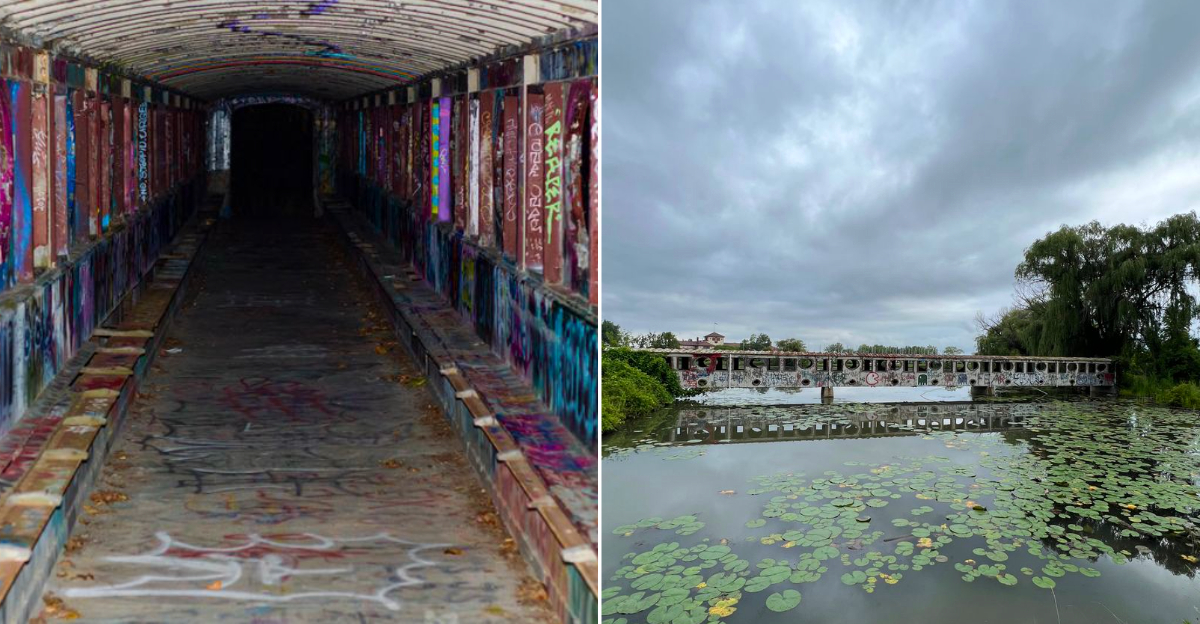
I don’t care how many “haunted” sites you’ve checked off, the map pin at 82WH+MC on Belle Isle feels like a trap the island set just for you. As you step off the sandy sun-drenched edges, the trees knit together with a claustrophobic suddenness, swallowing the wind and the distant sounds of Detroit.
Then, the concrete vault of the hidden bridge exhales a cold, damp breath that smells of stagnant river water and spray-paint fumes. It’s a subterranean throat inked in a fever dream of names and jagged confessions that seem to vibrate in the unnatural silence. You’ll hear nothing but the rhythmic drip-drop of condensation hitting the muck, a sound that feels like a countdown.
Descend into Detroit’s most chilling urban legend at the Belle Isle graffiti bridge, a hidden concrete sanctuary where local street art meets an unsettling, otherworldly atmosphere.
Stay a minute too long and the shadows under that arch start to shift, as if the layers of paint are trying to whisper how this secret gallery really earned its reputation.
Finding The Arch Without Losing Your Nerve
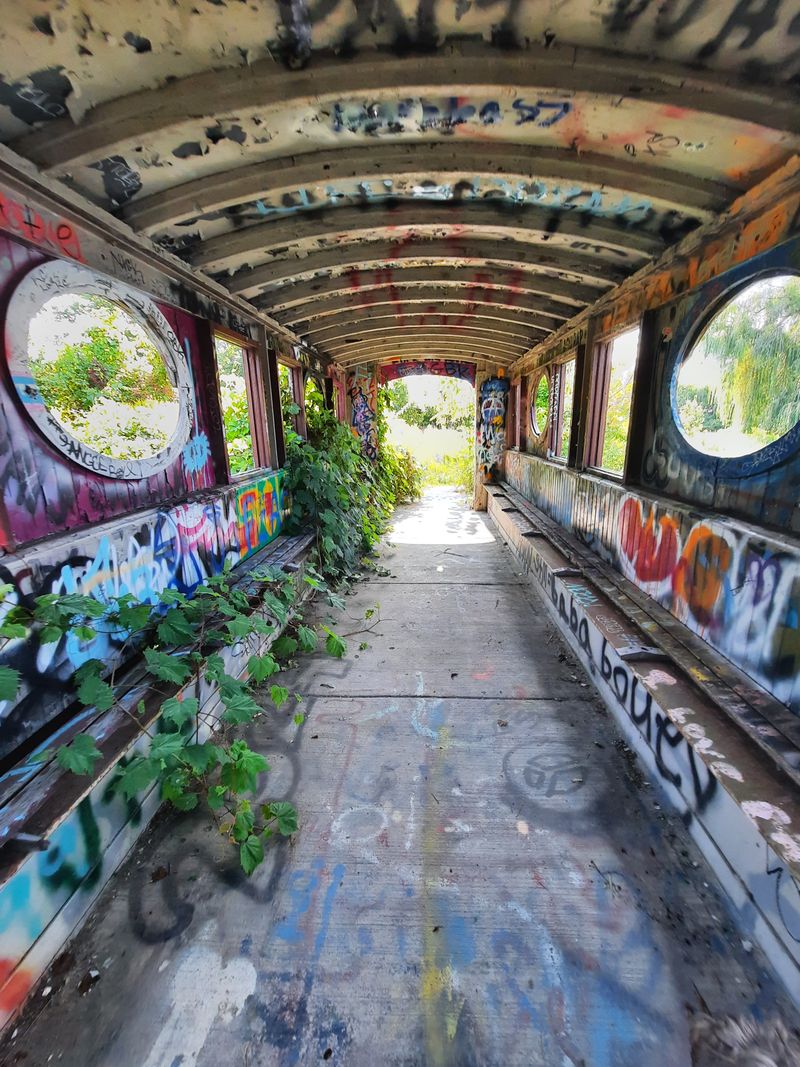
The trick to reaching these hollowed-out concrete ribs of the island is to trust the quiet, even when it starts to feel heavy. From the beach parking on Belle Isle, seek out the soft footpaths that push through overgrown brush. Leaves can scuff your sleeves like reaching fingers, and a faint hollow echo hints at the concrete abyss ahead.
A five-minute wander is common, provided you do not let the rustling in the tall grass make you run in the wrong direction. The bridge reveals itself with alarming suddenness, a low vault painted in restless, screaming colors and deep shadow. The vibe turns cinematic, like the prelude to a classic horror flick.
Wear sturdy shoes with good grip because the descent can be slick with moisture that never quite sees the sun. Always drop a digital pin at 82WH+MC before the canopy thickens, so your return to the land of the living stays a straight shot. Once you are close, slow down, breathe, and let your eyes adjust.
Reading The Layers Of Paint
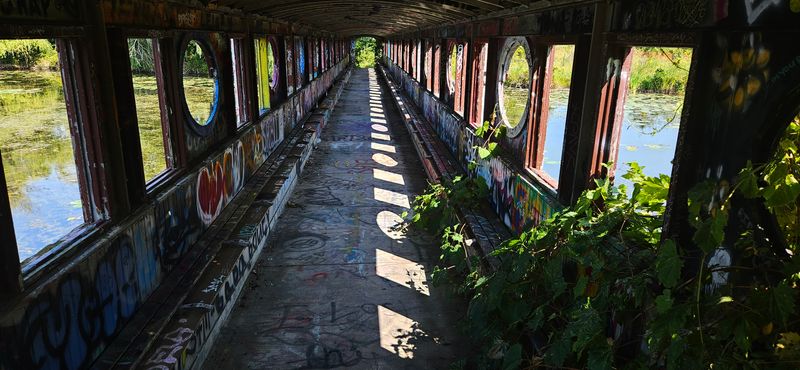
Look closely at the walls and you will notice eras of Detroit history stacked like sediment in a grave. Under the newest neon tag, a ghosted outline whispers of a previous visit from years ago. Beneath that, a dull cracked primer peeks through like bone, and the colors scrape, drip, and overlap until time feels close enough to touch.
It is a physical manifestation of the Graffiti Bridge’s long, silent life on the island, and Detroit’s habit of writing stories on hard surfaces shows up here with a chilling sort of humility. The history is not placarded or celebrated, it is a palimpsest of thousands of strangers who felt compelled to leave a mark.
If you want to document the site, focus your lens on the small details, the way the paint curls and peels, rather than only wide shots. Mind the flaking paint because it has a way of clinging to your skin long after you leave. Let the bridge keep its heavy, colorful coat, there is no need to take the spirits of the paint home with you.
Shadow Play For Your Camera
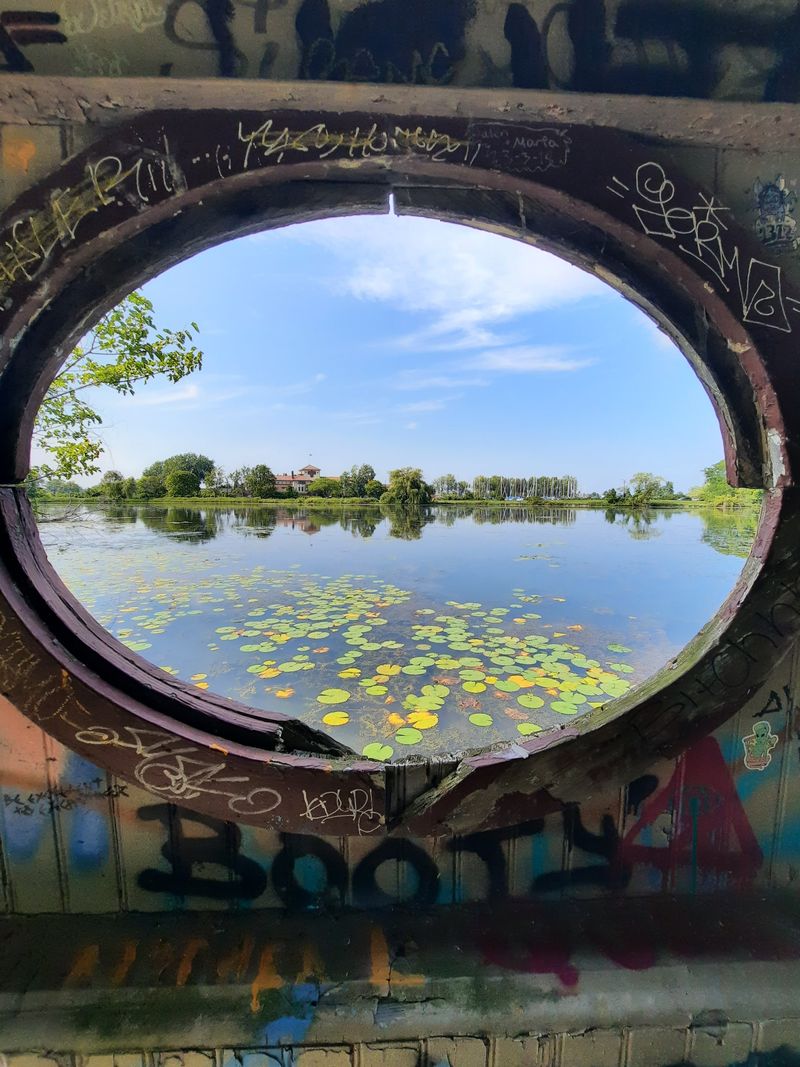
Light sneaks through the mouth of the arch at angles that would make any photographer grin, though the results can look more like a supernatural sighting than a vacation photo. The ceiling ribs cast long skeletal stripes on the floor, turning your own footsteps into patterned ghosts that follow you deeper into the span.
The walls bounce saturated reds and bruised purples onto your cheeks and jacket, giving portraits a sickly, ethereal mood you cannot fake with a digital filter. To capture the bridge at its most atmospheric, arrive near golden hour, when side light is generous but the shadows remain long and hungry.
Tripods are useful for capturing stillness, but handheld shots work if you brace your back against damp concrete and accept the cold chill that seeps through your coat. Keep central pathways clear and step aside if you see someone framing a shot. In a place this quiet, you really do not want to startle a stranger.
Listening To The Quiet Traffic Of Leaves
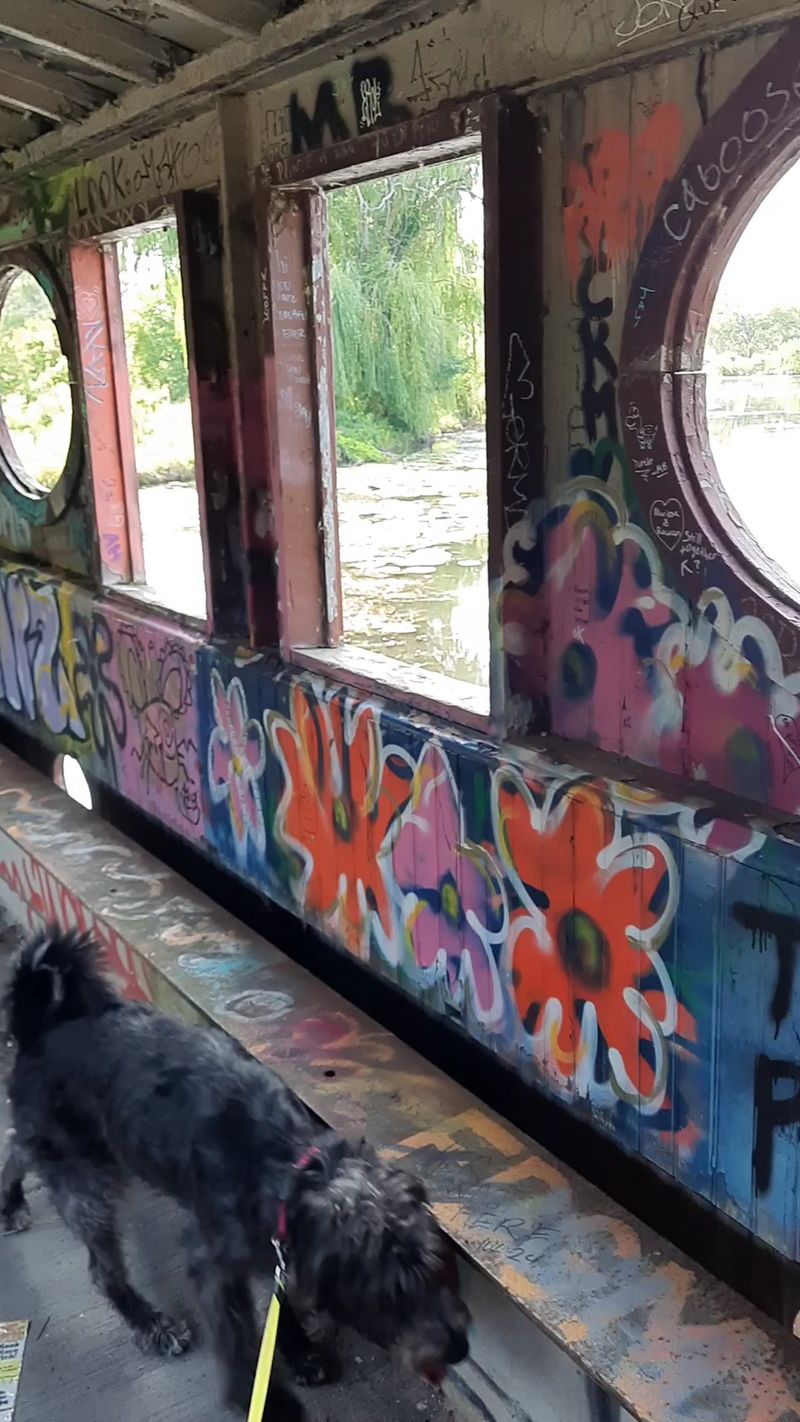
What you hear first in the belly of the bridge is not the river or the hum of Detroit, but dry leaves murmuring along the ceiling where air funnels through like a sigh. The acoustics give even the smallest sounds a bigger, more menacing body. Your footsteps become deliberate thuds, and a tapping camera strap starts to sound loud.
The vibe is contemplative, yet undeniably heavy, especially when you realize the only other sound is the occasional walker passing by like a flickering shadow. Step lightly and you will notice birds flashing between the boughs at either end, like frantic punctuation marks on the edges of the tunnel.
Bring what you need in a small, secure bag so your hands stay free for balance. The floor can be deceptively slick after a Michigan rain, and the last thing you want is a tumble in the dark. If you move slowly, you will hear the space change as you near the openings, and that shift helps your nerves settle.
Concrete Curves And Careworn Edges
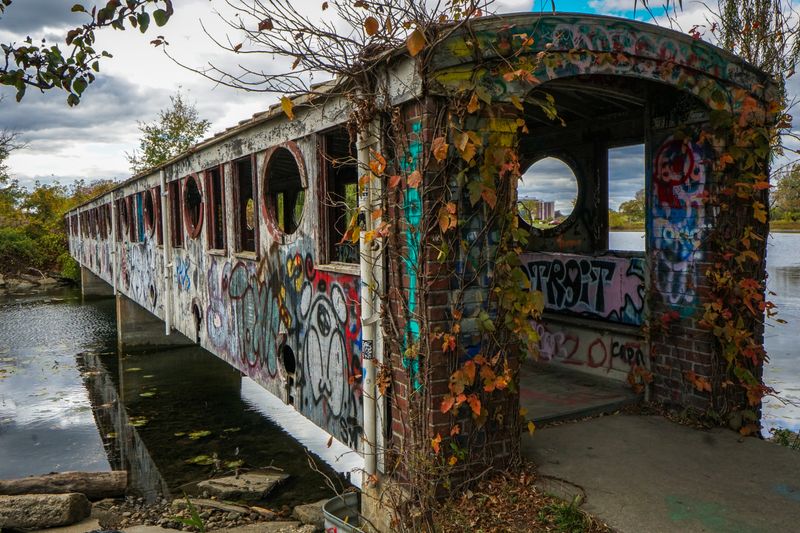
This bridge wears a gentle, deceptive arch, a practical span that the island eventually claimed as an accidental gallery. Its underside is smooth in places and scarred and pitted in others, and each patch becomes a ready canvas for the next restless soul with a spray can. You can trace a dark line where water occasionally kisses concrete during heavy storms.
That line leaves a dusky mark like a high-water bruise, and it makes the structure feel alive to the weather. Once utilitarian, the bridge now feels expressive and sturdier than its peeling paint implies. It carries the weight of something that has watched the city change from across the water for a long time.
If you are visiting, avoid scraping your gear or bags along the walls, because you do not want to disturb the delicate patina of decay. Stand back near the entrance to study the curve of the vault, then step forward slowly and follow a single jagged line of neon color into the darkness.
A Quiet Guide: The Footpath Itself
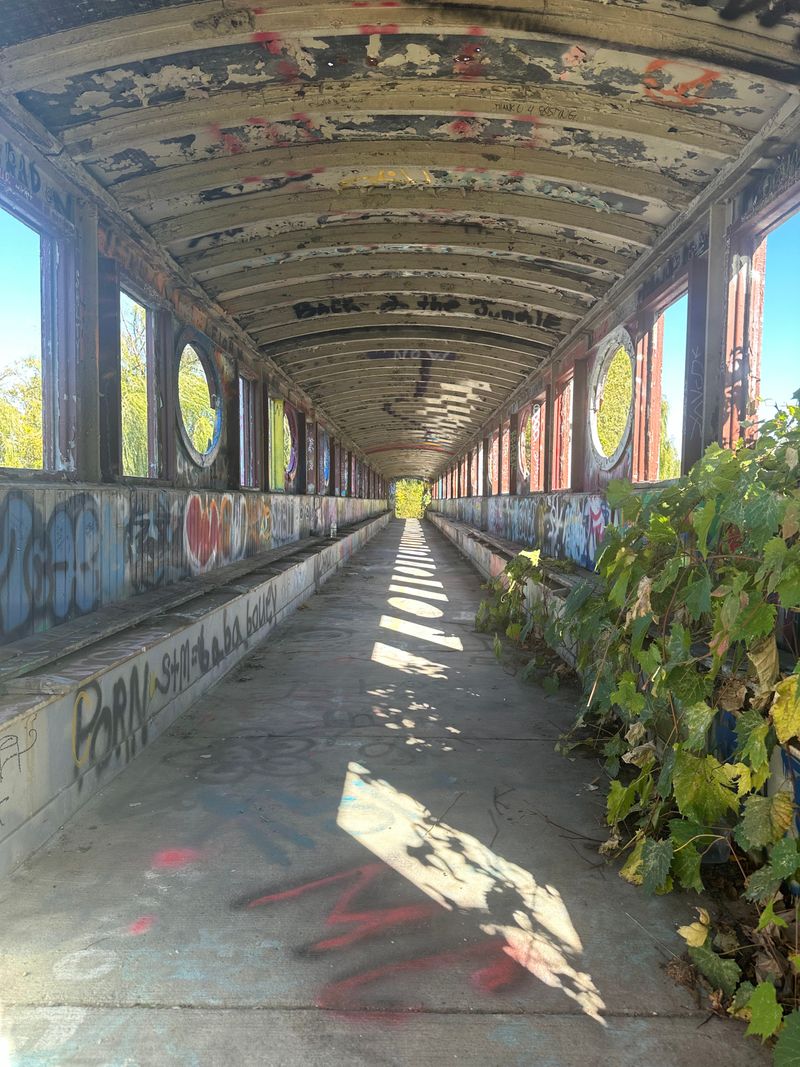
No rusted sign shouts directions to this lair, so the dirt trail becomes your unofficial, silent host. It braids through tall grasses and low tangled shrubs, tugging you toward the bridge the way a friend might point with their chin while looking over their shoulder. Every split resolves quickly if you keep your internal compass aimed at the hidden coordinates.
It feels less like a hike and more like being lured, but Belle Isle culture often leans welcoming. You may encounter other explorers who nod hello or offer a quick tip on which side of the arch has the best light, and that small human presence can steady the mood.
Bring plenty of water, pack out every bit of trash you bring in, and keep a sharp eye out for cyclists cruising the outer roads as you emerge from the brush. Your silent guide will be waiting right where shade thickens and the temperature drops, and it will lead you out again if you treat it with patience.
When Winter Turns The Colors Crisp
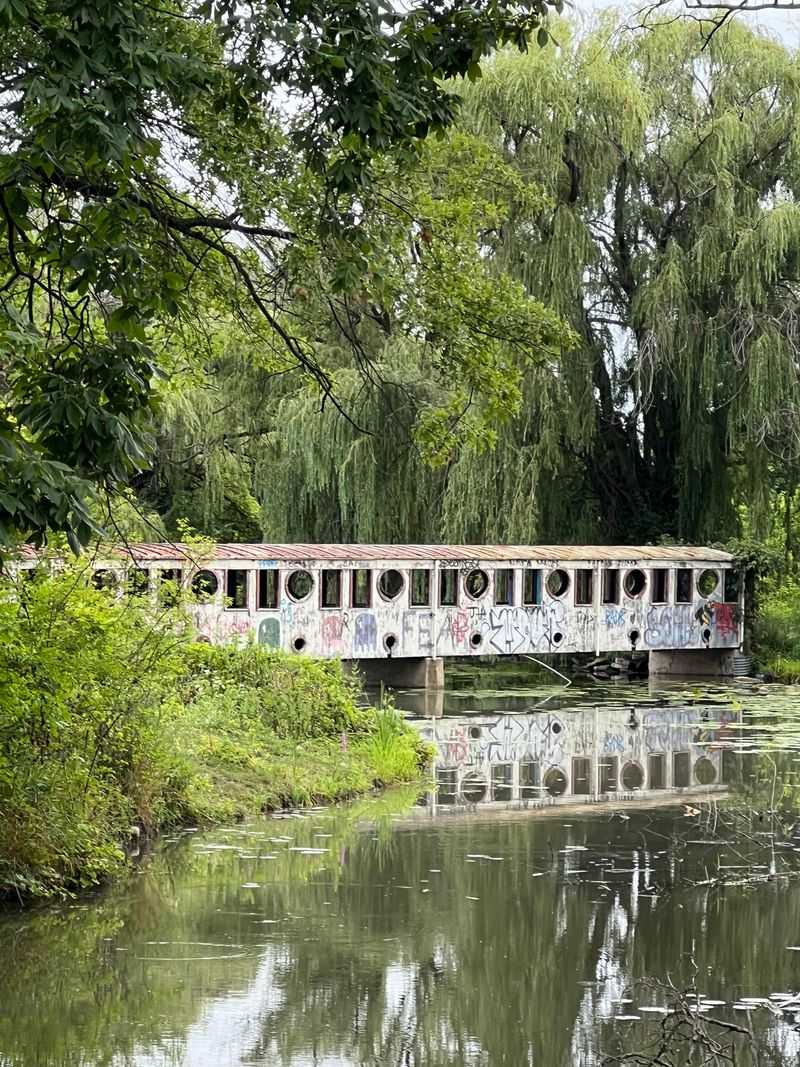
When Michigan frost sets in, the seasonal quiet thins the noise of the city and makes the paint pop against snow like fresh chalk. Your breath forms thick clouds in stagnant air, boots squeak against frozen muck, and the arch becomes a cold echo chamber for every stray sound. Winter invites slower looking and very short, steady steps.
Belle Isle walking traditions continue year-round, even when frost turns the bridge into an icebox. You might catch a lone photographer testing how blinding white snow frames neon letterforms. The reaction often comes as a nervous grin you try to hide from the wind, because the beauty and the eeriness arrive together.
Gloves with real grip are essential for navigating icy patches inside the span, and a thermos of something hot helps you linger without rushing. If you pause near the mouth of the arch, you can watch the colors sharpen against the pale world outside, and the contrast makes the whole place feel newly drawn.
Why The Place Feels Safe Enough
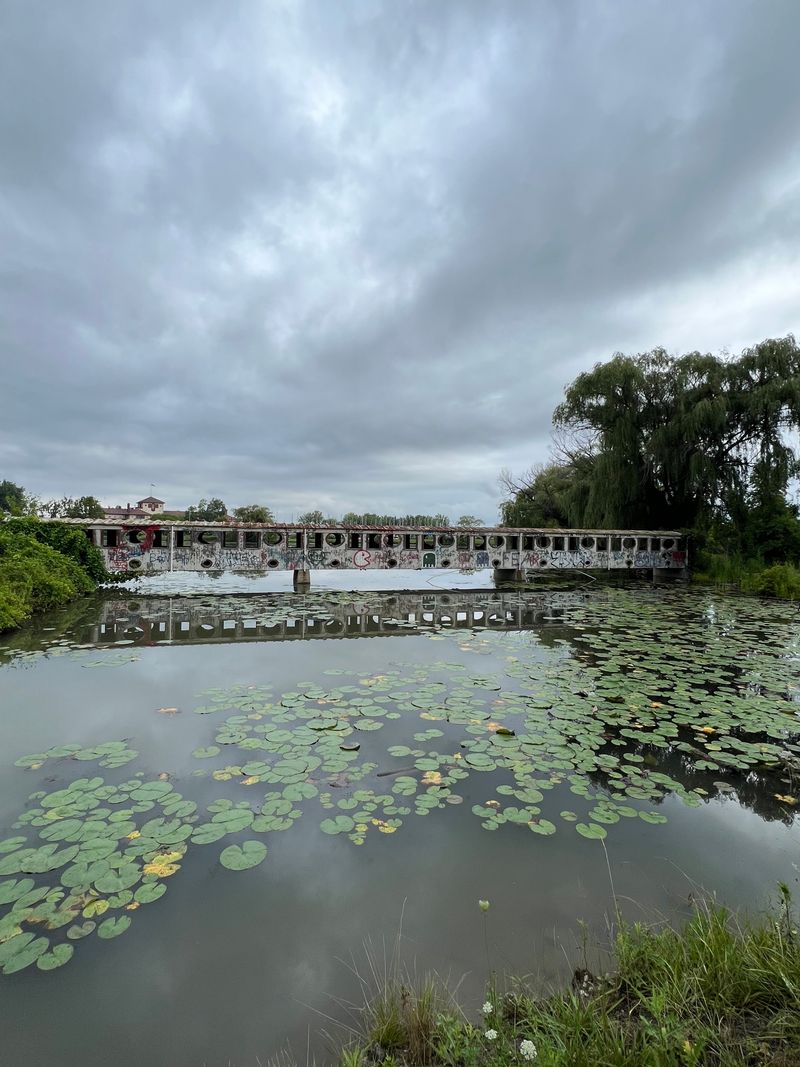
Despite the horror-movie aesthetics, daylight softens the eeriness you expect from viral photos. Joggers and families often drift through the clearing, and that easy human company changes the script from haunted to historic. The park’s active walking culture keeps a quiet pulse running past the bridge and reminds you that you are not truly alone on the island.
Preservation here is informal, based more on mutual respect for the art than any official rule. You see plenty of fresh paint, but you also see a strange restraint among artists, as if the space has its own etiquette. Keep your headphones low so environmental cues, and other people, can reach you.
Carry a small, powerful light in your bag in case clouds thicken and afternoon turns into early twilight. It is better to have a light you do not use than to find yourself fumbling for the path in the dark. With that one practical tool, the place becomes less nerve-testing and more simply intense.
Photographing Texture Without Losing Context
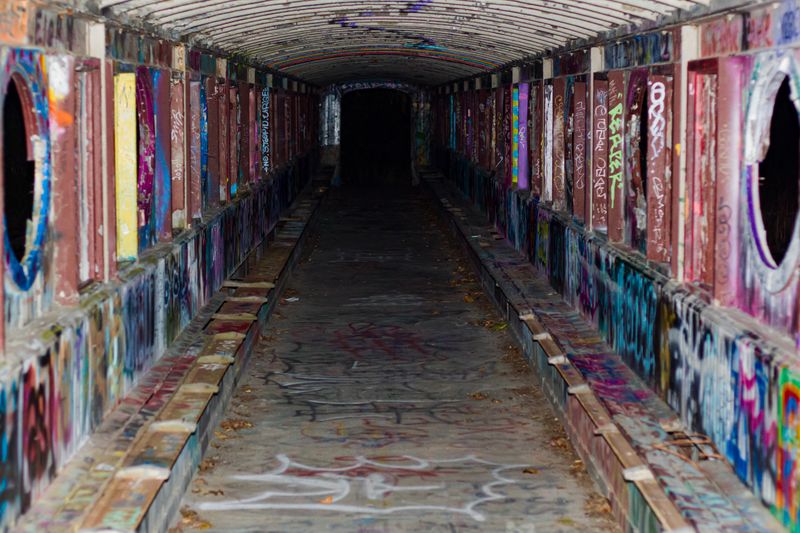
It is tempting to zoom in on every iridescent flake and neon drip on the concrete, but balance macro shots with wider frames. Capture the gaping mouth of the arch and the encroaching wall of trees, because the sharp contrast between wild growth and controlled concrete tells the fuller story. The setting matters as much as the paint.
A bit of technique goes a long way here. Shoot perpendicular to walls for true straight lines of text, then pivot to a low angle to give the vault dramatic scale. Avoid leaning too hard on digital filters that flatten the subtle, grimy nuance of the stone, since the real texture carries the mood.
Visitors often step backward into thick brush to find a cleaner perspective, so check your footing for holes or hidden roots before you commit. A microfiber cloth is a lifesaver for rescuing your lens from river mist that nudges inland. If you work slowly, you will leave with images that feel accurate, not staged.
Leaving Lightly, Returning Easily
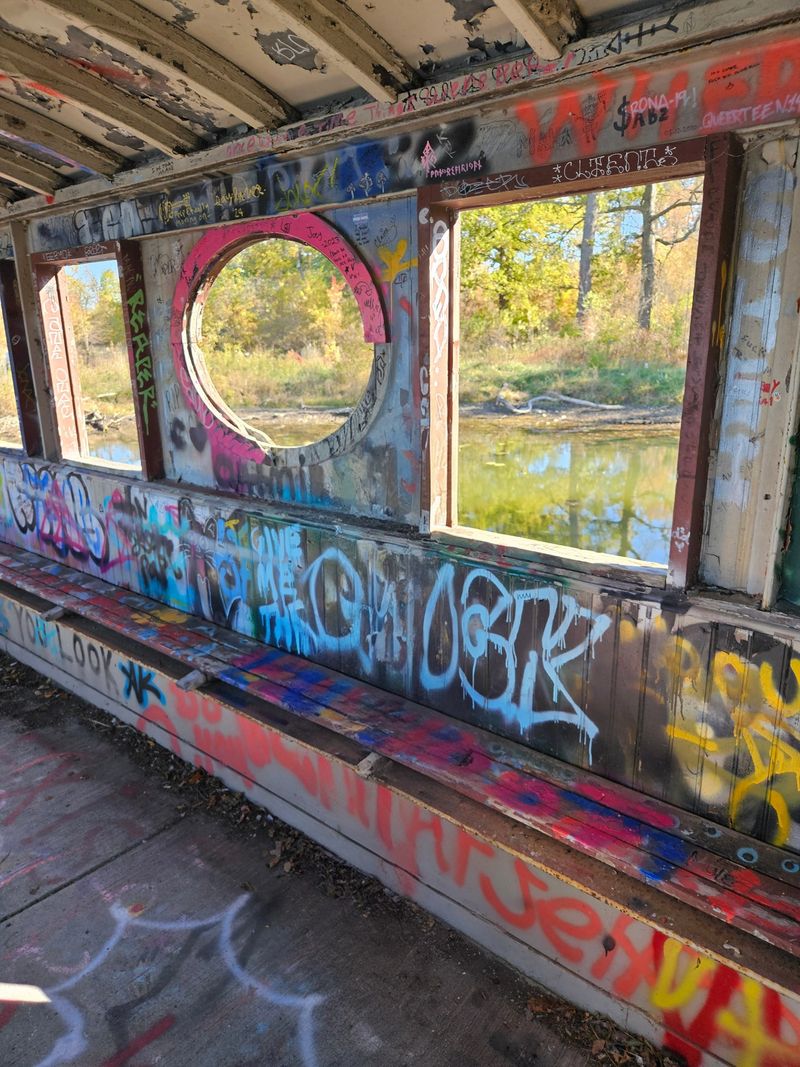
Exits can feel trickier than arrivals once the paths braid together in fading light. To avoid wandering in circles, drop another digital pin near the clearing as you leave, and follow the corridor of sky where trees begin to part. The bridge will seem to shrink behind you, the colors fading into a vague suggestion of light.
That gentle departure habit is what keeps the site alive for the next curious soul. Pack out wrappers, avoid touching paint that looks suspiciously wet, and do a quick sweep with your light to make sure you did not leave any gear behind in the shadows. You will likely want a second visit.
Morning brings a deceptive softness to the graffiti, while late afternoon brings sharp contrast and deeper shadow. Let both angles tell their own version of the story, and treat the return like a new visit rather than a repeat. If you marked your pins well, getting back will feel calm, even if the first walk in did not.