
This Enchanting Maine Boardwalk Trail Twists Through A Secret Bog Forest
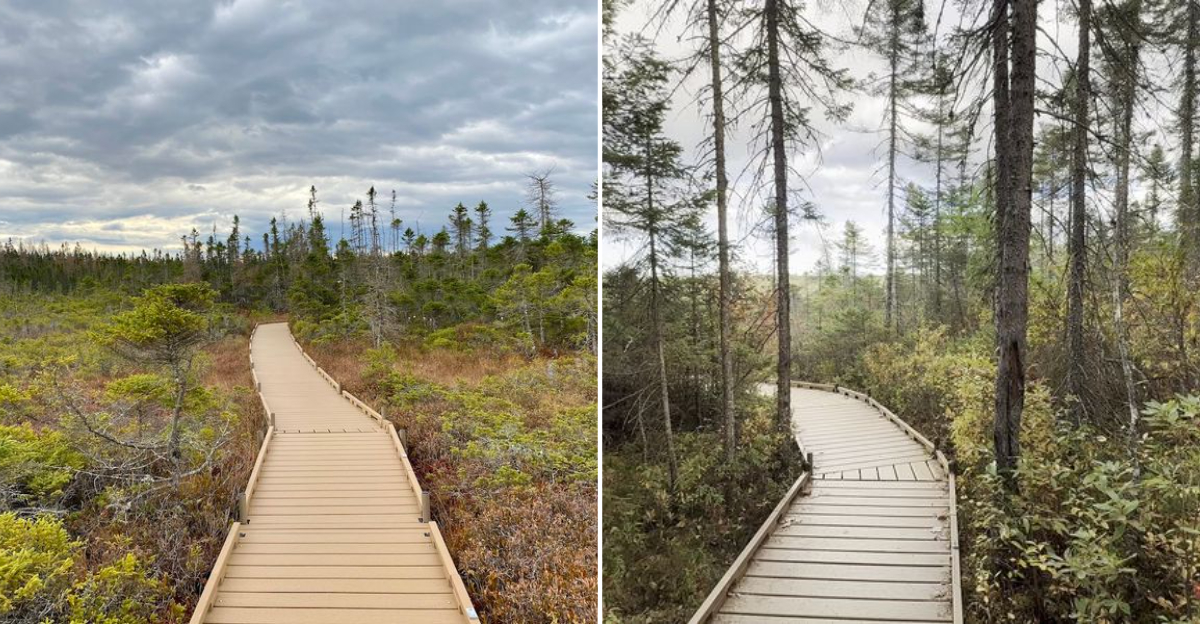
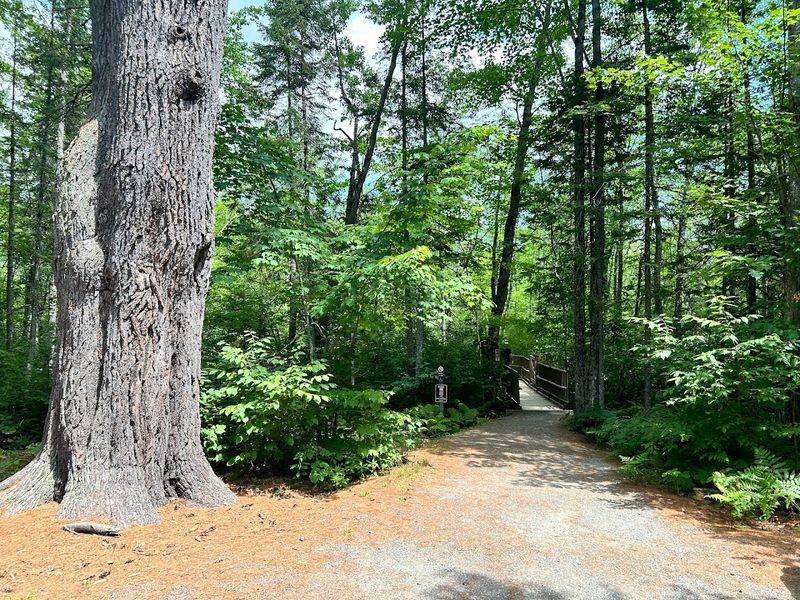
Maine loves to flip the script when you least expect it, and this hidden boardwalk trail is proof. One minute, a quiet forest surrounds you with shade and towering trees.
Then the landscape suddenly opens into a vast, sunlit peatland that feels almost otherworldly. This free, family-friendly walk follows a mile-long loop set above a living bog that has been developing for more than 11,000 years.
As you walk, you’ll notice things you don’t usually see on a hike, like carnivorous plants, soft layers of moss, and birds calling from every direction. It doesn’t feel like a typical trail so much as wandering through a living, breathing ecosystem.
A Bog That Has Been Building For Over 11,000 Years
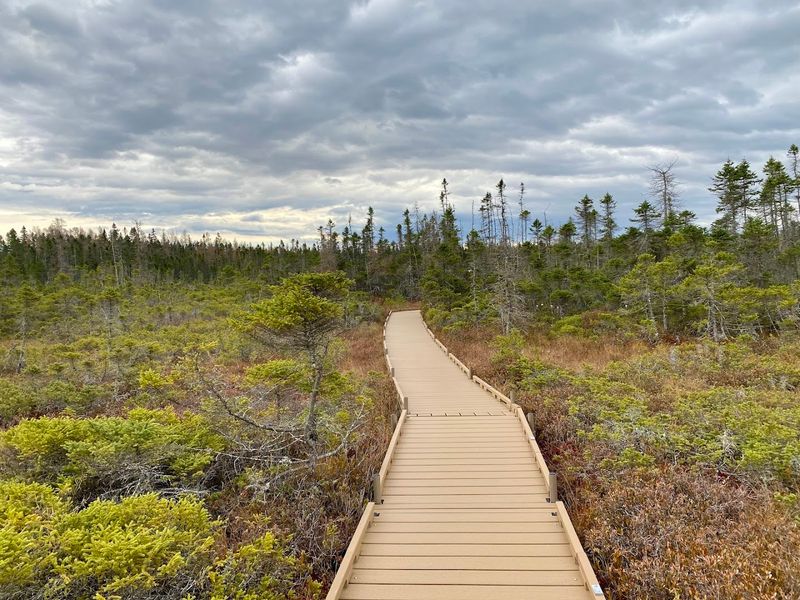
Long before anyone thought to build a boardwalk here, this bog was already doing something remarkable. The Orono Bog began forming roughly 11,000 years ago at the end of the last ice age, making it one of the most geologically fascinating spots in all of New England.
As glaciers retreated northward, they left behind low-lying depressions that slowly filled with water and organic matter.
Over thousands of years, layers of sphagnum moss accumulated and compressed into peat, creating the raised bog you can walk above today. Peat builds up incredibly slowly, sometimes just a millimeter per year, so what exists beneath the boardwalk represents an almost incomprehensible stretch of time.
Informative signs placed throughout the trail explain this geological history in clear, easy-to-understand language, making the walk feel like a living classroom. Standing in the open bog section and knowing what lies beneath your feet transforms a simple stroll into something truly awe-inspiring.
The Floating Boardwalk That Moves
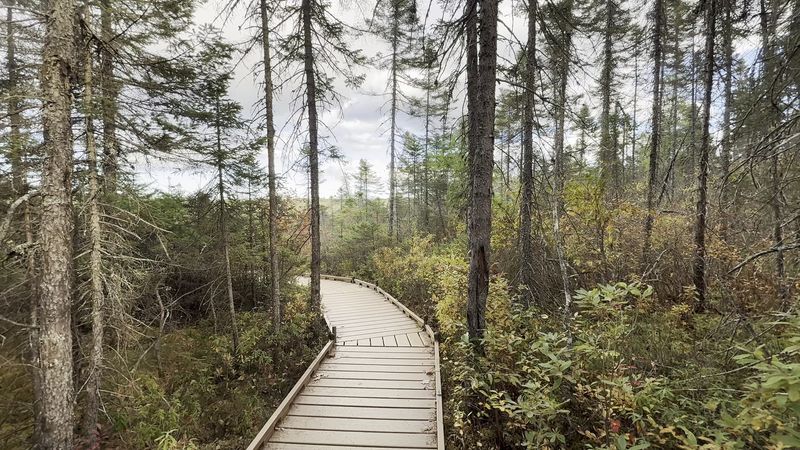
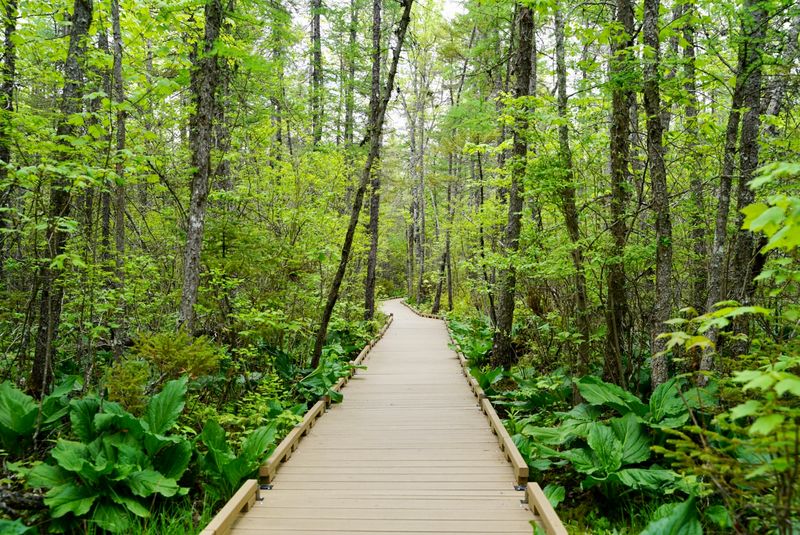
Walking the boardwalk at Orono Bog is unlike any trail surface you have probably experienced before. The path is built from composite decking panels that are hinged together, allowing the structure to flex gently with the natural movement of the bog beneath it.
In some spots, you will feel a slight bounce or give underfoot, which catches first-time visitors completely off guard.
The boardwalk stretches for a one-mile loop and begins about a quarter mile from the main parking area at Bangor City Forest. It is narrow by design, with mostly one-way traffic flow to keep things moving smoothly and to protect the sensitive ecosystem on either side.
Volunteers and staff ask that you never step off the boardwalk into the bog itself, both for your own safety and to preserve the fragile habitat. The floating, swaying sensation underfoot is one of those small details that makes this trail so memorable and genuinely unlike anything else in the region.
The Bog’s Carnivorous Celebrities
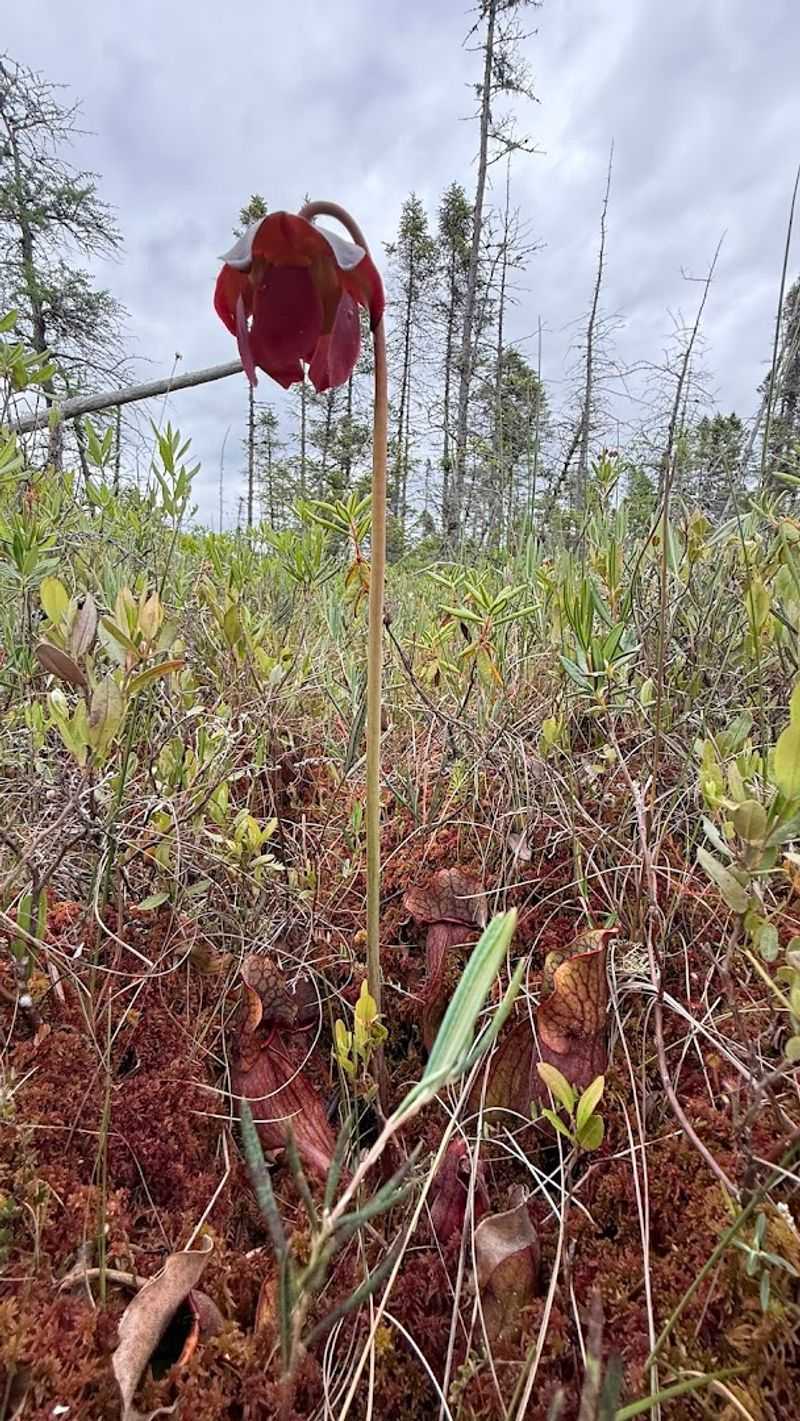
If there is one plant that stops every single visitor in their tracks, it is the pitcher plant. These striking carnivorous plants thrive in the nutrient-poor, acidic conditions of the Orono Bog, and they have developed a clever survival trick: they eat insects.
The tube-shaped leaves fill with rainwater and digestive enzymes, luring bugs inside with color and scent before trapping and dissolving them.
Pitcher plants are most abundant toward the far end of the open bog section, just before the trail curves back into the forest. They tend to cluster in low, mossy patches and are easy to spot thanks to their deep red-green coloring and distinctive upright shape.
Visiting in late spring or early summer gives you the best chance of seeing them in full bloom, with tall, nodding flowers rising above the foliage. Spotting your first pitcher plant in the wild feels like discovering something that should only exist in a science fiction story.
Over 14 Species Of Sphagnum Moss
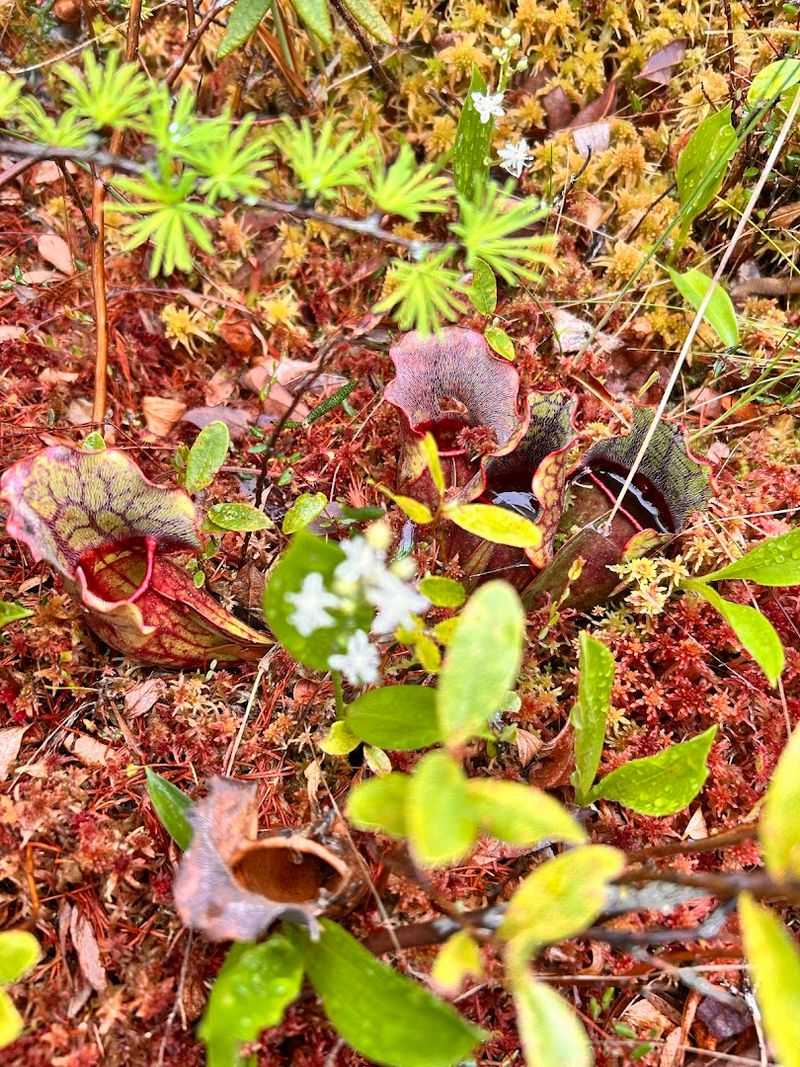
Sphagnum moss is the unsung hero of the Orono Bog, and once you learn what it does, you will never look at a clump of moss the same way again.
Over 14 distinct species of sphagnum have been identified here, each one contributing to the acidic, water-saturated environment that defines a raised peatland. Together, they form a living sponge that holds enormous amounts of water and slowly releases it over time.
The moss creates conditions so acidic and nutrient-poor that most plants simply cannot survive, which is exactly why the bog looks so dramatically different from the surrounding forest. Only highly specialized species like pitcher plants, black spruce, and leatherleaf shrubs can handle these extreme conditions.
From the boardwalk, you can observe the moss carpet stretching out in every direction in shades of rusty red, bright green, and golden yellow. The informational signs along the trail do a wonderful job of explaining how this seemingly simple plant engineers an entire ecosystem from the ground up.
The Dramatic Landscape Shift
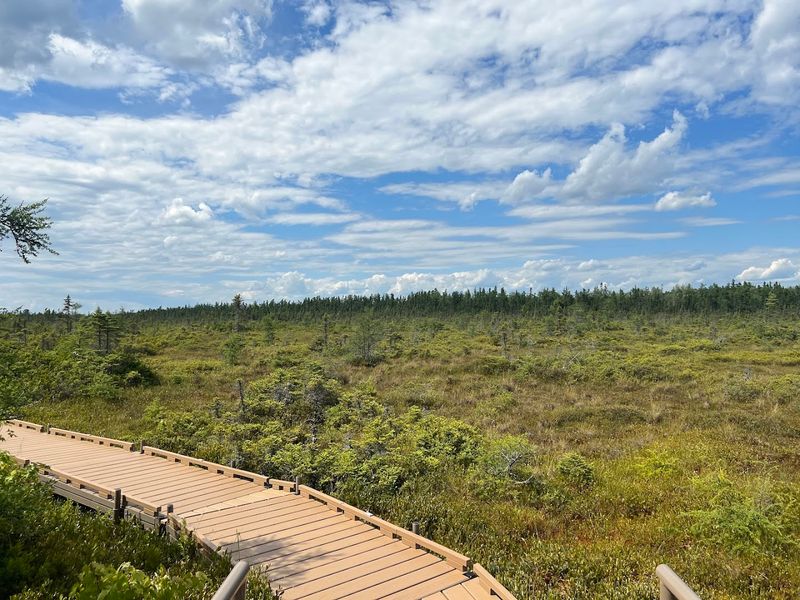
One of the most jaw-dropping moments on this trail happens without any warning. You are walking through a cool, shaded forest corridor with towering trees on both sides, and then suddenly the canopy disappears and the world opens up into a vast, flat, sun-drenched bog landscape.
The contrast is so sudden and so complete that it genuinely stops you mid-step.
This dramatic shift in scenery is one of the things that makes Orono Bog Boardwalk so memorable compared to typical woodland hikes.
The open bog section feels almost like stepping onto a different planet, with low-growing shrubs, scattered black spruce trees, and that endless carpet of moss stretching out in every direction.
On a sunny day, the open bog is bright and warm, offering sweeping views that feel out of place in the middle of a Maine city forest. Early morning visits are especially rewarding, when mist sometimes hovers just above the moss and the whole scene takes on a quiet, almost otherworldly quality.
Black Spruce Trees
Scattered across the open bog, the black spruce trees look almost comically small compared to the towering pines in the surrounding forest.
But do not let their modest size fool you. These trees can be surprisingly old, their growth stunted by the same acidic, low-nutrient conditions that make the bog so inhospitable to most plant life.
Black spruce are perfectly adapted to survive in waterlogged, cold, acidic soils where other trees would simply give up.
Their shallow root systems spread wide rather than deep, anchoring into the peat without needing the rich soil that most conifers require. They grow slowly and deliberately, shaped over decades by the bog’s unique pressures.
Seeing a knee-high spruce and realizing it might be older than you are is one of those quietly humbling moments the trail offers.
The interpretive signs along the boardwalk point out these trees and explain their biology, giving even casual visitors a deeper appreciation for what appears to be a simple, sparse landscape.
Wildlife Sightings From Birds To Bears
The Orono Bog Boardwalk is not just a plant lover’s paradise. It is also a surprisingly active wildlife corridor.
Birdwatchers will find plenty to keep their binoculars busy, with a variety of songbirds, wading birds, and raptors moving through the area depending on the season.
The surrounding Bangor City Forest trails add to the wildlife-watching opportunities, with deer, foxes, and other woodland creatures occasionally spotted among the trees.
During blueberry season, posted signs near the trailhead have noted bear activity in the area, which is a perfectly natural occurrence given the abundant food source nearby.
The bog itself acts as an important habitat for specialized insects, amphibians, and migratory birds that rely on wetland ecosystems.
Visiting at different times of year reveals completely different casts of wildlife characters, making repeat trips feel fresh and worthwhile. Early morning hours consistently offer the most active and rewarding wildlife encounters.
A Free Trail That Is Welcoming For All Ages And Abilities
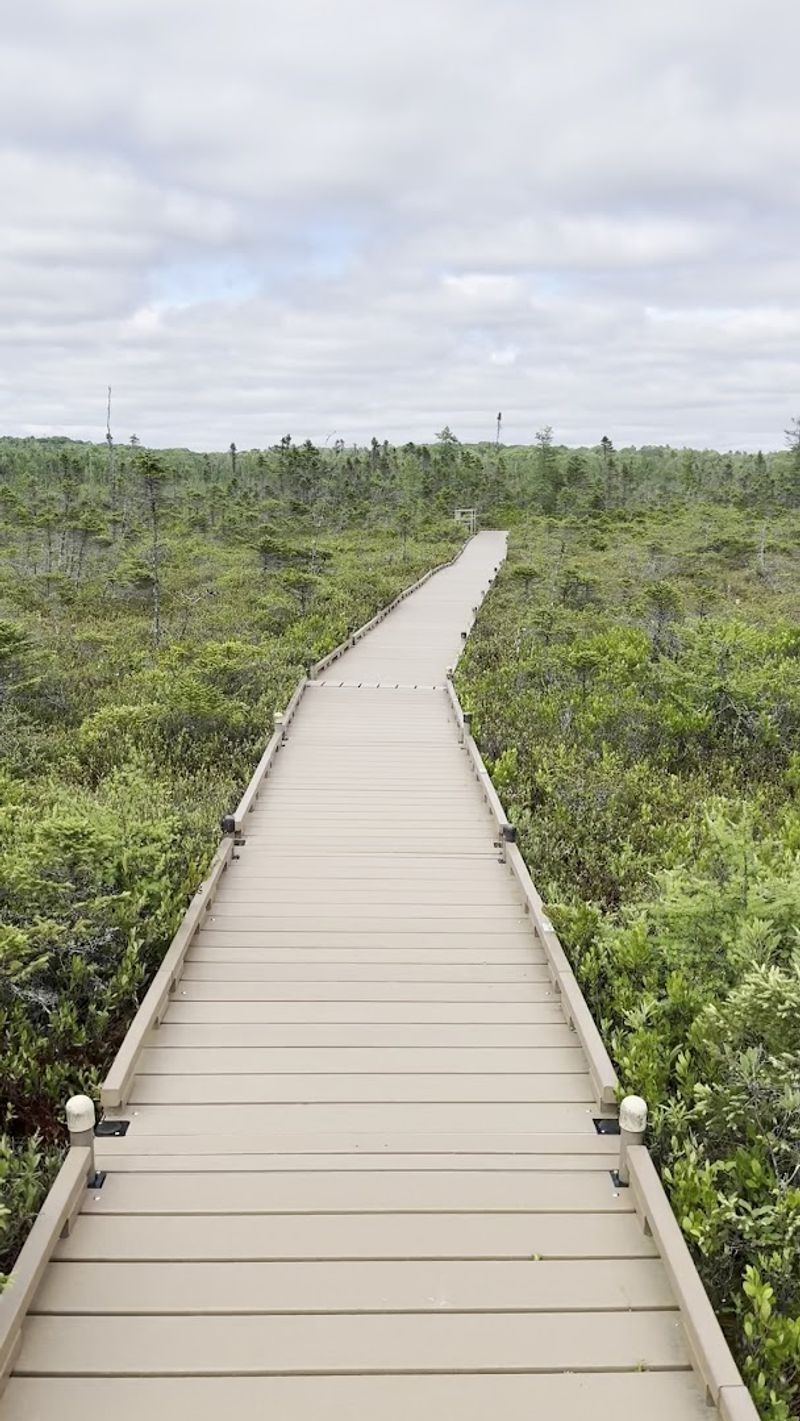
Not every remarkable natural experience requires a strenuous effort to reach it, and the Orono Bog Boardwalk proves that beautifully. The trail is completely free to visit, flat throughout, and accessible to a wide range of ages and physical abilities.
From toddlers in carriers to grandparents taking a leisurely afternoon stroll, the boardwalk accommodates just about everyone comfortably.
The quarter-mile walk from the parking area to the boardwalk entrance follows an improved gravel road that is easy underfoot. Once on the boardwalk loop itself, the path is stable and well-maintained, though the hinged sections do require a little mindfulness from those who are unsteady on their feet.
Pit toilets are available on a side trail just before the boardwalk entrance, and the main parking area at Bangor City Forest can accommodate around 30 vehicles.
A volunteer-staffed information booth greets visitors at the entrance, where you can pick up trail details and even purchase a souvenir t-shirt or hat. Donations are warmly accepted to help keep the trail maintained.
Seasonal Beauty That Changes With Every Visit
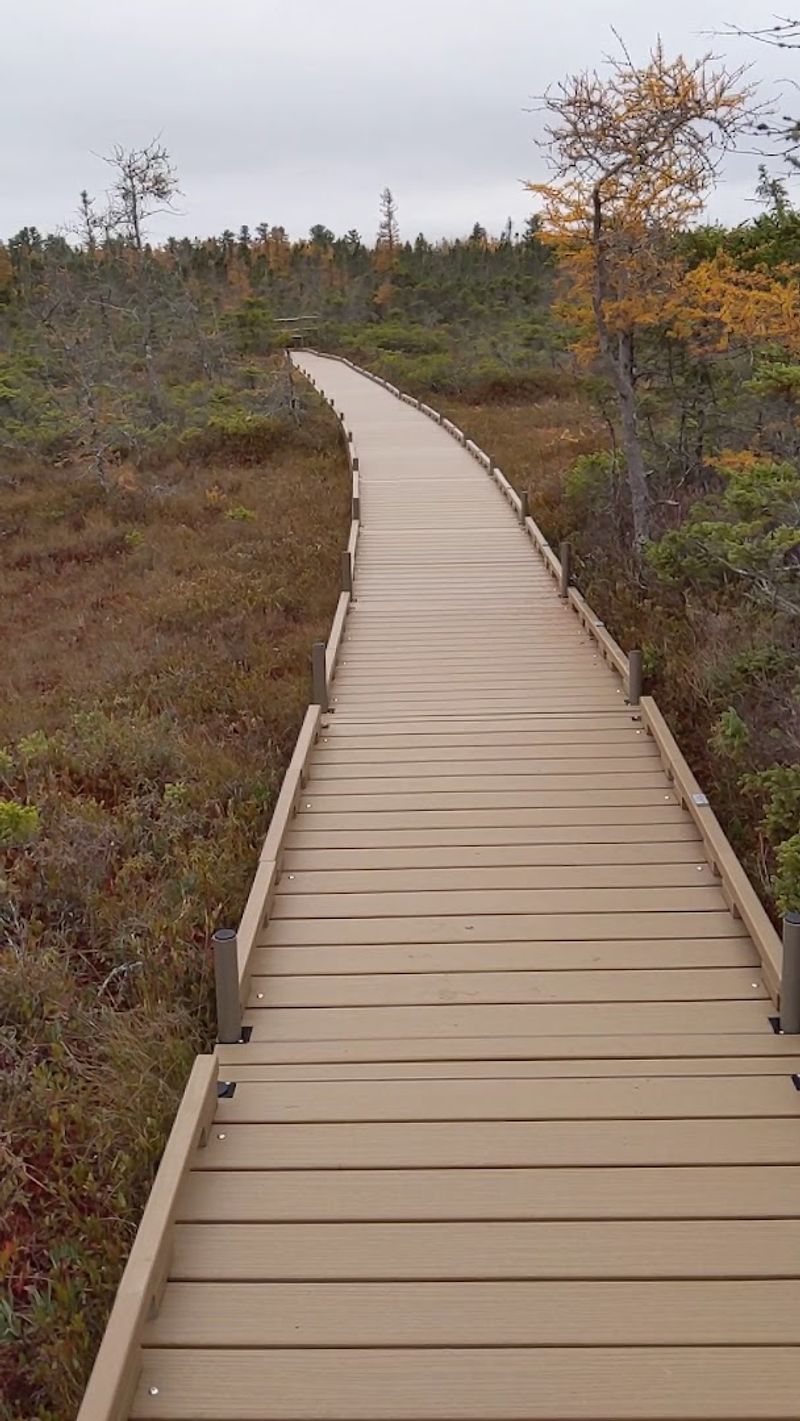
Every season brings a completely different personality to the Orono Bog Boardwalk, which is one reason so many visitors return year after year.
Summer is the showiest season, with pitcher plants blooming, wildflowers scattered across the bog surface, and the full green canopy of the forest trail providing welcome shade on warm days.
Autumn transforms the landscape into something almost theatrical, with the bog shrubs turning deep shades of burgundy and gold while the surrounding forest blazes with fall color.
Winter visits are possible but require caution, as the boardwalk can become slippery in icy conditions. The stark, quiet beauty of the bog under snow is a completely different experience from any other time of year.
Spring is arguably the most dynamic season, with migrating birds passing through, early wildflowers pushing up through the moss, and the whole ecosystem waking up after months of cold.
The boardwalk loop closes at 4:30 PM, so planning your arrival with enough daylight is worth keeping in mind regardless of the season.
Educational Signs That Turn A Walk Into A Learning Adventure
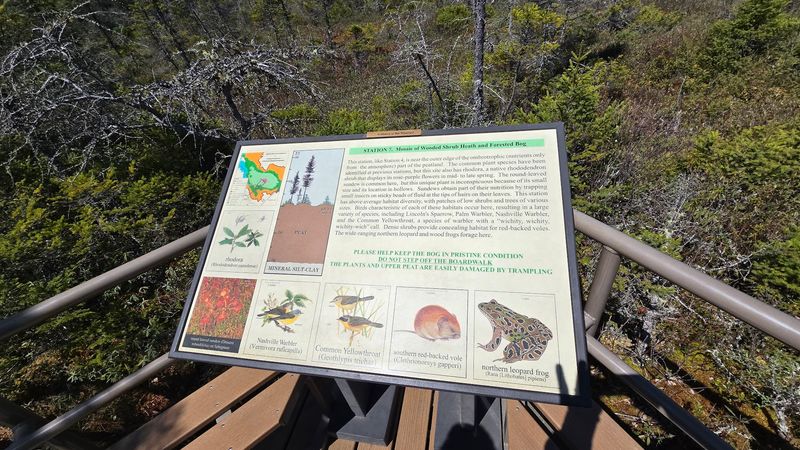
One of the most thoughtful features of the Orono Bog Boardwalk is the series of interpretive signs placed at regular intervals along the trail.
These signs cover everything from the geology of peat formation to the biology of carnivorous plants, and they are written in language that is clear and engaging for visitors of all ages.
Kids especially seem to light up when they read about pitcher plants trapping insects for nutrients.
The signs explain how over 14 species of sphagnum moss create the acidic conditions that define the ecosystem, how black spruce adapt to survive in the bog, and why stepping off the boardwalk would cause irreversible damage to the fragile habitat.
Each sign feels like a chapter in a larger story about this 11,000-year-old landscape. Bringing curious kids to this trail is one of the easiest ways to turn a simple outdoor outing into a genuinely memorable educational experience.
The combination of hands-on observation and well-written signage makes the Orono Bog Boardwalk at Tripp Drive, Bangor one of the most informative free trails in the entire state.