
This Famous Ghost Town In Arizona Will Instantly Transport You To The Wild West
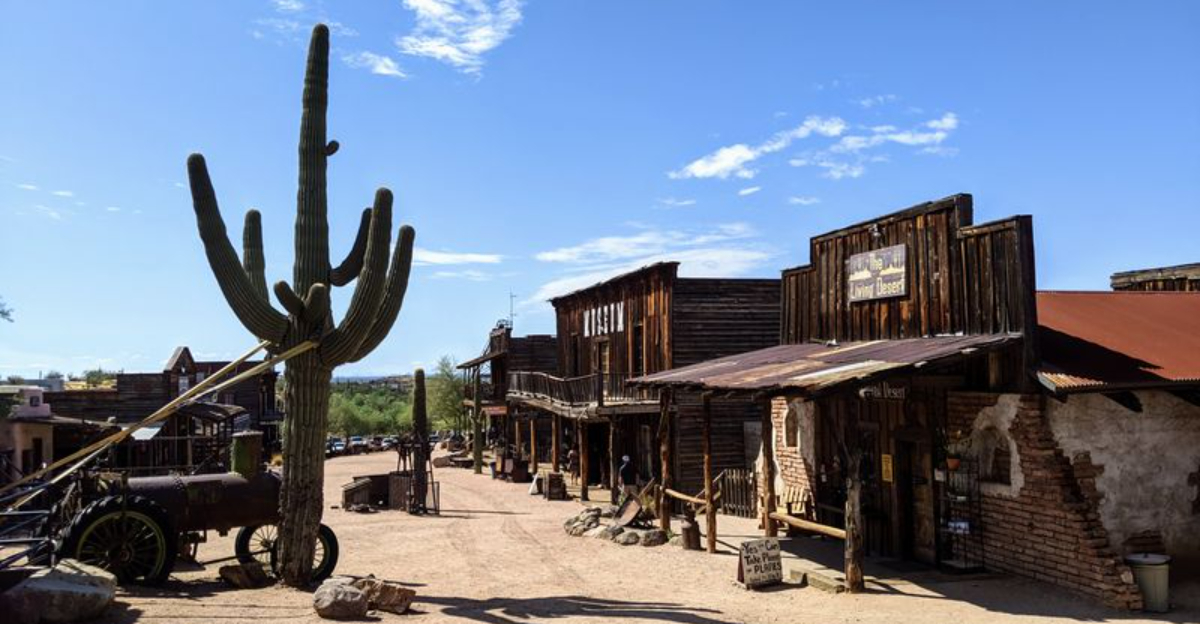
Ever dreamt of trading your screen time for saloon doors, or your morning commute for a dusty horse trail? I certainly have, and let me tell you, there’s a spot deep in the heart of Arizona that doesn’t just remind you of those classic Western films – it plonks you right into the middle of one.
Forget special effects; this place is the real deal. From the moment I stepped onto its sun-baked, dusty streets, I swear I could almost hear the faint jingle of spurs and the distant echo of a saloon piano.
It’s more than just a collection of old buildings; it’s a living, breathing postcard from the 1800s, just waiting for you to wander through its forgotten stories. Get ready, because a trip here is a journey back in time, and trust me, you won’t want to leave.
Walking Through A Living 1890s Mining Camp
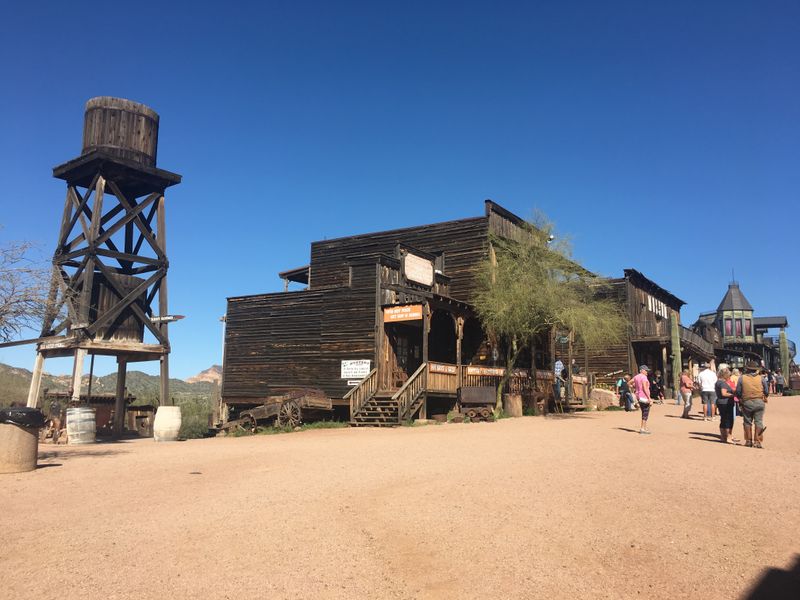
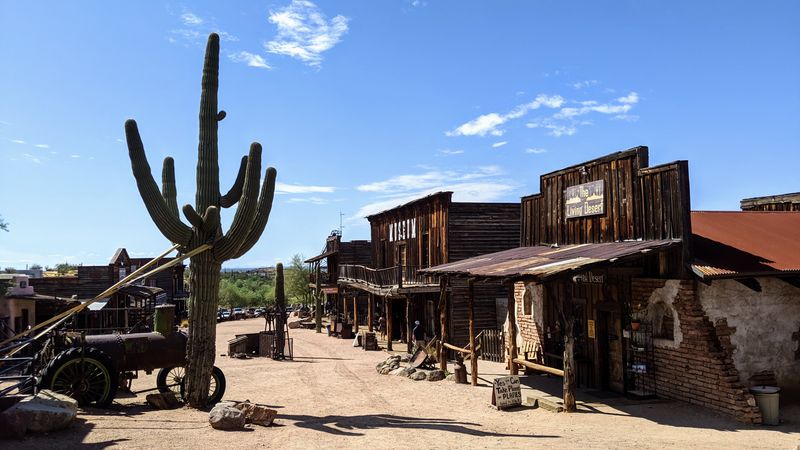
Every weathered plank and hand-painted sign recreates the boom-town energy that once drew fortune-seekers to these hills when gold fever ran hot. The main street stretches out with saloons, a general store, and a blacksmith shop that still rings with the sound of hammer on anvil during demonstrations.
I found myself pausing at every corner, half-expecting a prospector to stumble out with a pan full of glittering flakes.
The reconstructed buildings aren’t just empty shells either. Each structure houses period artifacts, antique mining equipment, and displays that explain how people actually lived when Goldfield thrived as a real mining operation.
Kids race along the boardwalks while parents snap photos against backdrops that need zero digital enhancement.
What strikes me most is how the town manages to feel both educational and entertaining without leaning too heavily in either direction, creating an experience that satisfies history buffs and adventure-seekers equally.
Goldfield Ghost Town sprawls across the desert floor like a movie set that forgot to pack up and leave.
Descending Into The Mammoth Mine
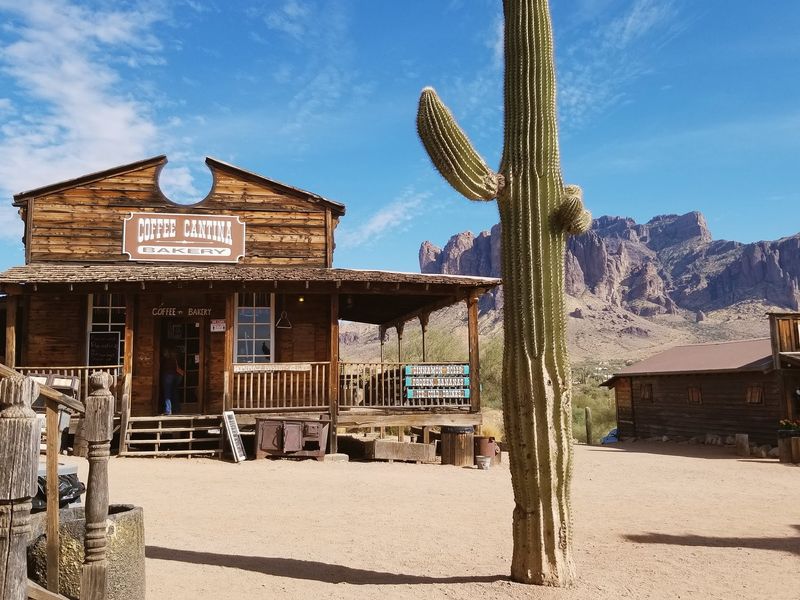
Located at 4650 N Mammoth Mine Rd in Apache Junction, this reconstructed mining town doesn’t just tell you about the Old West, it drops you right into the middle of it.
Nothing prepares you for the temperature drop when you step into the Mammoth Mine.
The guided tour takes you 100 feet down into the earth where miners once chipped away at rock faces, chasing veins of gold that funded their dreams and sometimes their disappointments.
Your guide shares stories about the backbreaking labor, the dangers of cave-ins, and the ingenious methods miners developed to extract precious metal from stubborn stone.
I kept touching the cool rock walls, imagining what it felt like to work here by candlelight with nothing but hope and determination.
The mine still contains original equipment, including ore carts, drilling tools, and ventilation shafts that remind you this wasn’t a theme park attraction but a real workplace.
Children ask endless questions about how miners found gold, what they ate for lunch, and whether anyone ever got lost in the tunnels.
Emerging back into Arizona sunshine feels like traveling forward in time, and suddenly I understood why those miners celebrated so hard when their shifts ended.
Watching Gunfighters Duel On Main Street
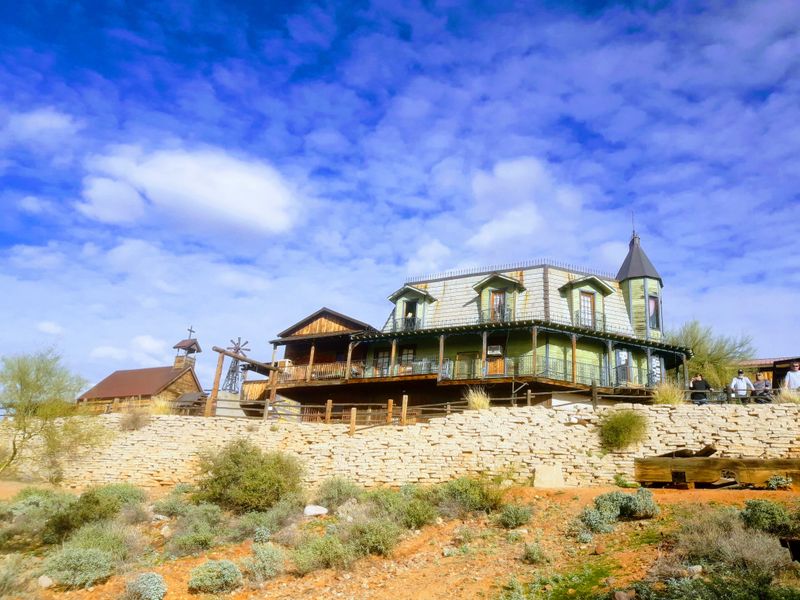
The crack of gunfire echoes off the Superstition Mountains, and suddenly Main Street transforms into a scene straight from a classic Western.
Costumed actors portray outlaws, sheriffs, and townsfolk in staged shootouts that happen multiple times throughout the day, complete with period-accurate dialogue and enough drama to make you forget you’re watching a performance.
I’ve seen these shows draw crowds of fifty or more, with children peeking around their parents’ legs and adults grinning like kids themselves.
The actors commit fully to their roles, improvising with audience members and delivering their lines with just the right mix of humor and swagger.
What makes these gunfights special isn’t just the pyrotechnics or the choreography but the way they capture the lawless energy that defined frontier towns.
Between shows, the performers stay in character, posing for photos and answering questions about their “lives” in Goldfield.
I caught myself genuinely invested in whether the marshal would catch the bank robbers, proof that good storytelling works even when you know it’s all pretend.
Exploring The Museum’s Mining Artifacts
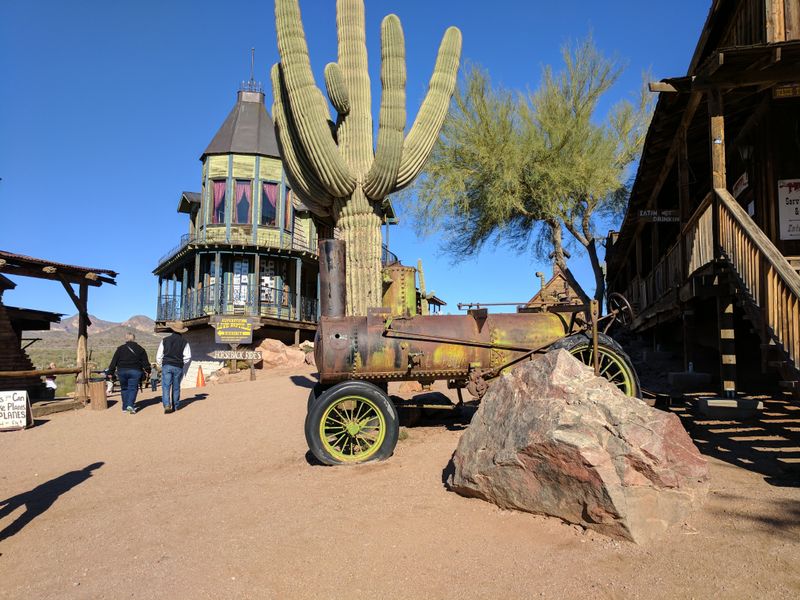
Goldfield’s museum packs more history into its modest space than buildings three times its size.
Glass cases display everything from delicate gold nuggets to massive drilling equipment that somehow miners hauled up mountainsides. Photographs line the walls showing the original Goldfield during its peak years, when the population swelled and the mine operated around the clock.
I spent nearly an hour reading handwritten letters from miners to their families, documents that revealed homesickness, optimism, and the grinding reality of desert life.
The collection includes assayer’s scales, dynamite boxes with faded warning labels, and personal items like pocket watches and tin cups that humanize the statistics.
One exhibit explains the process of extracting gold from ore, breaking down complex metallurgy into steps that actually make sense.
Museum volunteers circulate through the space, ready to answer questions or share stories passed down through generations of Arizona families.
Walking out, I felt like I’d gained not just facts about mining but genuine insight into the hopes and hardships that shaped the American West.
Riding The Narrow Gauge Railroad
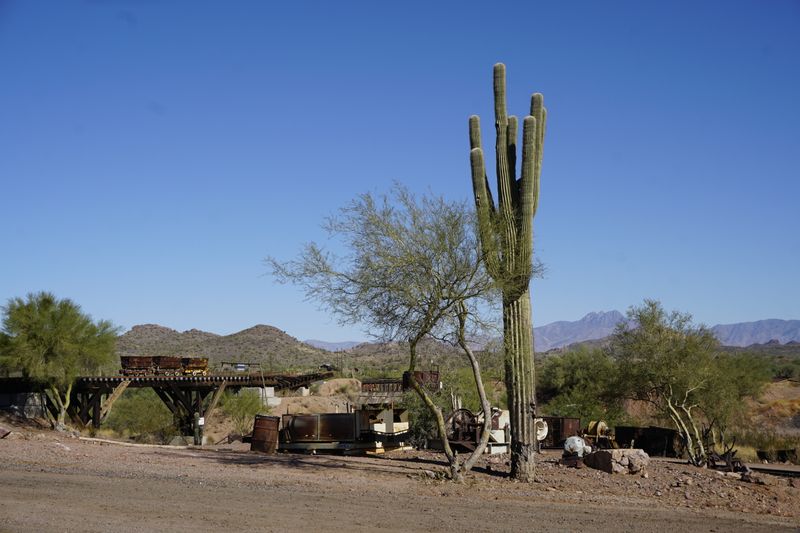
The narrow gauge railroad circles the property on tracks that clatter and sway just enough to feel authentically vintage.
Climbing aboard the open-air cars, I grabbed a wooden bench as the locomotive chugged to life with a blast of its whistle. The twenty-minute ride loops through desert terrain dotted with saguaro cacti and offers views of the Superstition Mountains that miners would have seen daily during their commutes.
Your conductor shares facts about the railroad’s role in mining operations, explaining how these small trains hauled ore, supplies, and workers between different sections of the claim.
Kids wave at visitors on the ground while parents enjoy the breeze and the chance to rest their feet after exploring the town.
The track passes by mining equipment too large to move into the museum, including a massive stamp mill that once crushed tons of rock.
I found the gentle rocking motion surprisingly relaxing, a peaceful contrast to the excitement of the gunfights and mine tours, and a perfect way to see parts of the property you might otherwise miss.
Browsing Shops Filled With Western Treasures
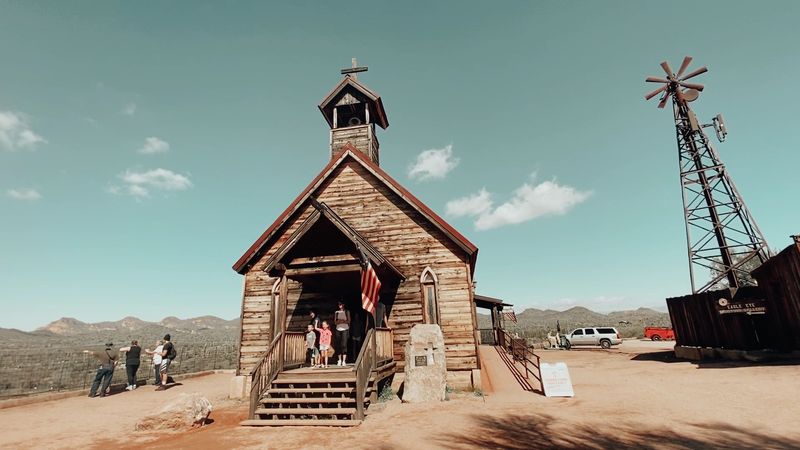
Goldfield’s shops manage the tricky balance between authentic period charm and modern tourist appeal.
The general store stocks everything from penny candy in glass jars to handcrafted leather goods that wouldn’t look out of place in an 1890s catalog. I discovered turquoise jewelry made by local artisans, books about Arizona history, and enough cowboy hats to outfit a small ranch.
The mercantile features mining-themed souvenirs including fool’s gold specimens, replica gold pans, and t-shirts with clever slogans about striking it rich.
What impressed me most was the quality of the offerings beyond the typical gift shop fare.
You can find genuine antiques, Native American crafts, and specialty items like mesquite honey and prickly pear jelly produced in Arizona. Shop owners know their merchandise and often share stories about the craftspeople or the history behind certain items.
Even if you’re not planning to buy, wandering through these spaces adds another layer to the experience, showing how frontier commerce worked and giving you a chance to take home a tangible piece of your visit.
Planning Your Visit To Beat The Desert Heat
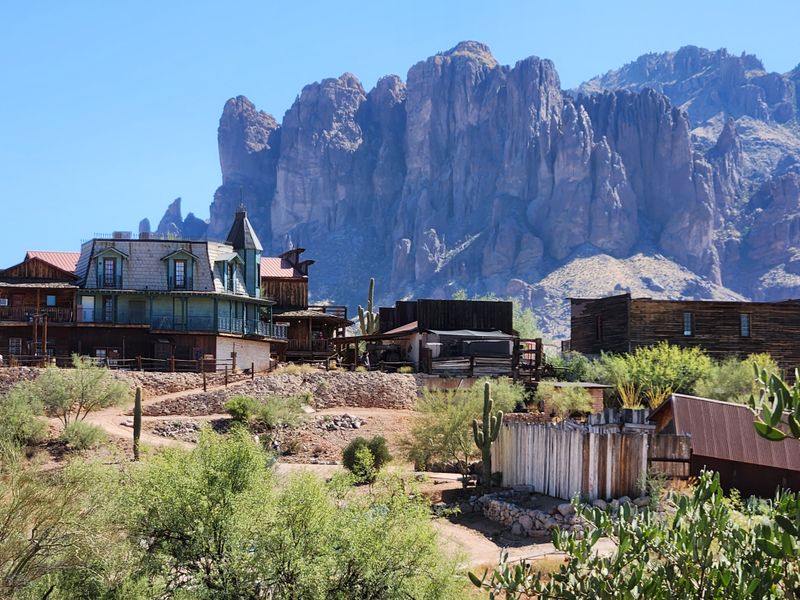
Timing your Goldfield adventure makes all the difference between a comfortable experience and a scorched one.
The town operates daily from 10 AM to 5 PM, but Arizona’s desert climate demands strategic planning, especially during summer months when temperatures can soar past 110 degrees. I recommend arriving right when the gates open to tackle the mine tour while underground temperatures still provide relief.
Fall through spring offers the most pleasant visiting conditions, with daytime highs in the 70s and 80s that let you explore comfortably.
Bring more water than you think you’ll need because the dry air dehydrates you faster than you’d expect, and wear sunscreen even on cloudy days since the desert sun shows no mercy.
The property includes shaded areas and indoor spaces where you can cool down between outdoor activities.
Comfortable walking shoes matter more than style since you’ll cover uneven ground and wooden boardwalks that can be slippery.
Most visitors spend three to four hours exploring everything Goldfield offers, though history enthusiasts and families with young children often stretch that to a full afternoon of discovery.
Panning For Gold In Authentic Mining Sluices
Real gold flakes glitter in the water as you swirl your pan just like prospectors did over a century ago. The mining sluices use the same gravity-fed water systems that separated precious metal from ordinary sand during Arizona’s gold rush era.
Kids and adults alike get genuinely excited when they spot their first shimmer of color in the bottom of their pan.
Staff members share authentic panning techniques passed down through generations of miners who worked these very hills. You’ll learn how to read the black sand, identify fool’s gold, and perfect the circular motion that keeps heavy gold settled while lighter material washes away.
Best of all, you get to keep whatever you find as a genuine souvenir from your Wild West adventure.
The rhythmic motion of swirling water and gravel quickly becomes meditative, connecting you to a slower, simpler era of Arizona history. Even the smallest fleck of gold feels like a triumph, sparking the same thrill that once drove hopeful prospectors westward.
By the end of the experience, your dusty boots and glittering vial of gold make for the perfect reminder of a hands-on Wild West adventure.