
This Famous New Jersey Factory Tour Has A Strange Story Hidden In Its History
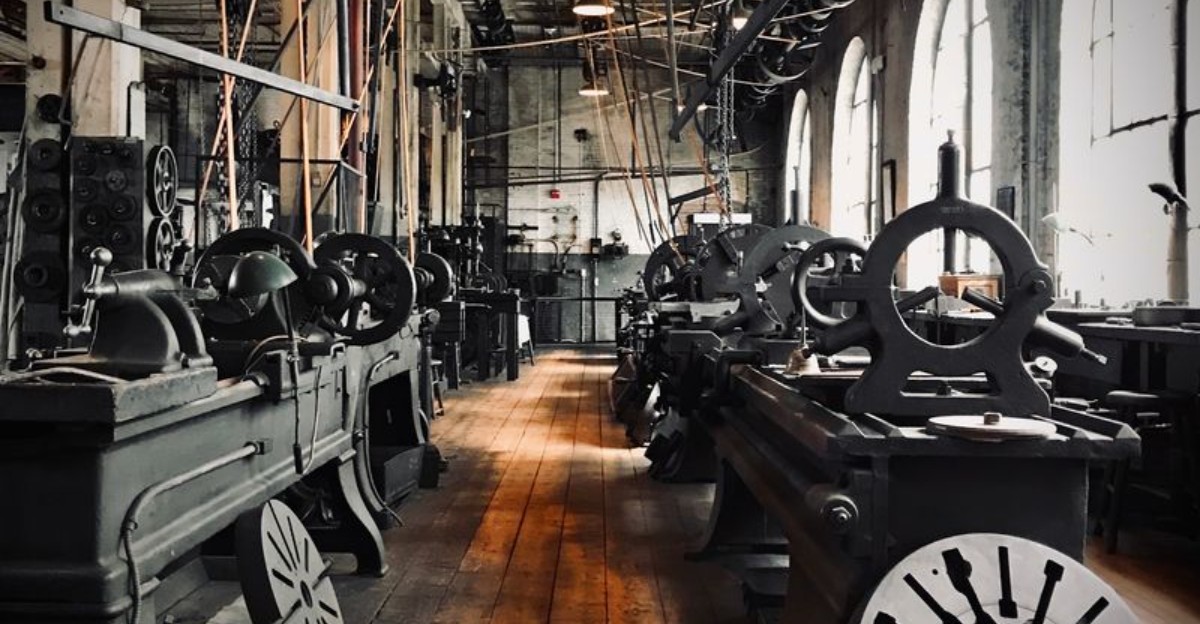
What if I told you one of New Jersey’s most fascinating factory tours once had a building that literally turned to follow the sun? Sounds made up, right?
Nope. And somehow, that’s not even the weirdest part. Back in the 1890s, this place wasn’t just cranking out inventions.
It was helping invent the future, from phonographs and batteries to some of the earliest motion pictures.
And then there was the Black Maria, a strange little tar-papered studio where Edison’s crew filmed boxing matches, dancers, and even a guy sneezing. Yes, a sneeze became a movie.
Honestly, TikTok would’ve eaten this place alive. But behind all the clever gadgets and famous experiments is a stranger story about what really went on inside these walls, and that’s the part most people don’t see coming.
Where Movies Got Their Very First Close-Up
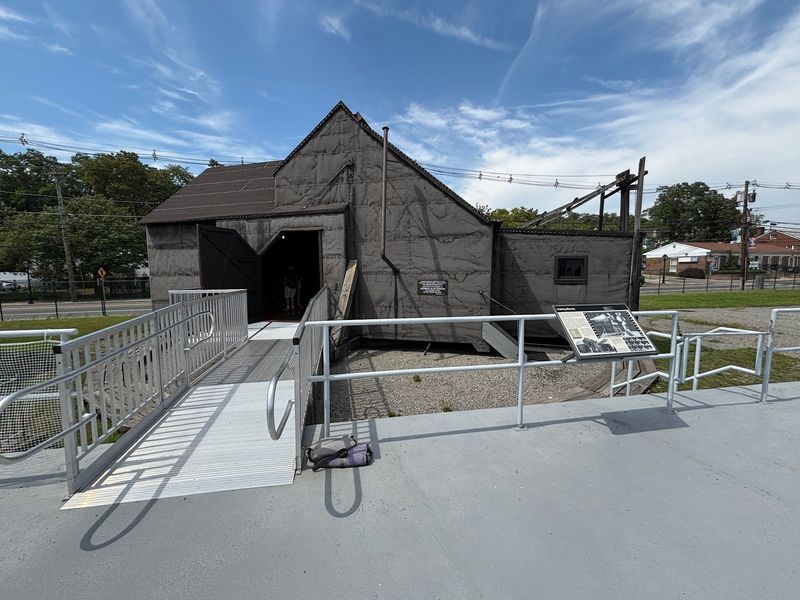
Long before Hollywood existed, the world’s first film studio was a strange, black-covered building in New Jersey that looked more like a police wagon than a creative hub. That building was the Black Maria, and it was absolutely revolutionary.
Edison’s team built it specifically to create motion pictures using the Kinetoscope, and it changed entertainment forever.
The design was brilliantly practical for its time. The roof could retract to let in natural sunlight, which early cameras desperately needed.
The whole structure sat on a circular track so it could rotate and follow the sun throughout the day, ensuring the best possible lighting for every single shoot.
One of the most surprising facts about this studio is that it produced the earliest copyrighted motion picture ever recorded, a short film simply called “Kinetoscopic Record of a Sneeze.” Yes, a sneeze became a legal milestone in film history.
The studio also hosted what many consider the first special effect in cinema, a seamless on-screen illusion created by stopping the camera mid-shoot. The replica standing at the park today gives visitors a genuine sense of just how humble and ingenious the birthplace of modern cinema truly was.
Edison’s Grand Laboratory Complex At 211 Main St, West Orange
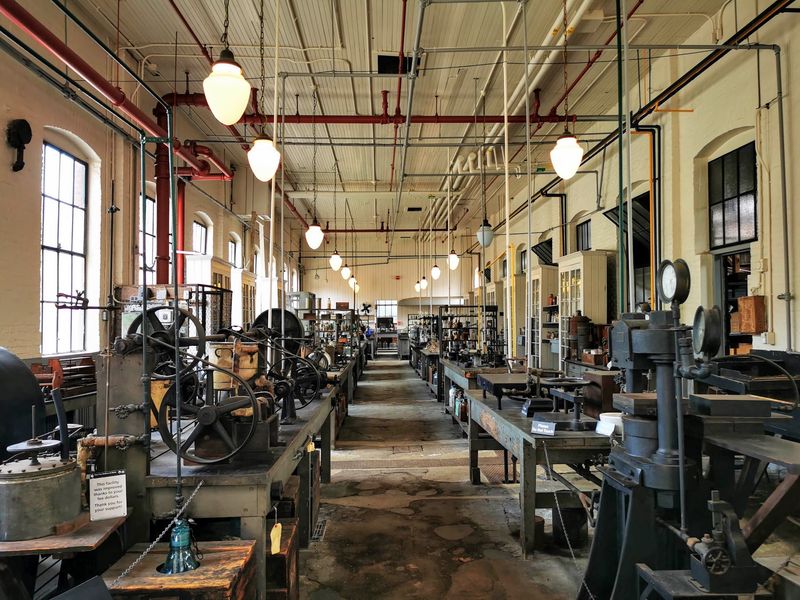
Walking into Edison’s laboratory complex at 211 Main St, West Orange, NJ 07052 feels like stepping into the ultimate inventor’s playground.
This was not just one building with a few workbenches. It was an entire campus engineered for mass-scale innovation, a place where hundreds of skilled individuals worked simultaneously across multiple specialized structures.
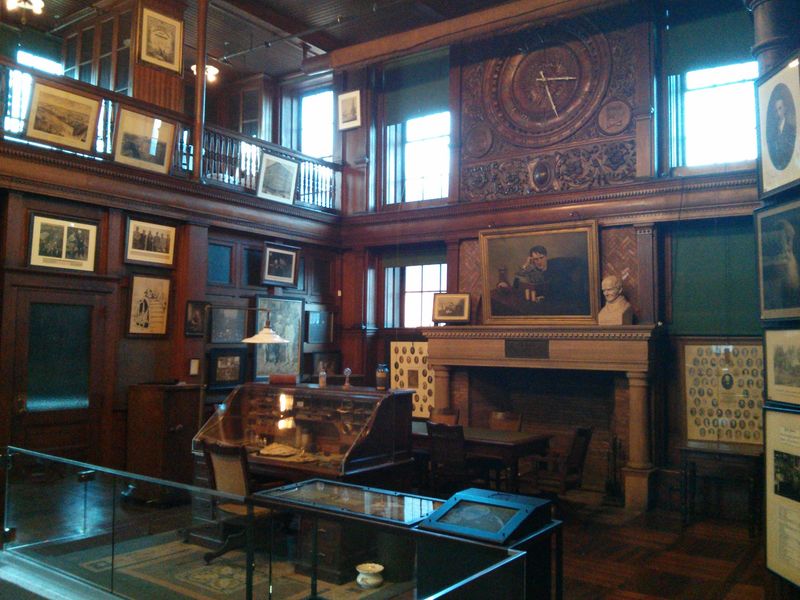
The main three-story building alone contained Edison’s enormous personal library, a precision machine shop, a woodworking space, a drafting room, and a music room packed with phonographs. Separate buildings dedicated to chemistry, physics, and metallurgy surrounded the main lab.
Each space had a specific purpose, and together they formed a remarkably efficient system for turning raw ideas into finished inventions.
Over 400,000 artifacts and prototypes from this era are preserved within the park today. Visitors can wander through rooms that look virtually untouched, with original tools, equipment, and materials still in place.
The sheer scale of the operation is genuinely staggering when you see it in person. Edison designed this complex with one clear goal: to eliminate the gap between inspiration and production.
Seeing it firsthand makes that ambition feel completely real, not just a line in a history book.
Sound Captured For The Very First Time
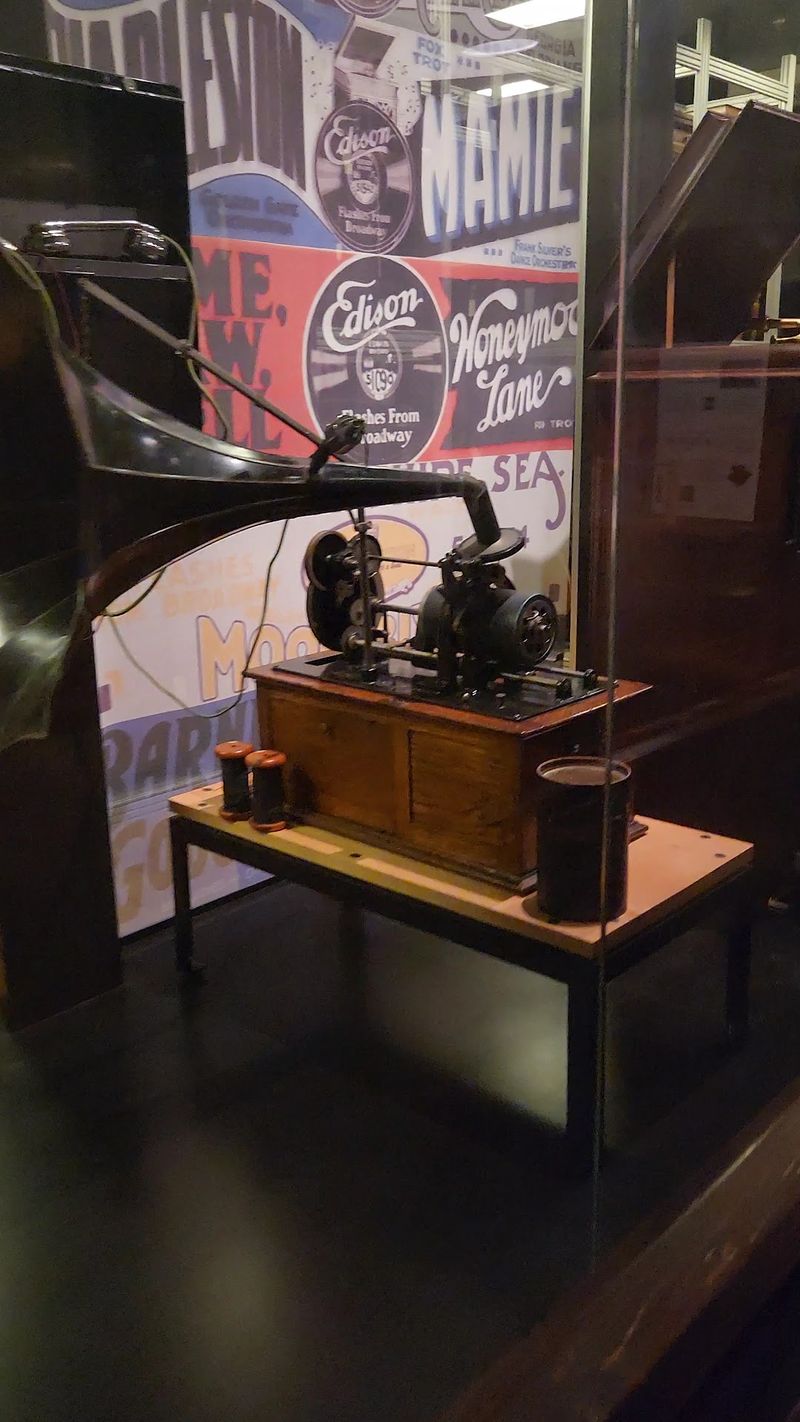
Here is a fun way to think about the phonograph: imagine being the first human being on Earth to hear a recorded voice play back at you.
That was exactly what Edison experienced when his prototype repeated his own words for the first time. He had spoken “Mary had a little lamb” into the mouthpiece, and the machine echoed it right back.
Pure magic wrapped in tin foil and metal.
The phonograph actually grew out of Edison’s experiments with telegraph and telephone technology. He was exploring ways to record telegraph messages automatically when he realized sound itself could be physically captured.
The initial design used a needle to indent vibrations onto a rotating cylinder, a shockingly simple concept that produced a genuinely astonishing result.
Edison considered the phonograph his personal favorite among all his inventions, and it is easy to understand why. It was the first technology to make recorded sound accessible to ordinary people in their own homes.
The park’s music room brings this history to life beautifully, with demonstrations that let visitors actually hear century-old cylinders playing music.
Hearing a phonograph perform in that original space creates a connection to the past that no textbook could ever replicate.
The Elegant Sanctuary Behind The Genius
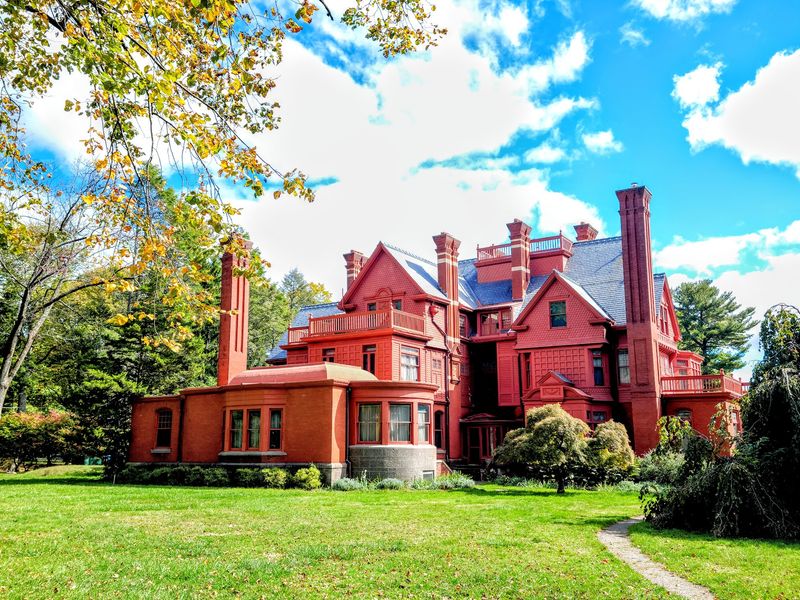
Just beyond the buzzing labs and whirring machines, a completely different world unfolds. Glenmont, Edison’s magnificent 29-room Queen Anne Victorian mansion, offers a glimpse into the quieter, more personal side of one of history’s busiest minds.
The architect Henry Hudson Holly designed this grand home, and it remains one of the finest examples of Victorian domestic architecture in New Jersey.
The estate covers 15 acres and feels genuinely lush, with trees and shrubs sourced from around the globe, many of them originally planted under Mina Edison’s careful supervision. An operating greenhouse on the property still grows descendants of those original plantings.
The concrete garage on the estate is a quirky reminder of Edison’s later obsession with cement as a building material, and it even houses some of his historic vehicles, including early electric cars.
Most of the original furnishings inside the mansion are beautifully preserved, giving the interior an authentic, lived-in feeling rather than a sterile museum atmosphere. Both Thomas and Mina Edison rest within the tranquil Japanese-inspired garden on the property grounds.
Visiting Glenmont adds an unexpected emotional depth to the overall park experience, reminding you that behind every great inventor is a real home, a real life, and a real story worth knowing.
Rising Stronger From The Rubble
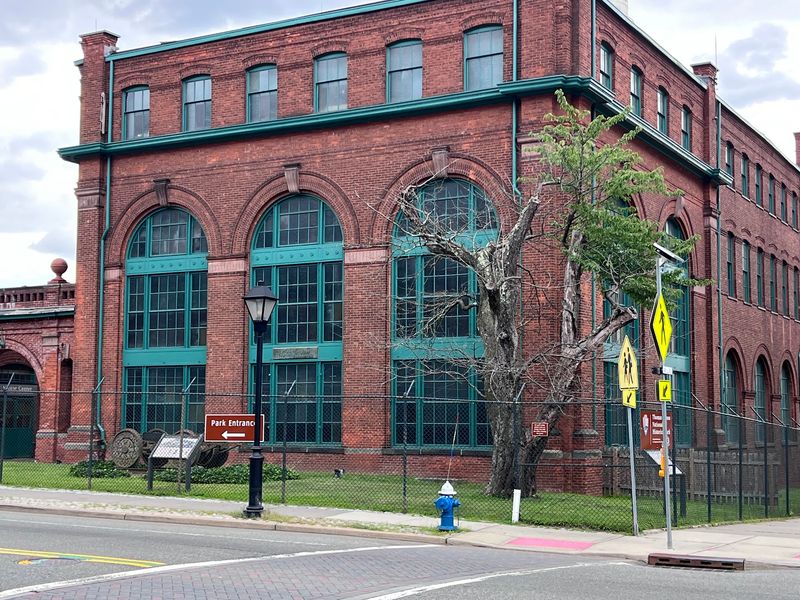
Picture this: you have spent decades building the most advanced invention factory the world has ever seen, and then one evening, a fire tears through it. That was Edison’s reality on December 9, 1914, when an explosion in a film inspection building quickly spread across the West Orange complex.
The blaze consumed multiple workshops and years worth of materials in a matter of hours.
What happened next is the part that truly deserves a spotlight. Rather than collapsing under the weight of the loss, Edison approached the situation with a remarkably calm, almost philosophical attitude.
He reportedly told observers that the fire was “certainly a fine fire,” a statement so unexpectedly composed that it became one of the most quoted moments of his later life.
Crucially, the most important structures survived. The main laboratory building, his vast personal library, and several key workshops remained standing.
This meant the relentless work of the complex could resume without losing its most essential foundation. The fire story is one of the park’s most compelling hidden chapters, because it reveals something about Edison that patents and inventions alone cannot capture.
Resilience, perspective, and an almost stubborn refusal to be defeated by setbacks were just as central to his genius as any technical skill.
Edison’s Wildly Unexpected Experiments
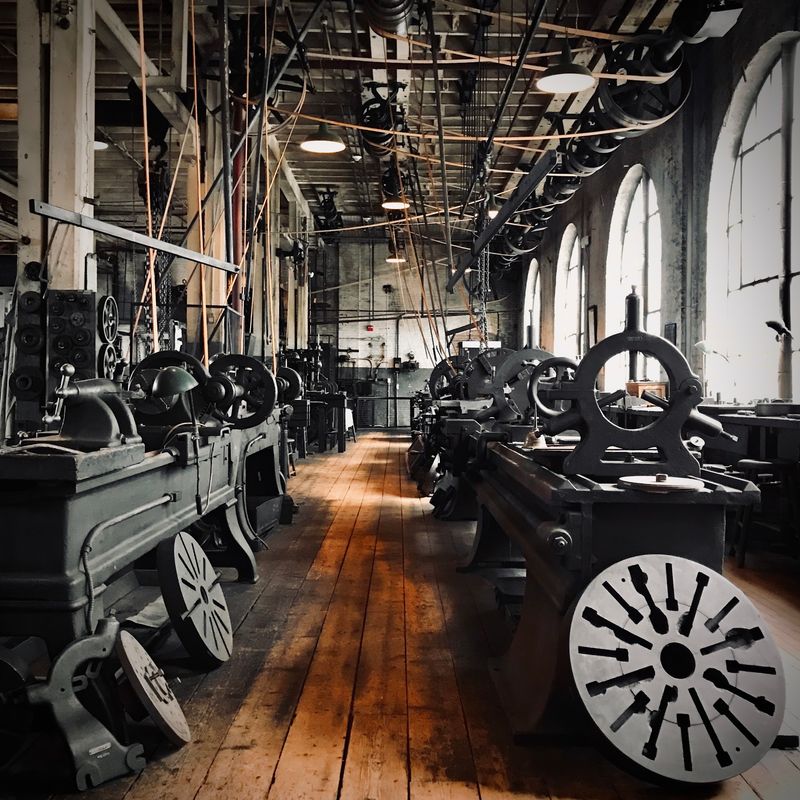
Most people arrive at the park expecting a deep celebration of the light bulb, and while that story is certainly here, the real jaw-droppers are the inventions nobody talks about at dinner. Edison’s West Orange lab was a bubbling cauldron of wildly diverse experimentation, and the range of projects tackled here is genuinely surprising.
During World War I, Edison became seriously concerned about America’s dependence on foreign rubber. His team reportedly tested around 17,000 different plant samples before identifying a specific type of goldenrod as a viable domestic rubber source.
That level of methodical persistence applied to a botanical problem shows just how broadly Edison defined the word “inventor.”
He also explored early X-ray technology through a device called the fluoroscope, experimented with alkaline storage batteries for over a decade, and pursued a massive iron ore separation project that ultimately did not succeed commercially. However, the knowledge gained from that project directly fueled a successful cement business.
Edison’s cement work even inspired him to dream about constructing entire houses from poured concrete. These lesser-known chapters of his career paint a portrait of a man whose curiosity had absolutely no boundaries, and the park preserves artifacts from nearly all of these fascinating, sometimes overlooked adventures.
Where Invention Kept Its Pantry
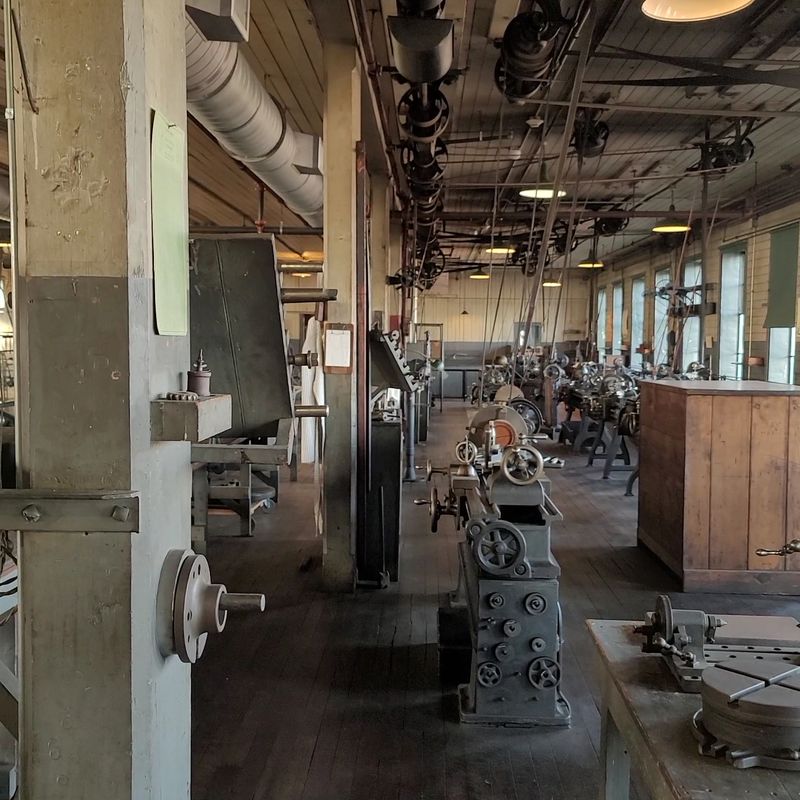
Forget everything you think you know about a stockroom. Edison’s version at the West Orange lab was practically a sacred space, and it came with barbed wire to prove it.
Every single item stored inside had been purchased with purpose, and access was tightly controlled. This was not casual storage; it was the engine room of innovation.
Edison had a memorable philosophy about material abundance. He believed that having a massive collection of raw materials on hand was one of the true secrets to productive inventing.
The idea was simple but powerful: when inspiration strikes at two in the morning, you should not have to wait weeks for a parts order to arrive. Everything needed for rapid experimentation had to be immediately within reach.
This approach allowed Edison’s team to prototype ideas quickly, test them, refine them, and move on without losing momentum. The stockroom essentially eliminated one of the biggest killers of creative flow, which is delay.
Seeing the preserved remnants of this system at the park makes the whole “invention factory” concept click in a very satisfying way. It is a quiet reminder that behind every brilliant breakthrough, there is usually an unglamorous but absolutely essential support system keeping the whole operation running smoothly.
The Recipe That Changed The World
There is a reason Edison’s famous quote about genius being “one percent inspiration and ninety-nine percent perspiration” has survived more than a century. He was not just saying it for effect.
He was describing his actual daily reality inside the West Orange complex, where he worked tirelessly for over 45 years and registered an astonishing 1,093 patents across his lifetime.
He was known to take quick naps in his library rather than go home, simply because leaving felt like wasted time. The pace he set was relentless, and the environment he built reflected that completely.
Every room in the complex served a purpose, every tool had a job, and every experiment was documented with meticulous handwritten notes that are still preserved in the park’s archives today.
Even when major projects stumbled, Edison extracted value from the wreckage. The collapsed iron ore separation venture fed directly into a profitable cement business.
That pattern of learning, adapting, and pressing forward without self-pity defined his career more than any single invention. Visiting the park and standing in the spaces where all of this happened is a genuinely moving experience.
So, after walking through these halls, which part of Edison’s relentless approach to creating do you think the modern world needs most right now?