
This Fascinating Open-Air Museum In Arizona Is A Hidden Treasure For Wild West Fans
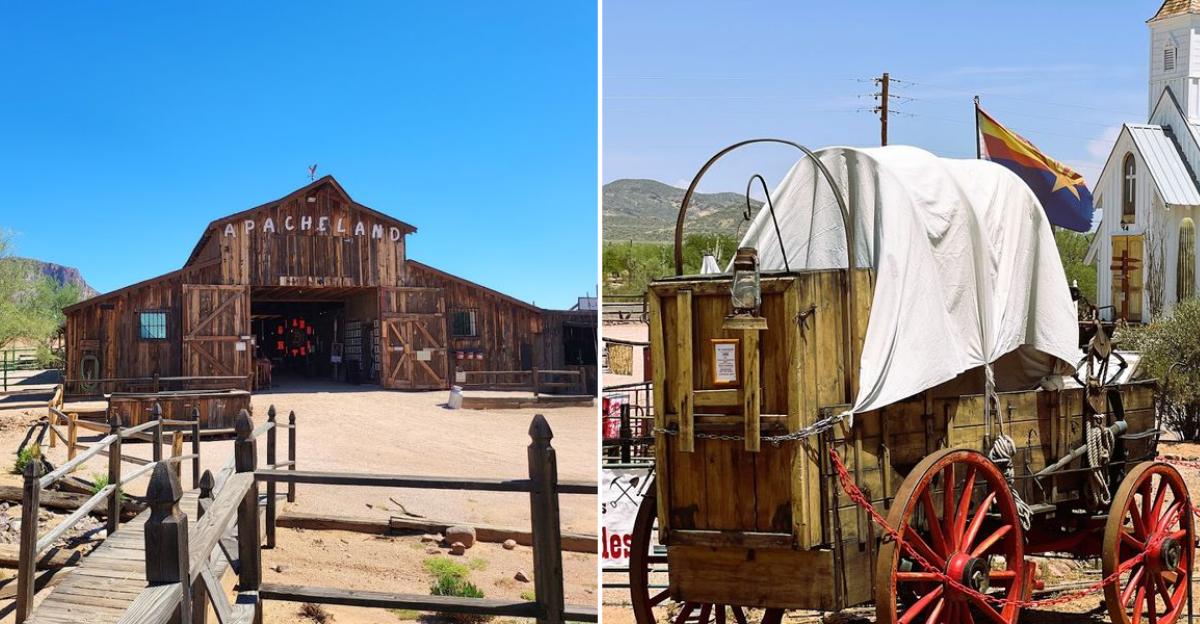
I’ll be the first to admit that I’ve spent an embarrassing amount of time daydreaming about being a pioneer, minus the whole “traveling by wagon for six months” part. Luckily, there’s a stunning spot in the heart of Arizona where you can soak up all that Wild West magic without the blisters or the historical hardships.
This sprawling outdoor destination is packed with authentic buildings and fascinating lore that feel plucked straight out of a classic Hollywood western film.
It’s arguably one of the best-kept secrets in the state for anyone who loves a good mystery or those legendary tales of hidden riches.
Honestly, the scenery alone is enough to make you a little emotional, but the history will keep you wandering for hours. The ultimate way to spend a sun-drenched afternoon exploring the rugged legends of Arizona.
Founded in 1979 by the Superstition Mountain Historical Society, this open-air museum blends indoor exhibits with outdoor landmarks that cover Native American culture, early settlers, mining history, and the legendary Lost Dutchman’s Gold Mine.
The Legend Of The Lost Dutchman’s Gold Mine
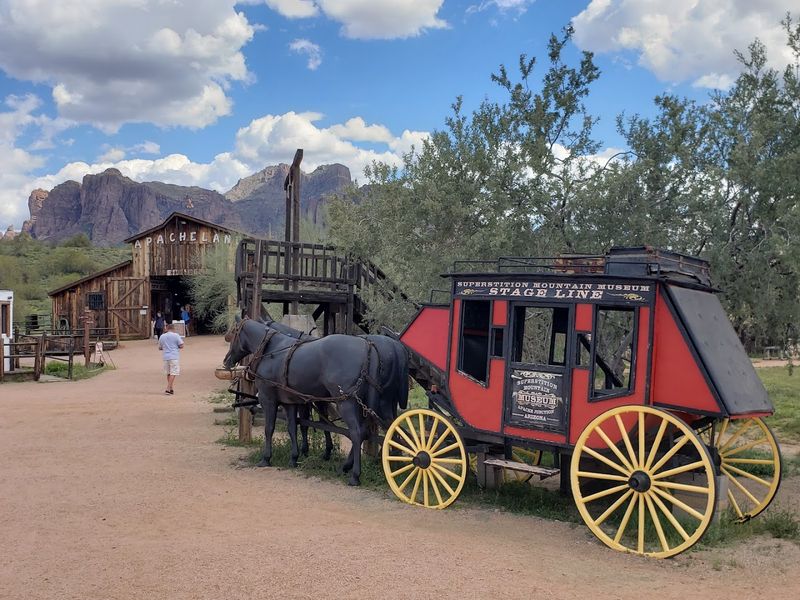
Few legends in the American West spark the imagination quite like the story of the Lost Dutchman’s Gold Mine. The tale centers on Jacob Waltz, a German immigrant often called “the Dutchman,” who claimed to have discovered a rich gold deposit somewhere deep in the Superstition Mountains during the late 1800s.
He reportedly carried out chunks of high-grade ore but never revealed the mine’s exact location before passing away in 1891. The museum dedicates a significant portion of its indoor exhibit space to unraveling this mystery.
Visitors encounter maps, artifacts, historical documents, and fascinating accounts from treasure hunters who have spent years searching the rugged terrain. The displays are engaging and surprisingly accessible, making it easy for younger visitors to follow the story.
What makes this exhibit especially compelling is how it balances hard history with genuine intrigue. You leave not just informed but genuinely curious, wondering whether the gold is still out there waiting to be found in those sun-scorched mountains.
The 4,900-Square-Foot Indoor Exhibit Hall
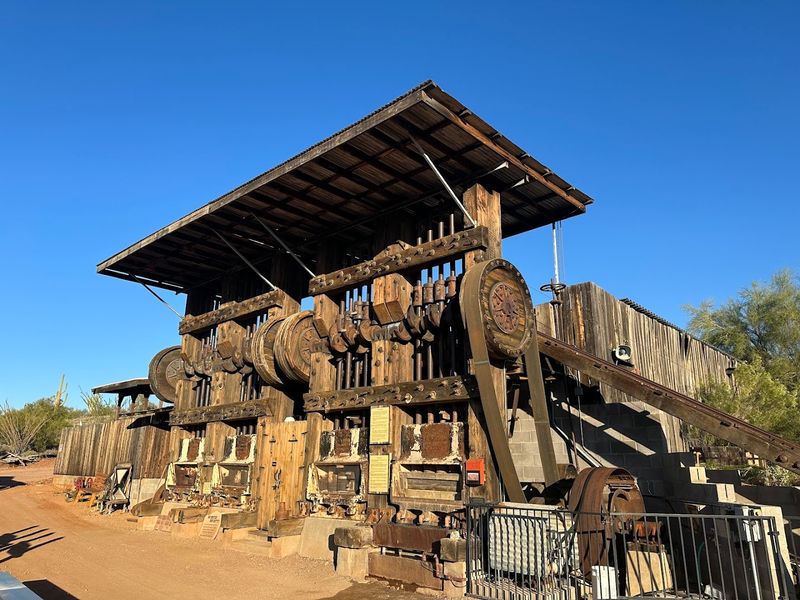
Stepping inside the museum’s main exhibit hall feels like cracking open a history book that actually keeps your attention. The 4,900-square-foot space is packed with carefully curated displays covering geology, local flora and fauna, Native American heritage, early settler life, and the mining era that defined this corner of Arizona.
I spent a good chunk of time at the geology section, which explains how the dramatic volcanic formations of the Superstition Mountains came to look the way they do today.
The Native American displays are equally impressive, offering respectful and detailed insight into the cultures that called this landscape home long before European settlers arrived.
The exhibit layout flows naturally from one era to the next, so you never feel lost or overwhelmed. Informational panels are written clearly, making them suitable for visitors of all ages. For anyone who appreciates context before exploring the outdoor grounds, this hall provides the perfect foundation for a truly meaningful visit to the museum.
The Historic Apacheland Barn
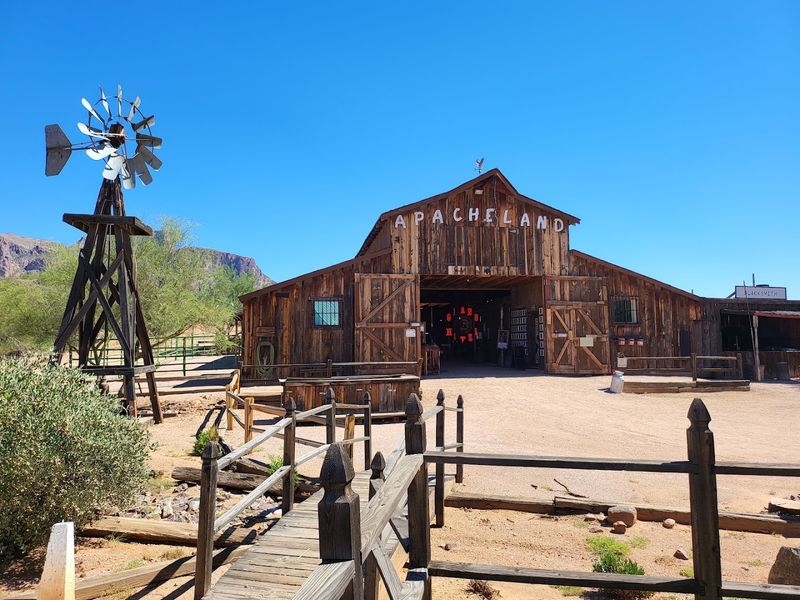
There is something quietly cinematic about standing in front of the Apacheland Barn, knowing that Hollywood once rolled cameras just a few miles from this very spot.
The barn originally stood at the Apacheland Movie Ranch, a working film location that hosted dozens of Western productions from the 1960s through the 1980s before much of it was destroyed by fire.
Salvaged and relocated to the museum grounds, the barn stands as a proud survivor of Arizona’s golden era of Western filmmaking. It is one of the most photographed structures on the property, and it is easy to understand why.
The weathered wood, wide doors, and desert backdrop create a scene straight out of a classic cowboy film.
For movie buffs and history lovers alike, the barn is a tangible connection to a time when the Sonoran Desert doubled as the backdrop for America’s most beloved screen adventures. Standing beside it, the old West feels surprisingly close.
The Elvis Chapel From Charro
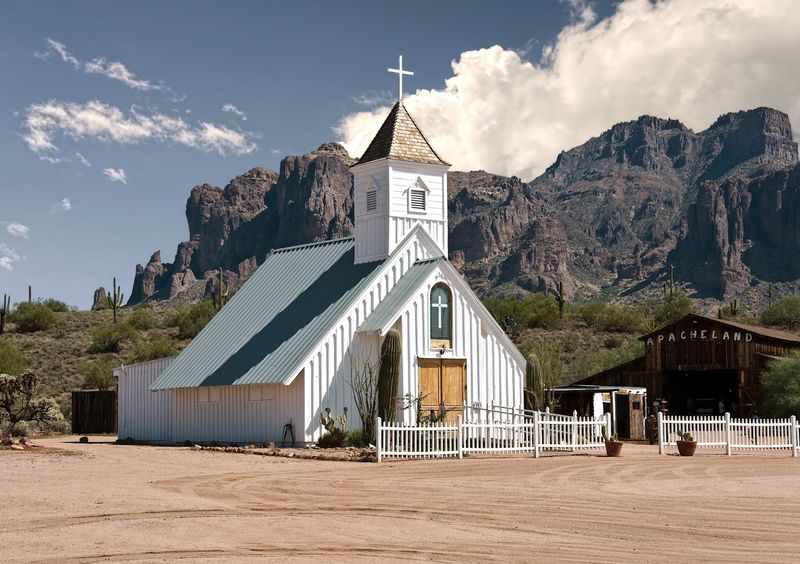
Not every open-air museum can claim a connection to the King of Rock and Roll, but the Superstition Mountain Lost Dutchman Museum pulls it off with style.
Tucked among the desert scrub on the museum grounds is a replica of the chapel that appeared in “Charro,” the 1969 Western film starring Elvis Presley in his only non-singing dramatic role.
The original chapel was built at Apacheland Movie Ranch specifically for the production, and this faithful replica gives visitors a chance to step into a genuine piece of film history. It is a small structure, but its charm is undeniable, especially for fans of classic cinema or Elvis himself.
When I visited, a couple was posing for photos outside the chapel door, laughing and clearly delighted by the unexpected pop culture connection.
It is one of those quirky, joyful surprises that makes this museum so much more than a typical history stop, turning a casual visit into something genuinely memorable.
The 20-Stamp Gold Mill Working Model
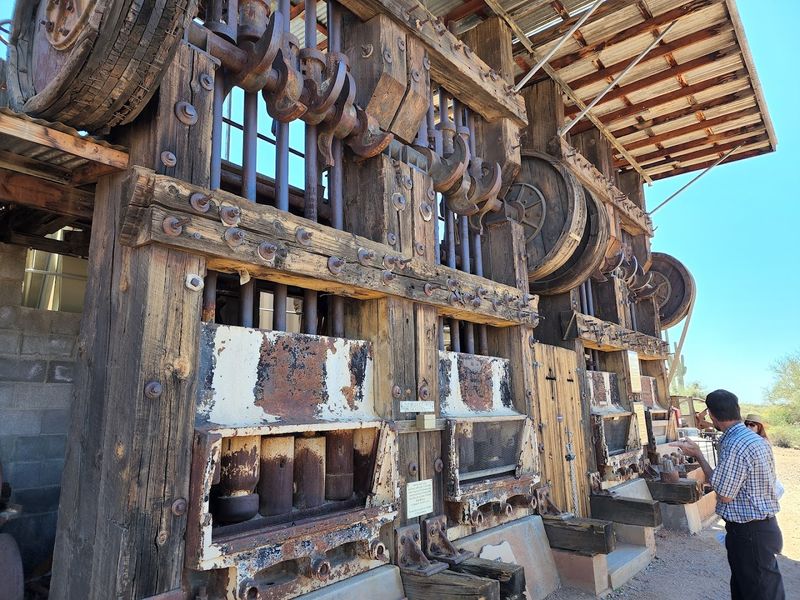
Gold fever was very real in the American Southwest, and the 20-Stamp Gold Mill working model does an outstanding job of showing exactly how miners turned raw ore into something valuable.
Stamp mills were the workhorses of the 19th-century mining industry, using heavy metal stamps to crush ore-bearing rock so that gold could be separated from the surrounding material.
This large-scale outdoor model is one of the most hands-on and visually impressive features on the museum grounds. Watching the mechanical process play out gives you a much clearer sense of the physical labor and engineering ingenuity that the mining era demanded.
It is the kind of exhibit that makes history feel real rather than distant. Kids especially seem to love this section, drawn in by the size and movement of the machinery.
Adults tend to linger just as long, quietly impressed by the craftsmanship involved in both the original equipment and the detailed reproduction. It is educational, engaging, and genuinely fun to observe up close.
The Large-Scale Model Railroad
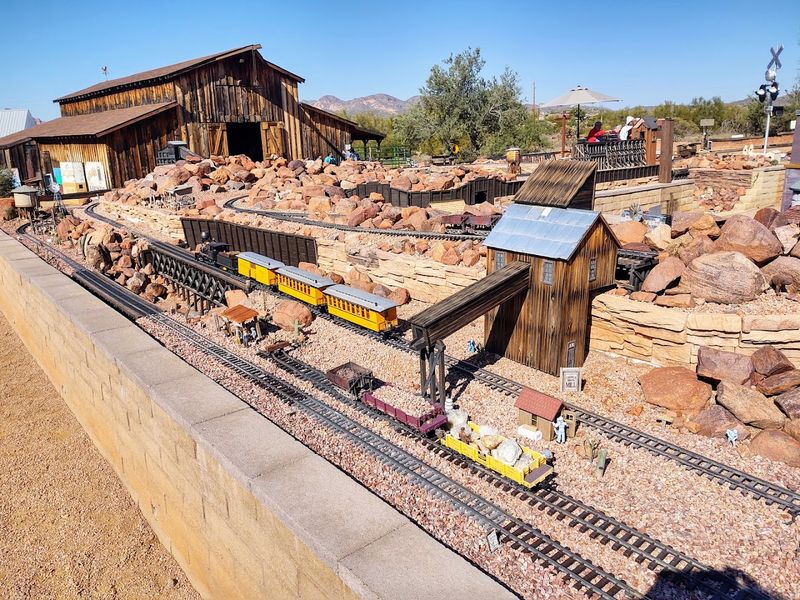
Tucked into a dedicated section of the museum grounds, the large-scale model railroad is one of those unexpected delights that catches visitors completely off guard.
Built to showcase the evolution of Apache Junction and the surrounding region, the layout features detailed miniature trains winding through landscapes that mirror the area’s real geography and history.
Model railroads have a way of drawing people in regardless of age. Children press their faces close to the tracks, watching the locomotives roll past tiny buildings and desert terrain.
Adults find themselves equally absorbed, pointing out historical details and recognizing landmarks they know from the real world just outside the museum gates.
The craftsmanship on display here is impressive, with careful attention paid to the regional character of each miniature scene. It is a lighthearted and creative way to learn about how this corner of Arizona developed over time.
For families looking for a moment of pure, uncomplicated fun during their visit, this exhibit never disappoints.
The Nature Trail And Practical Visitor Tips
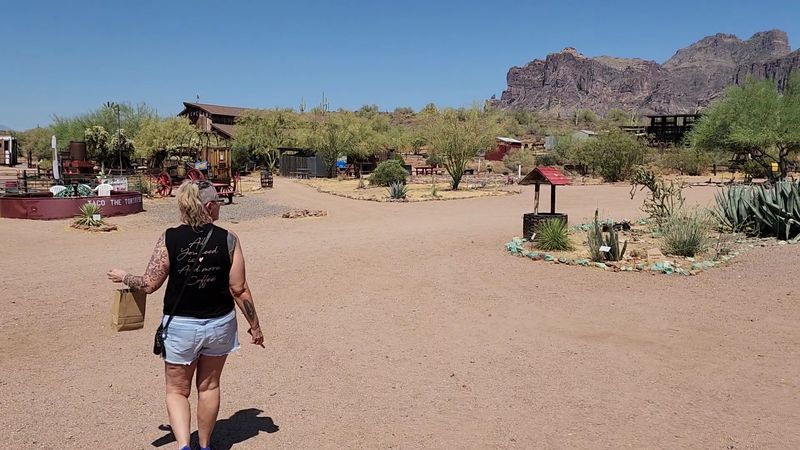
The museum’s labeled nature trail is a quiet reward for anyone willing to slow down and take it all in. Winding through native Sonoran Desert vegetation, the trail introduces visitors to the plants and wildlife that define this remarkable ecosystem, with clear, informative signs identifying each species along the way.
It is genuinely peaceful and a great way to end your visit.
On the practical side, the museum is located at 4087 E. Apache Trail, Apache Junction, AZ 85119, and is open daily from 9:00 AM to 4:00 PM, though it closes on Thanksgiving, Christmas, New Year’s Day, and Easter.
Admission is very reasonable, with adults paying $7.00, seniors $6.00, students aged 11 to 17 paying $4.00, and children 10 and under entering free with a paid adult.
The grounds are pet-friendly with leashes required, fully accessible for visitors with mobility challenges, and offer ample free parking on-site. Visiting in the cooler months between October and April makes the outdoor experience especially comfortable and enjoyable.
The Authentic Western Town Facade And Film History
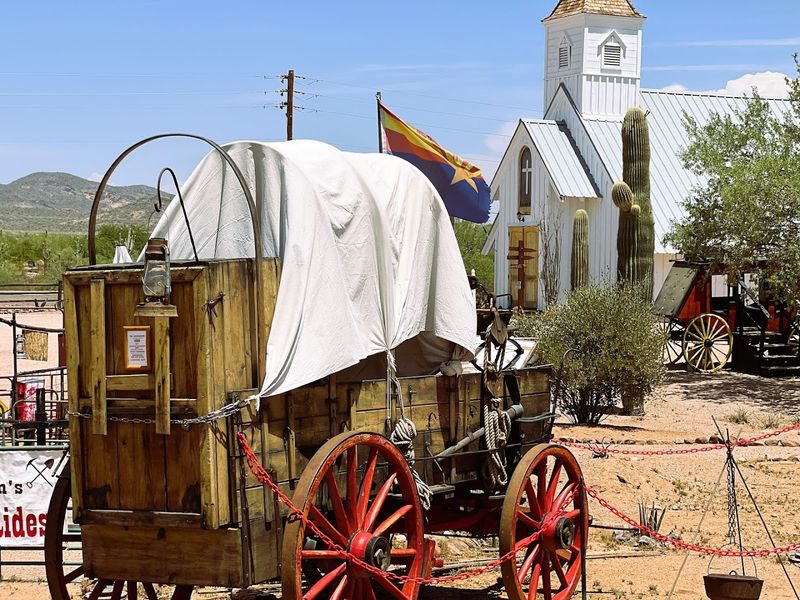
Hollywood brought the Wild West to life on screen, and the Superstition Mountain Museum holds a genuine piece of that cinematic magic.
The authentic Western town facade standing on the grounds was used in actual film and television productions, giving it a lived-in, storied character that replica sets simply cannot match. Walking past its wooden storefronts feels like stepping directly onto a movie set from decades past.
Each weathered plank and sun-bleached sign tells a quiet story about the golden era of Western filmmaking. Visitors who love classic cowboy movies will feel an instant connection to this remarkable structure. It is a photographer’s dream and a history lover’s reward all in one spot.
What makes it even better is that it does not feel staged or overpolished in the modern sense. There is a rough authenticity to the whole setting that makes the experience more immersive.
You can easily imagine actors in cowboy hats stepping through those doors or a dusty showdown unfolding in the street. For Wild West fans especially, it is the kind of place that turns a casual visit into something unexpectedly memorable.