
This Florida Hike You Need To Do This April Has A Wildly Good Payoff For The Shortest Miles
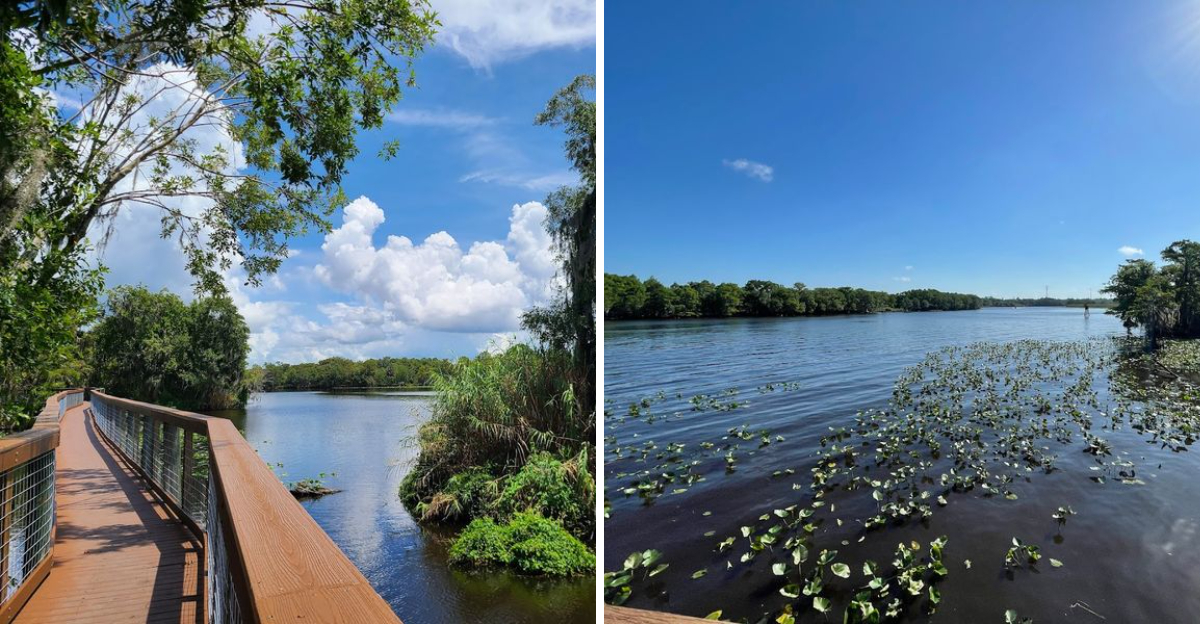
You can feel it before you even take the first step.
April in Florida has that perfect balance, warm enough to stay out for hours, but still light and comfortable, the kind of weather that makes you want to keep going just a little farther. And then the trail begins, and everything else fades out.
The ground shifts under your feet, roots twist across the path, and the air fills with sounds you do not usually notice, birds calling, leaves moving, something splashing just out of sight. This is not a casual walk.
It is the kind of trail that keeps you paying attention the entire time.
Florida shows a different side here, wilder, quieter, and a little unpredictable in the best way.
And with every step, you start to realize this is not just about reaching the end, it is about everything you encounter along the way.
The Loop That Never Gets Old
Walking the full loop takes most people three to four hours, but I appreciated knowing I could turn back anytime without retracing boring sections. The trail forms a complete circle, which means every stretch offers something different to look at.
Mile markers keep you informed about your progress, and the signs at the trailhead let you choose between clockwise and counterclockwise routes. I followed the arrows and went counterclockwise, saving the prettier shoreline sections for the second half when my legs needed extra motivation.
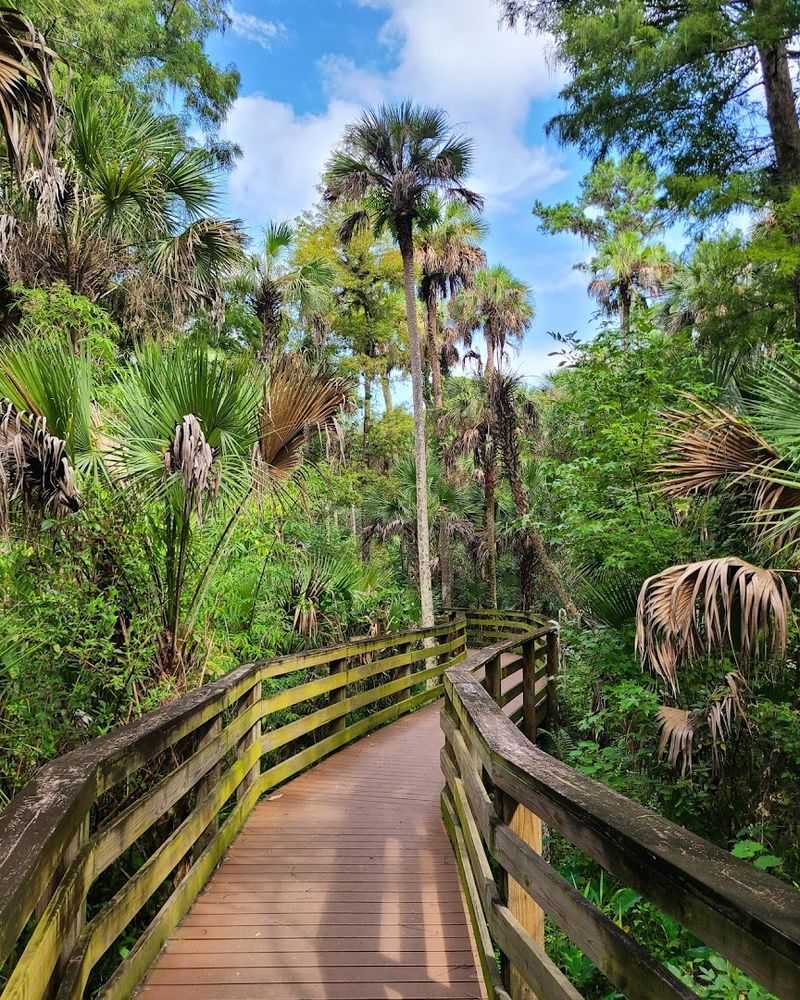
The path stays mostly shaded under a canopy that filters the April sun into dappled patterns on the ground. Tree roots cover much of the trail surface, demanding attention with every step, but that slower pace actually helped me spot more wildlife hiding in the underbrush.
Boardwalk sections break up the dirt trail and give your ankles a rest from root-hopping while offering elevated views of the surrounding wetlands.
Wildlife Central Station
I stopped counting after my fifteenth wild pig sighting because they just kept appearing around bends and snuffling through the palmetto scrub. Gators lounged on muddy banks like they owned the place, which technically they do, and I gave them the respect and distance they deserved.
Box turtles crossed the path at their own unhurried pace while herons stalked through shallow water hunting breakfast. One hiker reported seeing over fifteen boars in a single afternoon, and I believe it after my own pig parade.
The diversity surprised me most because I spotted deer tracks, heard woodpeckers hammering overhead, and watched hawks circle above the canopy. Even the small stuff caught my attention, with lizards darting across sun-warmed roots and colorful insects hovering near wildflowers.
April timing works perfectly because the dry season keeps water levels manageable while animals stay active and visible throughout the day. Every review I read mentioned multiple species sightings, and my own experience confirmed this trail earns its reputation as wildlife central.
Root Reality Check
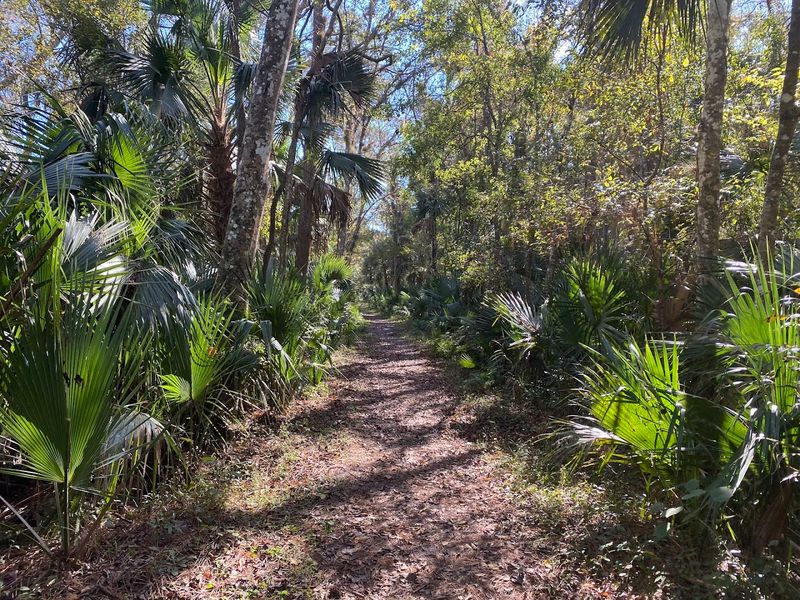
My ankles got a serious workout navigating the gnarled roots that crisscross this trail like nature installed speed bumps every few feet. Concentration becomes essential because one distracted moment can send you stumbling, and the reviews warning about twisted ankles aren’t exaggerating.
I learned quickly to step over roots rather than on them, treating each one as a miniature hurdle that demanded respect. The roots create an uneven surface that slows your pace but also forces you to stay present instead of zone out.
Proper footwear makes all the difference here, and I watched someone in flimsy sandals struggle while my hiking boots handled the terrain confidently. Thick soles protect your feet from the constant pressure of uneven ground, and good ankle support prevents wobbles on the narrow sections.
Some stretches require high-stepping over particularly large roots that jut up six inches or more from the trail surface. The root obstacle course actually became part of the fun once I accepted it as the trail’s defining characteristic rather than fighting against it.
Parking Lot Politics
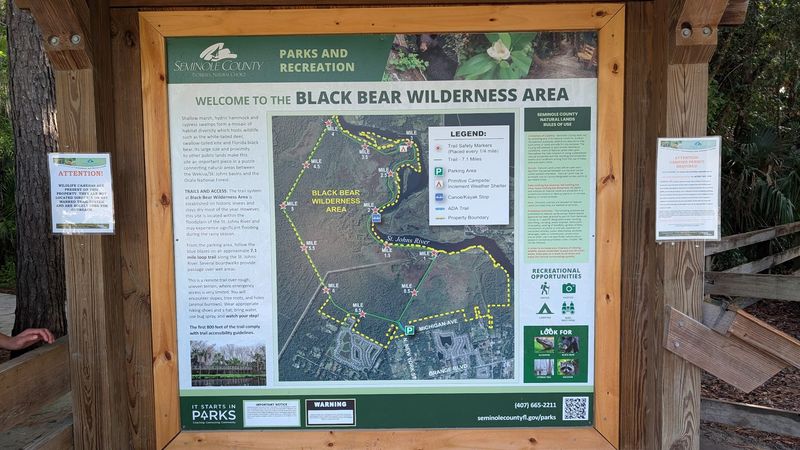
Arriving early became my strategy after learning the parking lot fills completely by mid-morning on weekends. The lot holds maybe thirty to forty vehicles, and street parking isn’t allowed, which creates a first-come situation that favors early birds.
I pulled in around eight o’clock on a Saturday and snagged one of the last spots as more cars circled hopefully behind me. The trailhead sits right at 5298 Michigan Ave in Sanford, making it easy to find but also popular enough that timing matters.
Free parking sweetens the deal since many Florida trails charge fees, but that generosity also attracts crowds during peak times. Weekday visits offer better parking odds if your schedule allows flexibility.
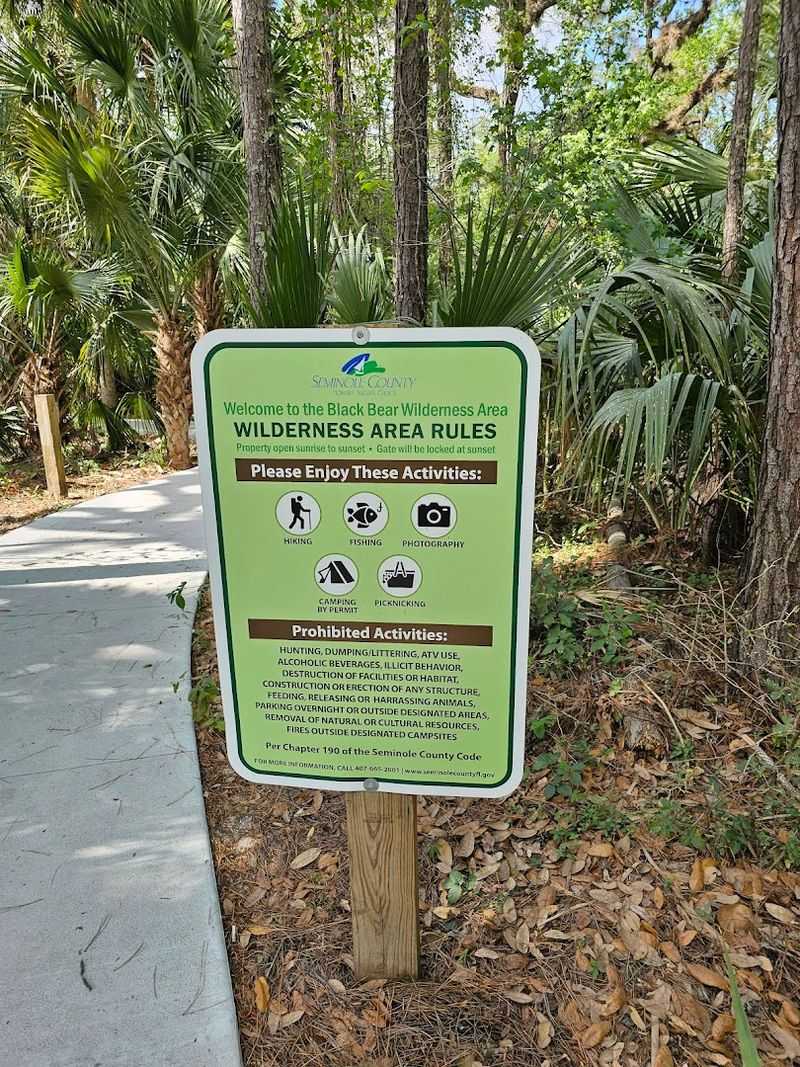
The lot connects directly to the trail entrance with clear signage explaining the route options and reminding hikers about wildlife safety. I noticed a porta-potty near the parking area, though reviews warned it wasn’t always in the best condition, so plan accordingly before starting your hike.
Seasonal Swamp Secrets
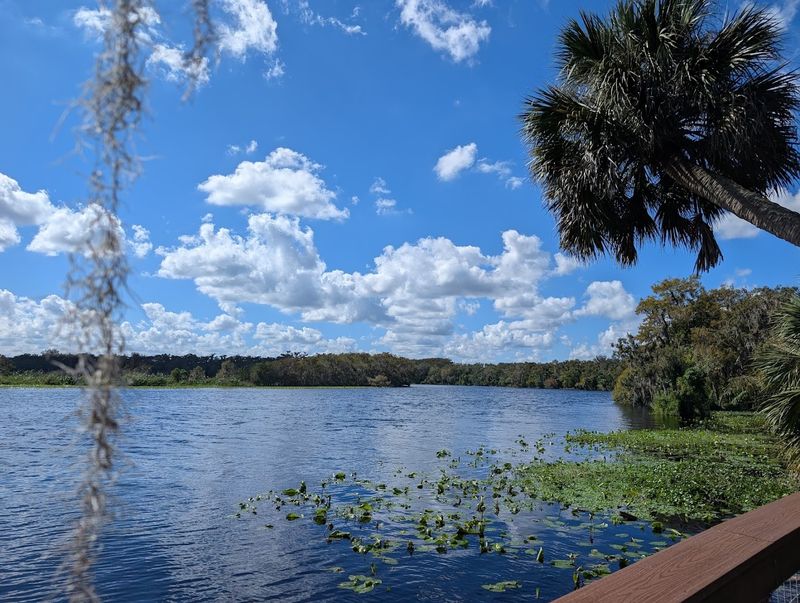
April sits squarely in the dry season, which means water levels drop and the trail stays mostly passable without swampy detours. I appreciated the firm ground under my boots, though one or two spots still required careful stepping over damp patches.
The lower humidity in spring makes the seven-mile loop far more comfortable than attempting it during Florida’s sticky summer months. Mosquitoes stay manageable in April compared to the summer swarms that would turn this hike into a bug-slapping marathon.
Visiting during wet season transforms the trail into a different experience entirely, with some sections becoming submerged and wildlife behavior shifting as water levels rise. The swampy character shows itself more dramatically when rain fills the wetlands bordering the path.
I noticed exposed shorelines and dry creek beds that would likely run full during wetter months, giving me a peek at the landscape’s bones. The seasonal changes mean each visit offers something different, but April delivers the sweet spot of comfortable temperatures, manageable bugs, and accessible trails without excessive mud.
Boardwalk Bonus Views
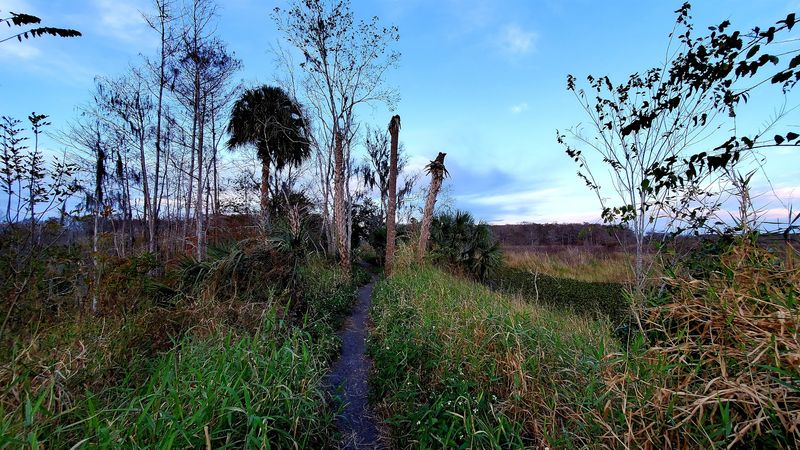
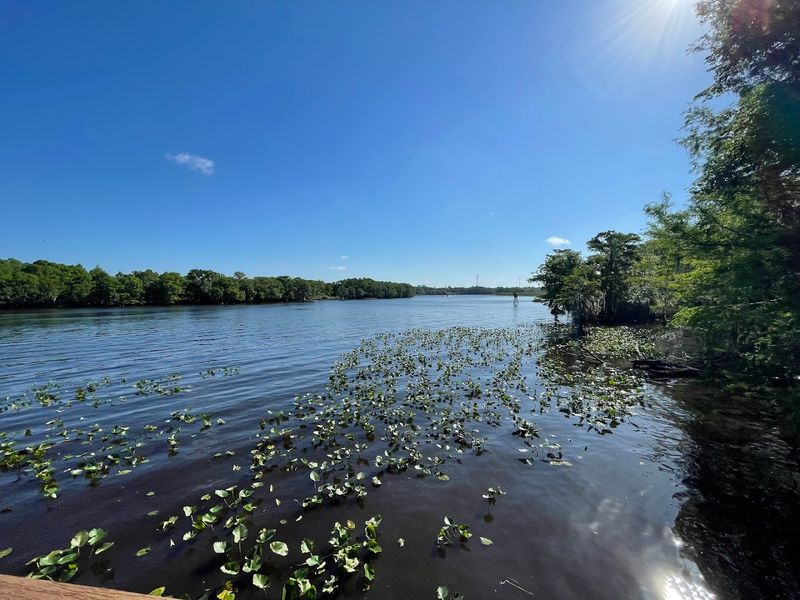
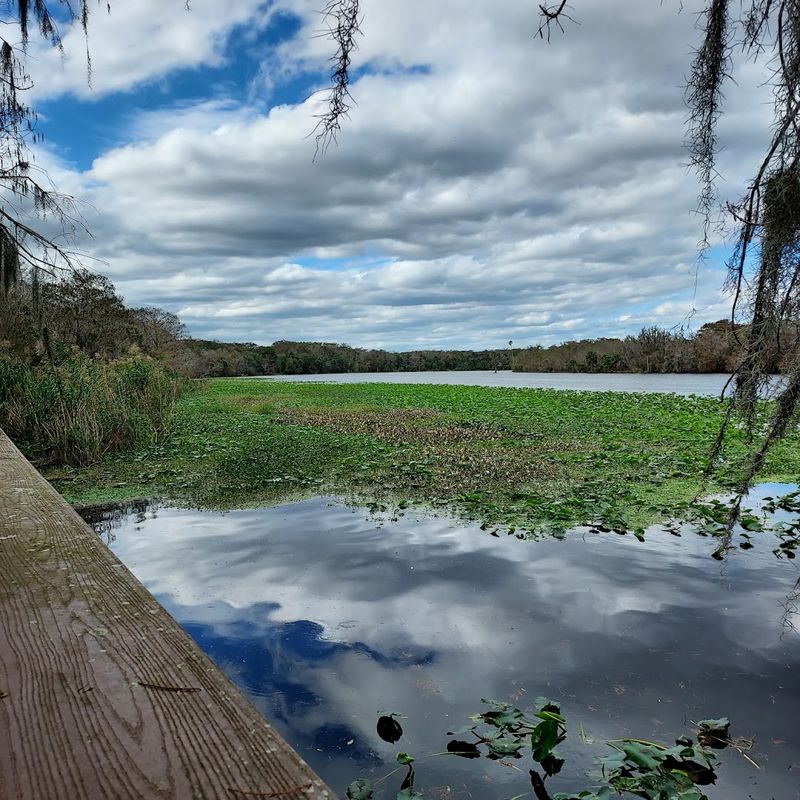
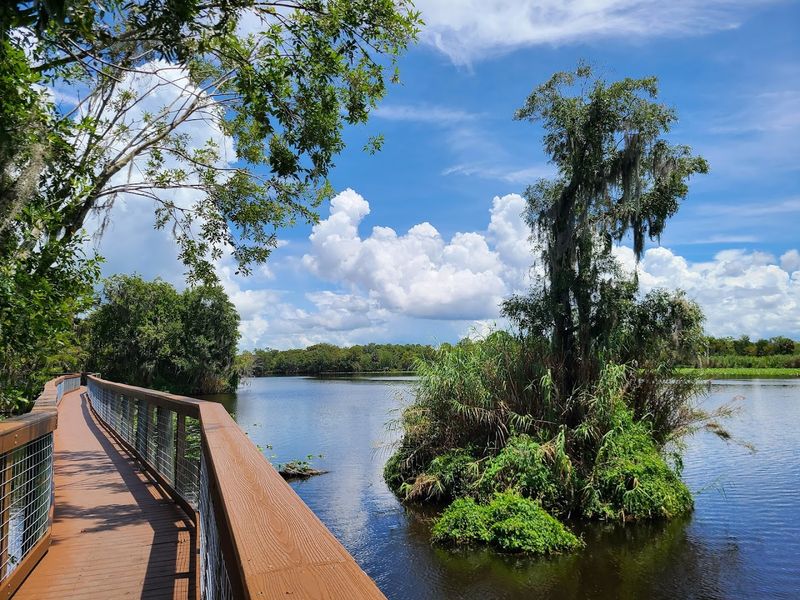
The elevated boardwalk sections gave my root-weary feet a welcome break while offering stunning views across the wetlands and St. Johns River. These wooden walkways stretch over areas where the trail would otherwise sink into marsh, creating accessible viewing platforms for the surrounding ecosystem.
I paused on one boardwalk to watch an alligator glide through dark water below, its prehistoric form perfectly suited to this ancient landscape. The planks felt solid under my boots, well-maintained despite constant exposure to Florida’s humidity and weather.
Birding becomes especially rewarding from the boardwalks because the elevation puts you at eye level with species perched in mid-story vegetation. I spotted several herons fishing in shallow pools visible only from these raised vantage points.
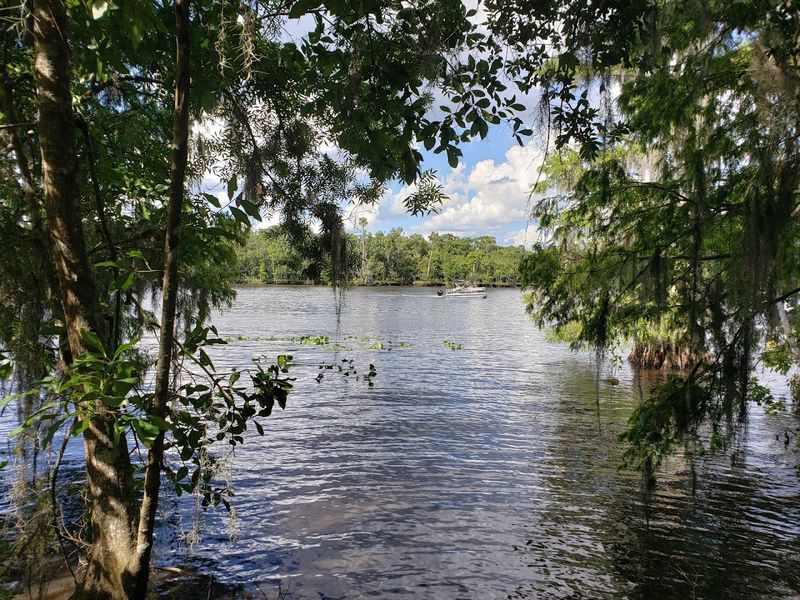
The boardwalk over the river became a highlight of the loop, offering expansive water views and a sense of the trail’s connection to this major Florida waterway. These sections prove that good trail design enhances rather than intrudes on the natural experience, giving hikers safe passage through sensitive wetland areas.
Midpoint Camping Shelter
Around the 3.5-mile mark, I reached a small camping area with a gazebo, picnic table, and benches that offered the only real rest spot in the trail’s second half. The shelter provides a perfect lunch break location, though signs remind visitors that overnight camping requires a permit.
I dropped my pack and sat on the bench, grateful for the chance to rest my legs and refuel with snacks before tackling the remaining miles. The camping area sits in a quiet section of the loop where the forest feels deeper and the sounds of civilization fade completely.
A few bugs buzzed around my sandwich, but nothing too aggressive, and the shade kept me comfortable during my fifteen-minute break. The gazebo would offer protection during a sudden rain shower, though April weather usually cooperates better than summer storms.
After the two-mile point, benches disappear entirely except for this midpoint oasis, so plan your rest stops accordingly. The camping shelter reminded me that some hikers turn this into an overnight adventure, though I felt satisfied completing it as a long day hike.
The Boring Stretch Strategy
Several reviewers mentioned a less interesting section between the five-mile mark and the trailhead, and I understood their point after walking through miles of similar-looking forest. The scenery becomes repetitive through this stretch, with fewer wildlife sightings and less varied terrain to hold your attention.
Going counterclockwise puts this boring section at the end when you’re already tired, which some hikers find demotivating. I noticed many people chose to go clockwise instead, saving the scenic shoreline and wildlife-rich areas for the final miles as a reward.
The straight, wooded portion serves its purpose as a connector between the trail’s more exciting sections, but it definitely tests your commitment to completing the full loop. I entertained myself by picking up my pace and treating it like a speed-walking challenge to finish faster.
Some hikers skip this section entirely by turning around at the 2.5 or three-mile mark, enjoying the best scenery twice instead of pushing through the less inspiring woods. That strategy makes sense if your goal focuses on wildlife viewing rather than mileage completion.
Safety And Preparation Essentials
I carried two full water bottles and still wished I had brought a third by the time I finished the loop on a warm April afternoon. No water fountains exist along the trail, and three to four hours of walking in Florida sunshine creates serious thirst even during the cooler months.
Bug spray proved essential despite the dry season, and I reapplied it at the midpoint to keep mosquitoes from turning my break into a feeding frenzy. The reviews recommending pepper spray or other wildlife deterrents reflect the real possibility of close encounters with wild pigs, gators, or even black bears.
I kept a small first aid kit in my pack because the root-covered trail creates genuine ankle-twisting potential with every distracted step. Hand sanitizer came in handy after touching railings and before eating my trail snacks.
The porta-potty at the trailhead represents your only restroom option, so plan your hydration carefully to avoid uncomfortable situations mid-loop. I packed out all my trash since garbage cans only appear at the parking area, not along the trail itself.
Perfect April Timing
April delivers that magical combination of comfortable temperatures, lower humidity, and active wildlife that makes this trail shine at its absolute best. I hiked in shorts and a t-shirt without overheating, though I still worked up a good sweat over seven miles of root-hopping.
The spring timing means flowers bloom along the trail edges and birds stay busy with nesting activities that create constant motion and sound in the canopy. Animals remain active throughout the day rather than hiding from summer heat, increasing your chances of spotting everything from gators to wild pigs.
The 7 AM opening time lets you start early and finish before the midday sun reaches its peak intensity, though the heavy shade keeps temperatures manageable even at noon. I appreciated the lack of summer afternoon thunderstorms that can turn Florida trails into muddy obstacle courses within minutes.
The dry conditions in April mean the trail stays in its most accessible state, with minimal mud and lower water levels that keep wetland crossings manageable. This timing transforms what could be a challenging slog into an enjoyable adventure that rewards every careful step with natural beauty and wildlife encounters.