
This Florida History Museum Turns Quiet Afternoons Into Discoveries
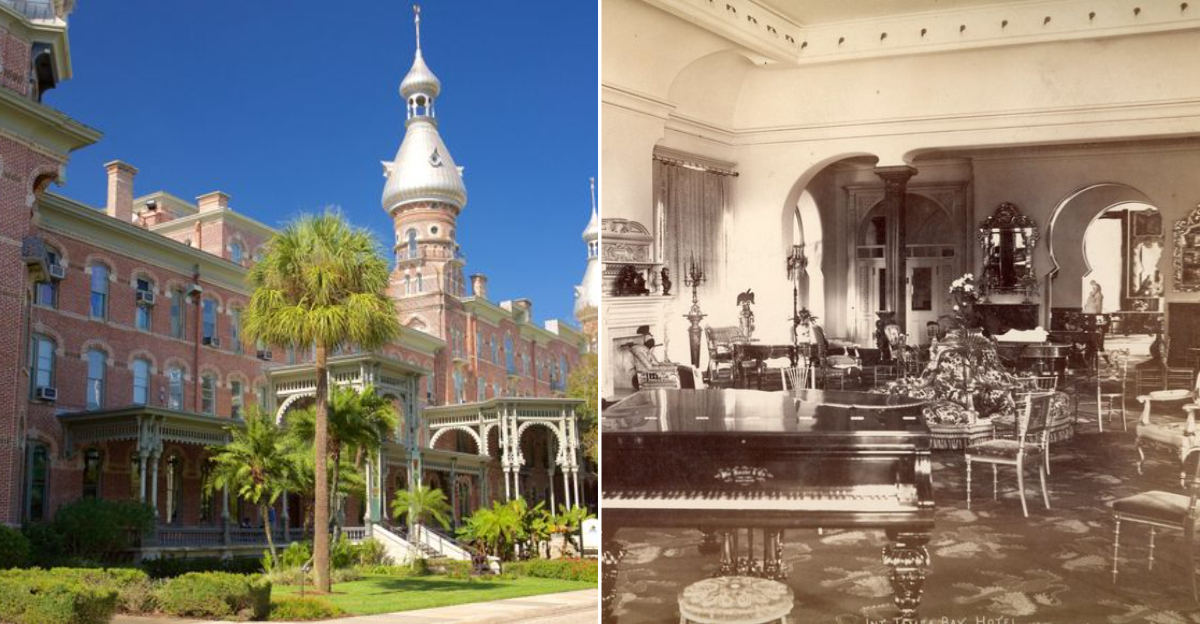
There’s a house in downtown Tampa that masquerades as a Moorish castle by the river, and inside, it holds stories as vivid as its turrets.
The Henry B. Plant Museum lives in the south wing of Plant Hall (once the Tampa Bay Hotel), its silver minarets gleaming from the skyline, inviting you in.
Step through its halls and you’ll wander through gilded rooms, wartime headquarters, and quiet corners brimming with material whispers of the past. In the list below, I’ll walk you through what to see, how to move, and where the real magic lies.
Riverfront Landmark
Sunlight bounces off silver minarets, and suddenly the building looks less like a museum and more like a palace from another continent. Those domes crown Plant Hall, a riverfront landmark that pulls eyes upward before you even step inside.
This south wing, once part of the Tampa Bay Hotel, is now the Henry B. Plant Museum. Its riverside setting keeps water and palms close at hand, grounding grandeur in tropical ease.
Standing under the turrets, I felt like Tampa was showing off its own fairytale skyline.
Gilded Age Rooms Intact
Here’s where the past doesn’t whisper, it surrounds you. Walk into parlors filled with original rugs, carved chairs, and porcelain vases, all left where hotel guests once sat. Nothing is staged with replicas; the furniture and objects are genuine.
Henry Plant imported treasures from Europe and Asia, layering his hotel with global opulence. The museum preserves that richness room by room, a kind of frozen hospitality.
My tip: pause in the parlor and close your eyes. You’ll almost hear the rustle of gowns and the clink of glass.
Easy Pace, Self-Guided
The audio tour doesn’t shout. A complimentary headset leads you for 45 minutes, but the real gift is freedom. You control the rhythm, wandering slowly through ornate halls or moving quickly past what doesn’t spark.
That independence changes the whole mood. You’re not stuck in a group, you’re free to follow your curiosity, linger on a ceiling detail, or slip back into a favorite room.
I loved that lack of pressure. It let me feel like an explorer, not a guest being herded along.
Spanish–American War Chapter
The Tampa Bay Hotel became something unexpected in 1898: Army headquarters for the Spanish–American War. Commanders strategized here, and soldiers camped on the grounds before leaving for Cuba.
The museum highlights this moment with artifacts and photos that reveal how leisure and war overlapped under the same ornate roof. It’s one of those juxtapositions that history loves to surprise us with.
If you’re short on time, head straight to this section. It shows the hotel’s national role far beyond Tampa’s borders.
National Historic Landmark
Moorish arches, domes, and verandas earned the building its National Historic Landmark status. Recognition came not only for the architecture but also for its role in American history.
Walking the verandas, the ornate trim and wide porches don’t just look decorative, they carry the weight of a hotel once meant to dazzle the world.
I thought the “landmark” label might feel formal, but here it rings true. Every corner radiates presence, the kind that stays with you long after leaving.
Simple Planning
Finding the museum couldn’t be easier. The entrance is at 401 West Kennedy Boulevard, right on the University of Tampa campus. Hours are clear and admission straightforward, with the audio tour already included.
That clarity helps the visit feel accessible. You don’t need reservations or a special ticket; you can just decide to pop in one afternoon.
If you’re anything like me, you’ll appreciate the lack of fuss. It keeps the mood light, so the surprises inside feel even better.
Classic Architecture Moment
The arches curve like crescents, verandas stretch wide, and onion-shaped domes rise above palms. This is Moorish Revival style at its most theatrical.
The building’s exterior doubles as a walking tour. Even before stepping inside, visitors pause to photograph turrets and patterned trim. The blend of Florida sunshine and exotic silhouette is irresistible.
Bring a camera, but also look up with your own eyes. The geometry against blue sky is as memorable as anything behind glass inside.
Seasonal Sparkle
December brings transformation. The Victorian Christmas Stroll fills every room with period holiday décor, from garlands to elaborate trees. It’s the kind of display that makes a historic house glow differently.
The event links back to the late 1800s, when hotels like this reveled in opulent seasonal decoration. What you see is grounded in that same Gilded Age excess, not just modern holiday flair.
I went during this season once, and it felt magical. The history was festive, not frozen, and the rooms truly came alive.
Riverwalk Ready
Step out of the museum and you’re immediately on Tampa’s 2.6-mile Riverwalk. The contrast is striking, ornate Moorish towers behind you, breezy waterfront ahead.
Locals jog, cycle, and stroll here, making it easy to stretch your museum visit into a full afternoon. Benches, art installations, and river views flow together.
I loved this transition. One moment I was staring at Persian rugs, the next watching kayaks glide past. Few museums let you shift gears so smoothly.
University Backdrop
Since 1933, the old Tampa Bay Hotel has doubled as part of the University of Tampa campus. Students cross its shaded verandas daily, moving through history on the way to class.
The building’s dual role as both academic hub and museum keeps it alive, never static. Its minarets belong as much to students as to tourists.
If you visit midweek, expect to share the grounds with undergrads and faculty. It adds a lively, unexpected layer to the museum’s atmosphere.
One Ticket, Full Story
General admission is refreshingly straightforward, your entry covers the self-guided audio tour and all the rooms. No hidden extras, no confusing tiers.
That means you can take your time, repeat a section, or double back to something you skipped. Every visitor gets the full sweep of the experience.
I appreciated that sense of generosity. It felt like the museum wanted me to stay as long as I liked, not hurry through a checklist.
Quick Detours Nearby
Step outside and the options multiply. Plant Park spreads just beyond the verandas, a lush green stretch perfect for catching your breath. Downtown museums, small cafés, and riverfront spots line the same stretch.
It’s the kind of cluster that makes planning unnecessary, you can improvise the rest of your day. History, art, and coffee all live within a few minutes’ walk.
If you’ve got the time, wander slowly. I found myself piecing together an afternoon from small, spontaneous discoveries.
A Quiet Kind of Wow
The museum doesn’t overwhelm with size, and that’s part of its charm. Each room feels like an invitation rather than an exhibit demanding attention.
The layers reveal themselves gently, furniture that holds memory, ceilings that sparkle, verandas that stretch into light. There’s always one more detail hiding in plain sight.
For me, that subtlety was the highlight. It left me leaving with a grin, not from spectacle, but from the quiet surprise of finding so much in such a compact space.