
This Florida Horseback Ride Offers Some Of The Most Scenic Views In The State
Florida does not always whisper palm trees and beaches. Sometimes it opens up wide, quiet, and unexpected, like it is daring you to look again.
One moment the land stretches flat and golden, the next it comes alive. Hooves move through tall grass.
Massive shapes graze without concern. The horizon feels endless, the kind that makes your weekend plans suddenly feel very small.
Ever had that moment where Florida stops feeling familiar and starts feeling untamed?
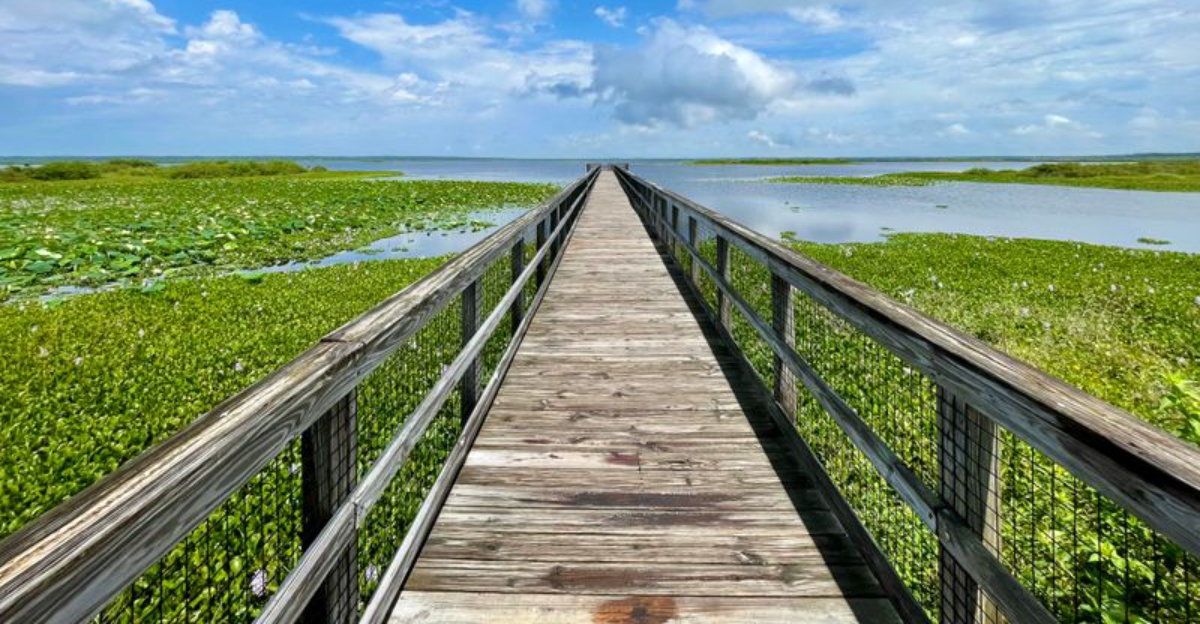
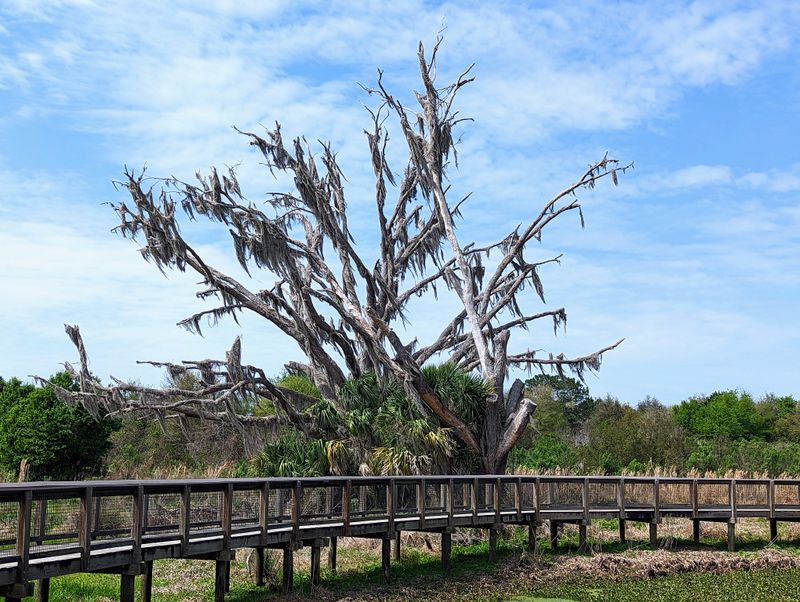
The air hums with birdsong. Boardwalks skim over marsh that seems to breathe on its own.
Oak canopies cast slow shadows, and every turn delivers another pause-and-stare moment. Nothing here feels staged.
Nothing feels rushed. It is wild, but calm.
Powerful, but grounding.
This is Florida with its guard down. The version most people never expect to find.
And once you experience it, you realize some of the state’s most unforgettable adventures are not loud or flashy. They are wide open, quietly alive, and impossible to forget.
The Prairie From The Saddle
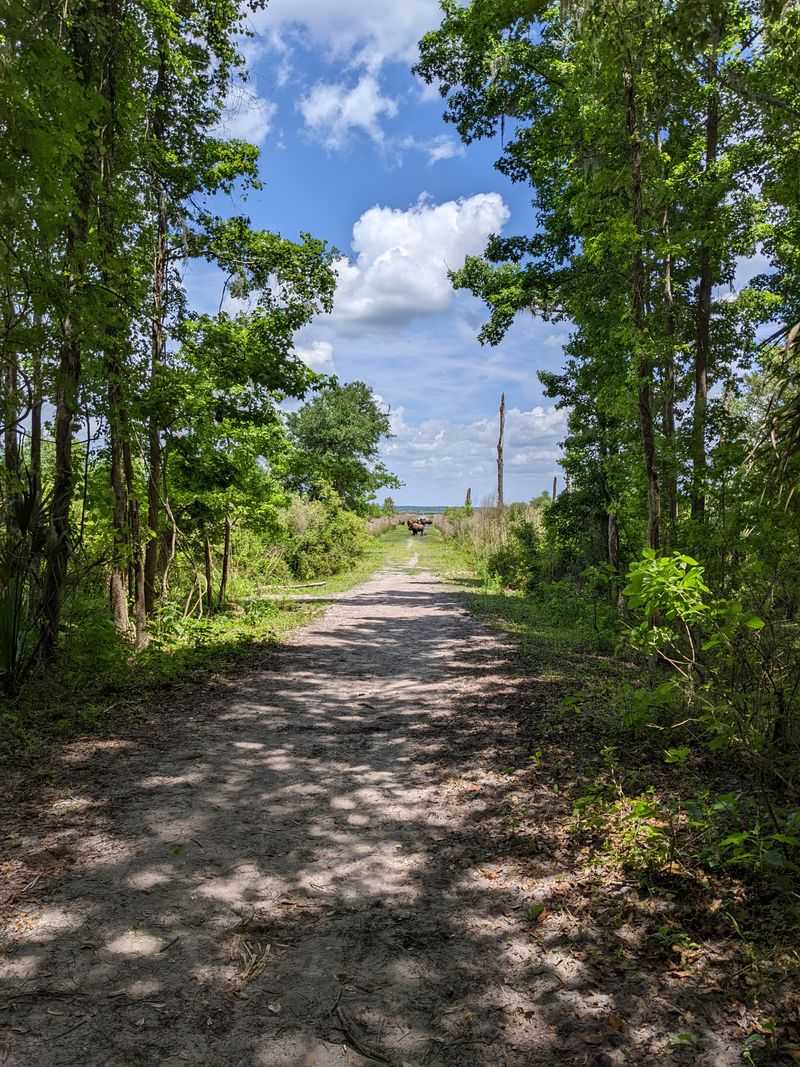
You feel the prairie before you fully see it, a slow sweep of grass and light breathing under the horse’s steady rhythm. The trail opens, and there is water glinting between sawgrass and sky, a shimmer that keeps shifting as ibises lift off like bright punctuation.
The ride stays easy and open, letting you settle into the quiet, then surprising you with a sudden rustle in the palmettos.
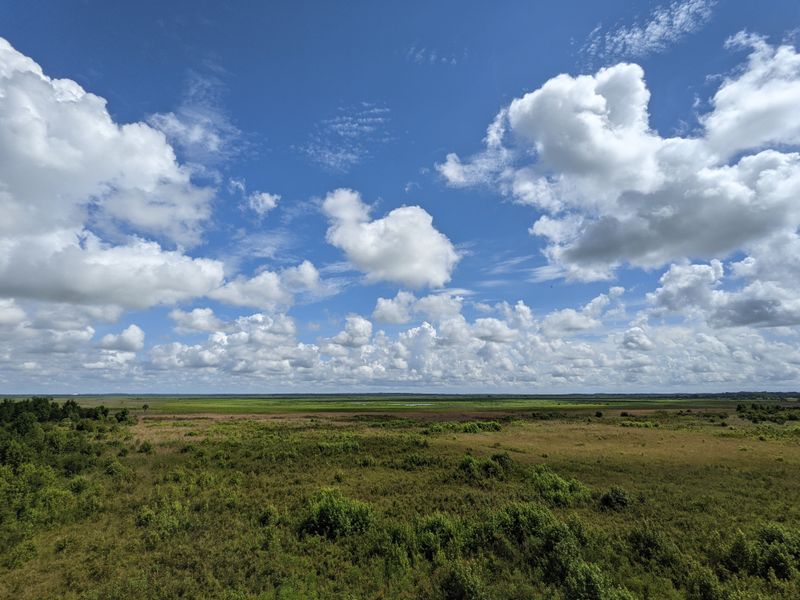
Look up and the horizon just keeps going, a ribbon of clouds spreading low across Micanopy’s sky. Hoofbeats land softly, and the saddle creaks only enough to remind you that you are part of the landscape now.
A ranger’s advice echoes: keep distance from wildlife, give way on narrow stretches, and never rush a view worth savoring.
Morning rides are best for cool breezes and better wildlife chances, though late afternoon light turns the prairie to honey. You will want water, a hat, and bug spray, because the sun does not cut corners out here.
Expect wide, mostly flat terrain, with occasional puddles after summer rain. The moments between turns feel timeless, and that is the point, really.
You come for scenery. You leave with stillness riding beside you.
Wild Horses And A Quiet Awe
There is a hush that follows the first glimpse of wild horses. They are not a show, not a stop on a checklist, but a living thread in this landscape at Paynes Prairie Preserve State Park, just south of Gainesville.
Their movements are careful and unhurried, heads down, tails flicking, shadows sliding over prairie grass.
On horseback or on foot, you keep a respectful distance. This is their home, and the best view arrives when you are patient and still.
Sometimes you will hear them before you see them, a soft snort floating across the water, or the stutter of hooves through the mud.
Guides will tell you the herd has a long Florida story, shaped by reintroduction and careful management. You will not always find them, and that uncertainty makes encounters feel earned.
Bring binoculars, and do not chase a better angle. Let the prairie decide.
If you come near sunset, the horses turn to silhouettes, and the sky does its quiet theater. Later, when you leave, the image holds.
It is not flashy. It is steady and true, a wild grace that lingers.
Bison On The Horizon
Someone points and you squint into the shimmer. Then the shape resolves into bison, dark and impossibly solid against the prairie.
In Florida, no less, where water and sky usually claim the stage.
They move like weather, slow and certain, reminding you that this preserve holds stories older than the highway you drove in on. Rangers share updates at the visitor center about recent sightings, and you learn to manage expectations.
It is real nature, not a calendar spread. If you catch them, it is a gift.
Use the observation tower for a better chance. Bring a zoom lens or binoculars, and lean on patience.
Midweek mornings tend to be quieter, and cooler weather can nudge wildlife into view. Always keep distance.
These are powerful animals, and the prairie is theirs. Even without a close look, the possibility charges every step.
You ride or walk with your eyes up, scanning the far grass. Sometimes the horizon gives nothing.
Sometimes it answers with thunder wearing fur.
The La Chua Trail Drama
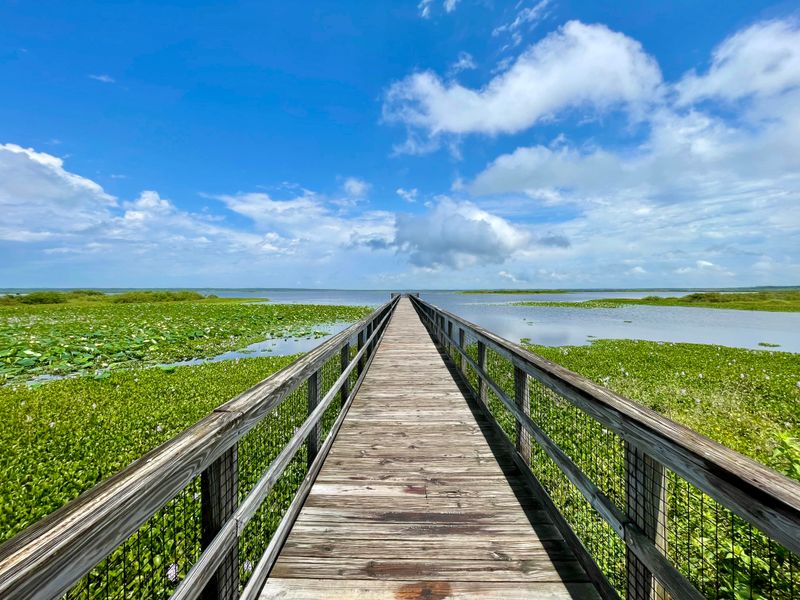
Step onto La Chua Trail and the prairie turns theatrical. Boardwalk planks hum underfoot, and the marsh opens like a stage crowded with egrets, herons, and the slow armor of alligators.
Water beads on lily pads. Camera shutters click.
The air smells like river and sunbaked grass.
On a good day, you will catch the classic tableau: birds stalking, gators basking, clouds stretching forever. The levee carries you farther with big sky all around, but mind the posted signs and seasonal closures.
Summer rains can swallow the path, and rangers will rope it off when water is high.
Carry water, sunscreen, and a hat, especially in warm months. Parking fills on weekends, so arrive early or late in the day.
If you ride elsewhere first, this trail makes a great cool-down walk. Wildlife keeps right on with its business, and you feel a little smaller in the best way.
Every few steps, something blinks or splashes. You pause, breathe, and remember why you came: real Florida, unscripted and generous when you give it time.
Observation Tower Sunrise
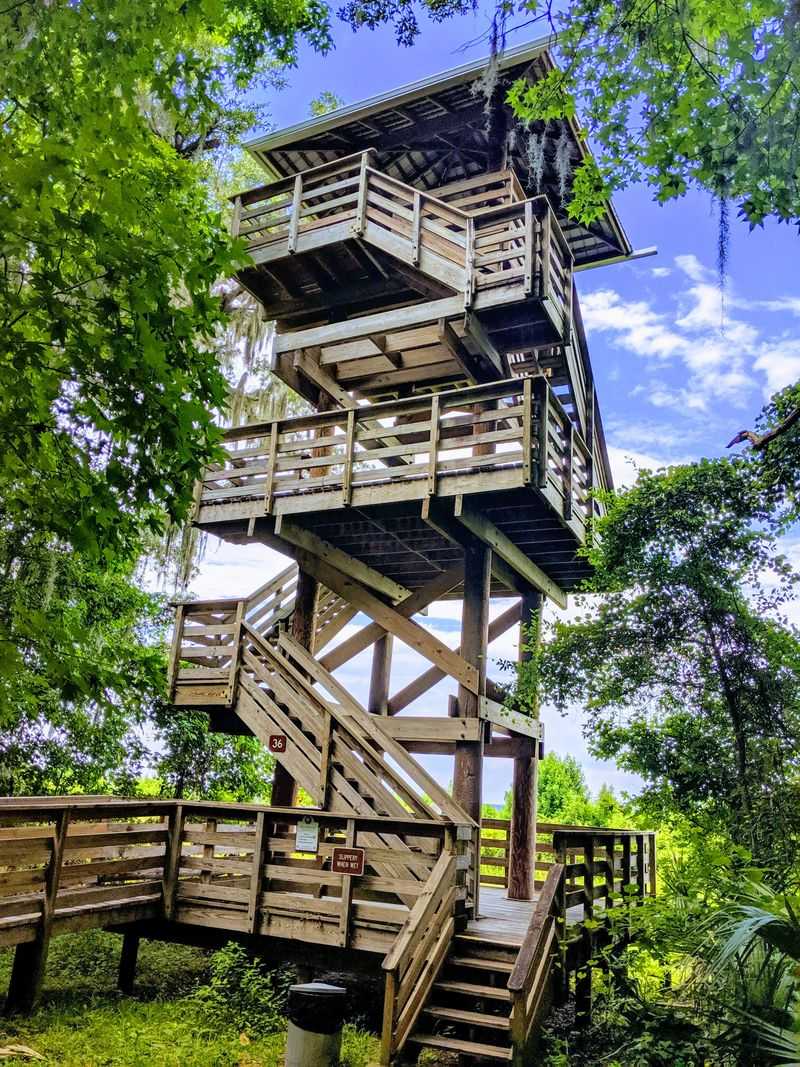
Climb the stairs while the sky is still figuring out its colors. From the top, the prairie spreads like a quiet ocean, fog lifting in slow folds.
You hear birds before you see them, wingbeats stitching the dawn together.
This is where you get the big picture. Trails look like fine lines.
The water flashes silver. Sometimes a grazing shape betrays the wild horses, and once in a while, a bison turns the horizon into an exclamation point.
Bring a light jacket for winter mornings and brace the breeze whipping across the railings.
Open hours run from 8 AM to just before 9 PM most days, but check seasonal changes and weather. Sunrise views mean arriving right at opening, then riding or walking when the light softens everything.
Parking is straightforward near the visitor center, and restrooms are clean. Take your time up there.
Let your coffee cool. The day below moves differently after you have seen it from this perch, like you have already traveled miles without taking a single step.
Visitor Center Stories
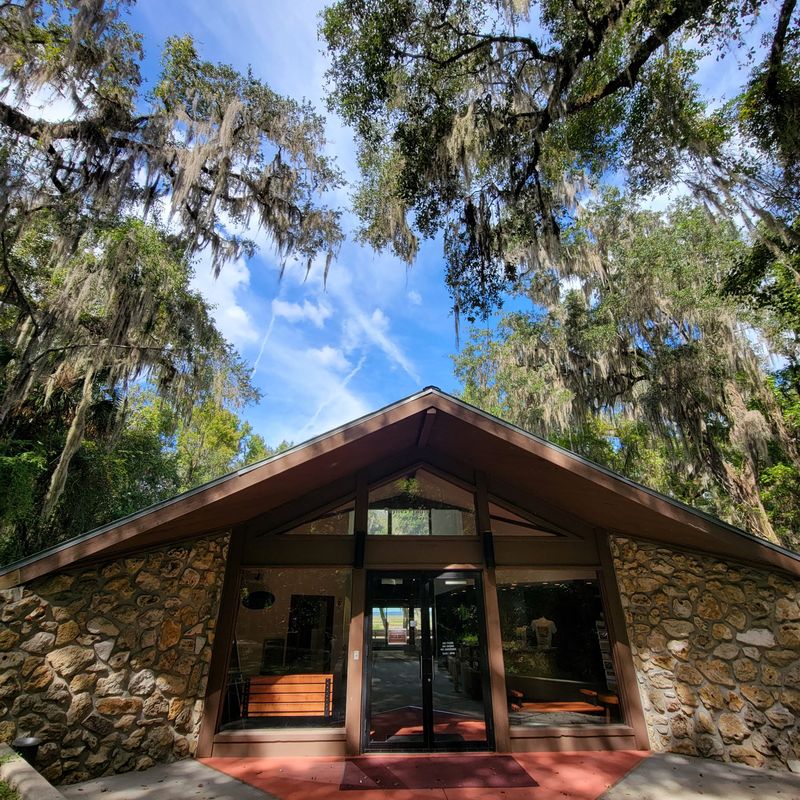
Start inside and the landscape starts talking. Exhibits at the visitor center map out the prairie’s wetlands, hammocks, and history, with panels that make science feel like a good campfire tale.
Staff share trail updates, wildlife tips, and which paths are high and dry after recent rains.
Grab a printed map because it shows distances more clearly than the online version. Ask about accessibility, seasonal closures, and where birds are working the shallows today.
If you have kids along, look for the hands-on displays and big windows that pull the outside right up to the glass.
Hours track the park schedule, opening at 8 AM most days, and the building is air conditioned and welcoming on steamy afternoons. There are clean restrooms and small exhibits that reward a slow look.
Plan ten to twenty minutes here before hitting the trails, or more if you like history. When you step back outside, you will hear the prairie differently, tuned by the stories behind it.
That tiny shift can change an entire day.
Camping Under The Oaks
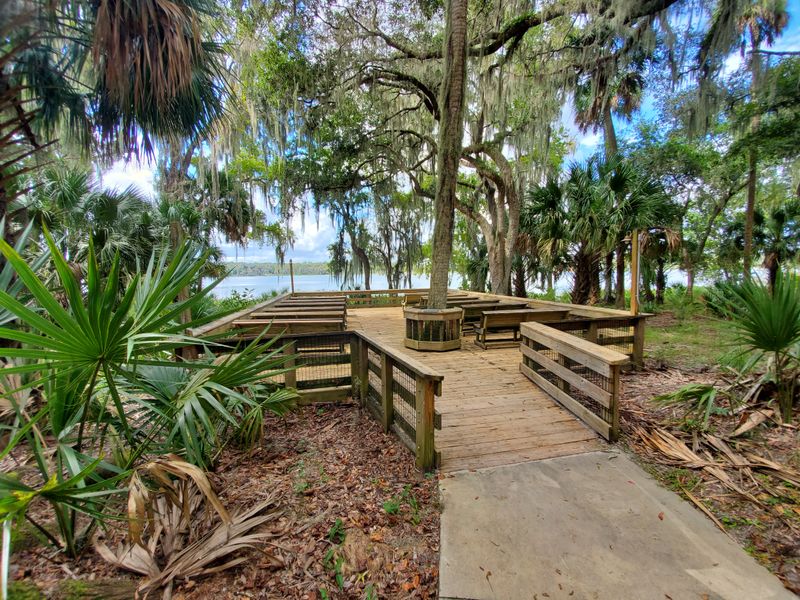
Evening in the campground feels like exhaling. Live oaks lean in with Spanish moss and crickets start their small orchestra.
Sites are roomy and mostly level, with gravel pads, water and electric, and a good fire ring setup for s’mores and stories.
Bathhouses are clean with hot showers, and paved roads make looping by bike an easy glide. You will not find washers or dryers, and ice is not sold on site, so plan a short run into town.
Bring firewood money or pick up a bundle at the park when available. Nights are quiet, and stars cut through where the canopy opens.
Reserve early, especially for weekends or cooler seasons. If you score the group site, it sits by calm water perfect for paddleboards when levels allow.
Mornings mean bird calls and coffee steam curling in the damp air. Hike or ride out from camp and you feel like you have slipped into a gentler rhythm.
That is the charm here. Nothing tries too hard.
Nature just does what it does, and you get front row seats.
Best Seasons And Daily Rhythm
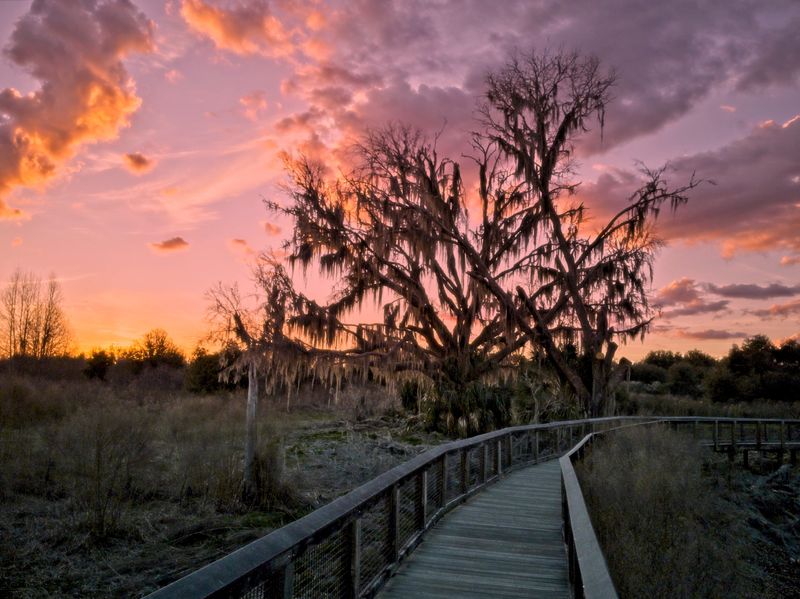
Florida seasons shape every step on Paynes Prairie, and timing your visit makes all the difference. Winter runs drier and cooler with broader access and fewer mosquitoes.
Spring throws wildflowers along the edges, while summer swells with green and afternoon storms. Fall brings soft light and mild air, a sweet spot for long rides.
Arrive early or late to dodge midday heat and find easier parking. Trails can flood after heavy rain, so ask rangers about conditions.
Wildlife tends to move at the fringes of the day, and breezes feel friendlier then too. Bring water, sunscreen, and a brimmed hat.
Closed-toe shoes make sense even on level ground.
Park hours hover around 8 AM to near dusk, with slight seasonal shifts, and entry fees are wallet friendly by state park standards. If something is unclear, say so at the gate or visitor center.
They will steer you right. Plan flexible goals and let the prairie set the pace.
That way, you leave room for surprises, which is where the memories hide.
Accessibility And Easy Wins
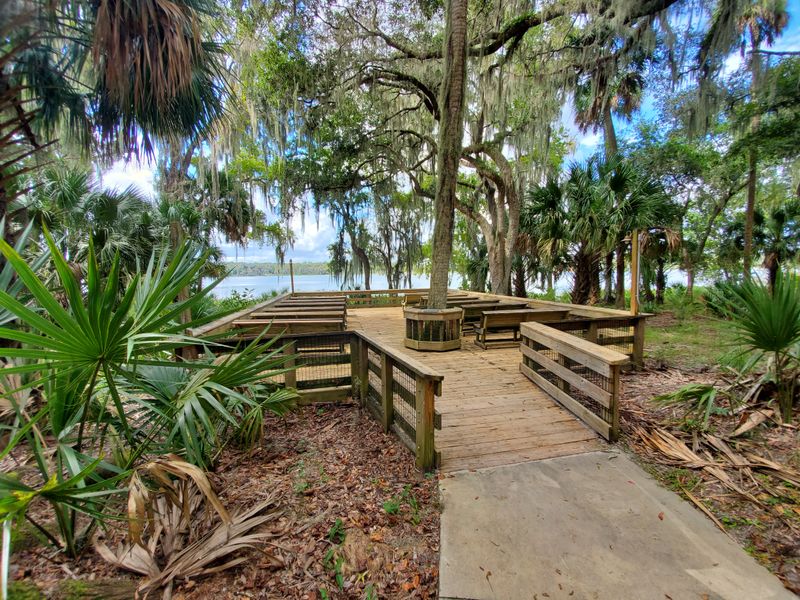
If you want big views without big miles, Paynes Prairie still shows up for you. Near the visitor center, paved paths, ramps, and accessible restrooms make it simple to roll or stroll to overlooks.
The observation tower stairs are not accessible, but ground-level platforms and wide walkways earn their keep with generous sightlines.
Ask staff which trails are firm and dry that day, because conditions shift with rain. Even short boardwalks deliver wildlife moments: turtles lined like beads, herons working the shallows, an alligator blinking like a statue with thoughts.
Shade comes and goes, so pack sun protection.
Parking is straightforward, with accessible spaces by key trailheads. If heat is an issue, aim for morning and keep your loop small.
You will not miss out. The prairie does not require heroics to shine.
It only asks that you look up every so often and let the small details land: wind in sawgrass, dragonflies stitching light, a distant horse lowering its head to drink.
Safety, Courtesy, And Trail Smarts
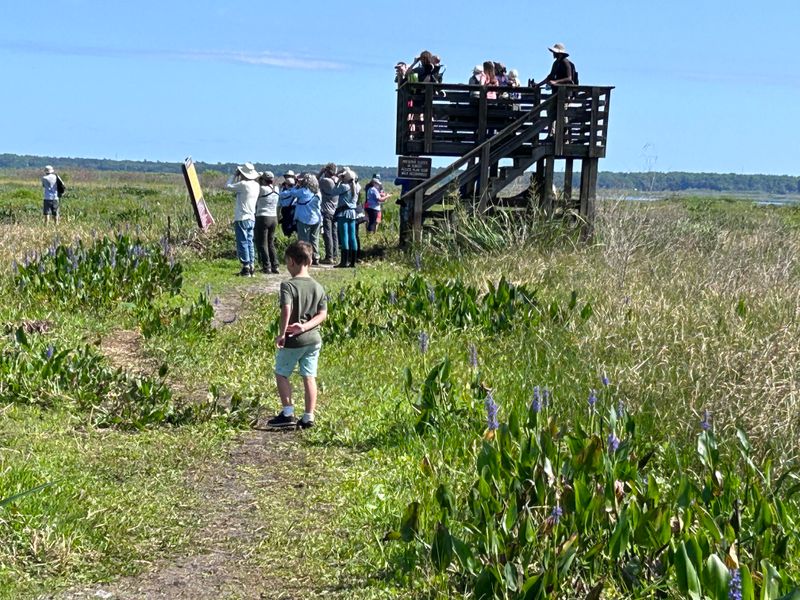
Good trail days start with simple habits. Yield to horseback riders, keep right on narrow stretches, and announce when passing.
Give all wildlife plenty of space, especially around water where gators sun and watch. Leash dogs where allowed and check current rules because policies protect both pets and native species.
Carry more water than you think you need, plus a map or offline app in case service drops. Summer storms pop fast, so watch the sky and step off exposed levees when thunder rumbles.
After heavy rain, expect mud and possible closures. Rangers post signs for a reason, and they are friendly if you have questions.
Dress for sun and bugs. Closed-toe shoes and a brimmed hat beat fashion every time here.
If you see horses or bison, admire from afar. Zoom with optics, not footsteps.
Your day feels better when the prairie stays relaxed. Pack out everything, nod to folks you meet, and let the quiet do the heavy lifting.
Birdwatching That Hooks You
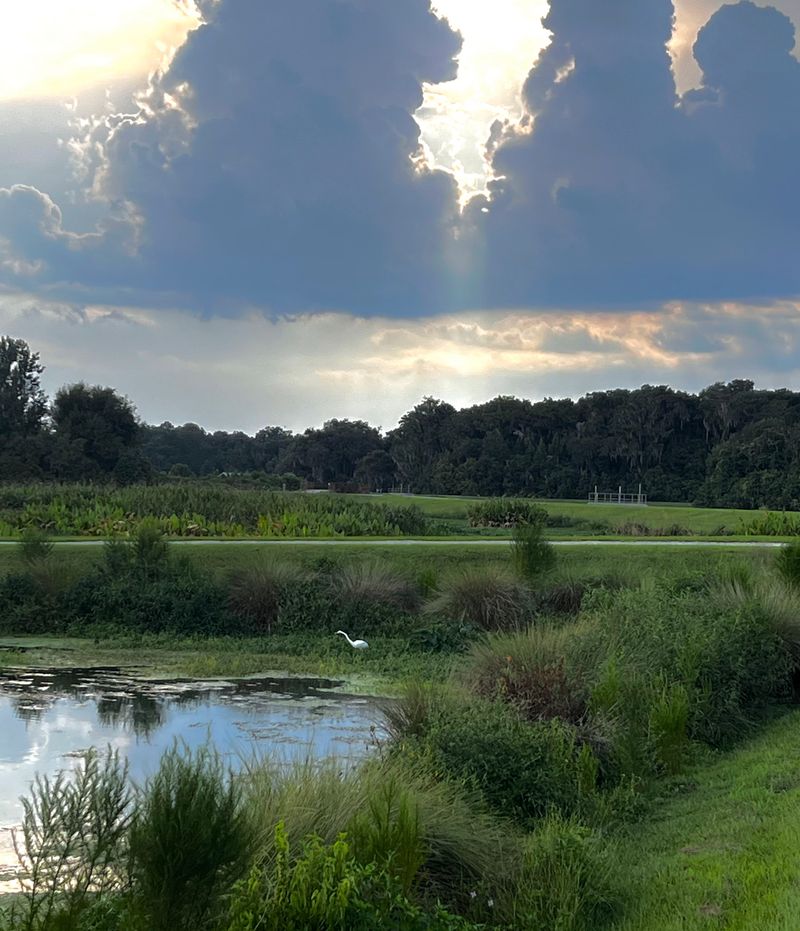
Even if birds are not your thing yet, Paynes Prairie might convert you. Dawn pulls cranes across the sky like slow handwriting, and wood storks clatter their way through breakfast.
Egrets shine white against the slick green shallows, and ospreys carve perfect arcs overhead.
Bring binoculars and linger on the levees or boardwalks. The rhythm becomes a puzzle you cannot stop solving.
Who is hunting, who is nesting, who just argued about a fish. Field guides at the visitor center can point you toward seasonal specials, and winter often brings cooler air and longer views.
Keep voices soft near rookeries. Step lightly and resist the urge to crash through reeds for a better shot.
You will get it from where you stand if you wait a minute or two. Birding lives on patience and small astonishments, and this park delivers both in easy reach.
You come for horses and bison. You stay for feathers writing the morning.
A Ride With Florida History
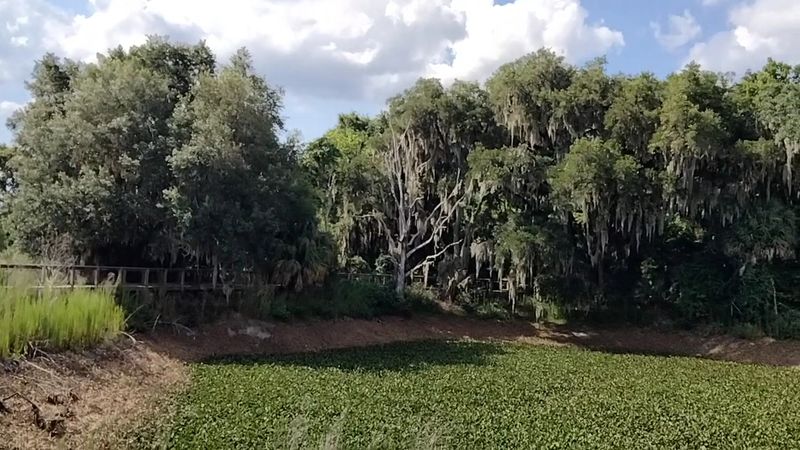
Out on the trail, the past rides alongside you. The prairie has seen Spanish cattle, Seminole history, droughts and floods that redrew its edges again and again.
Interpretive signs sketch those turns without getting stuffy, and the land fills in the rest with wind and water.
You cross hammocks where live oaks remember more than they tell, then slip back into open grass that once carried herds like a moving horizon. Floods turned the basin to a shallow lake for years at a time.
Later, drought cracked it underfoot. Today, careful management keeps habitats shifting but thriving.
It helps to slow down and imagine older footsteps under your horse’s. That tug of continuity makes the view richer.
You are not just sightseeing. You are visiting a place that keeps changing and somehow stays itself.
When you leave, the timeline still runs in your head like a quiet reel, and the prairie keeps rolling on without you, steady as tide.
Micanopy Charm After The Ride
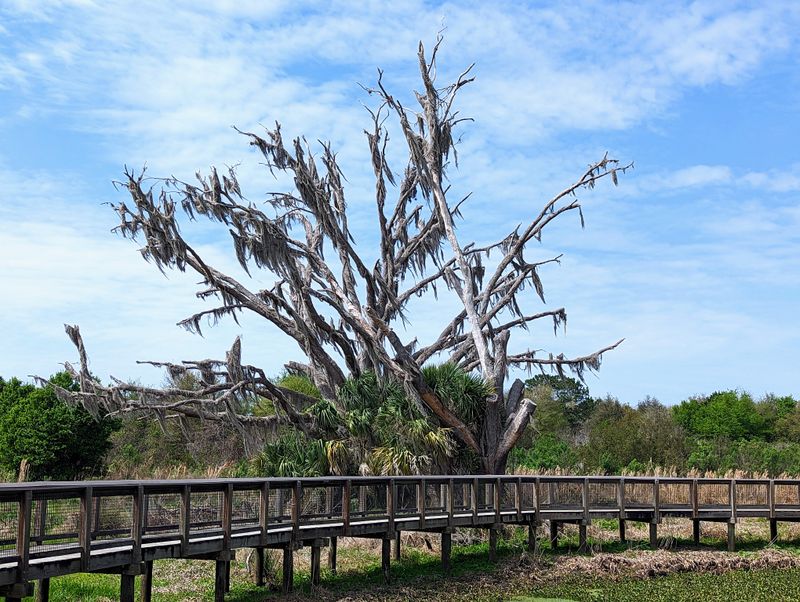
When the ride ends, the day does not have to. Micanopy waits a short hop away, draped in oaks and small-town charm.
Antique shops lean into their stories, and cafes pour the kind of sweet tea that makes sitting a sport. You shake the trail dust off and let the afternoon drift.
Parking is easy along the main drag, and storefronts mix history with laid-back energy. If you like museums, the town’s small spots punch above their weight, offering context that pairs nicely with the park’s big landscape.
Conversations happen on porches. You will probably have one.
Head back to camp before dusk or catch the prairie’s last light from a turnout. Either way, the contrast between open wild and old Florida town hits a perfect note.
You end the day softer around the edges, holding new favorites you did not plan. That is the sweet spot here: ride, wander, and let Micanopy wave you on.