
This Florida Lake Has Gone From Peaceful Retreat To The Center Of A Heated Local Argument
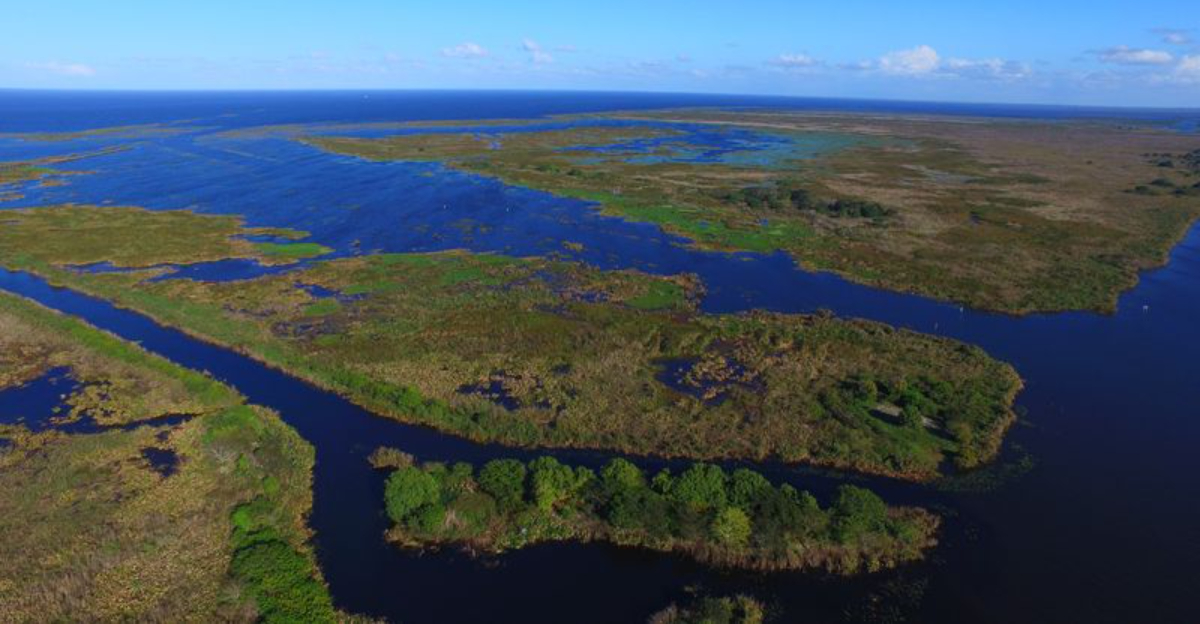
Florida is good at creating places that look peaceful from a distance.
This lake proves it.
The water stretches toward the horizon. Fishing boats cross the surface.
Birds gather along the marshes. Sunsets arrive with enough color to make everyone forget why they stopped.
Then the conversation changes.
Beneath the calm view sits one of Florida’s loudest environmental debates.
Water quality, pollution, wildlife, farming, and nearby communities have all become part of a complicated argument with no easy ending.
Everyone agrees the lake matters.
Agreeing on what should happen next is where things get interesting.
That contrast defines the place.
It remains beautiful, productive, and deeply important. It is also under pressure from decisions made far beyond its shoreline.
Curious visitors may arrive expecting fish, birds, and open water.
They leave realizing the lake is more than scenery.
It is a test of how Florida protects what it loves most.
The Sheer Size Of Lake Okeechobee Will Genuinely Surprise You
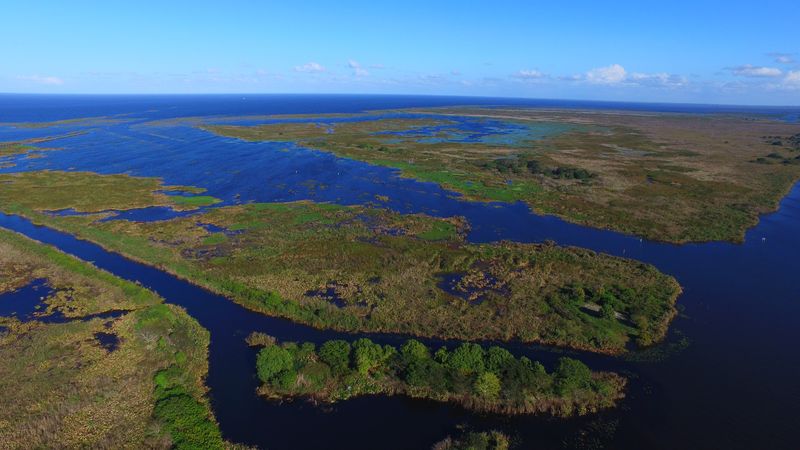
Most people have no idea just how enormous Lake Okeechobee really is until they are standing on its shore trying to find the other side.
Covering approximately 730 square miles, it holds the title of Florida’s largest freshwater lake and ranks second among all natural freshwater lakes in the contiguous United States, trailing only Lake Michigan.
The lake sits at a latitude of roughly 26.97 degrees north in south-central Florida, making it a geographic centerpiece of the entire state.
Its average depth is surprisingly shallow, hovering around nine feet, which means that massive surface area holds a relatively modest volume of water compared to what you might expect from something so wide.
That shallow profile creates a unique environment where wind can churn the water quickly, producing wave conditions that rival coastal bays on a breezy afternoon.
Locals often joke that the lake has its own microclimate, and weather reports for open water can differ dramatically from what you experience standing on the berm just a few feet away.
Bass Fishing Here Has Built A Reputation That Spans Decades
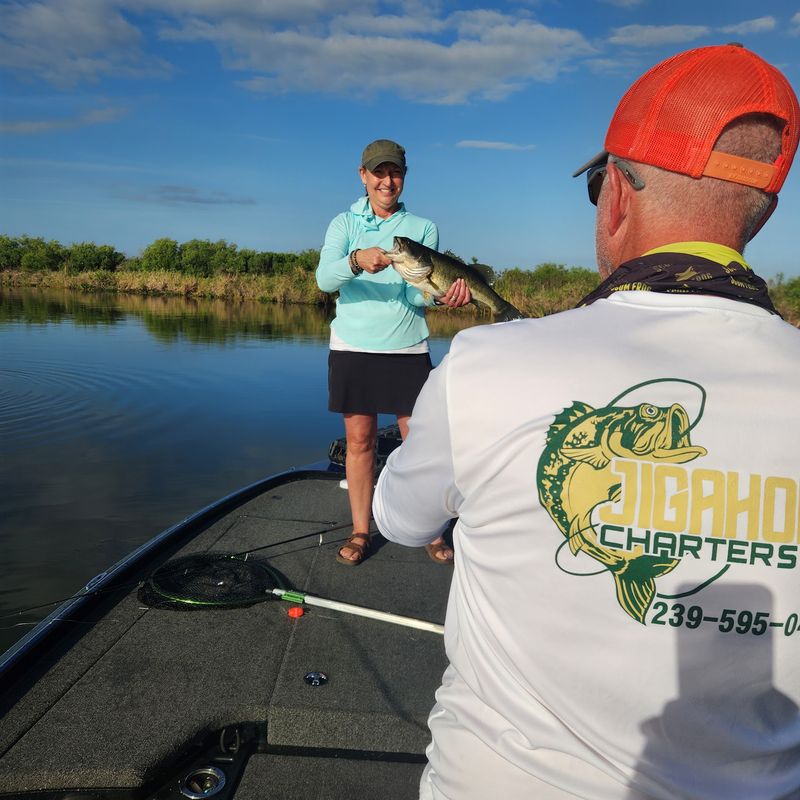
Ask any serious freshwater angler about Lake Okeechobee and watch their eyes light up like it is the last day of summer vacation.
The lake has earned a worldwide reputation as one of the premier largemouth bass fishing destinations on the planet, drawing tournament anglers and weekend warriors alike from every corner of the country.
Thick beds of hydrilla, lily pads, and emergent grasses create ideal hiding spots for trophy-sized bass that can tip the scales well past ten pounds.
Crappie, also called speckled perch by locals, are another fan favorite, and during peak season the action can be almost non-stop for anyone who knows where to look.
Charter guides operate out of towns like Okeechobee City and Clewiston, and many of them have been working these waters for twenty or thirty years.
Local restaurants around the lake proudly display mounted trophy fish on their walls, giving visitors a vivid preview of what a lucky day on the water can produce.
The 110-Mile Trail Around The Lake Is A Hidden Outdoor Treasure
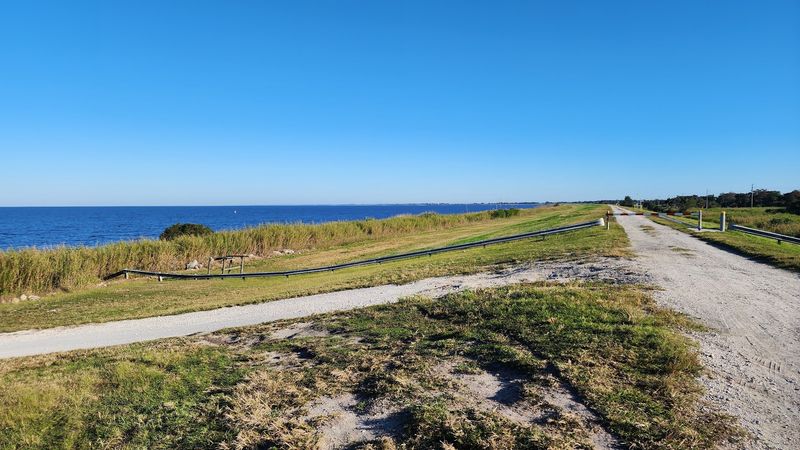
Wrapping all the way around the lake, the Lake Okeechobee Scenic Trail offers 110 miles of paved and packed-surface path that sits on top of the Herbert Hoover Dike.
Hikers, cyclists, and e-bike riders all share this elevated trail, and the views it offers of open water on one side and farmland on the other are genuinely hard to beat.
One reviewer described riding at sunset for the first time and being completely speechless, saying that neither words nor photos could capture what they experienced up there.
The trail passes through several small communities, including Pahokee, Belle Glade, and Moore Haven, each with its own character and a handful of spots to grab food and rest your legs.
Wildlife sightings along the route are common, with herons, ospreys, anhingas, and even the occasional alligator visible from the elevated berm path.
For anyone looking to combine physical activity with serious natural scenery, this trail delivers a satisfying outdoor experience that very few Florida destinations can match.
Airboating Across The Marshes Offers A Completely Different Perspective
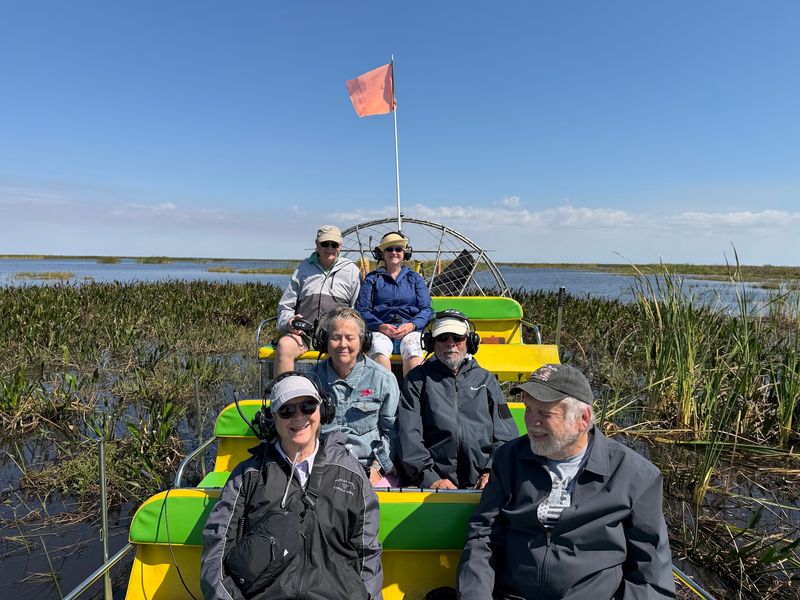
There is something uniquely thrilling about sitting on a flat-bottomed airboat as it skims across the surface of Lake Okeechobee’s shallow marshes at full speed.
The propeller roars, the saw grass blurs past on both sides, and suddenly you understand why locals have been doing this for generations as a pure expression of Florida outdoor culture.
Airboating allows access to areas that traditional boats simply cannot reach, including the dense marsh zones where tilapia beds cluster in visible patches near the surface.
Operators often stop at informal rest spots like the well-known Tin Shed, a casual gathering point where airboaters pull up, share stories, and enjoy a picnic surrounded by nothing but open sky and wild water.
Alligator sightings are practically guaranteed, and going out after dark adds a surreal element when dozens of glowing red eyes appear in the beam of a flashlight across the water.
For first-timers, the experience tends to shift quickly from nervous anticipation to pure, unfiltered enthusiasm.
Wildlife Watching Here Rivals Any Nature Preserve in the State
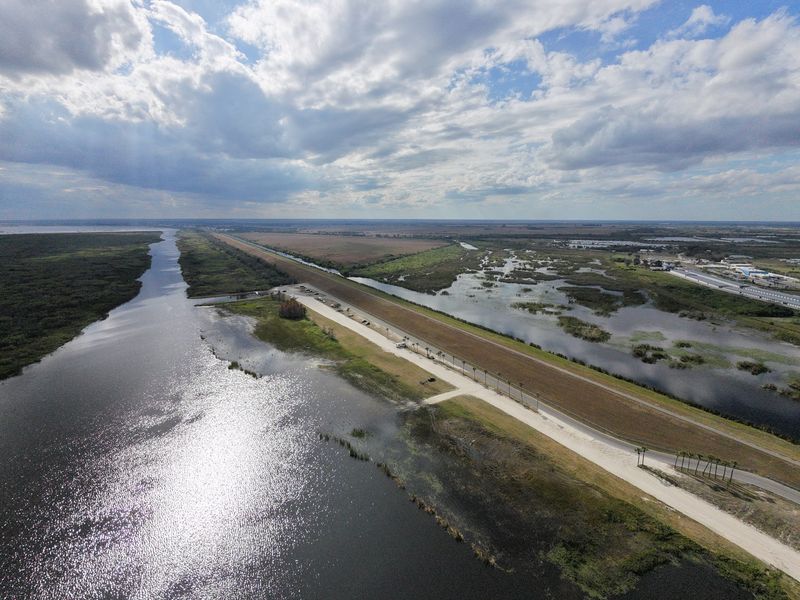
Before the debates started and the headlines got loud, Lake Okeechobee was simply one of the most rewarding wildlife watching spots in all of Florida.
The lake and its surrounding wetlands host an extraordinary variety of bird species, including great blue herons, snowy egrets, roseate spoonbills, ospreys, and anhingas that perform their wing-drying pose along the berm like they own the place.
Alligators are present in large numbers throughout the lake, and locals frequently advise visitors against swimming for exactly that reason, though watching them from a safe distance is a highlight for most people who visit.
Turtles surface near the quieter coves, and during certain seasons, wading birds gather in concentrations that feel almost prehistoric in their density and noise.
The lake’s shallow profile and abundant aquatic vegetation create a food-rich environment that supports this biodiversity year-round, not just during migration periods.
Birding enthusiasts who visit for the first time often leave with a life list that grew by a surprising number of new species in just a single afternoon.
Algae Blooms Have Turned A Local Treasure Into A Flashpoint
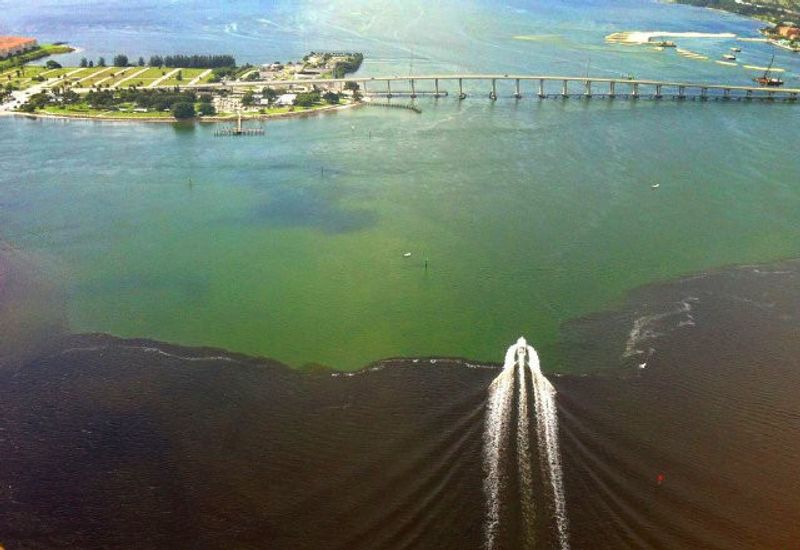
For years, scientists and local residents have been sounding the alarm about a problem that is both visible and deeply troubling every time it appears on the lake’s surface.
Blue-green algae blooms, caused by cyanobacteria that thrive in warm, nutrient-rich water, have become increasingly frequent and increasingly intense in Lake Okeechobee over recent decades.
The blooms produce a thick, paint-like layer of green slime across the water’s surface, releasing toxins that are harmful to fish, wildlife, pets, and humans who come into contact with them.
Fertilizer runoff from surrounding agricultural operations is widely identified as a primary driver of the nutrient overload that feeds these blooms, though the exact assignment of responsibility has sparked fierce disagreement between farmers, environmental groups, and government agencies.
When lake managers release water to control levels during rainy seasons, those bloom-laden releases flow into the Caloosahatchee River to the west and the St. Lucie River to the east, damaging coastal estuaries and triggering outrage in those communities as well.
The algae issue has essentially made Lake Okeechobee a symbol of a much larger environmental reckoning.
The Herbert Hoover Dike Has A Complicated And Consequential History
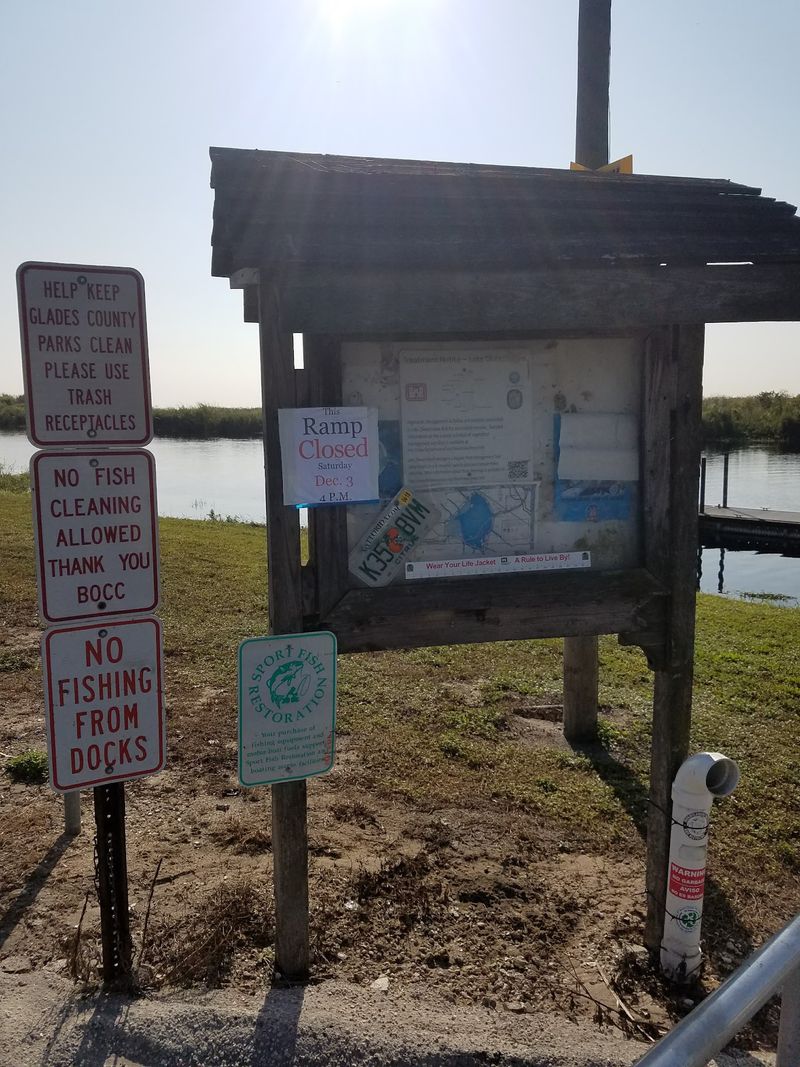
Standing on the berm trail and looking down at the dike beneath your feet, it is easy to forget that this massive earthen structure has one of the more dramatic origin stories in American engineering history.
The Herbert Hoover Dike was built by the U.S. Army Corps of Engineers following two catastrophic hurricanes in 1926 and 1928, the second of which caused a dike failure that sent a wall of water across the surrounding communities and claimed thousands of lives.
Construction of the modern dike was completed in the 1930s, and it has controlled lake levels and protected surrounding farmland and towns ever since.
However, the dike itself became a source of concern when inspections revealed significant structural vulnerabilities that prompted the Army Corps to undertake a massive rehabilitation project spanning several decades and billions of dollars.
Critics argue that the dike’s management has prioritized agricultural water needs over ecological health, a claim that sits at the center of ongoing policy disputes.
The dike is both a life-saving structure and a lightning rod for arguments about who gets to decide what happens to the water it contains.
Small Towns Around The Lake Each Tell Their Own Story
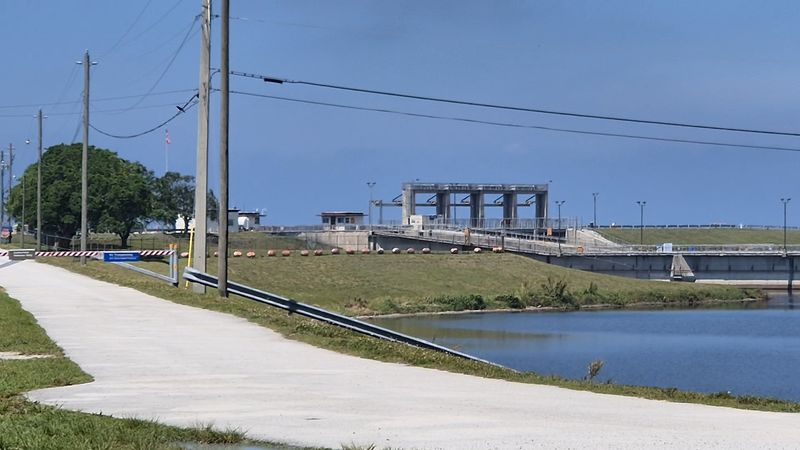
Driving the full loop around Lake Okeechobee means passing through a string of small towns that feel like they belong to a quieter, slower version of Florida that most tourists never find.
Okeechobee City on the northern end serves as the main hub, with bait shops, fishing outfitters, and diners where the coffee arrives fast and the fishing stories arrive faster.
Clewiston, on the southern edge, calls itself America’s Sweetest Town because of the massive U.S. Sugar Corporation operations that have shaped the local economy for generations.
Pahokee and Belle Glade sit on the eastern shore, communities with deep roots in agricultural labor and a cultural richness that is easy to overlook if you only stop briefly.
Moore Haven, the seat of Glades County to the west, offers a quieter entry point to the lake with boat ramps and a relaxed pace that suits anyone who just wants to be near the water without a crowd.
Each town adds a different chapter to the lake’s story, and together they reveal how deeply this body of water shapes the lives of everyone around it.
Sunsets Over The Lake Have Earned Their Own Devoted Fan Base
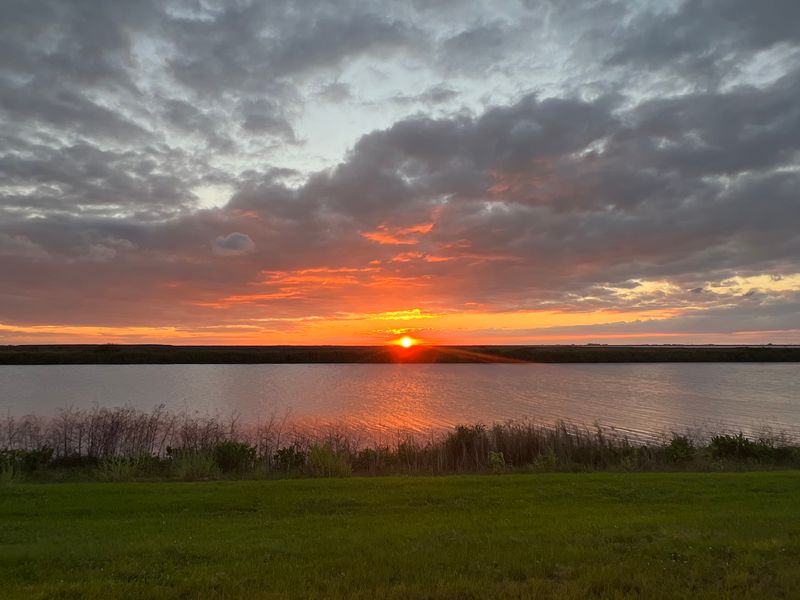
There is a particular kind of quiet that settles over Lake Okeechobee as the sun starts dropping toward the horizon, and once you have seen it, you understand why people drive hours just to be here at that moment.
The lake’s open, unobstructed surface gives the sky room to perform, and with nothing tall enough to interrupt the view, the colors spread across both the water and the clouds in ways that feel almost theatrical.
Multiple visitors have described the experience of watching the sunset here for the first time as something that photographs simply cannot capture, and that sentiment shows up again and again in firsthand accounts from people who made the trip.
The elevated vantage point of the berm trail makes an especially good spot for sunset viewing, since you get both the sky above and its reflection on the water below simultaneously.
Photographers, painters, and casual visitors all seem to arrive at the same conclusion: this lake puts on a show at the end of the day that is worth building your schedule around.
Even a brief stop during a longer road trip tends to turn into a much longer stay once the colors start to shift.
The Future Of The Lake Depends On Decisions Being Made Right Now
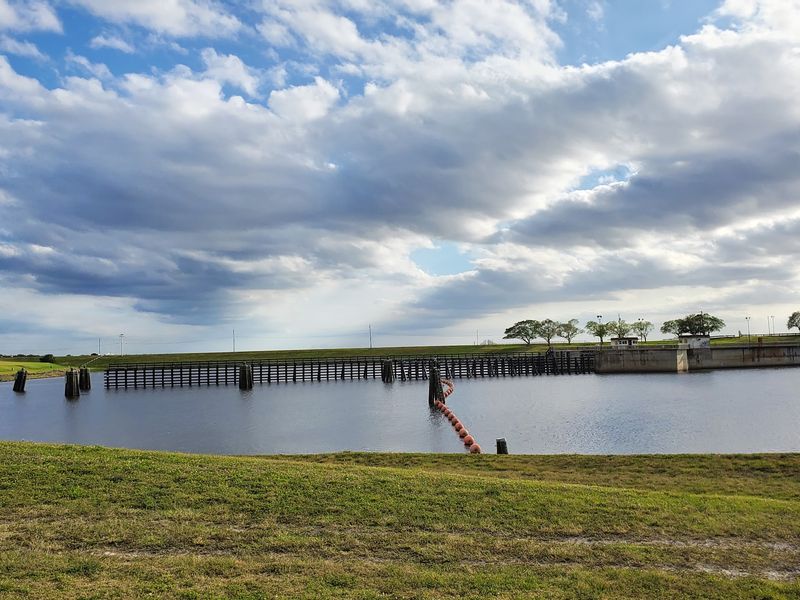
Few bodies of water in the United States carry as much political and environmental weight as Lake Okeechobee does at this particular moment in history.
The Comprehensive Everglades Restoration Plan, one of the largest environmental restoration efforts ever undertaken in the world, includes major projects designed to store and clean water south of the lake and reduce the damaging releases that have harmed coastal estuaries for years.
Progress on these projects has been slow, and the tension between agricultural interests, conservation advocates, state agencies, and federal planners has produced a debate that shows no sign of cooling down anytime soon.
Water quality, lake levels, land use around the watershed, and the long-term health of the greater Everglades ecosystem are all connected to choices being made about this one lake right now.
Community members in towns around the lake have become increasingly vocal advocates, attending public meetings and organizing campaigns to push for faster action and more transparent decision-making.
Whether Lake Okeechobee returns to its role as a peaceful natural retreat or remains a flashpoint for conflict depends entirely on the political will to prioritize its recovery over short-term economic convenience.