
This Florida Preserve Lets You Step Inside A Wolf Enclosure And Meet The Pack Up Close
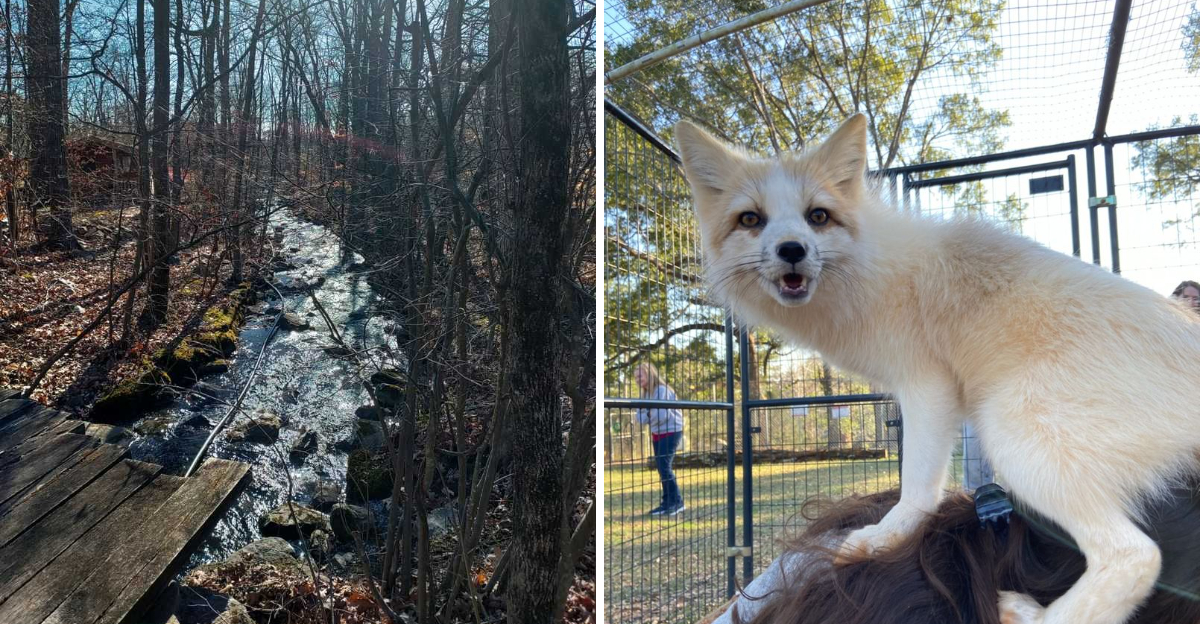
What if Florida was hiding an experience that completely rewrites what you think you know about wildlife? No fences.
No glass. No safe distance.
Just you, the quiet of the forest, and a sound that makes your chest tighten before you even see its source.
It starts with howls. Low, layered, and unmistakably alive.
Then comes the moment that changes everything. Warm breath against your hands.
Curious eyes meeting yours without fear. A presence that feels aware, calm, and strangely respectful.
Have you ever realized how different an encounter feels when an animal is not being watched, but is watching you too?
Time moves differently here. Personalities emerge.
Some are playful, some cautious, all unforgettable. This is not a show or a quick stop for photos.
It is connection, patience, and trust unfolding naturally. You leave with muddy boots, a quiet sense of awe, and the realization that Florida still holds wild, deeply moving experiences most people never even imagine exist.
Walking Among The Wolves
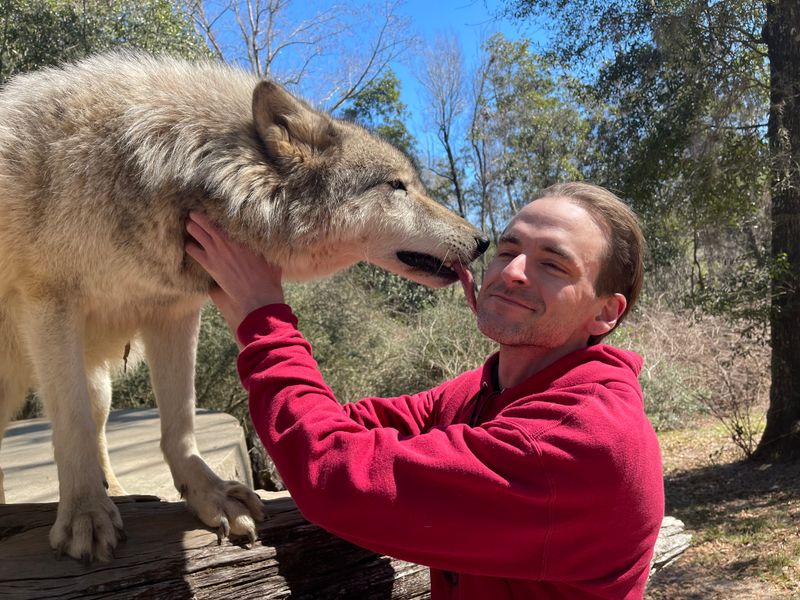
Stepping through the gate into my first wolf habitat felt like crossing into a world most humans never get to see.
Staff members guided me in with calm confidence, and within moments, curious wolves began padding over, their amber eyes studying me with an intelligence that made my heart skip.
I knelt down as instructed, and a beautiful gray wolf named Shadow pressed his forehead against my shoulder, leaning in for a scratch behind the ears like the world’s most majestic dog.
Another wolf circled around, sniffing my boots and jacket, while a third flopped down nearby, clearly hoping for belly rubs.
The guides knew every wolf by name and personality, sharing stories about who loved attention most, who preferred to observe from a distance, and who would inevitably try to steal the show.
I watched wolves interact with each other too, play-bowing and gently nipping, their social bonds obvious in every movement.
Being accepted into their space, even temporarily, felt like an honor I still can’t quite put into words.
Every moment reinforced that these weren’t just beautiful animals but complex individuals with preferences, moods, and an unexpected gentleness toward respectful visitors.
The Howling Session
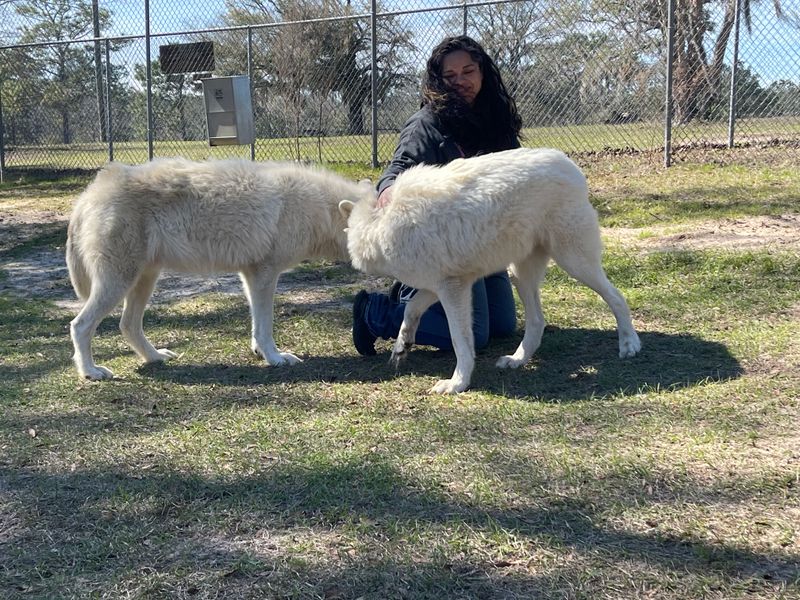
Halfway through my visit, one of the handlers asked if I wanted to hear the wolves sing, and before I could answer, she tilted her head back and let out a long, haunting howl.
Within seconds, every wolf in the enclosure joined in, their voices layering into a wild symphony that vibrated through my chest and made the hair on my arms stand up.
I’ve heard recordings before, but nothing prepared me for the real thing, for feeling that ancient sound wash over me while standing just feet away from the singers themselves.
Some wolves howled high and piercing, others low and rumbling, and together they created harmonies that felt both joyful and deeply primal.
The guides explained that howling strengthens pack bonds and helps wolves communicate across distances, but in that moment, it felt like they were simply sharing their voices because they could.
When the chorus finally faded, the wolves shook themselves off and went back to sniffing visitors and flopping down for pets, as if they hadn’t just performed the most moving concert of my life.
I left with that sound still echoing in my mind, a reminder of wildness that somehow felt like a gift meant specifically for those of us lucky enough to witness it.
Meeting The Smaller Residents
After spending time with the wolves, I got introduced to Seacrest’s smaller ambassadors, including an albino skunk named Bubblegum who looked like a fluffy cloud with the sweetest pink eyes.
I’d never held a skunk before, and I won’t lie, I hesitated for a second before the handler assured me Bubblegum was descented and absolutely loved attention.
The moment that little creature settled into my arms, soft and warm and surprisingly cuddly, I understood why the staff talked about these animals with the same affection they showed the wolves.
A raccoon with tiny, dexterous hands investigated my shoelaces while I sat cross-legged on the ground, and a possum with a prehensile tail wrapped around the handler’s wrist blinked at me sleepily.
Each animal had its own story, most of them rescues who couldn’t survive in the wild, and the staff shared those backgrounds with obvious pride in giving these creatures safe, enriching lives.
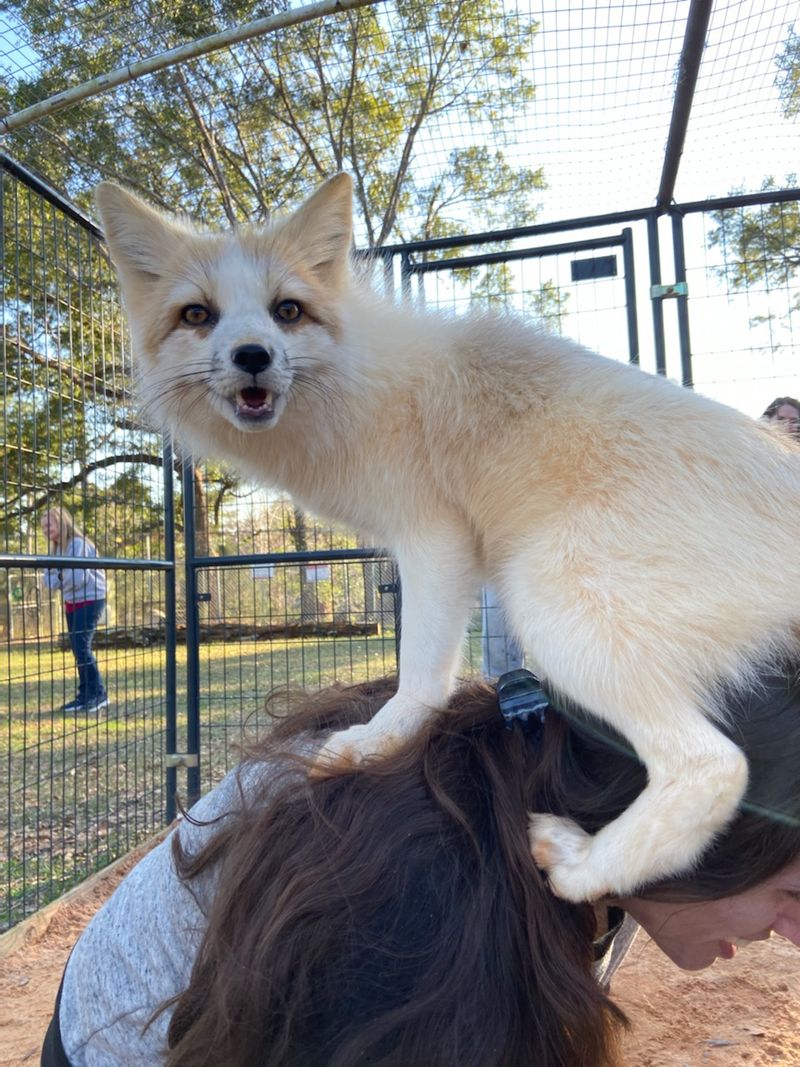
Foxes peered out from their enclosures, their bright eyes tracking every movement, and I learned about the preserve’s broader conservation mission beyond just wolves.
These smaller encounters added depth to my visit, showing me that Seacrest’s commitment extends to all wildlife that needs protection, education, and a second chance.
The Passionate Handlers
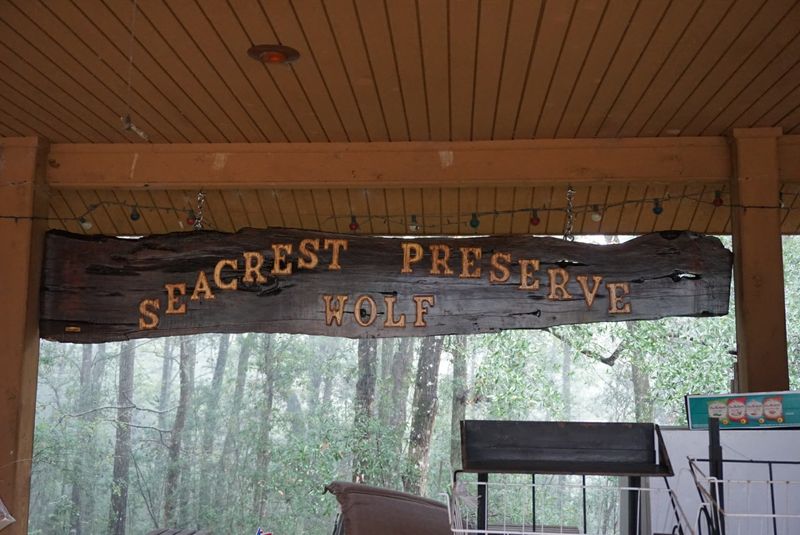
What struck me most during my hours at Seacrest wasn’t just the animals themselves but the obvious devotion of every single person working there.
Guides like Mallory, Rileigh, and Braun didn’t just know facts about wolves; they knew which individual preferred chin scratches over back rubs, who got grumpy on rainy days, and which wolf would inevitably try to give the most kisses.
They spoke about the animals with a tenderness that made it clear this wasn’t just a job but a calling, a daily commitment to creatures who depend entirely on human compassion for survival.
Between enclosures, handlers shared the preserve’s history, the challenges of running a non-profit wildlife sanctuary, and the deep satisfaction of watching rescued wolves thrive in their care.
I watched one guide crouch down to comfort a shy wolf who hung back from the group, speaking in low, soothing tones until the animal relaxed enough to accept a gentle ear scratch.
That patience, that genuine love, showed up in every interaction, every careful explanation, every moment they prioritized the animals’ comfort over rushing through the tour.
I left feeling like I’d met not just wolves but an entire community of humans fighting to protect them, and that combination made the experience infinitely more meaningful.
The VIP Experience
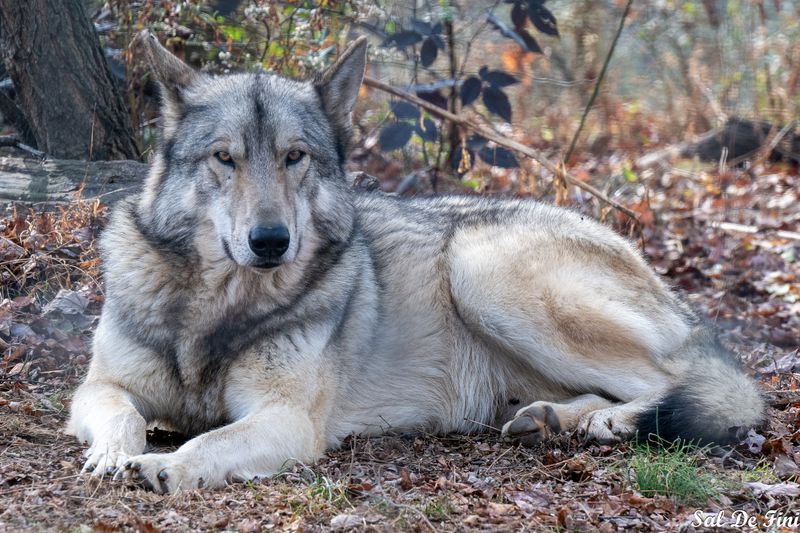
After hearing multiple visitors rave about the VIP tour option, I understood why people considered it worth the extra investment for a more intimate, personalized experience.
The private tours allow smaller groups, which means more one-on-one time with both the wolves and the knowledgeable guides who can answer every question without rushing.
Visitors on VIP tours often get access to different wolf packs, more time in each enclosure, and the kind of unhurried interaction that lets you really sink into the moment instead of feeling like you’re on a schedule.
Handlers take photos throughout, capturing those magical seconds when a wolf leans against your leg or looks directly into the camera with those piercing eyes.
Several people told me they’d done the VIP tour multiple times because each visit brought new experiences depending on which wolves felt social that particular day.
The flexibility of private bookings also means you can schedule around weather, ask for specific educational focus areas, or celebrate special occasions with an experience that beats any traditional party.
I watched a couple on their VIP tour absolutely glowing as they sat surrounded by wolves, and their guide mentioned it was a birthday gift that would clearly be remembered forever.
That level of personal attention transforms an already incredible encounter into something truly once-in-a-lifetime.
Supporting Conservation
Walking through Seacrest’s gift shop after my tour, I realized every purchase, every booking fee, every donation goes directly toward feeding, housing, and caring for animals who can’t survive on their own.
The preserve operates as a non-profit, which means they depend entirely on visitor support and community generosity to keep doing their vital conservation and education work.
Staff members openly discussed the challenges of running a wildlife sanctuary, including the significant costs of proper enclosures, veterinary care, food, and maintaining the property where these animals live.
I learned that many of the wolves came from situations where they’d been kept illegally as pets, rescued from inadequate facilities, or born in captivity and unable to be released into the wild.
Seacrest gives them permanent homes where they can live with dignity, proper nutrition, medical attention, and the company of their own kind.
Beyond just housing animals, the preserve educates thousands of visitors each year about wolf behavior, conservation needs, and the importance of protecting wild spaces and wildlife populations.
Every ticket purchased funds that mission, and I left knowing my visit had contributed to something far bigger than just my own unforgettable afternoon.
Supporting places like Seacrest means ensuring future generations can also experience the magic of meeting wolves face-to-face.