
This Florida Restaurant Clears The Menu Before Closing And Sends Everyone Home Happy
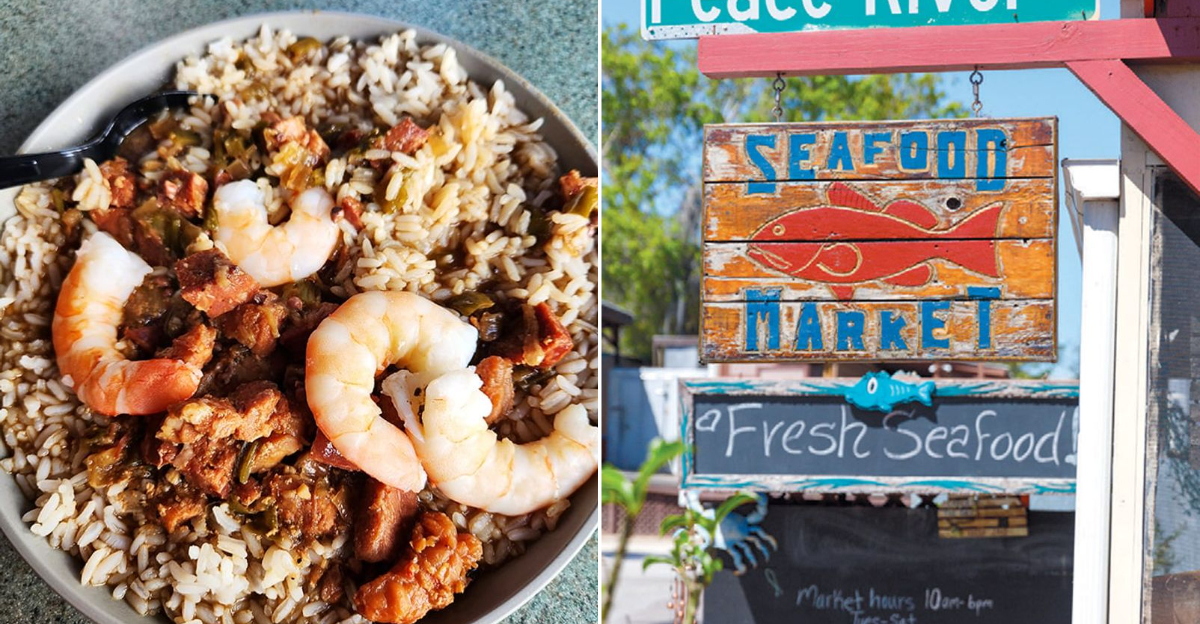
Peace River Seafood & Crab Shack moves on its own rhythm. The tide, the traps, the coolers, not the clock. The first time I showed up and learned they’d already sold out, the folks on the porch just nodded like this was the natural order of things.
And honestly, it is. When the catch is gone, the day is done, and everyone still leaves with buttery fingers and a story.
If you’re after seafood that tastes like it barely left the water, this guide will help you time it right and appreciate a cracker house that’s managed to keep its charm, its grit, and its standards beautifully intact.
Cracker House Dining Room That Feels Pure Old Florida
Walk into Peace River Seafood & Crab Shack and the floorboards say hello before anyone else. The cracker house bones, simple wood, breezy rooms, screened porches, feel like a postcard from 1950 that never faded.
There’s no pretense, just the gentle creak of chairs and the soft clatter of mallets meeting shells. You can see the day’s light slant through jalousie windows, turning baskets of lemons into tiny suns. The vibe sets expectations: what’s served here is close to the water, close to the bone, and refreshingly close to honest.
It’s a dining room that encourages sleeves rolled up and conversation unhurried. Old Florida isn’t a theme, it’s the architecture, the attitude, and the anchor of the meal.
Buckets Of Blue Crab With Mallets And Newspaper Tables
The signature tableau: a metal bucket of steaming blue crab, a mallet in your hand, and a table dressed in newspaper like a drop cloth for joy. At Peace River Seafood, the ritual is gloriously tactile: crack, pick, dip, repeat.
Staff walk newcomers through the technique, then let the rhythm take over. The crabs are local when in season, sweet and briny, more personality than garnish. Butter and house seasoning pull their weight without drowning the meat.
You’ll leave dotted with shell flecks and find that oddly satisfying. This is dinner as project, where conversation threads itself between taps and triumphs. When the last legs vanish, you understand why they sell out: it’s the kind of meal you can’t fake.
Daily Catch Boards That Slowly Empty As Service Rolls On
Keep an eye on the chalkboards; they tell the real-time story of the evening. Snapper, sheepshead, or blackened grouper, names appear with tally marks, then quietly erase as tables call dibs. The board isn’t marketing, it’s inventory in motion.
That’s the compact here: order what’s freshest, and respect that the sea isn’t a bottomless pantry. It creates a gentle urgency that feels more like a game than a scramble. Regulars read the board the way others read wine lists. If you see a fish you love, stake your claim early.
Watching the options dwindle becomes part of the theater, and proof that the line between dock and dinner is short, proud, and perishable.
Picnic Tables Under The Trees Beside Busy Duncan Road
Outside, picnic tables gather under scrappy shade trees, close enough to Duncan Road that you can hear life passing while you linger. It’s the perfect spillover for sunny days when the dining room hums. Baskets land, gulls comment from a distance, and the occasional breeze lifts the smell of garlic butter.
There’s fellowship in the open air, families trading mallets, neighbors waving across ketchup bottles. It’s not manicured; it’s practical and friendly, and that suits the menu just fine.
When the kitchen starts winding down, the picnic crowd senses it first, orders slow, stories lengthen, and the vibe tilts from hungry to satisfied. If you time it right, you get sunset, a clean plate, and that contented parking-lot smile.
Stone Crab Season Rush That Sells Out Before Sunset
When stone crab season hits (typically Oct–May), Peace River becomes a happy stampede. Claws come cracked, chilled, and bright with sweetness, the kind of delicate that doesn’t need help. Locals know to arrive early; once the claws are gone, that’s the ballgame.
Staff will tell you straight, no secret stash, no back door fix. It’s a ritual that respects the fishery and rewards punctuality.
Watching the last trays leave the pass feels celebratory, not frustrating, like a beloved neighborhood tradition completing its arc. If you’ve never timed dinner to a tide chart, this is your on-ramp. Plan, queue, savor, and accept the sell-out as part of the flavor.
Shrimp Platters Piled High From Local Charlotte Harbor Boats
The shrimp at Peace River tends to taste like it had a short commute, because it did. Boats out of Charlotte Harbor supply plump, snappy specimens that take well to steaming, frying, or blackening.
A platter arrives generous, with corn or slaw riding sidecar, and the shells slip off with cooperative ease. The sweetness is clean, mineral, and lightly oceanic; cocktail sauce is a condiment, not a disguise. Order early on busy nights, because shrimp is a crowd favorite and the first to disappear when coolers run light.
If you’re wavering, ask your server what’s shining that day. When they say shrimp, believe them, and enjoy the rare pleasure of seafood that still remembers the water.
Fresh Fish Dinners Built Around Whatever Came In That Morning
At this cracker house, fish dinners orbit the morning’s catch. One day it’s grouper grilled with lemon and butter; another, mahi blackened, edges just char-kissed. The preparation stays simple to let texture and flavor do the talking.
Portions are hearty, sides straightforward, hush puppies, slaw, maybe red potatoes, proof that comfort and quality play well together. Servers steer you to what’s singing on the line. If supply dips, they’ll say so plainly, and that honesty tastes as good as the fish.
Order with trust, then let the plate recalibrate your idea of freshness. You won’t need a sauce dictionary, just a fork and curiosity.
Seafood Market Cases That Thin Out As Locals Stock Up
Peace River isn’t just a restaurant; it’s a market, too, and the glass cases tell a parallel story. Fillets nest on ice, shrimp mounded like pink pebbles, blue crab looking ready for a boil.
As dinner service hums, locals slip in to buy for home, politely accelerating the sell-out. You’ll see selections narrow in real time, like a tide moving out. It’s oddly reassuring: the community trusts this place enough to shop here.
If you plan to cook later, swing by early and ask what’s best that day. The market is the kitchen’s heartbeat, and when the beat slows, you know closing time isn’t far behind.
Handwritten Sold Out Signs When The Coolers Finally Go Quiet
The moment of truth arrives quietly: a handwritten note taped to the door, or a chalk flourish that reads “Sold Out.” No drama, just clarity. The kitchen has emptied the coolers with purpose, not waste. Regulars nod; newcomers take photos.
It’s a small ceremony that aligns with their mission, serve what’s best, stop when it’s gone. If you miss out, you’ve still learned something about timing and trust in a place that refuses to serve yesterday’s fish.
Check hours, but also check your instincts: earlier is kinder to your craving. That sign isn’t a setback; it’s a promise kept.
Casual Plastic Bibs And Crackers That Turn Dinner Into A Project
There’s something delightfully unserious about tying on a plastic bib, then brandishing a crab cracker like a tiny tool of destiny. Peace River leans into the tactile joy of shellfish: you work a little, laugh a lot, and earn each bite.
Tools arrive like props, mallets, crackers, picks, quietly promising a mess you’ll be proud of. The staff keeps paper towels coming and winks at the inevitable splatter.
It’s an experience that disarms fussy diners and invites kids, grandparents, and date nights into the same gleeful club. You’ll leave spotted and happy, proof that participation improves flavor.
Key Lime Pie Slices Waiting As A Sweet Finish After The Feast
After shells and spice, Key lime pie slides in like a cool sea breeze. The slice here leans classic: tart, creamy, no neon green nonsense, with a crumb crust that doesn’t crumble into dust.
It’s the palate reset you didn’t know you needed, especially after a parade of butter and brine. Share if you must, but one fork often leads to two.
It’s a local-flavored sendoff that lets the seafood’s brightness linger without shouting. Even when the seafood sells out, the pie can be your consolation prize, and a very decent one at that.
Repeat Regulars Treating An Early Sell Out Like A Good Fishing Day
Listen to the regulars and you’ll hear the metaphor: some days the fish bite early. An empty menu is celebrated like a slam back at the dock.
They compare notes, who snagged the last grouper throat, who split the biggest shrimp platter, and congratulate the latecomers for at least trying.
It’s a playful culture of acceptance around a finite resource. The sell-out isn’t scarcity theater; it’s a shared understanding of how fresh seafood works. Becoming part of that rhythm is half the fun.