
This Forgotten Arizona Boomtown Is A Living Slice Of Old West Gold Rush History
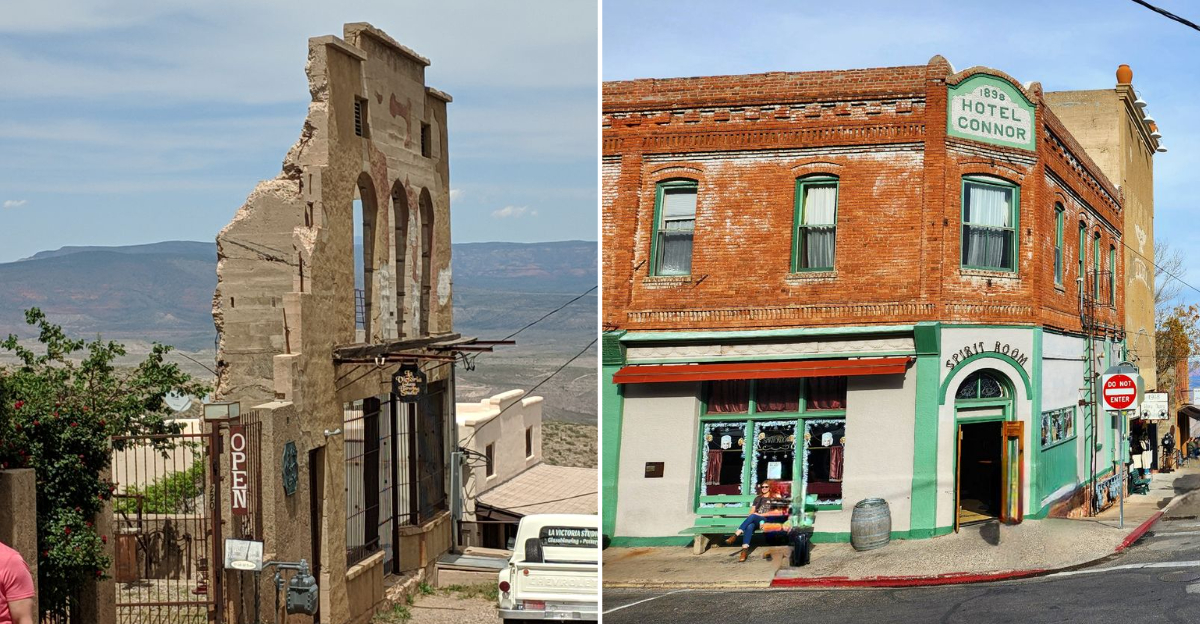
I never expected to stumble into a town where the past feels so alive, but Jerome, Arizona, proved me wrong. Perched on a hillside like a relic frozen in time, this old mining boomtown somehow blends crumbling historic buildings with a quirky arts scene.
Walking its crooked streets, you can almost hear the echoes of gold rush days, while galleries, cafés, and tiny shops remind you the town is very much alive.
Jerome is one of those rare places where history isn’t just a story. It’s something you can touch, see, and even taste.
Past and present mingle effortlessly in this Arizona town, creating a place full of surprises.
A Town That Literally Slid Down The Mountain
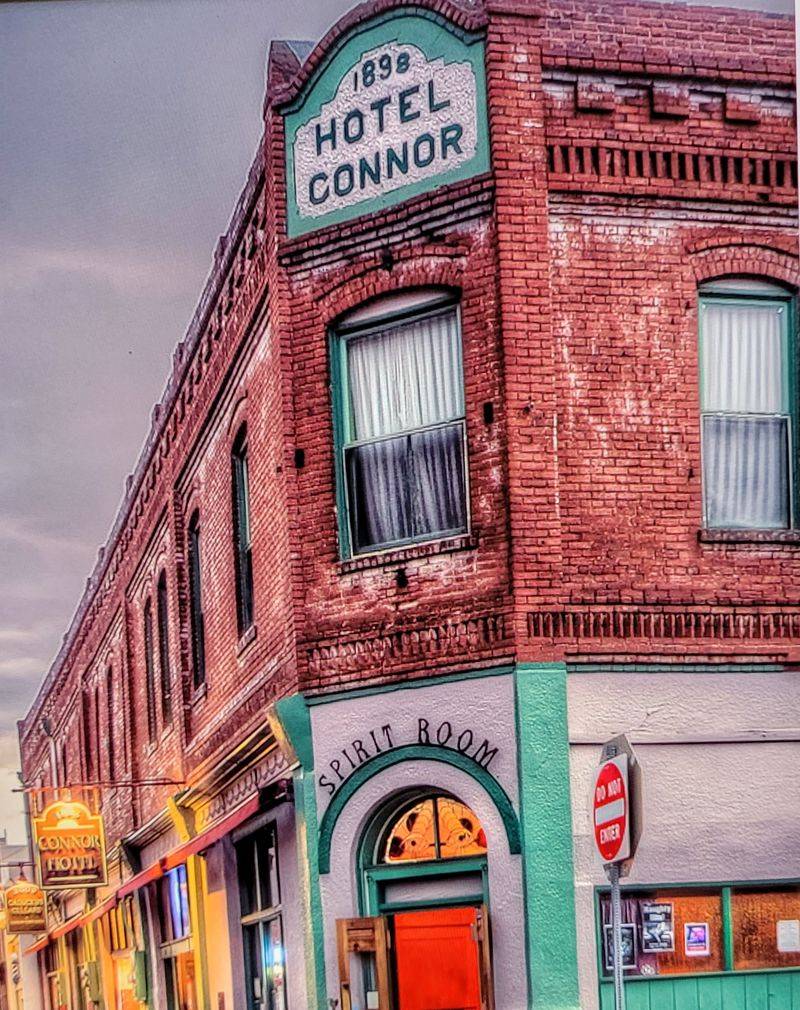
Walking through Jerome feels like exploring a tilted funhouse, and there’s a fascinating reason for that peculiarity. Years of underground blasting from copper mining operations literally caused buildings to shift, slide, and relocate themselves down the mountainside.
The town jail famously moved 225 feet from its original foundation, earning it the nickname “the traveling jail.”
I remember standing in front of one old building where the floor slanted at such an angle that marbles would roll right across the room.
My friend and I actually tested this theory with a penny, and sure enough, it zipped across the warped floorboards like it was on a mission.
The shopkeeper just laughed and said she’d gotten used to everything being slightly off-kilter after twenty years.
What makes this geological drama even more interesting is that some structures are still slowly moving today. Engineers have stabilized most of the historic buildings, but you can still see the evidence of Jerome’s restless nature in cracked walls and doorframes that don’t quite line up.
It’s like the mountain itself is a living, breathing entity that occasionally shrugs its shoulders, reminding everyone who really runs the show up here on Cleopatra Hill.
From Boom To Bust To Bohemian Paradise

Jerome’s population roller coaster tells a story more dramatic than any Hollywood script. At its peak in the 1920s, over 15,000 people called this mountainside home, making it Arizona’s fourth-largest city.
Copper flowed like water, money changed hands faster than you could count it, and the town buzzed with round-the-clock activity from the mines.
Then came the crash. By 1953, when Phelps Dodge finally closed the last mine, Jerome’s population had plummeted to a mere 50 souls.
The town became a ghost of its former self, with abandoned buildings and empty streets that whispered stories of better days. Most people wrote Jerome off as just another dead mining town destined to crumble into dust.
But here’s where the story gets interesting. In the 1960s and 70s, artists and free spirits discovered Jerome’s cheap real estate and jaw-dropping views.
They moved in, set up studios, and began transforming the forgotten boomtown into an artistic haven. Today, Jerome boasts around 450 residents, dozens of galleries, and a thriving tourism industry that celebrates both its mining heritage and creative renaissance.
The Douglas Mansion And Its Million-Dollar View

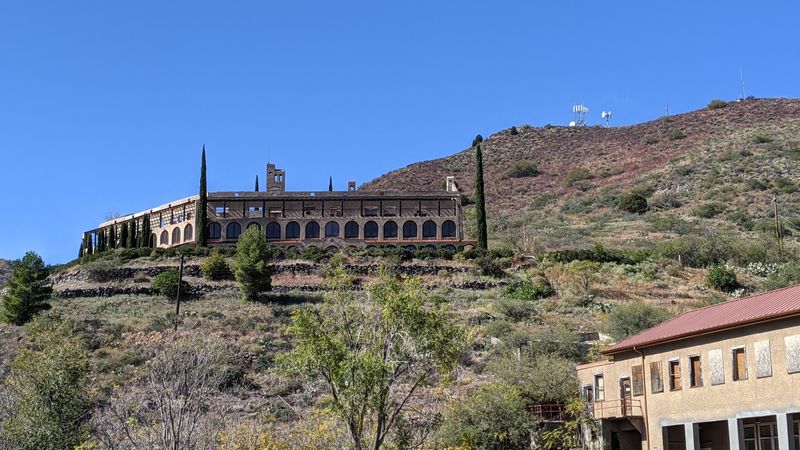
Sitting at Jerome State Historic Park, the Douglas Mansion commands attention like a castle overlooking its kingdom. James “Rawhide Jimmy” Douglas built this adobe beauty in 1916 for his family, and I’ve got to say, the man had impeccable taste in real estate locations.
The mansion sprawls across the hillside with windows that frame the Verde Valley like living paintings.
When I visited, I spent nearly an hour just standing on the terrace, mesmerized by the panoramic vista that stretches for miles.
On clear days, you can see all the way to the San Francisco Peaks near Flagstaff, over 60 miles away. The mansion now houses a museum dedicated to Jerome’s mining history, with exhibits showcasing ore samples, mining equipment, and photographs from the town’s heyday.
What struck me most was learning that Douglas built this as a hotel rather than a private residence, hoping to impress potential investors and visiting mining executives.
The strategy worked brilliantly. The mansion’s elegant architecture and strategic location helped convince countless businessmen that Jerome was worth their investment, fueling the town’s continued prosperity for years.
Mine Museum: A Journey Through Jerome’s Underground Empire
Located in a former fashion salon building, the Mine Museum packs more fascinating history into its compact space than seems physically possible.
This little treasure trove documents Jerome’s transformation from a small mining camp in the 1870s to one of Arizona’s copper powerhouses. Original mining equipment, vintage photographs, and detailed mineral displays tell the story of the men who dug deep into Mingus Mountain.
During my visit, I became completely absorbed by a display showing the massive network of tunnels beneath Jerome. Over 88 miles of underground passages honeycomb the mountain, creating a subterranean city that rivals the one above ground.
The exhibit included actual miners’ tools, lunch pails, and even carbide lamps that once illuminated those dark corridors.
One elderly gentleman visiting at the same time turned out to be a former miner’s grandson. He shared stories his grandfather told about working 12-hour shifts in sweltering conditions, emerging from the mines covered head to toe in red copper dust.
His tales brought the museum displays to life in ways no placard ever could, reminding me that behind every artifact lies a human story worth remembering.
Art Galleries Galore In Unlikely Places
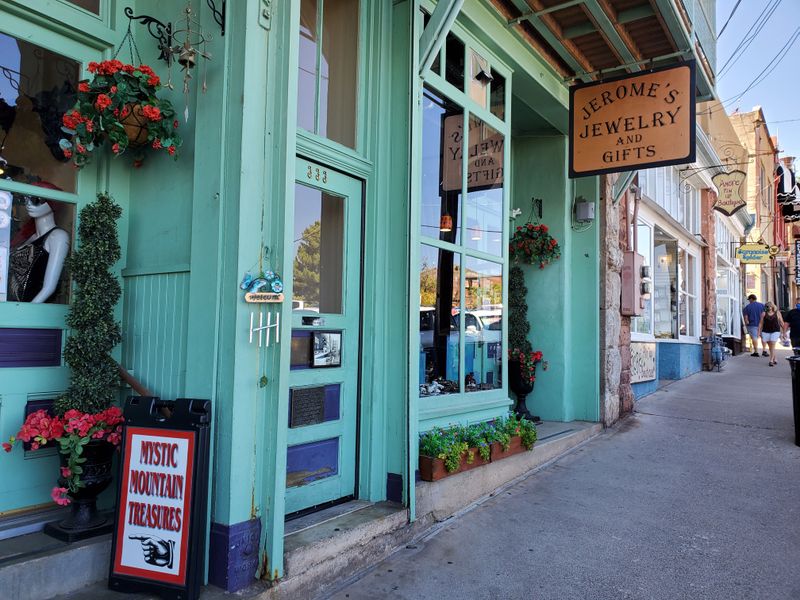
Jerome has reinvented itself as Arizona’s largest ghost town and an artistic hotspot that punches way above its weight class.
Over thirty galleries and studios crowd the steep streets, showcasing everything from traditional Western paintings to avant-garde sculptures made from recycled mining equipment.
Artists have claimed former brothels, general stores, and boarding houses as creative spaces, breathing new life into structures that might otherwise have collapsed.
I wandered into one gallery housed in what used to be a hardware store, where the artist had incorporated the building’s original shelving and display cases into her installation pieces.
She explained how Jerome’s creative community thrives on this blend of preservation and innovation, respecting the past while fearlessly experimenting with new forms.
Another studio I visited occupied a former gambling hall, and you could still see faded card suit symbols painted on the ceiling beams.
What makes Jerome’s art scene special isn’t just the quality of work, though that’s certainly impressive. It’s the way creativity has become the town’s new economic engine, replacing copper with culture and transforming potential ruins into vibrant spaces that attract visitors from around the world.
Audrey Headframe Park’s Vertigo-Inducing Views

Nothing quite prepares you for standing on a glass platform suspended over a 1,900-foot-deep mine shaft. Audrey Headframe Park features exactly this heart-stopping experience, and I’ll admit my knees got a little wobbly when I first stepped onto that transparent floor.
The headframe structure itself dates back to 1918 and once hoisted miners and ore up and down the Audrey Shaft.
Looking down through the glass, you’re peering into genuine Old West industrial archaeology. The shaft drops straight down into darkness, representing just one entry point into Jerome’s vast underground labyrinth.
Interpretive signs around the park explain the mining process, but honestly, standing over that abyss does more to convey the danger and difficulty of mining work than any description ever could.
The park also offers some of the best views in Jerome, which is saying something considering the entire town is basically a scenic overlook.
From here, the Verde Valley spreads out below like a topographical map, with Sedona’s red rocks visible to the east. I visited at sunset, and watching the light paint the valley in shades of gold and crimson while standing above that ancient mine shaft created a moment I’ll never forget.
Tuzigoot National Monument: Ancient Neighbors
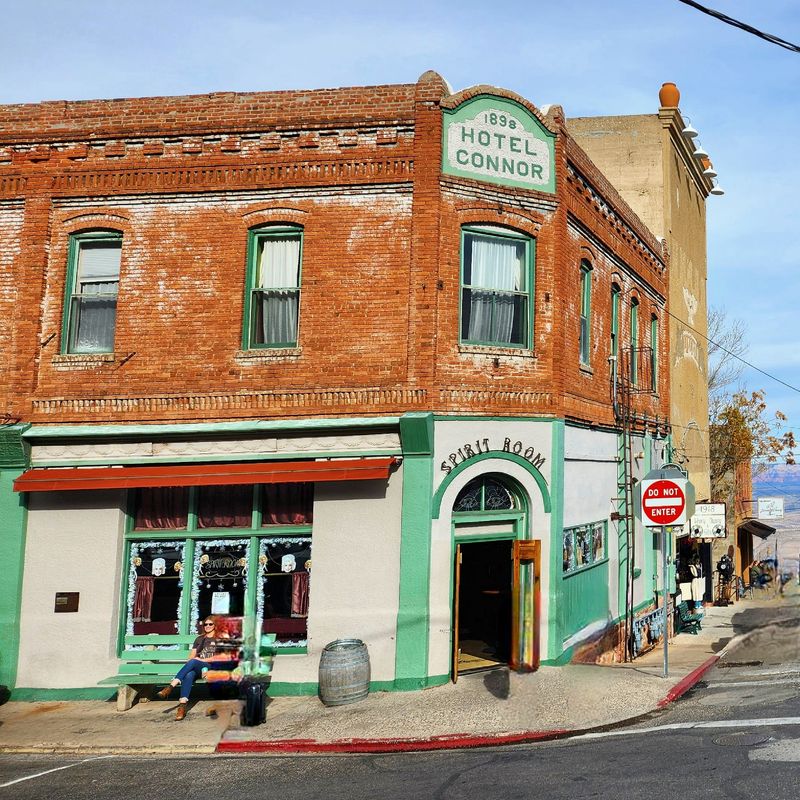
Just down the mountain from Jerome sits Tuzigoot National Monument, a sprawling pueblo ruin that predates the mining town by roughly 600 years.
The Sinagua people built this hilltop village between 1000 and 1400 CE, constructing over 110 rooms from limestone and mud mortar.
Standing among these ancient walls, you realize Jerome’s story is just the latest chapter in a much longer tale of humans drawn to this region’s resources.
I hiked the trail that winds through the ruins on a crisp morning, with Jerome visible on the mountain above. The contrast struck me powerfully – two communities separated by centuries but connected by the same impulse to extract value from this land.
The Sinagua farmed the Verde Valley and likely mined salt and other minerals. Jerome’s miners dug for copper.
Different resources, different technologies, but the same human drive to make a living from challenging terrain.
The monument’s visitor center displays Sinagua artifacts including pottery, tools, and jewelry that showcase their sophisticated culture.
Walking back to my car, I kept glancing up at Jerome clinging to its hillside, wondering what future visitors might think when they explore our ruins centuries from now.
The Steep Streets That Test Your Brakes
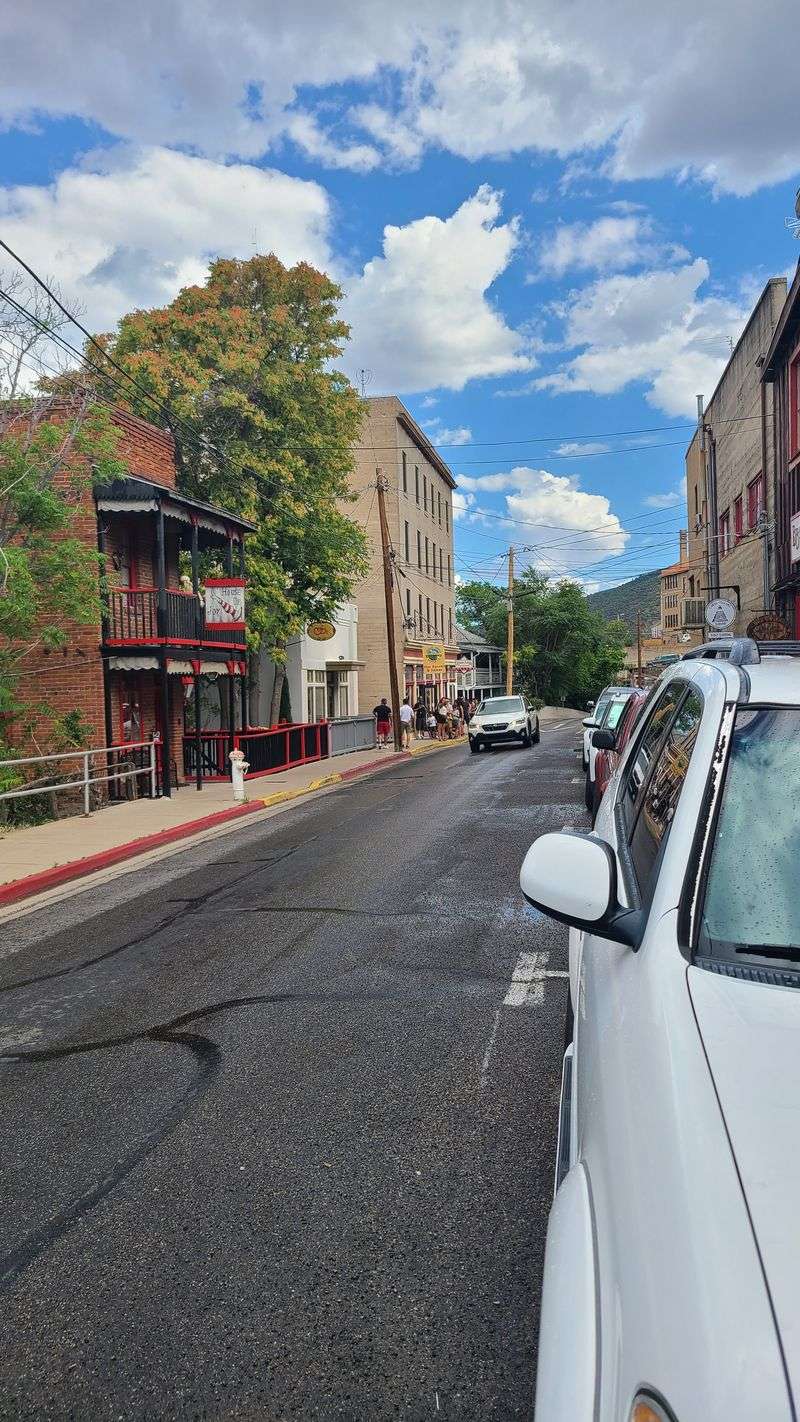
Fair warning: driving through Jerome will give your vehicle’s braking system a serious workout. Main Street climbs the mountain at grades that would make San Francisco nervous, with switchbacks so tight you’ll swear your car is going to tip over.
Parking requires either exceptional skill or exceptional faith in your emergency brake, and I watched more than one tourist nervously check their wheels multiple times before walking away from their vehicle.
My first attempt at navigating Jerome’s streets resulted in a minor panic when I stalled my manual transmission car on a particularly steep incline with vehicles parked inches from my bumper on both sides.
A local resident calmly walked over, offered some encouragement, and directed traffic around me while I regained my composure.
She mentioned this happens at least once a day during tourist season, and the community has gotten pretty good at helping flustered visitors.
But here’s the thing – those challenging streets are part of Jerome’s charm. They force you to slow down, pay attention, and experience the town at a pace that matches its historic character.
You can’t rush through Jerome, and that’s entirely the point.
The mountain demands respect, the streets require focus, and the town rewards those patient enough to navigate its vertical geography.