
This Forgotten Ghost Town Is Hidden In Colorado And Feels Straight Out Of A Nightmare
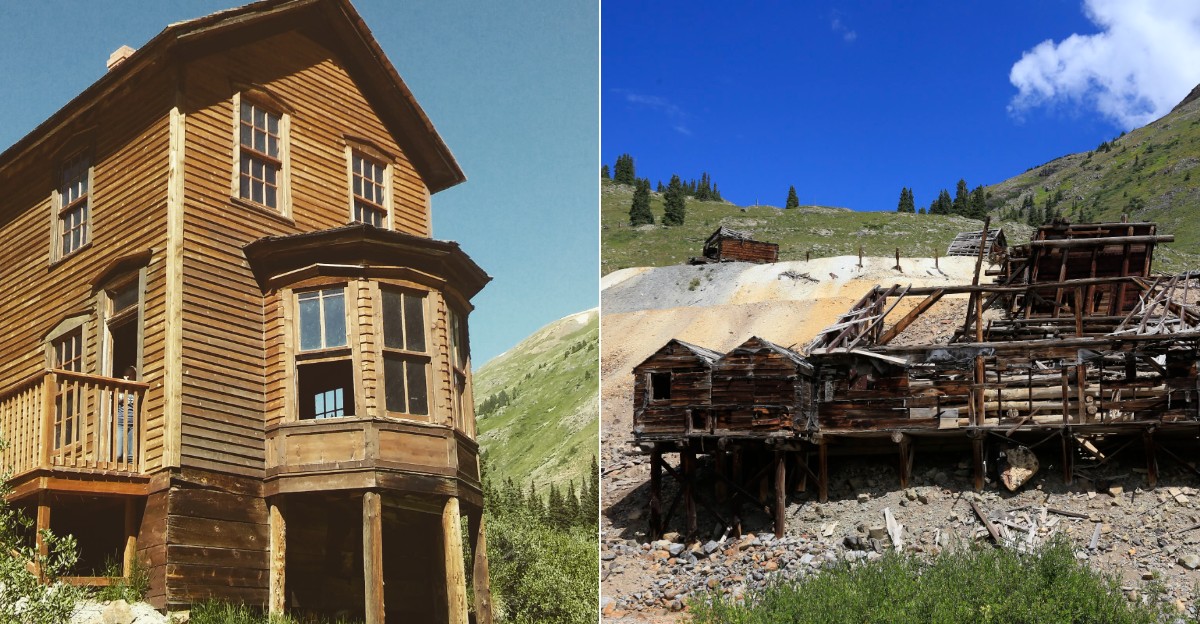
In 1884, a blizzard reportedly raged for 23 days and buried a tiny mountain town under about 25 feet of snow. The people still living there had to dig tunnels just to get from one building to another.
That town still stands today, sort of. Its empty cabins sit above 11,000 feet in the San Juan Mountains of Colorado.
Silver dreams built it, and harsh winters slowly emptied it.
I can’t imagine shoveling a path to my neighbor’s door through snow taller than a two-story house. Yet a handful of sturdy buildings outlasted every storm.
Their windows still stare out at the peaks like they’re waiting for someone.
I believe the best ghost towns make you feel a little uneasy and a lot curious. This one manages both.
So who’s brave enough to visit?
A Postal Clerk Gave This Spooky Spot Its Name
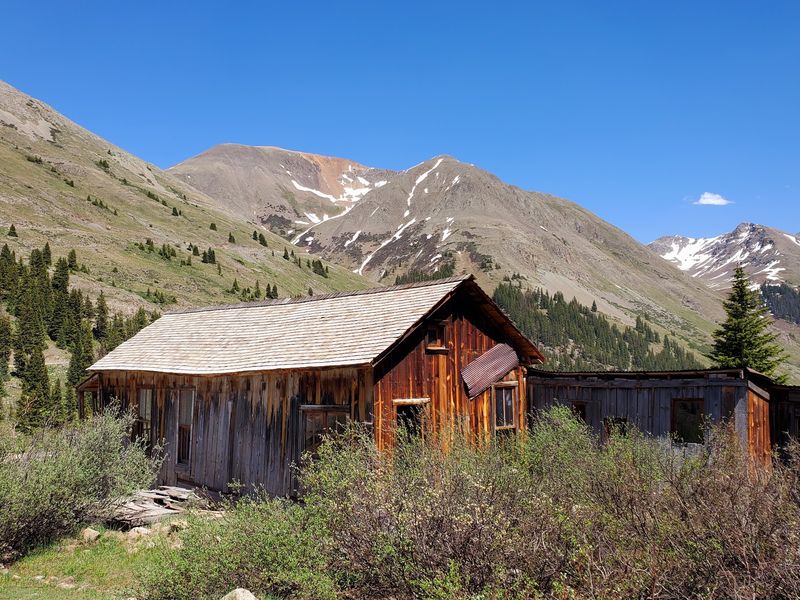
Prospectors built the first log cabin here in 1873. They called their camp Three Forks of the Animas, since three river forks meet nearby.
Then the U.S. Post Office Department stepped in around 1875.
The shorter name Animas Forks stuck, and it’s the one on maps today. I like how a bit of mail paperwork gave the place such an eerie, memorable title.
The Animas River name itself adds extra chills. In Spanish, animas refers to souls or spirits.
So you’re basically visiting a town named after souls at a river fork. That’s a lot of mood packed into two words.
The setting matches the name perfectly. Animas Forks sits in San Juan County, about 12 miles northeast of Silverton.
Steep, bare mountains rise on every side. The river runs past the silent buildings like it never got the memo that everyone left.
It helps to learn this backstory before you go. Knowing the town grew from a single cabin makes the empty streets feel more personal.
Every structure started as someone’s big bet on the mountains. Some of those bets still stand, just barely, waiting for you to notice them.
Your Lungs Will Notice The Altitude Before Your Eyes Do
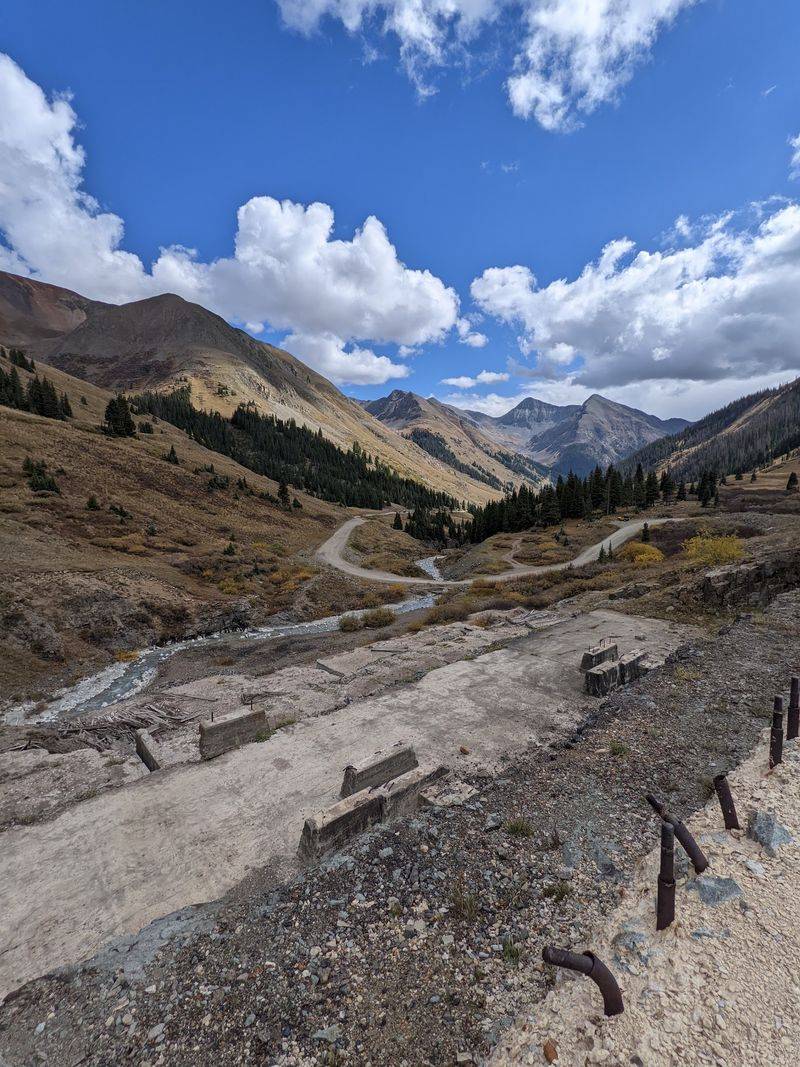
About 11,200 feet. That’s the elevation of this old camp, which makes it one of the highest mining camps in North America.
Numbers like that sound impressive on paper. Up here, they feel very real.
At this elevation, lower atmospheric pressure means less oxygen is available with each breath, so even a short walk between cabins can leave you puffing. Take it slow, and nobody will judge you.
Drink plenty of water before and during your trip. Altitude can bring headaches, dizziness, or tiredness, especially if you just arrived from lower ground.
Spending a night in a lower mountain town first can help your body adjust.
Sunshine also hits harder at this elevation. Pack sunscreen, sunglasses, and a hat, even when it feels cool outside.
Weather in the high country of Colorado can flip from sunny to stormy fast, so bring a warm jacket and rain layer too.
The payoff is huge, though. Tall peaks wrap around the valley, and the empty buildings look tiny against them.
That contrast is part of what makes the place so haunting. You feel small, a little breathless, and very far from everything familiar.
Bring A High-Clearance Ride And A Sense Of Adventure
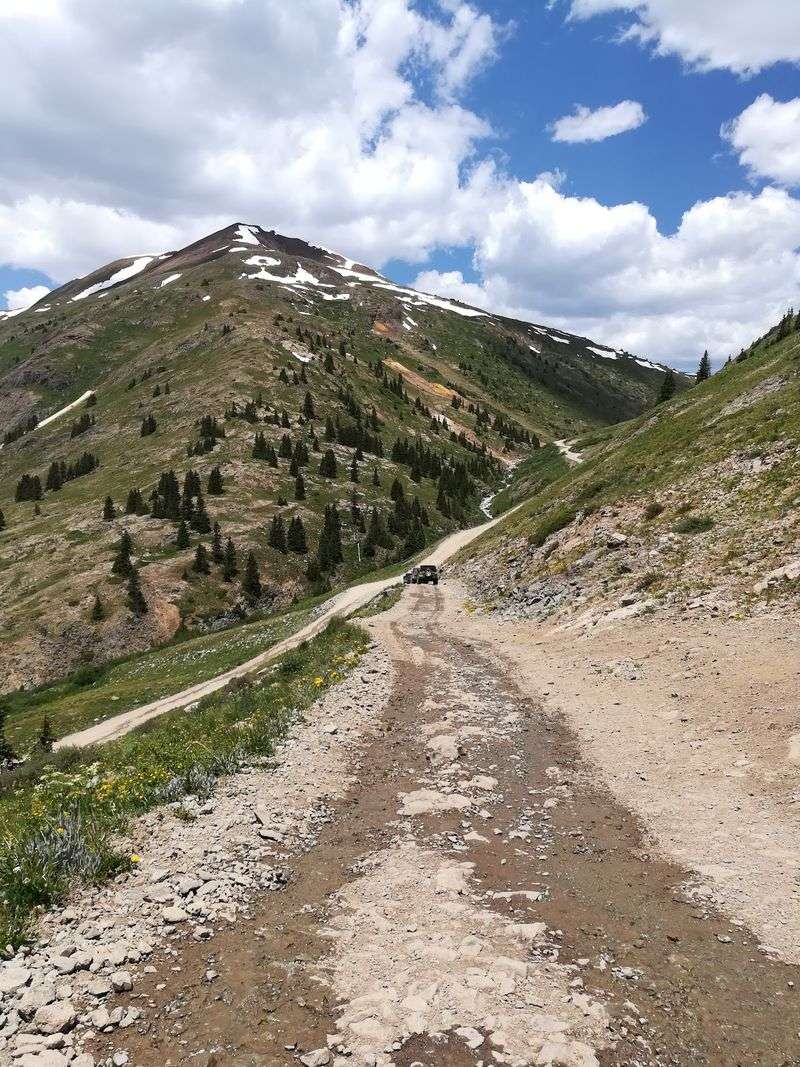
Paved roads don’t reach this place. To find Animas Forks, you’ll head about 12 miles northeast of Silverton on an unpaved mountain road.
The official map address is simply Colorado 81433, which tells you how remote it is.
In summer, some two-wheel-drive vehicles can manage the route from Silverton. Still, a high-clearance 4×4 is the smarter pick for the rocky stretches.
If you want to explore farther, you’ll definitely want one.
The town is a well-known stop on the Alpine Loop. This roughly 65-mile network of rough backcountry roads links Silverton, Ouray, and Lake City.
Many travelers rent jeeps or join guided tours to tackle it.
Timing matters a lot here. The best season usually runs from late spring or early summer through October.
Heavy snow typically closes the roads during the colder months, so winter visits are basically off the table.
Plan ahead before you roll out. Download maps, since cell service can be spotty in the mountains.
Fill your gas tank, pack snacks, and leave early in the day. Afternoon storms are common in summer, and you’ll want plenty of daylight for the bumpy ride back.
Hundreds Of Hopeful Miners Once Crowded These Slopes
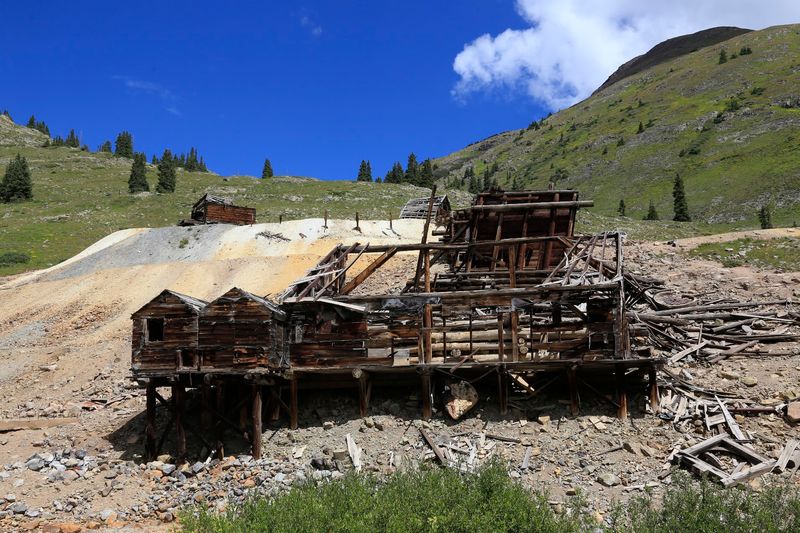
Silence fills the valley now, but it wasn’t always this quiet. By 1876, the camp had around 30 cabins, a hotel, a general store, and a post office.
Things really picked up in the 1880s. By 1883, about 450 people lived in Animas Forks.
That’s a busy crowd for a spot perched so high in the mountains. Miners came chasing silver and gold, hoping to strike it big.
The town even had its own newspaper. The Animas Forks Pioneer was published from 1882 to 1886.
Picture reading local news while snow piled up outside your cabin door. Talk about a cozy, slightly terrifying morning routine.
Knowing these numbers changes how the site feels. Those few empty buildings were once part of a lively place.
Neighbors shared gossip, merchants sold supplies, and families tried to build real lives at the edge of the sky.
As you wander, try to spot where other structures might have stood. Old foundations and open spaces hint at a much bigger town.
The gaps between buildings can feel just as spooky as the buildings themselves. Each empty patch held someone’s hopes.
Winter Here Was The Stuff Of Real Nightmares
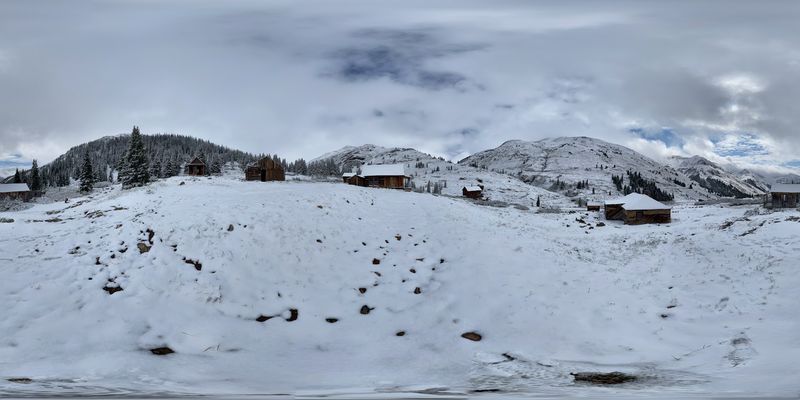
Twenty-five feet of snow. That’s roughly how much a legendary 23-day blizzard dumped on the town in 1884.
Residents dug tunnels between buildings just to move around.
Now that’s a scary story, and no ghosts were even needed. Most people didn’t stick around to face winters like that.
Many residents moved down to Silverton each fall to escape the worst cold. Yes, Silverton counted as the warm option.
Think about daily chores under those conditions. Hauling water, finding firewood, and staying fed would have been exhausting.
Supplies arrived over rough trails, and storms could cut off travel for long stretches. Toughness wasn’t optional up here.
That history adds real weight to a visit. When you stand beside the cabins, look at how close together some sit.
Tight spacing made sense when every trip outside was a battle with the weather.
Even in summer, the mountains can remind you who’s in charge. Storms roll in quickly, and temperatures drop fast.
Keep an eye on the clouds and pack layers. You’ll appreciate your warm jacket and a heated car ride home a lot more after learning these stories.
Fires, Failed Mills, And A Town That Slowly Went Quiet
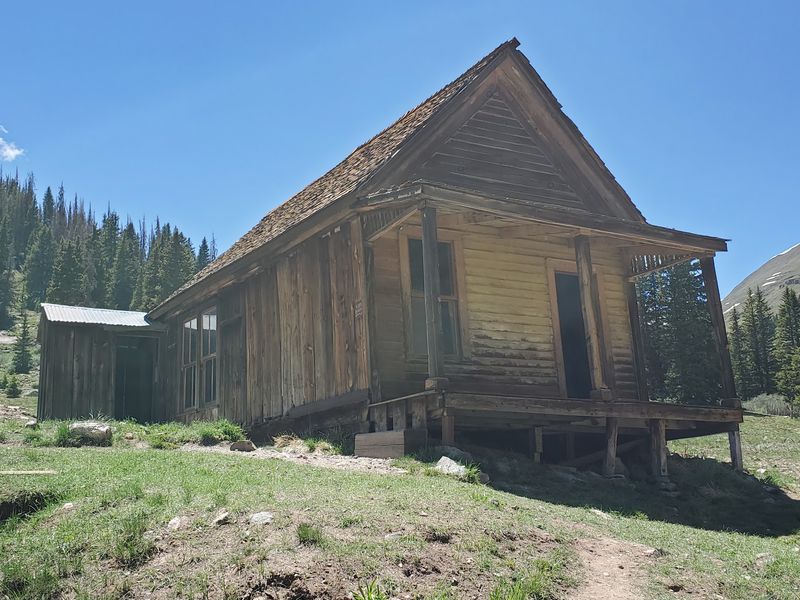
Boom towns rarely stay booming. As mining profits shrank, Animas Forks began to fade, one empty cabin at a time.
A big hope arrived in 1904 with the Gold Prince Mill. It was built to process ore from nearby mines.
Sadly, the mill closed in 1910, just six years later. Its remaining foundations still hint at how large the operation was.
Fire hit the town hard too. Major blazes in 1891 and 1913 destroyed many buildings.
In a place built mostly from wood, flames could spread quickly. Each loss made rebuilding harder for those who stayed.
The post office shut down for good in 1915. By the 1920s, the town was mostly abandoned.
Wind, snow, and time took over where miners left off.
Here’s the good news. The Bureau of Land Management now cares for the site, and Animas Forks joined the National Register of Historic Places in 2011.
That’s a big honor for a town that once seemed forgotten. Its quiet ending turned into a second life as one of Colorado’s most fascinating places to explore history.
That Bay Window House Will Stare Right Back At You
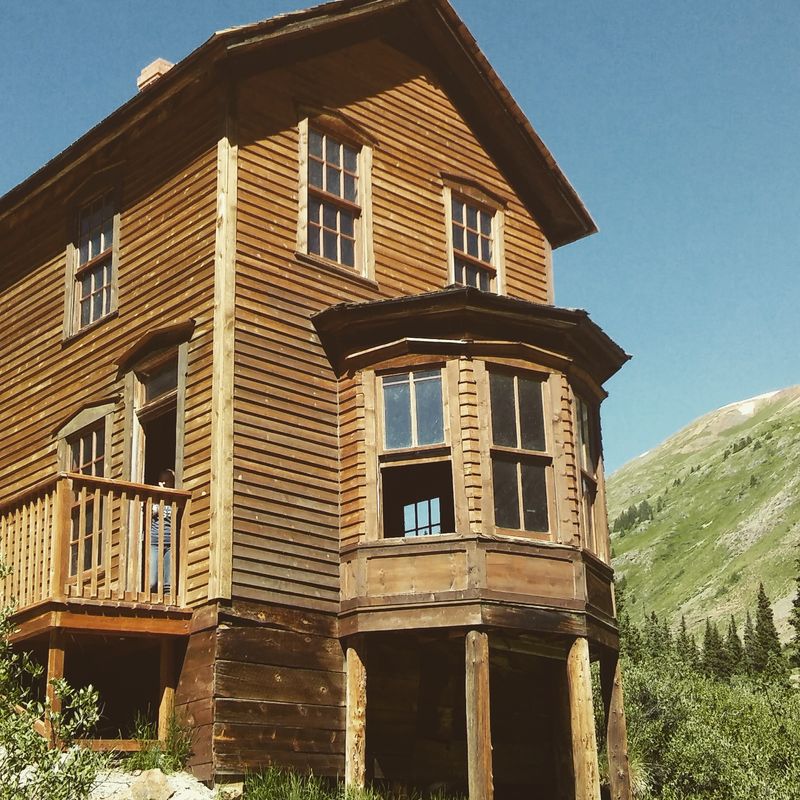
Every ghost town needs a star, and here it’s the William Duncan House. This two-story wooden home has a bold bay window that grabs attention right away.
Most mining cabins were small and simple. A fancy window like that showed the owner had some money and style.
Today, the empty frame looks out over the valley like a watchful eye. Creepy?
A little. Photogenic?
Absolutely.
Stabilization work since the late 1990s helped keep this house and others standing. Crews have worked carefully to protect the old wood and frames.
That effort means you can still admire real 1800s mining-era construction up close.
Bring your camera and try different angles. Shots from the front show off the bay window best.
Wider photos that include the mountains behind capture how lonely the house really looks.
Please treat the building gently while you explore. Don’t climb on walls, carve names, or take souvenirs.
These structures are fragile, and every visitor plays a part in protecting them. Leave the house looking exactly as you found it, so the next person gets that same shiver when they first see that window.
Peek Inside A Jail And A House Famous For Plumbing
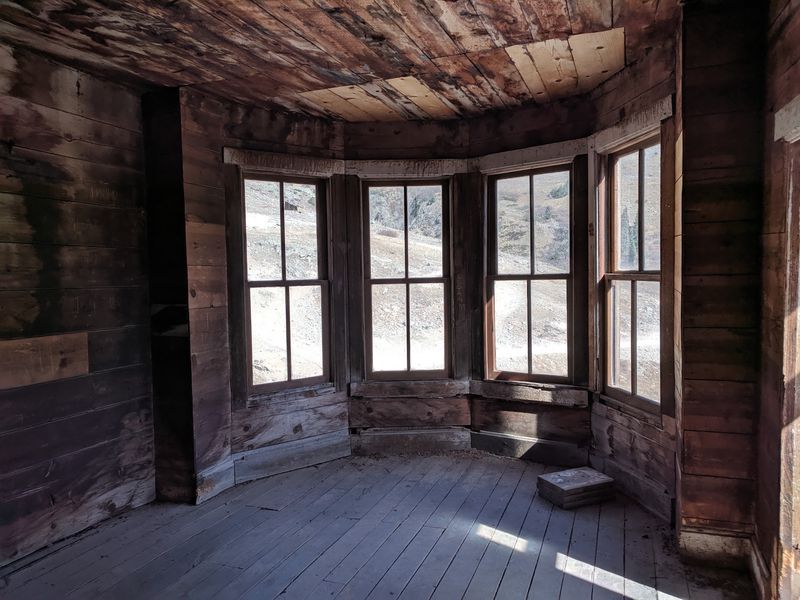
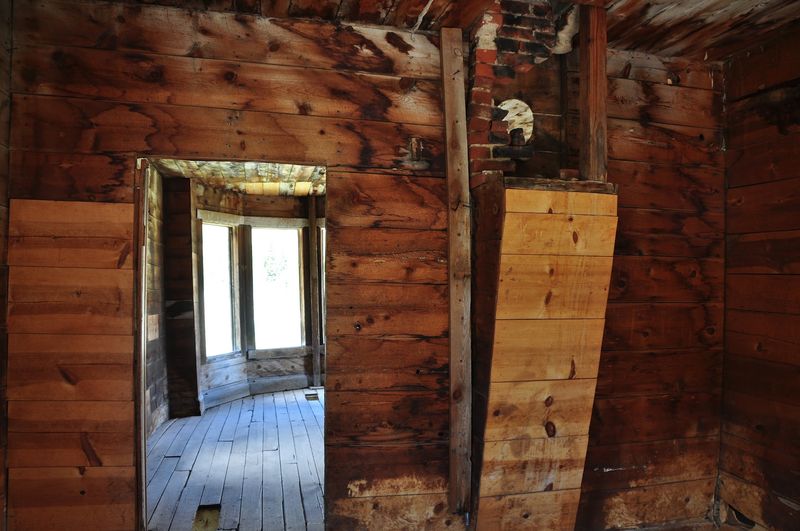
Nine buildings still stand at Animas Forks, and visitors can explore them freely. Each one offers a different glimpse into mountain life long ago.
The town jail is a favorite stop. It’s a small reminder that even a remote camp needed law and order.
Standing near it, you can almost imagine some rowdy miner cooling off after a bad night.
Then there’s the Gustavson House. It’s remembered for its unusual indoor outhouse, connected to the living quarters by an enclosed passageway.
Most folks dealt with chilly outhouses, so this was seriously fancy living. Honestly, during a 23-day blizzard, I’d pay a lot for that feature too.
Several old cabins round out the collection. They’re simpler, but they show how most residents actually lived.
Look for small details like window placement, door sizes, and building materials.
Take your time moving from one structure to the next. Rushing means missing the little touches that make each building unique.
Watch your step too, since the ground can be rocky and uneven. Sturdy shoes are a must.
Your ankles will thank you after a long afternoon of ghost town wandering.
Grab A Brochure And Let The Eerie Mood Sink In
Start your visit in the parking area. The Bureau of Land Management offers interpretive brochures and maps there to guide you through the site.
These handouts make a big difference. They help you match each building with its story, so you’re not just staring at old boards.
Learning who lived where turns a quick stop into a real history lesson.
Now for the spooky part. Some people say they feel an otherworldly presence among the empty buildings.
Whether you believe that or not, the silence alone can raise goosebumps. Wind whistling through gaps in old walls doesn’t exactly calm the nerves.
The scenery balances out the chills. Rugged peaks, rushing water, and wide skies make Animas Forks one of the most striking stops in Colorado.
Many travelers come for the off-road adventure and leave talking about the views.
Plan to stay a while instead of snapping a photo and leaving. Sit quietly for a few minutes and just listen.
You’ll hear the river, the wind, and maybe a creak or two. Whatever you feel up there, this mountain ghost town will likely follow you home in your thoughts.