
This Georgia Landmark Is A Giant Stone Eagle Believed To Be Around 2,000 Years Old
Someone, thousands of years ago, looked at a pile of white quartz rocks and apparently thought, “You know what this needs? Wings.” And somehow, that’s exactly what happened.
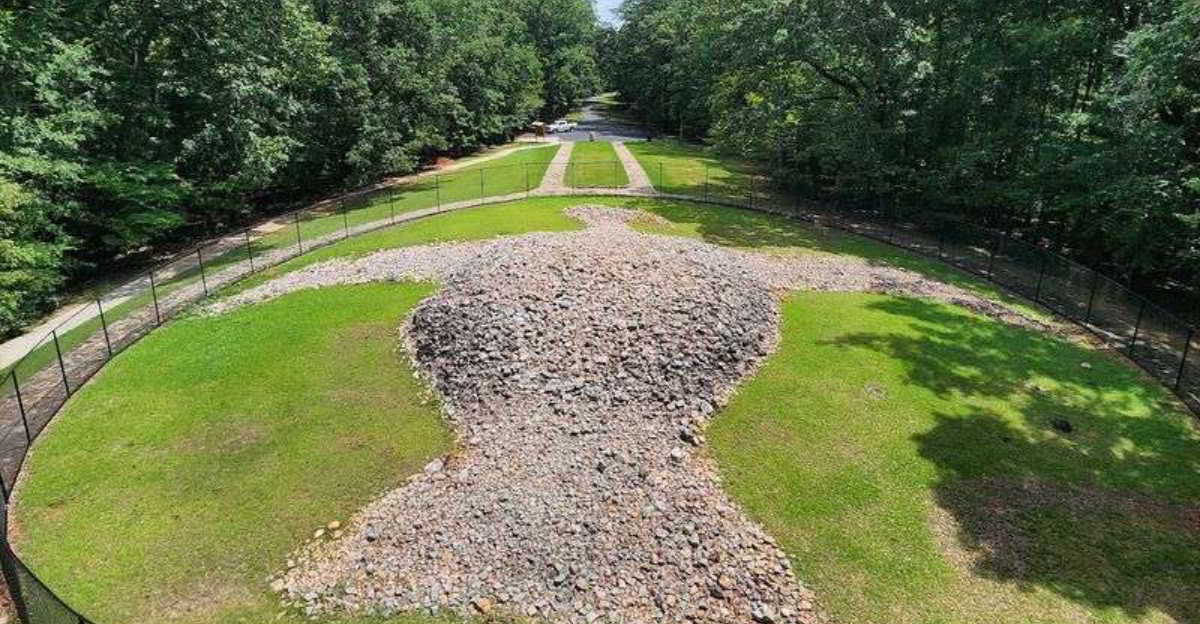
Hidden in central Georgia is a massive bird-shaped effigy made entirely from stones, stretching roughly 120 feet from wingtip to wingtip.
Archaeologists place it in the Middle Woodland period, meaning people were building this thing centuries before Georgia was anything resembling the Georgia we know today.
Even more fascinating? We still don’t have a definitive answer for why it was built.
It may have held religious or ceremonial meaning, but the people who created it didn’t exactly leave behind an instruction manual. Today, you can climb the nearby observation tower and look down at the ancient bird below.
A giant stone mystery that has been sitting there for roughly two millennia.
The Ancient Age That Makes Rock Eagle Truly Mind-Blowing
Some things in life make you feel wonderfully small, and learning the age of Rock Eagle is absolutely one of them.
This incredible effigy mound is estimated to have been constructed somewhere between 1000 BC and AD 1000, placing it firmly in the Woodland Period of Native American history.
That means this stone bird could be anywhere from 1,000 to 3,000 years old. Early scholars once suggested it might even be 5,000 years old, which would make it one of the oldest human-made structures in North America.
Even at the more conservative estimate, the timeline is staggering.
Rock Eagle stands as one of Georgia’s oldest known Indigenous mounds, surpassed only by the Sapelo Shell Ring Complex along the Georgia coast. It significantly predates the Mississippian, Creek, and Cherokee cultures that many people associate with the region.
The builders remain unknown, though most archaeologists connect the mound to a unique group of Woodland Period people. Whoever they were, they left behind something truly extraordinary.
Standing near this ancient site, you can almost feel the weight of centuries pressing gently down on your shoulders.
The Jaw-Dropping Size Of This Stone Giant
Okay, so picture this: a bird so massive that its wingspan matches a commercial airplane. That is not an exaggeration.
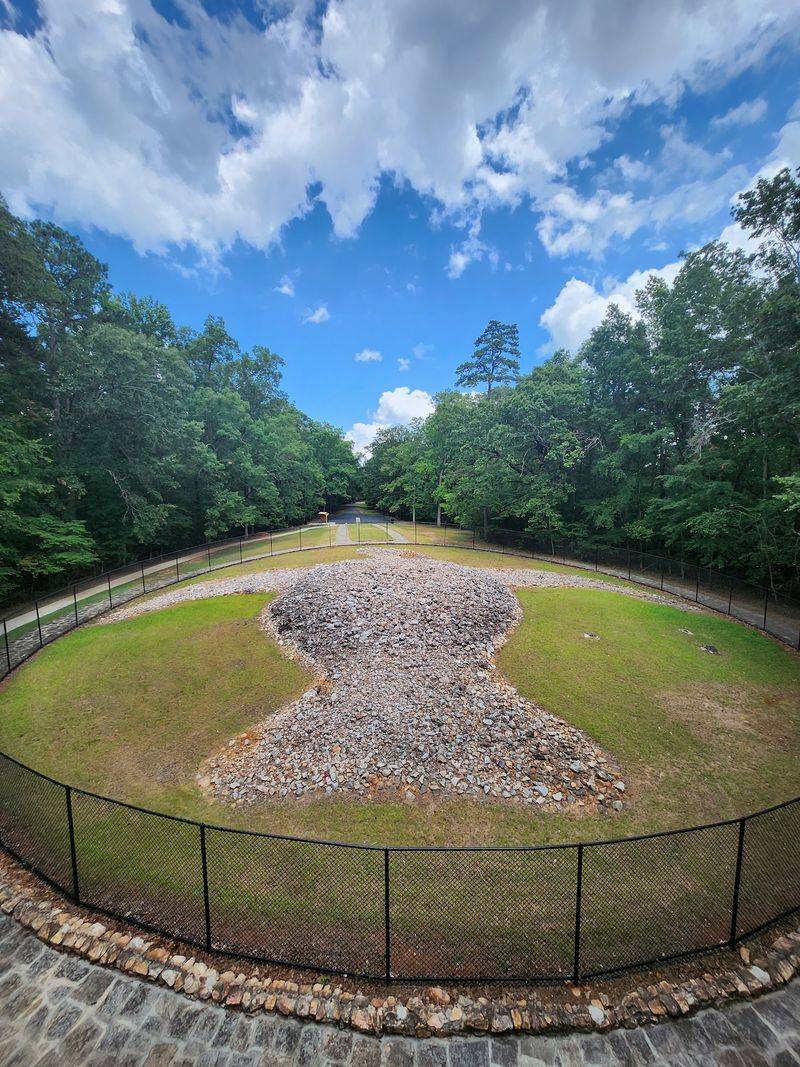
Located at 350 Rock Eagle Road in Eatonton, Georgia, the Rock Eagle Effigy Mound stretches an impressive 102 feet from its head to its tail and 120 feet from wingtip to wingtip.
At its highest point, the bird’s breast rises between eight and ten feet above the ground. From ground level, the carefully arranged stones can look a bit scattered and random.
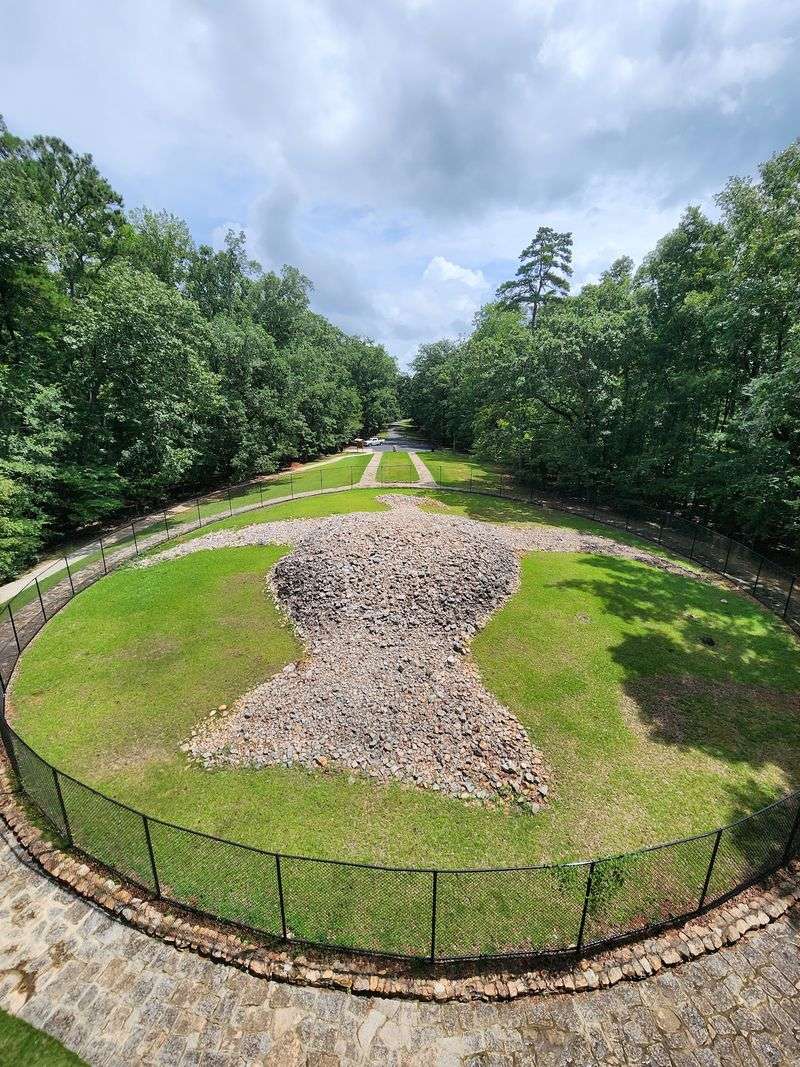
However, once you climb the observation tower and get a bird’s-eye view, the full outline of the effigy snaps into focus in the most satisfying way imaginable.
Interestingly, experts are not entirely sure whether the builders intended to depict an eagle, a buzzard, or another bird entirely. Some interpretations even suggest it might represent a vulture.
The bird’s head points toward the south by southeast, with its beak aimed almost due south, which challenges the popular belief that it faces the rising sun.
Rock Eagle is one of only two known large-scale bird effigy mounds found east of the Mississippi River, making its scale even more remarkable.
How Ancient Builders Actually Constructed This Masterpiece
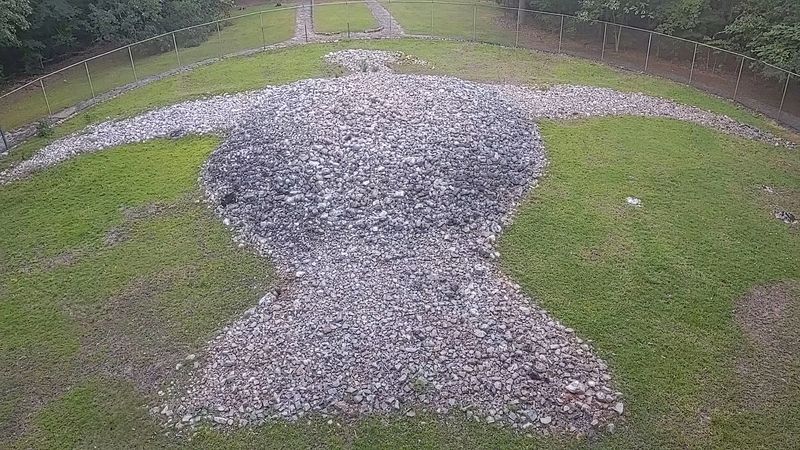
Here is where the story gets really fascinating. The Rock Eagle Effigy Mound was built entirely from thousands of pieces of milky white quartzite, a naturally occurring stone found in the region.
These rocks were carefully and deliberately placed to form the recognizable shape of a giant bird.
Estimates suggest the mound contains approximately 1.3 million pounds, or about 665 tons, of quartzite. Think about moving that much stone without any wheels, machines, or metal tools.
The organizational effort required to pull this off was extraordinary by any standard.
Archaeological findings have revealed something even more intriguing. Some of the materials used in the mound’s construction, specifically certain types of non-indigenous clay, were transported from other areas entirely.
This suggests that the builders were not just gathering whatever was nearby. They were sourcing specific materials from distant locations, which points to a sophisticated and well-organized society.
The effigy was also built atop a natural rock outcrop, meaning the builders cleverly used the existing landscape as a foundation.
Every detail of its construction reflects careful planning and a deep connection to the land beneath it.
The Mysterious Purpose Behind The Stone Bird
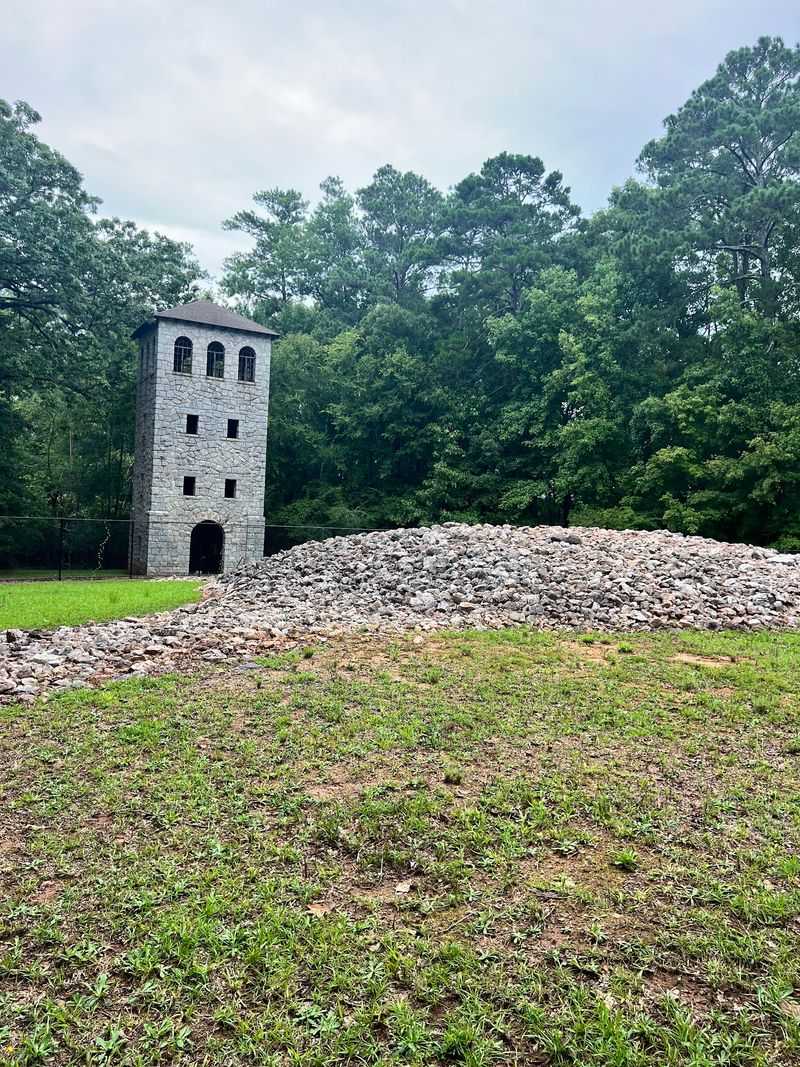
Nobody really knows why ancient people built Rock Eagle, and that mystery is honestly a big part of its charm.
Scholars have proposed several theories over the years, ranging from ceremonial gathering sites to astronomical observatories to places of ancestor worship.
Excavations carried out in the 1950s uncovered evidence of cremated human remains within the mound. This discovery led some researchers to suggest it may have functioned as a burial site.
However, most archaeologists do not classify it primarily as a burial mound.
Other artifacts found nearby include a single quartz tool, a projectile point, pottery fragments, and animal remains.
One particularly compelling theory suggests the effigy was a spiritual message intended to be seen from above, perhaps by deities or ancestral spirits believed to occupy the sky.
For certain Indigenous cultures, the eagle represented a direct connection between the physical world and the spirit world. If the bird represents a vulture or buzzard instead, the symbolic meaning shifts in a completely different direction.
The truth is, the purpose of Rock Eagle may never be fully known. That open-ended mystery is what keeps archaeologists, historians, and curious visitors coming back to this remarkable site year after year.
Climbing The Observation Tower For The Ultimate View
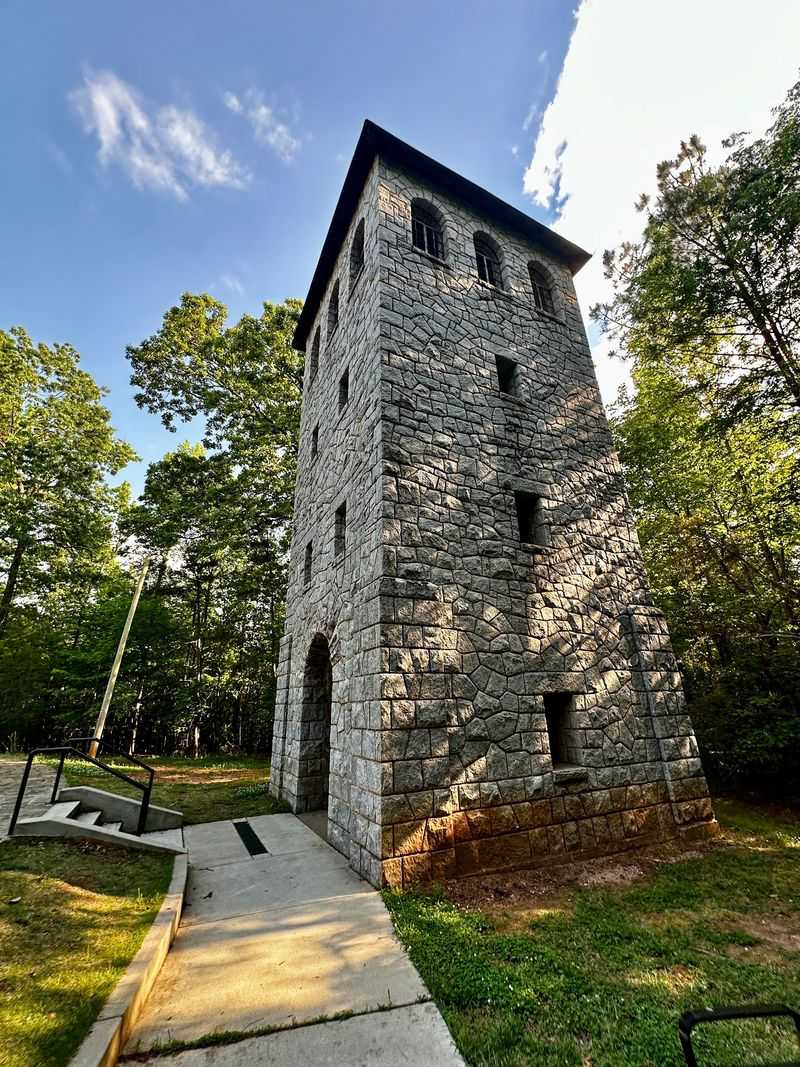
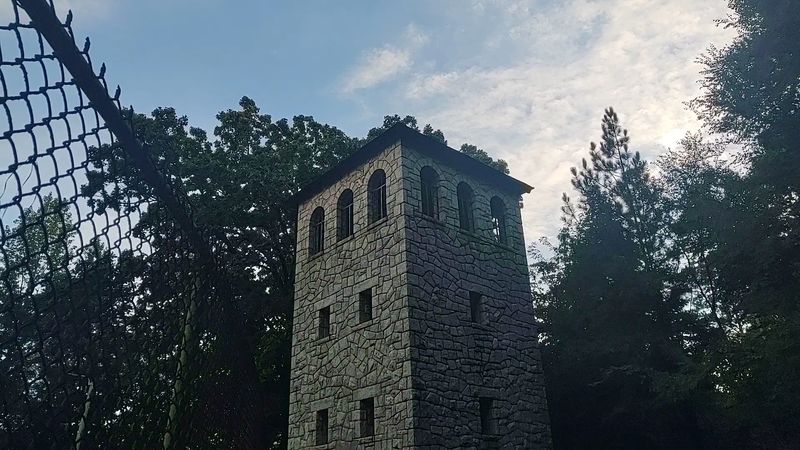
You simply cannot fully appreciate Rock Eagle until you climb the tower.
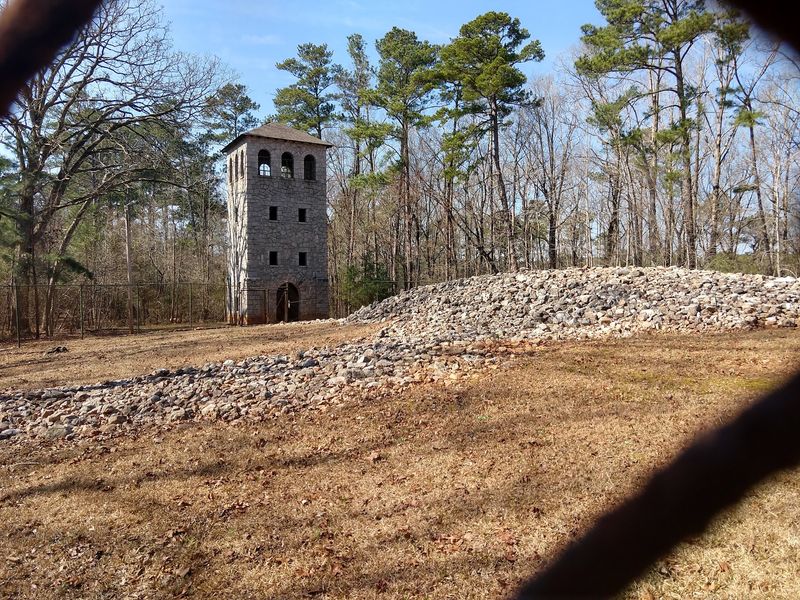
Built in the 1930s by either the Works Progress Administration or the Civilian Conservation Corps, this sturdy granite observation tower gives visitors the elevated, aerial perspective needed to see the full bird shape below.
From ground level, the stones look like an interesting but somewhat jumbled collection of white rocks. From the top of the tower, everything clicks into place.
The wings, the tail, the head, and the body all become crystal clear in a way that genuinely takes your breath away.
A paved pathway wraps around the entire effigy, and interpretive panels along the route explain the site’s historical and cultural significance in accessible, engaging language. Direct access to the mound itself is not permitted, and a protective fence surrounds it to preserve the ancient stones.
The tower is accessible during the Rock Eagle 4-H Center’s operating hours.
Visiting at different times of day offers different lighting conditions, and many visitors say the late afternoon golden hour makes the white quartzite stones glow in a particularly beautiful way. Plan to spend some time just soaking it all in from the top.
Rock Eagle’s Surprising Connection To The University Of Georgia
Most ancient archaeological sites are managed by government agencies or historical preservation groups. Rock Eagle takes a slightly different path.
The effigy mound sits within the grounds of the Rock Eagle 4-H Center, which is overseen by the University of Georgia and serves as the largest of five 4-H centers in the state.
Thousands of young people visit the center each year for environmental education programs, summer camping experiences, leadership conferences, and competitive events.
The site is open to the public free of charge from dawn to dusk, which makes it one of the most accessible ancient landmarks in the entire southeastern United States.
Tower access is available during the 4-H Center’s regular operating hours, so timing your visit accordingly is a smart move.
The surrounding campus is expansive and beautifully maintained, offering a peaceful natural setting that complements the ancient history on display. Rock Eagle was formally recognized for its cultural and historical importance in 1978, when it was added to the National Register of Historic Places.
That designation helped ensure the mound’s long-term protection and preservation for future generations. Few places in Georgia blend active community education with genuine ancient wonder quite so seamlessly as this remarkable site does.
Meet Rock Hawk, Rock Eagle’s Equally Mysterious Sibling
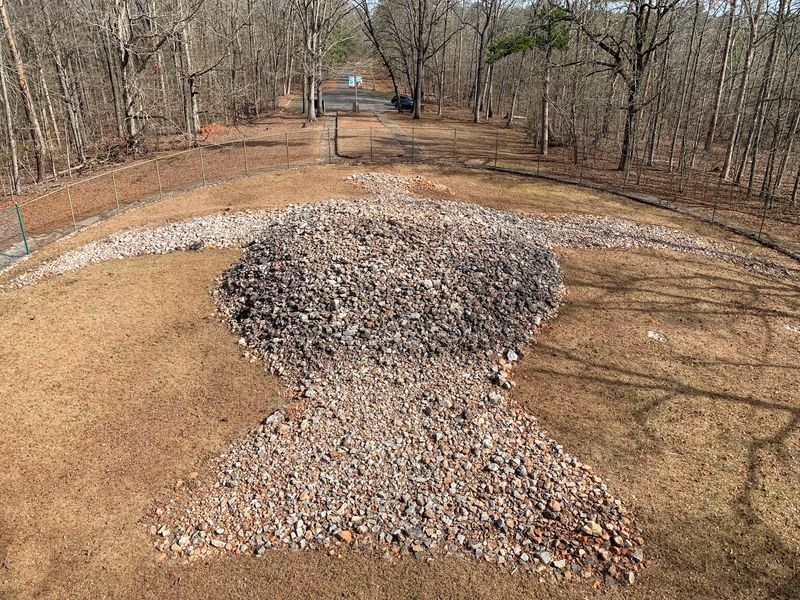
Plot twist: Rock Eagle has a sibling. Tucked away in the same Putnam County, Georgia, near the shores of Lake Oconee, sits the Rock Hawk Effigy Mound.
Rock Hawk holds the distinction of being the only other recognized stone effigy mound found east of the Mississippi River.
Like its famous counterpart, Rock Hawk is shaped like a bird and is believed to have been constructed by Woodland Period people approximately 1,500 years ago.
Its purpose is also thought to be ceremonial or symbolic in nature, though the specifics remain just as mysterious as those surrounding Rock Eagle.
Both effigies share strikingly similar dimensions, measuring roughly 102 feet from head to tail and between 120 and 132 feet from wingtip to wingtip. However, Rock Hawk’s physical condition is not as well-preserved as Rock Eagle’s, making the latter the more visually impressive of the two.
Visiting both sites on the same trip offers a rare and genuinely unique window into an ancient mound-building tradition that existed nowhere else in the eastern United States.
If Rock Eagle sparks your curiosity, Rock Hawk is absolutely worth seeking out as a companion experience that deepens the whole story.
How Rock Eagle Survived Centuries And Why It Still Matters Today
Surviving for thousands of years is no small feat for any ancient structure, and Rock Eagle’s story of preservation is genuinely remarkable.
Scholarly study of the site began as far back as 1877, and early settlers occasionally dug into the mound searching for buried treasure. Thankfully, the damage was limited.
The land was protected for many years by the Scott family, who never farmed the area and essentially left the mound undisturbed.
Later, the federal government acquired the property, and restoration efforts carried out by the Works Progress Administration and Civilian Conservation Corps in the 1930s helped stabilize and preserve the site for future generations.
Today, Rock Eagle is considered a sacred site by many Native American groups and serves as a powerful educational resource for those interested in history, archaeology, and Indigenous cultures.
It stands as a compelling reminder that Georgia’s story stretches back far beyond what most textbooks cover. Every stone in that ancient bird shape represents a choice made by a real person thousands of years ago.
Visiting Rock Eagle is less like a typical tourist stop and more like a genuine conversation with the past. Have you ever stood somewhere and felt history reach right through the ground and grab you?