
This Giant Arizona Sundial Was Once The Largest In The World
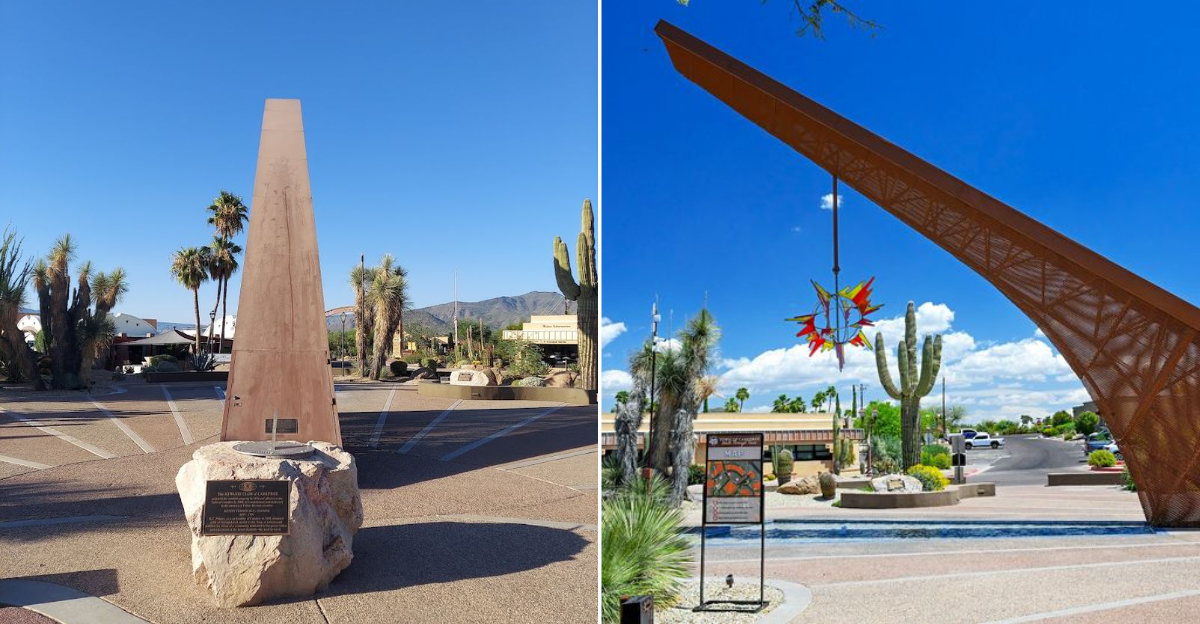
Growing up, I was the kid who couldn’t even tell time on a digital watch, let alone a sundial. So, when I first rolled up to a sun-baked desert town in Arizona and saw a metal beast rising ninety feet into the cloudless sky, my immediate thought was, “Did aliens try to build a giant pizza cutter and give up?”
Nope, it turns out I was standing in front of the legendary Carefree Sundial. Back in the day, this metallic monster actually held the title of the largest sundial in the entire world.
Standing under its shadow made me feel like an insignificant speck of dust, which is honestly my favorite way to start a Tuesday road trip, especially when a rogue tumbleweed decides to photobomb my selfie.
The Carefree Sundial is a towering, copper-clad timepiece that once held the title of the largest sundial in the world, and it still draws curious visitors who want to see something genuinely one-of-a-kind.
Stick around, because this story has layers of history, clever engineering, desert beauty, and small-town charm that make Carefree worth every mile of the drive.
A Monumental Masterpiece
Back in 1959, when most people were focused on rockets and televisions, two forward-thinking visionaries had their eyes on something far older: the sun.
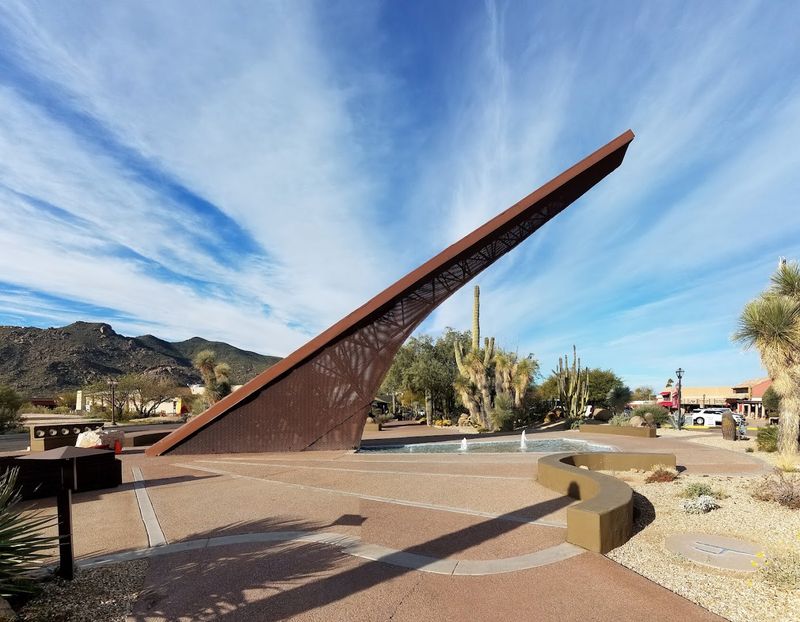
Architect Joe Wong and solar engineer John I. Yellott teamed up to create a sundial unlike anything the world had seen before, and the result still stands proudly at 8 E Sundial Cir, Carefree, Arizona.
The structure is genuinely massive. Its circular dial face stretches 90 feet in diameter, and the gnomon, the upright piece that casts the all-important shadow, rises 35 feet into the desert sky while extending between 62 and 72 feet outward.
The entire frame is clad in anodized copper, giving it a warm, burnished appearance that glows beautifully in the Arizona sunlight.
When it was completed, the Carefree Sundial was considered the second largest in the world, and it remains one of the largest working sundials in North America today. Few landmarks manage to feel both ancient and ahead of their time simultaneously.
The Engineering Genius Behind The Gnomon
Most people glance at a sundial and think it is simply a fancy shadow-caster. The gnomon on the Carefree Sundial, however, was engineered with a purpose that goes far beyond telling time.
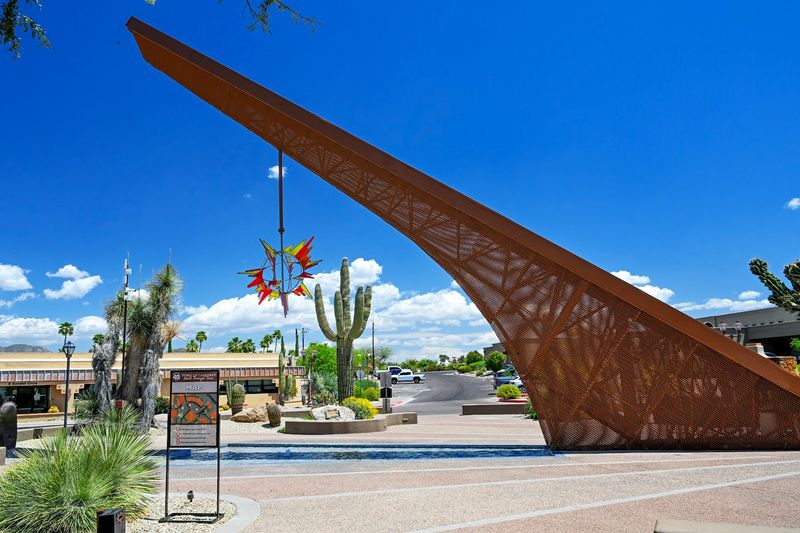
John I. Yellott designed it to function as a passive solar energy collector, embedding copper tubes within its four-foot-wide body to absorb heat from the sun and pump warm water into a nearby building’s heating system.
That dual-purpose concept was genuinely groundbreaking for the late 1950s, placing this Arizona landmark decades ahead of mainstream solar energy thinking. The gnomon is also precisely aligned to point toward Polaris, the North Star, which is exactly what gives the sundial its impressive accuracy.
On a clear Arizona day, the shadow falls with enough precision to read local apparent solar time, accounting for a 27.7-minute offset from Mountain Standard Time. A small equation-of-time plaque on site helps visitors make that calculation.
The attention to detail here is the kind that makes you stop, look closer, and genuinely appreciate the craft.
Keeping Time With Remarkable Accuracy
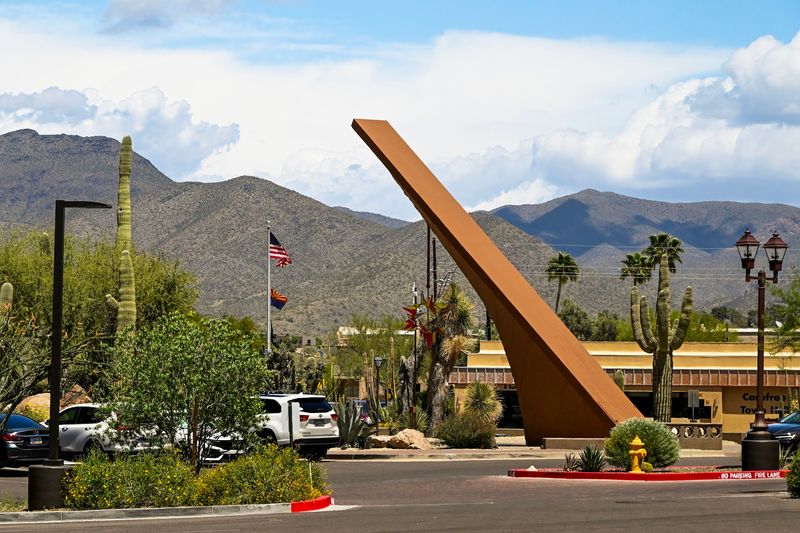
Telling time with shadows sounds poetic, but the Carefree Sundial takes that poetry seriously. The dial face is laid out with golden lines and large concrete numerals that circle the base of the gnomon, making it easy for visitors to read the hour just by observing where the shadow falls on any given sunny afternoon.
For anyone who wants a truly precise reading, the on-site equation-of-time plaque provides the adjustment needed to convert local apparent solar time into clock time.
A smaller scale model, built at 1/48th the size of the full structure, is also available on the plaza grounds for closer study and comparison.
The sundial reads most clearly during the long, brilliantly sunny days that Carefree is known for, which happen to be plentiful given that the area averages around 300 sunny days per year.
Watching the shadow inch across the dial face in real time is oddly mesmerizing, a quiet reminder that the sun has always been the original timekeeper, long before any clock was invented.
The Sparkling Sunburst Feature And LED Transformation
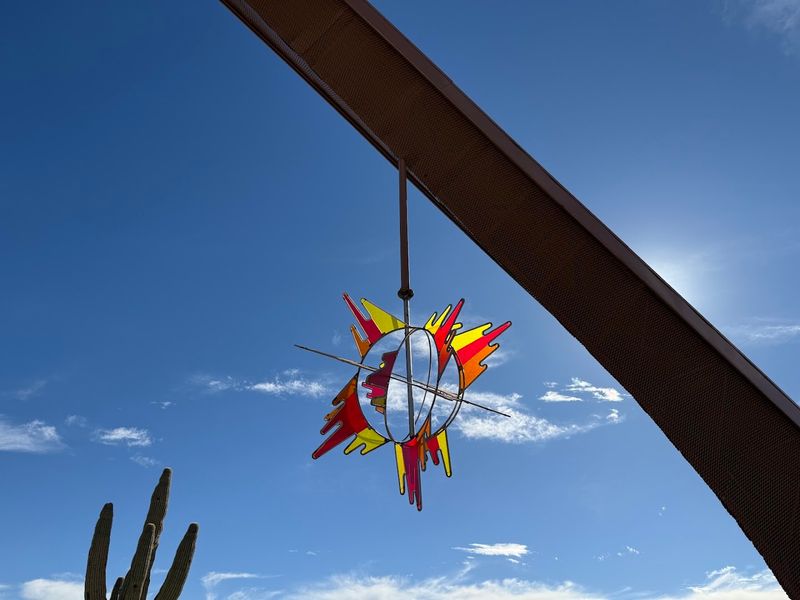
A giant copper sundial is already a statement piece, but its designers wanted it to sparkle too. The original construction included a colorful glass ornament called the Sunburst, mounted on the gnomon to catch and scatter light across the plaza.
It was a thoughtful artistic touch that gave the landmark a sense of life and movement beyond its structural presence.
Time and weather eventually took their toll, and the original Sunburst was removed in 2004 for repairs. Rather than simply replacing it with a replica, the town of Carefree chose to reimagine the feature entirely, installing a modern version fitted with LED lights that illuminate the gnomon with a radiant glow after dark.
The LED Sunburst transforms the sundial into an evening attraction as well as a daytime one, giving it a completely different personality once the Arizona sky turns deep blue and the stars appear.
It is one of those rare updates that genuinely honors the original spirit of a landmark while adding something fresh and unexpected that keeps visitors coming back.
Carefree Desert Gardens, A Free Botanical Escape
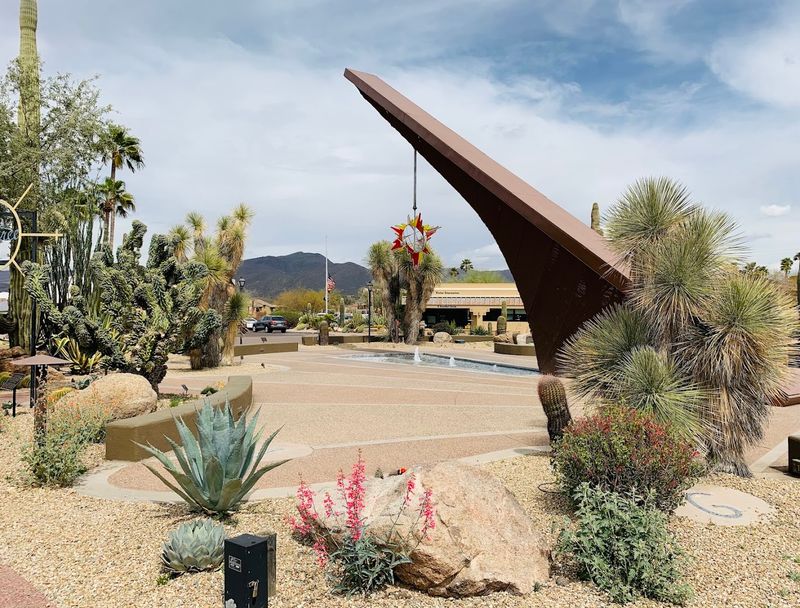
The Carefree Sundial does not stand alone in an empty plaza. It sits at the heart of the Carefree Desert Gardens, a beautifully maintained botanical space that is completely free to visit and open to the public.
Paths wind through a thoughtfully curated collection of desert plants, from towering saguaro cacti to delicate wildflowers that bloom in vibrant colors after winter rains.
Benches are scattered throughout the gardens, positioned to offer unobstructed views of the sundial and the sweeping desert landscape beyond the town. On cooler mornings, the gardens feel almost meditative, with birdsong, soft breezes, and the occasional roadrunner darting between the cacti.
Every Friday during the cooler months, the plaza surrounding the sundial transforms into a lively farmers market, where local vendors set up stalls selling fresh produce, handmade crafts, and regional specialties.
The combination of botanical beauty and community energy makes this spot far more than a simple photo stop. The gardens reward slow walkers who take time to notice the small details hiding between the stones and spines.
The Whimsical Town Of Carefree And Its Story
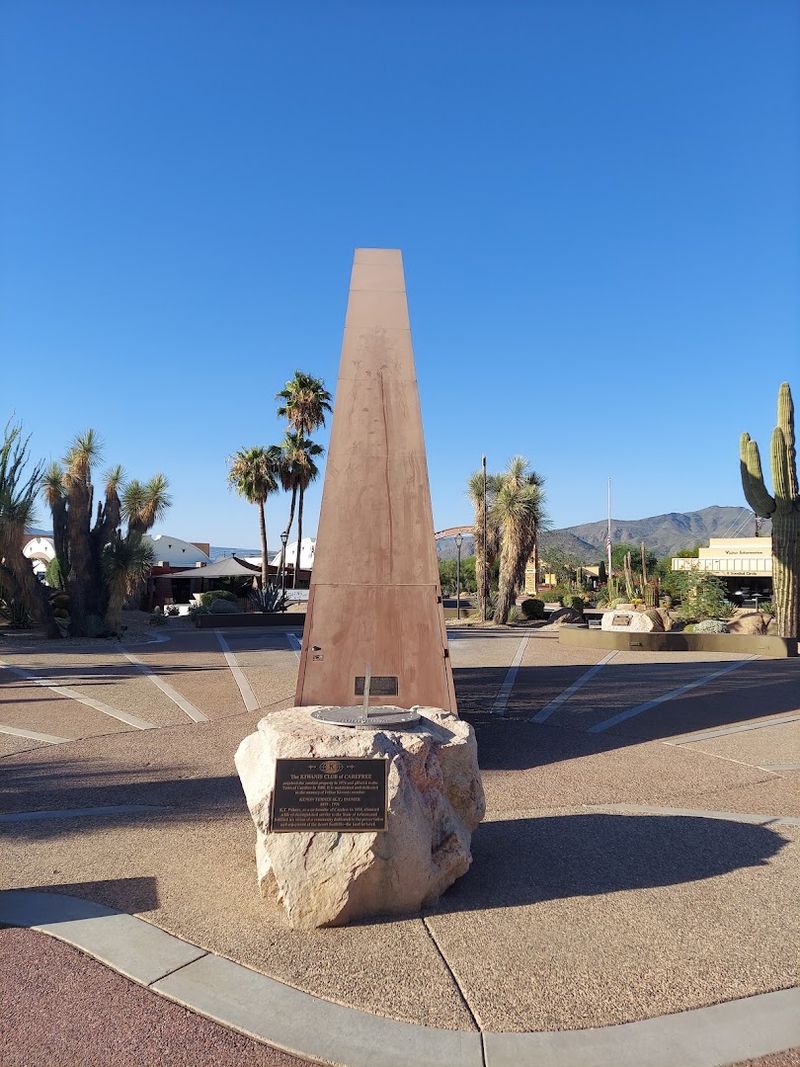
The town surrounding the sundial is just as interesting as the landmark itself.
Carefree was established in the 1950s as a planned community by developers Kenyon Palmer and Tom Darlington, who deliberately designed it to feel relaxed, open, and connected to the surrounding Sonoran Desert landscape.
The street names alone tell you everything about the attitude they were going for. Wander the town and you will pass signs for Easy Street, Peaceful Place, Tranquil Trail, and the wonderfully blunt Never Mind Trail.
These are real street names, not decorations, and they set a tone that the entire community seems to take to heart. The shops along Easy Street lean toward art galleries, boutiques, and locally owned restaurants rather than chain stores.
Carefree sits at roughly 2,500 feet in elevation, which gives it slightly cooler temperatures than the Phoenix valley below, making it a popular retreat during the warmer months.
The combination of intentional community design, quirky street signage, and genuine small-town warmth creates an atmosphere that feels refreshingly different from the typical Arizona resort experience.
Planning Your Visit To The Carefree Sundial
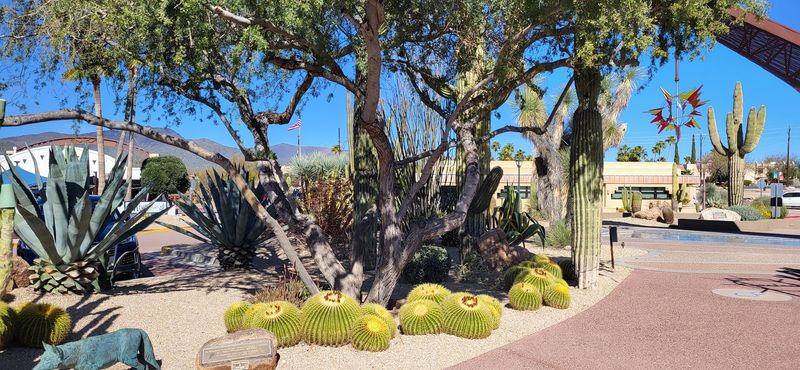
Getting to the Carefree Sundial is straightforward, and the experience is completely free. The sundial is located at 8 E Sundial Cir, Carefree, Arizona, right in the heart of the town center, with parking available nearby.
The drive from central Phoenix takes roughly 40 minutes, making it a very manageable day trip from the city. The best time to visit is between October and April, when temperatures are comfortable for outdoor exploring and the farmers market adds extra energy to the plaza on Fridays.
Summer visits are possible early in the morning before the desert heat builds, but the spring and fall months offer the most pleasant conditions for lingering in the gardens.
Bring a hat, sunscreen, and a water bottle regardless of the season, because the Arizona sun is persistent even on mild days. A camera is essentially mandatory, since the sundial offers compelling angles at every time of day, from the sharp morning shadows to the warm golden light of late afternoon.
Allow at least an hour to explore the sundial, gardens, and nearby shops properly.