
This Giant Michigan Tire Was Once A Ferris Wheel
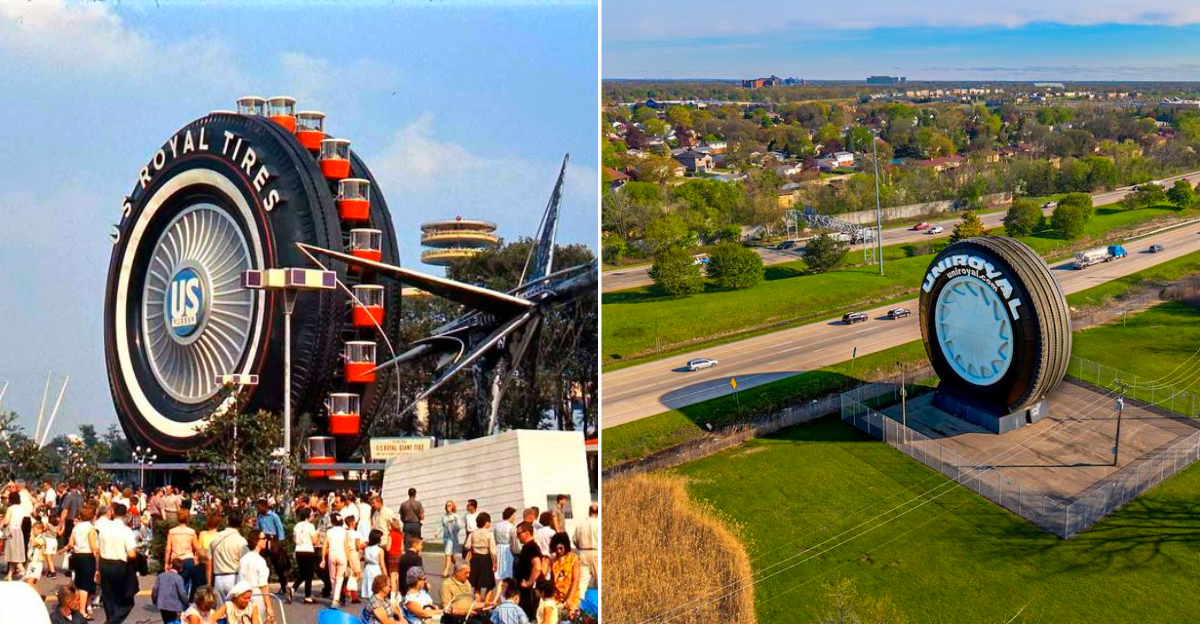
Drivers on the interstate do a double take the first time they see it: a tire standing eight stories tall on the side of the highway, weathered and unmistakable, like something a giant abandoned on the way home. The story behind it is stranger than the sight.
Built for the New York Worlds Fair as a Ferris wheel that actually carried paying passengers, the structure was later cut in half, trucked to its current spot, plus bolted into place as a roadside advertisement that outlasted the company’s original intentions by decades.
It has survived blizzards, interstate widening, plus the slow erosion of attention that claims most novelty landmarks. The tire does not move anymore.
It just stands there, visible from both directions, reminding commuters that Michigan has always had a flair for oversized statements. Michigan drivers pass a tire so large it once carried passengers at the Worlds Fair.
See It As A Roadside Stage
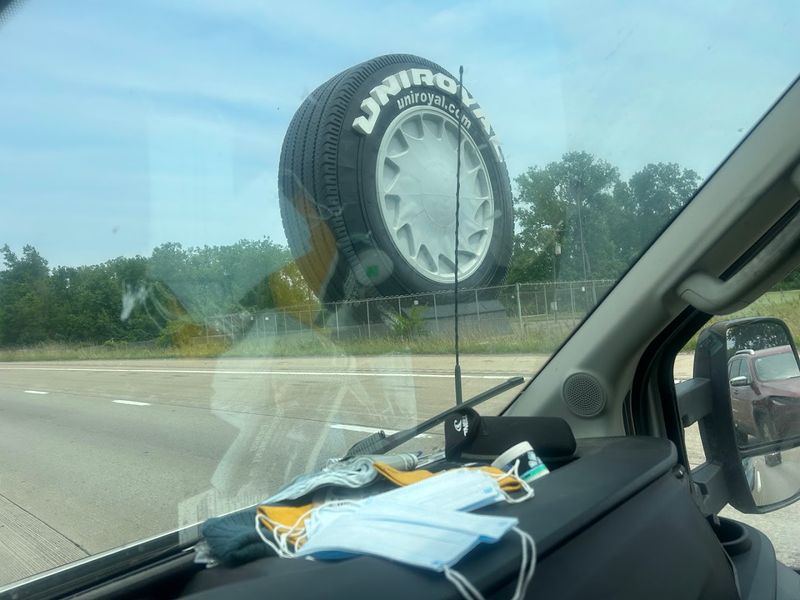
At highway speed, the Uniroyal Giant Tire feels less like an object and more like a performance timed to your windshield. It rises beside I-94 with the kind of confidence only very large things possess, and the effect is immediate.
Even from a distance, the proportions make nearby poles, ramps, and trees look oddly miniature.
What stays with you is not just size, but placement. This landmark was meant to be seen by moving people, and it still works best that way today.
If you want the classic encounter, approach as a passenger and let the tire reveal itself naturally instead of chasing a perfect still photo from the ground. The briefness of the view is part of its charm.
You notice it, register the absurd scale, and then it slips behind you, leaving a strangely cinematic afterimage that feels more memorable than a carefully staged roadside stop ever could.
Detroit’s Biggest Wheel No Longer Turns
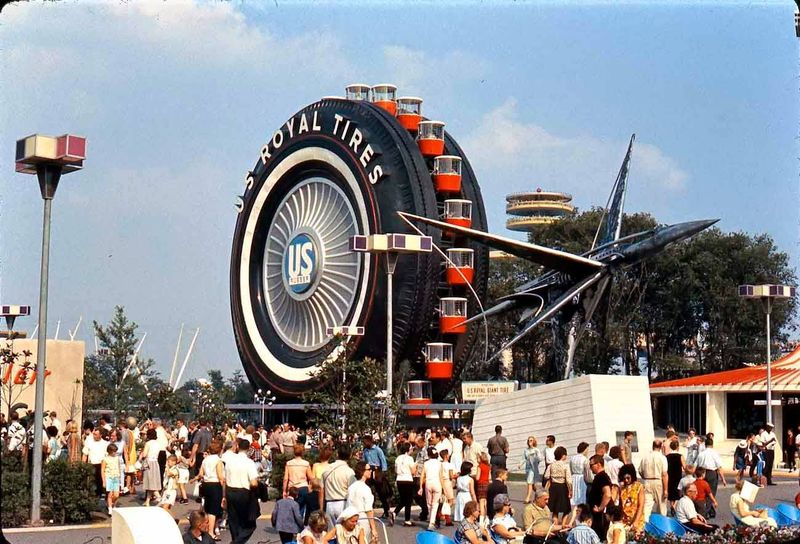
The Uniroyal Giant Tire stands beside I-94 in Allen Park, Michigan, between the Southfield Freeway interchange and the Outer Drive overpass. The clearest approach is eastbound on I-94, particularly when traveling toward Detroit from the airport area.
Stay on I-94 as you pass the Southfield Freeway interchange and look to the right side of the highway. The 80-foot tire rises above the roadside property quickly, so passengers will have a better view than the person driving.
There is no public entrance, viewing lot, or legal walk-up route to the tire. Remain on the highway, avoid stopping on the shoulder, and treat it as a drive-by landmark rather than a conventional roadside attraction.
Study The Design Like Architecture
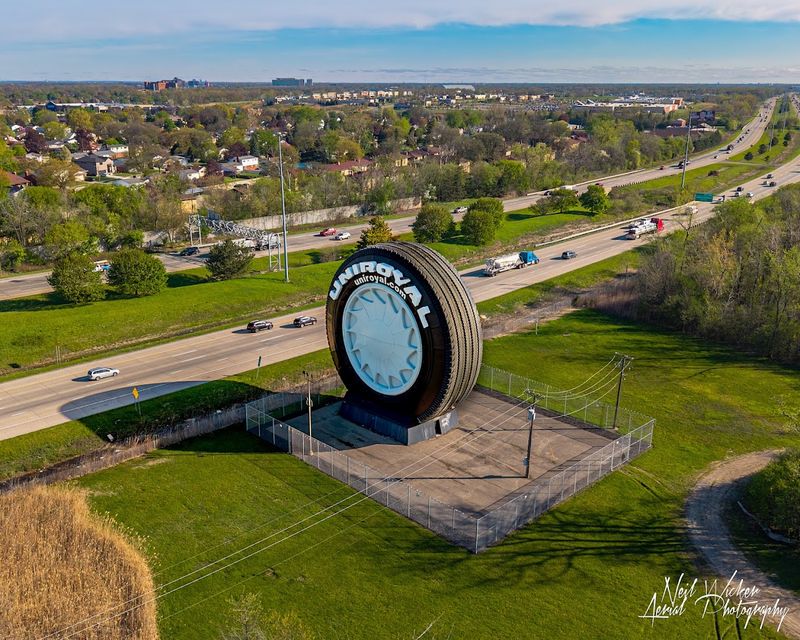
Seen up close from permitted vantage points, the tire starts to read less like signage and more like architecture. The form was designed by Shreve, Lamb & Harmon, the firm associated with the Empire State Building, which partly explains why the structure feels disciplined rather than goofy.
Its curves are clean, deliberate, and surprisingly elegant for something so commercial. The physical facts help too. The tire stands about 80 feet tall, weighs roughly 12 short tons, and encloses a vast interior volume.
Look for the tread depth and the sheer thickness of the shell, then remember this is not rubber at all, but glass-fiber-reinforced polyester resin built to endure weather and attention.
Plan For A Drive-By, Not A Walk-Up
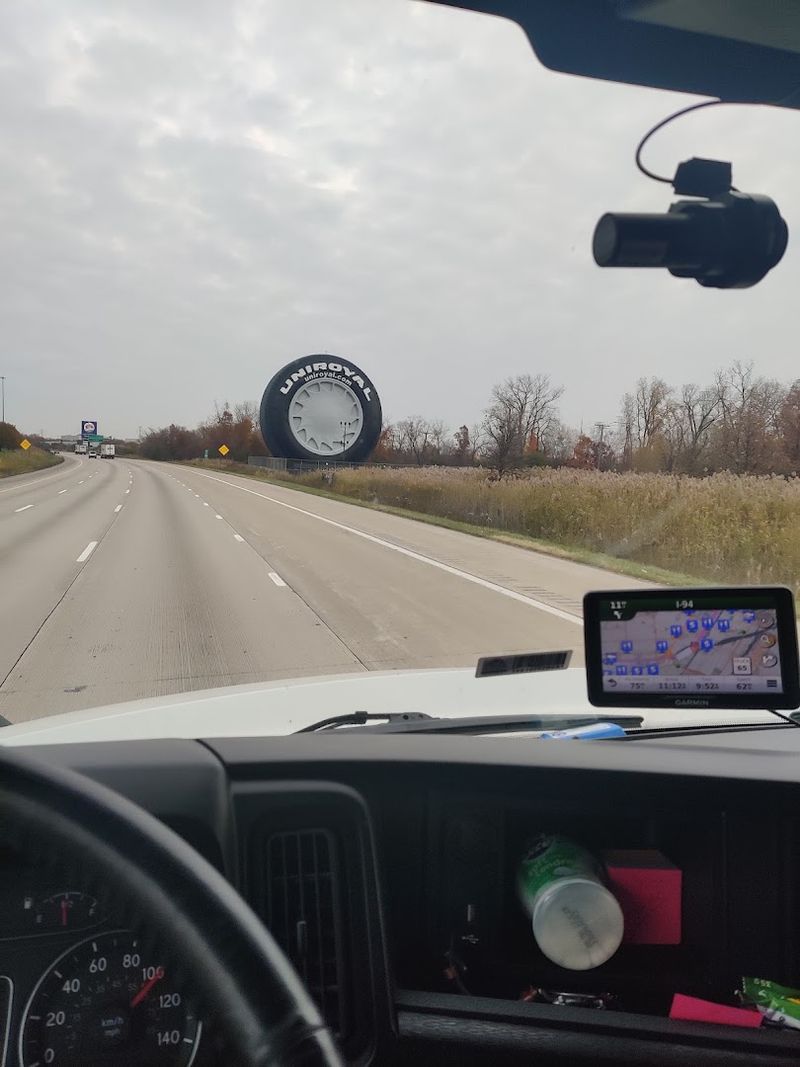
The practical truth is simple: this is not a stroll-up attraction. The tire sits on private property, now associated with Baker College land, and fencing limits close access.
That can feel frustrating if you arrive expecting a tidy overlook, but it also clarifies what kind of landmark this is.
Think of it as a drive-by monument, not a campus exhibit. The most satisfying visit usually comes from planning a safe freeway view rather than trying to edge too near from local roads, rail lines, or industrial margins.
Bring a passenger if you want photographs, keep your expectations realistic, and resist the temptation to trespass for a cleaner angle that still may not materialize.
Notice How It Marks Arrival
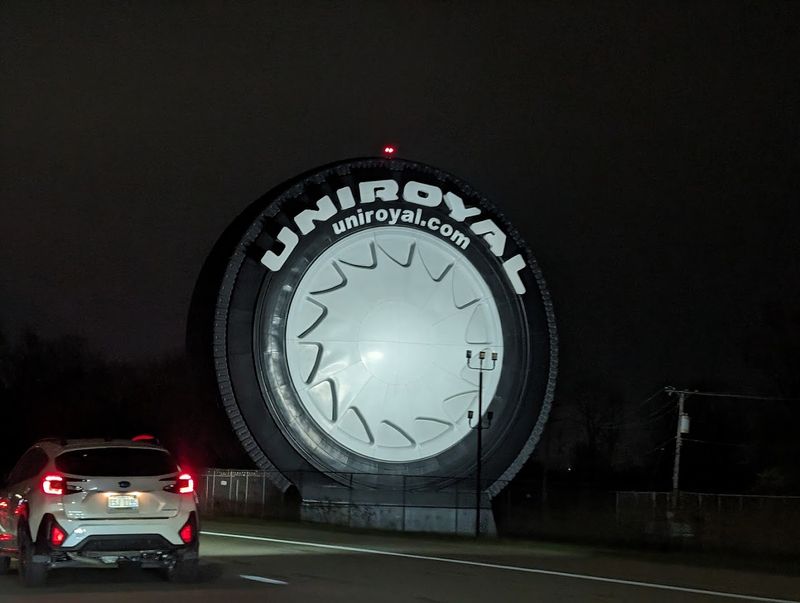
Some landmarks tell you where you are. This one tells you that you are entering a particular version of Michigan, where industry, scale, and wit happily share the same skyline.
For many travelers coming from the airport or moving east on I-94, the tire acts as an unofficial threshold into greater Detroit.
That role matters because the object is not hidden in a museum or framed by ceremony. It stands in the everyday landscape, meeting commuters, truckers, families, and first-time visitors on equal terms.
A giant tire could have been merely silly, yet here it feels regional, almost civic, as if the freeway itself decided to hang one memorable piece of local character at the door.
Look For The Layers Of Change
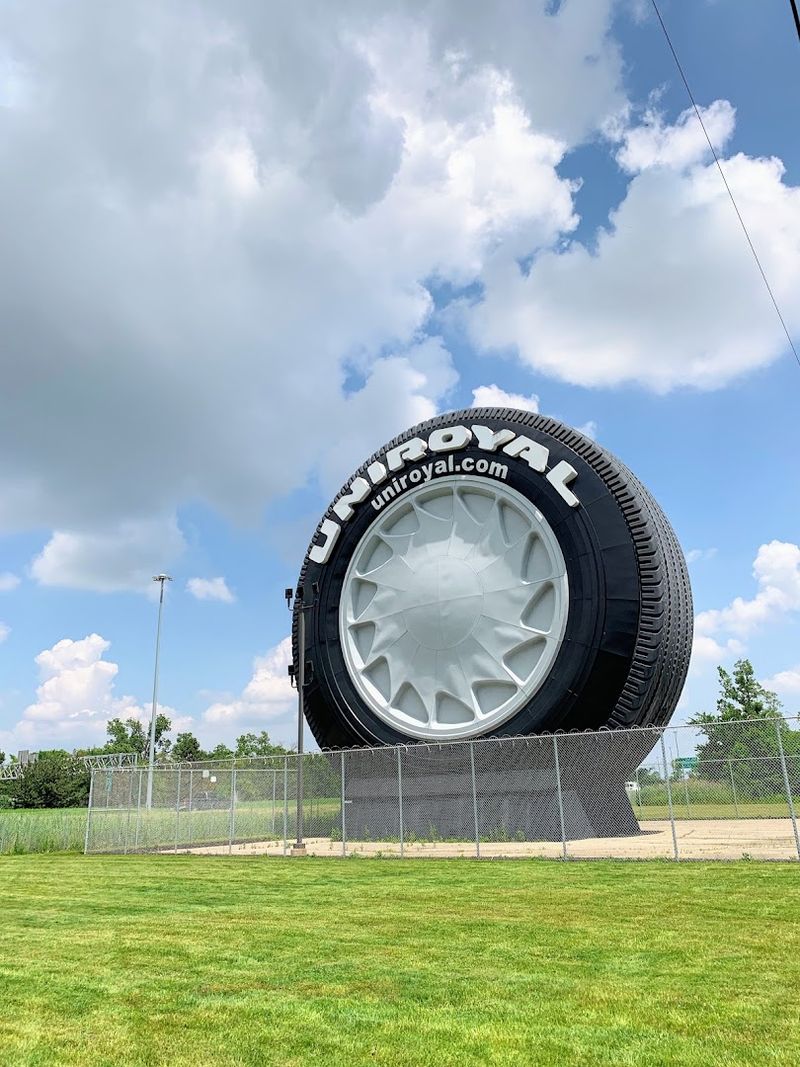
What you see today is not frozen in 1966. The Uniroyal Giant Tire has been updated repeatedly, which is part of why it still looks so assured beside the freeway rather than tired or neglected.
Major changes included a new hubcap and lighting in 1994, plus substantial structural work during a large 2003 renovation.
I find that maintenance history oddly touching because it confirms the landmark was considered worth saving, not merely tolerating. Earlier, a promotional nail was added to the tread in 1998 to advertise puncture-resistant tires, then removed in 2003.
These alterations never erased the original idea, but they did give the monument a second and third life in public view.
Accept The Slightly Strange Setting
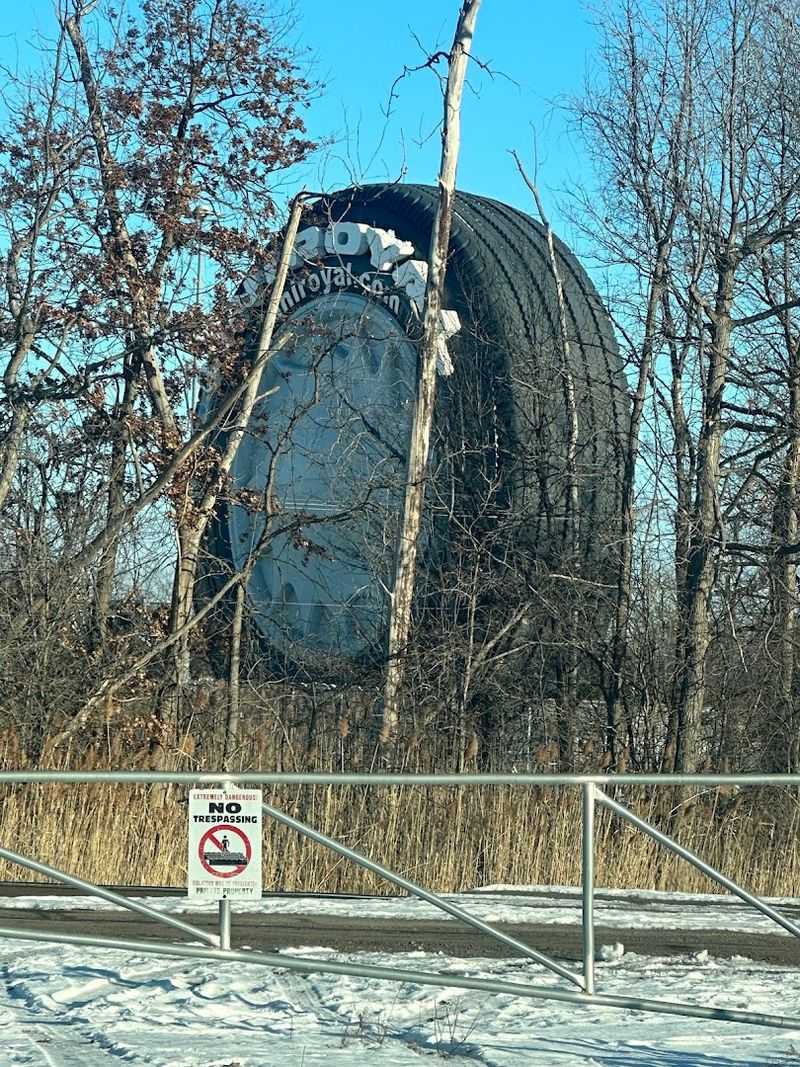
Part of the tire’s personality comes from where it sits. You are not getting landscaped paths, interpretive panels, or a polished plaza.
Instead, the setting is industrial, fenced, and a little awkward, which somehow suits an object born from corporate showmanship and repurposed for freeway life.
That mismatch between spectacle and surroundings creates much of the charm. A landmark this improbable might lose something if it were over-curated, because its appeal lies in the suddenness of seeing fairground exuberance lodged inside practical Detroit geography.
The fence and infrastructure are not pretty, but they underline the point: this is a working-region icon, not a souvenir version of one.
Use Light And Season To Your Advantage
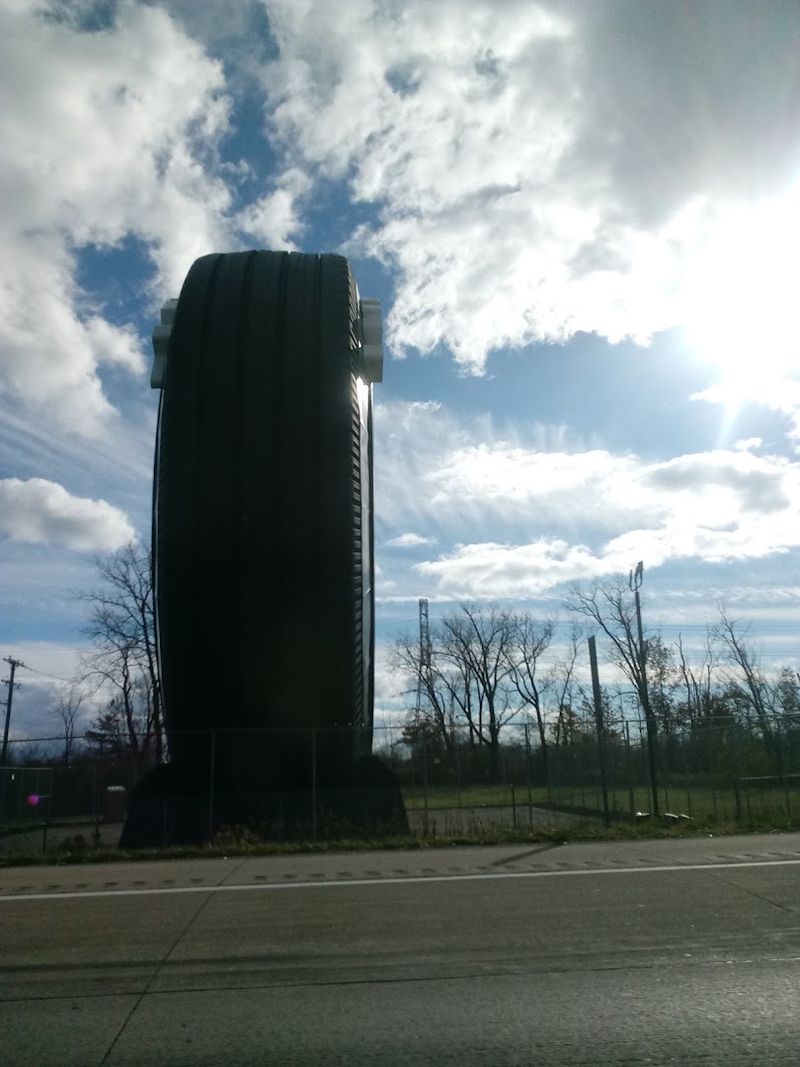
Season changes can alter the experience more than you might expect. In leafier months, nearby trees and angles from local approaches can interrupt your sightlines, while winter often sharpens the tire’s outline against the sky.
Clear daylight also helps the tread, hub details, and overall silhouette read better from a moving car.
If you are choosing between a gloomy errand-hour glimpse and a deliberate pass in good weather, choose the second. The monument is open to view around the clock, but not every hour flatters it equally.
Morning or late afternoon light tends to give the structure more depth, while still keeping the industrial backdrop honest instead of theatrical.
Think About Why It Endures
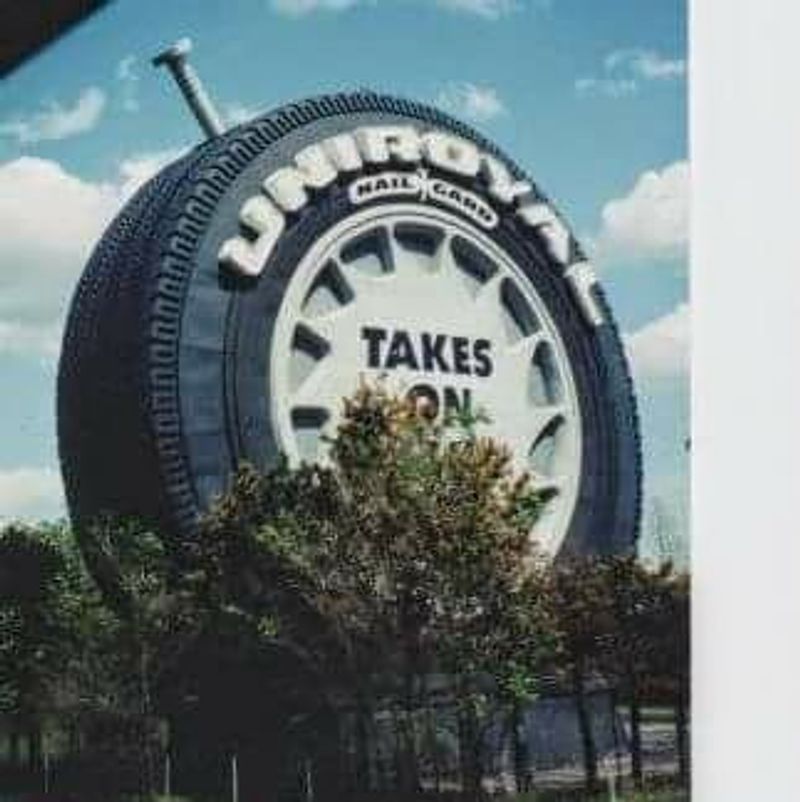
Plenty of oversized roadside objects exist, but not all of them linger in memory. This one endures because it manages to be funny, historic, and technically impressive at once.
A giant tire is an obvious advertisement, yet its World’s Fair pedigree and long Michigan afterlife give it the gravity of a real landmark.
It also helps that the symbol fits the region without straining. In the Detroit area, automotive imagery is not decorative background but part of the place’s identity, labor history, and visual language.
The tire catches your attention quickly, then rewards a second thought, which is usually the difference between a gimmick you forget and a landmark you keep describing later.
Treat The Visit As A Short Pilgrimage
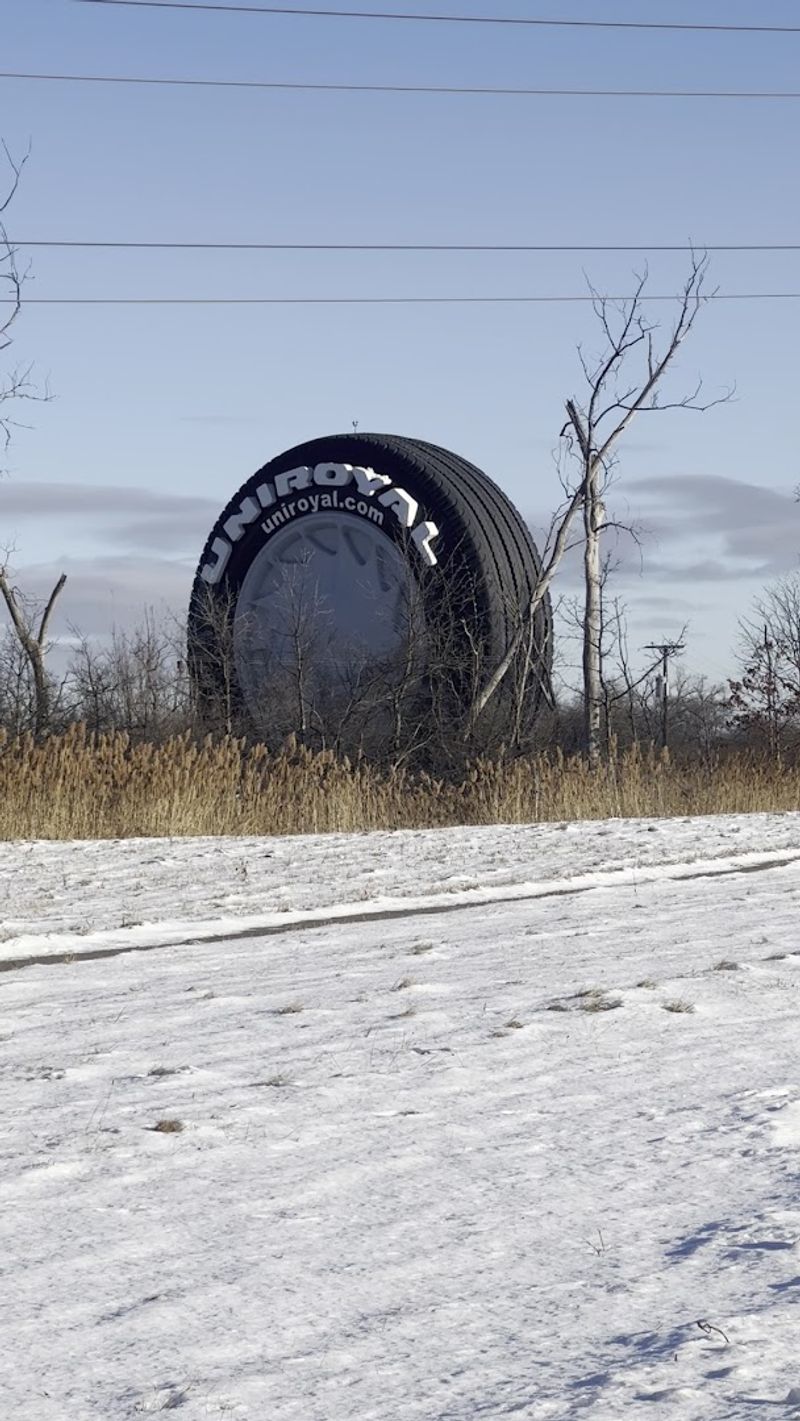
Because the stop is brief, it helps to treat it less like a destination packed with activities and more like a small pilgrimage to a piece of roadside history. You arrive, adjust your expectations, notice the scale, and let the oddness settle.
That rhythm suits the tire better than trying to force a bigger event around it.
I would not build an entire day around this one landmark, but I would absolutely make room for it if you are crossing the Detroit area with even a mild interest in Americana. The encounter is short, factual, and memorable, which is often enough.
Some places reward duration, while others reward attention, and this one belongs firmly to the second category.
Leave With The Right Kind Of Curiosity
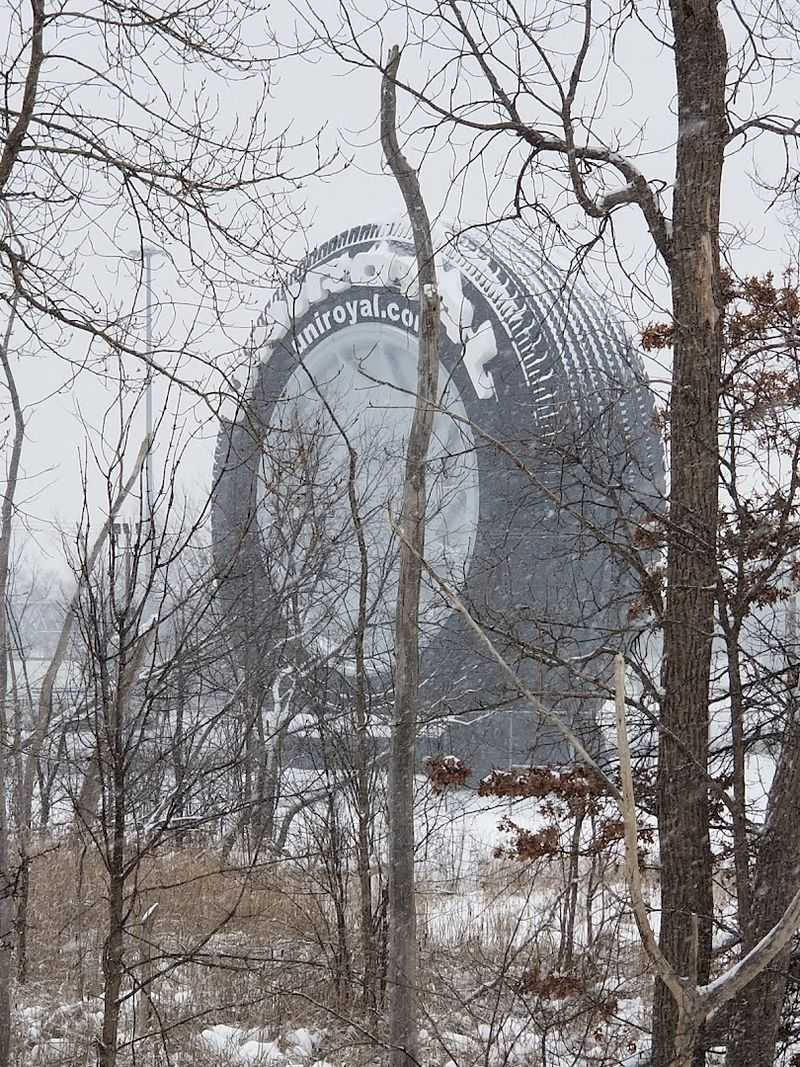
The best reason to see the Uniroyal Giant Tire is that it stays slightly unresolved, even after you know the facts. It is a former Ferris wheel, an engineering object, an advertisement, a local emblem, and a roadside absurdity all at once.
Few landmarks hold those identities together so neatly. That layered feeling is what makes the stop worthwhile. You leave with a clearer sense of how design, commerce, and regional memory can overlap in one very public sculpture beside a freeway.
If you are the kind of traveler who enjoys places that become more interesting the longer you think about them, this giant tire in Allen Park earns a respectful, lingering second look.