
This Giant New York Duck Gets Its Own Holiday Lighting Every Year
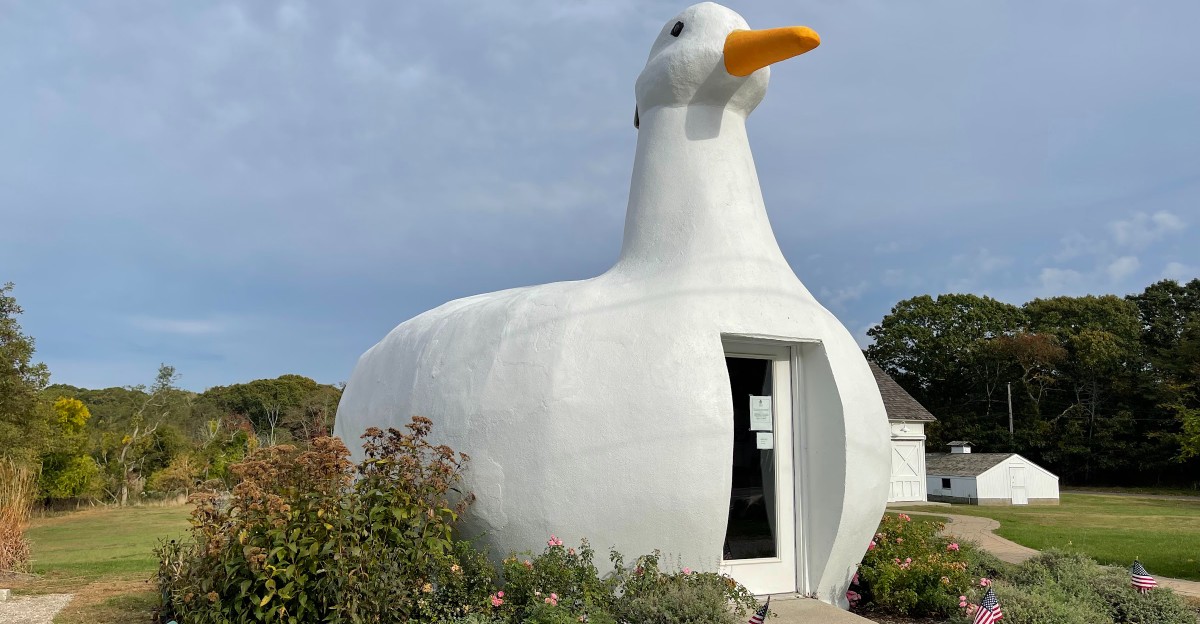
Santa shows up by fire truck to help light up a 10-ton duck. A middle school choir sings duck carols while he does it.
Yes, duck carols are a real thing.
The bird itself has taillights from a Model T for eyes. They glow red at night.
I can’t decide if that’s adorable or slightly spooky, and I love that I don’t have to choose.
This concrete quacker lives out on the east end of Long Island, New York. It started life as a shop selling actual ducks and eggs.
Now it sells duck-themed everything, from ornaments to key rings.
I believe every state needs one roadside building this silly and this beloved. So how did a giant duck end up with its own holiday party?
The story is better than you’d guess.
A Wreath Started The Whole Holiday Glow-Up
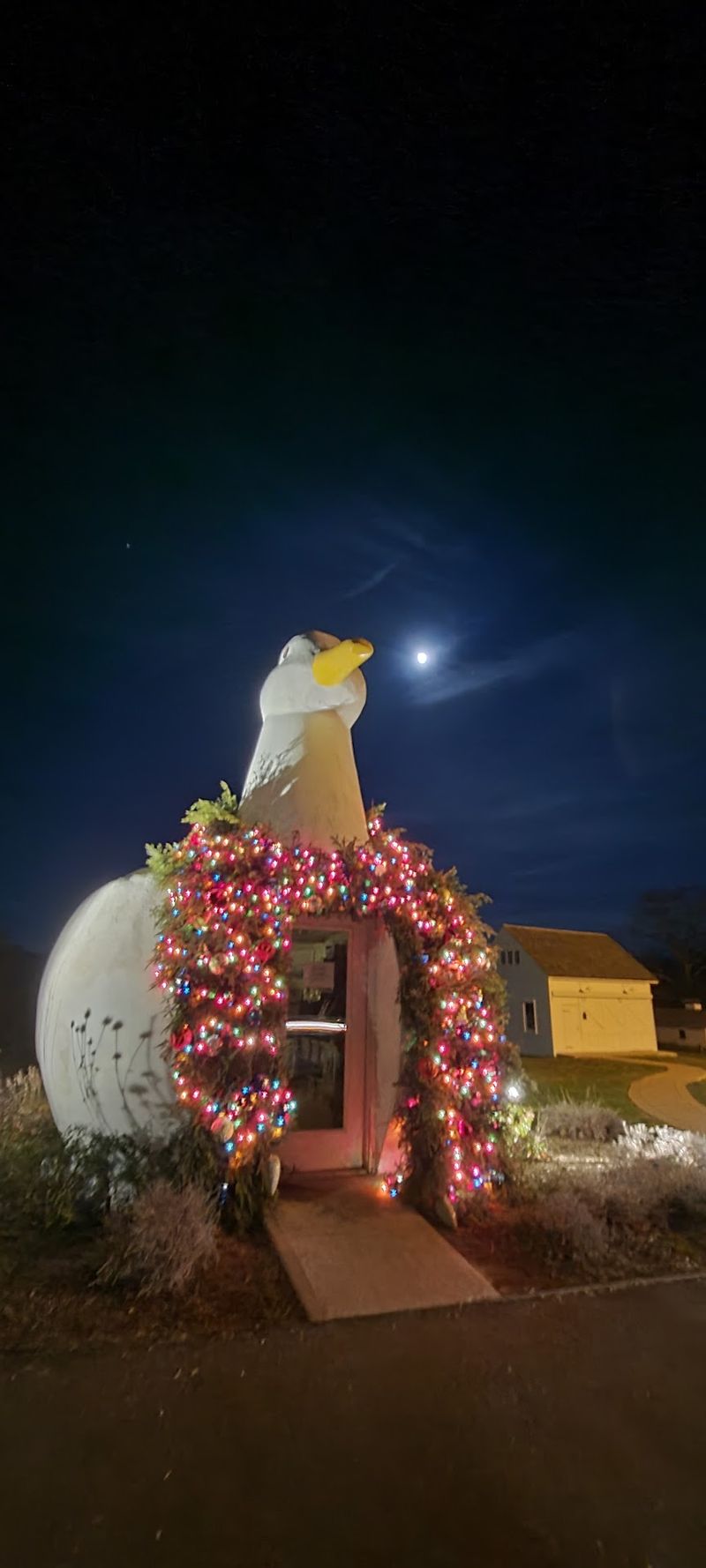
Somebody nobody could name began hanging a wreath on The Big Duck each November. That quiet gesture grew into one of the most charming traditions on Long Island.
After Suffolk County took over the property, the county Parks Department turned that wreath into a full holiday lighting. Now the big white bird gets dressed up every year, and the event usually lands in late November or early December.
Recent lightings have been scheduled in early December, so check the date before you head out. The ceremony draws hundreds of people.
That’s a lot of folks gathering around a duck in the cold, and honestly, I respect it.
The best part might be the arrival. Santa Claus pulls up on a fire truck, which beats a sleigh for drama on a busy highway.
Kids lose their minds, and grown-ups pretend they don’t.
The Riverhead Middle School show choir performs duck carols, and refreshments are part of the fun. Sometimes Quackerjack, the mascot of the Long Island Ducks baseball team, waddles in too.
A duck mascot visiting a duck building feels like a family reunion. Parking for the event has been organized at the back of the property.
Those Red Glowing Eyes Came Off A Model T
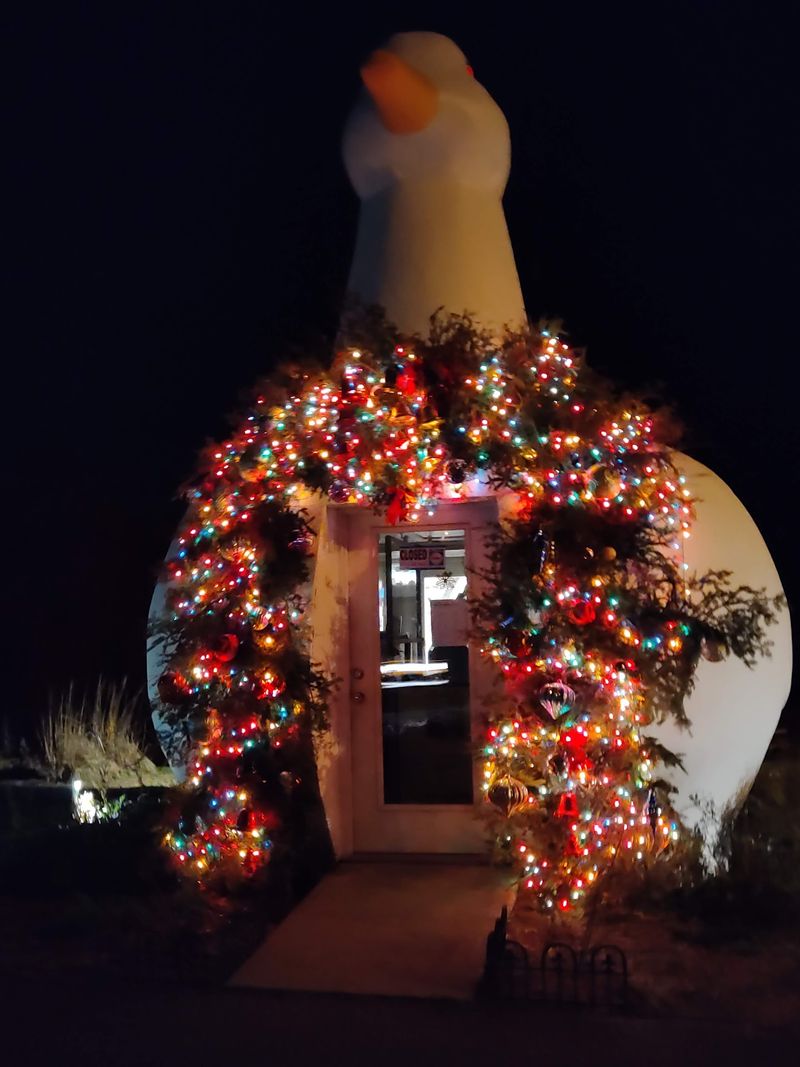
Two taillights from a Model T serve as the eyes of The Big Duck. When night falls, they glow red.
It’s part vintage car, part waterfowl, and fully unforgettable.
The rest of the bird is just as hefty. It measures 30 feet from beak to tail and 15 feet from wing to wing.
It stands about 20 feet tall from its base to the top of its head.
Then there’s the weight. This duck tips the scales at roughly 10 tons, so nobody is tucking it under an arm.
Builders shaped it with a wood frame, wire mesh, and concrete.
That mix of materials explains how it has survived the decades. Concrete over mesh gave the builders a way to sculpt smooth curves.
The result looks friendly instead of blocky, which matters when your whole job is making drivers smile.
Want a fun photo idea? Stand near the beak for scale, and you’ll see just how tiny you look next to it.
If you visit around dusk, those red eyes add extra personality to your shots. Your camera roll will thank you, even if your friends get a little confused.
A Coffee Pot In California Sparked A Long Island Legend
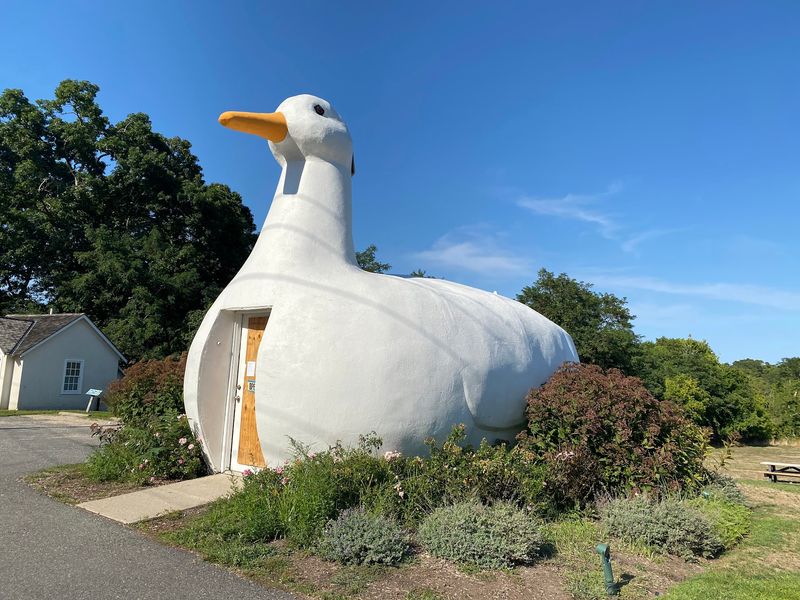
Road trips can change everything. Duck farmer Martin Maurer and his wife, Jeule, spotted a coffee shop shaped like a coffee pot while vacationing in California.
They came home with a very big idea.
In 1931, they built The Big Duck to sell Pekin ducks and eggs. The concept was simple.
Make the store look like the product, and nobody driving by would wonder what you sold.
Maurer hired local carpenter George Reeve to help. He also brought in William and Samuel Collins, brothers who designed sets for Broadway shows.
That theater background makes sense, because this building is pure showbiz.
The team reportedly used a live duck as a model. They also studied the frame of a cooked chicken to figure out the structure.
Talk about research you can eat afterward.
Long Island was famous for duck farming back then, so the building fit right in. Pekin ducks were big business in the area.
Today, the shop helps keep that farming story alive for new generations who may never have seen a working duck farm.
Architects Literally Named A Building Style After It
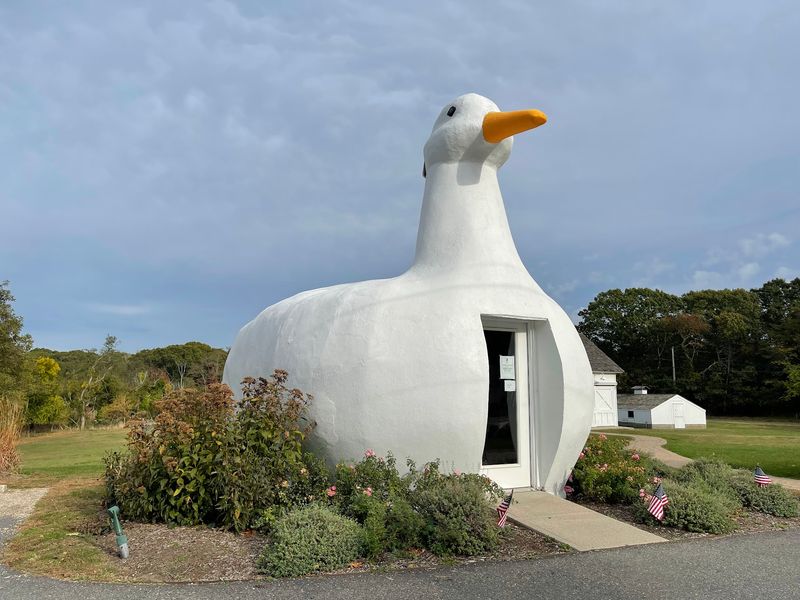
Fame comes in strange forms. In 1968, architects Robert Venturi and Denise Scott Brown coined the term Duck Architecture, inspired by this very bird.
The phrase describes buildings shaped like the thing they sell or do. Picture a hot dog stand shaped like a hot dog, or a doughnut shop wearing a giant doughnut.
The Big Duck became the poster child for the whole idea.
That makes this spot a bit of a celebrity in design classes. Architecture students learn the term, and this Flanders landmark is the original example.
Not bad for a building that once sold eggs.
Recognition kept rolling in over the years. The Big Duck joined the National Register of Historic Places in 1997.
The nearby Big Duck Ranch followed in 2008.
So when you pull over for a photo, you’re snapping more than a quirky roadside stop. You’re standing in front of a piece of design history in New York.
Feel free to mention that to anyone who questions why you braked for a duck. It makes a great comeback, and it happens to be true.
Christie Brinkley Helped Keep This Bird From Flying Off
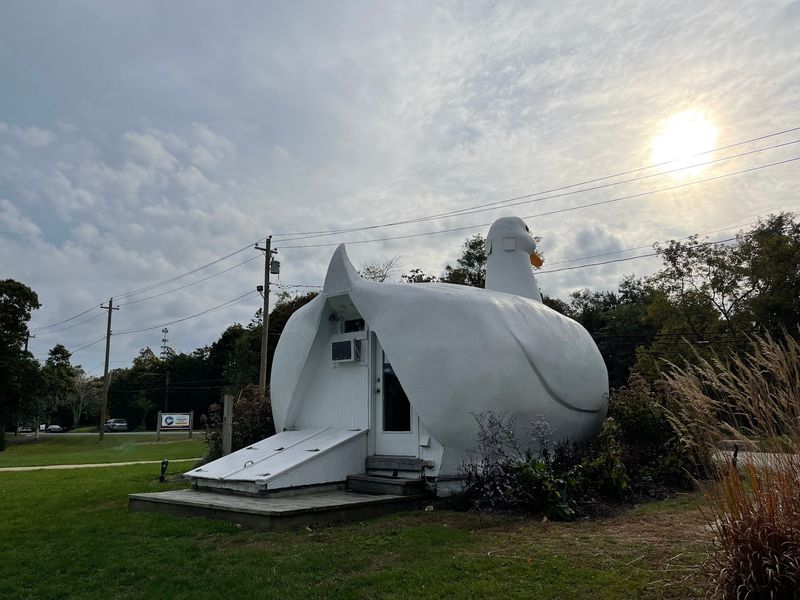
Few buildings have moved as often as this one. The Big Duck first stood on Main Street in Riverhead.
Around 1936 or 1937, it relocated to Route 24 in Flanders.
Then trouble arrived. The shop closed in 1984, and the duck faced possible demolition.
Fans launched a Save the Duck campaign, and model Christie Brinkley even lent her support.
The effort worked. In 1987, the building was donated to Suffolk County.
It spent some time at a nearby county park before heading back home.
In 2007, the duck returned to its current spot along Route 24. That’s the same farm area where it spent most of its life.
Old newspaper clippings inside tell the story of each move.
I like how a whole community rallied around a concrete bird. Plenty of old roadside buildings vanish without anyone noticing.
This one had people willing to fight for it, and that loyalty still shows today. The next time somebody says one voice can’t make a difference, point them toward this happy, well-traveled duck.
Duck-A-Billia Is A Real Shopping Category Here
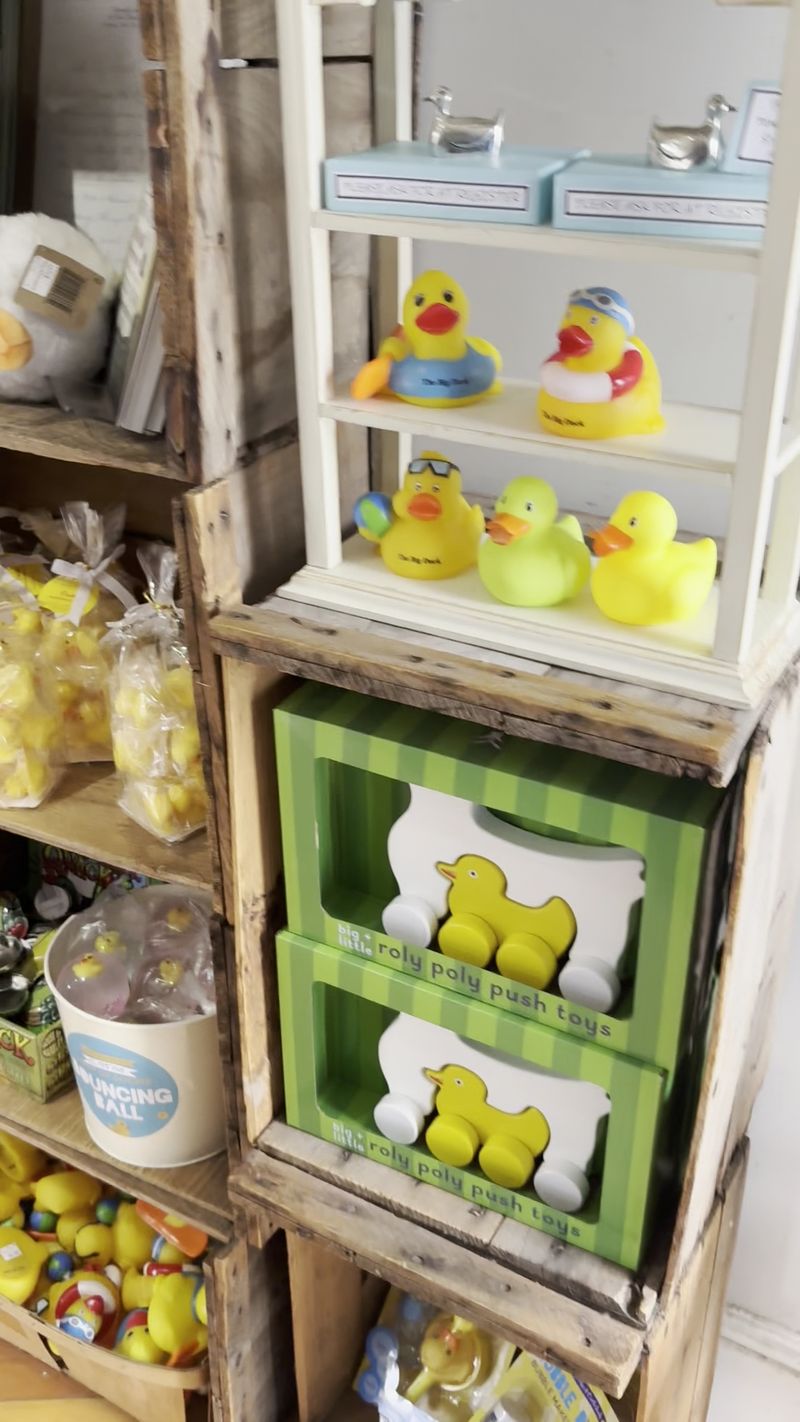
Shopping inside a giant duck is a sentence I never expected to type. Yet here we are.
The gift shop inside The Big Duck sells what it calls duck-a-billia.
That means unusual duck merchandise, plus other Long Island-themed gifts and handcrafted items. Think postcards, shirts, ornaments, and key rings.
If someone in your life collects ducks, consider this your mission.
The space is small, so plan for cozy browsing. It can feel snug when several people squeeze in together.
Patience pays off, though.
Look up while you shop, because the walls double as a mini museum. Historic photographs, antique postcards, and published articles cover the story of the duck.
Displays on roadside architecture add even more context.
Hours generally run from 10 AM to 5 PM, though Saturday hours have been listed shorter in some places. The shop may also close briefly for lunch, so calling ahead is smart.
Showing up early gives you the best shot at seeing everything. A holiday ornament from here makes a fun souvenir, especially if you’re visiting for the lighting.
Head Out Back For The Duck Farming Story
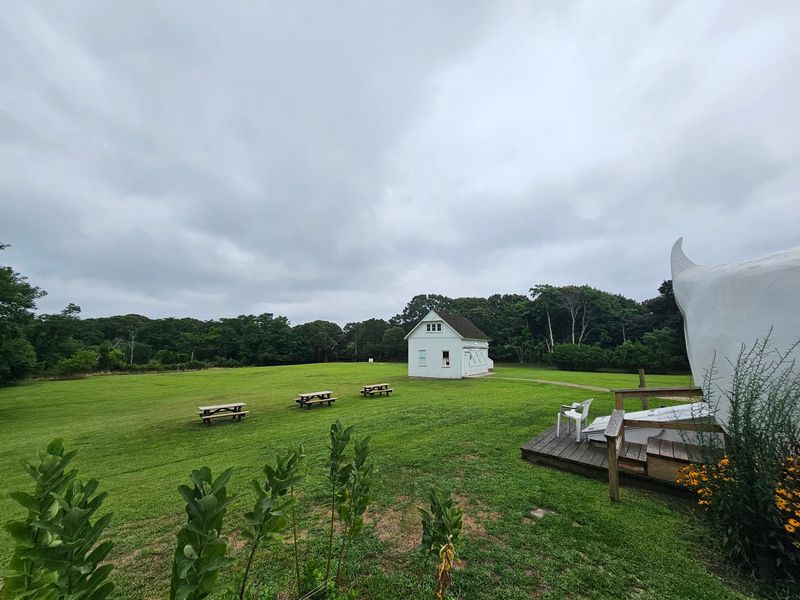
Behind the main attraction sits a separate building worth your time. It houses a Duck Farming Exhibit that explores the industry that made Long Island famous.
The Big Duck itself was born from that business, so the exhibit fills in the bigger picture. It shows how duck farming shaped this part of New York.
Pekin ducks were once a serious local product, not just a cute mascot idea.
Hours for this exhibit can vary because of staffing. Ask inside the main shop whether it’s open during your visit.
A quick question can save you a disappointed walk.
The property itself is part of the Big Duck Ranch, which earned its own spot on the National Register in 2008. That means the whole site carries history, not only the famous bird.
It’s a neat way to see where the story really happened.
Families with curious kids will find plenty to chat about here. Where did all those ducks go?
Why was Long Island such a duck hotspot? Those questions make the drive home a little more interesting than another round of are-we-there-yet.
Pack A Lunch Because Those Picnic Tables Are Waiting
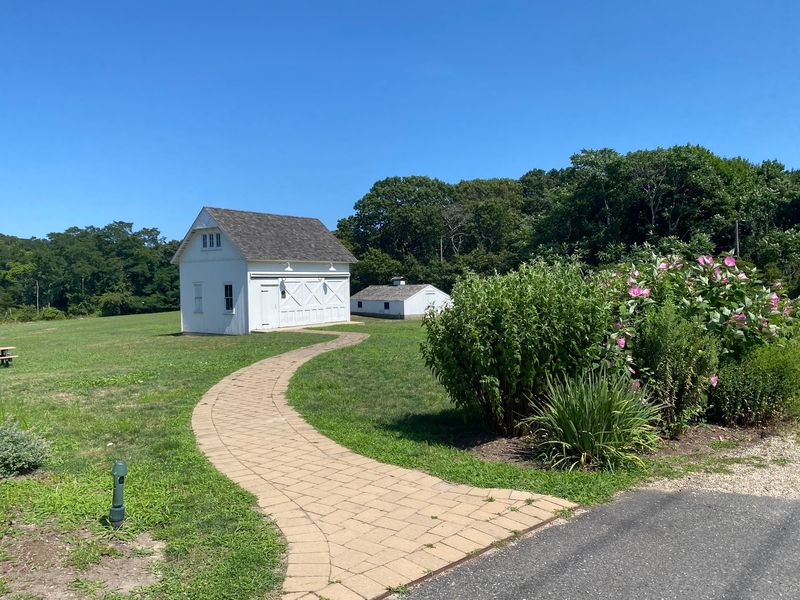
Sandwiches taste better near a giant duck. That’s not science, but I stand by it.
The grounds around The Big Duck feel like a small park.
You’ll find benches and picnic tables spread across the setting. A stone path leads toward the museum.
It’s an easy spot for a slow stroll or a relaxed lunch break on a road trip.
Parking happens on a gravel lot. The space close to the duck is limited, so don’t be shocked if you walk a bit.
During the holiday lighting, event parking has been set up at the back of the property.
Restrooms sit in a separate building. They’re single-occupancy family restrooms with baby-changing stations.
There’s one step up to enter, which is good to know if you’re using a stroller or wheelchair.
Bring snacks, a blanket, and your best duck pun. Kids can stretch their legs while adults snap photos from every angle.
It’s a simple stop, but those are often the ones people remember. Plus, few lunch views can compete with a 20-foot-tall bird watching over your chips.
Plan Your Route Out East For Maximum Quack
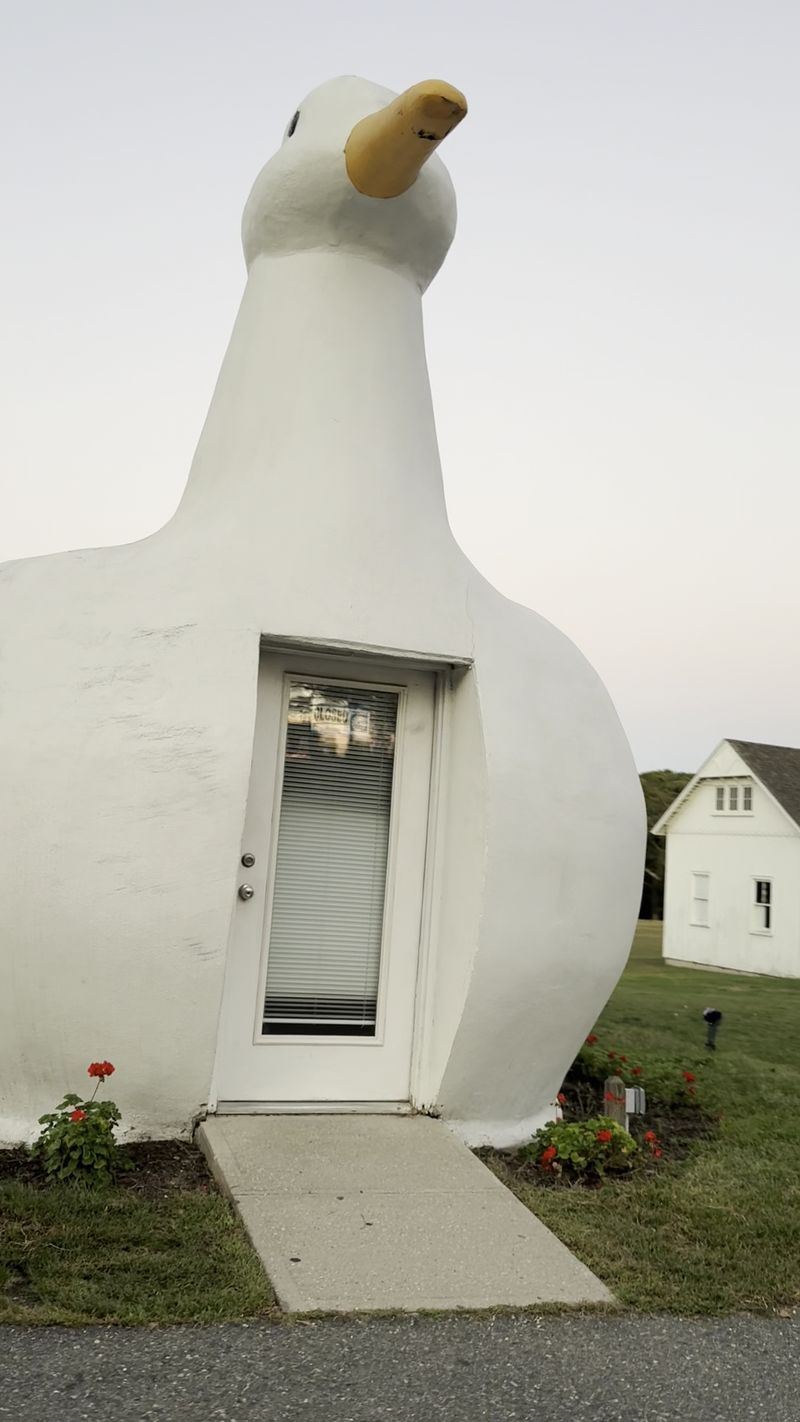
Route 24 is where you’ll find this bird, right at 1012 NY-24, Flanders, NY 11901. It sits on the east end of Long Island in Suffolk County, close to Riverhead.
The location makes it a natural stop on trips out east. Drivers heading toward the Hamptons or the North Fork often pass right by.
Pulling over takes just a few minutes, but the grin lasts longer.
The Big Duck is open year-round. Generally, doors open at 10 AM, though hours can shift.
Calling before a visit is wise, especially for large groups.
Timing matters if you want the full holiday magic. Watch for the lighting announcement from Suffolk County Parks each fall.
Dates have landed in late November or early December.
I can’t imagine a better excuse to bundle up for a winter drive in New York. You get Santa, a fire truck, carols, and a glowing duck in one evening.
Even without the event, this landmark rewards a quick detour. Just don’t blame me when you start honking hello every time you pass it afterward.